1 John 3:17
But whoso hath this world’s good, and seeth his brother have need, and shutteth up his bowels of compassion from him, how dwelleth the love of God in him?
Translations
But whoever has this world’s good, and sees his brother have need, and shuts up his bowels of compassion from him, how dwells the love of God in him?
But whoso hath this world’s good, and seeth his brother have need, and shutteth up his bowels of compassion from him, how dwelleth the love of God in him?
But whoso hath this world’s good, and seeth his brother hath need, and shutteth up his bowels of compassion from him, how dwelleth the love of God in him?
But he who hath this world's good, and seeth his brother have need, and shutteth up his bowels of compassion from him, how dwelleth the love of God in him?
Revised Version, American Standard Version
But whoso hath the world’ s goods, and beholdeth his brother in need, and shutteth up his compassion from him, how doth the love of God abide in him?
and whoever may have the goods of the world, and may view his brother having need, and may shut up his bowels from him — how doth the love of God remain in him?
But whoso may have the world's substance, and see his brother having need, and shut up his bowels from him, how abides the love of God in him?
But, whoso hath this world’s goods, and beholdeth his brother having, need, and shutteth up his tender affections from him, how, is, the love of God, abiding in him?
Berean Standard Bible, Majority Standard Bible
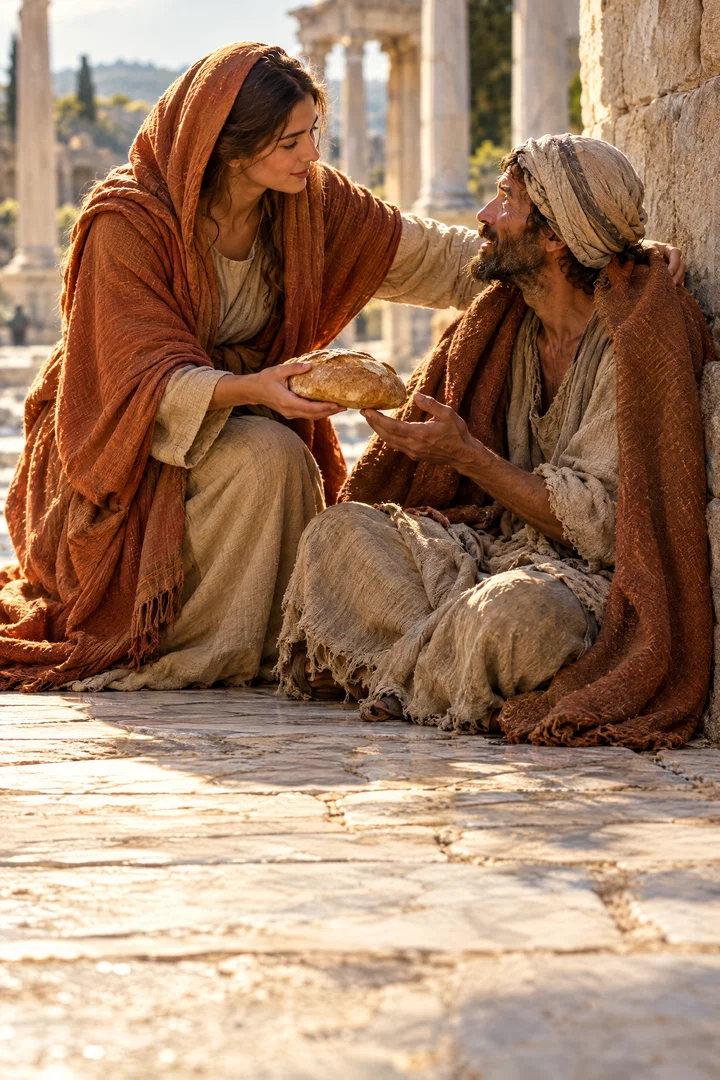
If anyone with earthly possessions sees his brother in need, but withholds his compassion from him, how can the love of God abide in him?
But whoever has the world’ s goods and sees his brother in need, then closes his heart of compassion against him, how does God’ s love remain in him?
But if a man has this world's goods, and sees that his brother is in need, and keeps his heart shut against his brother, how is it possible for the love of God to be in him?
And whosoeuer hath this worlds good, and seeth his brother haue neede, and shutteth vp his compassion from him, howe dwelleth the loue of God in him?
Douay-Rheims (Challoner revision)
He that hath the substance of this world, and shall see his brother in need, and shall shut up his bowels from him: how doth the charity of God abide in him?
Pictures
Cross-references 20 of 61
- James 2:15-16
If a brother or sister be naked, and destitute of daily food,
Both reject words of concern without practical help for someone in need.
- 1 John 4:7-8
Beloved, let us love one another: for love is of God; and every one that loveth is born of God, and knoweth God.
Love for one another shows knowledge of God, whose love is the source of true love.
- Matthew 25:40
And the King shall answer and say unto them, Verily I say unto you, Inasmuch as ye have done it unto one of the least of these my brethren, ye have done it unto me.
doing to needy brethren is doing to Christ
- 1 John 4:20
If a man say, I love God, and hateth his brother, he is a liar: for he that loveth not his brother whom he hath seen, how can he love God whom he hath not seen?
Love for a brother is evidence of genuine love for God.
- 1 John 4:11-12
Beloved, if God so loved us, we ought also to love one another.
God’s love for us calls us to love one another.
- Matthew 25:45
Then shall he answer them, saying, Verily I say unto you, Inasmuch as ye did it not to one of the least of these, ye did it not to me.
The following lines connect neglecting needy people with neglecting Christ.
- Matthew 22:37-40
Jesus said unto him, Thou shalt love the Lord thy God with all thy heart, and with all thy soul, and with all thy mind.
Love for God and neighbor are the principles on which the law hangs.
- Luke 3:11
He answereth and saith unto them, He that hath two coats, let him impart to him that hath none; and he that hath meat, let him do likewise.
Both require those with possessions to share with people in need.
- Galatians 5:14
For all the law is fulfilled in one word, even in this; Thou shalt love thy neighbour as thyself.
Love for one’s neighbor fulfills the law.
- James 2:17-18
Even so faith, if it hath not works, is dead, being alone.
Living faith is shown by works, including helping someone in need.
- Proverbs 11:24
There is that scattereth, and yet increaseth; and there is that withholdeth more than is meet, but it tendeth to poverty.
Withholding what is needed contrasts with generous giving.
- John 13:34
A new commandment I give unto you, That ye love one another; as I have loved you, that ye also love one another.
Commands love for one another as Christ loved.
- Luke 10:27
And he answering said, Thou shalt love the Lord thy God with all thy heart, and with all thy soul, and with all thy strength, and with all thy mind; and thy neighbour as thyself.
The command to love one’s neighbor frames practical compassion.
- Deuteronomy 15:7-11
If there be among you a poor man of one of thy brethren within any of thy gates in thy land which the LORD thy God giveth thee, thou shalt not harden thine heart, nor shut thine hand from thy poor brother:
Both command openhanded care for a needy brother.
- Isaiah 58:7
Is it not to deal thy bread to the hungry, and that thou bring the poor that are cast out to thy house? when thou seest the naked, that thou cover him; and that thou hide not thyself from thine own flesh?
Both call for sharing with and caring for kin in need.
- Luke 10:30-37
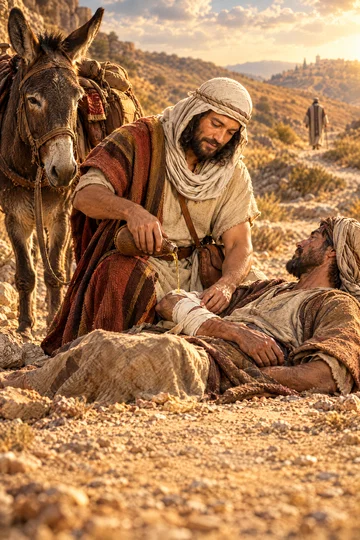
And Jesus answering said, A certain man went down from Jerusalem to Jericho, and fell among thieves, which stripped him of his raiment, and wounded him, and departed, leaving him half dead.
Both texts condemn withholding care from a brother in need.
- 1 John 3:10
In this the children of God are manifest, and the children of the devil: whosoever doeth not righteousness is not of God, neither he that loveth not his brother.
Loving a brother marks God's children; refusing compassion shows a lack of that love.
- Matthew 19:21
Jesus said unto him, If thou wilt be perfect, go and sell that thou hast, and give to the poor, and thou shalt have treasure in heaven: and come and follow me.
Jesus tells the rich man to sell his possessions and give to the poor.
- John 15:12
This is my commandment, That ye love one another, as I have loved you.
Christ commands love patterned on his own self-giving.
- 1 Timothy 6:18
That they do good, that they be rich in good works, ready to distribute, willing to communicate;
Both command the rich to share willingly.
Commentary
Each commentary is drawn from primary sources: the writings of Ellen G. White and Adventist pioneers and periodicals. Each commentary is separate. Its own words are not a quotation; follow the references to read the source passages.
Ellen G. White
52 sources
One who has this world's material goods and sees a brother in need yet shuts up compassion proves that the love of God does not dwell in him.RH Apr 3, 19002T 161.1Ms 31, 1903, par. 6–7 Its how is a searching personal question, teaching that God's love in the heart necessarily brings tender compassion and practical care, so that closing the heart in mere words and sympathy puts that indwelling love at risk.Lt 84, 1894, par. 12–15Ms 108, 1899, par. 22–25Ms 1b, 1874, par. 32 That love is known because Christ laid down His life, which defines love and requires believers to lay down selfishness in deeds of help, for true love is not in word or tongue only but in deed and in truth.2T 161.1Ms 89, 1898, par. 9–11Ms 8a, 1888, par. 13–15Lt 80, 1898, par. 16–18Ms 82, 1898, par. 26–30 Brother means especially a fellow believer of the household of faith purchased by Christ's blood, yet compassion must not be kept for self, family, or a select few but is commanded toward all whose need is greatest.RH Apr 10, 1900Ms 40, 1899, par. 1–4Lt 14, 1884, par. 1–6 This world's good means food, clothing, money, possessions and comfortable provision entrusted as stewardship, laying personal duty on the possessor to open the hand wide, to support the work of salvation for perishing souls, and to relieve the poor, the sick, the widow and the distressed, with the promise of assurance before God and answered prayer in deed-love and the warning of hardened heart, lost spirituality, and judgment to come for selfish withholding.Lt 16, 1898, par. 5–9Ms 12, 1868, par. 40–42STM2 30.3ST Jun 25, 1894Lt 17a, 1864, par. 6
Words and Question
Whoever holds material goods, sees a fellow believer in need, and refuses to show compassion proves that the love of God does not dwell in him.RH Apr 3, 19002T 161.1Ms 31, 1903, par. 6–7Ms 8a, 1888, par. 13–15Lt 84, 1894, par. 12–15 Love for others must be expressed in practical help and not merely claimed in words.RH Apr 3, 1900Ms 31, 1903, par. 6–7Ms 8a, 1888, par. 13–15Ms 51, 1894, par. 8–11 Love must be shown in deed and in truth rather than in word and tongue only.2T 161.1Ms 8a, 1888, par. 13–15Ms 51, 1894, par. 8–11 Care for a person's real needs is the evidence that faith and love are genuine.2T 161.1Ms 51, 1894, par. 8–11
This world's good means earthly material means such as food, clothing, money, possessions, and comfortable provision.Ms 12, 1868, par. 40–42Lt 14, 1884, par. 1–6Lt 17a, 1864, par. 6 Open hands with such things are required toward poor believers in tight circumstances, including a struggling mother with young children living by scarce poorly paid work, with other believers stirred to share in that help.Ms 12, 1868, par. 40–42 The larger the wealth entrusted, the greater the responsibility to use it to succor a brother in need and relieve suffering where it is in one's power to do good.ST Jun 25, 1894 A strong disposition to accumulate with little interest for poorer brethren is selfish blindness that sees only one's own advantage, arranges matters for self-benefit while letting others get along as they can, and decreases and destroys spirituality and godliness.ST Jun 25, 1894Lt 17a, 1864, par. 6
Brother means especially a fellow believer, one of the household of faith purchased by Christ's blood.RH Apr 10, 1900Ms 40, 1899, par. 1–4Lt 14, 1884, par. 1–6AA 546.2 Christ places infinite value on those purchased by His blood, adopts them as His children as objects of His tender care, and commits their temporal and spiritual necessities to His church to be supplied.RH Apr 10, 1900Ms 40, 1899, par. 1–4 What is done to help even the least of His brethren is counted as service done to Christ Himself, to be carried as the watchword into daily life through reverence, practical obedience, continual growth toward perfection of character, and imparting grace received.RH Apr 10, 1900Ms 40, 1899, par. 1–4 Compassion is commanded toward all, but especially toward those of the household of faith, and must not be kept for self, family, or a select few while giving nothing to those who need help the most.Lt 14, 1884, par. 1–6Ms 17, 1899, par. 5 Keeping affection and the sunshine of Christ's righteousness selfishly reserved to be lavished only upon a few is selfishness with no place in the life of Christ and in no way represents Him, and those who do not let what they have shine forth will soon lose its sweet bright rays.Ms 17, 1899, par. 5 It is a duty as a man and doubly as a Christian to support a poor relative with regular monthly help that will not be missed, being at least as kind as strangers, the church, or the town, while neglect is recorded in heaven as transgressing love to neighbor as self and awakens God's wrath to deprive of health and property.Lt 14, 1884, par. 1–6
How dwelleth the love of God in him is a searching personal question to be taken as before the Judge of all the earth.Lt 84, 1894, par. 12–15Ms 108, 1899, par. 22–25 God's love in the heart necessarily brings tender compassion and practical care for others, especially for those for whom Christ gave His life.Lt 84, 1894, par. 12–15Ms 51, 1894, par. 8–11Ms 108, 1899, par. 22–25 True love is known because God laid down His life, and it requires laying down self and life for the brethren in practical help and blessing.Ms 108, 1899, par. 22–25 Closing the heart to people who need help, words, and sympathy puts that indwelling love at risk, for loveless selfishness proves the heart is in darkness and death rather than in light and fellowship with God.Ms 108, 1899, par. 22–25Ms 1b, 1874, par. 32
Setting in First John
God's love is known because Christ laid down His life, and that act defines love and requires believers to lay down self and life for the brethren in practical help and blessing.Ms 89, 1898, par. 9–11Lt 80, 1898, par. 16–18Ms 82, 1898, par. 26–30Ms 108, 1899, par. 22–25ST Oct 20, 1898 The love required toward one another is as broad and full as Christ's love.ST Oct 20, 1898 True love is not in word or in tongue only but in deed and in truth, through faith which works by love and purifies the soul from selfishness, hardness of heart, moral defilement and spiritual pride.2T 161.1Ms 89, 1898, par. 9–11Ms 8a, 1888, par. 13–15Lt 80, 1898, par. 16–18Ms 82, 1898, par. 26–30 Personal deeds of goodness and care for real need are the evidence that faith and love are genuine, in contrast to Satan's sowing of dissension and strife.2T 161.1Ms 89, 1898, par. 9–11Ms 51, 1894, par. 8–11 Loving the brethren in such deed-love proves passing from death unto life.Ms 89, 1898, par. 9–11Lt 80, 1898, par. 16–18 It manifests and marks the children of God as distinct from the children of the devil.Ms 89, 1898, par. 9–11Lt 80, 1898, par. 16–18Ms 108, 1899, par. 22–25 Hating a brother is murder with no eternal life abiding in him, and loveless selfishness proves the heart is in darkness and death, not in light and fellowship with God.Ms 89, 1898, par. 9–11Ms 108, 1899, par. 22–25
Such deed-love assures the heart before God.Ms 89, 1898, par. 9–11Lt 80, 1898, par. 16–18Ms 108, 1899, par. 22–25Lt 16, 1868, par. 22–23 If the heart does not condemn, there is confidence toward God, and whatever is asked is received because His commandments are kept and the things pleasing in His sight are done.Ms 89, 1898, par. 9–11Lt 16, 1868, par. 22–23 Keeping His commandments means believing on Jesus Christ and loving one another, doing righteousness under the old commandment from the beginning, the holy law, and abiding in Him by the Spirit given.Ms 89, 1898, par. 9–11Lt 80, 1898, par. 16–18Ms 108, 1899, par. 22–25 This is the credential that Christ is formed within, the test and measurement of genuine religious experience and sanctification through the truth, and the religious obligation that must fashion all conduct after the divine Pattern.Ms 82, 1898, par. 26–30ST Oct 20, 1898 The chapter belongs to the testimony that joins the law and the gospel.SPBC 152.2–314MR 130.2–131.1 Its teaching on loving one another expresses the great principles of the law in the two great precepts to love the Lord God with all the heart and to love neighbor as self, upon which hang all the law and the prophets, so that those who receive God's gifts and love in faith and in life and character are to give to others.SPBC 152.2–3Ms 88, 1893, par. 35–3714MR 130.2–131.1
The disciples only understood this breadth of love after Christ's suffering, crucifixion, resurrection, words as the resurrection and the life, meeting in Galilee, ascension, and the revealing of that love by the Holy Spirit at Pentecost.Ms 82, 1898, par. 26–30ST Oct 20, 1898 When that love is in the heart it works like leaven to bring mind and soul and strength into complete harmony with the divine life.ST Oct 20, 1898 The third chapter of First John is to be studied, believed, practiced and shown in daily life by youth, students in schools and sanitariums, workers in printing offices, and instructors and leaders.Ms 31, 1903, par. 9 Its teaching calls for becoming sons and daughters of God, walking uprightly in a crooked and perverse generation, showing the contrast between the principles of Christ and the principles of Satan, learning from Christ His meekness and lowliness that makes His yoke easy and His burden light, being witnesses for God by faithful, joyful service and by the Saviour's keeping power every moment, keeping hereditary and cultivated tendencies under control with character daily refined, sanctified and purified, offering only God's sacred kindled fire, and never speaking harsh, passionate, rash words but speaking as Christ spoke with courtesy and respect.Ms 31, 1903, par. 9 Genuine conversion and reception of God's truth under it makes believers channels and representatives of God's grace rather than agents of division, who dwell on God's love and compassion rather than fixing attention on gloomy accounts of evil and Satan's power.4MR 297.1Lt 81, 1888, par. 9–11
Duties Toward Others
The verse requires practical religion every day in the home, the neighborhood, the church, and the institutions, revealing Christ's meekness, tenderness, compassion, and unselfish generosity toward the poor, the distressed, and the needy.Lt 134, 1902, par. 1–3Lt 165, 1901, par. 21–227MR 232.2–3 It calls for deeds of mercy and kind, uplifting speech like apples of gold in pictures of silver, instead of harsh words and unchristian, unbecoming actions that offend God.Lt 134, 1902, par. 1–3Lt 165, 1901, par. 21–227MR 232.2–3 Those who shut up compassion are weakened and deprived of the Spirit of God.Lt 134, 1902, par. 1–3Lt 165, 1901, par. 21–227MR 232.2–3 Christ commits the temporal and spiritual necessities of His people, purchased by His blood and adopted as objects of His tender care, to the church to be supplied, so that what is done to even the least of His brethren is counted as done to Him.RH Apr 10, 1900Ms 40, 1899, par. 1–4 This service to Christ in His brethren is to be the watchword carried faithfully into daily life through reverence for Christ, respect for His blood-bought ones, practical obedience to heaven's law, continual growth in attributes tending to perfection of character, and imparting to others the grace received when divine grace opens the heart.Ms 40, 1899, par. 1–4
The duty means love not in word or in tongue only but in deed and in truth, by opening the hand wide to a poor brother, lending him sufficient for his need, giving without a grieved heart, and relieving him when waxed poor and fallen into decay, without usury or increase.Lt 16, 1898, par. 5–9 This belongs to home missionary work and to those in responsible positions uniting to see it done, including helping distressed brethren who helped the cause in its necessity.Lt 16, 1898, par. 5–9 To refuse is to deal unjustly and unmercifully, to harden the heart and shut the hand, causing the cry of God's children to come up before the Lord as sin, hindering blessing and prayer from coming up as sweet incense, and bringing removal of prosperity.Lt 16, 1898, par. 5–9 Having this world's good lays personal duty on the possessor himself to see need and relieve it where it is greatest under the direction of the Holy Spirit, with prayer and wisdom from God, bringing great blessing to the giver.7T 178.1–3 Those who receive profit from books they have written are to receive a just share and hold it as a trust from God to be administered personally, and while it is right to place a portion in the treasury for general needs, they are to acquaint themselves with the necessities of the work and dispense means personally and lead out in benevolence, so that means are not expended in a few localities while many places where truth has not yet been lifted are left with little.7T 178.1–3
Those with resources must aid poorer people and struggling churches and institutions in proportion to how God has prospered them, rather than using everything to expand their own work.8T 136.1–2 Believers are to receive in order to give as ordained channels through which God's goodness, mercy, and truth flow, as co-workers with Christ in communicating practical wisdom and benevolence that brings brightness and blessing, instead of shutting sympathy up in a selfish heart.6T 190.18T 136.1–2 Those who live for themselves are always in want and never satisfied, while those who give to others find the greatest satisfaction in this life and get the most good out of life.6T 190.1 The verse applies to supporting the work of salvation with means, since money is God's own lent to men as stewards, and one who has this world's goods and sees perishing souls needing the truth yet will not dispose of those goods to send them the truth denies love.STM2 30.3ExVEGW 30.2–31.1Ms 4, 1850, par. 5–6 The obligation is urgent while Jesus stands before the Father pleading His blood, His sufferings and His death for sinners, and while messengers wait ready to carry the saving truth in papers and tracts that souls may be sealed with the seal of the living God, and even handing God's messengers money for that work is only a little thing.STM2 30.3ST Feb 24, 1887 Those who profess present truth yet are wrapped up in selfish interests so the heart does not take in the needs and wants of humanity, and who consider it too great a sacrifice to help souls, show they are not living out redeeming love, wasting on travel not their duty what could bring spiritual food, and cannot share in heaven's song of redeeming love.ExVEGW 30.2–31.1ST Feb 24, 1887Ms 4, 1850, par. 5–6
It calls for open hands with material things such as food and clothing toward poor believers in tight circumstances, and for stirring other believers to share in that help.Ms 12, 1868, par. 40–42 This includes a struggling mother with young children living by scarce poorly paid work, carrying a fatherless boy through school, and relieving widows, the sick, the disabled, and the destitute, even when they have lost other church support for keeping the Sabbath and face blindness, confinement to bed, and incurable disease, for the poor are blessed of the Lord and helping them proves His love.Ms 12, 1868, par. 40–42Ms 181, 1898, par. 6 It is a duty as a man and doubly as a Christian to support a poor relative with regular monthly help that will not be missed, being at least as kind as strangers, the church, or the town.Lt 14, 1884, par. 1–6 Fellow believers should encourage and help a blind, poor, and diseased brother who is trying to support himself, not distress him or obstruct his way, and those who wrong him must repent and make the wrong right, with the church sharing responsibility if it allows him to be wronged.3T 519.3 Neglect transgresses the law to love neighbor as self, comes from love of the world, love of self, and selfishness hardening the heart like stone, is recorded in the books of heaven, and awakens God's wrath to deprive of health and property, while compassion is commanded toward all but especially toward those of the household of faith.Lt 14, 1884, par. 1–6
Compassion includes brethren with the love of Christ in their hearts coming forward to help where they can a man humiliated by his mistakes and in need.Lt 168, 1899, par. 10 It includes paying women who labor with their husbands for their time, because God hates robbery connected with offerings.Lt 168, 1899, par. 10 Those who have means should consider a poor brother's circumstances in business, inquire into his wants, feel kindly sympathy for him, and ease his burden in many little acts in deed and in action and not in word merely, never demanding more than fair value nor taking selfish advantage of distress for a little gain, which God approves and will reward.SG2 247.1–248.1Lt 9, 1857, par. 1–4 Withholding compassion is loving money better than religion and better than God, dealing closely and covetously with brethren.Lt 9, 1857, par. 1–4 Such selfishness and love of the world weakens a burdened, erring brother's hands, causes him to stumble and say he cannot live religion or keep the truth, and may cause him to stumble to perdition for earthly gain, whereas being a brother's keeper means being in degree responsible for his soul, loving as Christ loved enough to give life for a brother, helping, favoring, and binding the erring brother to the heart with strong Christian cords, lest the brother who stumbles be required at his hand.Lt 9, 1857, par. 1–4
The love dwelling in a person is proved by Christlike courtesy, forbearance, compassion, and kindness toward brethren even when they differ in views, forbidding crowding and pushing others because they do not see alike.12MR 374.3–376.1Lt 21, 1888, par. 25–27 No harsh, discourteous, or unkind treatment is excused on the ground that views are questionable, even if questionable, nor on the ground of office and position of responsibility.12MR 374.3–376.1Lt 21, 1888, par. 25–27 Those in responsible positions are under sacred obligation to be like-minded with God, meek and humble, an example worthy of imitation in words, spirit, deportment, and manner of treating brethren.Lt 21, 1888, par. 25–27 The verse condemns being wrapped up in selfish interests, a strong disposition to accumulate with little interest for poorer brethren, seeing only one's own advantage and arranging matters to benefit self while letting others get along as they can, which is selfish blindness that decreases and destroys spirituality and godliness.ST Feb 24, 1887Lt 17a, 1864, par. 6 It condemns choosing fashion and frivolity, seeking an easier path without self-restraint and forgetting God, which shows Christ's love is not ruling and wounds Christ and brings shame on His name, and it condemns coolly sending a brother away without aid instead of treating him with Christian compassion.ST Oct 21, 1880Lt 69, 1895, par. 10–13
It calls for manliness and firmness in Christian character and warns against a cheap Christian character that works more harm in the world than the character of a worldling, because professed Christians mislead others by professing to represent Him whose name they assume.Lt 2, 1895, par. 1–4 Love for Christ leads to earnest, untiring care for others, especially fellow believers, putting that love into action for people in need.AA 546.2 The love of God dwells in a person only when selfishness is bravely overcome and no opportunity to help those around is allowed to pass.MYP 212.1 Each day, each hour, each moment weaves character and destiny, with every act drawing a thread that either mars or beautifies the pattern God designed to be bright and beautiful, so that carelessness and indolence, choosing own inclinations, forming unchristlike habits that bind with bands of steel, and walking away from Christ spoil the life and lead many others to miss the glories of heaven, while overcoming selfishness by helping others beautifies the life and makes the example a light that guides others to the cross.MYP 212.1
Promises and Warnings
Doing deed-love is how believers know they are of the truth and assure their hearts before God, for if the heart condemns God is greater than the heart and knows all things, and if the heart does not condemn there is confidence toward God with answered prayer through keeping His commandments and doing what pleases Him.Lt 16, 1868, par. 22–23 True religion always tells in its influence and actions, and the soul that seeks God in wise and unconditional surrender in private prayer apart from outward activity will have a life full of goodness, love and truth with conversation of heaven while kept from evil in the world.11MR 372.3 This calls for becoming sons and daughters of God, walking uprightly in a crooked and perverse generation, showing the contrast between Christ's principles and Satan's, learning Christ's meekness and lowliness that makes His yoke easy and burden light, being witnesses by faithful joyful service and moment-by-moment keeping power, holding hereditary and cultivated tendencies under control, offering only God's sacred kindled fire, and never speaking harsh passionate rash words but speaking with courtesy and respect as Christ spoke.Ms 31, 1903, par. 9 It requires divesting selfishness, redeeming the past, letting light shine by good works that lead others to glorify the Father in heaven, and regulating all business transactions in strict accordance with the Word in thorough work for eternity, with character daily refined, sanctified and purified.Ms 31, 1903, par. 9Lt 16, 1868, par. 22–23
Those who so live grow continually in attributes tending to perfection of character, keep the peace of God through Christ Jesus upon heart and mind, and will hear the benediction of the good and faithful servant and enter the joy of the Lord.Ms 40, 1899, par. 1–4 Christ places infinite value on those purchased by His blood, adopts them as His children as objects of His tender care, and commits their temporal and spiritual necessities to His church, so that what is done to the least of His brethren is done to Him, and this service to Christ in His brethren is to be the watchword carried faithfully into daily life through reverence for Christ, respect for His blood-bought ones, practical obedience to heaven's law, and imparting to others the grace received when divine grace opens the heart.Ms 40, 1899, par. 1–4 Receiving in order to give rather than shutting sympathy in a selfish heart is living the word of God in dealings with fellow men, and believers are ordained channels through which God's goodness, mercy and truth flow as co-workers with Christ in communicating practical wisdom and benevolence that brings brightness and blessing, which is a good and holy work.6T 190.1 Those who live for themselves are always in want and never satisfied, while those who give to others find the greatest satisfaction in this life and get the most good out of life.6T 190.1
Each day, each hour, each moment weaves character and destiny, with every act drawing a thread that either mars or beautifies the pattern God designed to be bright and beautiful.MYP 212.1 Overcoming selfishness bravely and letting no opportunity to help those around pass beautifies the life and makes the example a light guiding others to the cross.MYP 212.1 Carelessness and indolence spoil that life, choosing own inclinations forms unchristlike habits that bind with bands of steel, and walking away from Christ sets an example leading many others to miss the glories of heaven.MYP 212.1
Those who shut up compassion are weakened and deprived of the Spirit of God, and a strong disposition to accumulate with little interest for poorer brethren and failure to manifest noble disinterested benevolence decreases and destroys spirituality and godliness by selfish blindness that sees only own advantage and arranges matters for self-benefit while letting others get along as they can.Lt 165, 1901, par. 21–22Lt 17a, 1864, par. 6 Practical religion must be brought into home, neighborhood, church and institutions by revealing Christ's tenderness, compassion, meekness, generosity and unselfish generosity toward the poor, distressed and needy, with deeds of mercy and kind words like apples of gold in pictures of silver and uplifting speech instead of harsh words and unbecoming unchristian actions which offend God.Lt 134, 1902, par. 1–3Lt 165, 1901, par. 21–227MR 232.2–3 Those who possess much affection and the sunshine of Christ's righteousness are responsible to bestow it on all who need help most with self not placed first, not keeping it selfishly reserved for self, family or a select few, for such selfishness has no place in Christ's life and in no way represents Him, and those who do not let what they have shine forth will soon lose the sweet bright rays of heavenly grace.Ms 17, 1899, par. 5
Refusing to help is dealing unjustly and unmercifully, hardening the heart and shutting the hand, and the cry of God's children then comes up before the Lord as sin.Lt 16, 1898, par. 5–9 It hinders blessing and prayer from coming up as sweet incense and brings removal of prosperity.Lt 16, 1898, par. 5–9 Neglect is recorded in the books of heaven as transgressing the law to love neighbor as self, coming from love of the world, love of self and selfishness hardening the heart like stone, and it awakens God's wrath to deprive of health and property.Lt 14, 1884, par. 1–6 The duty is to open the hand wide to a poor brother, lend him sufficient for his need without a grieved heart, and relieve him when waxed poor and fallen into decay without usury or increase, as home missionary work for those in responsible positions uniting to see it done, including helping distressed brethren who helped the cause in its necessity, and it is duty as a man and doubly as a Christian to support a poor relative with regular monthly help that will not be missed, being at least as kind as strangers, the church or the town, with compassion commanded toward all but especially toward the household of faith.Lt 16, 1898, par. 5–9Lt 14, 1884, par. 1–6
Selfish withholding for gain that deals closely and covetously and takes selfish advantage of brethren is loving money better than religion and better than God.Lt 9, 1857, par. 1–4 Such selfishness and love of the world weakens a burdened erring brother's hands, causes him to stumble and say he cannot live religion or keep the truth, and may cause him to stumble to perdition for earthly gain.Lt 9, 1857, par. 1–4 Being a brother's keeper means being in degree responsible for his soul, loving as Christ loved enough to give life for a brother, inquiring into his wants, feeling kindly sympathy, easing his burden in many little acts in deed and action not in word merely, and helping, favoring and binding the erring brother to the heart with strong Christian cords lest the brother who stumbles be required at his hand.Lt 9, 1857, par. 1–4
God calls for a decided and thorough change and reformation in every church and institution, because in the day of judgment all these matters will be set right and put on their proper basis.Lt 134, 1902, par. 1–37MR 232.2–3 He will call stewards to account for closing the heart to the needy as a failure of mercy and stewardship.ST Sep 10, 1912 He who has large supplies and fails to relieve suffering when it is in his power to do good will receive large retribution, for justice and condemnation will come upon the possessor of wealth who selfishly withholds its benefit from those who need it, the larger the wealth entrusted the greater the responsibility to succor a brother in need.ST Jun 25, 1894 Keeping God's commandments means practicing mercy and the love of God and being upright in dealings with fellow men, while not serving God leaves ambition unrestrained to covetousness which ruins the soul and leaves the covetous rich miserable, discontented, unsatisfied and more miserable the more he grasps.ST Jun 25, 1894
Professed followers who possess worldly goods but consider helping the cause of salvation too great a sacrifice and lack interest in God's work on earth show they do not live redeeming love and cannot enter heaven or sing the song of redeeming love.STBk 105.4ExVEGW 30.2–31.1Ms 4, 1850, par. 5–6 This applies to withholding money that could send messengers with saving truth and papers and tracts to perishing souls needing truth while messengers wait, for money is God's own lent as a stewardship entrusted for service, and wasting it on travel that is not duty can leave people without the spiritual food faithful messengers could have brought.ExVEGW 30.2–31.1Ms 4, 1850, par. 5–6 Love for Christ cannot dwell in those who turn toward worldly self-indulgence and conformity, choose fashion and frivolity, seek an easier path without self-restraint and forget God, and by such conduct they wound Christ and bring shame on His name.ST Oct 21, 1880
Sources
Pioneers and periodicals
107 sources
To have material resources and see a fellow believer in need yet close the heart in compassion proves that the love of God does not live in that person.RH Apr 3, 1900ST Jan 6, 1881ST Dec 16, 1908RH Jan 19, 1911ST Dec 14, 1882 Love is known by practical help done in deed and in truth, not by sympathy, tears, kind words, profession, prayer, or preaching alone.ST Dec 10, 1896RH Mar 11, 1915RH Jan 5, 1860RH Sep 15, 1859 The brother in need is first the household of faith, especially the afflicted poor in lowly places, yet neighbor means any person in want, including the enslaved, the enemy, and the suffering stranger.ST Dec 10, 1902RH Oct 14, 1858STRH Dec 24, 1903 Love is the fulfilling of the law, so obedience is tested by mercy, and possessions are held as a stewardship to be consecrated to service, with abundance given to some that they may be proved by the need of others.RH Feb 17, 1859RH Sep 26, 1865ST Dec 10, 1902RH Jul 25, 1854 Compassion must be felt in the pocket as well as in the heart, relieving nearby hunger, clothing, shelter, and spiritual need first, for to open the hand is to live and to shut it is to be dead.ST Feb 19, 1885RH Oct 15, 1861RH Oct 7, 1909ST Dec 4, 1901
Words and Setting
The term for inner parts denotes the seat of feelings, emotions and affections, reflecting how strong emotion affects the body, and here it denotes compassion.ST Jan 14, 1897 Having this world's good means having material resources and possessions.ST Mar 27, 1884 A person with little can have enough when content, while without contentment nothing ever feels enough.ST Mar 27, 1884
The brother in need is first a fellow believer, yet neighbor means the person in need, so the term reaches beyond one's own religious group to anyone suffering or in want.ST Dec 10, 1902ST Nov 21, 1892 It therefore embraces enslaved people, whose acknowledgment and help belong to genuine religion, and enemies, who are to be prayed for, sought for salvation, and helped in practical ways when known to be in need and help is possible.RH Oct 14, 1858RH Mar 15, 1860 It includes the suffering and friendless pictured as a child in prison, a martyr, and a dying person in a leper's hut, whose recognition means responding to need.ST No one truly loves neighbor as self without first loving God, and only one born of God knows what love is; such a one loves all men, and this love is tested and proved by obedience to all of God's commandments, for to love God is to keep His commandments and to love his brother also, because God's law is one and its eternal principle of love is all-embracing.ST Dec 10, 1902
The verse belongs to an epistle that presents love in God's service as practical godly living, not mere sentiment.ST Dec 12, 1911 That epistle shows what God's love is and what human love toward God should be, namely not mere sentiment but faithful devotion and obedience. Within it, practical love for fellow believers stands among the deeds that show a person belongs to God, tested when someone with material means sees a brother in need and withholds compassion.ST Sep 25, 1893 Meeting such need with practical generosity belongs with willingness to lay down one's life for fellow believers after Christ's example, whose love is as broad and full as the love believers must have for one another.ST Oct 20, 1898RH Dec 24, 1861 Cited alongside Romans 3, the verse shows that the moral law, not the abolished law of ordinances, made Christ lay down His life for a guilty condemned world.RH Jul 22, 1852 The phrase for inner compassion is also used to ask whether anyone cares enough to arrange a meeting at Gilboa.RH Jan 21, 1858
Love Proved by Deeds
The verse gives the full answer to how to know whether a person loves the Lord and belongs to Him.RH Apr 3, 1900ST Jan 6, 1881ST Dec 16, 1908ST Nov 6, 1893RH Jan 5, 1911 One who has this world's goods and sees a brother have need and shuts up compassion proves the love of God does not dwell in him.RH Apr 3, 1900ST Jan 6, 1881ST Dec 16, 1908ST Nov 6, 1893ST Jul 8, 1897 Those blessed with material means must minister to the wants of a needy brother, and refusal shows God's love is not abiding within.RH Apr 3, 1900ST Dec 16, 1908ST Nov 6, 1893RH Jan 5, 1911ST Jul 8, 1897
God's love in a person is made evident by practical compassion and doing what is true.ST Dec 10, 1896RH Mar 11, 1915ST Nov 6, 1893ST Nov 6, 1893 Love must be shown in deed and in truth, not in word or tongue only.ST Dec 10, 1896RH Mar 11, 1915ST Nov 6, 1893ST Nov 6, 1893 It is not mere sympathy, tears, kind words, sentiment, profession, prayer, or preaching, but relieving the poor and needy, lifting the fallen, and helping those in need.ST Dec 10, 1896RH Mar 11, 1915RH Sep 28, 1911 Such deeds follow Christ's self-giving love and care for one another, walking in the footsteps of Jesus and molding life after His meek and lowly life, loving Him with all soul, strength, and mind so that no burden is too heavy and no sacrifice too great and every good deed is performed with pleasure and delight.RH Mar 11, 1915RH Sep 28, 1911
Withholding help shows the love of God does not abide in a person, while doing good to all, especially the household of faith, is a test of surety of eternal life and of having passed from death unto life.RH Jan 19, 1911ST Dec 14, 1882ST Nov 6, 1893ST Nov 6, 1893RH Oct 22, 1908 Faith works through love and is shown in deeds, and deeds of generosity test the sincerity of professed love.ST Dec 14, 1882ST Nov 6, 1893ST Nov 6, 1893 Giving does not earn God's favor; it is evidence that a person has received Christ's grace, and those who share in that grace are obligated to care for the afflicted, bereaved, poor, and orphaned.ST Nov 6, 1893ST Nov 6, 1893 Lack of interest in saving others reveals lack of salvation, for without love growing into love to men, shown by doing all that can be done to give the gospel to the heathen and to meet a depraved sinful world in its need, there is no salvation and no evidence of having passed from death unto life, and a man who does nothing for his Master and never cares about the perishing heathen enough to send missionaries gives dreadful reason to doubt whether he himself will be saved, because he is not like Christ.RH Oct 22, 1908ST Jul 31, 1879 This requirement supplies the motive and inspiration for Christian work, for looking to Christ as the only hope, and for proclaiming the last message in the relation of a redeemed person to Christ.RH Oct 22, 1908
The self-sacrificing love commanded is as broad and full as Christ's love in laying down His life, so believers ought to lay down their lives for the brethren.ST Oct 20, 1898 That love was not fully understood by the disciples until after Christ's sufferings, crucifixion, resurrection, ascension, and the Holy Spirit resting on them at Pentecost.ST Oct 20, 1898 It is the testimony to the world that Christ is formed within, the hope of glory, and it is the test of genuine religious experience and sanctification through the truth.ST Oct 20, 1898 Conduct is fashioned after the divine standard, while the love of Christ in the heart works like leaven to bring mind and soul and strength into complete harmony with the divine life.ST Oct 20, 1898
A deed that meets a brother's need does not end with the doing but flashes like signals to the skies, where angels overhead read how the brother was loved, and by the sum of such love God is revealed.ST Jan 17, 1878ST Oct 22, 1912ST Jul 18, 1900 Even a timid hand stretched out to aid a brother in need is remembered in an unfading record.ST Jan 17, 1878ST Oct 22, 1912ST Jul 18, 1900
To open the hand wide to help the need of a human brother is to live, doubling the length of life and gaining a thousand million lives by carrying the world in sympathies, while to shut compassion is to be dead.ST Dec 4, 1901 As the sun lives by pouring out gold, warmth, health, and precious light and would bury itself in eternal night by withholding, and as the flower lives not for itself but in the joy, beauty, and balm it freely diffuses and must exhale and bloom or smother and wither, so to give is to live and to deny is to die.ST Dec 4, 1901
Doctrinal Implications
Love is the fulfilling of the law, and love to neighbor is the second great principle on which the law hangs, so that keeping that command fulfills the law.RH Feb 17, 1859ST Dec 10, 1902RH Jul 25, 1854 To love God is to keep His commandments and to love one's brother also, for the law is one and its eternal principle of love is all-embracing.RH Feb 17, 1859ST Dec 10, 1902RH Jul 25, 1854 Obedience is the only test of love, and only the one born of God knows what love is and loves all men, with neighbor meaning the man in need.RH Feb 17, 1859ST Dec 10, 1902RH Jan 10, 1854 Withholding help when one has this world's goods and sees a brother in need therefore proves the love of God does not dwell within and proves commandment-breaking, and in the time before the speedy coming of the Saviour this brings love to a test which is keeping God's commandments and rebukes the eager grasp after the world and resolve on having riches found even in professed Christians.RH Feb 17, 1859RH Jul 25, 1854RH Jan 10, 1854
The rich ruler had not kept all the commandments, for his sorrow over his riches and his refusal to show compassion showed he was a slave to mammon and destitute of love to God and man, making his own declaration of obedience worthless.RH Feb 17, 1859 Material possessions are entrusted to people as stewards for the uses God intends, and conversion turns the heart away from love of the world and consecrates those possessions to His service.RH Sep 26, 1865RH Dec 15, 1859 God allows abundance to some while others suffer need in order to test those who have by those who have not, because He regards all men as one great family and is grieved as a tender parent when those with abundance surfeit themselves while the pinched and poverty-stricken suffer and die at their very doors. The larger the wealth entrusted the greater the responsibility to use this world's goods to succor a brother in need, whether one possesses little or much, with possessions given as a means to advance the cause rather than to be choked by the cares of the world and the deceitfulness of riches.ST Jun 25, 1894RH Dec 15, 1859
Each person is held responsible not for what others have nor for what he does not have, but for what he himself has in time, in opportunity, in talent, and in ability, and God will hold all possessors of wealth responsible for the way they obtained it and the way they use it.ST Jun 29, 1904 Where love is absent hatred and murder in breach of the sixth commandment are present, for keeping back this world's goods from a brother in need proves the love of God is not dwelling in the heart. This withholding comes from the love of money ruling in heart and life as sole and absolute and tyrannous lord, refusing generosity in dealing, open-handedness in giving, and freedom of action.RH Aug 18, 1868 That love of money is an absorbing, encroaching sin that grows by what it feeds on and resents more and more any compassion shown, until it possesses the moral and spiritual life, while greed and a grasping spirit shut the heart against charity and are out of place in a Christian, whose wealth is to be used faithfully in the Master's work and not hoarded for gain.RH Jul 10, 1860RH Aug 18, 1868
Keeping the commandments of God means practicing mercy and the love of God and being upright in dealings with fellow men.ST Jun 25, 1894 He who has large supplies and fails to relieve suffering when it is in his power to do good will receive large retribution, and justice and condemnation will come upon the possessor of wealth who selfishly withholds its benefit from those who need it.ST Jun 25, 1894 Closing the heart to the needy is a failure of mercy and stewardship for which God will call people to account, requiring as good stewards practical help such as homes for orphans, schooling for the poor, and food and clothing for the needy.ST Sep 10, 1912ST Jul 9, 1894 Not serving God leaves ambition unrestrained to covetousness, which ruins the soul and leaves the covetous rich man miserable, discontented, unsatisfied, and more miserable the more he grasps.ST Jun 25, 1894
Sharing is required as soon as there is any surplus, as when one with two coats or food gives to one with none. Neglect brings the judgment that what is done or not done to the least of Christ's brethren is done or not done to Christ, deciding between everlasting punishment and eternal life. A person who has no compassion for afflicted Christians should expect no compassion from God.RH Jan 12, 1869 Compassion for a needy brother must be more than giving material goods, for the giver must also guard his own life from evil.ST Jun 3, 1880 Property is of less value than the person who gives it, so giving possessions to God while giving oneself to sin is an incomplete offering, and true sacrifice to God joins outward acts of devotion to a life rooted in righteousness.ST Jun 3, 1880
Genuine appreciation of God's gift of His Son opens the heart to give practical help to God's poor and needy. The love of God lives in a person through deeds of love to a brother in need, not holding back in selfish greed what would supply need, but clothing the naked and feeding the hungry and dividing goods with the poor.ST Jun 12, 1901 God sees the gift laid before Him and repays the deed of love, so that giving is the way to receive.ST Jun 12, 1901 The little that is left after giving is multiplied, want is kept away, thirst is prevented even in famine, the scattered seed yields abundant increase, more is supplied from God's own store, blessings fall beside the door, and the liberal soul is made fat.ST Jun 12, 1901
Scope of Compassion
The brother in need especially includes the Lord's true children in affliction in lowly miserable places amid poverty, disease, and grief, who patiently bear suffering while comforting the hopeless and stricken around them. Though many are almost unknown to churches and ministers, they are lights shining amid darkness and under His special care, and wherever there is a church they must be searched out and ministered to rather than left under selfishness, greed, and oppression. This searching care extends to converted Sabbath keepers helped to find work so they can obtain life's necessities, and to believers who loaned money to institutions and later need it again in sickness, death, or hardship, who must not be left to suffer when others can help.RH Dec 24, 1903
Need means both temporal and spiritual things, for love gives and withholds neither kind of supply when it sees lack.RH Oct 7, 1902 It includes food, shelter, clothing, fuel, sympathy, home cheer, comfort, good books, prayers, education, encouragement, guidance, kind words, time, talents, and pity.RH Dec 3, 1901RH Dec 8, 1868ST Mar 17, 1887 The greatest need is the gospel of eternal life, so anxious care for those without its privileges is met by papers and tracts and by schools and missions and by working for the salvation of souls in deed and not in desire only.ST Feb 24, 1887ST Sep 27, 1883 Even where material help cannot be given, kind words and sympathy still show love and care for the poor.ST Mar 17, 1887
Compassion requires using resources to relieve hardship and not only feeling pity, for feeling for a neighbor should be felt in the pocket.ST Feb 19, 1885RH Oct 7, 1909 Tears of sympathy do not replace giving to relieve the poor.ST Mar 20, 1884 Cases of poor people in need test love for suffering humanity, and answering them opens a continuing channel of generosity and guards against covetousness.
Caring for nearby need within one's own sight is as pleasing to God as giving to distant causes, and the heart is closed when need close at hand is passed by.RH Oct 15, 1861 Large sums given for missions or some other charitable purpose do not fulfill the demand when widow and fatherless and sick and afflicted nearby are left to suffer for the common necessaries of life, however highly men esteem such givers as philanthropists.RH Dec 15, 1859 Meeting nearby need first takes wisdom asked liberally from God and a meek willingness to be guided and taught in judgment.RH Dec 15, 1859
Charity that only meets the need of the day and relieves pressing physical necessity and nothing more, leaving the person to beg again, may show natural pity and liberality but is not Christianity.RH Dec 18, 1900 Such unsystematized giving that relieves the body without educating degrades the receiver by making dependency and pauperism desirable and fails to meet the mind of God.RH Dec 18, 1900 The love of God dwells in charity that restores lost rights beginning with home influence, in consecration and devotion that broadens duty and creates brotherly love tender, pitiful, kind, and able and willing to minister to one another's necessities.RH Dec 18, 1900
Even a small and thin coat calls for stretching what one has, folding the needy one close to the heart, which doubles warmth and halves the pain of cold and suffering.ST Jan 3, 1905RH Jul 15, 1862 Girls and boys in homes overflowing with comforts and joys must make helpful deeds and loving speech and gifts of service and gifts of gold reach as far as possible to manifold households.ST Jan 3, 1905 Those with wealth should give in proportion to their means, yet the poor should not shut their hearts because they have little but keep a warm and liberal spirit, for a poor person's small gift is as acceptable as a rich person's large offering.RH Jul 21, 1868
Shutting up compassion is seeing a brother in need and withholding help.ST Dec 8, 1898 It is taking a pledge for nothing, stripping clothing from the naked, not giving water to the weary and withholding bread from the hungry, sending widows away empty and breaking the arms of the fatherless.ST Dec 8, 1898 It is indifference to the sufferings of the sick, desertion of those afflicted with contagious disease or helpless from any cause, unwillingness to aid those in misfortune or distress without pay, derision of the physically or mentally deformed and the childless, rude treatment of the young bride with the woes of daughter-in-law and concubine, inhuman methods of punishing prisoners unable to buy exemption, and ruthless cruelty in general, having bowels but no mercies.ST Dec 8, 1898
The charge of shutting compassion is judged by facts.RH Jul 22, 1852RH Jul 22, 1852 In the case of Cook, one former brother had visited and cared for him during his last illness, while others stayed away because they had been asked to keep away.RH Jul 22, 1852 Staying with a sick brother, watching over him, and arranging help demonstrates compassion even when told to keep away.RH Jul 22, 1852
Living Out Compassion
To be a Christian is to be benevolent, with open heart and open purse to feed the hungry, clothe the naked, minister to the sick, cause the widow's heart to sing for joy, and cheerfully contribute influence and property to relieve spiritual maladies as well as physical need.ST May 18, 1882RH Oct 20, 1868RH Mar 2, 1876 Entire consecration requires giving joyfully when calls for charity and mercy are made, and generous sharing with the needy is an important grace to be cultivated with promise to the liberal soul.RH Oct 20, 1868RH Mar 2, 1876 Close-fistedness leaves professing Christians in darkness at noonday and starving spiritually, and it shuts heaven against prayer, for the listening ear cannot bow graciously so long as part of the price is kept back.RH Oct 20, 1868
Professing sympathy for the poor and valuing the message is empty without feeling and acting to meet the urgent bodily wants of the worthy poor, the destitute, hungry and famishing brother.RH Jan 5, 1860RH Sep 15, 1859 Praising a sermon on sacrificing substance or convenience is not the same as practicing it.RH Jun 27, 1865 Excuses of inability, of having done much already, of needing to provide for one's own family first, of wanting to lay up money for the year, and of saying the government ought to care for the needy are shallow pretenses that cannot excuse refusal.RH Sep 15, 1859RH Dec 13, 1864 Those who are truly God's children will not dare deny food to one who asks when it is in their power to relieve him, but will deny themselves even a meal and suffer hunger themselves rather than let a fellow being perish.RH Sep 15, 1859
Prayer for the needy while withholding help one can give contradicts the prayer, and giving to meet the need is a way to answer it.RH Aug 6, 1872ST Aug 6, 1894RH Jun 25, 1861 This was shown when a farmer who prayed for people in distress gave wheat from the barn to give bread to a suffering hungry neighbor after his little son pointed out that he could answer his own prayer.ST Aug 6, 1894RH Jun 25, 1861 Deacon Gray put love into action by offering Joe his wheeled sick chair, food, books and papers, and by asking forgiveness for past harshness.ST Feb 11, 1875 Sarah gave up her place in line and her last dime to help people who needed coal, putting others before herself, and the call is to stretch what one has as the girl shared her coat with her cold brother, folding need close to double warmth and halve cold.ST Jan 20, 1904RH Jul 15, 1862 So also the chaplain gave water, a pillow, and his coat to a wounded soldier.
One who sees a brother languishing in sore distress and turns away to leave him comfortless when hope and happiness might be brought, or who refuses to share a brother's load and walk alone, cannot rightly ask God in evening prayer to supply his own hour of bitterness or to help him bear his own pain and loss, because he denied to his brother what he seeks for himself and would not bear his brother's cross.RH Jul 21, 1903 True prayer and true love do not stop with words and saying Amen in the closet but keep on in hands and feet and brain and pocketbook, doing all that can be done to help answer the prayer.ST May 3, 1899ST Aug 6, 1894ST May 4, 1882 Prayers go unanswered when prayer stops at asking instead of pressing on with practical earnestness to meet the need seen, and long prayers for others' welfare are empty when the person praying withholds bread for the hungry neighbor, support for the widow, aid for orphans and sufferers of injustice, fair pay for workers, and warmth, food and clothing for the afflicted.ST May 3, 1899ST Aug 6, 1894ST May 4, 1882
Prayer and preaching do not suffice when a person turns away from needy people, for faith must be joined with deeds that help the fallen and meet their needs.RH Mar 2, 1911 Practical help makes the message understandable to them.RH Mar 2, 1911 God's kingdom cannot fully fill hearts with gratitude until people share in its blessings and Christians preach God's precepts through both actions and words to the poor who lack bread and shelter, including their children, condemning wealth that passes them by.ST Nov 26, 1912
For those looking for the glorious appearing of Jesus, holy conduct must let light shine by sharing goods with the poor, following the example of giving half to the poor and restoring wrongs, instead of speaking empty comfort to the destitute without giving what is needed.RH Jul 7, 1859 Storing earthly treasure, even for children, violates this and brings corruption that consumes like fire, because life does not consist in abundance of possessions.RH Jul 7, 1859 Covetousness must be rejected and durable heavenly treasure sought instead.RH Jul 7, 1859
A rich man rolling in wealth who lets famine-stricken people in India starve when two cents a day would save each life, rather than sacrifice even wine or cigars, proves the love of God does not dwell in him.ST Feb 13, 1901 Such neglect makes heaven impossible without repentance and will bring terror when he must stand before his Maker and render an account of stewardship; entering heaven requires opening the purse and dealing bread to the hungry.ST Feb 13, 1901 Likewise, turning a deaf ear to a pale and feeble soldier who lost a leg and asks for help, in order to lay up money, is shutting up compassion, and though such a man thinks he is growing rich he is growing miserably poor.RH Dec 13, 1864
Large houses, rich lands, full barns, orchards, horses and laid-away funds require open hospitality and benevolence.ST Jun 13, 1878 Closing the house to guests who cannot return equal hospitality, sending ministers and weary homeless wanderers elsewhere, putting a neighbor's strayed horse or cow in pound, and turning away appeals for benevolent objects by husband and wife each pointing the applicant to the other so nothing is given proves want of God's love and leaves town and world no better for such living.ST Jun 13, 1878
Love for God is inconsistent with withholding compassion while spending unnecessarily on costly clothes that could support good works and the poor, a habit that hardens the heart by making a person accustomed to ignoring need.RH Jul 10, 1855 The same failure is shown in lavish care for a sick dog while human babies die for lack of bread or care, in a church that turns away the poor and ignores orphans and widows to spend on luxury, and in professed Christians who choose fashion and frivolity and an easier path without self-restraint, forgetting God, wounding Christ and bringing shame on his name.ST Oct 21, 1880ST Jan 13, 1881ST Nov 8, 1910 It is also shown by unions that monopolize industries, drive prices above normal and ignore the poverty caused by those prices, refusing even to give up part of an inflated profit to help, which pursues gain at the neighbor's expense instead of caring for him.RH Oct 7, 1909ST Dec 16, 1903
Genuine love for God is an active living principle that gives substance first to God and then to fellow people, and those entrusted with money and talents must use them to help send the message to people perishing in darkness rather than selfishly keeping them, for the cares of the world and the deceitfulness of riches choke the word.RH Nov 18, 1915 This giving supports schools, missions and the spread of truth and shows faith through works, including supplying at least a part of the need of poor fellow believers carrying on mission work in needy distant fields such as Fiji and the Australasian and island work.ST Sep 27, 1883ST Oct 2, 1901 Refusing aid to poor people exerting themselves to save souls contradicts having God's love within, and even the poor give systematically, increasing pledges, providing meeting-houses, and paying what they owe for periodicals as proof of love for truth, since those able to pay yet neglecting debts cannot sincerely claim to love the truth or to be overcoming.RH Feb 20, 1872
Love to God must grow into love to men, shown by doing all that can be done to give the gospel to the heathen and to meet a depraved sinful world in its need, and without that love there is no salvation and no evidence of having passed from death unto life.RH Oct 22, 1908 Those given greater light are debtors to share it and not keep it for themselves, and those who make themselves a barrier to these blessings through inaction face condemnation, as the Jews did when they used their privileges for themselves rather than serving others.RH Feb 8, 1912 This requirement supplies the motive and inspiration for Christian work, for looking to Christ as the only hope, and for proclaiming the last message in the relation of a redeemed person to Christ.RH Oct 22, 1908
Seeing suffering as unreal leads to refusing help and to cruelty and selfishness. Meeting a brother's need is the aim of all study through character-building, developing all powers to live an honorable upright noble life of righteous thoughts and righteous deeds, where ability to help self and others is true liberty and everlasting expansion of soul giving greater power to think and do right and to express right thoughts, feelings and sympathies the world greatly needs, and the happiness it yields is the happiness of heaven.ST Oct 2, 1901 Love therefore demands a loving deed that looks upon a brother's need, for kindness shown and heavenly light found were not given for one person alone but must be passed on to wipe another's tears and lift souls groping in the night, since living for self is living in vain while living for Christ is living again and reigning with him.RH Dec 22, 1910
Christian homes should offer help and refuge to those in need, not be kept for selfish pleasure, with need including food, shelter, sympathy, home cheer, comfort, good books, prayers and education.RH Dec 3, 1901 Seeing a brother have need while having this world's good creates a right to expect help at the one point where daily life touches another life, and shutting up compassion proves false.ST Mar 5, 1912 True spirituality is proved in daily occupation by giving the kind helpful word, the warm hand-clasp, brotherly sympathy and encouragement, a strong arm to lean on, friendship, and material aid such as a dollar to buy bread for little ones, without which all talk about praying and reading and churchgoing is chaff and dust that loses all chance to make a spiritual impression and wield a godly influence.ST Mar 5, 1912 In a world weary and hungry for love and sympathy and sick of sin, the Master's example of helpfulness must be followed by looking for opportunities to give loving help and by training children from babyhood to do the same, so the weeds of selfishness are uprooted in infancy and natural God-given helpfulness is encouraged rather than checked.ST Mar 10, 1909
True love relieves the poor and needy, lifts up the fallen and helps those in need, which is love in deed and in truth in thought, word and deed.RH Sep 28, 1911ST Nov 14, 1900 This compassion belongs to walking in the footsteps of Jesus and molding life after his meek and lowly life, loving him with all soul, strength and mind, so that no burden is too heavy and no sacrifice too great, and every good deed is performed with pleasure and delight.RH Sep 28, 1911 It is shown in timely acts of compassion, help, encouragement, guidance and sympathy that bring comfort and hope to one struggling under hardship, in forgiving those who have sinned and in benevolence to the poor and friendless, and as love grows people become more aware of how carelessly they have regarded others' suffering and how much remains undone, calling for increasing service with less pride and for serving without time limit or measured gifts.RH Sep 16, 1915RH Jan 29, 1861ST Dec 24, 1894RH Jul 28, 1910
Religious duties such as sending out papers, reading the Bible, praying, keeping the Sabbath, living honestly and owing no man money, and expecting to meet the Lord without fear do not satisfy the requirement when a poor neighbor is passed by as the fruit of his own idleness, when a needy family in a small unclean house is given no word for the soul and no heed for temporal wants, and when the home shows a harsh faultfinding spirit.ST Dec 12, 1911 The love of God is measured by active mercy to a brother's need in both temporal help and spiritual warning, including feeding and clothing the poor and supporting laws, education and religious influences that help them provide for themselves.ST Dec 12, 1911RH May 21, 1872 Giving to organized causes does not replace kindness and concern for a needy person at one's door, and refusing even a kind word or a stretched-out helping hand reveals lack of Christlike love, while acts of aid and kindness that show love are lasting and never die.ST Apr 2, 1894ST Dec 18, 1879
Helping a brother or sister in need remains a duty, and self-reliance does not remove the call to help others.ST Nov 18, 1880
Sources