Matthew 19:21
Jesus said unto him, If thou wilt be perfect, go and sell that thou hast, and give to the poor, and thou shalt have treasure in heaven: and come and follow me.
Translations
Jesus said to him, If you will be perfect, go and sell that you have, and give to the poor, and you shall have treasure in heaven: and come and follow me.
King James Version, KJV Cambridge Paragraph Bible
Jesus said unto him, If thou wilt be perfect, go and sell that thou hast, and give to the poor, and thou shalt have treasure in heaven: and come and follow me.
Jesus said to him, If thou wilt be perfect, go and sell what thou hast, and give to the poor, and thou shalt have treasure in heaven: and come and follow me.
Jesus said unto him, If thou wouldest be perfect, go, sell that thou hast, and give to the poor, and thou shalt have treasure in heaven: and come, follow me.
Jesus said unto him, If thou wouldest be perfect, go, sell that which thou hast, and give to the poor, and thou shalt have treasure in heaven: and come, follow me.
Jesus said to him, 'If thou dost will to be perfect, go away, sell what thou hast, and give to the poor, and thou shalt have treasure in heaven, and come, follow me.'
Jesus said to him, If thou wouldest be perfect, go, sell what thou hast and give to [ the] poor, and thou shalt have treasure in heaven; and come, follow me.
Jesus said unto him—If thou desirest to be perfect, Withdraw! sell thy substance, and give to the destitute,—and thou shalt have treasure in the heavens; and come! be following me.
Berean Standard Bible, Majority Standard Bible
Jesus told him, “ If you want to be perfect, go, sell your possessions and give to the poor, and you will have treasure in heaven. Then come, follow Me.”
Jesus said to him, “ If you want to be perfect, go, sell what you have, and give to the poor, and you will have treasure in heaven; and come, follow me.”
Jesus said to him, If you have a desire to be complete, go, get money for your property, and give it to the poor, and you will have wealth in heaven: and come after me.
Iesus sayd vnto him, If thou wilt be perfite, go, sell that thou hast, and giue it to the poore, and thou shalt haue treasure in heauen, and come, and follow me.
Douay-Rheims (Challoner revision)
Jesus saith to him: If thou wilt be perfect, go sell what thou hast, and give to the poor, and thou shalt have treasure in heaven: and come follow me.
Pictures
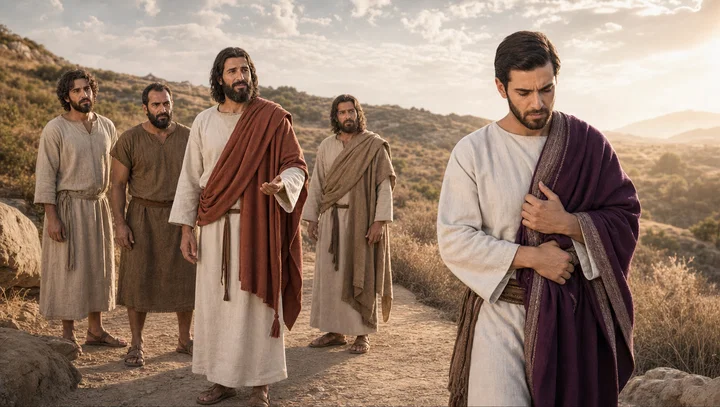

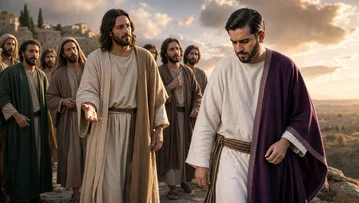
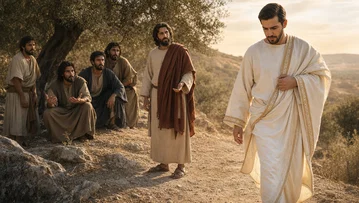
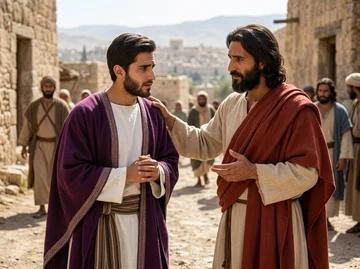
Cross-references 20 of 63
- Luke 18:22-23
Now when Jesus heard these things, he said unto him, Yet lackest thou one thing: sell all that thou hast, and distribute unto the poor, and thou shalt have treasure in heaven: and come, follow me.
The ruler sorrowfully refuses to sell his possessions and follow Jesus.
- Mark 10:21-22
Then Jesus beholding him loved him, and said unto him, One thing thou lackest: go thy way, sell whatsoever thou hast, and give to the poor, and thou shalt have treasure in heaven: and come, take up the cross, and follow me.
Jesus commands the rich ruler to give to the poor and follow him; the man leaves sorrowful.
- Matthew 6:19-21
Lay not up for yourselves treasures upon earth, where moth and rust doth corrupt, and where thieves break through and steal:
Both contrast earthly possessions with heavenly treasure and direct the heart toward lasting riches.
- Matthew 19:17
And he said unto him, Why callest thou me good? there is none good but one, that is, God: but if thou wilt enter into life, keep the commandments.
Jesus first tells the ruler to keep the commandments before calling him to follow.
- Matthew 16:24
Then said Jesus unto his disciples, If any man will come after me, let him deny himself, and take up his cross, and follow me.
Following Christ requires self-denial and taking up the cross.
- 2 Corinthians 8:9
For ye know the grace of our Lord Jesus Christ, that, though he was rich, yet for your sakes he became poor, that ye through his poverty might be rich.
Christ became poor so others might become rich, modeling self-giving generosity.
- Exodus 20:12-17
Honour thy father and thy mother: that thy days may be long upon the land which the LORD thy God giveth thee.
Jesus cites commandments concerning duties to others, including the prohibition against coveting.
- Matthew 19:29
And every one that hath forsaken houses, or brethren, or sisters, or father, or mother, or wife, or children, or lands, for my name’s sake, shall receive an hundredfold, and shall inherit everlasting life.
Those who forsake possessions for Christ receive a hundredfold and inherit everlasting life.
- Matthew 19:16
And, behold, one came and said unto him, Good Master, what good thing shall I do, that I may have eternal life?
The ruler asks how to receive eternal life before Jesus answers.
- Luke 14:33
So likewise, whosoever he be of you that forsaketh not all that he hath, he cannot be my disciple.
Both teach that discipleship requires giving up all one has.
- Matthew 6:24
No man can serve two masters: for either he will hate the one, and love the other; or else he will hold to the one, and despise the other. Ye cannot serve God and mammon.
The ruler’s choice shows that wealth can take the place of service to God.
- Matthew 25:40
And the King shall answer and say unto them, Verily I say unto you, Inasmuch as ye have done it unto one of the least of these my brethren, ye have done it unto me.
Deeds of care for the needy are counted as service to Christ.
- Leviticus 19:18
Thou shalt not avenge, nor bear any grudge against the children of thy people, but thou shalt love thy neighbour as thyself: I am the LORD.
The young man’s refusal to give to the poor showed failure to love his neighbor as himself.
- Mark 10:23-27
And Jesus looked round about, and saith unto his disciples, How hardly shall they that have riches enter into the kingdom of God!
Riches hinder entry into God’s kingdom, but God can save.
- Acts 4:34-35
Neither was there any among them that lacked: for as many as were possessors of lands or houses sold them, and brought the prices of the things that were sold,
Believers sold possessions and shared the proceeds to meet others’ needs.
- Luke 9:23
And he said to them all, If any man will come after me, let him deny himself, and take up his cross daily, and follow me.
Following Jesus requires self-denial and taking up the cross.
- Luke 12:33
Sell that ye have, and give alms; provide yourselves bags which wax not old, a treasure in the heavens that faileth not, where no thief approacheth, neither moth corrupteth.
Jesus teaches selling possessions, giving alms, and storing treasure in heaven.
- Luke 19:8-9
And Zacchæus stood, and said unto the Lord; Behold, Lord, the half of my goods I give to the poor; and if I have taken any thing from any man by false accusation, I restore him fourfold.
Zacchaeus gives to the poor and makes restitution, and Jesus declares salvation has come to his house.
- Luke 12:15
And he said unto them, Take heed, and beware of covetousness: for a man’s life consisteth not in the abundance of the things which he possesseth.
Warns against covetousness and making abundant possessions the basis of life.
- Matthew 6:33
But seek ye first the kingdom of God, and his righteousness; and all these things shall be added unto you.
Both put spiritual priorities before material concerns and trust God to supply needs.
Commentary part 1 of 2
Each commentary is drawn from primary sources: the writings of Ellen G. White and Adventist pioneers and periodicals. Each commentary is separate. Its own words are not a quotation; follow the references to read the source passages.
Ellen G. White
108 sources
Jesus told a sincere, capable young ruler who wanted eternal life and a perfect character that willingness to be perfect meant selling what he owned, giving to the poor to gain treasure in heaven, and leaving all to come follow Him.SG2 239.1–240.1Lt 195, 1903, par. 8–10Lt 354, 1907, par. 13–15Ms 40, 1905, par. 3–5Ms 123, 1908, par. 35–42 To be perfect is to remedy the one defect that mars the whole life by giving God the whole heart in supreme love for Him and love for neighbor as self, not mere outward keeping of the commandments.Ms 40, 1905, par. 3–5Ms 150, 1899, par. 22–27Ms 23, 1885, par. 25–27Lt 3, 1897, par. 2–3DA 519.4 His riches were his idol, loved better than God, fellow men, truth and heavenly treasure, so that supreme love of riches made him fail both love to God and love to neighbor.1T 170.4–171.3Lt 345, 1904, par. 7–11RH May 20, 1862ST Jan 27, 1876SG2 240.2–241.1 Possessions are entrusted by God to be used as faithful stewards for the needy and His work, and selling and giving to relieve suffering transfers earthly treasure into imperishable heavenly treasure.Ms 150, 1899, par. 22–27Ms 43, 1900, par. 45Lt 118, 1897, par. 26–33Lt 118, 1897, par. 21–25Lt 3, 1897, par. 11–13 The same course is required of all who seek a home in God's kingdom, to loosen the heart's hold on earth, deny self, take up the cross and follow in selfless service now, for clinging to wealth when called to sacrifice is choosing earthly over heavenly treasure.1T 170.4–171.3Ms 43, 1900, par. 45Lt 3, 1897, par. 11–13Lt 2, 1857, par. 6–8Ms 150, 1899, par. 31–34
Story and Wording
The saying belongs to Jesus' meeting with a rich young ruler in Israel who came asking what he must do to inherit eternal life.DA 518.1–3SG2 239.1–240.1Lt 195, 1903, par. 8–10 He claimed to have kept the commandments from his youth and asked what he still lacked, earnestly desiring to become Jesus' disciple.Lt 195, 1903, par. 8–10Ms 40, 1905, par. 3–5 He considered himself righteous yet felt he lacked something and wanted his soul satisfied.DA 518.5 In that exchange obedience to God's commandments was set forth as necessary for eternal life, with commandments cited that teach duty to others.DA 518.6
The full account stands in Matthew 19:16-30, paralleled in Mark 10:17-31 and Luke 18:18-30, and leads directly into the parable of the laborers in Matthew 20:1-16.COL 390 The decisive portion is Matthew 19:21-22, where the call to sell, give to the poor, lay up treasure in heaven, and follow is met by sorrowful departure because of great possessions.Lt 2, 1857, par. 6–8 The same span Matthew 19:16-22 shows keeping the commandments did not remove attachment to possessions, with selling, giving, and following named as the one thing still lacking.1T 207.2 Even with eternal life offered as reward, it was hard for the young man with great possessions to turn his affections from earthly wealth.2T 689.1–690.2
The command itself is conditional on willingness to be perfect: go and sell what is owned, give to the poor, receive treasure in heaven, and come and follow Jesus.SG2 239.1–240.1Lt 195, 1903, par. 8–10Lt 354, 1907, par. 13–15Lt 44, 1893, par. 8–9 It was laid as a close, searching test of perfection before a ruler willing to be taught, demanding perfect understanding and full surrender.Ms 40, 1905, par. 3–5 Entering into life and following Jesus were thus joined to definite conditions, and wealth was shown to make entrance into God's kingdom difficult.Lt 354, 1907, par. 13–15Lt 44, 1893, par. 8–9
The ruler was sincere, of pleasing appearance, outward piety, high motives and high capabilities, truly desiring eternal life and a perfect character fitted to live with God.Ms 40, 1905, par. 3–5Ms 123, 1908, par. 35–42STB 572.6–573.2 He was drawn by Christ's compassion for the poor and ignorant and His meekness and lowliness of heart, attracted and charmed by His life and teaching.Ms 40, 1905, par. 3–5STB 572.6–573.2 He was not ignorant of the service owed to God, realized he must work out a perfect character to gain a place in the abodes of bliss, and was fully convinced a place of happiness is prepared for all who in this life obey God's commands.STB 572.6–573.2 He thought himself an honest seeker, fully desiring to be as Christ was and realizing the importance of gaining future eternal life in the world to come as a wonderful reward.STB 572.6–573.2
When tested on possessions he went away sorrowful because he had great possessions and would not accept the call, valuing his riches more than heavenly treasure so that the condition chilled his desire.Lt 354, 1907, par. 13–15SG4 265.5Lt 44, 1893, par. 8–9Lt 2, 1857, par. 6–8 Jesus made His will clear but did not compel him and left him free to obey or refuse.Lt 160, 1899, par. 2–3 The promise of treasure in heaven then prompted Peter to ask what reward he and the disciples would receive for what they had left behind.COL 395.1–2Ms 40, 1905, par. 11–12 That question was used to correct a grasping, mercenary view of reward and to show God's favor is free grace, not earned by human works.COL 390.1
The disciples had fulfilled the condition of forsaking all by leaving their all, which was only a few fishing boats and nets.Ms 40, 1905, par. 11–12 Their sacrifice was not reproached for being little but was accepted like the widow's mite, because it was all they had and was as dear to them as the riches of the wealthy.Ms 40, 1905, par. 11–12 With tenderness and compassion it was promised that those who followed Him will in the regeneration sit with the Son of man on thrones judging the twelve tribes of Israel.Ms 40, 1905, par. 11–12 Everyone who has left houses, family, or lands for His name will receive a hundredfold and inherit everlasting life, though many that are first shall be last and the last first.Ms 40, 1905, par. 11–12
Perfection and Following Christ
To be perfect was to remedy the one great defect that marred the whole life and robbed of eternal life, by giving God the whole heart rather than letting possessions become an idol, with perfect understanding and full surrender.Ms 40, 1905, par. 3–5Lt 3, 1897, par. 2–3Lt 118, 1897, par. 21–25Ms 123, 1908, par. 35–42 The call laid a close, searching test before one willing to be taught, demanding that wealth entrusted for service be put at God's disposal and that love be expressed through care for one's neighbor.Ms 40, 1905, par. 3–5Lt 3, 1897, par. 2–3Lt 118, 1897, par. 21–25 Failure in understanding made the teaching seem too much, and valuing the gift above the Giver exposed a false claim to have kept the commandments, which require the whole person.Ms 40, 1905, par. 3–5Lt 118, 1897, par. 21–25Ms 123, 1908, par. 35–42 Perfection is fulfilling the law by supreme love for God and love for neighbor as self, entering the life and shaping the character, not mere outward conformity.Ms 150, 1899, par. 22–27Ms 23, 1885, par. 25–27DA 523.213MR 21.1–3 The lack was not outward obedience but love for God in the soul as a vital principle, without which the nature becomes corrupted, for self-giving love is what the commandments require.Ms 23, 1885, par. 25–27DA 519.413MR 21.1–3 Attachment to possessions revealed the absence of that love, and using wealth to relieve suffering and lead others to the Saviour would have been faithful stewardship and treasure in heaven.Ms 150, 1899, par. 22–27Ms 23, 1885, par. 25–27DA 523.2
Obedience to Christ's terms was the only hope of salvation and the way to a perfect Christian character.DA 520.2ST Oct 28, 1908ST Oct 28, 1908 Holding back anything from God weakens moral strength and usefulness, and cherished worldly things, however uncertain or unworthy, absorb the heart and if cherished take God's place and corrupt the whole person.DA 520.2ST Oct 28, 1908DA 523.4 Nothing short of obedience is acceptable, for the rule for all who would follow requires complete self-surrender, including giving up possessions when they stand in the way of discipleship.ST Oct 28, 1908DA 523.4 Coming and following meant leaving all — home, property, relationships, wealth, comfort and ease — without hesitation or turning back.Lt 12, 1897, par. 14–16DA 523.2 It meant placing self under Christ's guidance and control, yielding the will, giving Christ all possessed and all that one is, and placing resources and life at His disposal.DA 519.5ST Oct 28, 1908DA 523.2ST Oct 28, 1908
Giving oneself to His service as co-worker would bring growth in His presence, reflection of God's likeness, restoration of God's moral image, and abilities made a power for good among people.Lt 118, 1897, par. 21–25DA 523.2DA 519.3 Following required taking up the cross in self-denial, walking as Jesus walked, sharing His self-denial, and accepting reproach and stigma.RH Jan 12, 1905DA 519.5ST Oct 28, 19082RED 96.2LC1 200.2 Each act of self-denial enriches the giver, brings spiritual riches, and increases joy and immortal reward to come.2RED 96.2LC1 200.2 The offer set before such surrender was God's holiness and the privilege of becoming God's son and co-heir with Christ, received by surrendering self, yielding the will, and turning from ambitious plans.DA 519.5ST Oct 28, 1908
Treasure in heaven is an imperishable, immortal inheritance secure with God, the enduring riches of eternal life, offered on condition of obedience.Lt 118, 1897, par. 26–33Lt 118, 1897, par. 21–25RH Jan 12, 1905 It is gained by using entrusted possessions to relieve physical and spiritual need and by following in selfless service, with whatever nurtures selfishness surrendered for perfection of character.Lt 118, 1897, par. 26–33RH Jan 12, 1905 Christ's own giving up of heaven and becoming poor made it possible to keep the commandments and receive that treasure.Lt 118, 1897, par. 26–33
Wealth as Idol Exposed
Jesus knew exactly where the ruler failed and touched the plague spot of his life by touching his possessions, pointing out his idol and showing that his riches stood in the way of loving God with the whole heart and gaining eternal life.1T 170.4–171.3Lt 345, 1904, par. 7–113MR 66.2–67.2STB 573.3–574.1SG2 240.2–241.1 The command to sell what he had, give to the poor, gain treasure in heaven and follow in self-denial tested where his heart was and whether he would choose Christ and the unseen reward over visible earthly wealth and its temporal advantages.1T 170.4–171.3Lt 345, 1904, par. 7–11Lt 345, 1904, par. 2–6STB 573.3–574.1SG2 240.2–241.1 His refusal proved his weakness and that he was not a true lover of God, for he wanted eternal life but would not make the sacrifice, and by refusing he gave his worship ever after to the world.Lt 345, 1904, par. 7–113MR 66.2–67.2Lt 345, 1904, par. 2–6STB 573.3–574.1 Strict obedience to the letter of the commandments brings eternal life, yet the same sorrowful going away is seen in many who when told their duty to keep the Sabbath are unwilling to lift the cross.3MR 66.2–67.2
Supreme love of riches made it impossible for him to love God with all heart and soul and mind, so he failed the first four commandments containing duty to God.1T 170.4–171.3SG2 240.2–241.1SG2 242.1–3 That same love shut his eyes to the wants of fellow men, so he failed to love his neighbor as himself and failed the last six commandments.1T 170.4–171.3SG2 240.2–241.1SG2 242.1–3 No one who loves riches better than God, better than fellow men and better than truth, with heart set on riches, can have eternal life, and no one can selfishly keep riches and have treasure in heaven too.SG2 242.1–3 With God it is possible for a rich man to enter the kingdom, because truth set home to the heart by the Spirit crowds out the love of riches, since the love of Jesus and riches cannot dwell in the same heart.SG2 242.1–3 When love for God surpasses love for riches the possessor breaks away from riches and transfers affection to God, and love to God and fellow men predominates, so that the first four and the last six are kept in loving the Lord with all heart, soul and mind and loving neighbor as self.SG2 242.1–3
His heart was on his treasure and swallowed up in earthly possessions, loving possessions better than God and better than heavenly treasure.1T 170.4–171.3RH May 20, 1862SG2 240.2–241.1 He loved them better than fellow men and better than truth, with his heart bound to earth, prizing honor and power and standing among people and temporal advantages above Christ.ST Jan 27, 1876ST Oct 28, 1908ST Feb 14, 1878ST Mar 11, 1889SG2 242.1–3 His desire for eternal life was not enough while unwilling to give up to the poor and follow Jesus, for the one thing he lacked was attachment to riches requiring sacrifice.RH May 20, 1862 Selling and giving to the poor would have shown obedience to God's requirements, loosened affections from earthly treasure and followed Christ's example who left riches and glory and became poor that people might be made rich.ST Jan 27, 1876 His sorrow showed he prized the honor and power of wealth more than eternal life, for riches can make generosity harder and lead people to give up the immortal reward rather than part with possessions.ST Jan 27, 1876
He loved God's gifts more than the Giver, valued the gift above the Giver, let the world hold first place in his affections, and by refusing gave his worship ever after to the world.Lt 118, 1897, par. 26–33ST Oct 28, 1908STB 573.3–574.1DA 520.4 His goods were entrusted to be used as a faithful steward for those in need, and he could have honored the Giver by using them as directed to transfer affections to God, share in self-denial and become a co-worker in restoring the moral image.Lt 118, 1897, par. 26–33Lt 118, 1897, par. 21–25 Because the world held first place his claim to keep God's law was false, for a person cannot keep the commandments while putting the world first.ST Oct 28, 1908DA 520.4 Choosing the world over Christ means refusing His offer of eternal life and turning from Him as leader.ST Oct 28, 1908
His lack was not outward obedience but love for God in the heart as a vital principle, without which the nature becomes corrupted.DA 519.4 The command called him to surrender supreme love of self so he could receive God's love, exposing selfishness and covetousness and the failure to live out the commandments when obedience required surrendering what he loved.Lt 63a, 1893, par. 18–21DA 519.4COL 392.1 His self-love was transgression of the law, leaving him out of harmony with heaven and unfit for its kingdom, for keeping the Ten Commandments means complete love with perfection as fulfilling the law and treasure in heaven.COL 392.113MR 21.1–3 The test by the law of righteousness requiring love for neighbor as self exposed that he lacked love for God and others, valued entrusted possessions more than heavenly treasure, could not both keep them selfishly and follow Christ, and lacked the humble contrite heart whose goodness must be found in Christ's perfection.13MR 21.1–3RH Sep 11, 1900DA 519.2
His claim to have kept the commandments from youth was false and self-deceived, for he did not understand their depth and significance, had not done the plain duties they require of supreme love to God and neighbor as self, and had not given God his whole heart.3MR 66.2–67.2ST Oct 29, 1912ST Oct 22, 1894ST Jul 21, 189813MR 21.1–3 Jesus tested the claim by telling him to sell, give to the poor and follow, exposing the difference between outward keeping and a heart fully in harmony with God.COL 391.4–5 His sorrowful departure revealed he did not grasp the depth of God's law and that love of the world left no room for love of God, so he did not receive Christ or believe in Him.ST Oct 22, 1894ST Jul 21, 1898 Those who follow value His words, distinguish truth from error, and let truth change the heart and give new character to life.ST Jul 21, 1898
He wanted eternal life and heavenly treasure but also wanted to keep the temporal advantages of great possessions, wanting both and wanting life without sacrifice.RH May 20, 1862Lt 345, 1904, par. 2–6Ms 123, 1908, par. 35–42STB 573.3–574.1 To exchange seen earthly treasure for unseen heavenly treasure seemed too great a risk, so the condition chilled his desire and he judged the cost too great.SG4 265.5Ms 123, 1908, par. 35–42STB 573.3–574.1 Perfection requires remedying the one great defect that mars the whole life and robs of eternal life by making possessions an idol instead of giving them their proper place.Ms 123, 1908, par. 35–42 He found it difficult to turn affections from earthly wealth even when promised eternal life as reward, valued riches more than heavenly treasure, and by refusing the offer went away sorrowful.RH May 20, 1862SG4 265.5ST Oct 29, 1894
Law Obedience and Stewardship
Obedience to the commandments is necessary for entering life, and salvation has definite conditions that expose whether the law is kept in spirit and truth.Ms 23, 1885, par. 25–27Lt 8, 1895, par. 22–25Lt 44, 1893, par. 8–9DA 518.6 The command to sell, give to the poor, gain treasure in heaven and follow applies the moral law to the heart, exposing attachment to possessions as the defect that proves mere outward keeping false.Ms 23, 1885, par. 25–27Lt 8, 1895, par. 22–25Lt 118, 1897, par. 21–25 Keeping the commandments cannot be separated from surrendering what competes with allegiance, for the ruler honestly thought himself blameless yet loved possessions more than God's service and the lives of others, and went away sorrowful because he would not accept the call.Lt 8, 1895, par. 22–25Lt 44, 1893, par. 8–9Lt 202, 1899, par. 3–4 Those who value earthly things above eternal things risk losing both, and riches can hinder obedience and a clear understanding of truth unless possessions and the desire to act as one pleases give way to complete surrender.Lt 202, 1899, par. 3–4Lt 118, 1897, par. 37–40 The exchange cites commandments teaching duty to others, showing that eternal life is secured only by accepting Christ's conditions including surrender of riches and following Him.DA 518.6Lt 118, 1897, par. 37–40
Faith in Christ's merits does not excuse breaking God's law, for the law must be respected and loved rather than set aside.Ms 1, 1889, par. 35–40 Sin must be seen through the commandment until the law brings its sinfulness home to the conscience, and self must die before spiritual holiness can be known, since outwardly proper conduct and professed belief do not prove a changed heart.RH Sep 11, 1900Ms 150, 1899, par. 28–29 Joined with divine power and clothed with His righteousness believers can obey, finding goodness not in themselves but in Christ's perfection.Ms 1, 1889, par. 35–40DA 519.2 The ruler's claim to have kept the commandments was false because he lacked heart devotion, the humble contrite heart and supreme love for God that the command required.Ms 1, 1889, par. 35–40DA 519.2 Had he honored God by obeying in spirit and truth, the law would have brought his sinful nature to an end and he would have laid hold of eternal life.Ms 150, 1899, par. 28–29
Possessions are not truly one's own but are entrusted by God to be put at His service and used as a faithful steward for those in need of material and spiritual food.Lt 118, 1897, par. 26–33Lt 3, 1897, par. 11–13RH Jan 12, 1905 God's plan is that those given money, houses or lands act as His faithful almoners, relieving suffering, blessing the widow and fatherless, becoming rich in good works, and in that way winning souls to the Saviour.RH Sep 11, 19002T 679.1–680.1 To be perfect means giving God the whole heart rather than letting possessions become an idol, transferring affections to God, sharing in self-denial, and becoming a co-worker in restoring the moral image.Lt 118, 1897, par. 21–25 Placing wealth at Christ's disposal is duty, not special sacrifice beyond what is owed, for God owns all means and talents.Lt 3, 1897, par. 11–13 The promised heavenly treasure is an imperishable, immortal inheritance secure with God, offered on condition of obedience.Lt 118, 1897, par. 26–33Lt 118, 1897, par. 21–25
Selling, giving to the poor, and using wealth to relieve suffering and advance truth transfers earthly treasure into heavenly treasure, loosens affections from earth, and brings greater happiness to the giver while blessing others.ST Jan 27, 18764T 49.3–50.12T 679.1–680.1 No one can selfishly keep riches and have treasure in heaven too, for worldly treasure draws the heart away and riches make generosity harder, leading many to give up the immortal reward rather than part with possessions.ST Jan 27, 18764T 49.3–50.1 The call imitates a self-denying, cross-bearing life and requires valuing heavenly treasure above possessions and putting love for neighbor into action.Ms 150, 1899, par. 22–272T 679.1–680.1 This is the way for rich people to enter the kingdom, surrendering what stands in the way of following, with grace making the difficult course easier, and the same course is required of all who seek the enduring possession of a home in the kingdom.Ms 43, 1900, par. 45
The demand reflects Christ's own example, who left glory, honor, riches and heaven and became poor so that through Him people might become rich, keep the commandments, and receive heavenly treasure.Lt 1a, 1872, par. 13–14Lt 118, 1897, par. 26–33ST Jan 27, 1876 He gave up heaven to make obedience and that treasure possible, yet the ruler refused because his heart was bound to earth, prizing the gift above the Giver and honor, power and standing more than eternal life.Lt 118, 1897, par. 26–33ST Jan 27, 1876RH Jan 12, 1905 His sorrowful refusal showed love of riches outweighing love for others and the heavenly inheritance, choosing earthly wealth over heaven.Lt 1a, 1872, par. 13–142T 679.1–680.1
Not everyone is asked to sell everything or serve in the same way, for some may serve in ministry while others give means to support gospel work, and God accepts different offerings provided each consecrates life and all its interests to His service.PK 221.3 God does not require selling homes that are needed, but calls those with abundance to part willingly with some property according to need, and giving is a privilege that increases treasure for rich and poor alike.Lt 3, 1897, par. 11–13SG2 248.3–249.1 The command did not specify every detail, and the ruler could have sought counsel on how to carry it out in using talents to advance the kingdom and store imperishable treasure.Lt 3, 1897, par. 11–13 If those who have means refuse to respond, others who are willing to sacrifice even their homes may be called in their place.SG2 248.3–249.1
Scripture Links and Warnings
The sorrow of the ruler when told to sell, give to the poor, gain treasure in heaven and follow in self-denial exposed that his great possessions stood in the way of loving God with the whole heart and proved he was not a true lover of God despite claiming to have kept the commandments from his youth.3MR 66.2–67.2Ms 39, 1886, par. 1–3 The same occurs with many who when told their duty to keep the Sabbath go away sorrowful because they are unwilling to lift the cross.3MR 66.2–67.2Ms 39, 1886, par. 1–3 Earthly wealth holds them when duty calls them to give it up, for the young man represents many who see a cross to bear but remain held by earthly treasures, while following means faithfully using what has been entrusted including sharing sacred truth with the world in connection with receiving eternal life.Ms 39, 1886, par. 9–10 His refusal to give up what he loved revealed that he loved possessions more than God and left him unworthy of service in the Master's work.PK 221.1–2 That call to give up and follow expresses the larger call to put God's service first and consecrate life and all its interests in response to Heaven's call, as in the call of Elisha, though not everyone is asked to sell everything or serve in the same way since some may serve in ministry while others give means to support gospel work and God accepts different offerings.PK 221.1–2PK 221.3
Selfishness and covetousness kept the ruler from obeying when obedience required surrendering what he loved, revealing the heart's failure to live out the commandments, and the same selfish, covetous spirit cherished by Judas could have been met by the same call to keep the commandments yet was cherished until it led him to betray Christ.Lt 63a, 1893, par. 18–21 The command to sell, give to the poor and follow presents the great test at the final judgment where love and self-sacrifice reveal character.Ms 58, 1896, par. 20 Following requires denying self and taking up the cross, and the ruler's refusal when tested shows that outwardly proper conduct and professed belief in truth do not prove a changed heart, for God's law must bring the sinfulness of sin home to the conscience and self must die before spiritual holiness can be known.RH Sep 11, 1900 Had he seen his sin through the commandment and honored God by obeying in spirit and truth, the law would have brought his sinful nature to an end and he would have laid hold of eternal life.Ms 150, 1899, par. 28–29
Taking everything owned and following in order to see Jesus means gladly gathering up every possession and treasured trinket and climbing a steep and apparently frail stairway with eyes fixed upward lest dizziness cause a fall, while many others climbing fall before gaining the top.LSEGW 34.3–41T 28.1–29.1 Upon reaching the last step before the door all things brought must be cheerfully laid down, representing complete surrender rather than clinging, and only then can one enter to stand before Jesus.1T 28.1–29.1SG2 18.1–2EW 69.2–6 His beautiful countenance of benevolence and majesty knows every circumstance of life and all inner thoughts and feelings, and removes fear with a touch and smile, filling the heart with happiness, holy reverence, inexpressible love, and the safety and peace of heaven.1T 28.1–29.1
Heavenly treasure is laid up by perfecting Christian character and faithfully doing duty as a channel of light.3MR 69.1–3 Searching the Scriptures, waiting to learn what the Lord says, and imparting true light to others who desire it gives the blessing needed to do duty aright and forms a character whose example stands on the Lord's side.3MR 69.1–3 The young man represents a large class who when duty is brought to bear see a cross to lift but remain held by earthly possessions, which is why few obey God.3MR 69.1–3 Lifting that cross means letting go of earthly treasure, faithfully using entrusted sacred truths and talents to present to the world, keeping light openly on a candlestick so all see fellowship with Christ, and following Him, and in this way eternal life is secured.3MR 69.1–3
Present Call to Sacrifice
The same course laid before the rich ruler is required of all who seek an enduring home in God's kingdom and of all who possess this world's goods.Ms 43, 1900, par. 45Lt 3, 1897, par. 11–13Ms 150, 1899, par. 31–34RH Sep 11, 1900RH Jan 12, 1905 Following Christ means surrendering whatever stands in the way, loosening the heart's hold on possessions, denying self, taking up the cross, turning from earthly aims and cherished plans to heavenly ones, recognizing that possessions and selves belong to God, and following in selfless service.Ms 43, 1900, par. 45Lt 3, 1897, par. 11–13RH Sep 11, 1900RH Jan 12, 1905Ms 43, 1900, par. 47 Grace makes this difficult course easier, and giving to those in need while using talents to advance God's kingdom stores imperishable treasure in heaven, increasing that treasure for rich and poor alike.Ms 43, 1900, par. 45Lt 3, 1897, par. 11–13Ms 43, 1900, par. 47 The command did not specify every detail, for the ruler could have sought Christ's counsel about how to carry it out, and placing wealth at Christ's disposal is duty rather than special sacrifice beyond what is owed, since God owns all earthly goods and gives means and talents.Lt 3, 1897, par. 11–13
The command tests how much higher eternal life is prized than riches and whether truth and eternal life are loved more than earthly wealth.1T 170.4–171.3Lt 2, 1857, par. 6–8SG2 240.2–241.1SG2 242.1–3RH Aug 25, 1874 Jesus touched the ruler's possessions and pointed out his idol, commanding him to sell and give to the poor in order to have treasure in heaven, and his refusal proved his heart was on his treasure and swallowed up in earthly possessions.1T 170.4–171.3SG2 240.2–241.1SG2 242.1–3 His supreme love of riches made it impossible to love God with all heart, soul, and mind, so he failed the first four commandments containing duty to God, and it shut his eyes to the wants of fellow men, so he failed to love his neighbor as himself and failed the last six.1T 170.4–171.3SG2 240.2–241.1SG2 242.1–3 He loved possessions better than God, better than fellow men, better than truth, and better than heavenly treasure, and instead of eagerly laying hold of eternal life by removing the obstacle he went away sorrowful because he had great possessions.1T 170.4–171.3SG2 240.2–241.1SG2 242.1–3RH Aug 25, 1874 Clinging to wealth when called to sacrifice for truth means choosing earthly treasure over treasure in heaven, yielding truth rather than selling and giving to the poor, and risks perishing with that treasure and losing both.Lt 2, 1857, par. 6–8SG2 240.2–241.1SG2 242.1–3 Yet with God it is possible for a rich man to enter the kingdom, because truth set home to the heart by the Spirit crowds out love of riches, since love of Jesus and riches cannot dwell in the same heart, and when love for God surpasses love for riches the possessor breaks away, transfers affection to God, and keeps both tables of the law in loving the Lord fully and loving neighbor as self.SG2 242.1–3
The condition of many Sabbath-keepers is like that young man facing this requirement of going, selling, giving to the poor to have treasure in heaven, and coming to follow Jesus.SG2 239.1–240.1 His sorrow revealed wealth as an idol valued above eternal life, showing generosity to the needy and following Christ matter more than keeping wealth as security, and giving to religious causes alone does not satisfy every claim of duty.1T 482.1–483.1 A person may appear faithful and think himself perfect while still lacking supreme love for God and cherishing something that can shut him out of heaven.1T 482.1–483.1 Keeping the commandments did not remove attachment to possessions, for selling, giving, and following was the one thing still lacking, proving true sacrifice is required and excessive, ungenerous economy can become meanness rather than faithful stewardship.1T 207.2 Jesus gave the ruler a choice to part with possessions and have eternal life as a follower or retain them and lose it, but his riches were of greater value than heavenly treasure so the condition chilled his desire and he went away sorrowful.1T 350.1–2 Those who have treasure in this world and love riches with a miser's grasp cannot love Jesus and have the true riches, and professed followers who make getting earthly treasure their interest and study lose love for heaven and are counted as of the world, for light not cherished becomes darkness.1T 350.1–2
True love for Christ is revealed by action, not admiration or profession.ST Jul 21, 1898RH Sep 25, 1900 The ruler's claim to keep the commandments did not mean he had given God his whole heart, and his claim to love Jesus was tested by the call to sell, give, and follow, which exposed love of wealth as his idol leaving no room for love of God.ST Jul 21, 1898RH Sep 25, 1900 His sorrow showed he clung to riches more than to Christ, and that he did not receive Christ or believe in Him.ST Jul 21, 1898RH Sep 25, 1900 Those who follow Christ value His words, distinguish truth from error, and let truth change the heart and give new character to life.ST Jul 21, 1898
The ruler illustrates people entrusted with wealth who are tested whether they will yield what God entrusted, use means in Christ's service where blessing makes them fruitful, and advance the kingdom rather than glorify self or invest only on their own terms.Ms 150, 1899, par. 31–34RH Sep 11, 1900DA 523.4Ms 43, 1900, par. 46Ms 43, 1900, par. 49 Following Christ requires complete self-surrender and obedience, including giving up possessions when they stand in the way, and this is the rule for all who would follow, not merely a special demand for people in high positions or with great wealth.Ms 150, 1899, par. 31–34DA 523.4 Nothing short of obedience is acceptable, because cherished attachments and selfish indulgence endanger eternal life, corrupt the whole person, and must be cut away, with God's truth removing this besetting sin of selfishness or there is no hope of eternal life.DA 523.4ST Oct 28, 1908Ms 43, 1900, par. 46 When followers return to the Lord what belongs to Him they lay up treasure for the future, and their opportunity to do good is to place resources where God's blessing can make them fruitful rather than investing only on their own terms.ST Oct 28, 1908Ms 43, 1900, par. 49
Following Jesus calls for willingness to give up possessions for the good of others, the needs of God's work, and those lacking spiritual truth, using money for God's work and saving souls rather than tying it up in worldly business.ST2 46.1CET 106.1–2ExVEGW 29.3–30.1Lt 160, 1899, par. 7–9STM2 29.5 Like the young man who went away sorrowful, those who refuse to part with property when the cause calls for it lose the chance to lay up treasure in heaven.ST2 46.1CET 106.1–2ExVEGW 29.3–30.1STM2 29.5 Obedience to selling, giving to the poor, and following leads to treasure in heaven and glorifies God.Lt 160, 1899, par. 7–9 The gift of making such sacrifice is connected with the bread of life, for receiving Christ's life means Christ becomes the life-giving presence within the soul.Lt 354, 1905, par. 27 That same attachment can keep people from supporting those who carry spiritual food to others.STM2 29.5
Those who withhold means when God's work needs them resemble the young man who went away sorrowful.STBk 105.1ST2 46.1STA 104.4–106.14T 219.3CET 164.3 They cling with miser's grasp to earthly goods instead of sacrificing to help carry the saving message to people in need, showing they do not prize heavenly treasure.STBk 105.1ST2 46.1STA 104.4–106.11T 350.1–2 The young man wanted eternal life but would not surrender earthly treasure for Christ and eternal rewards, valuing riches more than that treasure so the demand cooled his desire, and his sorrowful refusal meant choosing wealth over heaven and discipleship and renouncing immortal life for money and power.4T 219.3CET 164.34T 50.2 Love of riches can keep even those who profess to keep God's commandments from surrendering earthly treasure for eternal life.4T 50.2 Worldly cares and riches choke the word, and choosing riches over doing good and over heaven leaves people unprepared and counted as of the world.4T 219.34T 50.21T 350.1–2
Sacrifice must be made now, for a coming destruction and overflowing scourge will sweep earthly possessions away and then it will be forever too late to sacrifice them and lay up treasure in heaven.STBk 105.1ST2 46.1ExVEGW 29.3–30.1STM2 30.1STA 104.4–106.1 Delaying sacrifice until earthly goods are lost leaves it too late to gain heavenly treasure, and when judgment comes and possessions are swept away the opportunity is gone.CET 106.1–2ExVEGW 29.3–30.1STM2 30.1 Earthly goods may soon be swept away, so they should be freely given now to help carry saving truth to people in need.STBk 105.1STA 104.4–106.1
Joyfully giving up earthly treasures, bearing the cross despite reproach and stigma, enriches the giver, brings spiritual riches, increases joy and immortal reward in the kingdom of glory, and includes the joy of seeing souls saved.2RED 96.2LC1 200.2ST Oct 28, 1908ST Apr 12, 1883ST Mar 18, 1875 Bearing the cross and enduring reproach may bring suffering now, but each act of self-denial enriches the giver and increases the joy and immortal reward to come.2RED 96.2LC1 200.2 Bearing Christ's cross is the way to life and exaltation, and self-denial and suffering for His name bring spiritual riches.LC1 200.2ST Mar 18, 1875 Following Jesus requires using possessions for God's glory and becoming rich in good works rather than treating wealth as one's own or trusting in it.ST Nov 5, 1894
Sources