1 Kings 1:15
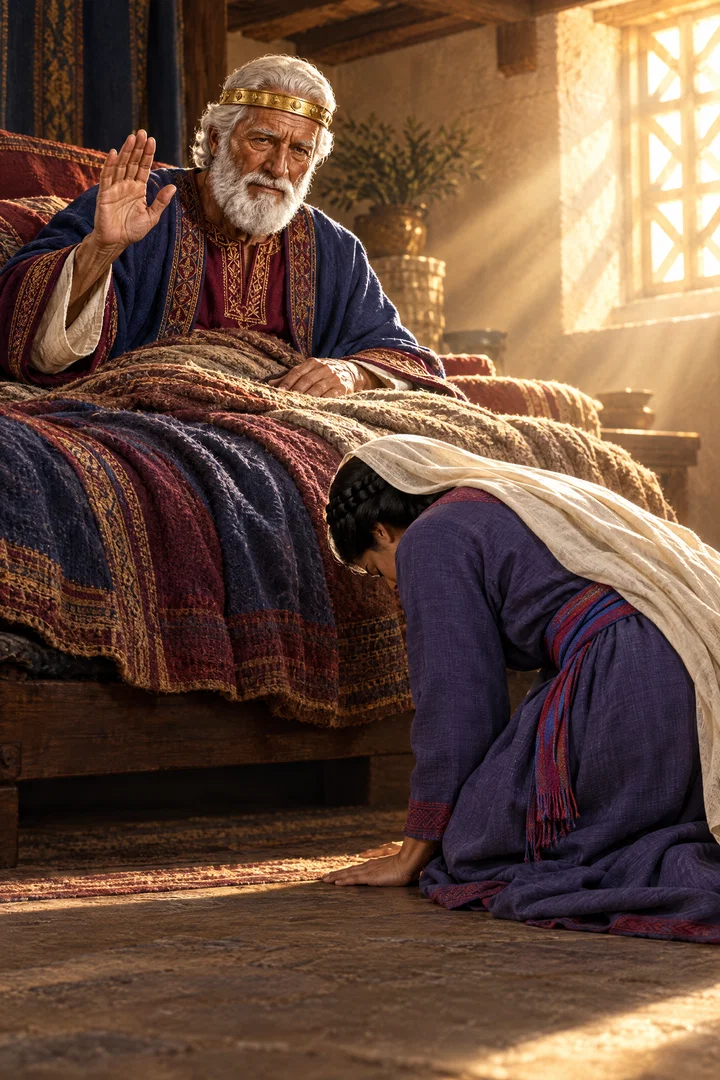
And Bath-sheba went in unto the king into the chamber: and the king was very old; and Abishag the Shunammite ministered unto the king.
Translations
And Bathsheba went in to the king into the chamber: and the king was very old; and Abishag the Shunammite ministered to the king.
King James Version, KJV Cambridge Paragraph Bible, Revised Version
And Bath-sheba went in unto the king into the chamber: and the king was very old; and Abishag the Shunammite ministered unto the king.
And Bath-sheba went to the king into the chamber: and the king was very old; and Abishag the Shunamite ministered to the king.
And Bath-sheba went in unto the king into the chamber: and the king was very old; and Abishag the Shunammite was ministering unto the king.
And Bath-Sheba cometh in unto the king, to the inner chamber, and the king [is] very aged, and Abishag the Shunammite is serving the king:
And Bathsheba went in to the king into the chamber; and the king was very old; and Abishag the Shunammite ministered to the king.
So Bath-sheba went in unto the king, into the chamber, now, the king, was very old,—and Abishag the Shunammite, was ministering unto the king.
Berean Standard Bible, Majority Standard Bible
So Bathsheba went to see the king in his bedroom. Since the king was very old, Abishag the Shunammite was serving him.
Bathsheba went in to the king in his room. The king was very old; and Abishag the Shunammite was serving the king.
Then Bath-sheba went into the king's room; now the king was very old, and Abishag the Shunammite was waiting on him.
So Bath-sheba went in vnto the King into the chamber, and the King was verie olde, and Abishag the Shunammite ministred vnto ye King.
Douay-Rheims (Challoner revision)
So Bethsabee went in to the king into the chamber: now the king was very old, and Abisag the Sunamitess ministered to him.
Pictures
Cross-references
- 1 Kings 1:32-40
And king David said, Call me Zadok the priest, and Nathan the prophet, and Benaiah the son of Jehoiada. And they came before the king.
David orders Solomon’s anointing and public proclamation as king.
- 2 Samuel 11
And it came to pass, after the year was expired, at the time when kings go forth to battle, that David sent Joab, and his servants with him, and all Israel; and they destroyed the children of Ammon, and besieged Rabbah. But David tarried still at Jerusalem.
David’s transgression involving Uriah is later repaid in Adonijah’s episode.
- 1 Kings 1:5-10
Then Adonijah the son of Haggith exalted himself, saying, I will be king: and he prepared him chariots and horsemen, and fifty men to run before him.
Adonijah’s bid for the throne prompts intervention in the succession crisis.
- 1 Kings 2:13-25
And Adonijah the son of Haggith came to Bath-sheba the mother of Solomon. And she said, Comest thou peaceably? And he said, Peaceably.
Adonijah’s failed plot ends in his death.
- 2 Samuel 12:11
Thus saith the LORD, Behold, I will raise up evil against thee out of thine own house, and I will take thy wives before thine eyes, and give them unto thy neighbour, and he shall lie with thy wives in the sight of this sun.
David’s household judgment foreshadows the later succession crisis.
Commentary
Each commentary is drawn from primary sources: the writings of Ellen G. White and Adventist pioneers and periodicals. Each commentary is separate. Its own words are not a quotation; follow the references to read the source passages.
Ellen G. White
1 source
Bath-sheba entered into the inner chamber to stand before the king, who was very old, while Abishag the Shunammite was in attendance ministering to him.PP 749.1–2 The scene reflects David in his great age and weakened condition, no longer vigorous but dependent on care within his own apartment.PP 749.1–2 Bath-sheba came on this occasion to inform him that Adonijah was seeking to take the throne and to remind him of his pledge that Solomon was to succeed him as king.PP 749.1–2
Sources
Pioneers and periodicals
8 sources
The verse opens 1 Kings in the last days of David before Solomon is called to the throne and enters upon his reign, while David though old and infirm is still reigning until Solomon is established.ST Dec 9, 1897ST May 13, 1913 It depicts Bath-sheba going in unto the very old king in his chamber, with Abishag the Shunammite ministering to him at the time of her visit.ST Apr 29, 1908ST Nov 5, 1885ST Nov 18, 1903RH Apr 26, 1870 The setting is a struggle over who would succeed David, for Adonijah, another son moved by unholy ambition, was asserting a claim to the throne and seeking to take it by taking advantage of David's old age and feebleness without David's knowledge, while David had selected Solomon under divine direction.ST Apr 29, 1908RH Jul 27, 1869ST Nov 5, 1885ST Nov 18, 1903
Nathan the prophet, knowing the Lord's will and the king's mind, acted prudently and wisely to secure the succession and defeat Adonijah's plan.ST Apr 29, 1908ST Dec 9, 1897RH Jul 27, 1869 He did not approach the king directly but used Bath-sheba as the means to bring David the news.ST Apr 29, 1908ST Nov 5, 1885 Joab failed in loyalty to his king by joining Adonijah.ST Apr 29, 1908 Adonijah's attempted seizure threatened the lives of David and Solomon, but it was thwarted and overthrown through Nathan's wisdom and interference, and Solomon was crowned king and entered upon his reign instead.ST Apr 29, 1908ST Dec 9, 1897RH Jul 27, 1869
Afterward Adonijah was overthrown and slain, Joab was slain, and Shimei, who had cursed David, was also put to death for failing to abide by the conditions of his life.ST Apr 29, 1908RH Jul 27, 1869 This trouble belongs to the subsequent history that fulfills Nathan's prophetic denunciation and warning after David's transgression involving Uriah, that violence and judgments would remain in David's house.RH Jul 27, 1869RH Oct 12, 1869RH Apr 26, 1870 Adonijah's rebellion and death continue the retribution David received through all the rest of his life for his wicked conduct toward Uriah, which came principally in his own family in the sad history of Amnon and Tamar and in the rebellion and unnatural crimes of Absalom; it proves that the wrongdoer receives back in kind for the wrongs committed and that sin never pays.RH Apr 26, 1870
Sources