1 Kings 1:16
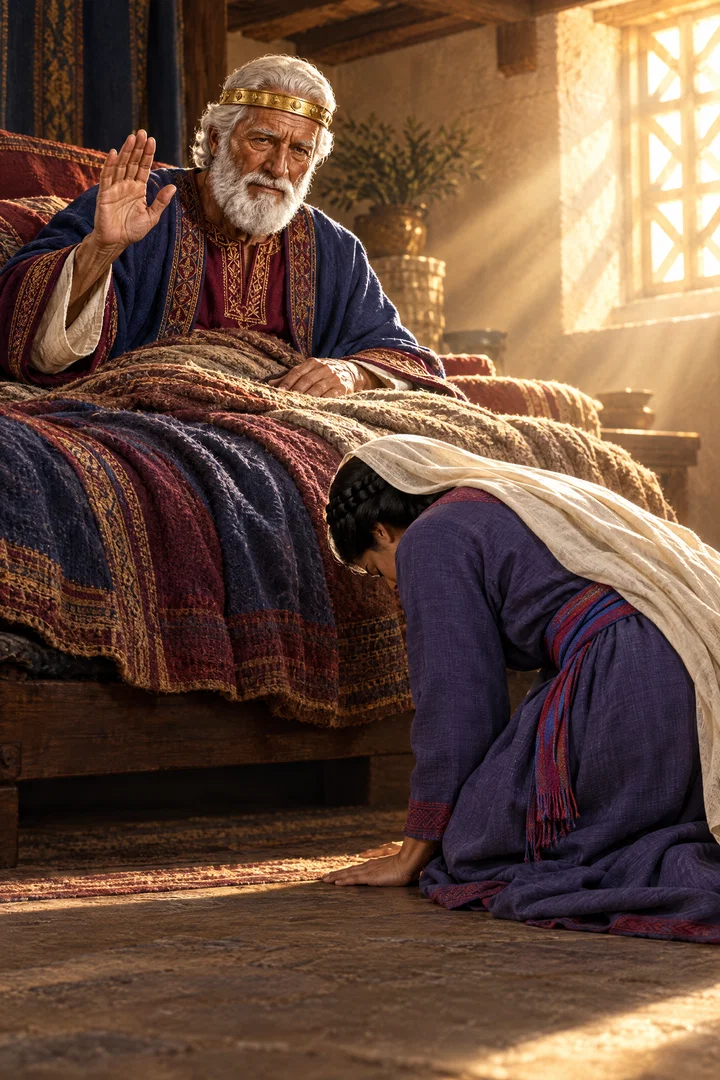
And Bath-sheba bowed, and did obeisance unto the king. And the king said, What wouldest thou?
Translations
And Bathsheba bowed, and did obeisance to the king. And the king said, What would you?
King James Version, KJV Cambridge Paragraph Bible, Revised Version, American Standard Version
And Bath-sheba bowed, and did obeisance unto the king. And the king said, What wouldest thou?
And Bath-sheba bowed, and did obeisance to the king. And the king said, What wouldst thou?
and Bath-Sheba boweth and doth obeisance to the king, and the king saith, 'What — to thee?'
And Bathsheba bowed and did obeisance to the king. And the king said, What wouldest thou?
And Bath-sheba bowed, and did homage unto the king,—and the king said—What aileth thee?
Berean Standard Bible, Majority Standard Bible
And Bathsheba bowed down in homage to the king, who asked, “ What is your desire?”
Bathsheba bowed and showed respect to the king. The king said, “ What would you like?”
And Bath-sheba went down on her face on the earth before the king giving him honour. And he said, What is your desire?
And Bath-sheba bowed and made obeisance vnto the King. And the King saide, What is thy matter?
Douay-Rheims (Challoner revision)
Bethsabee bowed herself, and worshipped the king. And the king said to her: What is thy will?
Pictures
Cross-references
- 2 Samuel 11
And it came to pass, after the year was expired, at the time when kings go forth to battle, that David sent Joab, and his servants with him, and all Israel; and they destroyed the children of Ammon, and besieged Rabbah. But David tarried still at Jerusalem.
David’s transgression leads to consequences and family retribution.
- 1 Kings 1:28-31
Then king David answered and said, Call me Bath-sheba. And she came into the king’s presence, and stood before the king.
David confirms Solomon as his successor in response to Bath-sheba.
- 1 Kings 2:13-25
And Adonijah the son of Haggith came to Bath-sheba the mother of Solomon. And she said, Comest thou peaceably? And he said, Peaceably.
Adonijah’s failed bid for the throne ends in his death.
- 2 Samuel 12:10
Now therefore the sword shall never depart from thine house; because thou hast despised me, and hast taken the wife of Uriah the Hittite to be thy wife.
Nathan’s warning of the sword in David’s house is fulfilled by later family troubles.
Commentary
Each commentary is drawn from primary sources: the writings of Ellen G. White and Adventist pioneers and periodicals. Each commentary is separate. Its own words are not a quotation; follow the references to read the source passages.
Ellen G. White
1 source
Bath-sheba bowed and paid respect to King David before asking him to act.PP 749.1–2 David answered her bow by asking what she wanted.PP 749.1–2 This was a formal audience between the king and Bath-sheba amid the succession crisis over Solomon.PP 749.1–2
Sources
Pioneers and periodicals
10 sources
The verse stands in the opening of 1 Kings, which covers the last days of David when Solomon is called to the throne and enters upon his reign.ST May 13, 1913 It belongs to the history of the undivided kingdom under Solomon covered in 1 Kings 1-11.RH May 11, 1916
The verse belongs to the story of Adonijah's unholy ambition to seize the throne by taking advantage of David's old age and infirmity.ST Apr 29, 1908RH Jul 27, 1869 The attempt was made while David was infirm and did not know of it.ST Nov 5, 1885ST Nov 18, 1903 David had selected Solomon, Bathsheba's son, as his successor under divine direction.ST Nov 18, 1903 Nathan the prophet, knowing the Lord's will and the king's mind, interfered with Adonijah's plan and brought his actions to the king's attention, while Joab failed in loyalty to his king.ST Apr 29, 1908ST Nov 18, 1903 By Nathan's prudence the throne was secured for Solomon despite Adonijah's attempt.ST Apr 29, 1908ST Dec 9, 1897
The verse shows Bath-sheba entering before David and bowing in deference to him with the respect required in the royal court and presenting her petition.ST Sep 17, 1896ST Nov 5, 1885 David asks what she wishes.ST Sep 17, 1896 Her access to the secluded king lets her bring him news of Adonijah's claim to the throne, which he does not know about, and plead Solomon's case.ST Nov 5, 1885 In keeping with court custom she later leaves when Nathan is called.ST Sep 17, 1896
Through this intervention Solomon is crowned king.ST Apr 29, 1908 Adonijah is then overthrown and slain for his failed plot, and Joab is slain and Shimei, who cursed David, is also put to death for failing to abide by the conditions of his life.ST Apr 29, 1908 The verse is thus included in the account of David's later history, which shows the judgments that followed his transgression and the fulfillment of Nathan's denunciation and warning that the sword would not depart from his house.RH Jul 27, 1869RH Oct 12, 1869 Adonijah's failed plot and overthrow and death are further troubles in David's family fulfilling that warning.RH Jul 27, 1869 The rebellion and death of Adonijah is retribution in kind for David's wicked conduct toward Uriah.RH Apr 26, 1870 That retribution followed David through all the rest of his life and came principally in his own family in Amnon and Tamar and in the rebellion and crimes of Absalom and in Adonijah, showing that the very kind of evil a man causes others comes back upon himself and that doing wrong never pays.RH Apr 26, 1870
Sources