1 Kings 1:20
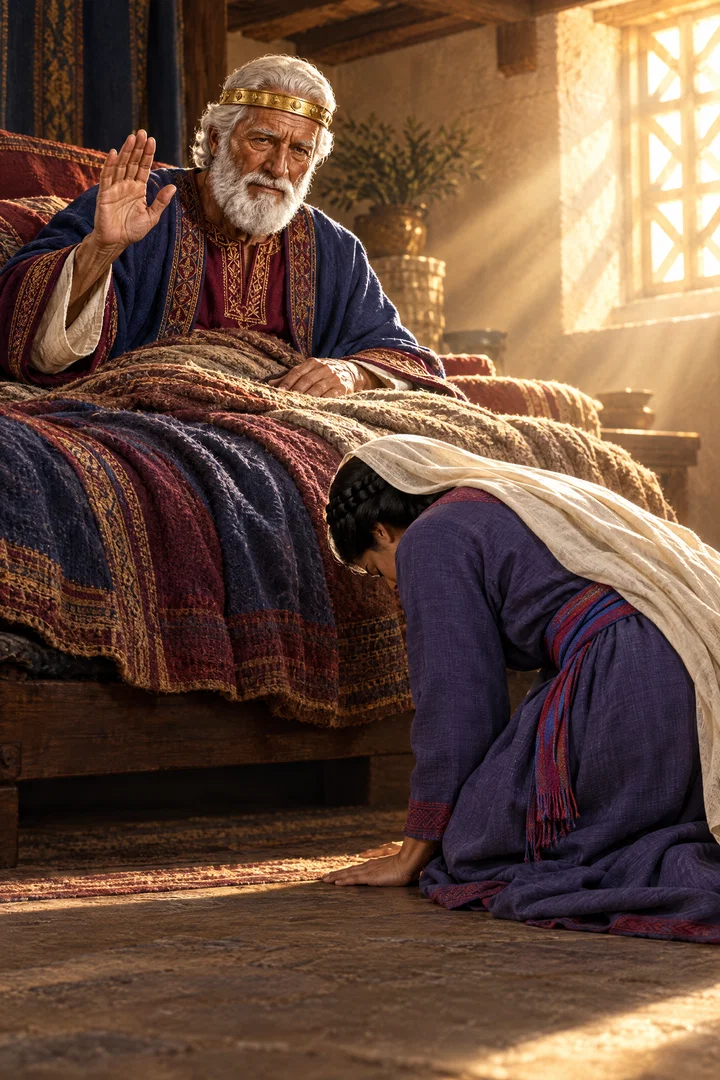
And thou, my lord, O king, the eyes of all Israel are upon thee, that thou shouldest tell them who shall sit on the throne of my lord the king after him.
Translations
And you, my lord, O king, the eyes of all Israel are on you, that you should tell them who shall sit on the throne of my lord the king after him.
And thou, my lord, O king, the eyes of all Israel are upon thee, that thou shouldest tell them who shall sit on the throne of my lord the king after him.
And thou, my lord O king, the eyes of all Israel are upon thee, that thou shouldest tell them who shall sit on the throne of my lord the king after him.
And thou, my lord, O king, the eyes of all Israel are upon thee, that thou shouldst tell them who shall sit on the throne of my lord the king after him.
Revised Version, American Standard Version, Darby Translation
And thou, my lord the king, the eyes of all Israel are upon thee, that thou shouldest tell them who shall sit on the throne of my lord the king after him.
And thou, my lord, O king, the eyes of all Israel [are] on thee, to declare to them who doth sit on the throne of my lord the king after him;
Thou, therefore, my lord, O king, the eyes of all Israel, are upon thee,—to tell them, who shall sit upon the throne of my lord the king, after him.
Berean Standard Bible, Majority Standard Bible
And as for you, my lord the king, the eyes of all Israel are upon you to tell them who will sit on the throne of my lord the king after him.
You, my lord the king, the eyes of all Israel are on you, that you should tell them who will sit on the throne of my lord the king after him.
And now, my lord the king, the eyes of all Israel are on you, waiting for you to say who is to take the place of my lord the king after him.
And thou, my lorde, O King, knowest that the eyes of all Israel are on thee, that thou shouldest tell them, who shoulde sit on the throne of my lord the King after him.
Douay-Rheims (Challoner revision)
And now, my lord O king, the eyes of all Israel are upon thee, that thou shouldst tell them, who shall sit on thy throne, my lord the king, after thee.
Pictures
Cross-references
- 1 Kings 1:30
Even as I sware unto thee by the LORD God of Israel, saying, Assuredly Solomon thy son shall reign after me, and he shall sit upon my throne in my stead; even so will I certainly do this day.
David confirms Solomon as his successor.
- 1 Kings 1:11-14
Wherefore Nathan spake unto Bath-sheba the mother of Solomon, saying, Hast thou not heard that Adonijah the son of Haggith doth reign, and David our lord knoweth it not?
Nathan sends Bath-sheba to alert David and plead for Solomon.
- 1 Kings 1:39
And Zadok the priest took an horn of oil out of the tabernacle, and anointed Solomon. And they blew the trumpet; and all the people said, God save king Solomon.
Solomon is anointed and proclaimed king as David directs.
- 1 Kings 1:5-10
Then Adonijah the son of Haggith exalted himself, saying, I will be king: and he prepared him chariots and horsemen, and fifty men to run before him.
Adonijah’s attempt to take the throne creates the succession crisis.
- 1 Kings 2
Now the days of David drew nigh that he should die; and he charged Solomon his son, saying,
Continues the account of David’s final days and succession.
- 2 Samuel 12:10-12
Now therefore the sword shall never depart from thine house; because thou hast despised me, and hast taken the wife of Uriah the Hittite to be thy wife.
Nathan’s judgment against David’s house unfolds in the succession crisis.
Commentary
Each commentary is drawn from primary sources: the writings of Ellen G. White and Adventist pioneers and periodicals. Each commentary is separate. Its own words are not a quotation; follow the references to read the source passages.
Ellen G. White
1 source
The nation faced a crisis over who would follow David on the throne, and the eyes of all Israel were fixed on the aging king for a decisive declaration.PP 749.1–2 The expectation was that he himself must name the successor who would sit on the throne after him.PP 749.1–2 David answered that expectation by confirming Solomon as the next king.PP 749.1–2 That choice was not merely David's preference, for Solomon was the one whom God had appointed to succeed him.PP 749.1–2
Sources
Pioneers and periodicals
10 sources
The eyes of all Israel were upon David to publicly tell who should sit on the throne after him, because the nation needed the king himself to name his successor.ST Apr 29, 1908ST Dec 9, 1897ST Nov 18, 1903 The succession was disputed, with Adonijah asserting a claim to the throne, while David had selected Solomon under divine direction.ST Nov 18, 1903 The verse stands in the opening of 1 Kings in the last days of David, when Solomon is called to the throne and enters upon his reign.ST May 13, 1913 It falls within the account of the undivided kingdom under Solomon.RH May 11, 1916
The attempted seizure of the throne by Adonijah took place in David's old age and feebleness while David was unaware.RH Jul 27, 1869ST Nov 5, 1885 In that crisis Nathan's prudence and wisdom secured Solomon's accession and helped defeat Adonijah's attempt.ST Dec 9, 1897RH Jul 27, 1869ST Dec 9, 1897 Nathan did not approach David directly but worked through Bath-sheba, urging her to plead Solomon's case before the king.ST Nov 5, 1885 The attempted coup threatened David and Solomon, but Adonijah's plot ended in his own overthrow and death.RH Jul 27, 1869
The episode fulfilled Nathan's words that the sword would never depart from David's house.RH Jul 27, 1869 The verse belongs to the record of David's later history, which shows the fulfillment of Nathan's prophetic denunciation through the judgments that came upon David after his sin concerning Uriah.RH Oct 12, 1869 Even Adonijah's rebellion and death are counted among that retribution and its consequences.RH Apr 26, 1870
Sources