1 Samuel 13:21
Yet they had a file for the mattocks, and for the coulters, and for the forks, and for the axes, and to sharpen the goads.
Translations
American King James Version, King James Version, KJV Cambridge Paragraph Bible
Yet they had a file for the mattocks, and for the coulters, and for the forks, and for the axes, and to sharpen the goads.
Yet they had a file for the mattocks, and for the colters, and for the forks, and for the axes, and to sharpen the goads.
yet they had a file for the mattocks, and for the coulters, and for the forks, and for the axes; and to set the goads.
yet they had a file for the mattocks, and for the coulters, and for the forks, and for the axes, and to set the goads.
and there hath been the file for mattocks, and for coulters, and for three-pronged rakes, and for the axes, and to set up the goads.
when the edges of the sickles, and the hoes, and the forks, and the axes were blunted; and to set the goads.
Howbeit they had a file for the sickles, and the mattocks, and the three-pronged forks, and the axes,—and for setting the goads.
Berean Standard Bible, Majority Standard Bible
The charge was a pim for sharpening a plowshare or mattock, a third of a shekel for sharpening a pitchfork or an axe, and a third of a shekel for repointing an oxgoad.
The price was one payim each to sharpen mattocks, plowshares, pitchforks, axes, and goads.
For they had instruments for putting an edge on their ploughs and blades and forks and axes, and for putting iron points on their ox-driving rods.
Yet they had a file for the shares, and for the mattockes, and for the picke forkes, and for the axes, and for to sharpen the goades.
Douay-Rheims (Challoner revision)
So that their shares, and their spades, and their forks, and their axes were blunt, even to the goad, which was to be mended.
Pictures
Commentary
Each commentary is drawn from primary sources: the writings of Ellen G. White and Adventist pioneers and periodicals. Each commentary is separate. Its own words are not a quotation; follow the references to read the source passages.
Ellen G. White
1 source
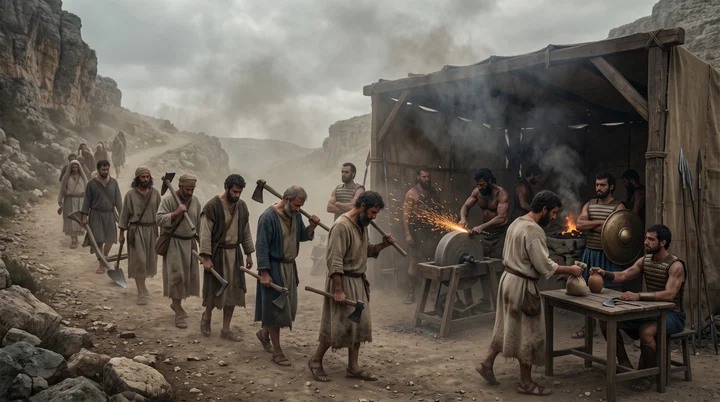
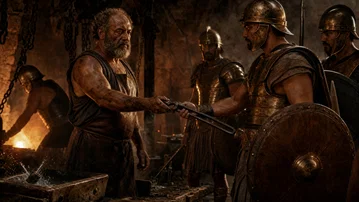
Israel stood in a condition of extreme military weakness under Philistine domination.ST Aug 10, 1882 The people possessed no proper armory and were forced to keep their mattocks, plowshares, forks, axes, and cattle goads serviceable with only a file for sharpening.ST Aug 10, 1882 That meager provision for maintaining even agricultural implements meant they entered any conflict with the Philistines almost entirely unarmed.ST Aug 10, 1882
Sources
Pioneers and periodicals
4 sources
The mattocks and coulters and forks and axes had grown blunt, and even the goads used for driving animals needed sharpening.ST Aug 3, 1882ST Aug 10, 1882ST Jul 15, 1889 For such sharpening of farm tools the people had only a file.ST Aug 3, 1882ST Aug 10, 1882ST Jul 15, 1889 The Philistines had kept the smithing trade in their own hands and would not allow the Israelites to make implements that could become weapons, so Israel depended on Philistine garrisons for that work.ST Aug 3, 1882ST Jul 15, 1889 This poor equipment was the result of lack of foresight and energy during the long period of peace.ST Aug 3, 1882
By Saul's accession Israel had no weapons of war and was left almost unarmed and lacking proper equipment against the Philistines.ST Aug 10, 1882ST Jul 15, 1889 The people remained under Philistine domination and control.ST Jul 15, 1889 The verse stands in the history of the beginning of Saul's reign, a time marked by rashness and weakness that led to the rejection of Saul and his family and the anointing of David, within the larger history from Eli to the old age of David.ST Mar 31, 1909
Sources