1 Samuel 13:5
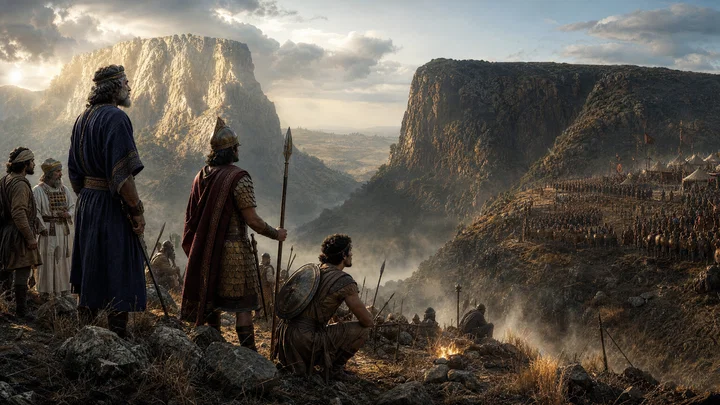
And the Philistines gathered themselves together to fight with Israel, thirty thousand chariots, and six thousand horsemen, and people as the sand which is on the sea shore in multitude: and they came up, and pitched in Michmash, eastward from Beth-aven.
Translations
And the Philistines gathered themselves together to fight with Israel, thirty thousand chariots, and six thousand horsemen, and people as the sand which is on the sea shore in multitude: and they came up, and pitched in Michmash, eastward from Bethaven.
King James Version, KJV Cambridge Paragraph Bible
And the Philistines gathered themselves together to fight with Israel, thirty thousand chariots, and six thousand horsemen, and people as the sand which is on the sea shore in multitude: and they came up, and pitched in Michmash, eastward from Beth-aven.
And the Philistines assembled to fight with Israel, thirty thousand chariots, and six thousand horsemen, and people as the sand which is on the sea shore in multitude: and they came up, and encamped in Michmash, eastward from Beth-aven.
And the Philistines assembled themselves together to fight with Israel, thirty thousand chariots, and six thousand horsemen, and people as the sand which is on the sea shore in multitude: and they came up, and pitched in Michmash, eastward of Beth-aven.
And the Philistines assembled themselves together to fight with Israel, thirty thousand chariots, and six thousand horsemen, and people as the sand which is on the sea-shore in multitude: and they came up, and encamped in Michmash, eastward of Beth-aven.
And the Philistines have been gathered to fight with Israel; thirty thousand chariots, and six thousand horsemen, and a people as the sand which [is] on the sea-shore for multitude; and they come up and encamp in Michmash, east of Beth-Aven.
And the Philistines were assembled together to fight with Israel, thirty thousand chariots, and six thousand horsemen, and people as the sand which is on the sea-shore in multitude; and they came up, and encamped in Michmash, eastward from Beth-Aven.
And, the Philistines, gathered themselves together to fight with Israel, thirty thousand chariots, and six thousand horsemen, a people also like the sand that is on the sea-shore for multitude,—and they came up, and encamped in Michmash, east of Beth-aven.
Berean Standard Bible, Majority Standard Bible
Now the Philistines assembled to fight against Israel with three thousand chariots, six thousand horsemen, and troops as numerous as the sand on the seashore. They went up and camped at Michmash, east of Beth-aven.
The Philistines assembled themselves together to fight with Israel: thirty thousand chariots, six thousand horsemen, and people as the sand which is on the seashore in multitude. They came up and encamped in Michmash, eastward of Beth Aven.
And the Philistines came together to make war on Israel, three thousand war-carriages and six thousand horsemen and an army of people like the sands of the sea in number: they came up and took up their position in Michmash, to the east of Beth-aven.
The Philistims also gathered themselues together to fight with Israel, thirty thousand charets, and sixe thousande horsemen: for the people was like the sand which is by the seas side in multitude, and came vp, and pitched in Michmash Eastward from Beth-auen.
Douay-Rheims (Challoner revision)
The Philistines also were assembled to fight against Israel, thirty thousand chariots, and six thousand horsemen, and a multitude of people besides, like the sand on the sea shore for number. And going up they camped in Machmas at the east of Bethaven.
Pictures
Cross-references
- 1 Samuel 14:6-14
And Jonathan said to the young man that bare his armour, Come, and let us go over unto the garrison of these uncircumcised: it may be that the LORD will work for us: for there is no restraint to the LORD to save by many or by few.
Jonathan attacks the Philistine camp at Michmash despite the disparity in forces.
- 1 Samuel 13:9-14
And Saul said, Bring hither a burnt offering to me, and peace offerings. And he offered the burnt offering.
Saul’s unlawful sacrifice leads to the loss of his kingdom.
- 1 Samuel 10:8
And thou shalt go down before me to Gilgal; and, behold, I will come down unto thee, to offer burnt offerings, and to sacrifice sacrifices of peace offerings: seven days shalt thou tarry, till I come to thee, and shew thee what thou shalt do.
Saul is ordered to wait seven days until Samuel arrives.
Commentary
Each commentary is drawn from primary sources: the writings of Ellen G. White and Adventist pioneers and periodicals. Each commentary is separate. Its own words are not a quotation; follow the references to read the source passages.
Ellen G. White
4 sources
The Philistines pitched at Michmash, eastward from Beth-aven and north of a deep valley opposite Israel's stronghold at Geba, with thirty thousand chariots, described as iron chariots, six thousand horsemen, and people as numerous as the sand on the seashore.Lt 16, 1897, par. 25–34PP 616.3–617.1ST Aug 10, 1882 Against that vast, well-drilled force stood only Saul's small company at Gilgal, almost unarmed and unprepared.Lt 16, 1897, par. 25–34PP 616.3–617.1ST Aug 10, 1882
The overwhelming outward appearance put Israel in a strait and terrified the people.Lt 16, 1897, par. 25–34PP 616.3–617.1ST Aug 10, 1882 Many hid in caves and thickets and rocks and high places and pits, some fled across the Jordan to Gad and Gilead, and those who remained scattered from Saul and followed him trembling in fear of the coming battle.Lt 16, 1897, par. 25–34PP 618.2–621.2PP 616.3–617.1 God permitted the crisis as a sore trial to test Saul and Israel, to reveal Saul's heart and expose his perversity, and to teach Israel humility and faith.Lt 16, 1897, par. 25–34ST Aug 10, 1882
The distress was the setting for Saul's test of waiting only a few hours for Samuel, to reveal whether he would look to God and obey orders from heaven instead of looking at outward appearances, becoming fearful and impatient and forcing himself into sacred office by offering the sacrifice himself.Lt 16, 1897, par. 25–34PP 618.2–621.2 Saul cited the Philistine presence as his reason for fear and impatience, but that military threat did not excuse his disobedience.PP 618.2–621.2
Sources
Pioneers and periodicals
4 sources
The verse stands in the account of the choosing of Saul and the beginning of his reign, in the midst of the Philistines' war against Israel and the severe conditions they imposed on the people, with the chapter also recording Saul's rash action.ST Mar 31, 1909 The Philistines assembled at Michmash to fight Israel in overwhelming force, thirty thousand chariots, described as iron chariots, and six thousand horsemen, with people as the sand on the seashore in multitude, a vast, well-drilled army.ST Aug 3, 1882ST Aug 10, 1882 Their encampment at Michmash lay north of a deep valley from the Israelite stronghold at Geba.ST Aug 10, 1882
Against that force stood Israel's small company, poorly armed and almost defenseless, and the numbers and military strength of the Philistines filled the Israelites with terror, dismay, and fear.ST Aug 3, 1882ST Aug 10, 1882 The chapter records Saul's first great test after his choosing as king, in which his rash and weak action failed, and God allowed the crisis to expose Saul's perversity and to teach Israel humility and faith.ST Aug 10, 1882ST Mar 31, 1909ST Oct 31, 1895 Saul's rashness and weakness led to the Lord's rejection of Saul and his family and to the anointing of David.ST Mar 31, 1909
That failure did not then cut Saul himself off from being king, for God gave him further trial and opportunity to retrieve his individual character.ST Oct 31, 1895
Sources