1 Samuel 15:22
And Samuel said, Hath the LORD as great delight in burnt offerings and sacrifices, as in obeying the voice of the LORD? Behold, to obey is better than sacrifice, and to hearken than the fat of rams.
Translations
And Samuel said, Has the LORD as great delight in burnt offerings and sacrifices, as in obeying the voice of the LORD? Behold, to obey is better than sacrifice, and to listen than the fat of rams.
King James Version, Revised Version
And Samuel said, Hath the LORD as great delight in burnt offerings and sacrifices, as in obeying the voice of the LORD? Behold, to obey is better than sacrifice, and to hearken than the fat of rams.
And Samuel said,
Hath the Lord as great delight in burnt offerings and sacrifices,
As in obeying the voice of the Lord?
Behold, to obey is better than sacrifice,
And to hearken than the fat of rams.And Samuel said, Hath the LORD as great delight in burnt-offerings and sacrifices, as in obeying the voice of the LORD? Behold, to obey is better than sacrifice, and to hearken than the fat of rams.
And Samuel said, Hath Jehovah as great delight in burnt-offerings and sacrifices, as in obeying the voice of Jehovah? Behold, to obey is better than sacrifice, and to hearken than the fat of rams.
And Samuel saith, 'Hath Jehovah had delight in burnt-offerings and sacrifices as [in] hearkening to the voice of Jehovah? lo, hearkening than sacrifice is better; to give attention than fat of rams;
And Samuel said, Has Jehovah delight in burnt-offerings and sacrifices, As in hearkening to the voice of Jehovah? Behold, obedience is better than sacrifice, Attention than the fat of rams.
Then said Samuel—Doth that which is pleasing unto Yahweh consist in ascending-offerings and sacrifices, So much as in hearkening unto the voice of Yahweh? Lo! to hearken, is, better, than, sacrifice. And, to give heed, than, the fat of rams;
Berean Standard Bible, Majority Standard Bible
But Samuel declared:
“ Does the LORD delight in burnt offerings and sacrifices
as much as in obedience to His voice?
Behold, obedience is better than sacrifice,
and attentiveness is better than the fat of rams.Samuel said, “ Has the LORD as great delight in burnt offerings and sacrifices, as in obeying the LORD’s voice? Behold, to obey is better than sacrifice, and to listen than the fat of rams.
And Samuel said, Has the Lord as much delight in offerings and burned offerings as in the doing of his orders? Truly, to do his pleasure is better than to make offerings, and to give ear to him than the fat of sheep.
And Samuel saide, Hath the Lord as great pleasure in burnt offerings and sacrifices, as when the voyce of the Lord is obeyed? beholde, to obey is better then sacrifice, and to hearken is better then the fatte of rammes.
Douay-Rheims (Challoner revision)
And Samuel said: Doth the Lord desire holocausts and victims, and not rather that the voice of the Lord should be obeyed? For obedience is better than sacrifices: and to hearken rather than to offer the fat of rams.
Pictures
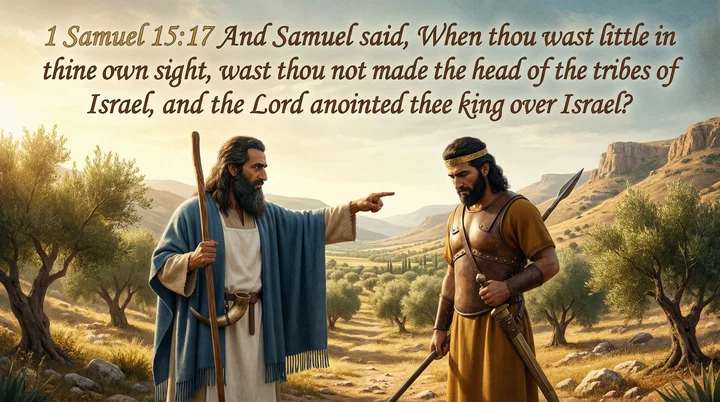
Cross-references 20 of 118
- 1 Samuel 15:3
Now go and smite Amalek, and utterly destroy all that they have, and spare them not; but slay both man and woman, infant and suckling, ox and sheep, camel and ass.
God commanded Saul to destroy Amalek and all that belonged to it.
- Matthew 7:21
Not every one that saith unto me, Lord, Lord, shall enter into the kingdom of heaven; but he that doeth the will of my Father which is in heaven.
Doing the Father’s will, rather than religious claims, marks those who enter the kingdom.
- Isaiah 1:11-17
To what purpose is the multitude of your sacrifices unto me? saith the LORD: I am full of the burnt offerings of rams, and the fat of fed beasts; and I delight not in the blood of bullocks, or of lambs, or of he goats.
Both reject multiplied sacrifices when people disregard God and fail to do right.
- John 14:15
If ye love me, keep my commandments.
Both link devotion to God with obeying his commands.
- 1 Samuel 15:15
And Saul said, They have brought them from the Amalekites: for the people spared the best of the sheep and of the oxen, to sacrifice unto the LORD thy God; and the rest we have utterly destroyed.
Saul excuses disobedience by saying the spared animals were for sacrifice.
- Micah 6:8
He hath shewed thee, O man, what is good; and what doth the LORD require of thee, but to do justly, and to love mercy, and to walk humbly with thy God?
Both teach that offerings cannot replace doing what God requires.
- Matthew 15:3-9
But he answered and said unto them, Why do ye also transgress the commandment of God by your tradition?
Human traditions set aside God’s commands, making worship vain instead of obedient.
- Proverbs 28:9
He that turneth away his ear from hearing the law, even his prayer shall be abomination.
Turning from God’s law makes even prayer an abomination.
- 1 Samuel 15:9
But Saul and the people spared Agag, and the best of the sheep, and of the oxen, and of the fatlings, and the lambs, and all that was good, and would not utterly destroy them: but every thing that was vile and refuse, that they destroyed utterly.
Saul spares Agag and the best animals.
- Jeremiah 6:19-20
Hear, O earth: behold, I will bring evil upon this people, even the fruit of their thoughts, because they have not hearkened unto my words, nor to my law, but rejected it.
Offerings are unacceptable when the people reject God’s law and refuse to obey.
- Luke 6:46
And why call ye me, Lord, Lord, and do not the things which I say?
Both reject calling the Lord so without obeying what he says.
- Leviticus 10:1-2
And Nadab and Abihu, the sons of Aaron, took either of them his censer, and put fire therein, and put incense thereon, and offered strange fire before the LORD, which he commanded them not.
Nadab and Abihu were punished with death for disobeying God’s instructions in worship.
- Revelation 14:12
Here is the patience of the saints: here are they that keep the commandments of God, and the faith of Jesus.
Keeping God’s commandments and faith in Jesus express faithful obedience.
- Psalms 40:6-8
Sacrifice and offering thou didst not desire; mine ears hast thou opened: burnt offering and sin offering hast thou not required.
Contrasts sacrifice with obedience and delight in doing God’s will.
- Hebrews 5:9
And being made perfect, he became the author of eternal salvation unto all them that obey him;
Christ is the source of salvation for those who obey him.
- 1 Samuel 15:26
And Samuel said unto Saul, I will not return with thee: for thou hast rejected the word of the LORD, and the LORD hath rejected thee from being king over Israel.
Saul is rejected as king for rejecting the LORD’s word.
- Isaiah 1:19
If ye be willing and obedient, ye shall eat the good of the land:
Promises good to those who are willing and obedient.
- Mark 12:33
And to love him with all the heart, and with all the understanding, and with all the soul, and with all the strength, and to love his neighbour as himself, is more than all whole burnt offerings and sacrifices.
Love of God and neighbor outweighs burnt offerings and sacrifices.
- John 15:14
Ye are my friends, if ye do whatsoever I command you.
Both make obedience to God’s commands the test of loyalty and belonging.
- Ecclesiastes 12:13
Let us hear the conclusion of the whole matter: Fear God, and keep his commandments: for this is the whole duty of man.
Both make obeying God’s commandments humanity’s duty.
Commentary
Each commentary is drawn from primary sources: the writings of Ellen G. White and Adventist pioneers and periodicals. Each commentary is separate. Its own words are not a quotation; follow the references to read the source passages.
Ellen G. White
80 sources
To obey God's voice delights Him more than burnt offerings and sacrifices, even the most costly, and His word is the supreme authority to be obeyed without question.ST Feb 14, 1911ST Jan 9, 1896Lt 12, 1910, par. 8–9 It was spoken to Saul after he was commanded to utterly destroy the Amalekites, yet he spared the best sheep, oxen and cattle on the plea of reserving them for sacrifice, following his own judgment instead of God's express direction.ST Feb 14, 1911ST Jan 9, 1896Ms 26, 1886, par. 23–26 No sacrifice, religious act, or pious purpose can make disobedience acceptable, cover transgression, or make up for rejecting an express command.ST Feb 14, 1911ST Jan 9, 1896SG4 75.1–5 What is required is full, willing, wholehearted obedience with undivided affections, in small as well as great matters, not partial compliance or excuses.Lt 47a, 1895, par. 8ST Feb 19, 1902ST May 11, 1876 Animal offerings were appointed only to remind sinners that sin brings death and to point forward to the sinless Saviour, and they are acceptable only when they express repentance, faith in Christ, love, and a pledge of future obedience.SG4 75.1–51SP 365.2–3ST Sep 14, 18822T 651.3–652.13T 57.2
Saul's Disobedience and Rejection
Samuel spoke the words to Saul after the command to utterly destroy the Amalekites had come through Samuel, giving Saul a direct test of fidelity to prove whether he would carry out God's word.ST Jan 9, 189610MR 92.4–93.1PP 627.3Lt 10, 1873, par. 23–26 The word of the Lord was to be obeyed without question as supreme authority, and delight in obeying His voice outweighs delight in burnt offerings and sacrifices.ST Jan 9, 189610MR 92.4–93.1 A religious offering or apparent benefit cannot justify disobeying an express command, quiet the conscience, or cover transgression, so keeping cattle and sheep for burnt sacrifice did not count as keeping the command.ST Jan 9, 189610MR 92.4–93.1
Saul departed from the express command by sparing the best sheep, oxen and cattle, keeping them on the plea that they were reserved for sacrifice to God.ST Feb 14, 1911ST Jan 9, 1896Ms 26, 1886, par. 23–26Ms 1a, 1890, par. 31–331SP 362.3–363.4 He followed his own judgment, reasoning and course instead of God's direction, and no claim of pious purpose made that choice acceptable.Ms 26, 1886, par. 23–26Ms 1a, 1890, par. 31–331SP 362.3–363.4SG4 73.3–74.4 A sacrifice offered after rejecting God's word cannot make up for refusing to obey, replace heeding His command, or excuse failure to obey fully.ST Feb 14, 19111SP 362.3–363.4SG4 73.3–74.44T 146.2–4ST Jul 17, 1884
When confronted Saul insisted he had performed the commandment and denied disobedience, though his words contradicted that denial.ST Jan 9, 1896Lt 46, 1891, par. 12–15Ms 7, 1886, par. 10–114T 146.2–4 He then shifted blame to the people for sparing the animals to sacrifice, while the bleating of sheep and lowing of oxen gave unmistakable proof that he had not obeyed.ST Jan 9, 1896PP 630.4–631.2 Hearkening requires obedience rather than excuses or partial compliance, and choosing one's own course while claiming to have obeyed rejects God's word and brings consequences.Lt 46, 1891, par. 12–15Ms 7, 1886, par. 10–114T 146.2–4ST Jul 17, 1884PP 630.4–631.2
His course was a pattern of refusing to confess even when facts were clear, persisting in his own way, rejecting reproof and correction, and revealing pride, self-justification and placing his own will above God's.15MR 172.1–173.1Lt 28a, 1893, par. 1–3Ms 11, 1888, par. 1–21SP 365.4–366.1Lt 13, 1892, par. 8–10 Claiming to have obeyed while refusing to confess was not true submission, and stubbornly resisting correction leads to further sin unless transforming grace works daily in the soul.Lt 46, 1891, par. 12–1515MR 172.1–173.1Ms 11, 1888, par. 1–2 Insistence on one's own way instead of heeding counsel and reproof is disobedience rather than acceptable service, and humility before God is the safeguard against trusting one's own judgment.Lt 46, 1891, par. 12–15ST Sep 14, 1882Lt 13, 1892, par. 8–10
Rejecting God's word brought Saul's rejection as king, loss of honor, ruin, and finally death in dishonor and despair.Ms 26, 1886, par. 23–26Ms 1a, 1890, par. 31–33Lt 13, 1892, par. 8–10Ms 151, 1899, par. 4 He did not make obedience his first concern or let heaven's principles govern his conduct, disregarded an express command and acted presumptuously despite instruction that his rule required strict integrity.Ms 151, 1899, par. 4Lt 12a, 1888, par. 12–13 His disobedience set a ruinous example for Israel, displeased God, and cost him his right to the kingdom, warning those in responsibility especially not to pursue their own plans while refusing the Lord's counsel but to examine themselves, seek the Lord, and accept correction rather than rely on their own wisdom.7T 284.4Lt 12a, 1888, par. 12–13Lt 12a, 1888, par. 14
The next verse explains the sentence: rebellion is as witchcraft and sorcery and stubbornness is as iniquity and idolatry, so willful resistance insults divine authority and shares the spirit of sorcery.Ms 26, 1886, par. 23–26Ms 1a, 1890, par. 31–33Lt 4, 1889, par. 52–54ST Sep 14, 18821T 322.1–2 Stubborn resistance to God's light through pride is rebellion, and stubborn disobedience brings condemnation proportionate to the light and instruction received.Lt 4, 1889, par. 52–54Lt 56, 1892, par. 6–7 Outward consecration or religious appearance without careful attention to God's word gives no secure foundation.1T 322.1–2
Saul's excuse-making contrasts with David, who acknowledged guilt with remorse and sincere grief, showing that honestly facing sin rather than excusing it marks the difference between their responses.SG4 86.2–87.1
Obedience Outweighs Ritual Sacrifice
To obey the voice of the Lord and to hearken to Him gives God greater delight than burnt offerings and sacrifices, even the costly fat of rams.ST Feb 14, 1911ST Jan 9, 1896Lt 12, 1910, par. 8–9Lt 82, 1895, par. 264T 146.2–4 His word is the supreme authority in life and is to be obeyed without question.ST Jan 9, 1896PP 627.3 Sacrifice cannot make up for refusing to obey, excuse disobedience, or substitute for obedient worship.ST Feb 14, 1911Lt 12, 1910, par. 8–9Lt 82, 1895, par. 264T 146.2–4 Saul's plea that he had spared the best sheep and oxen of the Amalekites to sacrifice did not excuse his departure from the express command, and the bleating of sheep and lowing of oxen stood as unmistakable proof that he had not performed the commandment while he claimed he had and shifted blame to the people.ST Jan 9, 18964T 146.2–4
Hearkening means full, willing, wholehearted and entire obedience with undivided affections, and God accepts nothing short of it, for outward service alone is not enough to attain holiness.Lt 47a, 1895, par. 8ST May 11, 1876ST Jul 17, 18842T 237.1 It rejects partial compliance, excuses, and choosing one's own course instead of carrying out the explicit command.ST May 11, 18764T 146.2–4ST Jul 17, 1884 In the smallest as well as the largest affairs of life the first question is what God's will is, and His will is to be followed.ST Feb 19, 19026MR 383.1–2 The Christian life consists in acting on conviction and consecrating the soul to God in willing and doing what He calls for, ridding life of selfishness, covetousness and impurity, yielding to Christ's training, submitting human will and way to His will and way, and making life one with His life, which gains treasure enduring to eternal life.Lt 47a, 1895, par. 8ST Feb 19, 1902 True religion is actual imitation of Christ, and God keeps a personal account with every person, testing each by the practical results of his work.ST Feb 19, 1902
No sacrifice, religious act, apparent benefit, or pious purpose can make disobedience acceptable, quiet the conscience, cover disobedience to an express command, or make transgression acceptable.ST Feb 14, 1911ST Jan 9, 1896Ms 1a, 1890, par. 31–33Ms 7, 1886, par. 10–1110MR 92.4–93.1 To offer as sacrifice what God commanded to be destroyed, and to present religious acts as an excuse for disobedience, does not make disobedience acceptable, for to obey would have been better than making provision for sacrifices for sin.SG4 75.1–5Ms 1a, 1890, par. 31–33Ms 7, 1886, par. 10–11 Keeping some of the best cattle and sheep for burnt sacrifice when everything was commanded to be destroyed did not count as keeping the command, and a religious offering or an apparent benefit cannot justify disobeying God.Ms 1a, 1890, par. 31–33Ms 7, 1886, par. 10–1110MR 92.4–93.1 Offering sacrifice while rejecting God's word is rebellion, and stubbornness is like idolatry, bringing God's rejection, the scattering of means gained by violating His law, punishment for persistent disregard of given light, and judgment upon those who knowingly persist in transgression.ST Jan 9, 1896Ms 1a, 1890, par. 31–33Ms 7, 1886, par. 10–1110MR 92.4–93.1 Using His cause to cover sin makes the wrong worse, for God did not need spoil from a people under His curse, since all the riches of the earth and its cattle already belong to Him.SG4 75.1–5
Required ceremonies cannot replace a life of obedience, and cold forms cannot erase sins for which there is no true repentance.ST Mar 21, 18783SP 22.1ST Mar 28, 1878 Burnt offerings and sacrifices do not please God when the giver's spirit is wrong or when they are multiplied as heartless service to conciliate Him in place of humble repentance and obedient service.4T 84.2–33SP 22.1DA 589.1–590.2ST Mar 28, 1878 No amount of money or religious acts can buy God's blessing or guarantee victory, and impressive achievements cannot secure them apart from faithfully doing the work God gives, removing character defects, and cooperating with others even when their work is imperfect so the work can be united.Lt 12, 1910, par. 8–94T 84.2–3 The sacrifice God requires is yielding oneself and submitting one's will to His will.4T 84.2–3 Animal offerings meant to point to Christ cannot honor God when turned into means of gain and empty ritual, and multiplying sacrifices while persisting in selfishness dishonors Him and obscures their meaning.DA 589.1–590.2
Purpose and Limits of Sacrifices
Animal offerings were appointed to remind sinners that sin brings death.SG4 75.1–51SP 365.2–3 The blood of an innocent victim could atone for guilt only by pointing forward to the greater sacrifice to come.SG4 75.1–51SP 365.2–3 That greater sacrifice is the holy, sinless Saviour as a lamb without blemish.SG4 75.1–51SP 365.2–3DA 607.3–608.2
To be acceptable a sacrifice must express recognition of guilt, humble repentance for breaking God's law, and faith in Christ whose death removes guilt.ST Sep 14, 1882PP 634.3DA 607.3–608.2 It must also express pure and unselfish love and pledge future obedience to God's law.2T 651.3–652.13T 57.2PP 634.3ST Jun 11, 1894 Without penitence, faith and an obedient heart it is worthless, and mere outward shedding of blood for sin without inward piety has no value.ST Sep 14, 1882PP 634.3DA 607.3–608.2 Offerings are accepted only as sacrifices of grateful obedience showing that all a person has and is belongs to God.2T 651.3–652.1ST Jun 11, 1894
God did not need spoil from a people under His curse as an offering.SG4 75.1–51SP 365.2–3 All the riches of the earth and its cattle already belong to Him, for He is the Owner of all things.SG4 75.1–515MR 355.2–356.1Lt 23, 1885, par. 26–29 Without obedience and pure love even the richest and most expensive offering is too poor to present to Him.2T 651.3–652.13T 57.2ST Jun 11, 189415MR 355.2–356.1Lt 23, 1885, par. 26–29
Sacrifices become displeasing when multiplied as heartless service to conciliate God in place of humble repentance and obedient service.3SP 22.1DA 589.1–590.2ST Mar 28, 1878 They show contempt for divine authority when treated as meritorious in themselves, used instead of true service, or exalted above what they symbolize.ST Sep 14, 1882PP 634.3 Religious ceremonies cannot be accepted when people persist in willfully violating God's commands.DA 589.1–590.2PP 634.3 So it was when priests turned the sacrifices meant to point to Christ into means of gain and empty ritual, multiplying sacrifices while persisting in selfishness.3SP 22.1DA 589.1–590.2
Law Sabbath and Judgment
God's gracious requirement has always been perfect obedience to His law, and the gospel does not abolish or weaken that requirement or permit continued rebellion.Lt 85, 1886, par. 22–23 The law calls for righteousness, but it can accomplish its purpose only as understood in relation to Christ, through whom faith brings both pardon and power to obey.Lt 85, 1886, par. 22–23DA 607.3–608.2
In the judgment professed Christians who claim faith in Jesus while trampling on His law and transgressing it will be called to account.Lt 85, 1886, par. 22–23 Christ's righteousness is imputed only to the obedient who accept it by faith and do not dishonor God.Lt 85, 1886, par. 22–23
The verse condemns substituting human authority for God's word in the Sabbath command, for the seventh-day Sabbath is God's command established at creation and placed in the Decalogue, so keeping a substitute day is not obedience to Him.ST Sep 14, 1882 Religious zeal and human rules cannot justify disobeying God's command or replacing the seventh-day Sabbath with Sunday.RH Jun 4, 1901 Keeping Sunday in honor of the resurrection without any command from God, or sweeping away the Ten Commandments as nailed to the cross with the ceremonial law of types and sacrifices while professing to honor the Son, is disobedience that pours contempt on His law.ST Jan 9, 1896 He has given His law and promised blessing to those who keep His commandments, especially the fourth commandment to keep the Sabbath as a memorial of creation.ST Jan 9, 1896
That substitution repeats Cain's course of bringing an offering according to his own ideas instead of God's express direction, in contrast to Abel's obedience to God's direction.ST Jan 9, 1896 Those who obey like Abel will receive from the disobedient treatment like Abel received from Cain.ST Jan 9, 1896 Satan's aim is to have people follow his will instead of God's, and disregard for God's Sabbath is connected with idolatry, atheism, and infidelity.ST Sep 14, 1882
Offerings of slain beasts are no longer required, but obedience remains required of all reasoning creatures because God is loving and must uphold justice.Ms 175, 1903, par. 9 A religious offering or an apparent benefit cannot justify disobeying God, as Saul's keeping of the best cattle and sheep to offer as burnt sacrifice though God had commanded that everything be destroyed did not count as keeping the command.Ms 7, 1886, par. 10–1110MR 92.4–93.1 Means gained by violating God's law will be scattered, and persistent disregard of given light brings punishment.Ms 7, 1886, par. 10–11 Stubborn disobedience brings condemnation proportionate to the light and instruction a person has received, and those who knowingly persist in transgression face God's judgment.10MR 92.4–93.1Lt 56, 1892, par. 6–7
Living Out Willing Obedience
To obey is to humbly surrender the will and way to God, yielding self, repenting, letting self die in thought and word and deed, making truth part of the heart and obeying in every area of life.Lt 46, 1891, par. 12–15Lt 20, 1891, par. 3–4Lt 1, 1865, par. 2–3Lt 13, 1892, par. 8–10 Humility before God is the safeguard against trusting one's own judgment and defending a wrong course against His word, for insisting on one's own way instead of heeding counsel and reproof is disobedience, not acceptable service.Lt 46, 1891, par. 12–15Lt 13, 1892, par. 8–10 Such stubborn refusal to yield must be overcome, and those who humbly follow His guidance gain heavenly joy, enduring treasure, and everlasting life.Lt 20, 1891, par. 3–4Lt 1, 1865, par. 2–3Lt 13, 1892, par. 8–10
Obedience means following the light God has given rather than choosing only what is agreeable or convenient, and disobeying when obedience is difficult is still disobedience.TCBMP 147.23T 116.1 It requires stopping judgment of others, first confessing personal faults, humbling self, removing one's own character defects, and examining self by God's law instead of demanding confessions from neighbors.Lt 4, 1889, par. 52–54Lt 18, 1862, par. 22–23TCBMP 147.2 Stubborn resistance to light through pride is rebellion, and willing obedience is the remedy.Lt 4, 1889, par. 52–54
Waiting for the Lord's direction before acting belongs to obedience, moving only when His will is known rather than acting hastily or following human plans.Lt 40, 1902, par. 7–9Lt 85, 1902, par. 3Lt 184, 1901, par. 16–19 Such waiting and submitting teach trust and confidence and build wisdom and experience.Lt 40, 1902, par. 7–9Lt 85, 1902, par. 3 In every matter the first question is what God wills, setting aside personal preference to do the work He appoints even when trying or costly.Lt 22, 1899, par. 4–5 Neglecting that appointed duty and substituting one's own course brings loss and delay to the work, as Israel's insubordination did, and the consequences must not be blamed on God.Lt 184, 1901, par. 16–1920MR 312.7–313.1
Children and youth are to learn willing obedience as the true expression of reverence, for nothing God commands is unessential.RH Oct 5, 1911CT 110.4–111.1 This is taught by gentle, persistent effort from an early age, and good behavior is to be practiced in every family.Ms 7, 1904, par. 28–32CT 110.4–111.16MR 354.2–4 Where parents cannot provide the discipline and government that require obedience, children should be placed where obedience will be required.Ms 7, 1904, par. 28–326MR 354.2–4
In God's work each person must faithfully do the work appointed, loosen hold on the world, give self and bear responsibilities in service, for the sacrifice God requires is yielding oneself and submitting the will to His will.Lt 12, 1910, par. 8–94T 84.2–3Lt 33, 1868, par. 5–6TCBMP 77.2–3 No amount of money or religious acts can buy God's blessing or guarantee victory, and even the richest offerings are too meager without obedient, unselfish love.Lt 12, 1910, par. 8–94T 84.2–3TCBMP 77.2–3 Workers are to remove character defects and cooperate with others even when their work is imperfect, so the work can be united, and simple earnest efforts to help others are acceptable to God.Lt 12, 1910, par. 8–9Lt 66, 1902, par. 14–15Lt 19, 1910, par. 1–4
Jesus does not require self-imposed sacrifice and anxious exhaustion, but obedient, thoughtful, calm and wise labor and calm trust in Him as Savior.20MR 133.6Lt 7, 1885, par. 3–4Lt 39, 1887, par. 8–10 Ministers are not asked to weary and confuse hearers with unnecessarily long discourses that exhaust themselves.20MR 133.6Lt 39, 1887, par. 8–10 They are to teach with judgment, giving truth in portions people can understand and absorb.Lt 39, 1887, par. 8–10
Acceptance with God depends on fearing to offend Him and obeying Him, not on religious standing, position of responsibility, impressive achievements, or outward religious observance.7T 284.4CE 226.3–227.114MR 99.1 Self-government under God's authority is the first law of His kingdom, and placing one's own will above God's denies Him. An impetuous spirit not trained from youth to submit to God cherishes disregard that is not easily reversed, and Saul's refusal of counsel while pursuing his own plans warns that all, especially those in responsibility, need self-examination and seeking the Lord rather than relying on their own wisdom.7T 284.4CE 226.3–227.1
True religion is actual imitation of Christ, ridding life of all selfishness, covetousness and impurity, yielding to His training, submitting human will and way to His will and way, and making life one with His life.ST Feb 19, 1902 God keeps a personal account with every person, testing each by the practical results of work, and this course gains treasure that endures to eternal life.ST Feb 19, 1902
Outward consecration or religious appearance without careful attention to God's word gives no secure foundation, for conduct reveals whether profession is true obedience.STSE 116.2–117.11T 322.1–2 Claiming to have obeyed while the evidence proves otherwise, professing loyalty yet disregarding His voice and justifying disobedience, or claiming a right heart while neglecting and disobeying important truths, has not heeded the call to hearken.STSE 116.2–117.11T 322.1–2 Receiving a message as from heaven requires diligent obedience and earnest effort to undo harm already done.Lt 13, 1862, par. 5–6
Sources
Pioneers and periodicals
103 sources
Samuel confronted Saul after he spared Agag and the best livestock when commanded to utterly destroy Amalek, and declared that obeying the voice of the Lord is better and more pleasing to Him than burnt offerings and sacrifices and the fat of rams.ST Aug 31, 1882ST Jan 9, 1896RH Dec 9, 1915RH Mar 23, 1916ST Dec 12, 1895 God delights more in obeying and hearkening to what He commands than in bringing offerings, even costly ones, and no good intention, human reasoning or religious pretense can take its place.ST Feb 14, 1911RH Dec 1, 1868ST Nov 4, 1880 He requires implicit, exact, prompt and complete obedience to the particular thing He requires, without deviation even for a supposed good purpose, and partial obedience that spares part or chooses which commands to keep is disobedience from a disloyal heart.ST Jul 22, 1886ST Jul 13, 1915RH Oct 8, 1861ST Sep 9, 1886RH Sep 16, 1915 Sacrifices in themselves have no virtue to remove sin or give acceptance, and find favor only as they express repentance, faith in Christ whom they foreshadow, and grateful obedience, while an offering made from disobedience or exalted above obedience is displeasing.ST Sep 9, 1875ST May 5, 1914RH Jul 25, 1854 Rebellion is as witchcraft and stubbornness as idolatry, rejecting the word of the Lord, and because Saul rejected His word the Lord rejected him from being king, while obedience remains the highest worship, the test of love and loyalty, and the way of life.ST Aug 31, 1882RH Dec 9, 1915ST Aug 12, 1889ST Jan 25, 1899RH Nov 18, 1909
Setting and Wording
Samuel spoke the words to King Saul after Saul had been commissioned to smite Amalek and utterly destroy all people and livestock without sparing.RH Dec 9, 1915ST Jul 13, 1915ST Sep 9, 1886ST Sep 20, 1883 The commission was judgment because Amalek had hindered Israel in the desert wanderings, smiting the feeble, faint and weary at Rephidim after Egypt, because the cup of their iniquity was full, and God's judgments and requirements are righteous and infallible.ST Jul 13, 1915ST Sep 9, 1886STST Apr 23, 1902 In Israel's theocracy the people acted through prophet or priest as executors of God's will, and He assumed responsibility for the command.ST
Saul disobeyed by sparing Agag king of the Amalekites alive and sparing the best sheep, oxen, fatlings, lambs and all that was good, destroying only what was vile and refuse.ST Aug 31, 1882ST Jan 9, 1896RH Dec 9, 1915ST Oct 31, 1895RH Nov 18, 1909 He claimed he had performed the commandment and excused the sparing as keeping animals to sacrifice to God, shifted blame to the people, and said he feared and obeyed their voice.ST Aug 31, 1882ST Jan 9, 1896RH Dec 9, 1915ST Oct 31, 1895RH Nov 18, 1909 He acted from short-sighted reasoning, ambition, covetousness and selfishness that a great offering would show allegiance better than uselessly slaying animals.ST Aug 31, 1882RH Dec 9, 1915ST Jul 13, 1915
Samuel's question asks whether the Lord has as great delight in burnt offerings and sacrifices as in obeying the voice of the Lord, declaring that to obey is better than sacrifice and to hearken than the fat of rams.RH Dec 9, 1915ST Jul 13, 1915RH Mar 23, 1916ST Oct 31, 1895ST Oct 31, 1895 It sets the relative merits of obedience and sacrifice, making obedience the purest and highest worship and the real test of love.ST Dec 12, 1895ST Oct 31, 1895ST Oct 31, 1895ST Sep 9, 1930 It means love and obedience to the law, the Ten Commandments, is more than whole burnt offerings.ST Dec 12, 1895
Agag's line continued after Saul captured him alive and brought him to Gilgal where Samuel slew him.ST Apr 23, 1902 Haman called the Agagite was probably a direct descendant of Agag perpetuating Amalekite treachery and cruelty in seeking to destroy the Jews, about five and one-half centuries later, though the number of generations is unknown.ST Apr 23, 1902ST Jan 20, 1898
The Amalekite commission was Saul's second great test and his final test of whether he would honor and obey the Lord who had honored him.ST Aug 12, 1889ST Dec 11, 1884ST Jul 2, 1885ST Sep 15, 1898 His failure proved he had turned back from following the Lord, his apostasy was complete and settled, his heart incorrigible and his probation closed, showing a person can pass the line of hope and divine forbearance while still in full vigor of life and the Lord withdraws His Spirit.ST Aug 12, 1889ST Dec 11, 1884ST Dec 11, 1884 It marked the culmination of departures already shown in presumptuously offering sacrifice, and the final rejection of Saul as king so another could be raised up, with the kingdom rent from him and given to David.ST Aug 12, 1889ST Dec 11, 1884ST Dec 11, 1884ST Jul 2, 1885ST Sep 15, 1898
Samuel confronted Saul in grief over Saul's downfall, not in political triumph over a rival, after Saul had been made king when the people rejected God's government through Samuel.ST Jun 13, 1906 The denunciation is an example of eloquence found in Old Testament speeches.ST Feb 5, 1885
Obedience Outweighs Sacrifice
God takes greater delight in obeying his voice and hearkening to what he commands than in burnt offerings, sacrifices and the fat of rams, and obeying and heeding him is better, more acceptable and more pleasing than bringing offerings however costly or delightful the religious service may seem.ST Feb 14, 1911ST Jul 22, 1886RH Dec 1, 1868ST Nov 4, 1880ST Dec 12, 1895 No voluntary substitution, human reasoning, good intention or religious pretense can take its place, and formal worship, prayer, praise, preaching, exhortation, alms and giving cannot make up for failing to do what he requires.ST Feb 14, 1911ST Jul 22, 1886RH Dec 1, 1868ST Nov 4, 1880ST Dec 12, 1895 Saul was sent to destroy the Amalekites utterly, man and beast, in judgment for hindering Israel in the desert wanderings when the cup of their iniquity was full, yet spared the king and the best sheep, oxen, fatlings, lambs and all that was good to sacrifice in worship, thinking fat animals would please God more than finishing the killing he was commanded to do.ST Feb 14, 1911ST Jul 13, 1915RH Dec 1, 1868ST Nov 4, 1880ST Sep 9, 1886 He claimed he had performed the commandment and shifted blame to the people, but the bleating sheep and lowing oxen gave unmistakable proof of disobedience, and for rejecting God's word he was rejected from being king, showing that leaving plain assigned duty to pray or do more distinctly religious service does not please God.ST Feb 14, 1911ST Jul 22, 1886ST Jan 9, 1896RH Dec 1, 1868ST Nov 4, 1880
God is particular and exacting, requiring implicit, exact, prompt, complete and unquestioning obedience to the particular thing he requires without slight deviation even for a supposed good purpose.ST Jul 13, 1915ST Sep 9, 1886RH Sep 16, 1915RH Jun 26, 1866ST Jun 8, 1915 When he specifies what is to be done, doing exactly as he says honors him more than substituting a different course, and to obey his voice as given is better than offering something else in its place.ST Jul 13, 1915ST Sep 9, 1886RH Sep 16, 1915RH Jun 26, 1866ST Jun 8, 1915 To presume that approximate obedience is sufficient, that he does not mean exactly what he says, or that large latitude is given in deciding what to do and what not to do, places human judgment above God and amounts to idolatry, for his judgments and requirements are always righteous and infallible while human variations from them are always erring and fallacious.ST Jul 13, 1915ST Sep 9, 1886RH Sep 16, 1915ST Jun 8, 1915RH Mar 10, 1874 No command is a matter of indifference even when the act seems small, and even small departures treated as unimportant lead toward apostasy, as Saul's short-sighted reasoning that the spoil could make a great offering to show allegiance better than uselessly slaying the animals cost him his kingdom.ST Jul 13, 1915ST Sep 9, 1886RH Sep 16, 1915RH Jun 26, 1866RH Mar 10, 1874 The same exactness applies now, demanding obedience to all ten commands including remembering the seventh-day Sabbath he appointed and hallowed rather than substituting another day or keeping any seventh part of time, for choosing another will bring loss in the reckoning.ST Jul 13, 1915ST Sep 9, 1886RH Sep 16, 1915RH Jun 26, 1866ST Jun 8, 1915
Partial obedience is disobedience, for sparing part while destroying part, as Saul spared Agag and the best animals supposedly for sacrifice, tested character and showed he could not be trusted to rule God's people.ST Jul 22, 1886ST May 11, 1876RH Oct 8, 1861ST Oct 17, 1895 Agreeing with God's word while ignoring it when it conflicts with personal interest, deciding which commands matter enough to obey, clinging to cherished habits as modern idols and delaying giving them up, shows a disloyal heart, pride, presumption and self-will.ST Jul 22, 1886ST May 11, 1876RH Oct 8, 1861ST Oct 17, 1895ST Nov 9, 1915 Whole-hearted obedience shows a loyal devoted heart, while sacrifice may express only selfish ambition, and what is refused robs of all blessing.ST Jul 22, 1886ST May 11, 1876RH Oct 8, 1861ST Oct 17, 1895ST Nov 9, 1915 Willingness to do some commandments but not all leaves a person guilty of all, and trying to keep part in human strength fails, while keeping all by God's help with the blessing of heaven is easier and secures the blessing.ST Jul 22, 1886RH Oct 8, 1861ST Oct 17, 1895ST Nov 9, 1915
Burnt offerings and sacrifices in themselves have no virtue, give God no delight, never made a man perfect, and could not remove sin or serve as means of acceptance.ST May 5, 1914RH Jul 25, 1854RH Sep 13, 1870RH Jul 9, 1901ST Sep 16, 1913 They became necessary only because man transgressed God's law, and were reminders of sin, teaching aids and object-lessons shadowing forth Christ, finding favor only insofar as they expressed recognition of guilt, repentance for breaking God's law, faith in Christ, grateful obedience and acknowledgment that all belongs to God.ST Sep 9, 1875ST May 5, 1914RH Jul 25, 1854RH Jul 9, 1901ST Sep 16, 1913 Old Testament sacrifices were types of Christ's sacrifice showing both God's abhorrence of sin and the relation of his sacrifice to obedience, and this principle applies in every dispensation, past as now.ST Sep 9, 1875ST May 5, 1914RH Jul 25, 1854RH Jul 9, 1901ST Sep 16, 1913 An offering kept under God's curse, made from spoil that cost nothing and that God forbade to keep, or used instead of true service, treated as meritorious in itself or exalted above what it symbolizes, is displeasing and hateful and cannot properly be called sacrifice, and sacrifice cannot quiet conscience or cover disobedience to an express command when a person remains self-willed and sin-loving.ST Jan 9, 1896ST Sep 9, 1875RH Sep 13, 1870RH Jul 9, 1901ST Sep 16, 1913
Obedience is the highest service owed to God, the purest and highest worship, the test of character, loyalty and love, and the way of life that leads to life.ST Dec 12, 1895RH Mar 17, 1874ST Sep 9, 1930ST Mar 15, 1910ST Sep 17, 1894 Thus saith the Lord is the only guide and standard, his word is the supreme authority and rule for faith and conduct, and no substitute devised by man can take its place no matter how pleasing or humanly reasonable any other course may appear.ST Jan 9, 1896ST Dec 12, 1895RH Mar 17, 1874ST Sep 9, 1930RH Nov 18, 1909 True obedience means submitting without questioning or reasoning against his command, saying yes when he speaks, doing duty under difficulties when duty demands sacrifice, and doing just what he commanded rather than bringing service he never commanded.ST Jul 9, 1912RH Mar 17, 1874ST Mar 15, 1910ST Sep 17, 1894RH Nov 18, 1909 It may require living differently from proud and worldly people even within a church, for spurious selfish affection wants to shape its own policy and bring God to its own pleasures and forms, as Saul contrary to law offered sacrifice to demonstrate himself and kept the best to show his great victory and kindness in distribution.ST Jul 9, 1912RH Mar 17, 1874ST Sep 9, 1930ST Mar 15, 1910RH Nov 18, 1909
Rebellion Excuses and Rejection
The rebuke that follows declares that rebellion is witchcraft and stubbornness is iniquity, idolatry and iniquity.ST Aug 31, 1882ST Jan 25, 1899RH Nov 18, 1909ST Apr 6, 1888ST Aug 21, 1901 In the Hebrew the wording is that they are those sins, not merely as them.ST Jan 25, 1899 Rebellion and stubbornness reject God and place the person under the control of evil spirits, leaving no neutral ground.ST Jan 25, 1899ST Jun 8, 1915 They share the spirit of sorcery, insult the Holy Spirit, and are the spirit of antichrist.ST Sep 14, 1882ST Jun 8, 1915
No excuse turned disobedience into obedience.ST Jan 9, 1896RH Nov 18, 1909ST Apr 6, 1888 Saul claimed he had performed the commandment and had obeyed, yet the bleating sheep and lowing oxen gave unmistakable proof to the contrary.ST Jan 9, 1896RH Nov 18, 1909ST Apr 6, 1888 He blamed circumstances and the people, saying he feared the people and obeyed their voice and was virtually compelled to act as he did.ST Jan 9, 1896ST Mar 21, 1906ST Feb 10, 1904 He concealed self-will and rebellion under pious appeals to sacrifice, persuaded himself he had obeyed, and treated God as though God should accept terms set by the king rather than humbly obeying God.ST Jan 9, 1896RH Nov 18, 1909ST Feb 19, 1885 He refused to confess, to see his sinfulness, to humble himself and to cry for mercy, and his keeping of spoil for sacrifice showed covetousness and refusal to admit wrong.ST Jul 22, 1886ST Jan 9, 1896ST May 11, 1876 His plea covered a plan for celebration to glorify his own achievement and victory, and his faith failed when he followed human policy instead of God's command to destroy the Amalekites and their property, sparing King Agag and the flocks on the claim the animals were for sacrifice.ST Jan 9, 1896ST Feb 4, 1897
Because he rejected the word of the Lord, the Lord rejected him from being king, took the kingdom away, refused to have anything to do with him, and withdrew His Spirit.ST Jan 9, 1896RH Dec 9, 1915ST Sep 9, 1886ST Oct 31, 1895RH Nov 18, 1909 This was the culmination of departures already shown in presumptuously offering sacrifice, and the final rejection so another could be raised up.ST Aug 12, 1889ST Nov 4, 1880 Royal dignity, power, capability and office did not excuse him, and another king, David, was indicated as God's choice in His own time.ST Feb 25, 1897ST Jun 4, 1912 He lost crown, throne, friendship of Samuel, soul and life, living rejected until he ended his life by his own hand in despair, dying apart from God as a lost man, with his ruin rehearsed against him in his last extremity to extinguish hope for this world and the next.RH Dec 9, 1915ST Jun 8, 1915
Saul stands as God's once-for-all example of an offender in disobedience, set alongside Cain in murder, Lot's wife in loitering, Achan in coveting, Korah in presumption, Uzziah in profanation, Eve, Balaam, Judas, Ananias and Sapphira, and Nadab and Abihu and Uzziah who offered in their own way and time from pride and will-worship.ST Nov 10, 1881ST Dec 16, 1913 His judgment is a warning for the church for all time, showing that obedience can determine whether a life ends in loss or receives God's promised reward.ST Feb 25, 1897 Breaking through the hedge of conscience and knowledge of right and wrong that God puts around people brings the serpent's bite of sin, and none can break that hedge without being bitten and coming into danger.ST Dec 16, 1913 A seemingly small temptation makes descent easier than return, with the person becoming harder and more indifferent over time. A divinely appointed office may be worthy of honor, but holding it does not change the heart or make holy, and only Christ can save and cleanse.ST Jun 4, 1912
His partial obedience and refusal to confess showed he had rejected God's word, and his stubborn rejection of reproof added to that rebellion.ST Jul 22, 1886ST Jan 20, 1887ST May 11, 1876ST Sep 14, 1882 His refusal to be corrected, continued hardness of heart, resting content with outward form without power, and selective sparing of the person especially condemned showed pride and disregard.ST Jul 22, 1886ST May 11, 1876 In contrast David, though king, humbled himself, sorrowed over sin, confessed, repented and obtained mercy because God delights in mercy, while Saul was not sorry for rejecting God.
Sacrifice Christ and Worship
Christ is the highest example of the obedient spirit, becoming obedient unto death on the cross and delighting to do God's will with God's law within His heart.ST Jul 22, 1886ST May 5, 1914ST Oct 31, 1895 He kept the law perfectly in letter and spirit and obeyed the Father's law, setting a pattern for followers to obey God's commandments and submit to His will.ST Jul 22, 1886ST Apr 14, 1914 He takes away the first system of sacrifices and offerings to establish the second, the doing of God's will by which people are sanctified through the once-for-all offering of His body.ST May 5, 1914 To have His commandments and keep them and to keep His words is what it is to love Him, for love means obedience and disobedience is rebellion.ST Jul 22, 1886ST Apr 14, 1914 Grace makes no compromise with sin and grants no permission to sin, but gives power so that every detail of the righteousness of the law is fulfilled in those who walk after the Spirit.ST Apr 14, 1914ST Oct 31, 1895
Old Testament sacrifices were types of Christ's sacrifice, showing both God's abhorrence of sin and the relation of Christ's sacrifice to obedience, and this principle applies in every dispensation, past as now.ST Sep 9, 1875 They became necessary only because man transgressed God's law and committed sin, and if man had not sinned they would not have been needed.ST May 5, 1914 The ceremonial offerings were reminders of sin and teaching aids and object-lessons shadowing forth Christ, but they never made a man perfect, could not remove sin or serve as a means of acceptance with God, and have no virtue or value in themselves.RH Jul 25, 1854RH Sep 13, 1870RH Jul 9, 1901ST Sep 16, 1913 They found favor only insofar as they were efficacious as expressing recognition of guilt, repentance for breaking God's law, faith in Christ whose death removes guilt, grateful obedience, and acknowledgment that all belongs to God.ST Sep 14, 1882ST Sep 16, 1913 An offering becomes displeasing and hateful when used instead of true service, treated as meritorious in itself, exalted above what it symbolizes, kept under God's curse, or offered by those who reject God's law and remain self-willed and sin-loving, and claiming faith in Christ or presenting Him as sacrifice is likewise vain without doing the Father's will.ST Sep 14, 1882ST Sep 9, 1875RH Sep 13, 1870ST Aug 5, 1875
Saul presenting works and his own course in place of obedience repeats Cain's course of bringing an offering according to his own ideas instead of God's express direction, in contrast to Abel's obedience to God's direction.ST Jan 9, 1896ST Jan 23, 1896 Those who obey like Abel will receive from the disobedient treatment like Abel received from Cain.ST Jan 9, 1896 The same rebellious root appears in Nadab and Abihu's open presumptuous disobedience done in their own way and time out of pride, vanity and superiority to God's appointed regulations, and in Uzziah burning incense and being smitten with leprosy.ST Nov 10, 1881RH Mar 6, 1913 The root of all sin lies in rebellion and antagonism of man's will to the will of God, so that it was not the fruit of the forbidden tree that caused woe but the rebellious transgression of law in eating it, for sin is transgression of the law.ST Nov 10, 1881 Mere hearing that points to works comes from selfishness preferring its own course to the way pointed out in God's word because that way is contrary to natural desires, having a form of godliness but denying its power, whose end is destruction, for not the hearers of the law are just before God but the doers of the law shall be justified.ST Jan 23, 1896
To obey is better than sacrifice, so God's law cannot be kept by breaking it.RH Nov 27, 1913 God is a loving Heavenly Father with no relation to Moloch and takes no delight in human burnt offerings.RH Nov 27, 1913 Jephthah therefore did not offer his only daughter as a burnt sacrifice, because killing her to keep his vow would have been disobedience.RH Nov 27, 1913 He did with her according to his vow by giving her wholly to the Lord to remain a virgin and never marry, letting his lineage perish in thanksgiving for victory over Ammon.RH Nov 27, 1913
Obedience outweighs sacrifice in missionary work, shown when the healed demoniac gave up his desire to travel with Jesus and obeyed Jesus' command to return home and tell how great things God had done for him.ST Dec 18, 1901 His obedience in going and publishing throughout the city proved his faith.ST Dec 18, 1901 It prepared the people to gladly receive Jesus when He returned.ST Dec 18, 1901
Law Sabbath and Ordinances
To obey is better than sacrifice applies to keeping holy the seventh day that God hallowed, blessed, sanctified and established at creation and placed in the Decalogue.RH Dec 27, 1906ST Jun 18, 1896RH Sep 16, 1915RH Jun 26, 1866ST Jun 8, 1915 Profaning that day and offering another day in its place disobeys and displeases God like Saul's substitute of spared animals for sacrifice, for religious acts cannot take the place of heeding what He commands.RH Dec 27, 1906ST Jun 18, 1896RH Sep 16, 1915ST Mar 25, 1880ST Jun 8, 1915 Keeping Sunday however well kept, whether for uniformity, custom, popularity, trade, or to honor the resurrection without any command, baptism being left as the true memorial, is disobedience, and those convinced the seventh day is the Sabbath yet keeping another day for popularity and trade do as Saul did.ST Jun 18, 1896RH Sep 16, 1915ST Mar 25, 1880 God appointed the particular seventh day, not merely any seventh part of time, and no voluntary substitution of any kind can take the place of simple obedience to His command as given.RH Sep 16, 1915RH Jun 26, 1866ST Jun 8, 1915 Choosing another day will bring loss in the day of reckoning, ruin and disaster, trading obedience for loss, while keeping His own day is safe and those who put off coming to Jesus for a farm do the same poor bargain that did not pay.ST Mar 25, 1880RH Jun 26, 1866ST Jun 8, 1915
Obedience to all ten commands, including remembering the seventh-day Sabbath to keep it holy, is demanded now and will be the test of loyalty when seeking admission to His kingdom, and there is no promise of life except in the pathway of obedience.ST Jun 8, 1915ST Jun 29, 1876 God has not changed, His law has not changed and His Sabbath has not changed, and He requires all to observe them loyally and in faithfulness.ST Jun 8, 1915ST Oct 17, 1895RH Nov 10, 1874 Costly houses of worship, great institutions of learning, large sums spent in philanthropy, church buildings, penances, human rules and theories cannot atone for disobedience or purchase salvation, for God is not mocked and will not serve with sin.ST Jun 29, 1876ST Oct 17, 1895RH Nov 10, 1874 Religious acts are not acceptable when people reject God's law, turning from it makes faith and worship void, and obedience is not a minor detail that commendable conduct elsewhere can make up for, as shown by the rich young ruler's failure to do the one thing he lacked.ST Jun 29, 1876ST Jul 27, 1904RH Aug 15, 1871RH Nov 10, 1874 The law reveals sin, remains in force, and includes God's sanctified rest day, which those who preach repentance must present to sinners as part of what obedience requires, for obedience and listening to God are the highest duty.ST Jul 27, 1904 Grace makes no compromise with sin or permission to sin but gives power so every detail of righteousness is fulfilled, and the gospel was never given to free men to transgress but to put away transgression.ST Jun 8, 1915
Obeying Christ's command by immersion is better than treating water from the Jordan as superstitiously sacred and sprinkling it on people.ST May 7, 1885ST Jan 8, 1885 Good intentions or personal conscience do not make departure from the divine command acceptable in Christian ordinances, so those improperly baptized must be baptized properly as Paul required at Ephesus.ST May 7, 1885ST Jan 8, 1885
Faithfulness in returning tithes is an act of obedience, not a substitute for it, and God blesses those who give faithfully.RH Aug 27, 1901 Giving property to God's cause cannot cancel past disobedience or repay it, though God mercifully requires only a tenth of increase rather than all one's possessions.RH Aug 13, 1872 Abstaining from selling wine on Sunday cannot make up for knowingly producing and selling fermented wine or doing ordinary work on the Sabbath, for the Lord does not accept such a substitute.RH Oct 5, 1905 Keeping God's commandments is better than building churches, for costly church buildings can become visible substitutes for humble obedience and heart piety, and their multiplication may signal declining faith and love.
Faithful Daily Obedience
Obeying what God requires matters more to Him than offering sacrifices or other acts of worship, and formal worship, prayer, praise, preaching, exhortation, alms and giving cannot make up for failing to do what He commands.RH Dec 1, 1868ST Nov 4, 1880ST Apr 17, 1879RH Mar 26, 1872 Sparing what was commanded to be destroyed while claiming it was kept to sacrifice in worship, thinking fat animals and delightful religious service would please God more than finishing the commanded work, was disobedience that cost the kingdom.RH Dec 1, 1868ST Nov 4, 1880ST Apr 17, 1879ST Aug 23, 1883 Leaving plain assigned duty to pray or exhort or do other religious service, quitting assigned work to do something more distinctly religious, even worship, prayer or exhortation, is disobedience that does not please God now any more than then.RH Dec 1, 1868ST Nov 4, 1880ST Apr 17, 1879 No religious effort, penance, human rule, theory or false hope can take the place of doing what God requires, and remaining disobedient keeps the soul in bondage while allowing sin to increase.RH Sep 26, 1865RH Mar 26, 1872 Prayer is right with obedience but not instead of it, and obedience pleases God more than prayer when obedience is what He asks.RH Dec 1, 1868ST Nov 4, 1880ST Apr 17, 1879
God delights in obedience in the details of daily life more than in great sacrifices, and in the smallest as well as the largest affairs the first question is what His will is.ST Feb 19, 1902ST Oct 18, 1877ST May 20, 1880 Humble faithfulness in daily duties, yielding the will, submitting to parents and teachers, ridding life of selfishness, covetousness and impurity, submitting human will and way to His will and way, and making life one with His life gains treasure enduring to eternal life.ST Feb 19, 1902RH Oct 5, 1911ST Oct 18, 1877 Even a child's duties done to please God are better gifts than riches without obedience, and children and youth should learn willing obedience because nothing God commands is unessential and obedience to what He commands is true reverence.ST Feb 19, 1902RH Oct 5, 1911ST Oct 18, 1877 Willingness to make severe and painful sacrifices while keeping liberty to follow own wishes and habits in little things that touch pride, indolence, haughtiness, temper, readiness to take offense, passions and inclinations does not show true and constant love, which is distinguished from mere impulse and passing fervor only by fidelity in little things.ST Jun 9, 1914ST May 20, 1880 No pleading prayer or burning tears will gain a hearing while disobedience continues, but when stubborn nature yields the obedient find understanding, hourly strength, knowledge of matchless love and rest safe.ST Feb 19, 1902ST Oct 16, 1884ST Jun 9, 1914
True obedience means learning God's will and obeying it strictly rather than following own feelings, human reasoning, policy or convenience.RH Nov 18, 1909ST Oct 16, 1884ST Jul 13, 1915ST Jan 29, 1885RH Oct 31, 1871 Doing exactly what God tells to do is the best service, and thinking one knows better than God what is good, presuming to replace His known command with own reasoning, or substituting own judgment and excuses is both mistake and sin that tests allegiance.ST Jul 13, 1915ST Aug 23, 1883ST Jan 29, 1885RH Oct 31, 1871 It requires submitting without questioning or reasoning against His command, saying yes when God speaks, listening and doing, with a sincere heart fearing God and loving and reverencing Him and His word.RH Nov 18, 1909ST Oct 16, 1884RH Oct 31, 1871 It requires willing cheerful cooperation from love and gratitude rather than reluctance, fear, cold duty or mechanical compliance, with timely response without hesitant delay, trusting results to God even when obedience costs or overturns established methods.RH Nov 18, 1909ST Oct 16, 1884ST Jul 13, 1915ST Aug 23, 1883
God values a sincerely penitent humble heart that turns away from sin more than costly sacrifices.RH May 13, 1875RH Dec 18, 1900RH Jun 25, 1901 True sorrow is grief for having offended God, expressed in humility and turning away, not despair or fear of punishment.RH May 13, 1875 He weighs hearts and wills, giving more favor to the smallest deed of faith than to bright feelings and choice prayers that bloom for an hour and fade, so words must be pruned and thoughts controlled until they condense into strong purpose instead of shrinking when hard service must be done.ST Jan 13, 1881 Loving God and neighbor is more important than burnt offerings and sacrifices.RH May 13, 1875RH Dec 18, 1900RH Jun 25, 1901
Obedience is the only infallible test of true discipleship, indispensable to salvation, without which faith, love, hope and other graces are vain.RH Jun 16, 1863RH Jul 10, 1913RH Apr 28, 1868 It includes obeying Christ's call to watch and wait for His return in watchfulness and faithful work as a willing response of those who love Him, deciding to keep all His commandments rather than remain indecisive, a choice that will not be regretted at His return.ST Oct 16, 1884RH Jul 10, 1913RH Apr 28, 1868 It means examining and obeying light as it opens and following it as the way opens even when it requires leaving a church, and once enlightened choosing between Christ's commandments and false claims.RH Jun 16, 1863ST Aug 16, 1905RH Apr 28, 1868 Delayed hesitant movements hinder progress, while timely obedience brings joy, peace, rest to the weary, understanding, strength and treasure enduring to eternal life, whereas disobedience hinders God's people and keeps the soul in bondage.ST Feb 19, 1902RH Sep 26, 1865ST Jun 9, 1914RH Jun 16, 1863RH Aug 20, 1903
Sources