Micah 6:8
He hath shewed thee, O man, what is good; and what doth the LORD require of thee, but to do justly, and to love mercy, and to walk humbly with thy God?
Translations
He has showed you, O man, what is good; and what does the LORD require of you, but to do justly, and to love mercy, and to walk humbly with your God?
King James Version, Revised Version
He hath shewed thee, O man, what is good; and what doth the LORD require of thee, but to do justly, and to love mercy, and to walk humbly with thy God?
He hath shewed thee, O man, what is good;
And what doth the Lord require of thee,
But to do justly, and to love mercy,
And to walk humbly with thy God?He hath shown thee, O man, what is good; and what the LORD doth require of thee, but to do justly, and to love mercy, and to walk humbly with thy God?
He hath showed thee, O man, what is good; and what doth Jehovah require of thee, but to do justly, and to love kindness, and to walk humbly with thy God?
He hath declared to thee, O man, what [is] good; Yea, what is Jehovah requiring of thee, Except — to do judgment, and love kindness, And lowly to walk with thy God?
He hath shewn thee, O man, what is good: and what doth Jehovah require of thee, but to do justly, and to love goodness, and to walk humbly with thy God?
He hath told thee, O son of earth, what is good,—what then is, Yahweh, seeking of thee, but, to do justice, to delight in lovingkindness, and humbly to walk with thy God?
Berean Standard Bible, Majority Standard Bible
He has shown you, O man, what is good.
And what does the LORD require of you
but to act justly, to love mercy,
and to walk humbly with your God?He has shown you, O man, what is good.
What does the LORD require of you, but to act justly,
to love mercy, and to walk humbly with your God?He has made clear to you, O man, what is good; and what is desired from you by the Lord; only doing what is right, and loving mercy, and walking without pride before your God.
He hath shewed thee, O man, what is good, and what the Lord requireth of thee: surely to doe iustly, and to loue mercie, and to humble thy selfe, to walke with thy God.
Douay-Rheims (Challoner revision)
I will shew thee, O man, what is good, and what the Lord requireth of thee: Verily, to do judgment, and to love mercy, and to walk solicitous with thy God.
Pictures

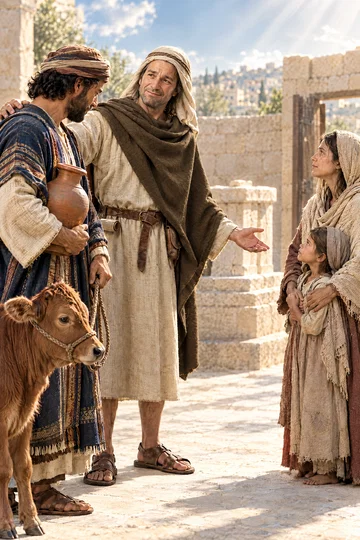
Cross-references 20 of 75
- Genesis 5:24
And Enoch walked with God: and he was not; for God took him.
Enoch’s walk with God exemplifies a life lived in humble fellowship with him.
- Isaiah 57:15
For thus saith the high and lofty One that inhabiteth eternity, whose name is Holy; I dwell in the high and holy place, with him also that is of a contrite and humble spirit, to revive the spirit of the humble, and to revive the heart of the contrite ones.
God dwells with the humble and contrite to revive them.
- Isaiah 1:16-17
Wash you, make you clean; put away the evil of your doings from before mine eyes; cease to do evil;
Calls people to turn from evil, do good, seek justice, and help the oppressed.
- Matthew 11:29
Take my yoke upon you, and learn of me; for I am meek and lowly in heart: and ye shall find rest unto your souls.
Christ’s meek and lowly character models walking humbly with God.
- Matthew 23:23
Woe unto you, scribes and Pharisees, hypocrites! for ye pay tithe of mint and anise and cummin, and have omitted the weightier matters of the law, judgment, mercy, and faith: these ought ye to have done, and not to leave the other undone.
Both name justice and mercy among what God requires.
- Jeremiah 9:24
But let him that glorieth glory in this, that he understandeth and knoweth me, that I am the LORD which exercise lovingkindness, judgment, and righteousness, in the earth: for in these things I delight, saith the LORD.
Both name the qualities God delights in: lovingkindness, judgment, and righteousness.
- Matthew 25:40
And the King shall answer and say unto them, Verily I say unto you, Inasmuch as ye have done it unto one of the least of these my brethren, ye have done it unto me.
Christ identifies himself with his poor and needy people.
- 1 Samuel 15:22
And Samuel said, Hath the LORD as great delight in burnt offerings and sacrifices, as in obeying the voice of the LORD? Behold, to obey is better than sacrifice, and to hearken than the fat of rams.
Both texts emphasize that God requires obedience rather than sacrifice.
- Matthew 22:37-39
Jesus said unto him, Thou shalt love the Lord thy God with all thy heart, and with all thy soul, and with all thy mind.
The commands to love God and neighbor echo Micah’s call to walk humbly and act justly.
- James 4:10
Humble yourselves in the sight of the Lord, and he shall lift you up.
Humble walking before God is followed by his lifting one up.
- Deuteronomy 10:12-13
And now, Israel, what doth the LORD thy God require of thee, but to fear the LORD thy God, to walk in all his ways, and to love him, and to serve the LORD thy God with all thy heart and with all thy soul,
Moses gives an earlier statement of what God requires and says it is for Israel’s good.
- Hosea 6:6
For I desired mercy, and not sacrifice; and the knowledge of God more than burnt offerings.
God values mercy and knowing him above sacrifices.
- Exodus 34:6-7
And the LORD passed by before him, and proclaimed, The LORD, The LORD God, merciful and gracious, longsuffering, and abundant in goodness and truth,
God’s merciful character is presented as the model for the qualities He requires.
- Isaiah 1:11-15
To what purpose is the multitude of your sacrifices unto me? saith the LORD: I am full of the burnt offerings of rams, and the fat of fed beasts; and I delight not in the blood of bullocks, or of lambs, or of he goats.
Religious ceremonies and prayers are rejected when justice and faithful conduct are absent.
- James 1:27
Pure religion and undefiled before God and the Father is this, To visit the fatherless and widows in their affliction, and to keep himself unspotted from the world.
Both define faithful religion through practical care and godly conduct.
- 1 Peter 5:6
Humble yourselves therefore under the mighty hand of God, that he may exalt you in due time:
Urges people to humble themselves under God's hand.
- Psalms 51:17
The sacrifices of God are a broken spirit: a broken and a contrite heart, O God, thou wilt not despise.
Both value a humble, repentant heart over sacrifice.
- Genesis 18:19
For I know him, that he will command his children and his household after him, and they shall keep the way of the LORD, to do justice and judgment; that the LORD may bring upon Abraham that which he hath spoken of him.
Abraham teaches his household to keep the Lord’s way and do justice.
- Matthew 25:35-36
For I was an hungred, and ye gave me meat: I was thirsty, and ye gave me drink: I was a stranger, and ye took me in:
Merciful care for people in need is counted as care for Christ.
- Philippians 2:3
Let nothing be done through strife or vainglory; but in lowliness of mind let each esteem other better than themselves.
Lowliness of mind means esteeming others above oneself.
Commentary part 1 of 3
Each commentary is drawn from primary sources: the writings of Ellen G. White and Adventist pioneers and periodicals. Each commentary is separate. Its own words are not a quotation; follow the references to read the source passages.
Ellen G. White
489 sources
God has already shown people what is good and what He requires, which is to act fairly, to love kindness, and to live in humble closeness with Him.RH Sep 30, 1909RH Apr 1, 1915Lt 8, 1901, par. 21–22 No multitude of sacrifices, gifts, ceremonies, or outward correctness can take the place of this or buy His favor, cover wrong, or atone for sin.RH Apr 1, 1915Lt 8, 1901, par. 21–22Ms 164, 1904, par. 1–5 This life flows from sanctified faith in Christ that purifies the heart and transforms the character, for without that faith and humble walk even strict justice and mercy cannot please God.RH Sep 30, 1909Ms 11, 1909, par. 16 To act fairly and love mercy means honest dealing in all business, refusal to cheat, oppress, or exploit any person, fair and compassionate treatment of workers, and active help to the needy, the oppressed, and the wronged with restitution where wrong was done.Lt 4, 1896, par. 32–33Ms 99, 1893, par. 13–14Ms 2, 1897, par. 21–23Lt 222, 1899, par. 2–47T 261.4–262.1 To walk humbly with God means coming to Him with the whole heart in dependence, submission, trust, and obedience, refusing pride and self-exaltation, and this humble walk brings His presence, guidance, strength, and safety.RH Oct 21, 1909FE 532.2RH Mar 23, 19055T 517.2–518.1Ms 13, 1909, par. 7
Verse Text and Setting
He has already made known what is good and what is required: to act justly, to love mercy, and to walk humbly with God.RH Sep 30, 1909RH Apr 1, 1915Lt 8, 1901, par. 21–22Ms 164, 1904, par. 1–56T 148.3–149.1 This is not a new disclosure but what people already know, set against trust in costly offerings to purchase favor — not calves, burnt offerings, thousands of rams, rivers of oil, or even the firstborn for transgression, but a humble contrite heart that gratefully receives the free gift and gives freely in turn.RH Apr 1, 1915Lt 8, 1901, par. 21–22Ms 164, 1904, par. 1–5 Neglect of human need and refusal to help make even costly offerings and grand displays of generosity abominable.Lt 8, 1901, par. 21–22
It was given as God’s plain and positive answer in the apostasy of Judah and Israel to those asking what to bring before Him.RH Apr 1, 1915Ms 164, 1904, par. 1–5 It belongs to the Lord’s controversy with His people, in which He pleads by recalling bringing them up out of Egypt and redeeming them from servitude, sending Moses, Aaron and Miriam before them, and preserving them from Balak’s counsel and Balaam’s answer from Shittim to Gilgal in order to make known His righteousness.Ms 164, 1904, par. 1–5 Failure in this requirement is departure from God.Ms 164, 1904, par. 1–5 It is the Lord’s voice crying to the city, with the rod He has appointed, and that rod has come upon His people for this departure.Ms 164, 1904, par. 1–5Ms 108, 1905, par. 36–37 In that setting it also rebukes taking counsel with men who do not walk in the Lord’s counsel, and condemns work carried forward under a leader filling his mind with sophistries and deceptions as unacceptable to God.Ms 108, 1905, par. 36–37
It was directed to a rebellious people to teach that obedience to God is better than sacrifice.Lt 184, 1901, par. 16–1920MR 312.7–313.110MR 277.2–278.2 It therefore calls for acknowledgment and repentance of disobedience and departure from truth and plans, rather than blaming God for consequences caused by their own choices and wrongdoing.Lt 184, 1901, par. 16–1920MR 312.7–313.110MR 277.2–278.2 It is connected with following the path God has marked out: those who reject the light and blessings He gives, act perversely and show ingratitude cannot expect Him to fulfill His promises or continue to encourage them.Ms 137, 1908, par. 1–2 It is also included among prophecies describing the world’s condition before the second coming, when iniquity abounds as people transgress God’s law and break the everlasting covenant.Ms 110, 1893, par. 13
Faith and True Religion
God does not accept multiplied sacrifices, offerings, gifts, penances, ceremonies or outward orthodoxy as a way to purchase favor, atone for sin, or cover injustice and self-interest, for He has already shown what is good and requires just doing, loving mercy and humble walking with Him instead of calves, thousands of rams, rivers of oil, or even the firstborn for transgression.RH Apr 1, 1915Lt 8, 1901, par. 21–22Ms 164, 1904, par. 1–5ST Dec 12, 1892 Costly offerings and grand displays of generosity coming from a heart that neglects human need and refuses to help are abominable to Him, and what He seeks comes from a humble contrite heart that gratefully receives His free gift and then gives freely in turn.Lt 8, 1901, par. 21–22COL 210.2–3 Hard rigid orthodoxy without contrition, tenderness and love is worthless and a stumbling block, while the requirement is lived out in helping the oppressed and burdened with tender pity, meeting repentance with sympathy rather than jealousy or censure.COL 210.2–3
Outward justice and mercy alone are insufficient without sanctified faith leading to humble walk with God, for without faith in Christ character and conduct are not sanctified in motive and purpose and cannot please Him.RH Sep 30, 1909Ms 11, 1909, par. 16 Through such faith people appreciate God's character as revealed in Christ's earthly life, display those same attributes, show Christ present within, and prove genuine citizenship in His kingdom.RH Sep 30, 1909Ms 11, 1909, par. 16 The verse thus answers the soul's cry for justification and harmony with God, with what is required flowing from faith working by love to purify the soul and transform the character, a lesson given centuries beforehand against legal religion.
The verse teaches practical godliness repeating enduring counsel to Israel against formalism that forgets mercy, calling not for abundant burnt offerings or other outward religious acts but for acting justly, loving mercy and walking humbly with God.PK 326.1–2 Above all God's people are to embody this in Spirit-sanctified lives to reveal practical Christianity and show struggling souls what faithful living means.RH Mar 31, 1910 What the Father asks is justice, mercy and humility as reasonable service of good deeds, pure living, tenderness to need, reverence, trust and prayer for light to see the Master's footsteps in daily ways. He asks not for scourge or knife but for the calm beauty of an ordered life whose breathing is unworded praise, rooted in faith that God is good.
True Bible religion exalts God and humbles people, brings eternity near, interweaves with everyday concerns and leads to faithfulness in all things.Lt 26d, 1887, par. 20–23 It begins with heartfelt conviction of sin, hatred of sin and deep earnest growing desire for Christ's righteousness and unfading life, and constantly teaches to act fairly, cherish kindness and live in humble closeness with God, which produces strength and decision of character rather than softness, feebleness and indecision.Lt 26d, 1887, par. 20–23 What the Lord requires is to live rightly before Him in this life by forming a Christlike character through practicing goodness and mercy and following Christ in self-denial and sacrifice.CT 249.1
The verse expresses God's character and what He delights in, including lovingkindness, judgment and righteousness, calling for a meek Christian spirit rather than proud, hard or exacting one, shown in treatment of others and conduct of responsibilities including leadership and service.Lt 13, 1902, par. 40–41Ms 40, 1890, par. 74–80Ms 62, 1890, par. 17–18Ms 40a, 1890, par. 81–84Ms 193, 1897, par. 18 God will punish persistence in misrepresenting His character.Lt 13, 1902, par. 40–41 The verse is true peculiarity unlike the world, meaning separation from all approach to iniquity, truthfulness and strict honesty, patience under provocation, chaste holy thoughts with pure holy words, select speech with heavenly conversation, freedom from pride of opinion, low self-estimate esteeming others better than self, and courteous kindly pure holy refined ennobled Christlike character shining as lights without spot and blameless.Ms 37, 1885, par. 6–10 It forbids odd ways, coarse manners and eccentricities made as crosses to show separation.Ms 37, 1885, par. 6–10
God's law calls people to deal justly, love mercy and walk humbly with God, and obeying it brings them under their Creator and Redeemer's guidance and forms them into a pure wise people whose joy is to live by those principles.Ms 164, 1899, par. 1–6 God Himself deals justly and loves mercy, where justice means each receives reward or punishment according to deeds, reaping what is sown, while mercy is His priceless grace offered through His Son as sacrifice for sin.18MR 345.3–346.1 Redemption shows justice and mercy in harmony, and though He wills all to be saved He does not force obedience, leaving each free to accept or refuse mercy.18MR 345.3–346.1 God requires justice, mercy and love of Him, and these qualities must be brought more fully into the work of His people, so that His work is marked by strict justice, mercy and the love of God.RH Apr 14, 1903Lt 412, 1907, par. 9
True repentance is revealed by doing justice, loving mercy and walking humbly, leading when another was wronged to full restitution so the guilty may be cleared from guilt.7T 261.4–262.1GW 499.4–500.18MR 161.2Lt 88, 1900, par. 13–14 Restored people in fellowship continue in repentance, confession and restitution and resolve to do good to one another, which fulfills the law of Christ and brings blessing and healing to the relationship.7T 261.4–262.1GW 499.4–500.1Ms 47, 1902, par. 10–12 Such repentance involves conversion of heart, soul and spirit cleansing impurities of sentiment and principle that should never have existed, repenting of and forever forsaking the spirit that led to unjust acts before sin is blotted out, with a healing not measured by money value.Ms 29, 1903, par. 7 Such acts of repentance and restitution do not atone for sin, since only Jesus' blood can atone and cleanse the sinner.Ms 47, 1902, par. 10–12
Doing justly, loving mercy and walking humbly are fitting fruits of God's law written in the heart and unfailing evidence of true sanctification, true religion, and holy heart, life and character.3T 201.2TBC1872 57.2ST Sep 19, 1900Lt 64, 1900, par. 13 They root out covetousness, which is idolatry, envy and love of the world, bring mind and will under Christ's authority and obedience as a pleasure, and give a holy life power to convict the world.3T 201.2TBC1872 57.2 Rank or teaching position does not prove it, but words, spirit and character reveal whether one has put on Christ.Lt 64, 1900, par. 13
Doing Justly at Work
To do justly forbids exploiting people through unfair plans and dishonest business practices, for such conduct violates what is good that God has shown.Lt 4, 1896, par. 32–33 Doing justly includes acquiring money without cheating or oppressing a neighbor, and wealth gained dishonestly remains unlawful gain before God that cannot be made acceptable by giving it to His treasury, rather than costly offerings compensating for wrongdoing.Ms 99, 1893, par. 13–14
Doing justly and loving mercy require honest and fair dealings that include not oppressing workers or withholding their wages, and justice and mercy must mark both employers and workers rather than offerings or outward worship alone.Ms 2, 1897, par. 21–23 Failure to act with justice and mercy toward workers in hardship is contrary to God's word and the Spirit of Christ and needs repentance, and those guilty are to be pitied rather than answered with retaliation.Lt 222, 1899, par. 2–4 Doing justly and loving mercy must shape dealings with every person and not only a favored few, meaning treating workers faithfully, paying worthy and efficient workers reasonable wages, and not burdening them with sacrifices while resources are spent on institutional expansion, with mercy and justice extending even to the humblest worker.Lt 18, 1890, par. 25–27 The requirement to deal justly and mercifully means acting in business transactions with love and benevolence, including looking after faithful unselfish workers who might otherwise deprive themselves of things they need, and failing to do so is unjust.Ms 142, 1903, par. 115
Doing justly and loving mercy require being changed by the truth so that ambition and selfishness are removed, rejecting covetousness, treating fellow workers fairly, and not taking excessive wages from the treasury when others labor as hard under difficult conditions for much less.1MR 272.1–273.1 Love for God and neighbor gives a sensitive conscience that recognizes when one's gain deprives others, and such selfishness is contrary to the Spirit's sanctifying work and places spiritual life and eternal destiny in danger.1MR 272.1–273.1 The Lord deals justly, loves mercy, and His ways are equal, and that character condemns selfish grasping for all that is possible in wages and royalties while oppressing others, and the confusion and devising of those whose discernment is not clear and whose ways are not equal.Ms 140, 1901, par. 63–64 God does not sanction such selfishness and avarice in business transactions, and these things will one day be seen in their true bearing.Ms 140, 1901, par. 63–64
God's cause is free from every taint of injustice and seeks no advantage by depriving members of His family of their individuality or rights.7T 179.1–180.1 Applied to publishing houses in dealing with God's workers, this forbids wrong business principles, selfish narrow plans, oppressive restrictions, crowding down those God is using, arbitrary authority, selfishness and overreaching, even when urged as necessary for success and advancement, and to Him all such practices are abhorrent.7T 179.1–180.1 Those who have entered into other men's labors in the publishing work are to labor conscientiously as men employed to do the work entrusted to their hands instead of gathering control into finite hands and driving measures by human wisdom and stubborn will, for even those with greatest position and authority remain under God whose sovereignty is supreme, and these duties apply regardless of position.ST2 2.1STA 108.2LSEGW 320.2–321.1 Control of the large publishing interests at the heart of the work cannot be vested wholly in those who show little experience in the things of God and no spiritual discernment, and mismanagement by erring men must not shake confidence of churches depending on that work.STBk 108.2 To lay hands upon God's publishing work to place a human mold and superscription upon it is as dangerous to the soul and disastrous to the cause as Uzzah putting forth his hand to steady the ark, failure to deal justly and humbly is proved by works, and whatever a man's responsibility, even authority as great as Ahab's, God is above him.STBk 108.2
Just dealing is required and unfair action, false dealing, falsehood and robbery in business are condemned, especially buying and selling land and speculation that makes men and women poor and causes suffering.Lt 405, 1904, par. 12–13 Those who continue in such unfair transactions ruin their own souls and unfit themselves to enter the city whose builder and maker is God, every transaction is written in the record book in heaven, integrity is required even if it costs life with refusal to be swayed to an unjust action or to place injustice in an uncertain light, for to do injustice to one soul is to do it to Christ in the person of His saints.Lt 405, 1904, par. 12–13 Scheming to deny others a fair chance and make profit from them violates the justice and mercy required, and dishonest and unjust conduct generally stands condemned.17MR 190.3STB 361.2–3 In a property sale, keeping the commandments meant not claiming an extra four thousand dollars belonging to the other person because the seller had done nothing to increase the property's value.Lt 96, 1894, par. 5–6
Fairness and kindness are required in everyday dealings especially in business, and failure dishonors God and His cause.2T 87.1 Lying, cheating, exaggerating, giving way to anger, and boastful self-praise break the requirement and make professed believers stumbling blocks giving sinners excuse to reject truth, and defending truth without a right spirit violates it.2T 87.1 The requirements apply to business dealings and every interaction: dealing fairly and honestly, showing compassion, and treating others as one would wish to be treated, with strict honesty in even the smallest dealings and with mercy and love for God as weightier matters not to be neglected while observing lesser duties.ST Dec 24, 18964T 337.1–2 What is required in conduct is dealing justly, loving mercy, and walking humbly with God, so that a transaction acceptable under civil law can still be wrong before God and receive a different verdict in judgment, calling for fair and merciful treatment of a brother including not using advantage to oppress him, which God does not justify.Lt 96, 1894, par. 1–3
Acting justly and loving mercy includes being truthful and righteous in business dealings, being strictly honest, never deceiving or misrepresenting even in a small matter, and keeping an agreement even when it causes personal loss.20MR 343.5Lt 103, 1900, par. 15–16 Changing plans to escape a promise shows unreliability, and yielding in small transactions can lead to yielding in larger ones, for God requires justice and mercy joined with truth and righteousness.20MR 343.5Lt 103, 1900, par. 15–16 Bible religion is put into practice by treating others fairly and mercifully, so gaining even a small advantage through double dealing violates the requirement and dishonors God and the truth.Lt 78, 1896, par. 7–8 In dealing with one supposed to be wrong, doing justly means investigating thoroughly, laboring with the person first in a kind Christian manner, giving him a chance to explain and answer, and not charging dishonesty, publishing failings, or condemning on appearance, suspicion and hearsay without positive ground.Lt 32, 1875, par. 27–34 Loving mercy in such discipline means working with love, sympathy, pitying tenderness and prayer as a nursing father to save him, not in a hard harsh overbearing judge-like spirit, and failure reveals great deficiency in Christian charity and wise discipline.Lt 32, 1875, par. 27–34
Acting justly and showing mercy means dealing fairly, refusing crooked or exploitative conduct, and correcting wrongs, and those who fail risk losing the Spirit of God.Ms 45, 1909, par. 15 Doing what is right and loving mercy are required duties, and failure includes using unfair schemes and neglecting people who need help.Lt 99, 1899, par. 1–4 Doing what is right must be joined with love and mercy, so in correcting wrongdoers justice requires faithful reproof while mercy requires tender compassion suited to each person, and needless severity fails to hold them together.3T 269.2 A steward must make his interests one with his Master's by acting with justice and mercy in business, hurting and wronging no one, for every case comes before God as Ruler of the universe to be weighed, and anyone whose unjust dealings stand unrepented receives TEKEL and is barred from the city of God.Ms 25, 1906, par. 7
In medical institutions acting justly and mercifully means following biblical principles rather than worldly pricing practices, with charges fair and proportionate to the work and patients not billed exorbitantly for brief operations.Lt 232, 1899, par. 25 Doing what is right and loving mercy belong together with justice and love side by side, meaning in responsible work and business dealings acting with strict honesty and preserving order while showing compassion, mercy and forbearance.Lt 34a, 1886, par. 22 Acting justly and mercifully applies to fair distribution of funds so that neither justice nor mercy is neglected.STB 559.3 Acting justly is required, refusing to correct unjust dealings and do justice displeases the Lord, and those managing institutions are to represent Christ in spirit and work.Lt 130, 1899, par. 9–10 God's way requires acting justly, showing mercy, and loving, combining both in work while keeping the way of the Lord, applying especially to how those who have gone wrong are treated.Lt 70, 1895, par. 8–9Lt 160, 1901, par. 2
Just dealing and humble conduct before God are required, and fraud and dishonest measures violate it and are abominable in His sight.Lt 8, 1901, par. 23 Doing justly and loving mercy are ways to serve God urged in dealing with others amid reproach and difficulty.8T 123.1–2 People are to deal justly, love mercy, and walk humbly with God, and these duties are violated when people follow own imagination, uncontrolled will and passion in ways that harm others.Lt 102a, 1896, par. 10–13 The rich violated the requirement by gaining wealth through breaking God's law, neglecting the hungry and naked, and through pride, self-exaltation and seeking others' homage in contrast to walking humbly with God.GC 654.14SP 470.2GC88 653.4–654.1 Earthly riches and pleasures could not make them rich toward God, so when judgment came their possessions vanished and they regretted the outcome without repenting of wickedness.GC88 653.4–654.1 When God entrusts responsibilities He requires obedience to His law and just dealing, realizing the Lord beholds all dealings and will punish every unjust oppressive action, giving opportunities to become one with Christ and with Him, so those who walk in fear of God meditating on His character become more like Christ daily, while those who choose not to know God will be ostentatious and boastful.Lt 61, 1904, par. 1
Loving Mercy Toward Others
Doing justly and loving mercy mean rejecting racial prejudice, seeking the oppressed, lifting up the fallen, and helping those in need, including the colored people who had suffered enslavement and injustice.SW 74.2 What is good and required is just conduct, love of mercy, and a humble walk with God rather than reliance on offerings or religious ritual, and it is lived out by helping the oppressed and burdened and showing tender pity to people suffering in sin.COL 210.2–3 Those who know they are saved by the Father's love meet repentance with sympathy, not jealousy or censure.COL 210.2–3 It is the voice of God to every soul, requiring losing no opportunity to perform deeds of mercy, tender forethought and Christian courtesy for the burdened and the oppressed.RH Apr 1, 1915 Where no more can be done, it requires speaking words of courage and hope to those unacquainted with God, who are reached most easily by sympathy and love.RH Apr 1, 1915
God requires more than offerings or other outward acts of worship, for people must act justly, love mercy, and live humbly with Him, and loving mercy must be shown in deeds including kindness and courtesy toward strangers and relief for the poor, without fraud, oppression, or exploitation.Ms 121, 1899, par. 21–23 True religion requires doing justice, loving mercy, and walking humbly before God, and these qualities appear in defending the poor, caring for orphans and widows, and relieving those in need.3T 538.1–2 They follow from bringing thoughts, words, actions, appetites, and passions under God's will, since true religion leads toward holiness and perfection, and stopping short of submission to God leaves a person unfit for heaven.3T 538.1–2 The verse draws the line laid down by the God of justice for dealing with fellow men and shows what makes a person a Christian and what pure religion and an upright, holy life are.STMW6 29.1–2 It means acting fairly toward others, cherishing kindness, and living humbly with God, which requires honoring the rights belonging to every human being as God's purchased heritage, refusing to turn anyone from those rights for selfish ends, refusing double dealing, and refusing to take even the smallest unfair advantage, since service joined with such wrongdoing God will not accept and it dishonors Him and the truth.STMW6 29.1–2
Faithful workers are described by dealing justly, loving mercy, and helping those in need, with service to God marked by steadfastness to truth, self-denial, and care for others, and they should in turn be treated considerately, kindly, and generously.Ms 99, 1909, par. 10–14 Just and merciful conduct applies to men who have labored and sacrificed in God's service in that they deal justly, love mercy, and help the needy, and their fellow workers should likewise treat these older ministers fairly, kindly, and generously, and appreciate and support them.Ms 125, 1903, par. 18–19 Walking humbly with God belongs with a life of mercy, for genuine acts of mercy toward the needy reflect it, and the Lord promises to be with, help, and strengthen one who walks humbly, as seen in Edson White's acts of genuine mercy toward the needy.Ms 45, 1909, par. 3–4
Meaning of Humble Walk
Walking humbly means coming to God in humility with the whole heart, submitting the soul, believing exactly what His Word says, being willing to be taught, humbling self before Him and trusting in Him alone, and carrying His work in His way in harmony with others, and those who do so have God walking with them, revealing Himself to them, and they see His salvation.RH Oct 21, 1909FE 532.2Ms 23, 1909, par. 12Lt 23, 1895, par. 9Lt 86, 1892, par. 4–6 It is a way of life inseparably joined to seeing His salvation.RH Mar 23, 1905
Walking humbly includes refusing pride and self-exaltation, accepting the duties and place God assigns and faithfully doing even lowly work, using the gifts given and trusting God with place and interests for greater service in due time.ST Mar 9, 1888 Safety lies in not glorying in ability, wealth, power, wisdom or anything apart from Christ and not taking the honor and authority belonging to God, since pride seeks control over others and oppresses them.Ms 29, 1895, par. 11–12
It means not denying wrongs but acknowledging sins, repenting and being converted, for pride that refuses to acknowledge mistakes keeps a person from being accepted no matter what position is held, while all who confess and forsake sins and trust wholly in the merits of Jesus will be declared worthy of salvation before the world and before the holy angels.Lt 102, 1905, par. 19 It brings His presence and means unreserved surrender without self-exaltation, and when one engaged in the Lord's work exalts self he loses the strength that comes from that surrender.Lt 69, 1902, par. 8 It means living in dependence by waiting on the Lord for renewed strength, finding life and salvation in Him, and bringing Him into life and character until wholly His.Lt 24, 1887, par. 8
It brings victory in the mighty conflict with self and sin, and victories there belong only to those who so walk, bringing victories in the life of faith as part of doing what is good.Lt 75, 1901, par. 15Lt 172, 1909, par. 14 God's way is to do justice, seek mercy, and walk humbly with Him, and those who live this way are welcomed into His presence and fitted for the society of heavenly angels.Ms 37, 1894, par. 24 It means living in close dependence by distrusting self, trusting the great Helper, keeping Him near for counsel, and following Him as Enoch did, including hiding self in Christ, exalting Jesus, and giving Him the whole heart and undivided allegiance.Lt 100, 1897, par. 10–12
People need God to teach them to deal justly, love mercy, and walk humbly with Him.Lt 150, 1899, par. 18 In facing difficulties that obstruct useful service, humility means hiding self in Jesus, which shields from the enemy's attacks, while a consistent life earns respect and sincere counsel can persuade.21MR 178.1Lt 16a, 1895, par. 1 It means living with meekness and lowliness of mind, exalting Jesus without holding exalted ideas of oneself.Lt 126, 1900, par. 11–12
It is the way to rise to true greatness, and the required humility is not forced but genuine, coming from a true sense of human inefficiency and inadequacy and of God's greatness, involving earnest striving to make the soul temple a dwelling place where God delights to dwell and pleasing to Him.Ms 73, 1901, par. 3014MR 352.1 Doing what is right, loving mercy, and walking humbly matter more than gaining position, influence or honor from people, and seeking worldly distinction instead of these duties puts spirituality at risk.Lt 25, 1873, par. 4–5 What is required of Christians is to act justly, love mercy, and walk humbly, and living by this command continually testifies that God sent His Son into the world.Lt 93, 1901, par. 15
God calls people to deal justly and walk humbly, and walking humbly means trusting Him rather than treating human approval as decisive, with Christ alone as helper and refuge in every difficulty.Lt 119, 1894, par. 7–10 The Lord calls His people to walk humbly with Him, and unity must not be used to support anyone's evil course of action.Ms 161, 1903, par. 1 Keeping the way of the Lord means doing justice, loving mercy, and walking humbly, including being pure in heart and full of human kindness while living in the world without belonging to it.12MR 109.2–3
It is seen in a life of true dignity and noble character, loving fellow believers, treating them with brotherly love, kindness and courtesy, and working for one another's good, showing that God's truth and law guide the heart, whose principles of peace prevent discord and strife, with God's grace alone making people holy and keeping them holy.6MR 236.4–237.1Lt 157, 1901, par. 16–17 It means following the leadings of the Holy Spirit, valuing His favor more highly than everything else, and holding to Jesus as best Friend and constant Guardian.Lt 3, 1903, par. 5–6 Brethren are required to so walk, and walking humbly means not tearing one another in pieces.Lt 46, 1906, par. 15
It is central to greatness, meaning relying on Christ rather than self-confidence, seeking strength through private communion with Him, and accepting honor without exalting self or putting down others, which reflects the Spirit of the Lord, whereas pride and belittling others show the Spirit departing and leave a person to own wisdom.11MR 306.2–4 A person should walk humbly by continually asking in faith for God to guide every thought and control every impulse, no matter how much spiritual light or divine favor has been received, living in continual dependence in which every thought and impulse needs His direction and control, to be pleaded for in faith.MYP 62.1–2HSP 5.2 God has shown what is good and requires acting justly, loving mercy, and walking humbly, and walking humbly brings His help, guidance, strength and peace even for those who are weak and entrusted with responsibility.7T 267.120MR 75.2
The humble walk means meeting difficulties through faith in the living God, with careful consideration of how one's words and actions affect others.STB 821.2AFUP 6.2 God's people are to walk humbly before Him, and the church in this generation especially needs humility and has nothing to boast of.9T 243.2 For young men it means serving God with courage and integrity while rejecting impurity, sensuality, falsity and wickedness and remaining free from them.RH Apr 10, 1913MYP 24.1–2
God requires people to walk humbly with Him, and this humility applies to all His servants whatever their position or work.RCOC 106.1 It is essential to a safe and holy life, meaning having lowly views of self, submitting to God's will, and depending on Christ rather than self-confidence, in which humility God can work through human effort and make His strength effective in weakness.5T 586.2 God has shown what is good and requires living justly, loving mercy, and walking humbly, and walking humbly means relying on Him in faithful service, as He continues to use and strengthen such a person for the appointed work.SBAWP 69.3
It is part of the life God requires, meaning following the Lord and learning from Him daily, through the Holy Spirit giving power to reflect Christ's character in words and actions and show the world a better way.STB 824.2 It means recognizing dependence on Him for every capability, opportunity and privilege, and education shaped by divine grace and the Great Teacher subdues pride and passion and leads to this humble dependence and elevates in moral value with God, while education without grace produces pride, vanity and bigotry.STSE 104.2–105.2TBC1882 15.1CE 41.3–42.2CT 94.2 It includes carefully considering how one's words and actions affect others and meeting difficulties through faith in the living God, as part of what God requires.AFUP 6.2Ms 13, 1912, par. 11
It means living in dependence on Him and working in the spirit of Christ, laying burdens on God as the great Burden-bearer, with expectation of triumph in His presence and communion with His love.6T 63.2 It is staying close at His side to walk and work with Him while He teaches how to overcome temptation, and even in fallen nature a person can do all God expects through help provided by walking and working and living by faith in the Son of God, with a way of escape with every temptation coming by walking humbly.RH Apr 15, 1909 It is part of what God requires and calls for lasting reformation from actions founded on wrong principles, meaning turning away from actions wrong in principle and making a decisive, lasting reformation.STGC 39.2–3Lt 31, 1898, par. 13
God's people are called to walk humbly by consecrating themselves wholly to the Lord rather than being caught up in worldly commercialism and chance, and serving in the work of Christ's kingdom.STB 708.3 It means looking away from human praise and working for Christ rather than seeking attention, honor or distinction for oneself, calling for steady purpose and willingness to labor and sacrifice even in obscurity.5T 132.3 The life of everyone with a living connection with God who works together with Him shows truth as it is in Jesus changing the mind so divine power works through human action, producing fair dealing, compassionate kindness and humble fellowship with God, including sharing God's merciful compassionate care for His creatures without regard to race, recognizing one common Father and all as brothers, guarding the good of others so missionary effort succeeds.SW 79.1–81.1
Safety lies in walking humbly, meaning guarding against self-sufficiency and self-confidence, keeping self out of sight, and seeking a daily living experience with God, because a person's only safety lies in this humble walk.5T 517.2–518.19MR 133.3 What is required is just conduct, love of mercy, and a humble walk, which in medical missionary work means those taking that name pledge to serve with humility, mercy and love for God, helping restore the divine image in humanity.Lt 8, 1901, par. 9 True education consists in walking humbly, the Word of God opposes education shaped by human ideas, and keeping God's law is the highest education.11MR 174.5
It means trusting Him and following His leading, for He is the believer's helper, living in humble trust in Him.Lt 170, 1909, par. 1Lt 89, 1894, par. 1 Walking humbly before God is urgent because time is very short, life is uncertain, and probation may close at an unknown moment, and those who walk humbly will be allowed to end their labors with joy.Lt 27, 1876, par. 420MR 23.4 It is part of living the truth not merely professing it, safeguards against selfishness and unrecognized sin gaining control and leading into Satan's snares, and calls for continual watchfulness and prayer, rejecting inherited or acquired habits that draw away from following Jesus and copying His example, being essential to safety from sin and Satan's deceptions lest selfishness and hidden sin gain control and lead astray.13MR 274.2Lt 48, 1894, par. 13–14
It is a fitting and required way to live before Him.Lt 164, 1895, par. 1Lt 100, 1899, par. 10 It means having the proud spirit abased by gaining mastery over ambitious pride and desire for self-exaltation and self-worship which caused Satan's downfall, holding to repentance instead of forgetting it since returning to pride separates further from God, and realizing need for daily conversion and receiving a daily fresh supply of grace without which one will stumble and fall and at last be left joined to idols.Ms 35, 1903, par. 4 What is good is the old-fashioned religion that leads a person to walk humbly in active service, grasping the theory of truth but not stopping there, cooperating with God by using all entrusted capabilities and gifts in His service, spending much time searching the Scriptures and with God in prayer, thereby receiving divine power to understand the sacred art of saving souls.Ms 3, 1901, par. 717MR 48.2RH Feb 12, 1901
Walking humbly keeps a person from running into the fire of fanaticism and from drifting into formalism that freezes his own soul and others' souls, and brings an awakened intellect into his work.Ms 3, 1901, par. 7 It means recognizing that honor and responsibility come from God not self, calling for humility rather than superiority by not exalting self or devaluing fellow workers, but bearing God-given honor without becoming proud and remaining faithful to God and others, since even great responsibility, success and honor are gifts from God not grounds for superiority, and a superior domineering spirit risks losing God's Spirit and being left to own wisdom.21MR 46.3–5Lt 40, 1899, par. 27–29 It means relying on Him in faith, and He enables those who do so to carry out His righteous will and become a blessing to others.Lt 84, 1908, par. 8–9
It means each worker should seek the Lord personally through prayer and study of the Word, depend on Him for guidance, and sincerely seek to know duty rather than rely on self-important human authority.Lt 218, 1907, par. 4–5 Pressing together and living in humility means making Him the only hope instead of trusting in man or relying on human strength.Lt 403, 1906, par. 7 Christians are called to walk humbly with God who is their strength, including gaining mastery over self and giving spiritual things ascendancy over temporal things, since present and future happiness depend on it.ST Dec 18, 1901
It means relying on Christ rather than exalting self, and without that humility and reliance even people who have spoken messages of righteousness by faith can become spiritually blind.7MR 196.1 It means faithfully serving in the place where He stations you, with the Lord's blessing accompanying this humility and such faithfulness helping others.Lt 192, 1908, par. 1 People should walk humbly, and this humble life should also influence others and lead them heavenward.Lt 2, 1886, par. 30–32
It is what God requires, and since human beings are prone to trust own weak wisdom, seek prominence, and think they can plan better than others, humility means resisting that self-reliance and ambition.Ms 183, 1898, par. 49–50 It is the way to receive light from Him and calls for dependence on God rather than self-sufficiency or unsanctified independence.Lt 62, 1898, par. 8–9
Sources