1 Samuel 25:11
Shall I then take my bread, and my water, and my flesh that I have killed for my shearers, and give it unto men, whom I know not whence they be?
Translations
Shall I then take my bread, and my water, and my flesh that I have killed for my shearers, and give it to men, whom I know not from where they be?
King James Version, KJV Cambridge Paragraph Bible
Shall I then take my bread, and my water, and my flesh that I have killed for my shearers, and give it unto men, whom I know not whence they be?
Shall I then take my bread, and my water, and my flesh that I have killed for my shearers, and give it to men, whom I know not whence they are?
Shall I then take my bread, and my water, and my flesh that I have killed for my shearers, and give it unto men of whom I know not whence they be?
Shall I then take my bread, and my water, and my flesh that I have killed for my shearers, and give it unto men of whom I know not whence they are?
and I have taken my bread, and my water, and my flesh, which I slaughtered for my shearers, and have given [it] to men whom I have not known whence they [are]!'
And shall I take my bread, and my water, and my flesh which I have killed for my shearers, and give [ it] to men whom I know not whence they are?
Shall I, then, take my bread, and my wine, and my slain beasts, that I have slaughtered for my shearers,—and give unto men of whom I know not whence they are?
Berean Standard Bible, Majority Standard Bible
Why should I take my bread and water and the meat I have slaughtered for my shearers, and give them to these men whose origin I do not know?”
Shall I then take my bread, my water, and my meat that I have killed for my shearers, and give it to men who I don’t know where they come from?”
Am I to take my bread and my wine and the meat I have got ready for my wool-cutters and give it to men coming from I have no idea where?
Shall I then take my bread, and my water, and my flesh that I haue killed for my sherers, and giue it vnto men, whom I know not whence they be?
Douay-Rheims (Challoner revision)
Shall I then take my bread, and my water, and the flesh of my cattle, which I have killed for my shearers, and give to men whom I know not whence they are?
Pictures
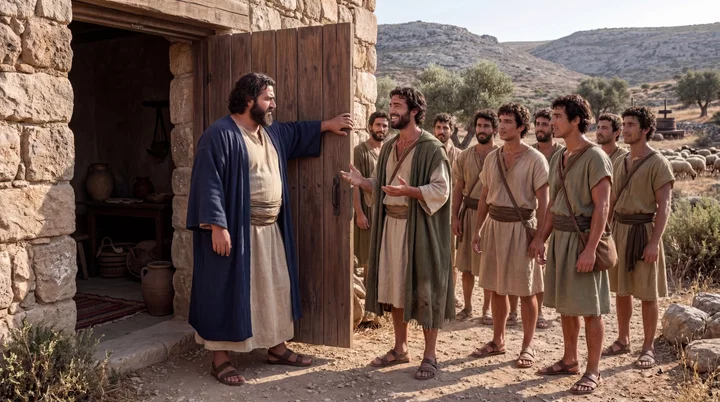
Cross-references
- 1 Samuel 25:33
And blessed be thy advice, and blessed be thou, which hast kept me this day from coming to shed blood, and from avenging myself with mine own hand.
Abigail’s appeal turns David from taking vengeance into his own hands.
- 1 Samuel 25:17
Now therefore know and consider what thou wilt do; for evil is determined against our master, and against all his household: for he is such a son of Belial, that a man cannot speak to him.
A servant warns Abigail that Nabal’s insolent refusal puts the household in danger.
Commentary
Each commentary is drawn from primary sources: the writings of Ellen G. White and Adventist pioneers and periodicals. Each commentary is separate. Its own words are not a quotation; follow the references to read the source passages.
Ellen G. White
2 sources
Nabal refused to share the bread, water, and slaughtered meat he had prepared for his shearers at his shearing feast with David and his men, though he had abundance and David had made a courteous request to relieve his need.21MR 213.1–214.3PP 665.1 That request was not for charity alone but in return for valuable service, for David and his men had been like a wall of protection to Nabal's shepherds and flocks.21MR 213.1–214.3PP 665.1 They had behaved honestly toward that property instead of helping themselves to it.PP 665.1
Nabal's answer dismissed David as an unknown person and his men as runaway servants, withholding provision from men whose origin he claimed not to know.PP 665.1 The refusal exposed a selfish and ungrateful spirit that returned evil for the good done in protecting his flocks and shepherds.21MR 213.1–214.3PP 665.1 It was churlish and niggardly, meeting kindness with contempt and showing that the kindness done to him was lost upon him.21MR 213.1–214.3PP 665.1
Sources
Pioneers and periodicals
4 sources
The verse belongs to the account of David's checkered but steadily rising career, which displays the habits and customs of the people, the influence of surrounding nations upon them, and God's providence shaping and molding national events while still remembering the promised Seed.ST Apr 11, 1911 In its immediate setting it records Nabal refusing to share his bread, water, and meat killed for his shearers with David's hungry men during the sheep-shearing feast, despite his own abundance.ST Sep 2, 1875 In it he dismisses David and his men as men he does not know whence they are, treating them as strangers and calling David a runaway.ST Sep 2, 1875 The refusal was ungrateful because David's men had protected Nabal's shepherds and flocks.ST Sep 2, 1875 His words illustrate selfish covetousness and selfishness.ST Jun 9, 1890ST Sep 2, 1875 His name means fool.ST Jun 9, 1890
The episode containing the verse illustrates that David did not seek personal revenge against those who persecuted him.ST Feb 17, 1904 It supports the lesson that personal desire must not govern prayer.ST Feb 17, 1904
Sources