1 Samuel 25:10
And Nabal answered David’s servants, and said, Who is David? and who is the son of Jesse? there be many servants now a days that break away every man from his master.
Translations
American King James Version, King James Version, KJV Cambridge Paragraph Bible, Revised Version
And Nabal answered David’s servants, and said, Who is David? and who is the son of Jesse? there be many servants now a days that break away every man from his master.
And Nabal answered David's servants, and said, Who is David? and who is the son of Jesse? there are many servants in these days that break away every man from his master.
And Nabal answered David’s servants, and said, Who is David? and who is the son of Jesse? there are many servants now-a-days that break away every man from his master.
And Nabal answereth the servants of David and saith, 'Who [is] David, and who the son of Jesse? to-day have servants been multiplied who are breaking away each from his master;
And Nabal answered David's servants and said, Who is David? and who is the son of Jesse? there are many servants now-a-days that break away every man from his master.
Then Nabal answered the servants of David, and said, Who is David? And who is the son of Jesse? Nowadays, many are the servants that have broken away, every one from the presence of his lord:
Berean Standard Bible, Majority Standard Bible
But Nabal asked them, “ Who is David? Who is this son of Jesse? Many servants these days are breaking away from their masters.
Nabal answered David’s servants and said, “ Who is David? Who is the son of Jesse? There are many servants who break away from their masters these days.
And Nabal gave them his answer and said, Who is David? who is the son of Jesse? there are a number of servants in these days running away from their masters.
Then Nabal answered Dauids seruantes, and sayd, Who is Dauid? and who is the sonne of Ishai? there be many seruantes nowe a dayes, that breake away euery man from his master.
Douay-Rheims (Challoner revision)
But Nabal answering the servants of David, said: Who is David? and what is the son of Isai? servants are multiplied now a days who flee from their masters.
Pictures
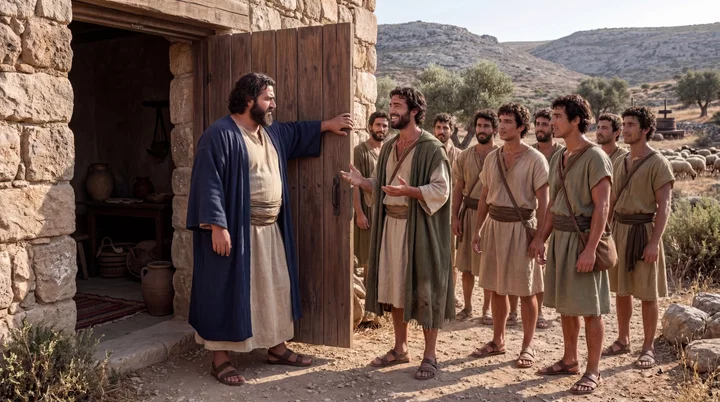
Cross-references
- 1 Samuel 25:26-31
Now therefore, my lord, as the LORD liveth, and as thy soul liveth, seeing the LORD hath withholden thee from coming to shed blood, and from avenging thyself with thine own hand, now let thine enemies, and they that seek evil to my lord, be as Nabal.
Abigail respectfully persuades David to leave vengeance to the LORD.
- 1 Samuel 25:21-22
Now David had said, Surely in vain have I kept all that this fellow hath in the wilderness, so that nothing was missed of all that pertained unto him: and he hath requited me evil for good.
Nabal’s insult moves David to resolve to take revenge on Nabal and his household.
- 1 Samuel 25:33
And blessed be thy advice, and blessed be thou, which hast kept me this day from coming to shed blood, and from avenging myself with mine own hand.
David credits Abigail’s counsel with keeping him from shedding blood and taking vengeance.
- 1 Samuel 25:17
Now therefore know and consider what thou wilt do; for evil is determined against our master, and against all his household: for he is such a son of Belial, that a man cannot speak to him.
Nabal’s servant calls him impossible to reason with and warns of the danger his conduct has brought.
Commentary
Each commentary is drawn from primary sources: the writings of Ellen G. White and Adventist pioneers and periodicals. Each commentary is separate. Its own words are not a quotation; follow the references to read the source passages.
Ellen G. White
4 sources
The verse belongs to the time after Saul killed the priests of the Lord, when Abiathar son of Ahimelech escaped and fled to David, and David kept him in safeguard with himself because the one who sought David's life sought Abiathar's life also.PP 660.1 Before the verse, David and his men had protected Nabal's shepherds and flocks like a wall of protection, and this rich man was then asked to furnish from his abundance some relief for the necessities of those who had done him such valuable service.21MR 213.1–214.3PP 665.1 Though they could have helped themselves from the flocks and herds they acted honestly and did not, and David made the request courteously.21MR 213.1–214.3PP 665.1
In the verse Nabal answers that courteous request with insolence and scorn, questioning David's identity, treating David and the son of Jesse as unknown, and falsely portraying David and his men as runaway slaves by dismissing him as merely one of many servants now breaking away from or deserting their masters.21MR 213.1–214.3PP 665.1PP 665.3–666.3 He uses that accusation to justify refusing help despite their protection of his flocks and shepherds, thus returning evil for good.21MR 213.1–214.3PP 665.1 His answer reveals an ungrateful, selfish, contemptuous, churlish and miserly character upon whom the kindness done is lost.21MR 213.1–214.3PP 665.1 In contrast to Nabal's contempt, Abigail respectfully addresses David as her lord, which recognizes his standing and future as Israel's appointed prince.PP 665.3–666.3
Sources
Pioneers and periodicals
4 sources
Nabal's name signifies fool.ST Jun 9, 1890 When David's starving soldiers came to him for food, he turned against them with sudden indignant selfishness, though his own feast was prepared with great liberality.ST Sep 2, 1875 His heart contracted toward men whose service had protected and enriched him.ST Sep 2, 1875 In the verse he refuses to recognize David's authority, dismissing him as an unknown man by asking who David and the son of Jesse are.RH Mar 23, 1916 He treats David's followers as servants breaking away every man from his master, classing them with runaways and deserters, and his words further charge David with being a refugee from justice and a runaway from his proper place.RH Mar 23, 1916ST Sep 2, 1875
Nabal illustrates selfish covetousness, and the verse warns to take heed and beware of covetousness, especially when pressure of avarice and overreaching in pursuit of wealth and station is general.ST Jun 9, 1890 Covetousness is idolatry, showing that every violation of one commandment involves violation of others also.ST Jun 9, 1890 To spend all energies in accumulating possessions available only in this short and uncertain life, while making no effort to secure eternal life with all the happiness Heaven can bestow, is folly.ST Jun 9, 1890 In the setting of this chapter, when David was personally persecuted, he did not seek the destruction of his persecutors or retaliate against them.ST Feb 17, 1904
Sources