1 Samuel 9:18
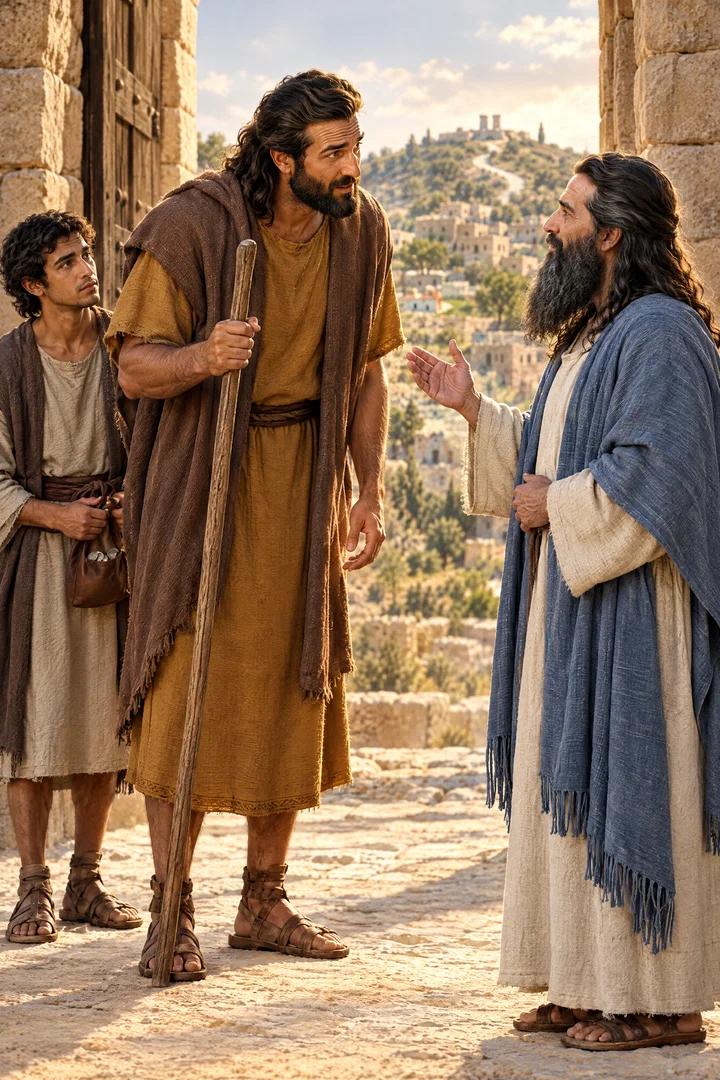
Then Saul drew near to Samuel in the gate, and said, Tell me, I pray thee, where the seer’s house is.
Translations
Then Saul drew near to Samuel in the gate, and said, Tell me, I pray you, where the seer’s house is.
King James Version, KJV Cambridge Paragraph Bible, Revised Version, American Standard Version
Then Saul drew near to Samuel in the gate, and said, Tell me, I pray thee, where the seer’s house is.
Then Saul drew near to Samuel in the gate, and said, Tell me, I pray thee, where the seer's house is.
And Saul draweth nigh to Samuel in the midst of the gate, and saith, 'Declare, I pray thee, to me, where [is] this — the seer's house?'
And Saul drew near to Samuel in the midst of the gate, and said, Tell me, I pray thee, where the seer's house is.
And Saul drew near unto Samuel, in the midst of the gate,—and said—I pray thee, do tell me, where is the house of the seer?
Berean Standard Bible, Majority Standard Bible
Saul approached Samuel in the gateway and asked, “Would you please tell me where the seer’s house is?”
Then Saul approached Samuel in the gateway, and said, “ Please tell me where the seer’s house is.”
Then Saul came up to Samuel in the doorway of the town and said, Give me directions, if you will be so good, to the house of the seer.
Then went Saul to Samuel in the middes of the gate, and said, Tell me, I pray thee, where the Seers house is.
Douay-Rheims (Challoner revision)
And Saul came to Samuel in the midst of the gate and said: Tell me, I pray thee, where is the house of the seer?
Pictures
Cross-references
- 1 Samuel 8:4-5
Then all the elders of Israel gathered themselves together, and came to Samuel unto Ramah,
Israel’s elders demand a king before Saul is chosen.
- 1 Samuel 9:3-5
And the asses of Kish Saul’s father were lost. And Kish said to Saul his son, Take now one of the servants with thee, and arise, go seek the asses.
Saul’s search for the lost asses brought him to Samuel.
Commentary
Each commentary is drawn from primary sources: the writings of Ellen G. White and Adventist pioneers and periodicals. Each commentary is separate. Its own words are not a quotation; follow the references to read the source passages.
Ellen G. White
3 sources
This meeting belongs to the time when all the elders of Israel gathered together and came to Samuel at Ramah and told him he was old and his sons did not walk in his ways and asked him to make them a king to judge them like all the nations.PP 604.2 They used the injustice of the judges as a pretext for a change long secretly desired, while their real motive was discontent and pride and a deliberate and determined purpose to set Samuel aside.PP 604.2 He felt it as a censure upon himself, even though no complaint had been made against him and all acknowledged the integrity and wisdom of his administration.PP 604.2 The evil course of his sons had never been brought to him, and he would have removed them without delay had he known it, yet he uttered no reproach but carried the matter to the Lord in prayer and sought counsel from Him alone.PP 604.2
Saul drew near to Samuel in the gate and asked him where the seer's house was.ST Jul 20, 1882PP 609.2–3 God had revealed to Samuel beforehand that Saul would come and that he would reign over Israel.PP 609.2–3 Samuel identified himself as the seer, told Saul that the lost animals had been found, and invited him to remain for the feast.ST Jul 20, 1882PP 609.2–3 He also told Saul that his father was now anxious about him rather than about the animals.ST Jul 20, 1882
Samuel's words to Saul gave a hint of the great future and great destiny before him.ST Jul 20, 1882PP 609.2–3 Saul answered with modest self-deprecation, pointing to the smallness of his tribe and his family.PP 609.2–3
Sources
Pioneers and periodicals
6 sources
Saul drew near to Samuel in the gate of the city to ask where the seer's house was, coming to him while searching for his father's lost donkeys.ST Jul 20, 1882ST Jul 29, 1889ST Jul 29, 1889ST Jun 13, 1906 This belongs to the account of Saul's choosing as king.ST Apr 15, 1913 His accession to power was favorable, with God's favor and Samuel's friendship.ST Feb 19, 1885 God had already directed events beforehand by telling Samuel that Saul was the man destined to rule Israel.ST Jul 29, 1889
In response Samuel identified himself as the seer and told Saul the lost cattle had been found and his father was now worried about him.ST Jul 20, 1882 He urged him to stay for the feast while giving him a hint of the great destiny before him.ST Jul 20, 1882 This ordinary meeting led to Saul's unexpected call to take charge of Israel, and after recognizing the call as from God, Saul waited to receive the Lord's counsel.ST Jul 29, 1889
Saul stands here at the humble beginning of his kingship, which awakens sympathy and desire for his complete success, showing humility in being anointed while seeking the donkeys, in not telling his family he had been made king, and in hiding when the people gathered to present him as king.ST Jun 13, 1906 God honored that humble disposition by giving Saul another heart for the work Israel hoped he would do as king.ST Jun 13, 1906 Had Saul remained humble and obedient, God's blessing would have continued upon him and his family.ST Jun 13, 1906 But his later inconsistent life of self-exaltation, pride, and repeated failure proved him utterly weak when he might have been strong in God, bringing sadness and illustrating that pride goes before destruction and a haughty spirit before a fall.ST Jun 13, 1906
Sources