1 Samuel 8:4
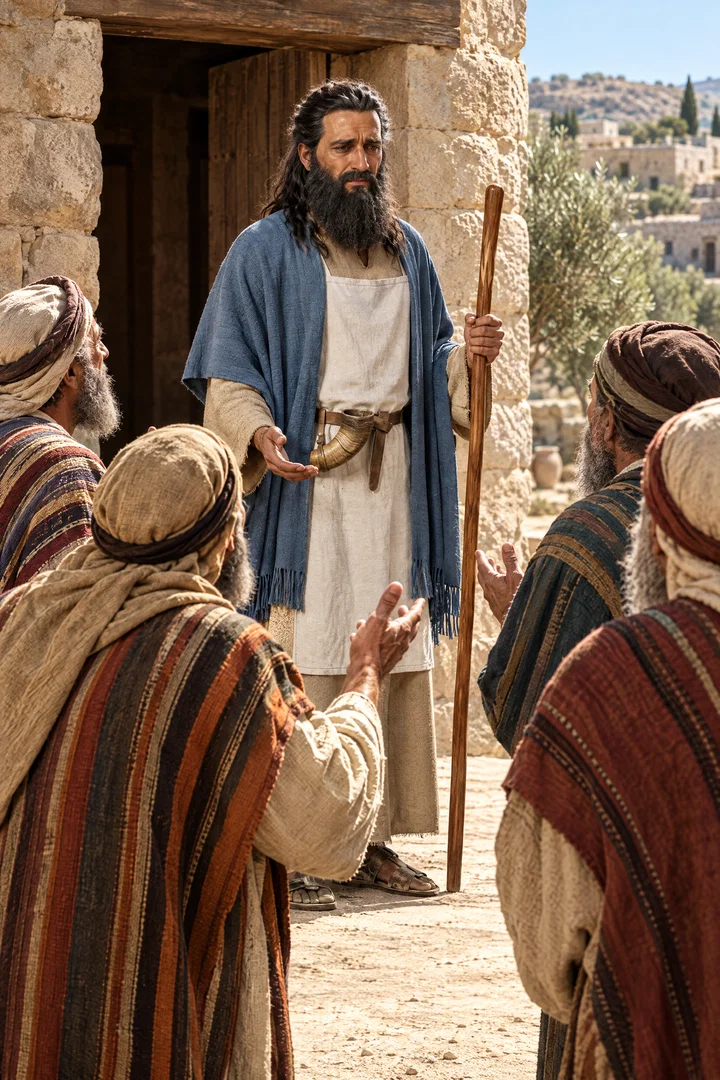
Then all the elders of Israel gathered themselves together, and came to Samuel unto Ramah,
Translations
American King James Version, Darby Translation
Then all the elders of Israel gathered themselves together, and came to Samuel to Ramah,
King James Version, KJV Cambridge Paragraph Bible
Then all the elders of Israel gathered themselves together, and came to Samuel unto Ramah,
Then all the elders of Israel assembled, and came to Samuel to Ramah,
Then all the elders of Israel gathered themselves together, and came to Samuel unto Ramah:
Then all the elders of Israel gathered themselves together, and came to Samuel unto Ramah;
And all the elders of Israel gather themselves together, and come in unto Samuel to Ramath,
So then all the elders of Israel gathered themselves together,—and came unto Samuel, to Ramah;
Berean Standard Bible, Majority Standard Bible
So all the elders of Israel gathered together and came to Samuel at Ramah.
Then all the elders of Israel gathered themselves together and came to Samuel to Ramah.
Then all the responsible men of Israel got together and went to Samuel at Ramah,
Wherefore all the Elders of Israel gathered them together, and came to Samuel vnto Ramah,
Douay-Rheims (Challoner revision)
Then all the ancients of Israel being assembled, came to Samuel to Ramatha.
Pictures
Cross-references
- 1 Samuel 8:19-20
Nevertheless the people refused to obey the voice of Samuel; and they said, Nay; but we will have a king over us;
Israel insists on having a king to rule and lead them, rejecting God’s rule.
- 1 Samuel 8:9-18
Now therefore hearken unto their voice: howbeit yet protest solemnly unto them, and shew them the manner of the king that shall reign over them.
Samuel warns the elders of the burdens and distress a king will bring.
- Acts 13:20
And after that he gave unto them judges about the space of four hundred and fifty years, until Samuel the prophet.
Israel was governed by judges before Samuel.
- 1 Samuel 7:15-17
And Samuel judged Israel all the days of his life.
Samuel judged Israel before the elders’ request.
- Deuteronomy 17:14-20
When thou art come unto the land which the LORD thy God giveth thee, and shalt possess it, and shalt dwell therein, and shalt say, I will set a king over me, like as all the nations that are about me;
Israel’s law sets limits and duties for a king.
- 1 Samuel 8:22
And the LORD said to Samuel, Hearken unto their voice, and make them a king. And Samuel said unto the men of Israel, Go ye every man unto his city.
God directs Samuel to appoint a king.
- Hosea 13:11
I gave thee a king in mine anger, and took him away in my wrath.
God gave Israel a king in anger.
- Judges 21:25
In those days there was no king in Israel: every man did that which was right in his own eyes.
Both texts describe Israel’s disorder during a time without a king.
Commentary
Each commentary is drawn from primary sources: the writings of Ellen G. White and Adventist pioneers and periodicals. Each commentary is separate. Its own words are not a quotation; follow the references to read the source passages.
Ellen G. White
12 sources
Then all the elders of Israel gathered themselves together and came to Samuel at Ramah to present their petition for a king.Ms 53, 1890, par. 26–31PP 604.2SG4 65.4ST Jul 13, 1882ST Jul 13, 1882 Their gathering at Ramah to approach Samuel began the discarding of Samuel before God had released him and the choosing to be ruled by a king.Ms 53, 1890, par. 26–31 This demand marks the folly of Israel in the days of Samuel.HL 283.2Ms 61, 1890, par. 18STA 113.14MR 69.2
Their stated occasion was dissatisfaction with the judges.PP 604.2 Those who considered themselves wronged by Samuel's sons brought their complaints to the elders, and the elders then came to Samuel at Ramah to bring a complaint against his sons, followed immediately by a request for a king.ST Jul 13, 1882ST Jul 13, 1882 They said they found no fault with Samuel's own rule, but argued that he was becoming too old and that his sons could not be trusted.ST Jul 13, 1882
Those complaints provided a pretext for pressing a change in government that many had secretly wanted for a long time.PP 604.2ST Jul 13, 1882 Their meeting arose amid that dissatisfaction yet served as a pretext for seeking a king, though the deeper motive was discontent and pride and they had long desired this change.PP 604.2 Their request arose from discontent and pride and reflected a purpose formed through long deliberation, not a sudden impulse.ST Jul 13, 1882
The demand was a rebellious departure from God's rule and a failure to trust Him to provide leaders.SG4 65.4 It was a refusal to be under God's jurisdiction and a separation from God's management, rule, and control, renouncing God's rule as divine theocracy.Ms 53, 1890, par. 26–31Lt 9, 1901, par. 23–24 It means Israel had left their first love and come into controversy with God, failing to know the blessing and safety of being led and controlled by the Lord in all ways.Ms 53, 1890, par. 26–31 Israel was meant to obey the rulers God chose and seek His guidance in difficulty, and to trust the Lord God of Israel as Ruler of the people.SG4 65.4HL 283.2
The motive was to be like the other nations and to be recognized by the world, demanding an earthly king so they could be like the nations around them.Ms 53, 1890, par. 26–31Lt 9, 1901, par. 23–24 It was a renouncing of divine theocracy for the sake of outward show and worldly likeness.Lt 9, 1901, par. 23–24 Israel had been chosen to serve God and be an example to other nations, but the desire to imitate them brought the trouble and distress God warned of through His prophet.RH Jul 23, 1901 Persisting in the demand despite the Lord's warning illustrates taking oneself out of God's hands and putting oneself under worldly, fashionable influence in an attempt at self-exaltation that instead lowers standing and imperils God's work.Lt 9, 1901, par. 23–24
Samuel was distressed by their voice and prayed unto the Lord.Ms 53, 1890, par. 26–31 He was deeply hurt and took the request as a judgment against him and an effort to discard and replace him before God had released him.Ms 53, 1890, par. 26–31ST Jul 13, 1882 He kept his hurt to himself because reproaching the people could have caused further harm.ST Jul 13, 1882 God directed Samuel to listen to the voice of the people and let the people's voice decide.Ms 53, 1890, par. 26–31
The act came from unsanctified judgment, worldly policy, and spiritual blindness.Ms 53, 1890, par. 26–31 It was marked by lack of humility, confidence in self, and failure to trust the Lord God of Israel as Ruler of the people.HL 283.2Ms 61, 1890, par. 18 It was a leaning on men and their own judgment instead of trusting God, a relying on human judgment rather than trusting God through pride, self-reliance, and misplaced trust.Ms 61, 1890, par. 18STA 113.14MR 69.2 It meant failure to combine divine power with human effort.Ms 61, 1890, par. 18
The same spirit repeats whenever God's people bring in a new order of things by human judgment and lay plans God never thought, to carry on His work as seems best and most desirable to themselves.Ms 53, 1890, par. 26–31 The same folly will be repeated among the people of God today unless there is greater humility, less confidence in self, and more trust and dependence on God.HL 283.2Ms 61, 1890, par. 18STA 113.14MR 69.2 Such dependence is shown by leaning no longer on men, making God the trust, talking less and praying much more, and revealing dependence on God by meekness of spirit, caution in plans and movements, and the mind of Christ.Ms 61, 1890, par. 18STA 113.1
Sources
Pioneers and periodicals
26 sources
All the elders of Israel gathered together and came to Samuel at Ramah to present their petition for a king.ST Jul 22, 1889RH Jan 28, 1902RH Mar 16, 1916 They demanded a king to judge and govern them like all the surrounding nations, so that Israel could be like those nations.ST Apr 17, 1901 The demand was outward apostasy revealing inward apostasy, for the people had already become like the nations at heart and were dissatisfied with dependence on God as ruler, and in asking for an earthly king they rejected God who had been their King and refused to have Him reign over them.RH Jan 28, 1902ST May 31, 1899ST Apr 17, 1901ST Feb 27, 1901 God was unwilling to grant the request because royal power brings danger of pride and tyranny, and He warned them through Samuel of the trouble that would follow, yet He then yielded and let them have the king they wanted as a concession apart from His original ideal.ST May 31, 1899ST Sep 20, 1883ST Sep 5, 1895ST Oct 17, 1916
Elders Gather at Ramah
All the elders of Israel gathered themselves together and came to Samuel at Ramah to present their petition for a king.ST Jul 22, 1889RH Jan 28, 1902RH Mar 16, 1916ST May 31, 1899ST Jun 18, 1885 Their coming was to demand a king to judge them, confronting Samuel with the request to govern them. RH Jan 28, 1902ST May 31, 1899ST Jun 18, 1885ST Apr 17, 1901 Ramah, where this gathering took place, lay in the same locality a few miles from Jerusalem.ST Oct 24, 1895
At that time Samuel was old and was assisted in the work of judge by his two sons at Beersheba.RH Jan 28, 1902ST Jun 18, 1885ST Oct 24, 1895 His sons did not follow his ways but took bribes and perverted their office, and could not be trusted.ST Jul 13, 1882ST Oct 24, 1895 The elders cited his age and his sons' untrustworthiness as their alleged reason, while saying they found no fault with Samuel's own rule.ST Jul 13, 1882ST Jun 18, 1885ST Oct 24, 1895 People who considered themselves wronged by Samuel's sons brought their complaints to the elders, and those complaints gave a pretext for pressing a change in government that many had secretly wanted for a long time.ST Jul 13, 1882ST Jul 13, 1882 The request therefore arose from discontent and pride and reflected a purpose formed through long deliberation, not a sudden impulse.ST Jul 13, 1882
Samuel was deeply hurt and took the request as a judgment against him and an effort to replace him, but he kept his hurt to himself because reproaching the people could have caused further harm.ST Jul 13, 1882 Other pressures also lay behind the meeting, for oppression by the warlike nations still in Canaan made Samuel as a man of peace seem inadequate.ST Jul 22, 1889 They thought they needed a warrior ruler who could lead them into battle and use their enemies' tactics.ST Jul 22, 1889 The troubled condition and disorder under the later judges also made a strong union seem necessary for deliverance from their troubles.RH May 26, 1904RH Mar 30, 1916 Yet God had chosen to govern Israel through judges appointed and empowered by Him from time to time, and the needed change was in the people's self-government rather than in that system.ST Sep 20, 1883RH May 26, 1904
The gathering begins a new era in the government of Israel and is the foundation and first step of the monarchy.ST Oct 24, 1895RH Mar 30, 1916ST Feb 13, 1901 It led to Samuel's guidance in the matter, his meeting with Saul of the tribe of Benjamin and instructions to him, and the public choosing of Saul as king.ST Oct 24, 1895 Saul was a Benjaminite whom the Lord had specially prepared, and he was chosen and anointed as the first king, though he later rebelled against the Lord and was rejected as king.RH Mar 30, 1916ST Apr 28, 1914 No effort to establish a king had been made since the disastrous rule of Abimelech until this time.ST Jul 22, 1889
Rejecting God as King
The elders demanded a king to judge and govern them like all the surrounding nations, so that Israel could be like those nations.RH Jul 23, 1901ST Apr 17, 1901ST Jul 29, 1897
The demand was outward apostasy revealing inward apostasy, for the people had already become like the nations at heart.ST Apr 17, 1901
They would not govern themselves by the law of God, so they needed a recognized human authority to give them law and govern them.ST Apr 17, 1901
They were dissatisfied with dependence on God as their ruler and leader and forsook Him as their King because they did not want to remain a peculiar people as God's example to the world.RH Jul 23, 1901ST Apr 17, 1901ST Feb 27, 1901
They patterned after nations that had long since lost the memory of God, crying for a king and looking to him instead of to God for protection and guidance.ST Feb 27, 1901
In this they rejected God who had been their King, refused to have Him reign over them, and made a complete rejection of God and His law for an earthly king and earthly law.RH Jan 28, 1902ST May 31, 1899ST Apr 17, 1901
This was open rebellion against God, beginning Israel's formal rejection of God's direct rule, with the voice of the people opposing God's will.RH Jan 28, 1902ST May 31, 1899ST Apr 17, 1901ST Oct 17, 1916
Before the demand Israel was a theocracy in which all the people together formed both the religious community and the nation, with distinct groups carrying out religious and civil duties without one controlling the other and with God giving the laws for both.ST Apr 29, 1903
It was a true theocracy whose fundamental principles brought its subjects liberty in its truest sense, yet even this true theocracy could not keep the people loyal.ST Apr 29, 1903RH Aug 20, 1901
God was unwilling to grant the request because royal power put rulers in danger of pride and tyranny.ST Sep 20, 1883
He warned them through Samuel of the dangers, harmful results, trouble and distress that would follow.RH Jul 23, 1901ST Sep 5, 1895ST Oct 17, 1916
The relation between God and man is reciprocal, and He does not desire unwilling service nor desire to reign over the unwilling, but requires only willing, loving service, so that all governments derive their just powers from the consent of the governed.ST Sep 5, 1895
God then yielded and let them have the king they wanted in His anger after ordering Samuel to accede to them, giving them their own choice, and Samuel then anointed Saul as king.ST May 31, 1899ST Sep 5, 1895RH Mar 30, 1916ST Feb 27, 1901
This giving of a king was a concession apart from His original ideal, parallel to His permission to eat flesh, with both allowances followed by punishment in like manner such as the gradual shortening of human life.RH Oct 28, 1873
Persisting in wanting what God is not ready to give rejects blessings greater than anything hoped for and shuts people off from far greater spiritual benefits.ST Jul 22, 1889
The choice drew Israel into the politics of governing the nation apart from God's direction, led to idolatry, and meant losing the conditions requiring them to trust in God alone as King.ST Mar 31, 1909ST Jul 29, 1897
With their king came oppression and long and bloody wars, and later perversion of God's plan of government, illustrating that death, the salary for sin, is the wage of disloyalty and sin.RH Jul 23, 1901ST Jul 29, 1897ST Feb 27, 1901RH Aug 20, 1901
Their departure from God's rule did not then end God's relationship with Israel as His people, for He continued to work with them until they rejected Christ as their rightful King and openly chose another ruler, at which rejection the theocracy ended in its national and worldly sense.RH May 27, 1909
A king could eventually be given with God's sanction, but he was not to be a tyrant ruling with absolute power, for he would represent the Messianic office of Christ.ST Jul 22, 1889
Sources