1 Timothy 1:3
As I besought thee to abide still at Ephesus, when I went into Macedonia, that thou mightest charge some that they teach no other doctrine,
Translations
As I sought you to abide still at Ephesus, when I went into Macedonia, that you might charge some that they teach no other doctrine,
King James Version, KJV Cambridge Paragraph Bible, Webster Bible
As I besought thee to abide still at Ephesus, when I went into Macedonia, that thou mightest charge some that they teach no other doctrine,
Revised Version, American Standard Version
As I exhorted thee to tarry at Ephesus, when I was going into Macedonia, that thou mightest charge certain men not to teach a different doctrine,
according as I did exhort thee to remain in Ephesus — I going on to Macedonia — that thou mightest charge certain not to teach any other thing,
Even as I begged thee to remain in Ephesus, [ when I was] going to Macedonia, that thou mightest enjoin some not to teach other doctrines,
Even as I exhorted thee to remain in Ephesus, when I was journeying into Macedonia, that thou mightest charge some—
Berean Standard Bible, Majority Standard Bible
As I urged you on my departure to Macedonia, you should stay on at Ephesus to instruct certain men not to teach false doctrines
As I urged you when I was going into Macedonia, stay at Ephesus that you might command certain men not to teach a different doctrine,
It was my desire, when I went on into Macedonia, that you might make a stop at Ephesus, to give orders to certain men not to put forward a different teaching,
As I besought thee to abide still in Ephesus, when I departed into Macedonia, so doe, that thou mayest warne some, that they teach none other doctrine,
Douay-Rheims (Challoner revision)
As I desired thee to remain at Ephesus when I went into Macedonia, that thou mightest charge some not to teach otherwise,
Pictures
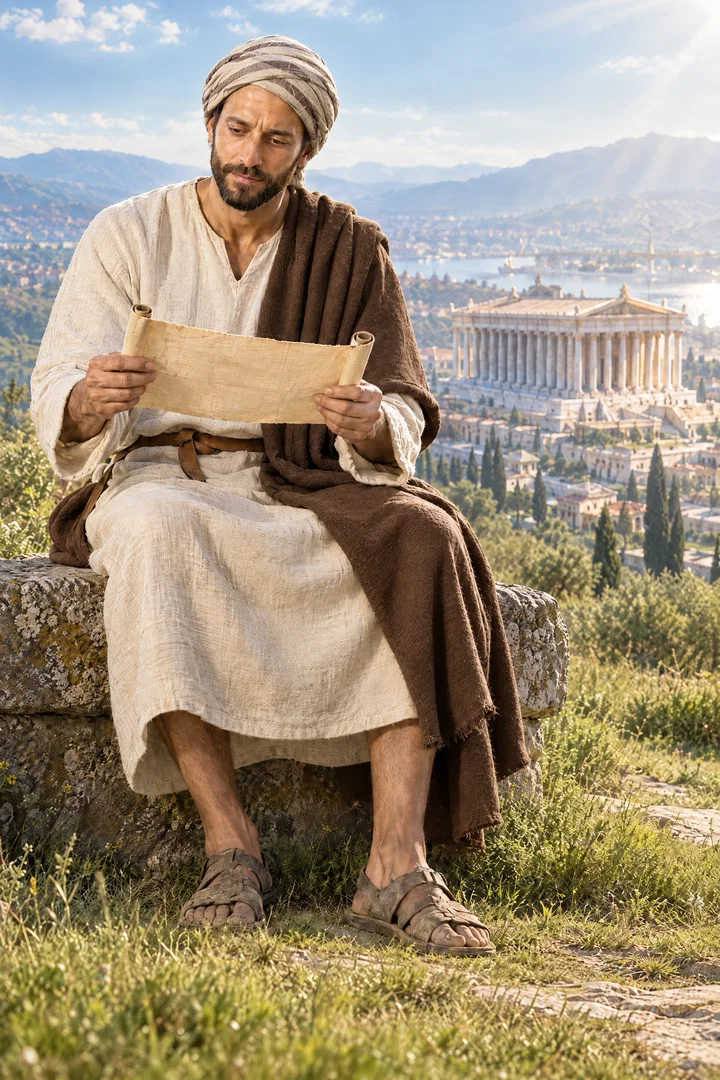
Cross-references
- 2 Timothy 4:3-4
For the time will come when they will not endure sound doctrine; but after their own lusts shall they heap to themselves teachers, having itching ears;
People will reject sound doctrine, turn from truth, and follow fables.
- 1 Timothy 1:18-19
This charge I commit unto thee, son Timothy, according to the prophecies which went before on thee, that thou by them mightest war a good warfare;
The charge continues with holding faith and a good conscience, lest faith be shipwrecked.
- Acts 20:28-30
Take heed therefore unto yourselves, and to all the flock, over the which the Holy Ghost hath made you overseers, to feed the church of God, which he hath purchased with his own blood.
Paul warns church leaders that false teachers will arise and lead disciples astray.
- 1 Timothy 4:16
Take heed unto thyself, and unto the doctrine; continue in them: for in doing this thou shalt both save thyself, and them that hear thee.
Continued attention to sound doctrine affects the salvation of Timothy and his hearers.
- 1 Timothy 4:13
Till I come, give attendance to reading, to exhortation, to doctrine.
Timothy is urged to attend to teaching and doctrine.
- Acts 15:24
Forasmuch as we have heard, that certain which went out from us have troubled you with words, subverting your souls, saying, Ye must be circumcised, and keep the law: to whom we gave no such commandment:
The decree rejects teaching that Gentiles must be circumcised and keep the law.
- 2 Timothy 1:13
Hold fast the form of sound words, which thou hast heard of me, in faith and love which is in Christ Jesus.
Timothy is told to hold fast the pattern of sound words.
- 1 Timothy 4:11-12
These things command and teach.
Timothy is charged to teach faithfully and be an example to believers.
- Titus 1:5
For this cause left I thee in Crete, that thou shouldest set in order the things that are wanting, and ordain elders in every city, as I had appointed thee:
Both charge church leaders to put matters in order.
- Revelation 2:2
I know thy works, and thy labour, and thy patience, and how thou canst not bear them which are evil: and thou hast tried them which say they are apostles, and are not, and hast found them liars:
The Ephesian church rejects false apostles, as Timothy is charged to oppose false doctrine.
Commentary
Each commentary is drawn from primary sources: the writings of Ellen G. White and Adventist pioneers and periodicals. Each commentary is separate. Its own words are not a quotation; follow the references to read the source passages.
Ellen G. White
6 sources
Paul remained behind at Ephesus when the journey into Macedonia began, under instruction to order certain persons to stop presenting a different teaching.Lt 143, 1897, par. 4Ms 186, 1897, par. 45–497MR 175.3–176.2 The responsibility for the care of the church at Ephesus was thus placed upon him while the onward journey continued, which those who held the later account describe as the last voyage toward Rome.SLP 319.1 He was a youthful worker brought to conversion through that earlier labor and bound as a son to a loved and honored father, after sharing together missionary hopes and perils and toils.SLP 319.1 His mild, yielding, retiring character brought rest and comfort to an ardent, zealous, indomitable spirit, by faithful service and tender love that brightened many dark hours.SLP 319.1
The charge was a guard for the church against false teaching that draws people away from faith and a godly life.Lt 143, 1897, par. 4Ms 186, 1897, par. 45–49 The different teaching to be stopped was attention to fables and endless genealogies, which furnish disputes and questions instead of building godly edification and faith.Lt 143, 1897, par. 47MR 175.3–176.2Ms 80, 1898, par. 6–7 The aim of the charge is love from a pure heart and a good conscience and sincere, unfeigned faith.7MR 175.3–176.2Ms 80, 1898, par. 6–7 Those who swerve from that aim turn aside to empty talk and vain jangling, desiring to be teachers of the law while understanding neither what they say nor what they affirm.7MR 175.3–176.2
The same charge calls for holding faith and a good conscience in a good warfare, since casting them away brings shipwreck concerning faith.7MR 175.3–176.2 It calls believers to proclaim no other teaching than the true faith, boldly and fervently, refusing to be turned away to seducing spirits and standing firm to declare the message given by God.Lt 205, 1905, par. 15–16 Those who obey this charge are guided by God, have His grace put in their hearts, and are to be highly esteemed.Lt 205, 1905, par. 15–16
The charge applies to those who go out from the truth and give up the Bible truth that made Seventh-day Adventists what they are, letting go the Sabbath and wrapping themselves in a false sanctification that accords with any false theory.7MR 175.3–176.2 It applies to undermining faith and circulating false statements and senseless lies, while those who remain must, after having done all, stand.7MR 175.3–176.2
Sources
Pioneers and periodicals
11 sources
Paul on his way into Macedonia asked Timothy to remain at Ephesus to take charge of the church there and put it in order by commanding certain ones to teach no different doctrine.ST Jan 1, 1885ST Jan 4, 1883 Those entrusted with oversight of the church are therefore to guard it from teaching contrary to the truth and to correct those who teach otherwise.RH Feb 25, 1858RH Jan 31, 1871ST Oct 24, 1878 Sound doctrine must be carefully guarded because it is practical teaching that leads to a pure life and the holiness essential to salvation, calling for sound faith that rejects fables and false doctrines.ST Jan 4, 1883RH Jan 8, 1875RH Oct 27, 1859RH Jul 26, 1864 The false teaching to be stopped included Judaizing teachers who made much of long genealogies and those who presumed to teach the law without understanding what they affirmed, a danger also seen when churches cling to their own ideas and shut the door against light that differs from them.ST Jan 1, 1885RH Jun 26, 1856 Those who held it taught that verses 1-11 enforce moral obligations without naming the Sabbath, showing it was not binding on Gentile Christians.RH Oct 21, 1851
Setting at Ephesus
Paul went into Macedonia and besought Timothy to abide still at Ephesus, remaining there at his request rather than accompanying him.ST Jan 1, 1885ST Jan 4, 1883RH Jan 31, 1871ST Oct 24, 1878 He left Timothy stationed there to charge some that they teach no other doctrine, laying upon certain persons a direct order not to teach a different doctrine from the true one.ST Jan 1, 1885ST Jan 4, 1883RH Jan 31, 1871ST Oct 24, 1878 That remaining was for the oversight and regulation of the church, with guarding its teaching made his appointed responsibility.ST Jan 1, 1885ST Jan 4, 1883RH Jan 31, 1871ST Oct 24, 1878RH Jan 8, 1875
This letter was written near the close of Paul's ministerial career, more than thirty years after his conversion. Timothy's stationing at Ephesus when Paul went into Macedonia was another advantage among many given to the church at Ephesus.
Guarding True Doctrine
Those entrusted with oversight of the church are to warn certain people not to teach doctrine contrary to the truth and different from the true one.RH Feb 25, 1858RH Jan 31, 1871ST Oct 24, 1878RH Nov 30, 1916 Paul left Timothy stationed at Ephesus while he went into Macedonia to give this charge and to regulate the church.RH Jan 31, 1871ST Oct 24, 1878RH Nov 30, 1916 Guarding the church from false teaching is an important responsibility, requiring correction of those who teach otherwise.RH Jan 31, 1871ST Oct 24, 1878
Sound doctrine must be carefully guarded because it is sound, practical teaching that leads to purity and a pure life.ST Jan 4, 1883RH Jan 8, 1875 It teaches the holiness essential to salvation, while teachings contrary to it oppose sound doctrine.ST Jan 4, 1883RH Jan 8, 1875 The charge therefore calls for sound faith, with rejection of fables and refusal to turn aside to false doctrines and fables.RH Oct 27, 1859RH Jul 26, 1864
The false teachers in view included Judaizing teachers who made a merit of long genealogies and threatened the church with harmful influence.ST Jan 1, 1885 The command was aimed at false teachers including those who desired to teach the law without understanding what they said or what they asserted.RH Jun 26, 1856 This need to guard the church from false teaching led to plain rules for the qualifications of its leaders, rather than allowing people to appoint themselves.RH Jun 26, 1856
The charge was needed because churches were bringing in their own ideas and opinions, setting their stakes and holding the measuring tape in their hands. If message or messenger differed in some little degree from preconceived ideas, they closed the door firmly against the light and the light-bearer. The verse is the Lord's warning through Paul to every man to take heed against entertaining this spirit of jangling and strife. As held by those who so taught, the passage in verses 1-11 enforces moral obligations but does not name the Sabbath, and its silence shows the Sabbath was not binding on Gentile Christians, since if it were binding that omission would be unaccountable.RH Oct 21, 1851
Sources