1 Timothy 6:7
For we brought nothing into this world, and it is certain we can carry no thing out.
Translations
American King James Version, KJV Cambridge Paragraph Bible, Webster Bible
For we brought nothing into this world, and it is certain we can carry nothing out.
For we brought nothing into this world, and it is certain we can carry no thing out.
Revised Version, American Standard Version
for we brought nothing into the world, for neither can we carry anything out;
for nothing did we bring into the world — [it is] manifest that we are able to carry nothing out;
For we have brought nothing into the world: [ it is] [manifest] that neither can we carry anything out.
For, nothing, brought we into the world, neither, to take anything out, are we able;—
For we brought nothing into the world, so we cannot carry anything out of it.
For we brought nothing into the world, so certainly we cannot carry anything out of it.
For we brought nothing into the world, and we certainly can’ t carry anything out.
For we came into the world with nothing, and we are not able to take anything out;
For we brought nothing into the world, and it is certaine, that we can carie nothing out.
Douay-Rheims (Challoner revision)
For we brought nothing into this world: and certainly we can carry nothing out.
Pictures

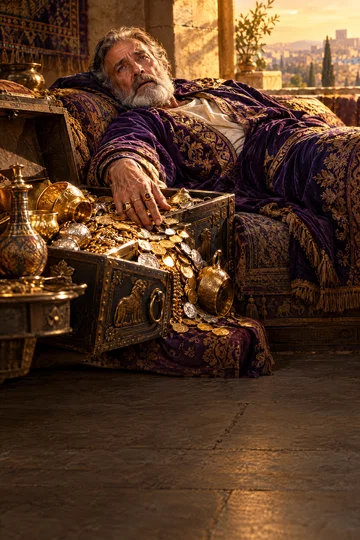
Cross-references
- Matthew 6:19-20
Lay not up for yourselves treasures upon earth, where moth and rust doth corrupt, and where thieves break through and steal:
Earthly wealth is left behind, while treasure in heaven endures.
- 1 Timothy 6:19
Laying up in store for themselves a good foundation against the time to come, that they may lay hold on eternal life.
Earthly wealth cannot be carried out, but a good foundation is laid up for eternity.
- Luke 12:20-21
But God said unto him, Thou fool, this night thy soul shall be required of thee: then whose shall those things be, which thou hast provided?
The rich fool dies and leaves his stored wealth, having failed to become rich toward God.
- Ecclesiastes 5:15
As he came forth of his mother’s womb, naked shall he return to go as he came, and shall take nothing of his labour, which he may carry away in his hand.
People leave the world as they came, taking nothing with them.
- Job 1:21
And said, Naked came I out of my mother’s womb, and naked shall I return thither: the LORD gave, and the LORD hath taken away; blessed be the name of the LORD.
Both teach that we enter life with nothing and leave with nothing.
- Luke 12:33
Sell that ye have, and give alms; provide yourselves bags which wax not old, a treasure in the heavens that faileth not, where no thief approacheth, neither moth corrupteth.
Giving alms lays up unfailing treasure in heaven.
- Luke 12:15
And he said unto them, Take heed, and beware of covetousness: for a man’s life consisteth not in the abundance of the things which he possesseth.
Life does not consist in owning many things; beware covetousness.
- Luke 16:22-25
And it came to pass, that the beggar died, and was carried by the angels into Abraham’s bosom: the rich man also died, and was buried;
The rich man leaves his wealth behind when his life ends.
- Psalms 49:17
For when he dieth he shall carry nothing away: his glory shall not descend after him.
A person cannot take wealth along at death.
- Mark 8:36
For what shall it profit a man, if he shall gain the whole world, and lose his own soul?
Both warn that earthly gain is useless at death.
- Proverbs 23:4-5
Labour not to be rich: cease from thine own wisdom.
Warns that riches are fleeting and should not be pursued.
- Psalms 62:10
Trust not in oppression, and become not vain in robbery: if riches increase, set not your heart upon them.
Warns against trusting in wealth or setting the heart on it.
- Hebrews 13:5
Let your conversation be without covetousness; and be content with such things as ye have: for he hath said, I will never leave thee, nor forsake thee.
Both teach contentment with what we have.
- 1 Peter 1:4
To an inheritance incorruptible, and undefiled, and that fadeth not away, reserved in heaven for you,
It names the lasting inheritance contrasted with wealth left behind.
- 1 John 2:17
And the world passeth away, and the lust thereof: but he that doeth the will of God abideth for ever.
The world and its desires pass away, while the doer of God's will abides forever.
- 2 Corinthians 4:18
While we look not at the things which are seen, but at the things which are not seen: for the things which are seen are temporal; but the things which are not seen are eternal.
Visible things are temporary, while unseen things are eternal.
- Luke 16:9
And I say unto you, Make to yourselves friends of the mammon of unrighteousness; that, when ye fail, they may receive you into everlasting habitations.
Earthly wealth fails, but it can be used to make lasting friends.
- Colossians 3:2
Set your affection on things above, not on things on the earth.
Sets affection on heavenly things rather than earthly possessions.
Commentary
Each commentary is drawn from primary sources: the writings of Ellen G. White and Adventist pioneers and periodicals. Each commentary is separate. Its own words are not a quotation; follow the references to read the source passages.
Ellen G. White
19 sources
We brought nothing into the world and can carry nothing out at death, so lands, money, and all earthly possessions are temporary and cannot be taken into the eternal world and God's kingdom.ST Mar 22, 18831T 540.2Ms 21, 1899, par. 25–26 Because nothing is carried out, godliness with contentment is great gain, calling for satisfaction with simple food and clothing rather than pursuit of riches.1T 540.2Ms 21, 1899, par. 25–26Ms 82, 1898, par. 2–6 Wanting to be rich leads into temptation and a snare, into foolish and hurtful desires that drown people in ruin and destruction, draw them from faith, and pierce them with many sorrows.Lt 70, 1893, par. 29–33ST Oct 13, 18981T 541.1 Money has value only as a trust from heaven to bless humanity, becoming a curse when used to indulge self, so trust is to be placed in God rather than in uncertain riches.Lt 70, 1893, par. 29–33ST Oct 13, 1898 Its lasting use is in doing good, sharing generously, and giving to advance God's work and help those in need, for while money is not needed in the next life, good done in winning souls to Christ is carried to heaven and lays up treasure for the future.Lt 70, 1893, par. 29–33RH Jan 31, 1907COL 266.2
Nothing Brought, Nothing Taken
People enter this world bringing nothing with them and leave it at death able to carry nothing out, so lands, money, earthly treasures and every possession are temporary and cannot be taken beyond death into the eternal world and God's kingdom.ST Mar 22, 18831T 540.2Ms 21, 1899, par. 25–26Ms 82, 1898, par. 2–6Lt 70, 1893, par. 29–33 Because nothing can be carried out, godliness with contentment is great gain, calling for satisfaction and contentment with basic food and clothing rather than the pursuit of riches.1T 540.2Ms 21, 1899, par. 25–26Ms 82, 1898, par. 2–6Lt 70, 1893, par. 29–334T 617.2–618.1 Covetousness and the pursuit of wealth are therefore warned against as seeking no lasting gain.Ms 82, 1898, par. 2–6Lt 70, 1893, par. 29–334T 617.2–618.1
Having riches is no proof of godliness, superiority, lasting gain, or happiness, and the pursuit of wealth cannot secure what it promises.ST Mar 22, 18831T 540.2ST Mar 22, 1883 To suppose that gain is godliness dishonors God, and to make material gain into a god and to use religion to get wealth are dangerous, as seen when professed poverty is used to grow wealthy.ST Oct 13, 1898GC88 83.1Lt 1a, 1872, par. 9–10 Having the whole world without God's blessing still leaves a person as poor as a beggar.ST Apr 3, 1879
Wanting to be rich and wanting to be first leads into temptation and a snare, into foolish, harmful and hurtful desires that drown people in ruin and destruction, draw them from faith, and pierce them with many sorrows.Lt 70, 1893, par. 29–33ST Oct 13, 1898 Spending a lifetime to acquire wealth cannot preserve it beyond death, for the rich must leave behind what they labored to acquire.1T 541.1ST Mar 22, 1883 Gaining property at the cost of faith and eternal interests means losing both worlds, staking eternal interests for earthly gain and forfeiting this world and the next.1T 541.1ST Mar 22, 1883
The love of gain makes people proud and full of envy, strife, evil surmising and dispute, scheming and planning for earthly possessions that have no value with God.ST Oct 13, 1898 Loving and idolizing the world is a snare of Satan aimed especially at those looking for Christ's second appearing and keeping all God's commandments.EW 227.1 Placing affections on lands, money and earthly treasures that must be left at death, and caring more for money than for the success of Christ's kingdom and the spread of truth, holds a person in Satan's power.EW 227.1
Fixing mind and soul on worldly business, honor, wealth and pleasure dwarfs spiritual life and turns ability and influence from serving Christ to serving self.Lt 1a, 1872, par. 9–10 The one who idolizes the world becomes dazed and blinded, drunk with cares, a worldly businessman and a slave to mammon.EW 227.1Lt 1a, 1872, par. 9–10 Keeping means in Satan's ranks, withholding support and driving ministers to want and distress, weakens courage and zeal, destroys love for one another, and causes salvation and grace to stand back.EW 227.1 It produces a grudging disposition that gives sparingly, and by example leads the family to love and serve worldly things instead of advancing in the divine life and striving to enter the strait gate.EW 227.1Lt 1a, 1872, par. 9–10
Stewardship for Eternal Gain
Money has value only when held in trust as a gift from heaven to bless humanity, while when used to indulge and glorify self it becomes a curse, an encumbrance and a temptation.Lt 70, 1893, par. 29–33ST Oct 13, 1898 Trust is therefore to be placed in God rather than in uncertain riches, since earthly possessions are temporary.Lt 70, 1893, par. 29–33ST Oct 13, 1898
Instead of seeking wealth, believers are to pursue godliness and other virtues, fight the good fight of faith and lay hold on eternal life.Lt 70, 1893, par. 29–33ST Oct 13, 1898 This means seeking purity of heart, love and unity, the bread of life, and a meek and quiet spirit rather than wanting to be first.Lt 70, 1893, par. 29–33ST Oct 13, 1898 The pleasure and power of this world pass away, but a life spent doing God's will abides forever.Lt 70, 1893, par. 29–33ST Oct 13, 1898RH Jan 31, 1907
The lasting value of wealth lies in doing good, sharing generously, and laying up lasting treasure for the future.Lt 70, 1893, par. 29–33RH Jan 31, 1907COL 266.24T 52.3–53.1 Its value lies in using entrusted gifts for God's work and for those in need rather than spending selfishly, to save souls and bless others and to advance God's work.Lt 70, 1893, par. 29–33RH Jan 31, 1907COL 266.24T 52.3–53.1 Money is not needed in the next life, but good deeds done in winning people to Christ are carried to heaven, and their results will be seen in God's kingdom.Lt 70, 1893, par. 29–33RH Jan 31, 1907COL 266.24T 52.3–53.1
As pictured in the rich man, death ends stewardship.COL 267.1ST Jun 1, 1915 He leaves his wealth behind, and his riches cannot save him.COL 267.1ST Jun 1, 1915 They have not made his account right with God or clothed him in Christ's righteousness, and expose him as spiritually poor.COL 267.1ST Jun 1, 1915
No matter how carefully wealth is acquired and guarded, none of it can be carried into God's kingdom or benefit its owner after death or when Christ appears.GC88 83.14T 52.3–53.1 Earthly riches can also be destroyed suddenly, so they are no lasting security.4T 52.3–53.1 Worldly honor and wealth gained while neglecting spiritual life leave a person lower in moral worth before God's judgment, as illustrated by friars growing wealthy despite professing poverty and using religion to gain riches.GC88 83.14T 52.3–53.1 The verse therefore appeals for turning from worldly attachments to choose God rather than mammon, and not making obedience depend on personal or temporal advantage.Lt 109, 1899, par. 16–18GC88 83.14T 52.3–53.1
Sources
Pioneers and periodicals
76 sources
People enter this life with nothing and leave it with nothing, and no earthly possession can be carried beyond death into eternity.ST Mar 22, 1883ST Sep 17, 1912RH Nov 20, 1856RH Oct 12, 1869ST May 6, 1886 For this reason godliness with contentment is great gain, and having food and clothing is enough reason to be thankful, content, and willing to share.RH Oct 12, 1869RH Apr 4, 1871ST Feb 22, 1905RH Feb 20, 1913ST Jan 30, 1901 The desire to be rich is a temptation and a snare leading to destruction, for the love of money is the root of evil that draws away from faith and pierces with sorrows.ST Sep 17, 1912RH Feb 20, 1855ST Mar 31, 1887ST Jan 30, 1901RH May 12, 1904 What endures beyond the grave is not property but character formed with God, and the hope of a heavenly inheritance through Christ.RH Jun 16, 1904RH Mar 21, 1871RH Jan 2, 1866ST Jul 26, 1905RH Jul 1, 1873 Riches are therefore received from God in trust, to be used faithfully in doing good and giving to the needy, thus sending treasure ahead into heaven where it is secure.RH Jul 1, 1873ST Jan 3, 1905RH Mar 3, 1903ST Nov 30, 1882RH Jun 4, 1857
Entering and Leaving Empty-Handed
It is certain that people bring nothing into this world and can carry nothing out of it when they die, so earthly possessions do not accompany a person beyond this life into eternity.ST Mar 22, 1883ST Sep 17, 1912RH Nov 20, 1856RH Feb 20, 1855 Entering life with nothing and leaving it with nothing proves that having food and clothing is enough reason for contentment, while stretching desire for daily necessities into desire for wealth and luxury and seeking to become rich exposes a person to temptation and harmful desires.ST Mar 22, 1883ST Sep 17, 1912RH Nov 20, 1856RH Feb 20, 1855RH Apr 4, 1871 Money itself is neither good nor evil, but loving it takes root within and leads away from faith into other evils and sorrow, so having riches is no proof of godliness, superiority, lasting gain, security, or happiness.ST Mar 22, 1883ST Sep 17, 1912RH Nov 20, 1856RH Feb 20, 1855
Death makes rich and poor equal in ownership, since neither retains anything, not even a penny, whatever dignity or poverty attends the burial.RH Oct 12, 1869ST May 6, 1886RH Jan 2, 1866RH Jan 10, 1856 Both leave burdens and treasures at the grave, and wealth, property, honor, and authority must be left to others, while the dead are as powerless as the poorest and weakest.RH Oct 12, 1869ST May 6, 1886RH Jan 2, 1866 Even the fineness of a burial shroud matters little because the body returns to dust.RH Oct 12, 1869ST May 6, 1886RH Jan 10, 1856
Nothing brought in can be taken out, which proves earthly riches are not truly owned, for gold and silver are only earth made precious by human judgment.RH Nov 11, 1858RH Jul 1, 1873RH Jun 24, 1858 Death strains out and leaves behind all the work of human hands, including houses, lands, clothing, money, books, pictures, furniture, comforts, treasures, honors, and earthly friends, so no material organizing and building can be taken through the shadowy door.RH Jul 1, 1873RH Jun 24, 1858RH Aug 3, 1876 Wealth, power, and fame cannot save from the narrow bed, obtain a single hour's delay, or be felt in the grave, and one who uses riches only for self-aggrandizement may be left poor in the world to come without an inheritance there.RH Jul 1, 1873RH Jun 24, 1858RH Aug 3, 1876
A miser may cling to wealth and be buried with the key to his safe or money-chest tied to his wrist, gripping it until the last breath, but the gold stays behind for heirs to break open and divide while he decays in the grave with only the useless key beside him.RH Apr 21, 1904ST Jan 13, 1888ST Oct 30, 1879RH Apr 4, 1871ST Mar 18, 1903 Shrouds have no pockets, and the empty hands of Alexander display the same truth visibly, warning against avarice and attachment to possessions.RH Apr 21, 1904ST Jan 13, 1888RH Apr 4, 1871 Control over great enterprises does not endure beyond death, and hoarded wealth such as an estate selfishly saved cannot go beyond the grave but is sold and consumed in quarrels and by lawyers, proving the futility of clinging to riches when the soul is lost.RH Apr 21, 1904ST Oct 30, 1879ST Mar 18, 1903
Losing life is the greatest of all losses because it includes every other loss, leaving a person with nothing more to lose since all possessions are left behind at death. This truth about human nature explains the claim that a person will give all for life. Applied to Adam, it means his transgression cost him not life alone but dominion and inheritance with it, so he could pass to descendants only what he had left, a brief sorrowful life ending in death.
Contentment With Basic Needs
Godliness joined with contentment is great gain because human beings arrive with empty hands and depart with empty hands, so possessions cannot supply lasting gain.ST Oct 13, 1898ST Feb 22, 1905RH Feb 20, 1913ST Jan 30, 1901 Remembering that nothing is brought in and nothing is carried out exposes the folly of making wealth the purpose of life and points instead to a gain whose worth endures beyond death.ST Feb 22, 1905RH Feb 20, 1913 Those who suppose gain itself is godliness dishonor God, becoming proud and full of envy, strife, evil surmising and dispute while scheming for earthly possessions that have no value with Him.ST Oct 13, 1898ST Jan 30, 1901 Money has worth only when held in trust as a gift from heaven to bless humanity, and when used to indulge and glorify self it becomes a curse, an encumbrance and a temptation.ST Oct 13, 1898ST Jan 30, 1901
Having food and clothing is reason enough to be content, thankful to God, and willing to share with those who have less.RH Oct 12, 1869RH Apr 4, 1871 Wealth, property, honor and authority must be left to others, while the dead are as powerless as the poorest and weakest, and this grounds the counsel to rest content with what meets necessary needs.RH Oct 12, 1869RH Apr 4, 1871ST Mar 31, 1887 Desire for daily necessities must not be stretched into desire for wealth, luxury, costly fashion and surplus, since surplus can tempt growing indulgence, turn thoughts toward self, and end in destruction.RH Apr 4, 1871ST Mar 31, 1887RH May 12, 1904RH Sep 11, 1860 Treasure laid up in heaven brings lasting reward, whereas earthly possessions cannot secure it, and letting love of money rule draws away from faith and pierces with sorrows.ST Mar 31, 1887RH May 12, 1904
Contentment holds in any financial condition, since abundance does not make it natural.ST Feb 22, 1905ST Nov 15, 1883 Having little is enough when content, while without contentment no amount of anything feels sufficient.ST Mar 27, 1884ST Jun 12, 1879 A contented mind is a continual inward feast, and trouble falls lightly upon it, like hailstones rattling on a roof while one sits at a sumptuous feast inside; human beings need but little here below and need that little only for a short time, so earth-born cares are wrong and must be put away.ST Nov 15, 1883ST Mar 27, 1884RH Sep 15, 1859 Worldly wealth does not guarantee happiness, and being satisfied with what one has is reason for thankfulness rather than envy of the rich.ST Nov 15, 1883ST Jun 12, 1879
This truth quiets the heart in God in reliance on His merciful providence and gracious promises for support and necessary things.ST Apr 22, 1903RH Oct 20, 1859 It opposes murmuring against God, distrust, distracting cares, covetous desires and all mental anxiety about earthly things, since this life was given to seek a better one.ST Apr 22, 1903RH Oct 20, 1859 As God feeds birds that only gather what He provides without sowing, reaping or storing, people using greater faculties to cooperate with Him by working with their might, sowing, reaping and gathering need not fear want.ST Apr 22, 1903RH Oct 20, 1859 When food and clothing are present there is to be contentment, with care for earthly necessities cast on God while attending to the great business of salvation, knowing the Lord will withhold no good thing from those who walk uprightly.ST Apr 22, 1903RH Oct 20, 1859
Blessedness belongs to small desires and to contentment with whatever is lent by heaven, without aspiring to greater things or restless ambition for a higher seat.RH Aug 20, 1861RH May 20, 1862RH Dec 15, 1859 Nursing a secret wish for more, even when blessed with mind and place and ample store, lets envy creep in to gnaw the heart, fills years with borrowed fears, bends and dims the body before its time, shuts out the joy of earth's seasons and home bliss, and keeps from kneeling to thank God.RH Aug 20, 1861ST Mar 11, 1886 To be contented with one's lot through cares and fears keeps step buoyant and eye hopeful, puts sweet flowers under heaven's smile to cheer the lot, and leads to thanking God for all.RH Aug 20, 1861RH May 20, 1862 True riches come not from increasing wealth but from limiting desire, for one with no bounds to that desire remains poor and needy, and wanting what is unnecessary can make life miserable.RH Jun 14, 1867ST Mar 11, 1886 He has most who covets least, wanting little because he desires no more than can be gotten justly, used soberly, distributed cheerfully, and lived with contentedly.RH Jun 14, 1867RH Dec 15, 1859
Dangers of Seeking Wealth
The empty entry and empty exit make the push to get rich a trap, for wanting to become rich and fretting to become rich pull a person into temptation and a snare and into senseless and damaging cravings that plunge into ruin and final loss.ST Sep 17, 1912ST Mar 31, 1887 Surplus beyond present need feeds that danger, coaxing ever larger self-indulgence and turning thought inward upon self until it ends in destruction.ST Sep 17, 1912ST Mar 31, 1887
Money in itself is neither good nor evil, but love of it strikes root inside and becomes the root of evil.ST Sep 17, 1912ST Jan 30, 1901 That love draws some away from faith and stabs them through with many griefs.RH Feb 20, 1855ST Jan 30, 1901RH May 12, 1904 No one can serve God and mammon, no one can live to yield fruit to self and at the same time be rich toward God, the one who stores up treasure for self alone is a fool, life is not measured by abundance of goods, and covetousness must be guarded against, including piling up treasure at the poor's expense in the last days.ST Jan 30, 1901
Riches prove nothing about godliness or superiority and secure no lasting gain or happiness.ST Mar 22, 1883RH Nov 20, 1856 Great treasure brings trouble and yields no profit, while little joined with the fear of the Lord is better, because righteousness rescues from death and the Lord sustains the soul of the righteous.ST Mar 22, 1883RH Nov 20, 1856ST Oct 18, 1899 The ungodly rich may hold more than they wished and still remain unsatisfied, while the righteous poor may be content and truly happy, since lasting beauty and treasure belong to the deathless land.ST Mar 22, 1883RH Mar 19, 1861 To chase property at the price of faith and eternal interests is to lose both worlds, and the strain for wealth can waste strength, break health, and throw away present happiness.ST Mar 22, 1883ST Mar 22, 1883RH Nov 20, 1856
The same certainty instructs God's worker to reject covetousness along with lightness, folly, and false philosophy, and to hold fast to God and His Word.ST Oct 20, 1909 It forbids clinging, hoarding, selfish spending, and envy, and calls for contentment with a view to riches that endure beyond what can be lost.ST Oct 26, 1882RH Jul 13, 1916 Life is therefore not to be built around temporary gain, nor is excessive toil to be spent on what cannot be carried past death, but living and planning are to be set in light of eternity.RH Sep 8, 1904RH Jul 13, 1916 Loss of wealth on those terms is no reason for fear.RH Jan 10, 1871
The rich are to be envied for nothing, because everything is left forever at the grave.ST Apr 26, 1883 A millionaire draws from income only food and clothing, for he cannot eat more than one man's share or wear more than one suit at once, can dwell in only one house at a time, cannot eat or wear rent money but only uses it to buy other houses for others to inhabit, only looks at fine furniture and pictures as any poor man who is not blind can look, and rides no more easily in a fine carriage than in an omnibus.ST Apr 26, 1883 Wealth cannot purchase one more day of life, cannot buy back youth, and cannot hold off the hour of death, so the less that is craved here the happier.ST Apr 26, 1883
Hoarding earthly riches while stinting self and others brings care and pain yet preserves nothing beyond the grave.RH Jun 24, 1858ST Apr 1, 1886 Goods used only for self-exaltation leave the owner possibly poor in the world to come, without an inheritance there, since no possession is brought in and none is taken out.RH Jun 24, 1858ST Apr 1, 1886
Enduring Treasure and Character
Worldly wealth and property cannot be taken beyond death, while character is carried into the next life.RH Jun 16, 1904RH Jul 1, 1873 Character is formed during earthly life in cooperation with God, and neither death nor Christ's coming changes it, except that His coming fixes it forever.RH Jun 16, 1904 Death strains out and leaves behind all the work of hands — houses, lands, clothing, money, books, pictures, furniture, comforts, treasures, honors, and earthly friends — so no material organizing and building passes through the shadowy door.RH Jul 1, 1873 Only what is spiritual passes through the grave, only what is ineffable and of high moral texture, namely true manhood made of truth, honesty, equity, generosity, and affection.RH Jul 1, 1873 Life on earth is therefore a time to shape character in preparation for eternity and fellowship with heaven's sinless inhabitants, and a person measures rightly only by knowing how much can be carried through and beyond death, while everything else given time and life to is mere baggage and chaff left behind after the ripe wheat is gone.RH Jun 16, 1904RH Jul 1, 1873
People bring no earthly possessions into the world and cannot take any with them when they die, for wealth, property, earthly success, distinctions, burdens and treasures must be left at the grave, rich and poor alike.RH Mar 21, 1871RH Jan 2, 1866RH Nov 21, 1854 The one treasure death cannot take is hope of heaven through Jesus' atoning blood, because it is a heavenly inheritance rather than an earthly possession.RH Mar 21, 1871RH Jan 2, 1866 Those who belong to Christ enter a nobler inheritance reserved for them, kept by God's power through faith unto salvation.ST Jul 26, 1905 The Christian is a stranger on earth, so possessions and amusements should not dominate life, but citizenship, treasure, and heart belong in heaven where the believer hopes to live forever.RH Nov 21, 1854 Lasting riches belong to those whose treasure is in heaven and who can claim Christ as Saviour and God as Father, and their heavenly inheritance includes a crown and a mansion.RH Mar 26, 1872
Any possessions in the life to come must be laid up as treasure in heaven during this life, since people enter and leave this life with no possessions and will stand in God's presence as empty-handed as when they entered life.ST Mar 17, 1909RH Jun 9, 1874 Striving for riches therefore risks the soul for something that at best lasts only a little while, costs toil and labor and wearisome days and sleepless nights to gain, diminishes the power to enjoy what is hoarded, and cannot purchase a title to the kingdom of Heaven or a seat there, since silver and gold are unavailing for that.RH Jun 9, 1874 True enduring treasure is obtained only by going to Christ for salvation, by seeking God's kingdom and righteousness first and laying up treasure in heaven, rather than selling the soul for perishable things that yield no permanent joy here and no eternal joy.RH Jun 9, 1874 Having the whole world without God's blessing leaves a person as poor as a beggar, for earthly wealth cannot be carried into the next world.ST Apr 3, 1879
Earthly goods have value only when used to glorify God and help prepare for the better world to come, and this is reason to be content with food and clothing rather than seek wealth or covet it.ST Jul 23, 1894 Lasting riches are faith, God's grace, and the promised kingdom, not possessions, and the call is to seek riches that endure for eternity rather than riches that can be lost.ST Jul 23, 1894 Lasting beauty and treasure belong to the deathless land, not this world, since earthly possessions cannot provide lasting security or happiness, so the ungodly rich may have more than they desire and still be dissatisfied while the righteous poor can be content and truly happy. Earthly wealth is not the measure of being rich, for the sun, flowers, grass, useful hands and eyes, and food and clothing are blessings a poor herdboy can share with a king.RH Apr 4, 1907 A contented heart is the greatest treasure and brings lasting happiness.RH Apr 4, 1907
Possessions, honor, and praise are left behind at death, and the spirit God gave also leaves when a person enters the grave, where the dead rest until God gives life again. The resurrection is like another birth, when the poor will inherit heaven's store while those who spent their lives in wantonness will rise to face eternal scorn. Remembering that people enter with nothing and take nothing out exposes the folly of making wealth life's purpose and points to the better gain of godliness with contentment, whose value endures beyond death.RH Feb 20, 1913 How a person lives on earth determines how that person leaves it.RH Feb 20, 1913
Since no one truly owns anything and nothing can be carried out of the world, giving up all right and title to self and everything to God and receiving God in exchange is a good bargain that makes a poor man very rich. Possessing God is possessing everything God makes and governs, giving all the benefits of riches without their troubles and burdens, without vexation over stocks and notes and shares or fear of calamity leaving one penniless. Godliness with contentment is having plenty of food and clothing, all that is necessary for bodily comfort, a contented mind, and ample security for the future, with all the world's wealth needed for present use and the rest held in reserve as an unfailing fund to supply future wants. More delicate dishes would only increase disease, fine clothing and rich attire would only make humility more difficult, and a large bank account would make trust in God less likely and increase exposure to wicked men and evil times.
True gain is not measured by immediate profit, for doing what is right builds character now and brings gain in the end. Gain gotten here cannot be kept beyond death, so a man who fills his mind with business, devotes every power to making money, excludes thoughts of heaven, and absorbs himself wholly in the present with no time for the future goes down to death a poor man when his brief life ends.RH Jan 13, 1874 A life spent in anxious toil and care for sordid gain barters away heaven, leaving no foundation laid against the time to come and no hold secured upon eternal life.RH Jan 13, 1874
Faithful Stewardship and Giving
People come into the world naked and return naked to dust, so riches are not brought in by human effort and do not come by chance but are received from God.RH Jul 1, 1873RH Mar 3, 1903 Human life and possessions ultimately belong to the Lord, and what is held is entrusted for use, so holders are stewards of God's goods and not their owners.RH Jul 1, 1873RH Mar 3, 1903 God is not unrighteous in distributing unequally, giving much to one and little to another, but does so that the rich may receive reward for faithfully giving out what is entrusted to them and the poor may receive recompense for patience.RH Jul 1, 1873 Wealth in the hands of the rich belongs by right to many, the holder is only its steward, and to keep it as one's own and refuse to give is unjust and shows poverty of love, kindness, faith, and mercy.RH Jul 1, 1873
Money has value only when held in trust as a gift from heaven to bless humanity, and when used to indulge and glorify self it becomes a curse, an encumbrance, a temptation and a snare.ST Oct 13, 1898ST Jul 23, 1874 It rebukes supposing gain is godliness, with pride, envy, strife, evil surmising and dispute, and scheming and planning for earthly possessions that have no value with God.ST Oct 13, 1898 Because people enter with nothing and leave with nothing, life is not merely for making a living but to improve the world and the conditions of those around, to bring creation into harmony with its Creator, and to make life worth living and the world happier and better rather than squandered in pursuit of wealth.ST Jan 27, 1904ST Jul 23, 1874
Earthly possessions are temporary, since people enter with nothing and leave with nothing, yet treasure can be sent ahead by giving alms and storing treasure in heaven, so earthly goods should be used faithfully for God and others.ST Jan 3, 1905ST Nov 30, 1882 The dead cannot clutch gold and shrouds have no pockets, but using wealth to help the poor lays up lasting treasure in heaven where it is secure from loss.ST Jan 3, 1905ST Nov 30, 1882 Wealth used selfishly does not follow its owner as a benefit, and its abuse remains to answer for at judgment, while wealth entrusted to Christ and given to needy people in His service becomes treasure that can be carried beyond death.RH Jun 4, 1857 The dead person who was called rich awakens with nothing in hand.ST Mar 15, 1883RH Jun 4, 1857
Because nothing is carried out, money entrusted by God should be used in His service and in response to calls to support His work, including needy mission fields.RH Jul 23, 1901 Keeping money back while thousands of poverty-stricken people in sin perish unwarned and while earthly pleasure, power and glory pass away is useless and wrong.RH Jan 31, 1907RH Jul 23, 1901 Believers are to remember missions in prayers and offerings and to do more than before instead of saying they can do no more. A life spent doing God's will abides forever, and the results of giving to advance God's work will be seen in God's kingdom.RH Jan 31, 1907RH Jul 23, 1901
Wealth hoarded during life is a poor preparation for the next world, for it must be left to others, may pass into disputes, and after death is distributed without the owner's control.ST Mar 15, 1883RH Jun 4, 1857 Those who spend their lives accumulating may fail to give while they have opportunity.ST Mar 15, 1883RH Jun 4, 1857 Money can instead be turned into help for the poor and good done during lifetime, leaving the lasting good hope of beneficial influence after death.ST Mar 15, 1883 In the picture of the rich man, death ends his stewardship, he leaves his wealth behind and is exposed as spiritually poor without Christ's righteousness.ST Jun 1, 1915RH Jun 4, 1857
Nothing called one's own is carried into eternity, for people leave behind what they call their own and come to God empty-handed.ST May 14, 1902ST Oct 6, 1909 Gifts do not buy entry to God, for people depend on His love and generosity, since He gives all things.ST May 14, 1902 Death is the inevitable hour for all, wealth and power end at the grave, and even the greatest rulers must bow to death and relinquish gold and authority to another, who in turn must also give it up.ST Oct 6, 1909 It is therefore better to be content with few things in this life, to live for others as well as for self, and to send the fruit of best efforts ahead in order to have part in the glorious kingdom where death never reigns.ST May 14, 1902ST Oct 6, 1909
Worldly gain is not the true measure of gain, and Christians should be content with food and clothing while seeking the life to come.RH Dec 18, 1900RH Apr 7, 1910RH Apr 30, 1857 The truth that nothing is brought in and nothing can be taken out supports contentment with little and freedom from unnecessary anxious thoughts.RH Apr 7, 1910RH Apr 11, 1865RH Apr 30, 1857 It calls for a humble, contented and prudent attitude toward temporal blessings.RH Apr 7, 1910RH Apr 11, 1865 Wealth does not guarantee happiness or freedom from care, and whether poverty or riches, outward lots are a blessing when met with humility, patience and contentment.RH Dec 18, 1900ST Nov 15, 1883
Sources