Job 1:21
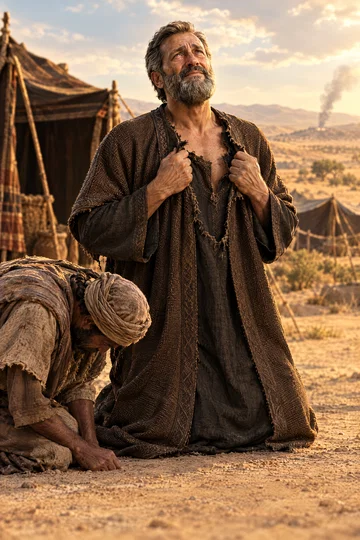
And said, Naked came I out of my mother’s womb, and naked shall I return thither: the LORD gave, and the LORD hath taken away; blessed be the name of the LORD.
Translations
And said, Naked came I out of my mother’s womb, and naked shall I return thither: the LORD gave, and the LORD has taken away; blessed be the name of the LORD.
And said, Naked came I out of my mother’s womb, and naked shall I return thither: the LORD gave, and the LORD hath taken away; blessed be the name of the LORD.
and said,
Naked came I out of my mother’s womb,
And naked shall I return thither:
The Lord gave, and the Lord hath taken away;
Blessed be the name of the Lord.And said, Naked came I from my mother's womb, and naked shall I return thither: The LORD gave, and the LORD hath taken away; blessed be the name of the LORD.
and he said, Naked came I out of my mother’s womb, and naked shall I return thither: the LORD gave, and the LORD hath taken away; blessed be the name of the LORD.
and he said, Naked came I out of my mother’s womb, and naked shall I return thither: Jehovah gave, and Jehovah hath taken away; blessed be the name of Jehovah.
and he saith, 'Naked came I forth from the womb of my mother, and naked I turn back thither: Jehovah hath given and Jehovah hath taken: let the name of Jehovah be blessed.'
and he said, Naked came I out of my mother's womb, and naked shall I return thither: Jehovah gave, and Jehovah hath taken away; blessed be the name of Jehovah!
and said—Naked came I forth from the womb of my mother, and naked must I return thither, Yahweh, gave, and, Yahweh, hath taken away,—The name of Yahweh be blessed!
Berean Standard Bible, Majority Standard Bible
saying:
“ Naked I came from my mother’s womb,
and naked I will return.
The LORD gave, and the LORD has taken away.
Blessed be the name of the LORD.”He said, “ Naked I came out of my mother’s womb, and naked will I return there. The LORD gave, and the LORD has taken away. Blessed be the LORD’s name.”
With nothing I came out of my mother's body, and with nothing I will go back there; the Lord gave and the Lord has taken away; let the Lord's name be praised.
And sayd, Naked came I out of my mothers wombe, and naked shall I returne thither: the Lord hath giuen, and the Lord hath taken it: blessed be the Name of the Lord.
Douay-Rheims (Challoner revision)
And said: Naked came I out of my mother’s womb, and naked shall I return thither: the Lord gave, and the Lord hath taken away: as it hath pleased the Lord so is it done: blessed be the name of the Lord.
Pictures



Cross-references
- Job 2:10
But he said unto her, Thou speakest as one of the foolish women speaketh. What? shall we receive good at the hand of God, and shall we not receive evil? In all this did not Job sin with his lips.
Job accepts adversity from God as well as good, echoing his blessing of God amid loss.
- Job 1:12
And the LORD said unto Satan, Behold, all that he hath is in thy power; only upon himself put not forth thine hand. So Satan went forth from the presence of the LORD.
God permits Satan to afflict Job only within set limits.
- James 5:11
Behold, we count them happy which endure. Ye have heard of the patience of Job, and have seen the end of the Lord; that the Lord is very pitiful, and of tender mercy.
Job is named as an example of patient endurance through suffering.
- Job 2:6
And the LORD said unto Satan, Behold, he is in thine hand; but save his life.
God again limits Satan, forbidding him to take Job’s life.
- 1 Timothy 6:7
For we brought nothing into this world, and it is certain we can carry no thing out.
Both describe coming into life with nothing and leaving possessions behind.
- Psalms 49:17
For when he dieth he shall carry nothing away: his glory shall not descend after him.
The dead carry none of their possessions away.
- Ecclesiastes 12:7
Then shall the dust return to the earth as it was: and the spirit shall return unto God who gave it.
Both describe the return of life to God at death.
- Genesis 3:19
In the sweat of thy face shalt thou eat bread, till thou return unto the ground; for out of it wast thou taken: for dust thou art, and unto dust shalt thou return.
Both describe the body’s return to dust in death.
- Job 42:10-12
And the LORD turned the captivity of Job, when he prayed for his friends: also the LORD gave Job twice as much as he had before.
Job’s blessings multiplied after his trial.
- Job 2:9
Then said his wife unto him, Dost thou still retain thine integrity? curse God, and die.
contrasting counsel to curse God instead of bless Him
- Job 13:15
Though he slay me, yet will I trust in him: but I will maintain mine own ways before him.
Job expresses faithful trust under affliction.
- Ezekiel 14:14
Though these three men, Noah, Daniel, and Job, were in it, they should deliver but their own souls by their righteousness, saith the Lord GOD.
Names Job as a righteous example.
- 2 Samuel 16:10-12
And the king said, What have I to do with you, ye sons of Zeruiah? so let him curse, because the LORD hath said unto him, Curse David. Who shall then say, Wherefore hast thou done so?
David accepts affliction as permitted by God and refuses revenge against Shimei.
- Luke 22:42
Saying, Father, if thou be willing, remove this cup from me: nevertheless not my will, but thine, be done.
Both express submission to God’s will amid loss or suffering.
Commentary
Each commentary is drawn from primary sources: the writings of Ellen G. White and Adventist pioneers and periodicals. Each commentary is separate. Its own words are not a quotation; follow the references to read the source passages.
Ellen G. White
16 sources
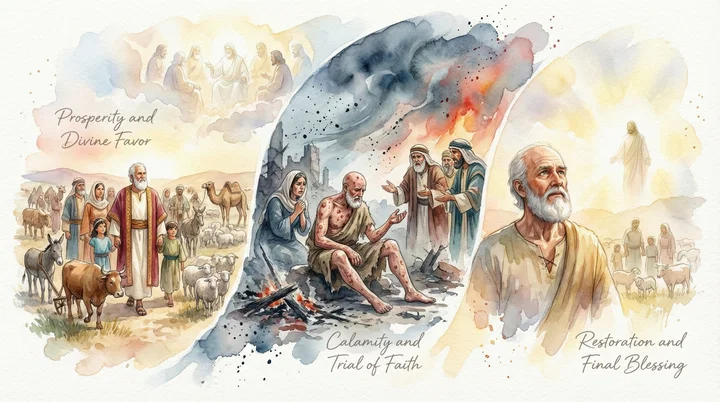
All people enter life with nothing and leave it with nothing, for life itself and everything possessed in it are gifts entrusted by the Lord that He may permit to be taken away.Lt 28, 1859, par. 7–9Ms 81, 1899, par. 9AA 575.1 The words belong to Job, a righteous servant whom God allowed Satan to afflict with the loss of possessions and children and with severe bodily suffering, showing that such trial is not always the result of a sinful life and does not mean God has forsaken the sufferer.Lt 74, 1910, par. 1–5Ms 22, 1898, par. 294T 525.1ST May 19, 1914 Even when stripped of everything and wrongly accused by his friends of bringing the suffering on himself, he blessed the Lord and held fast his integrity and loyalty.Ms 22, 1898, par. 294T 525.1ST May 19, 1914Lt 10, 1879, par. 4–9 That blessing is submission to God's sovereignty, acknowledging Him as the giver who takes away, trusting Him without murmuring and resting in His sustaining presence and mercy in the darkest hour.Lt 71, 1878, par. 1–5Ms 13, 1863, par. 3–4Lt 65a, 1894, par. 5 Such steadfastness proves the power of faith and God's abiding presence, and it makes loss bearable in bereavement, for hope is not confined to this world since those who rest in Jesus will be reunited at the resurrection.Ms 13, 1863, par. 3–4Lt 65a, 1894, par. 51T 110.4–111.1RH Sep 12, 1912
Words and Historical Setting
People come naked from the mother's womb and return naked, bringing nothing of their own into the world and taking nothing out of it.Lt 28, 1859, par. 7–9Ms 81, 1899, par. 9AA 575.1 Life, possessions and wealth come from the Lord as gifts entrusted by Him, and what a person possesses may be taken away when He permits it, so that like Job a person can be stripped of everything.Lt 28, 1859, par. 7–9Ms 81, 1899, par. 9AA 575.1 Those who love money and fail to use what they have to help others cannot take it with them.Ms 81, 1899, par. 9 The saying belongs to the account of Job, a righteous servant of God whom God allowed Satan to afflict and to show his wrath against, showing that suffering is not always the result of a sinful life.Lt 74, 1910, par. 1–5Ms 22, 1898, par. 29
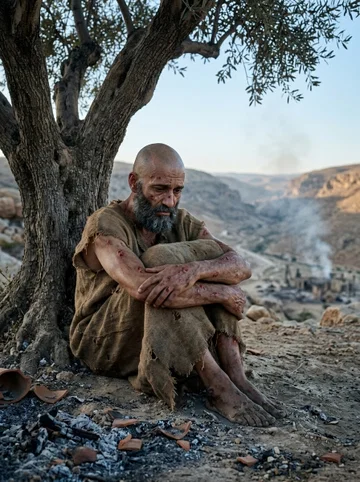
Job was deprived of his worldly and earthly possessions and children and suffered severe bodily pain and affliction.Ms 22, 1898, par. 294T 525.1RH Sep 12, 1912AA 575.1Lt 10, 1879, par. 4–9 He was so afflicted in body that he was abhorred by relatives and friends.4T 525.1RH Sep 12, 1912 Yet God had not forsaken him.Lt 10, 1879, par. 4–9 Job's friends wrongly accused him of bringing the suffering on himself and misrepresented God.Ms 22, 1898, par. 29 Job remained loyal, and God rewarded him by later lifting him up and showing him more favor than before.Ms 22, 1898, par. 29Lt 10, 1879, par. 4–9
Trust and Hope in Loss
Closeness to God is no guarantee of prosperity in the things of this life, for those most closely connected with Him may often be sorely tried and afflicted.4T 525.1 Job was stripped of his worldly possessions and so afflicted in body that he was abhorred by his relatives and friends, yet he preserved his integrity and faithfulness to God.4T 525.1 His suffering did not come from a sinful life, for he was a righteous man whom God permitted Satan to afflict, losing possessions and children and enduring bodily pain while his friends wrongly charged him with bringing it on himself.Ms 22, 1898, par. 29
Even after such loss and severe suffering he blessed the Lord and kept his integrity, faithfulness and loyalty, an example of steadfast faith in trial.Ms 22, 1898, par. 294T 525.1AA 575.1GW92 25.2–26.2 That blessing was submission to divine sovereignty and will, confessing that the Lord gives and takes away and that His name remains worthy of praise.Lt 71, 1878, par. 1–5Lt 65a, 1894, par. 5Ms 185, 1899, par. 17 It is trust without murmuring or accusing God, resting in Him in the darkest hour in confidence in His sustaining presence, grace and mercy.Ms 13, 1863, par. 3–4ST May 19, 1914RH Sep 12, 1912 Such steadfastness proves the faithfulness of His promises and His abiding presence and sustaining grace, and proves the power of faith to withstand the powers of the world.RH Sep 12, 1912 He does not prevent the plottings of wicked men, but He causes their devices to work for good to those who maintain faith in trial and conflict, bringing His children near to Him in the furnace of trial and affliction to show them their weakness and His strength and to teach them to lean on Him.RH Sep 12, 1912
In bereavement the same words can become the language of the heart.Lt 71, 1878, par. 1–5 When a child dies despite all that human care and skill can do, and when children and a spouse are taken, life received as a gift and what is dear lost can still be met by blessing His name and finding comfort in Jesus amid grief, sustained by trust that His mercy is present even in the darkest hour.LSEGW 252.4Lt 71, 1878, par. 1–5Ms 185, 1899, par. 171T 110.4–111.1 The loss is bearable because hope is not confined to this world.Ms 13, 1863, par. 3–4 God comforts the bereaved and enables them to trust His power to give life to the dead, for death does not end hope and those who rest in Jesus will be reunited at the resurrection.Ms 13, 1863, par. 3–4Lt 65a, 1894, par. 51T 110.4–111.1
Sources
Pioneers and periodicals
125 sources
People enter life with nothing and leave it with nothing, laying down all possessions at death, for what they have is lent by God who gives and who reclaims His own.RH Jan 10, 1856RH Apr 8, 1858ST May 1, 1879ST Sep 17, 1912 When loss is ascribed to the Lord taking away, it means He permits what Satan and human agents do within limits He sets and governs, for death itself entered by sin and He permits its consequences while redeeming His children from them.ST Sep 17, 1912ST May 12, 1909RH Dec 11, 1856RH Sep 11, 1860RH Oct 28, 1858 Calamity may therefore fall on the faithful without being punishment for their sins, for God allows affliction as a test that proves faith and teaches patience.RH Aug 16, 1906ST Mar 27, 1893RH Jul 21, 1874ST Aug 8, 1906ST Aug 8, 1906 The fitting response is to bless His name in loss as in blessing, submitting to His wisdom and goodness with calm trust rather than murmuring, since the Giver remains when gifts are gone.RH Sep 29, 1910RH Jun 27, 1871RH Jun 3, 1862RH May 12, 1863 So the saying gives words for bereavement, acknowledging children and loved ones as gifts He takes back in death, blessing Him in sorrow with hope of waking together when the Life-giver calls to immortality.ST May 24, 1883ST Nov 5, 1885RH Nov 30, 1905RH Dec 20, 1906
Words and Literary Setting
The saying stands in the prose prologue of chapters 1 and 2, set apart from the poetic debate of chapters 4 to 31, the speeches of Elihu in chapters 32 to 37, the speeches of the Lord out of the storm-cloud, and the prose epilogue in chapter 42:7-17.ST Job lived about the time Moses was forced to flee from Egypt to sojourn in Midian, and Moses wrote the account while a fugitive in Midian.RH Mar 14, 1912 Handed down in the Book of God, it carries important lessons for those living prior to the coming of the Lord.RH Mar 14, 1912
The book presents the enduring problem of human destiny and God's ways with people on earth, portraying profound sorrow and reconciliation in a universal, deeply human voice.ST Mar 13, 1879 To return thither describes death as entering a figurative mother's womb, the grave in the earth, rather than returning to the literal mother's womb.ST Dec 11, 1928 That figure points to a second birth from the grave in God's appointed time.ST Dec 11, 1928
Coming and leaving naked means human life begins and ends with no possessions carried into or out of life.RH Jan 10, 1856ST Sep 17, 1912 Birth does not distinguish people by rank, for princes and poor children alike are born naked.RH Jan 10, 1856RH Jul 11, 1871 The body returns to dust, and differences in wealth and possessions do not change this entrance and exit with nothing.RH Jan 10, 1856ST Sep 17, 1912
Life and its blessings are gifts from God to which they return when He takes them away, calling for blessing of His name.ST Sep 17, 1912RH Jan 5, 1860 The soul is given by the Lord and taken back at death, when life's sun sets and its task is done.ST Sep 13, 1910RH Jan 5, 1860 Breath and life cease at death rather than continuing in conscious existence, since immortality is not inherent in man but bestowed by the Creator, given to those to whom immortality is due and eternal oblivion to those to whom oblivion is due, both being blessings.RH Jan 5, 1860RH Jul 24, 1913
Satan and Divine Permission
Satan is a real and cruel being distinct from corrupt human nature, who appeared before God and spoke with Him concerning Job.ST Jul 3, 1907 He then caused the disasters that destroyed Job's possessions, killed his children and servants, and afflicted his body, in order to provoke Job to curse God.RH Aug 4, 1903ST Aug 23, 1883 Job did not sin or accuse God foolishly but acknowledged that all he had came from the Lord and blessed the Lord even when it was taken away.RH Aug 4, 1903ST Aug 23, 1883 In trials believers are to trust Christ shaping them rather than dwell on the devil or complain about circumstances, putting Christ's righteousness in place of the devil's influence.RH Aug 4, 1903
Satan was allowed to afflict Job only within limits set by God and could not take Job's life without permission.ST Sep 17, 1912 Evil spirits cannot afflict a person's body without God's permission, and such harm remains under God's authority.ST Sep 17, 1912ST Jul 4, 1906 That Job knew Satan as a distinct evil being shows that knowledge of Satan predated the Israelites' residence in Babylon.RH Sep 4, 1866
Job gives some idea of the war in heaven, a spiritual warfare not fought with weapons of flesh between Michael, the Son of God, chief of the angelic host, and the dragon, Satan, chief of the rebellious hosts.ST Jun 12, 1907 That war began before man could witness it, evidently about the time of the foundation of this world, and extended to the time Christ came to earth as man.ST Jun 12, 1907 It lasted until Christ died on the cross and was raised triumphant over all the power of the dragon, when rejoicing came to heaven but woe to earth because the devil came down with great wrath.ST Jun 12, 1907 Satan claimed dominion over the earth, but his title was not clear because God still had a loyal servant there in Job, whose loyalty showed that the Lord retained a kingdom on earth.ST May 1, 1901
When loss is spoken of as the Lord taking away, it means the Lord permits it because He is able to control all circumstances.ST May 12, 1909 Job blessed God in the loss of those dear to him because he knew the Lord knew all about it and trusted there was some good in his trouble, feeling sorrow yet keeping faith in overruling providence.ST May 12, 1909 This does not mean death comes by the Lord's agency, for death entered the world as the result of sin.ST May 12, 1909 The Lord permits death in letting the consequences of sin rest on all the human race, not from enmity, and from those consequences He will redeem all His children.ST May 12, 1909
Though the Chaldeans and Sabeans caused his losses, Job did not rail against them or seek revenge but looked past the agents to the Lord who had permitted and guarded what happened.RH Dec 11, 1856RH Oct 28, 1858 The verse credits the Lord with the giving and taking while the account also gives Satan credit for the work.RH Sep 11, 1860 Trials, whether inward or outward, are to be received as from the hand of the heavenly Father, with attention fixed on God rather than on the means through which they come.RH Oct 28, 1858 A person can look beyond the immediate human or satanic instrument to God who permits and governs what happens, receiving trials with resignation and thankfulness rather than letting attention to the means make events seem merely perplexing or wrong.RH Apr 5, 1860 This does not include sin but rests on trust in God's rule, and losses and ill treatment can help growth in grace and reveal the emptiness of what is most loved.RH Apr 5, 1860
Job's trial was permitted by God and used by Satan to plant doubt that God had forgotten him. Job's steadfast endurance refutes Satan's claims and encourages believers to stand the test God permits instead of complaining and rebelling. Trials are purposeful proving, and those tested are called God's beloved, made partakers of Christ's sufferings that they may share His rejoicing. The account shows Satan's terrible power to trouble God's people.ST Sep 6, 1883 Job being bowed down with grief was a time when he was especially vulnerable to temptation.ST Jan 8, 1885
Suffering Tested Not Punished
Calamity can come upon a faithful person without being punishment for sins, so suffering does not prove that God is displeased with the sufferer.RH Aug 16, 1906ST Mar 27, 1893 Job endured the test and remained true to God, giving no grounds for accusation or reproach, and what brings glory to God can be for a person's good when received in trust.RH Aug 16, 1906ST Mar 27, 1893 People should not claim to know why calamity has come unless God makes its cause plain.RH Aug 16, 1906 God allows affliction to come even to the faithful as a test and a lesson to prove faith, and the account of afflictions permitted to Job belongs to the teaching of patience through his life.RH Jul 21, 1874ST Aug 8, 1906ST Oct 3, 1895 Christians are not distinguished by being spared affliction but by meeting trials with faith that leads to renewed strength, rising from them stronger in God.ST Aug 8, 1906ST Aug 8, 1906 Job's faith endured under affliction and he remained faithful despite outward conditions becoming as unfavorable as could be imagined.ST Jun 17, 1903ST Jan 30, 1901
Serving God did not spare Job the loss of his children and severe disease, and convenience is not the measure of faithfulness.RH Oct 22, 1872 Service to God may involve loss and disappointment, yet patient trust can bring a person nearer to God, and after being tried and remaining faithful Job was permitted to see God. A devastating loss such as by fire is not by itself proof of divine judgment or punishment but is to be understood through Job's experience.ST Nov 7, 1906 It is met with steadfast trust that God lives and reigns, loves His children, and can turn suffering and loss into blessing, and the work is to be taken up again.ST Aug 8, 1906ST Aug 8, 1906ST Nov 7, 1906
God watches over the whole downward course of time and alone is wise to choose our lot and direct our ways.RH Jun 10, 1862 His bounteous love is beyond doubt and measure and His will is unerring and gracious, so every wish should be resigned to it.RH Jun 10, 1862 He is supremely good when He gives and no less good when He denies and takes away, and sufferings from His sovereign hand are blessings in disguise.RH Jun 10, 1862 Happiness cannot be found here where sweetness is mixed with bitterness and friends change and die, so God Himself must be our all in all.RH Jun 10, 1862 Deprived of worldly possessions and so afflicted in body as to be abhorred by relatives and friends, Job maintained his integrity, faith and loyalty and rested in God in the darkest hour, trusting His sustaining presence and grace.ST May 19, 1914RH Sep 12, 1912 His steadfastness proves the faithfulness of God's promises and the power of faith to withstand the powers of the world, showing that God does not prevent the plottings of wicked men but causes their devices to work for good to those who maintain faith in trial and conflict, bringing His children near to Him in the furnace of trial and affliction to show them their weakness and His strength and to teach them to lean on Him.RH Sep 12, 1912
Nakedness Stewardship and Mortality
People enter life with nothing and leave it with nothing, laying down every treasure at the door of the tomb and entering death empty to face the unseen world.RH Jul 29, 1862ST Jul 23, 1874RH Jan 2, 1866RH Nov 11, 1858ST Jun 17, 1875 No heaps of golden ore and no ranges of widest empire can purchase exemption from this stripping, for rich and poor, young and old alike leave naked, the capitalist's fortune passing to greedy heirs and other holders and the king's diadem and scepter passing to feeble hands.RH Jul 29, 1862RH Jan 2, 1866ST Jun 17, 1875 Every field, farm, cattle, stock, note, bond, mortgage and piece of honestly earned gold must be left behind to the last farthing, so that a man enters the other world utterly destitute of the wealth he loved and took pride and delight in accumulating.RH Jan 2, 1866RH Nov 11, 1858ST Jun 17, 1875 Even before death possessions may be lost through financial ruin or disaster, for earthly wealth is temporary and clinging to riches cannot prevent their loss, and making riches the purpose of life is folly beside using life to make the world happier and better.ST Jul 23, 1874RH Nov 11, 1858ST Feb 10, 1898
Each person faces the final judgment still more stripped of earthly possessions than at birth, standing without material defenses so that wealth cannot prevent or alter the Judge's sentence.RH Jan 2, 1866ST Apr 26, 1910 The only possession that can be carried through the darkness of death is hope of heaven through the atoning blood of Jesus, a heavenly inheritance the grave cannot take away.RH Jan 2, 1866 Coming naked and returning naked, a person brings nothing when the hour comes to stand at the eternal gate, leaving behind the words and works called his own and lifting void hands alone with nakedness of soul that pays no toll, coming giftless to Him who gives all things because He lives and needing His love to fill him.ST May 14, 1902
What people have belongs to God and is only lent or entrusted to them for a time, and when He takes back what He has lent they should be grateful for the time they had it rather than grieve that He has reclaimed His own.RH Apr 8, 1858ST May 1, 1879 Earthly possessions and joys are temporary and not permanently theirs, so His people can acknowledge His right to take them away while trusting Him through loss and sorrow, remembering that perfect lasting happiness awaits in heaven.RH Apr 8, 1858ST May 1, 1879 Wealth comes from God and is not merely one's own, for the rich hold it as stewards to dispense faithfully, and unequal wealth gives the rich opportunity for reward through generosity and the poor recompense for patience.RH Jul 1, 1873 Giving to God is therefore not simply loss nor withholding a sure way to become richer, since God blesses those He loves as is for their good and His glory.RH Jul 1, 1873ST Oct 6, 1881
People must be willing to relinquish worldly possessions and attachments in order to belong wholly to God, leaving behind in entering His kingdom what is sinful, selfish or worldly without longing to return, even when valuable things would take the place of a heart separated to God.ST Jun 23, 1887 All life is from God as Creator, Life-giver and Judge of all the earth, given as a trust to be used for His glory and man's eternal good, and it is His to give and His to take away.RH Apr 6, 1916 When man misuses the gift God does no injustice in removing it in whatever way He wills, whether by swift superhuman judgment or by human agent, so killing by God's command does not violate the command not to kill, and the utter destruction of peoples become so corrupt, debased, depraved and reprobate as the Canaanites manifests mercy to them and their present and probable posterity by cutting off a fearful harvest of crime and vice, even though the human instrument through Israel sometimes limited and perverted His work, for which He is not to be held responsible.RH Apr 6, 1916 Losing earthly substance and worldly possessions need not defeat faith or destroy faithfulness, for in the darkest trial a person can remain steadfast trusting God's care and rule, and life's losses and changes can deepen trust and become steps toward the blessed shore where change is gain and time is over.RH May 28, 1857RH Jan 14, 1904ST Dec 21, 1882
Blessing God in Affliction
Job acknowledged that he entered life with nothing and will leave with nothing, and that his possessions and children were gifts from the Lord who had now taken them away.RH Mar 14, 1912ST Aug 24, 1915ST Apr 17, 1907RH Mar 21, 1912 He blessed the Lord's name even in loss, worshiped without charging God foolishly, and did not sin or accuse God of wrongdoing, showing that hardship need not turn a faithful person against God.RH Mar 14, 1912ST Aug 24, 1915ST Apr 17, 1907 His response displayed faith, trust, goodwill, submission and patience, honoring God and holding fast integrity despite severe grief over children and possessions.ST Aug 24, 1915RH Mar 21, 1912
Job's patience and trust at the beginning came from recognizing God's hand in all that happened and acknowledging that God both gives and takes away.ST Sep 23, 1875ST Aug 24, 1915 He recognized God as the giver of all good received, remembered past blessings even in affliction, and had no reason to turn to Satan who had never given him any benefit.ST Sep 23, 1875
The right attitude toward affliction is submission to God, praising Him in loss as well as in blessing.RH Sep 29, 1910RH Jun 27, 1871 God's children are to trust Him under all circumstances, confident that nothing happens outside His providence, recognizing that what was had came from the Lord and its loss remained within His providence even amid grief over property and family. Such submissive trust rather than murmuring when circumstances are painful brings peace and strength in temptation, and His name is to be blessed even in distress.RH Jun 27, 1871
What a person has is received from God and may be taken away by Him, teaching humble surrender to God's rule and calm trust in His wisdom and goodness.RH Apr 10, 1856RH Mar 17, 1910RH Dec 17, 1901 This means accepting whatever He assigns and relying on Him for strength to bear it, recognizing that what is received comes from Him, trusting Him through grief and affliction, and continuing to honor Him in either circumstance whether He gives or takes away.RH Apr 10, 1856RH Mar 17, 1910RH Dec 17, 1901
God is to be blessed for all things at all times, in all places, on all occasions and in every condition, for adversity as well as prosperity, for years of dearth as well as years of plenty, for times of war as well as times of peace.RH Jun 7, 1864 He is to be blessed in sickness and in health, in weal and in woe, in liberty and in restraint, whether sick or well, whether in warm or cold weather, whether clothed or naked, whether rich or poor, and whether He gives or takes away.RH Jun 7, 1864
The Giver remains when the gifts are gone, so loss does not leave the believer with nothing.RH Jun 3, 1862RH May 12, 1863RH Jun 10, 1875 Job losing all God had given was not miserable because he still had God Himself, and the Christian still has Christ as treasure and heaven as inheritance with much in hand and more in hope, which forbids murmuring.RH May 12, 1863 For every Christian traveler there is a bright side even in affliction, seen when loss is turned into praise, giving an example for those weighed down by cares, perplexities, untrue friends and oppression to find light and hope, since some must lose everything before they find everything again in God.RH Jun 3, 1862RH Jun 10, 1875
The verse expresses readiness to endure the loss of everything as a test of sanctification, blessing God's name even in total loss.ST Sep 15, 1881ST Oct 11, 1883ST May 8, 1879 It means acknowledging God as giver of house, land, herd, flock and every possession, yielding them all back to Him, and being ready to be sanctified in the loss of all and to surrender everything and trust Him through severe trial without turning from God.ST Oct 11, 1883RH Feb 24, 1863ST May 8, 1879 It is the answer of a heart loving God's will, law and government wholly and neighbor as self, choosing God's laws over men's even when it costs property, livelihood and freedom, as in sheltering the oppressed and helping fugitive slaves at the loss of house, land, livestock and every possession, yet finding reconciliation, peace like a river, and treasure in heaven.RH Feb 24, 1863ST Jun 17, 1875ST Feb 12, 1885 Faithfulness means blessing His name even when obedience to His laws costs everything.ST Jun 17, 1875
Submission includes accepting painful losses as under God's providence and remaining silent rather than demanding explanations when God gives none.RH Aug 5, 1909RH Jan 14, 1862ST Jan 16, 1907 The Lord knows best and cares for His children through both joy and trial, and trusting this is a difficult but strengthening expression of Christian character.RH Aug 5, 1909ST Jan 16, 1907 When blessings fade submission can be difficult, so one accepts corrections without complaint, trusts His goodness, asks grace to bear grief, and faces the veiled future by praising when it brings gladness and bowing to His word when it brings sadness, blessing His name both when He gives and when He takes away.RH Jan 14, 1862RH Sep 12, 1865
A willing mind receives what God gives and relinquishes what He takes.ST Aug 9, 1910RH Feb 10, 1863RH Apr 3, 1900 When earthly possessions are lost by fire, wind or water the will is swallowed up in God's will instead of insisting on one's own way with uneasiness, mourning and complaining, acknowledging the Lord as the one who gives and takes away and blessing His name.ST Aug 9, 1910RH Feb 10, 1863 When home or dear friends must be given up God enables cheerful resignation and submission for those who sincerely acknowledge Him.RH Apr 3, 1900
Faithful people can bless the Lord even while facing severe suffering, illness, injury, persecution and loss of support, accepting the Lord's authority through both giving and taking away and remaining thankful and undiscouraged.RH Jul 27, 1916ST Apr 17, 1907RH Jul 27, 1916 Satan attacks workers with difficulties, loss, sickness, injury and hindrance to bring discouragement as he attacked Job, and the faithful response is to refuse discouragement, remain loyal, continue honoring His name, and acknowledge His sustaining in sickness and health while keeping the commandments and faith of Jesus.RH Jul 27, 1916RH Feb 24, 1863 Job as seer rejoiced even amid affliction, setting the pattern for holding joy when ants destroy cared-for trees and serpents, tarantulas, scorpions and vermin threaten fowls and livelihood, and for praising while wading through sorrow.RH Dec 6, 1906RH Feb 24, 1863
Job praised God instead of swearing after losing money, children, land and becoming sick with sores, so anger that wants to swear gives way to praise with a happy contented heart through hard daily work even when work is spoiled and must be done again.RH Apr 23, 1867RH Jul 26, 1870ST Jan 7, 1903 Sudden loss of children, property, honors and companions is met with holy resignation recognizing what was had was given by the Lord, presenting loss in suffering as no reason to cease honoring God.RH Apr 23, 1867RH Jan 28, 1873 A patient person receives both giving and taking with trust and continues blessing the Lord's name rather than murmuring against God or blaming others.RH Apr 23, 1867RH Jul 26, 1870RH Jan 28, 1873
His chastisements are acts of love for people's good and salvation even when reasons are unclear, and painful experiences He permits can serve His purpose.RH Feb 6, 1908RH Dec 11, 1900RH Jul 2, 1867 His taking is joined to His giving, so even a wound or dark trial can bring healing and peace, and people should still bless and honor Him through loss, pain and other hardships.RH Feb 6, 1908RH Dec 11, 1900 Life and possessions come from the Lord and may be taken away by Him, including earthly possessions and loved ones.RH Feb 6, 1908RH Dec 11, 1900
What is treasured, including a friend, is entrusted by God and may be yielded to Him, with trust in His unfailing strength and wisdom remaining firm even when loss tests the soul.RH Jul 23, 1857
Holding to God when crushing darkness comes through riven hopes and shattered ideals requires bravery, when the choicest ideal is shattered and the sweetest expectation feels the rod of death.RH Oct 20, 1868ST Jul 13, 1904ST Feb 26, 1894 Professions of unworldliness and unmovable trust beforehand are the confidence of inexperience, so it is best to wait and see, for a person may prove as brave as Job when trial arrives.ST Feb 26, 1894 Job is the most patient man not because he never had trouble but because he endured the most fearful successive calamities patiently, humbly confessing trust under family bereavement while still blessing and praising His name for what He gave and took, where even the bitter cup is not unmingled with heavenly joy and bereavements become links in providence binding hearts nearer to God.RH Oct 20, 1868ST Jul 13, 1904
Job could lack children and still be happy, illustrating that loss does not prevent happiness when one has Christ.RH Oct 28, 1909 God's name is to be praised whether He delivers from danger or permits death, which can be accepted as precious in His sight.
Praising the Lord's name belongs with trusting Him and thanking Him for blessing the labors of faithful servants to the good of souls while trusting for the work to come.RH Jul 31, 1860 His name is to be blessed even when circumstances are disappointing, praising Him for hearing prayer and directing His people.RH Jul 31, 1860
Death Mourned and Hope Held
In bereavement the verse comforts by confessing that life and every gift come from the Lord who may take them away, while blessing His name in loss with acceptance, patience, reverent submission and Christian fortitude.ST May 24, 1883ST Nov 5, 1885RH Nov 30, 1905RH Apr 18, 1907 It is spoken over the death of a beloved child, an infant, a son, a daughter, a mother, a faithful aged brother, and a children's father, describing death as falling asleep and affirming trust that God does all things well even after painful illness and unsuccessful efforts to save.ST May 24, 1883ST Nov 5, 1885RH Nov 30, 1905RH Apr 18, 1907 Entering life with nothing and leaving with nothing, human beings lay down what God first gave, for life begins and ends in nakedness and dependence.RH Apr 18, 1907RH Jul 29, 1873
Beside the dead it gives words for a funeral discourse in humble submission to a kind and loving Father, saying calmly even while hearts bleed that what God gave God has taken, blessed be His name and His will be done.RH Apr 2, 1901RH Mar 3, 1904 Those who so speak are cast down but not forsaken, afflicted but not alone.RH Mar 3, 1904 The death of a little child is thus the Lord taking away what the Lord gave, to be met with blessing because He does all things well.RH Apr 2, 1901
A child is a gift given by God's hands and taken back in death as His own, and bereaved parents honor God by trusting, blessing His name and yielding to His will even over an infant.RH Sep 27, 1864RH May 19, 1863 They are taught not to deplore the going to the grave, because the same God who gave and took will soon restore.RH May 19, 1863 They will meet again in immortal bloom, coming from the land of the enemy where death has no sting since the Saviour died and passed through the grave before to guide through its gloom.RH May 19, 1863
Praise and submission when loved ones are suddenly taken is the fitting language of grieving hearts at burial, holding that God is very pitiful and of tender mercy as learned from Job's patience and experience.RH Dec 20, 1906RH Sep 21, 1916 Present loss is outweighed by hope of waking together in the resurrection morning, when the loved one laid away to rest is called by the Life-giver to glorious immortality.RH Dec 20, 1906 There are no tears for the dead but for the living, as Jesus becomes more precious as Comforter, Guide, Husband and Friend through thorny paths, the treasure committed to Him until broken links reunite where there is no parting or sickness.RH Sep 21, 1916 To die in the Lord is blessed and God's thoughts and ways are higher, so trust looks forward to seeing the dead again with the Saviour in the clouds when the tomb is unlocked and sleeping children come forth.RH Sep 21, 1916
When a little child dies, believing parents sorrow yet bless God, for the child was given and taken by the Lord whose name is still to be blessed.RH Dec 2, 1909ST Sep 25, 1901ST Jun 5, 1884 Spoken at death this gives comfort and trust that the baby has gone to rest and is safe and will be found again in a glad day to come.ST Sep 25, 1901 A father can recognize the Lord's goodness even in grief because a daughter died with Christian character intact, and a Sabbath keeper losing little son and daughter can continue blessing without loving God less.RH Dec 2, 1909ST Jun 5, 1884
A bereaved person acknowledging that the Lord gives and takes away and blessing His name can be lifted from sadness and despondency, because the Lord heals the broken heart and sustains with strength for the day.RH Dec 24, 1861RH Jan 9, 1908RH Mar 20, 1879 Even when grief leaves one feeling alone, one can look to God and trust His mercy and love.RH Dec 24, 1861RH Mar 20, 1879 A child's trust that God will care for the family and provide a home after a father's loss shows confidence amid need.RH Jan 9, 1908
The thought comforted parents left childless in a short week by sudden disease taking son and daughter, with words of comfort to an attentive congregation in the hour of sorrow.RH Nov 7, 1865ST Apr 15, 1880 A bereaved father's sorrow leading him to care for a lonely child holds out hope that Christ will restore the dead.RH Nov 7, 1865ST Apr 15, 1880
To speak the verse over premature decay and death brought on by following intemperate example is false blind guidance.RH Jul 28, 1863 It hides human responsibility for intemperance, leads youths to the grave and to ruin, and turns divine sovereignty into an excuse for soul-debasing habits that destroy health and life, though loved ones do come from God and are removed by Him to comfort mourners.RH Jul 28, 1863
Being deprived of everything in a week from comfort and winter preparation to destitution of house, furniture, beds, food and clothing shows blessing God's name amid total loss even unto death for the Saviour's love.ST Apr 2, 1896 Left with uncovered heads, bare feet and little clothing, wandering to find children while holding faith as sons, pastors and young men are killed for refusing to deny their religion, the sufferers still bless.ST Apr 2, 1896 After losing sons in missionary service in Africa, a mother willingly offering another son illustrates the same trust and spirit of sacrifice, recognizing that life and blessings come from the Lord and may be taken away.ST Oct 19, 1904
Sources