2 Chronicles 19:5
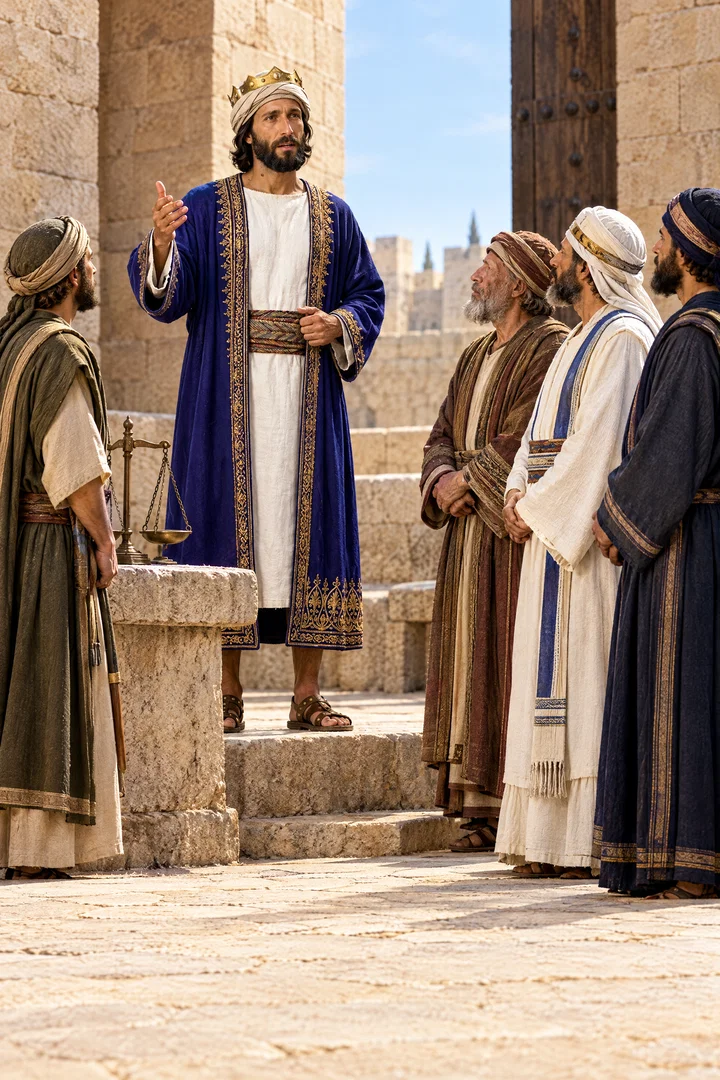
And he set judges in the land throughout all the fenced cities of Judah, city by city,
Translations
American King James Version, King James Version, KJV Cambridge Paragraph Bible, Revised Version
And he set judges in the land throughout all the fenced cities of Judah, city by city,
Webster Bible, American Standard Version
And he set judges in the land throughout all the fortified cities of Judah, city by city,
And he establisheth judges in the land, in all the fenced cities of Judah, for every city,
And he set judges in the land throughout the fortified cities of Judah, city by city.
And he stationed judges in the land, throughout all the fortified cities of Judah, city by city;
Berean Standard Bible, Majority Standard Bible
He appointed judges in the land, in each of the fortified cities of Judah.
He set judges in the land throughout all the fortified cities of Judah, city by city,
And he put judges through all the land, in every walled town of Judah,
And hee set iudges in the lande throughout all the strong cities of Iudah, citie by citie,
Douay-Rheims (Challoner revision)
And he set judges of the land in all the fenced cities of Juda, in every place.
Pictures
Cross-references
- Exodus 18:21-26
Moreover thou shalt provide out of all the people able men, such as fear God, men of truth, hating covetousness; and place such over them, to be rulers of thousands, and rulers of hundreds, rulers of fifties, and rulers of tens:
Both describe appointing judges to govern and judge the people.
- Psalms 82:1-4
God standeth in the congregation of the mighty; he judgeth among the gods.
God judges and commands judges to defend the vulnerable.
Commentary
Each commentary is drawn from primary sources: the writings of Ellen G. White and Adventist pioneers and periodicals. Each commentary is separate. Its own words are not a quotation; follow the references to read the source passages.
Ellen G. White
3 sources
Jehoshaphat set judges throughout Judah's fortified cities, city by city.Ms 80, 1904, par. 44–47PK 197.1–2RH Dec 25, 1913 The appointments were part of his effort to reform the land and bring the people back to God.RH Dec 25, 1913 They formed an effective system that placed justice within reach across the land.Ms 80, 1904, par. 44–47PK 197.1–2 The local courts were supported by a court of appeal in Jerusalem.RH Dec 25, 1913
The judges served and judged for the Lord, who was with them in judgment, making their work a responsibility before God.Ms 80, 1904, par. 44–47PK 197.1–2RH Dec 25, 1913 They were to act carefully and with reverence for God.Ms 80, 1904, par. 44–47PK 197.1–2 They were to act faithfully and courageously.RH Dec 25, 1913
The God for whom they judged is free from injustice, partiality, and bribery, and takes no gifts.Ms 80, 1904, par. 44–47PK 197.1–2RH Dec 25, 1913 Righteous judgment of this kind helps exalt a nation.Ms 80, 1904, par. 44–47
Sources
Pioneers and periodicals
7 sources
The verse belongs to the reign of Jehoshaphat, the good king of Judah, whose history is recorded together with Solomon, Rehoboam, Abijah, and Asa in 2 Chronicles 1 to 20 after the division of the united kingdom at Solomon's death.ST Jun 27, 1911 His rule stands in contrast to the seven brief reigns in backsliding Israel from Jeroboam to Ahab, which turned away from God by Jeroboam's calves of gold and paid little heed to the voice and service of God through His prophets, a contrast that gives a practical lesson in faithfulness.ST Jun 27, 1911 The verse falls within Jehoshaphat's prosperous, good reign and his reform of Judah.ST Sep 7, 1904ST May 26, 1909 He was a truly great king, greater even than his father Asa, who appointed teachers throughout the land of Judah to teach the people the right way.ST Jun 10, 1908
The verse records how he strengthened that reform by setting judges throughout all the fenced or fortified cities of Judah, city by city, as part of his effort to reform the land and bring the people back to God.RH Dec 25, 1913ST Jul 13, 1904 This local system of justice was supported by a court of appeal in Jerusalem, and the judges were to act faithfully and courageously, recognizing that they judged for the Lord, who is with them in judgment and is impartial and takes no gifts.RH Dec 25, 1913 It shows his marked faithfulness in his last days in his earnest endeavor to restore completely the worship of God.
His great and awful mistake was entering into alliance with Ahab of wicked Israel, for which he was reproved by the prophet after being rebuked for helping the ungodly and loving them that hate the Lord, an alliance that nearly cost his life, and that period was also marked by his son's marriage to the daughter of Ahab and Jezebel, which later brought trouble to Judah, and by his later sinful alliance with Ahaziah to make ships to go to Tarshish.ST Jun 10, 1908ST Sep 7, 1904RH May 20, 1862 Unlike his father, he received the reproof and humbled himself under it, returning to integrity and seeking the God of his fathers when in trouble, and the setting of judges city by city stands between those sinful alliances as part of that faithful restoration.ST Jun 10, 1908RH May 20, 1862 To continue voluntary connection with unbelievers or to enter new engagements of that kind is dangerous and directly contrary to the word of God.RH May 20, 1862
Sources