2 Chronicles 26:17
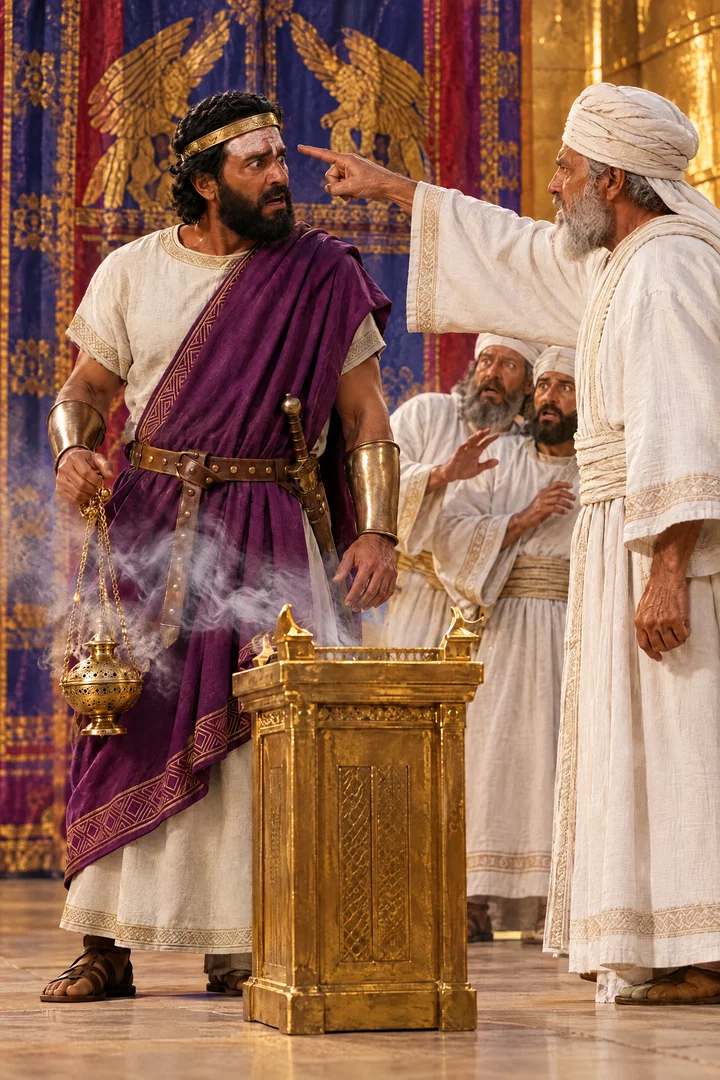
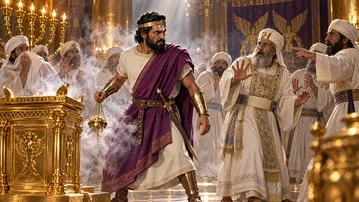
And Azariah the priest went in after him, and with him fourscore priests of the LORD, that were valiant men:
Translations
American King James Version, King James Version, Revised Version
And Azariah the priest went in after him, and with him fourscore priests of the LORD, that were valiant men:
And Azariah the priest went in after him, and with him fourscore priests of the Lord, that were valiant men:
And Azariah the priest went in after him, and with him eighty priests of the LORD, that were valiant men:
And Azariah the priest went in after him, and with him fourscore priests of Jehovah, that were valiant men:
And Azariah the priest goeth in after him, and with him priests of Jehovah eighty, sons of valour,
And Azariah the priest went in after him, and with him priests of Jehovah, eighty valiant men;
Then entered after him, Azariah the priest,—and with him eighty priests of Yahweh, sons of valour;
Berean Standard Bible, Majority Standard Bible
Then Azariah the priest, along with eighty brave priests of the LORD, went in after him.
Azariah the priest went in after him, and with him eighty priests of the LORD, who were valiant men.
And Azariah the priest went in after him, with eighty of the Lord's priests, who were strong men;
And Azariah the Priest went in after him, and with him foure score Priests of the Lord, valiant men.
Douay-Rheims (Challoner revision)
And immediately Azarias the priest going in after him, and with him fourscore priests of the Lord, most valiant men,
Pictures
Cross-references
- Numbers 3:10
And thou shalt appoint Aaron and his sons, and they shall wait on their priest’s office: and the stranger that cometh nigh shall be put to death.
Priestly service was reserved to Aaron’s family, and unauthorized entry was forbidden.
- Numbers 16:40
To be a memorial unto the children of Israel, that no stranger, which is not of the seed of Aaron, come near to offer incense before the LORD; that he be not as Korah, and as his company: as the LORD said to him by the hand of Moses.
Restricts offering incense to those of Aaron’s lineage.
- 2 Kings 15:1
In the twenty and seventh year of Jeroboam king of Israel began Azariah son of Amaziah king of Judah to reign.
Identifies Uzziah also as Azariah.
- 1 Samuel 13:9-10
And Saul said, Bring hither a burnt offering to me, and peace offerings. And he offered the burnt offering.
Saul and Uzziah both overstep by attempting priestly duties as kings.
- Isaiah 6:1
In the year that king Uzziah died I saw also the Lord sitting upon a throne, high and lifted up, and his train filled the temple.
Isaiah’s vision is set in the year King Uzziah died.
- Leviticus 13:45-46
And the leper in whom the plague is, his clothes shall be rent, and his head bare, and he shall put a covering upon his upper lip, and shall cry, Unclean, unclean.
The passage describes the leper’s required isolation and warning cry.
- Numbers 18:7
Therefore thou and thy sons with thee shall keep your priest’s office for every thing of the altar, and within the vail; and ye shall serve: I have given your priest’s office unto you as a service of gift: and the stranger that cometh nigh shall be put to death.
Assigns altar and sanctuary service to Aaron and his sons.
Commentary
Each commentary is drawn from primary sources: the writings of Ellen G. White and Adventist pioneers and periodicals. Each commentary is separate. Its own words are not a quotation; follow the references to read the source passages.
Ellen G. White
3 sources
Azariah the priest, the high priest, went in after King Uzziah into the sanctuary, into the temple, with eighty valiant, courageous priests of the Lord to confront him.RH Mar 4, 1915RH Aug 14, 1900 Uzziah had entered to burn incense upon the altar, presumptuously taking up the priestly duty of burning incense.RH Mar 4, 1915RH Aug 14, 1900 The plain command of Jehovah was that none but the descendants of Aaron should officiate as priests, so his act in presumption was in violation of that command and was a trespass.RH Mar 4, 1915 Azariah and his associates, his fellow priests, remonstrated with the king and pleaded with him to turn from his purpose, telling him he had trespassed and that it would not be for his honor.RH Mar 4, 1915
The verse belongs to the account of a king struck with leprosy.DA 262.1–3 Leprosy was regarded as judgment for sin.DA 262.1–3 It was regarded as a symbol of sin.DA 262.1–3 Even a monarch who contracted it had to give up the scepter and live apart from society.DA 262.1–3
Sources
Pioneers and periodicals
26 sources
Azariah the high priest followed King Uzziah into the sanctuary with eighty other valiant priests, making eighty-one in all, to stand against him to his face and stop his intrusion.RH Mar 4, 1915RH Apr 9, 1914RH Jul 14, 1903 Uzziah had done right and sought God and prospered until his name spread far, but when he was strong his heart was lifted up in pride and he transgressed by entering the temple to burn incense upon the altar of incense.ST May 7, 1912RH Jul 14, 1903ST Apr 11, 1911 They pleaded with him to leave the sanctuary and told him he had trespassed, for to burn incense belonged not to the king but to the priests the sons of Aaron consecrated for that work, and it would not be for his honor from the Lord.RH Mar 4, 1915RH Jul 14, 1903RH Jan 20, 1853 Though he was wroth with a censer in his hand and would not yield, leprosy rose in his forehead because the Lord smote him, and they thrust him out and he hasted away, remaining a leper cut off from the house of the Lord unto his death.RH Jul 14, 1903ST Jan 8, 1885ST Apr 11, 1911 None but the descendants of Aaron were authorized to serve as priests and burn incense, so that even a king could not lawfully perform that office, and the strict smiting of Uzziah for breaking that priesthood law shows the change of law in Hebrews 7 is the change from Aaron to Christ and not a disannulling of the Sabbath commandment.RH Mar 4, 1915ST Apr 22, 1889ST Dec 9, 1889RH Aug 9, 1870RH Feb 4, 1873
Uzziah's Trespass Confronted
The account belongs to the presumption of King Uzziah after a reign otherwise counted among the good kings.ST May 7, 1912 He had done right and sought God in the days of Zechariah who had understanding in the visions of God, and as long as he sought the Lord God made him prosper and helped him against his enemies until his name spread far.RH Jul 14, 1903 But when he was strong his heart was lifted up in self-confidence and pride to his destruction, and he transgressed by entering the temple to burn incense upon the altar of incense and usurp the priests' sacred duty.RH Jul 14, 1903RH Nov 9, 1869 His act was a defiant usurpation of the priests' office and mistake bringing loss.ST May 7, 1912ST Apr 11, 1911
Azariah the priest, the high and chief priest, went in after Uzziah into the sanctuary and temple with fourscore priests of the Lord.RH Mar 4, 1915ST Sep 3, 1896ST Dec 9, 1889 Those were eighty other valiant, courageous and brave men, making eighty-one in all.RH Jul 14, 1903 They came to withstand him to his face and courageously oppose and stop his presumptuous intrusion.RH Mar 4, 1915RH Apr 9, 1914RH Jul 14, 1903ST Sep 3, 1896 Their resistance was part of the priests' effort to stop his transgression and upheld the boundary between royal authority and the worship duties assigned to Aaron's descendants.RH Apr 9, 1914ST Sep 3, 1896ST Jan 12, 1882
Azariah and his associates remonstrated with the king and pleaded with him to turn from his purpose.RH Mar 4, 1915RH Jul 14, 1903 They ordered him to leave the sanctuary and go out of the sanctuary because he had trespassed.RH Jul 14, 1903RH Jan 20, 1853 They told him that to burn incense belongs not to the king but to the priests the sons of Aaron that are consecrated to burn incense, and that it would not be for his honor from the Lord God.RH Mar 4, 1915RH Jul 14, 1903
Though Uzziah was wroth with a censer in his hand and persisted and resisted them, leprosy rose up in his forehead before the priests by the incense altar because the Lord had smitten him for this act.RH Jul 14, 1903ST Apr 15, 1886 They thrust him out and he himself hasted to go out; he was excluded from the house of the Lord and left the temple a leper.RH Jul 14, 1903ST Jan 8, 1885 He remained a leper dwelling apart and cut off from the house of the Lord unto the day of his death in disgrace, spending his final seven years apart while Jotham ruled in his place.RH Jul 14, 1903ST Apr 11, 1911ST Jan 31, 1911 His prideful presumption led to his becoming a leper, and his unauthorized attempt opposed by the priests ended with his exclusion.ST Jan 8, 1885ST Jan 31, 1911
Uzziah's day is associated with a great earthquake that shook the ground and damaged the temple and surrounding area.RH Nov 9, 1869 The event shows that earthquakes may serve as temporal judgments indicating God's displeasure at wickedness.RH Nov 9, 1869 The verse itself does not mention the earthquake; it only records that Azariah entered after Uzziah with eighty valiant priests.RH Sep 11, 1856
Priesthood Law and Lessons
The verse shows the plain command and ordinance of Jehovah that none but the descendants of Aaron, the sons of Aaron consecrated to burn incense, were authorized to officiate as priests and burn incense upon the altar.RH Mar 4, 1915ST Apr 22, 1889ST Dec 9, 1889ST Jan 12, 1882RH Aug 9, 1870 During the Aaronic priesthood a man from another tribe and a non-Levite could not lawfully serve or minister in the priest's office, so Uzziah's presumptuous attempt to act as priest and perform what belonged to the priests was sinful trespass in violation of that command.RH Mar 4, 1915ST Dec 9, 1889ST Jan 12, 1882RH Aug 9, 1870ST Apr 1, 1897 Even a king with royal status could not disregard this ordinance, and his royal position gave him no right to take up the priest's sacred work.RH Mar 4, 1915ST Apr 22, 1889ST Jan 12, 1882ST
The law governing the Aaronic priesthood that reserved priestly duties to Aaron's descendants was distinct from the moral law.RH Aug 9, 1870RH Feb 4, 1873 A king of Israel was smitten with leprosy for disregarding the law that gave the service of priesthood exclusively to Aaron and his sons, when Azariah and eighty valiant priests went in after him to withstand his intrusion into priestly work, and that strict punishment proves how strictly that priesthood law bound Israel.RH Aug 9, 1870RH Feb 4, 1873 That same strictness proves that the change of law taught in Hebrews 7 is the change of priesthood from Aaron to Christ, who is of the tribe of Judah, not a disannulling of the Sabbath commandment.RH Feb 4, 1873
Azariah the priest entering the temple after the king with eighty courageous, brave priests of the Lord upholds the boundary between royal authority and the worship duties and sacred priestly service assigned to Aaron's descendants.ST Sep 3, 1896ST Jan 12, 1882ST Nov 10, 1881ST Aug 13, 1896 Their courageous opposition to the king's presumptuous intrusion reflects the priests' duty to uphold the divinely appointed order of worship and to stop an unlawful act in the sanctuary.ST Sep 3, 1896ST Nov 10, 1881ST Aug 13, 1896 Joining civil authority with religious authority in this way brings loss of royal power and freedom, and the episode warns that such union threatens rights of conscience.ST Mar 24, 1909
Uzziah's unlawful attempt to serve at the altar and offer incense, an act reserved for the priests, was prideful presumption and irreverence toward God's house and worship that brought God's judgment upon him.ST Jan 31, 1911RH Oct 9, 1900ST Sep 17, 1902ST Jul 30, 1902 He was struck with leprosy for this presumptuous sin and ended his reign in disgrace, leaving the temple a leper, showing that entering God's holy presence while choosing sin brings judgment.ST Jan 31, 1911RH Oct 9, 1900ST Jul 30, 1902 Neither a good aim nor consecrated status makes a wrong and unholy act right or acceptable, as his wrongdoing shows.STRH Oct 11, 1864
Sources