2 Kings 13:16
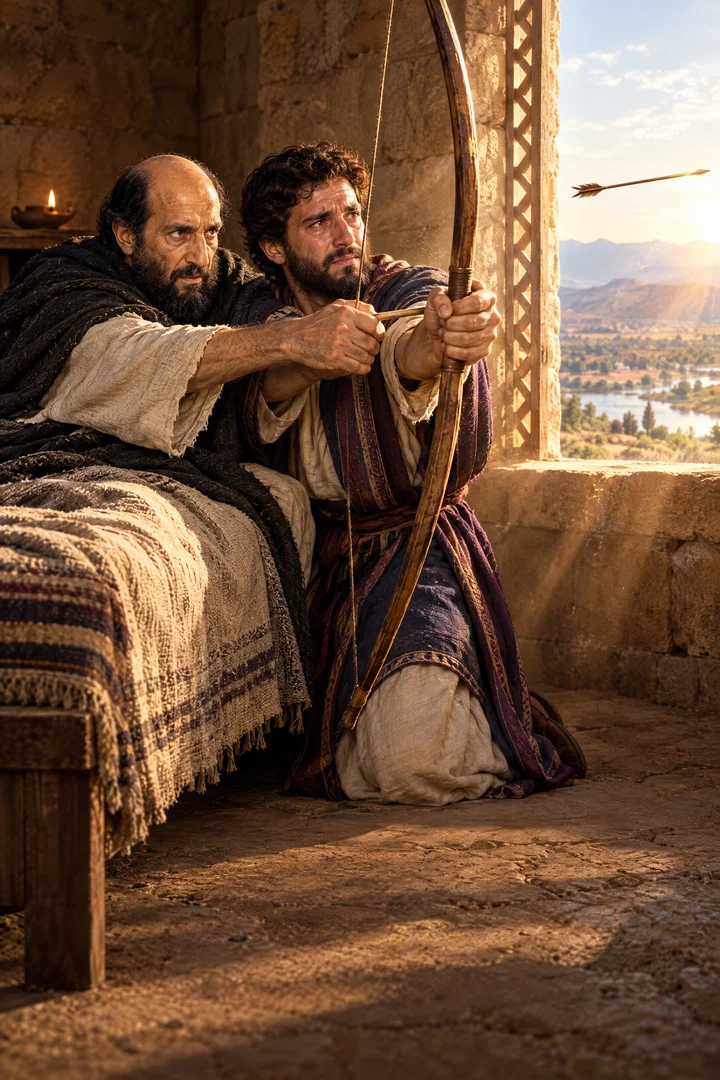
And he said to the king of Israel, Put thine hand upon the bow. And he put his hand upon it: and Elisha put his hands upon the king’s hands.
Translations
And he said to the king of Israel, Put your hand on the bow. And he put his hand on it: and Elisha put his hands on the king’s hands.
King James Version, KJV Cambridge Paragraph Bible
And he said to the king of Israel, Put thine hand upon the bow. And he put his hand upon it: and Elisha put his hands upon the king’s hands.
And he said to the king of Israel, Put thy hand upon the bow. And he put his hand upon it: and Elisha put his hands upon the king's hands.
And he said to the king of Israel, Put thine hand upon the bow: and he put his hand upon it. And Elisha laid his hands upon the king’s hands.
And he said to the king of Israel, Put thy hand upon the bow; and he put his hand upon it. And Elisha laid his hands upon the king’s hands.
And he saith to the king of Israel, 'Place thy hand on the bow;' and he placeth his hand, and Elisha putteth his hands on the hands of the king,
And he said to the king of Israel, Put thy hand upon the bow. And he put his hand [ upon it]; and Elisha put his hands upon the king's hands,
Then said he unto the king of Israel, Let thy hand rest upon the bow. So he let his hand rest thereon. Then Elisha put his own hands upon the hands of the king;
Berean Standard Bible, Majority Standard Bible
Then Elisha said to the king of Israel, “ Put your hand on the bow.”So the king put his hand on the bow, and Elisha put his hands on the king’s hands.
He said to the king of Israel, “ Put your hand on the bow;” and he put his hand on it. Elisha laid his hands on the king’s hands.
And he said to the king of Israel, Put your hand on the bow: and he put his hand on it; and Elisha put his hands on the king's hands.
And he sayde to the King of Israel, Put thine hand vpon the bowe. And he put his hand vpon it. And Elisha put his hands vpon the Kings hands,
Douay-Rheims (Challoner revision)
He said to the king of Israel: Put thy hand upon the bow. And when he had put his hand, Eliseus put his hands over the king’s hands,
Pictures
Cross-references
- 2 Kings 13:24-25
So Hazael king of Syria died; and Ben-hadad his son reigned in his stead.
Joash’s victories fulfill Elisha’s prediction of deliverance from Syria.
- 2 Kings 2:9
And it came to pass, when they were gone over, that Elijah said unto Elisha, Ask what I shall do for thee, before I be taken away from thee. And Elisha said, I pray thee, let a double portion of thy spirit be upon me.
Elisha sought and received a blessing associated with Elijah’s departure.
Commentary
Each commentary is drawn from primary sources: the writings of Ellen G. White and Adventist pioneers and periodicals. Each commentary is separate. Its own words are not a quotation; follow the references to read the source passages.
Ellen G. White
4 sources
The hand upon the bow belongs to the final counsel and encouragement given to King Joash before death, marking the closing work of a faithful ministry.PK 263.2PK 263.3–264.1 As Joash took hold of the bow, Elisha placed his own hands over the king's hands.PK 262.1–263.1PK 261.1–3 That covering of the king's hands was a prophetic act marking God's guidance in what was being done.PK 262.1–263.1PK 261.1–3 It introduced God's promised deliverance from Syria through the arrow Joash was about to shoot.PK 262.1–263.1PK 261.1–3
The moment tested Joash's faith and gave him opportunity to act with God's help.PK 262.1–263.1PK 261.1–3 The deliverance promised required him to act with energy and perseverance, and the opportunity offered was to put his kingdom in a stronger position.PK 262.1–263.1PK 261.1–3 His later halfhearted striking of the ground showed a limited response that would bring only limited victory.PK 262.1–263.1 In giving this counsel Elisha himself advanced by faith when the way seemed closed, remaining confident in God's power, and God honored that confidence by opening the way.PK 263.2
Sources
Pioneers and periodicals
12 sources
When Elisha was ministering in the reign of Joash king of Israel, he laid his own hands over the king's hands upon the bow to guide and begin the symbolic shooting.ST Oct 22, 1885ST Oct 22, 1885ST May 5, 1909 That touch marked the act as directed by the prophet and wrought by the Lord, making the arrow to be shot the promised deliverance of Israel from Syria.RH Mar 25, 1902RH Jun 29, 1911 The command to take bow and arrows was a test of the strength of the king's faith in that promised deliverance.RH Nov 16, 1916ST Sep 29, 1914 Joash showed too little faith and persistence by striking the ground only three times, so his victories over Syria were limited to three instead of complete destruction.ST Sep 17, 1896ST Jun 3, 1913RH Nov 16, 1916ST Oct 29, 1885 God puts the instrument of deliverance into human hands to be used persistently, and what is received is measured by what is dared to claim in faith.RH Mar 25, 1902ST Sep 17, 1896ST Jun 14, 1899RH Mar 25, 1902
Hands on the Bow
The scene belongs to the life and ministry of Elisha during the reign of Jehoash, also called Joash, king of Israel.ST May 5, 1909 As the king takes hold of the bow, Elisha places his own hands over the king's hands and guides them, preparing him and beginning the symbolic act that follows.ST Oct 22, 1885ST Oct 22, 1885 That opening movement readies the shooting of an arrow to signify victory over Syria.
The laying of hands signifies the prophet's direction and the Lord's involvement in the promised deliverance from Syria. It marks the arrow to be shot as the Lord's promised deliverance of Israel from Syria and its enemies and as the coming victory over Syria.RH Mar 25, 1902RH Jun 29, 1911 God in this way puts an arrow of deliverance into human hands, and people must act with what God provides.RH Mar 25, 1902
Elisha's command to take the bow and arrows is a test concerning the deliverance God would give, testing the strength of the king's faith.RH Nov 16, 1916ST Sep 29, 1914 It comes as Joash seeks counsel and protection against the Syrians.ST Sep 29, 1914
Faith Measures Deliverance
The king's response to the prophetic instructions measured the faith he exercised, and the deliverance Israel would receive was limited accordingly.RH Nov 16, 1916 Elisha's guiding of his hands on the bow was meant to teach him persistence and faithfulness, a lesson he failed to learn.ST Jun 3, 1913 His limited response showed small faith, and his later failure to strike the ground more than three times showed inadequate faith in the prophetic word.ST Jun 3, 1913RH Nov 16, 1916
Because he showed too little persistence in striking with the arrows, his victories over Syria would be limited to three rather than complete.ST Sep 17, 1896ST Oct 29, 1885 Greater persistence in venturing fully by faith would have brought a more complete victory, while his three strikes meant only three victories.ST Sep 17, 1896
Elisha promised Joash three victories over Syria, followed by a period of prosperity for Israel and Judah.ST Jun 14, 1899 The account illustrates that the measure of what people receive is related to how much they dare to claim in faith.ST Sep 17, 1896
God puts an arrow of deliverance and an instrument of deliverance into human hands, and people must act with what God provides.RH Mar 25, 1902RH Mar 25, 1902 That means may be prayer, confession, love, faith, giving, or consecrated service, and it must be used persistently until the work is complete.RH Mar 25, 1902
Sources