2 Kings 25:14
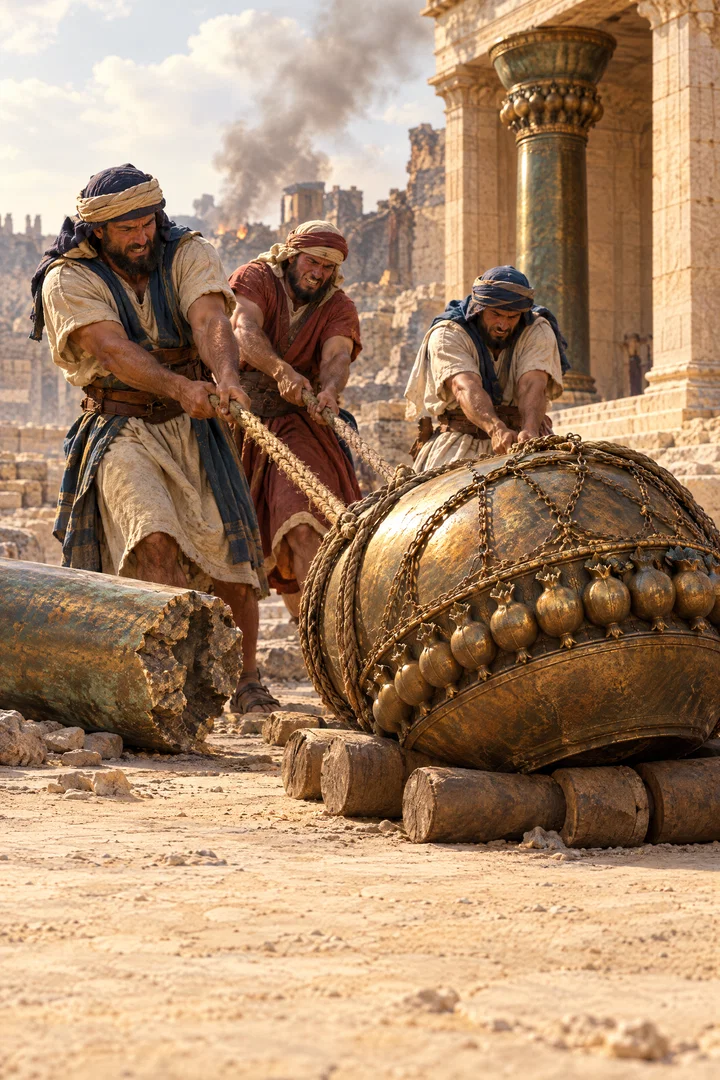
And the pots, and the shovels, and the snuffers, and the spoons, and all the vessels of brass wherewith they ministered, took they away.
Translations
And the pots, and the shovels, and the snuffers, and the spoons, and all the vessels of brass with which they ministered, took they away.
King James Version, KJV Cambridge Paragraph Bible, Revised Version, American Standard Version
And the pots, and the shovels, and the snuffers, and the spoons, and all the vessels of brass wherewith they ministered, took they away.
And the pots, and the shovels, and the snuffers, and the spoons, and all the vessels of brass with which they ministered, they took away.
And the pots, and the shovels, and the snuffers, and the spoons, and all the vessels of brass with which they minister they have taken,
The cauldrons also and the shovels and the knives and the cups, and all the vessels of copper wherewith they ministered, they took away.
and, the caldrons, and the shovels, and the snuffers, and the spoons, even all the utensils of bronze wherewith ministration used to be made, did they take away;
Berean Standard Bible, Majority Standard Bible
They also took away the pots, shovels, wick trimmers, dishes, and all the articles of bronze used in the temple service.
They took away the pots, the shovels, the snuffers, the spoons, and all the vessels of bronze with which they ministered.
And the pots and the spades and the scissors for the lights and the spoons, and all the brass vessels used in the Lord's house, they took away.
The pots also and the besomes, and the instruments of musike, and the incense dishes, and al the vessels of brasse that they ministred in, tooke they away.
Douay-Rheims (Challoner revision)
They took away also the pots of brass, and the mazers, and the forks, and the cups, and the mortars, and all the vessels of brass with which they ministered.
Pictures
Cross-references
- 2 Chronicles 36:18
And all the vessels of the house of God, great and small, and the treasures of the house of the LORD, and the treasures of the king, and of his princes; all these he brought to Babylon.
The temple vessels were taken to Babylon.
- Jeremiah 52:18
The caldrons also, and the shovels, and the snuffers, and the bowls, and the spoons, and all the vessels of brass wherewith they ministered, took they away.
Lists the temple vessels carried away to Babylon.
- 2 Kings 24:13
And he carried out thence all the treasures of the house of the LORD, and the treasures of the king’s house, and cut in pieces all the vessels of gold which Solomon king of Israel had made in the temple of the LORD, as the LORD had said.
Both describe the removal of temple vessels and treasures during the Babylonian conquest.
Commentary
Each commentary is drawn from primary sources: the writings of Ellen G. White and Adventist pioneers and periodicals. Each commentary is separate. Its own words are not a quotation; follow the references to read the source passages.
Pioneers and periodicals
12 sources
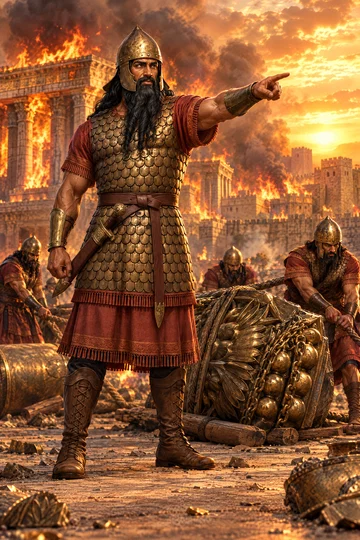
The verse records that when Jerusalem fell the Babylonians under Nebuchadnezzar stripped the temple and carried to Babylon the bronze pots, shovels, snuffers, spoons and all the vessels used in its service, in the plunder and destruction of Solomon's temple.ST Jan 14, 1886ST Aug 20, 1885RH Nov 10, 1863 It belongs to the closing history of the kingdom of Judah, when independent rule ended, Zedekiah rebelled and fell, the nation was captured and carried into captivity, and only a small company remained in the land, a loss that followed Israel's unfaithfulness.ST Jan 14, 1886ST Jun 10, 1913ST Nov 5, 1912ST May 12, 1909 That captivity and destruction are typical of events to transpire under the gospel and at the close of this dispensation, to be read with the transition from type to antitype in view.RH Sep 17, 1872 The carrying away of the vessels pictures the church's spiritual graces and worship as gone into enemy hands, for the captivity was a true event of the past that did not by itself reveal God's truth for the present needs of later generations.RH Apr 2, 1857ST May 11, 1915
Temple Plundered at Fall
During the destruction of Jerusalem the Babylonians carried away the bronze pots and shovels and snuffers and spoons and all the other vessels used in the service of the Lord's house.ST Jan 14, 1886ST Aug 20, 1885 The Chaldeans under Nebuchadnezzar stripped the temple of its treasures when they plundered Jerusalem and destroyed Solomon's temple.ST Aug 20, 1885RH Nov 10, 1863ST Nov 5, 1912 Those bronze utensils of the temple service were carried away to Babylon as part of the removal of the temple furnishings in the plunder, in the fall and exile of Judah and the overthrow of its kingdom.ST Jan 14, 1886ST Nov 5, 1912ST Nov 7, 1906
The taking of the vessels belongs to the laying waste of Jerusalem that closes the history of the kingdom of Judah.ST Jan 14, 1886ST Jun 10, 1913ST Nov 4, 1897 It was when Zedekiah rebelled and fell, when independent rule ended and Judah was subjected to Babylon, when the Jewish nation was finally captured and many of God's people were carried into captivity to complete the captivity.ST Jan 14, 1886ST May 12, 1909ST Nov 4, 1897 A small company remained in the land under Gedaliah.ST May 12, 1909 This closing account follows the wicked and weak reigns of the kings of Judah.ST May 10, 1910
Their removal was part of the loss that followed Israel's unfaithfulness.ST Nov 5, 1912
Prophetic Type and Application
The carrying away of the bronze utensils of temple ministry in the Babylonian captivity and final destruction of Jerusalem is typical of events to transpire either under the gospel or at the close of this dispensation.RH Sep 17, 1872 That history must be read with the sudden transition from type to antitype in view.RH Sep 17, 1872 What belongs to ancient Israel must be distinguished from what belongs to its emphatic fulfillment in this age, so that what applies to the antitype is not applied to the type.RH Sep 17, 1872
The taking of the brass vessels used in temple service away to Babylon as spoil belongs to the account of Jerusalem's fall.RH Apr 2, 1857 That loss is applied spiritually to the church, picturing its spiritual graces and worship as gone into enemy hands.RH Apr 2, 1857 The Babylonian captivity was received as a true event of the past but did not by itself reveal God's truth for later generations' present needs.ST May 11, 1915
Sources