2 Kings 25:15
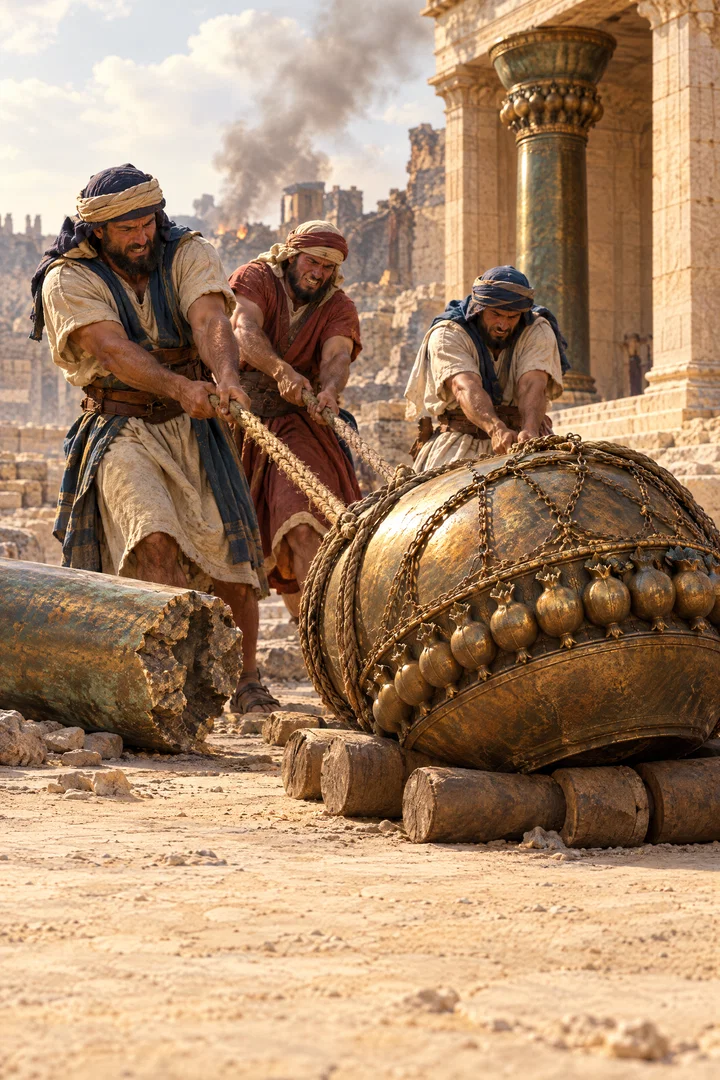
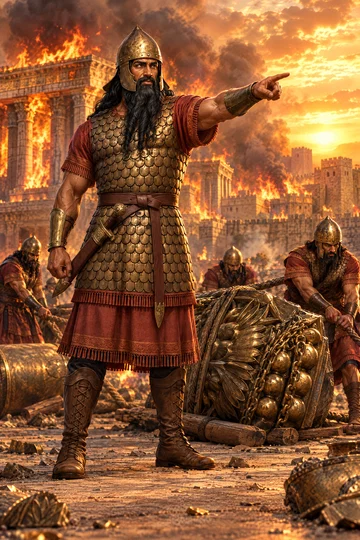
And the firepans, and the bowls, and such things as were of gold, in gold, and of silver, in silver, the captain of the guard took away.
Translations
And the fire pans, and the bowls, and such things as were of gold, in gold, and of silver, in silver, the captain of the guard took away.
King James Version, KJV Cambridge Paragraph Bible
And the firepans, and the bowls, and such things as were of gold, in gold, and of silver, in silver, the captain of the guard took away.
And the fire-pans, and the bowls, and such things as were of gold, in gold, and of silver, in silver, the captain of the guard took away.
And the firepans, and the basons; that which was of gold, in gold; and that which was of silver, in silver, the captain of the guard took away.
And the firepans, and the basins, that which was of gold, in gold, and that which was of silver, in silver, the captain of the guard took away.
and the fire-pans, and the bowls that [are] wholly of silver, hath the chief of the executioners taken.
And the censers and the bowls, that which was of gold in gold, and that which was of silver in silver, the captain of the body-guard took away.
and, the sprinkling pans and the dashing bowls which were of gold, in gold, and which were of silver, in silver, did, the chief of the royal executions, take away.
Berean Standard Bible, Majority Standard Bible
The captain of the guard also took away the censers and sprinkling bowls—anything made of pure gold or fine silver.
The captain of the guard took away the fire pans, the basins, that which was of gold, for gold, and that which was of silver, for silver.
And the fire-trays and the basins; the gold of the gold vessels and the silver of the silver vessels, were all taken away by the captain of the armed men.
And the asshe pannes, and the basens, and all that was of gold, and that was of siluer, tooke the chiefe steward away,
Douay-Rheims (Challoner revision)
Moreover also the censers, and the bowls, such as were of gold in gold, and such as were of silver in silver, the general of the army took away.
Pictures
Cross-references
- 2 Chronicles 36:18
And all the vessels of the house of God, great and small, and the treasures of the house of the LORD, and the treasures of the king, and of his princes; all these he brought to Babylon.
Both describe Babylon taking the temple vessels and treasures.
- Jeremiah 52:19
And the basons, and the firepans, and the bowls, and the caldrons, and the candlesticks, and the spoons, and the cups; that which was of gold in gold, and that which was of silver in silver, took the captain of the guard away.
Lists the gold and silver temple vessels taken away by the captain of the guard.
- 2 Kings 24:13
And he carried out thence all the treasures of the house of the LORD, and the treasures of the king’s house, and cut in pieces all the vessels of gold which Solomon king of Israel had made in the temple of the LORD, as the LORD had said.
Describes the earlier removal of temple treasures to Babylon.
- 2 Kings 25:9
And he burnt the house of the LORD, and the king’s house, and all the houses of Jerusalem, and every great man’s house burnt he with fire.
The temple was burned during Jerusalem’s fall.
Commentary
Each commentary is drawn from primary sources: the writings of Ellen G. White and Adventist pioneers and periodicals. Each commentary is separate. Its own words are not a quotation; follow the references to read the source passages.
Pioneers and periodicals
12 sources
The verse records the final plundering of Solomon's temple, when Nebuchadnezzar's captain of the guard carried its gold and silver firepans and bowls to Babylon as spoil.ST Jan 14, 1886RH Nov 10, 1863ST Nov 5, 1912 It belongs to the overthrow of Judah after Zedekiah's rebellion, when Jerusalem was taken, the kingdom ended, Zedekiah was blinded and died captive in Babylon, and only a small company was left in the land.ST May 12, 1909ST Nov 4, 1897ST Nov 7, 1906 That stripping of the temple treasures came because of Israel's unfaithfulness, and with the vessels the priests, Levites, singers, elders and young people were also swept into captivity.ST Nov 5, 1912ST Nov 7, 1906RH Apr 2, 1857 The captivity and destruction of Jerusalem here is typical of events to transpire under the gospel or at the close of this dispensation, yet as past history alone it cannot reveal God's truth for the present needs of later generations.RH Sep 17, 1872ST May 11, 1915
Historical Setting and Meaning
In the Hebrew canon the books of Kings form one whole and are counted as one book, the division into two having been introduced in the old versions which reckoned Samuel and Kings as the four books of the Kingdoms.ST Dec 9, 1897 They relate the history of the kings from the accession of Solomon to the Babylonian captivity, and this verse belongs to the third great section of that history, the history of the remaining kingdom of Judah after the ten tribes had been swept away, 2 Kings 18-25.ST Dec 9, 1897 It belongs to the laying waste of Jerusalem and the despoiling of the temple that closes the history of the kingdom of Judah.ST Jun 10, 1913ST May 10, 1910 That closing portion stands in the last five chapters of Kings, marked by the wicked and weak reigns of the kings of Judah, whose one bright chapter is the reformation conducted under the good king Josiah supported by his godly priests and counselors.ST May 10, 1910
The verse stands in the account of Nebuchadnezzar's taking of Jerusalem and Babylon's conquest of Judah.ST May 12, 1909ST Nov 7, 1906 The rebellion of Zedekiah ended in the final capture of the Jewish nation, the kingdom was overthrown, and the people were carried captive and scattered.ST May 12, 1909ST Nov 7, 1906 Zedekiah was the last king of the chosen people; Nebuchadnezzar put out his eyes and took him to Babylon, where he died in captivity.ST Nov 4, 1897 Afterward only a little company was left in the land under Gedaliah, and whatever independent government Judah afterward enjoyed was only as a province subservient to the great kingdoms ruling the world.ST May 12, 1909ST Nov 4, 1897
The verse records that the Babylonian captain of the guard under Nebuchadnezzar took away the firepans, bowls, and such things as were of gold and silver from Jerusalem and Solomon's temple as spoil to Babylon.ST Jan 14, 1886RH Nov 10, 1863ST Nov 5, 1912RH Apr 2, 1857 This was part of the removal of its treasures and the final plundering and destruction that completed Judah's captivity.ST Jan 14, 1886RH Nov 10, 1863ST Nov 5, 1912 The removal of the temple treasures was the consequence of Israel's unfaithfulness.ST Nov 5, 1912 It was part of a larger loss in which the people, including priests, Levites, singers, elders, and young people, were also taken into captivity.ST Nov 7, 1906RH Apr 2, 1857
Prophetic Type and Limitation
The twenty-one verses that tell of the Babylonian captivity and the final destruction of Jerusalem foreshadow events to transpire either under the gospel or at the close of this dispensation.RH Sep 17, 1872 Within that larger pattern stands the carrying away of the temple's gold and silver vessels.RH Sep 17, 1872ST May 11, 1915 That captivity is believed as true past history, yet by itself it cannot reveal God's truth for the present needs of later generations.ST May 11, 1915
Sources