2 Kings 5:9
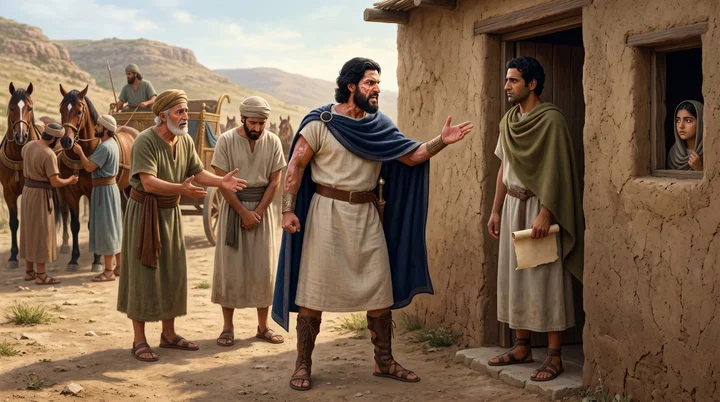
So Naaman came with his horses and with his chariot, and stood at the door of the house of Elisha.
Translations
American King James Version, King James Version, KJV Cambridge Paragraph Bible, Webster Bible
So Naaman came with his horses and with his chariot, and stood at the door of the house of Elisha.
Revised Version, American Standard Version, World English Bible
So Naaman came with his horses and with his chariots, and stood at the door of the house of Elisha.
And Naaman cometh, with his horses and with his chariot, and standeth at the opening of the house for Elisha;
And Naaman came with his horses and with his chariot, and stood at the doorway of the house of Elisha.
So Naaman came, with his horses and with his chariot, and stood at the entrance of the house of Elisha;
Berean Standard Bible, Majority Standard Bible
So Naaman came with his horses and chariots and stood at the door of Elisha’s house.
So Naaman, with all his horses and his carriages, came to the door of Elisha's house.
Then Naaman came with his horses, and with his charets, and stoode at the doore of the house of Elisha.
Douay-Rheims (Challoner revision)
So Naaman came with Iris horses and chariots, and stood at the door of the house of Eliseus:
Pictures
Cross-references
- Luke 4:27
And many lepers were in Israel in the time of Eliseus the prophet; and none of them was cleansed, saving Naaman the Syrian.
Jesus cites Naaman’s cleansing as God’s favor reaching a foreigner amid Israel’s unbelief.
- 2 Kings 5:14
Then went he down, and dipped himself seven times in Jordan, according to the saying of the man of God: and his flesh came again like unto the flesh of a little child, and he was clean.
Naaman obeys Elisha’s instruction and is cleansed.
- 2 Kings 5:20
But Gehazi, the servant of Elisha the man of God, said, Behold, my master hath spared Naaman this Syrian, in not receiving at his hands that which he brought: but, as the LORD liveth, I will run after him, and take somewhat of him.
Gehazi resolves to pursue Naaman and take a gift.
- 2 Kings 5:1
Now Naaman, captain of the host of the king of Syria, was a great man with his master, and honourable, because by him the LORD had given deliverance unto Syria: he was also a mighty man in valour, but he was a leper.
Identifies Naaman and describes his position and illness.
- 2 Kings 5:2-3
And the Syrians had gone out by companies, and had brought away captive out of the land of Israel a little maid; and she waited on Naaman’s wife.
The captive maiden tells Naaman’s wife about Elisha.
- 2 Kings 5:15-16
And he returned to the man of God, he and all his company, and came, and stood before him: and he said, Behold, now I know that there is no God in all the earth, but in Israel: now therefore, I pray thee, take a blessing of thy servant.
Naaman gratefully offers Elisha a gift, but Elisha refuses it.
Commentary
Each commentary is drawn from primary sources: the writings of Ellen G. White and Adventist pioneers and periodicals. Each commentary is separate. Its own words are not a quotation; follow the references to read the source passages.
Ellen G. White
18 sources
Naaman was a Syrian commander afflicted with leprosy who came with his horses and chariot and stood waiting at the door of Elisha's house to seek healing, having been directed there by the testimony of the captive Israelite maid that God's power worked through the prophet.PK 244.2PK 246.4DA 238.2–239.1MH 472.4–473.1 Elisha answered him at the door through a messenger with direction to wash seven times in the Jordan, and by obeying he was cleansed of his leprosy and enlightened to know the true God.PK 246.4DA 238.2–239.1ST Feb 17, 18812SP 112.2–113.1 His was the only cleansing of a leper in Elisha's time, when many lepers in Israel were passed over, so that no like healing occurred again until Christ's ministry.DA 262.4–264.2LC1 53.2–54.1ST Jun 23, 1909 God thus manifested Himself to a heathen Gentile foreigner because Naaman had lived faithfully by the best light he had, with a felt need and a heart ready to receive grace, showing that divine blessing was not limited to Israel.DA 238.2–239.1ST Feb 17, 1881ST Feb 17, 1881SLP 229.1–230.24RED 5.3–7.1 A person's standing before God depends on the use made of received light rather than the amount received, while the lepers of Israel closed the door to good by unbelief, unrighteous life, and pride that would have perverted grace to self-exaltation.DA 238.2–239.1ST Feb 17, 1881SLP 229.1–230.24RED 5.3–7.12SP 113.2–3
Visit and Healing Described
Naaman was a Syrian nobleman and commander, a leper who came with his horses and with his chariot and stood and waited at the door of Elisha's house to seek help and healing.PK 244.2PK 246.42SP 112.2–113.1DA 239.2–240.1 His visit followed the testimony of the captive Israelite maid that God's power worked through Elisha to give the help Naaman needed.PK 244.2MH 472.4–473.1 Elisha answered Naaman at the door through a messenger, directing him to wash seven times in the Jordan to be healed of leprosy.PK 246.4
Naaman was cleansed of his leprosy and came to know the true God, being enlightened in divine truth.DA 238.2–239.1ST Feb 17, 18812SP 112.2–113.12SP 113.2–3DA 239.2–240.1
His was the only cleansing of a leper in Elisha's time, when many lepers in Israel were passed over.DA 262.4–264.2LC1 53.2–54.1ST Jun 23, 1909Ms 40, 1887, par. 8–11Ms 8, 1888, par. 9–14 Jesus' later healing of a leper was therefore unprecedented since that event.DA 262.4–264.2
Grace Beyond Israel
Naaman stood at Elisha's door as a heathen, a Gentile, a Syrian foreigner and nobleman, yet one who had lived faithfully by the best light he possessed, following his convictions of right, feeling his great need of help, and opening his heart ready to receive God's grace and instruction.DA 238.2–239.1ST Feb 17, 1881ST Feb 17, 18812SP 112.2–113.12SP 113.2–3 God therefore manifested Himself to him and favored him, cleansing him of leprosy and enlightening him in divine truth, showing that God's blessings and the ministry of His prophet were not limited to Israel but were sent beyond Israel.DA 238.2–239.1SLP 229.1–230.24RED 5.3–7.1AA 416.2–417.1LC1 53.2–54.1 A person's standing before God depends on how received light is used rather than how much light has been received, so one with little light who lives by it is regarded with greater favor and counted more righteous than those with great light and spiritual advantages whose lives contradict their profession.DA 238.2–239.1SLP 229.1–230.22SP 113.2–3AA 416.2–417.1Ms 8, 1888, par. 9–14
The power of God displayed through faithful prophets was not labored for the salvation of an unbelieving, hard-hearted people, but was especially given to those with hearts that could feel and faith that would grasp the evidences God gave.2SP 112.2–113.1LC1 56.1ST Jun 23, 1909 The many lepers in Israel were passed over because their unbelief and unrighteous lives closed the door of good to them.ST Feb 17, 18814RED 5.3–7.1Ms 40, 1887, par. 8–11 Instead of making right use of God's blessings they slighted and despised their privileges and would have perverted tokens of grace to exalt themselves in pride, boastfulness, and self-sufficiency, placing themselves where the Lord could not manifest His power for them.Ms 40, 1887, par. 8–11 Jesus held up this history to expose wicked unbelief and corrupt life and to show His ministry would not meet the expectation of national deliverance.LC1 56.1LC1 53.2–54.1 It struck home as a terribly severe rebuke that first awakened reverence and then stirred scorn from those who would have no king without riches and splendor and a grand and imposing army.LC1 56.1
God has reasons for directing feet to a particular place, because there someone may need the help His representative can give, as when the little Israelite maiden was sent to Naaman the Syrian captain.MH 472.4–473.1 Work that is not personal choice is still to be accepted as God's choice and the nearest duty done whether pleasing or unpleasing.MH 472.4–473.1 God still sends men, women, and youth today as His representatives to those needing divine help and guidance.MH 472.4–473.1
Sources
Pioneers and periodicals
43 sources
Naaman was the captain of the Syrian army, a great, honored and mighty commander, yet a leper, who came with his horses and his chariot and stood at the door of Elisha's house seeking healing.ST Sep 10, 1885ST Dec 7, 1904ST Aug 20, 1902ST Jul 7, 1909RH Apr 23, 1908 He had been told by an Israelite captive girl in his household of the prophet in Samaria, whose childlike faith made the power of Israel's God known to her master.ST Jul 13, 1904RH Jun 10, 1902RH Nov 19, 1908 As a great man he expected the prophet to receive him with deference and to come out and perform some striking act, but Elisha sent a messenger bidding him wash in the Jordan, and the simple command wounded his pride and angered him.ST Aug 4, 1898ST Feb 11, 1889ST Sep 10, 1885RH Jun 16, 1903RH Oct 8, 1872 He was willing to do some great thing yet rebelled at humbly dipping seven times in the Jordan, until persuaded to obey, and he was cleansed not by the water itself but by God's power when he trusted God's word and fulfilled the exact condition.RH May 6, 1858ST Apr 19, 1910RH Apr 23, 1908RH Jan 22, 1867ST May 28, 1894 He stands as the only leper cleansed among many in Israel in Elisha's time, showing that God's grace and salvation are without distinction of nationality to every receptive outsider who obeys by faith, while unbelief shuts out many with greater light.ST Feb 19, 1894ST Dec 23, 1889ST Mar 22, 1899ST Nov 7, 1895
Naaman's Identity and Arrival
Naaman was captain of the Syrian army, a great, honored and mighty warrior and commander, yet he was a leper.ST Sep 10, 1885ST Jul 7, 1909RH Apr 23, 1908 He came with his horses and his chariot and stood at the door of Elisha's house seeking healing for his leprosy.ST Dec 7, 1904ST Aug 20, 1902ST Feb 11, 1889ST Sep 10, 1885RH Jun 16, 1903 He was a Syrian nobleman and a heathen man who was healed of leprosy only after obeying the prophet's direction in a simple act, trusting God's word.ST Dec 7, 1904ST Aug 20, 1902 His cleansing depended on obeying God's command, for without the Great Physician's healing his condition remained incurable.RH Apr 23, 1908
He brought rich presents of silver and gold to pay for his cure, expecting and hoping for a pompous display and popular demonstration in keeping with his high standing.RH Oct 8, 1872 He journeyed peacefully from Damascus into Israel to seek the prophet, as captain of the Syrian king's forces coming to Elisha's house with his horses and his chariot and his rich presents to be healed of his disease.RH Oct 8, 1872ST Jun 16, 1887 As a great man from Syria he expected the prophet to receive him with deference and personal attention.ST Aug 4, 1898ST Sep 10, 1885 He believed healing was possible but expected the prophet to come out in person, invoke the Lord, and perform a striking act rather than send a messenger with the instruction to wash in the Jordan.ST Feb 11, 1889ST Sep 10, 1885RH Jun 16, 1903
His coming was prompted by an Israelite captive girl in his household who told of the prophet in Samaria and the power of Israel's God, making the true God known to her master and helping bring about his healing.RH Jun 10, 1902RH Nov 19, 1908 The maid showed childlike faith that Elisha could heal him, trusting God's power though Elisha had not healed a leper before and without having seen such a healing.ST Jul 13, 1904 The same Spirit that moved the maid to speak of the prophet moved Elisha to have Naaman sent to him.ST Oct 12, 1904 The meeting was for more than the physical healing of the Syrian captain, that Naaman and others through him might know there is a prophet in Israel and through that knowledge find salvation.ST Oct 12, 1904
Through the witness of one captive child, Naaman and, through his public standing and journey, the Syrian nation received light about God, for his healing led him to acknowledge that there was no God throughout the earth except in Israel and to pledge worship to the Lord alone.RH Jun 10, 1902 His healing made Elisha renowned throughout Syria and known to the Syrians.ST Oct 19, 1904 Elisha was specially honored as the man of God, and after the incident with the bears people of every class respected him.
Pride Meets Simple Command
Naaman stood at Elisha's door with horses and chariot expecting a personal reception, but Elisha did not meet him in person and sent a messenger with the instruction to wash in the Jordan.ST Sep 10, 1885RH Jun 16, 1903 He believed healing was possible, yet he expected the prophet to come out, invoke the Lord, and perform a striking, pompous act in keeping with his high standing.ST Feb 11, 1889RH Oct 8, 1872 The simple instruction to wash in the Jordan wounded his pride, weakened his faith, and angered him because the healing did not happen in the way he expected and the remedy was so simple.ST Feb 11, 1889ST Sep 10, 1885RH Jun 16, 1903
He was willing to do something great but rebelled at the simple instruction to wash seven times in the Jordan.ST Apr 19, 1910RH Jan 22, 1867 He thought the command to dip was nonsense and mere blind obedience, while worldly wisdom dictated a better way.ST Apr 19, 1910ST May 28, 1894 The test was implicit faith against human wisdom, for human wisdom must not be preferred to obeying God exactly as He commands, and once it is sure God commands it the only course is to trust Him and obey.ST Apr 19, 1910ST May 28, 1894 He yielded only when his servant persuaded him to obey.ST Apr 19, 1910RH Jan 22, 1867
He had to give up expectation of a great act and humbly accept doing a small, straightforward thing rather than insisting on something grand.ST Aug 21, 1901 Men will do some notably conspicuous thing while scorning an apparently small thing, though obedience to the small command carries the far greater exercise of faith.ST Aug 21, 1901 Such obedience is the proof of belief in God and is righteousness, and faith does not dismiss or judge God's commands as unimportant.ST Aug 21, 1901ST May 28, 1894 His coming shows the propensity to receive God's benefits only in a self-dictated manner that does not mar pride or interfere with worldly interests and enjoyments.RH Oct 8, 1872 When required to deny self, reform life, and be governed by the rules of pure morality, men prefer an easier way congenial to the carnal mind by adding to or taking from the straight testimony of God's word until religion is left without vitality and moral principle.RH Oct 8, 1872
Faith Proved by Obedience
The arrival with horses and chariot at Elisha's door begins a test of implicit faith against human wisdom, for worldly wisdom dictated a better way than dipping in the Jordan.ST Apr 19, 1910ST Mar 25, 1897 Blind obedience was necessary, and human wisdom must not be preferred to obeying God exactly as He commands.ST Apr 19, 1910ST Mar 25, 1897 Once it is sure God commands it, the only course is to trust Him and obey.ST Apr 19, 1910 Faith does not dismiss God's commands as unimportant or judge the command to dip as nonsense.ST May 28, 1894
Faith meant following God's instruction to dip seven times in the Jordan rather than choosing the clearer rivers of Damascus or deciding that one dipping was enough, and obedience to God's word brought healing and life.ST Feb 4, 1897 Washing only six times would not have met the condition, for he was required to wash seven times before he was healed.RH May 6, 1858ST Feb 11, 1886 The simplicity of the means tested his faith, which he at first hesitated to accept.ST Feb 11, 1889ST May 15, 1884 He found healing only when he obeyed the prophet's command.ST Feb 11, 1889
God's healing does not depend on means that seem impressive or worthy to human eyes.ST Aug 20, 1902 Naaman was cleansed when he obeyed the prophet's instruction and washed seven times in the Jordan, trusting God's word.ST Aug 20, 1902 Men will do some notably conspicuous thing while scorning an apparently small thing, though obedience to the small command carries the far greater exercise of faith.ST Aug 21, 1901 Such obedience is the proof of belief in God and is righteousness.ST Aug 21, 1901
Healing, Salvation, and Grace
Naaman stood at Elisha's door still a leper despite his greatness and rank, and his condition remained incurable without the healing of the Great Physician.RH Apr 23, 1908 He was told to wash seven times in the Jordan, and he was not healed by the water itself but by God's power after he fulfilled the instruction, for washing only six times would not have met the condition.RH May 6, 1858 Just as he had no claim to healing before obeying, so a sinner has no claim to pardon before meeting the conditions of salvation, for God's promised pardon follows the required steps.RH May 6, 1858 His healing came because he believed, showing that salvation is received by faith.ST Feb 19, 1894
The washing was a provided means he had to use, and refusing it would have left him unhealed, so that expecting recovery while refusing to use God-provided remedies when they are available is presumption, not faith.ST Feb 11, 1886 In the same way many expect God to heal them miraculously without effort even while they continue in harmful practices.ST He was made whole when he accepted God's instruction to wash in the Jordan rather than trusting his own judgment about which waters were best, which shows that those who seek salvation must not reject Christ's love or try to reach heaven by another way.RH Nov 21, 1865
The episode belongs to Elisha's ministry as the Lord's accredited prophet and showed his understanding of faith in the treatment of disease. Naaman's cleansing demonstrates that the Lord's healing was available to lepers in Israel, though only he received it. The failure of the others to be healed did not prove that healing was unavailable, but that they had not appreciated the Lord's presence through His prophet.
Light to the Nations
Naaman the Syrian was the only leper cleansed among the many lepers in Israel in Elisha's time, so that Elisha's help reached a foreigner while Israelites were not cleansed.ST Jun 23, 1909ST Dec 23, 1889ST Mar 22, 1899 Jesus cited his cleansing as the example of a prophet ministering beyond Israel, illustrating that a prophet may be rejected among his own people while God's blessing reaches an outsider.ST Jun 23, 1909ST Feb 19, 1894ST Mar 22, 1899 His coming with horses and chariot to stand at Elisha's house belongs to that ministry to a foreigner after Israel rejected God's messenger, showing that God's power was given to a receptive outsider while Israel's unbelief kept many from receiving it.ST Jun 23, 1909ST Sep 24, 1894
God gives blessing without distinction between Jew and Gentile, and His grace and call are not limited by nationality, for He is no respecter of persons, with Naaman's healing coming because he believed and showing that salvation is received by faith.ST Feb 19, 1894ST Nov 7, 1895 A heathen who lives faithfully by the light he has, recognizes his need, and is willing to receive divine instruction may receive God's favor and be enlightened in divine truth, as Naaman the Syrian nobleman who stood at Elisha's door seeking help lived by the light he possessed, felt his need, and opened his heart to instruction.ST Feb 17, 1881ST Feb 17, 1881 Those with greater light may lose that privilege through unbelief and unrighteous lives, for Naaman was true to his convictions and recognized his need whereas Israel's unbelief and disregard of its privileges closed the way to blessing, since God works for those who value the light and favors they receive.ST Feb 17, 1881ST Jun 16, 1887
After an Israelite captive girl told him of the power of Israel's God, his healing led him to acknowledge that there was no God throughout the earth except in Israel and to pledge worship to the Lord alone.RH Jun 10, 1902 Through the witness of one captive child, and through Naaman's public standing and journey, the Syrian nation received light about God.RH Jun 10, 1902 The story was therefore a lesson that God's light and salvation were not meant for Israel alone but that Israel was to share God's message with the world, for God has precious souls in every nation.ST Dec 23, 1889ST Jan 22, 1894
Warnings and Daily Application
The coming of Naaman with horses and chariot to Elisha's house leads into a warning against worldly policy, for after he was cured of leprosy he stood before the man of God and in fervency of gratitude urged him to receive a present, but the prophet thought best to refuse.ST Oct 3, 1878 Gehazi was then taken by a spirit of worldly policy and reasoned that the valuable present might just as well have been taken, since the Syrian was rich and able to give it and willing to give it for his cure.ST Oct 3, 1878 Letting such a good opportunity to add to their treasures slip seemed strange and astonishing and unmindful of his interests, and he resolved that he would run after Naaman and take somewhat of him.ST Oct 3, 1878 That visit further manifested Gehazi's selfish disposition, the same selfish character shown when he would prevent the Shunammite woman from making her wishes known to the prophet.ST Jul 28, 1898
As Naaman looked for great acts from men instead of simply obeying God, so many do the same when the holy Sabbath draws a straight line, trying to climb up some other way because they do not realize the weight and importance of simply obeying God.RH Jan 20, 1853 Patiently enduring trial and keeping God's commandments and the faith of Jesus in the third angel's message is the only appointed way of escape from death.RH Jan 20, 1853 Naaman was a leper facing a disease that would worsen and eventually end his life, yet his courage did not rest on hope of recovery.ST Jun 7, 1910 He accepted the burden and continued to live out his duty.ST Jun 7, 1910
Sources