2 Samuel 13:19
And Tamar put ashes on her head, and rent her garment of divers colours that was on her, and laid her hand on her head, and went on crying.
Translations
American King James Version, Webster Bible
And Tamar put ashes on her head, and rent her garment of divers colors that was on her, and laid her hand on her head, and went on crying.
King James Version, KJV Cambridge Paragraph Bible
And Tamar put ashes on her head, and rent her garment of divers colours that was on her, and laid her hand on her head, and went on crying.
And Tamar put ashes on her head, and rent her garment of divers colours that was on her; and she laid her hand on her head, and went her way, crying aloud as she went.
And Tamar put ashes on her head, and rent her garment of divers colors that was on her; and she laid her hand on her head, and went her way, crying aloud as she went.
And Tamar taketh ashes for her head, and the long coat that [is] on her she hath rent, and putteth her hand on her head, and goeth, going on and crying;
And Tamar put ashes on her head, and rent her vest of many colours which was on her, and laid her hand on her head, and went away, crying out as she went.
And Tamar put ashes upon her head, and, the long tunic that was upon her, she rent,—and put her hand upon her head, and went her way, crying out as she went.
And Tamar put ashes on her head and tore her robe. And putting her hand on her head, she went away crying bitterly.
And Tamar put ashes on her head and tore her robe. And putting her hand on her head, she went away crying aloud.
Tamar put ashes on her head, and tore her garment of various colors that was on her; and she laid her hand on her head and went her way, crying aloud as she went.
And Tamar, in her grief, put dust on her head; and she put her hand on her head and went away crying loudly.
And Tamar put ashes on her head and rent the garment of diuers colours which was on her, and layde her hand on her head, and went her way crying.
Douay-Rheims (Challoner revision)
And she put ashes on her head, and rent her long robe and laid her hands upon her head, and went on crying.
Pictures
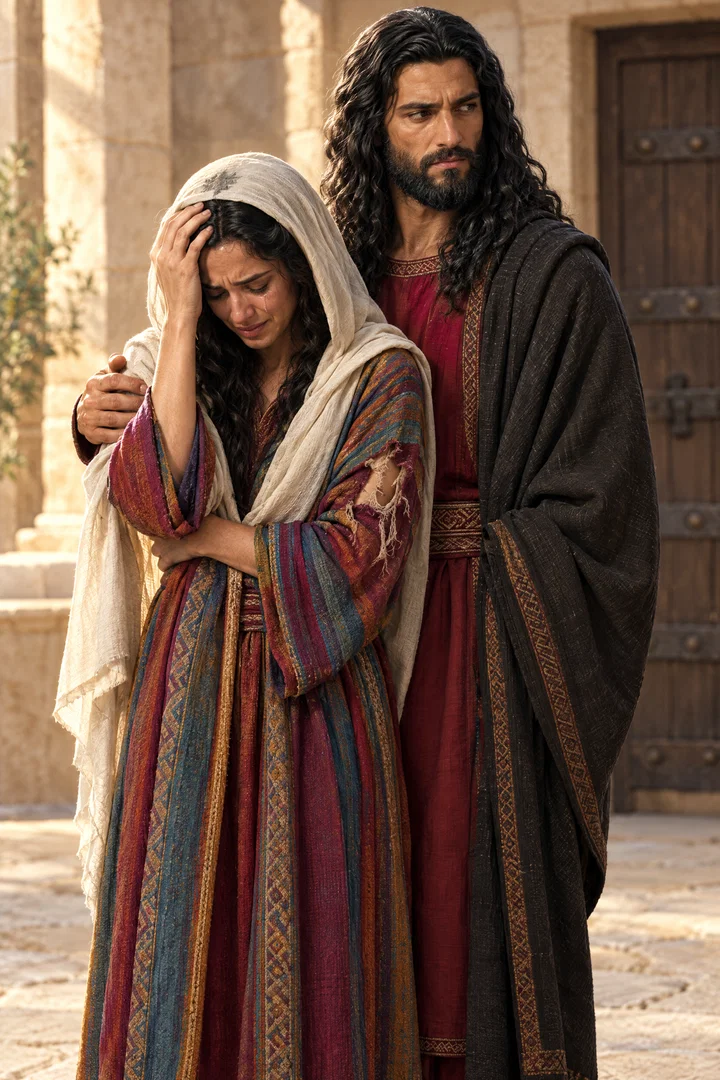
Cross-references
- 2 Samuel 12:11
Thus saith the LORD, Behold, I will raise up evil against thee out of thine own house, and I will take thy wives before thine eyes, and give them unto thy neighbour, and he shall lie with thy wives in the sight of this sun.
Trouble foretold within David’s household unfolds in Tamar’s suffering.
- 2 Samuel 13:28-29
Now Absalom had commanded his servants, saying, Mark ye now when Amnon’s heart is merry with wine, and when I say unto you, Smite Amnon; then kill him, fear not: have not I commanded you? be courageous, and be valiant.
Absalom has Amnon killed to avenge Tamar’s disgrace.
Commentary
Each commentary is drawn from primary sources: the writings of Ellen G. White and Adventist pioneers and periodicals. Each commentary is separate. Its own words are not a quotation; follow the references to read the source passages.
Ellen G. White
2 sources
Tamar was Amnon's sister, and this verse stands in the account of her being grievously wronged by him.PP 727.2–31SP 381.3–382.3 The wrong was a great crime that Amnon committed against her.PP 727.2–31SP 381.3–382.3 Absalom avenged that crime by killing Amnon.1SP 381.3–382.3
These events became part of the bitter consequences of David's own wrongdoing.1SP 381.3–382.3 They continually reminded him of the injustice he had done to Uriah and Bath-sheba.1SP 381.3–382.3
Sources
Pioneers and periodicals
9 sources
Tamar, a virgin princess, after Amnon's crime publicly expressed her grief and humiliation by putting ashes on her head, tearing her distinctive garment of divers colours that marked her, laying her hand on her head, and going away crying.ST Mar 31, 1881RH Jul 27, 1869ST Oct 27, 1898 The verse belongs to the sad history of Amnon, described as incestuous, and Tamar's disgrace, set among the deplorable examples of David's sons that show failure of home government.RH Apr 26, 1870ST Dec 30, 1913ST Jul 20, 1904 It belongs to David's later history of heavy disgrace, sorrow and family tragedies on account of his sons Amnon and Absalom, which marred his peace and wrung his heart.RH Oct 12, 1869ST Apr 14, 1909ST Dec 30, 1913
It shows the judgments and retribution that followed David's transgression and wrongs, which pursued him through all the rest of his life principally in his own family.RH Apr 26, 1870ST Mar 31, 1881RH Oct 12, 1869 That retribution came in kind for his wicked conduct toward Uriah, proving that wrongdoing brings calamity and sorrow upon the wrongdoer in the very kind of evil he caused others and that what a man sows he reaps.ST Mar 31, 1881 That family misery is traced largely to the awful evil of a multiplicity of wives and plural marriages, producing children by different wives amid idleness, luxury, jealousy, hatred and rivalry that fostered harmful character.ST Apr 29, 1908ST Apr 14, 1909ST Oct 27, 1898 The story illustrates that people cannot violate God's laws without suffering, because every transgression carries an inherent curse.ST Apr 29, 1908
Sources