2 Samuel 17:8
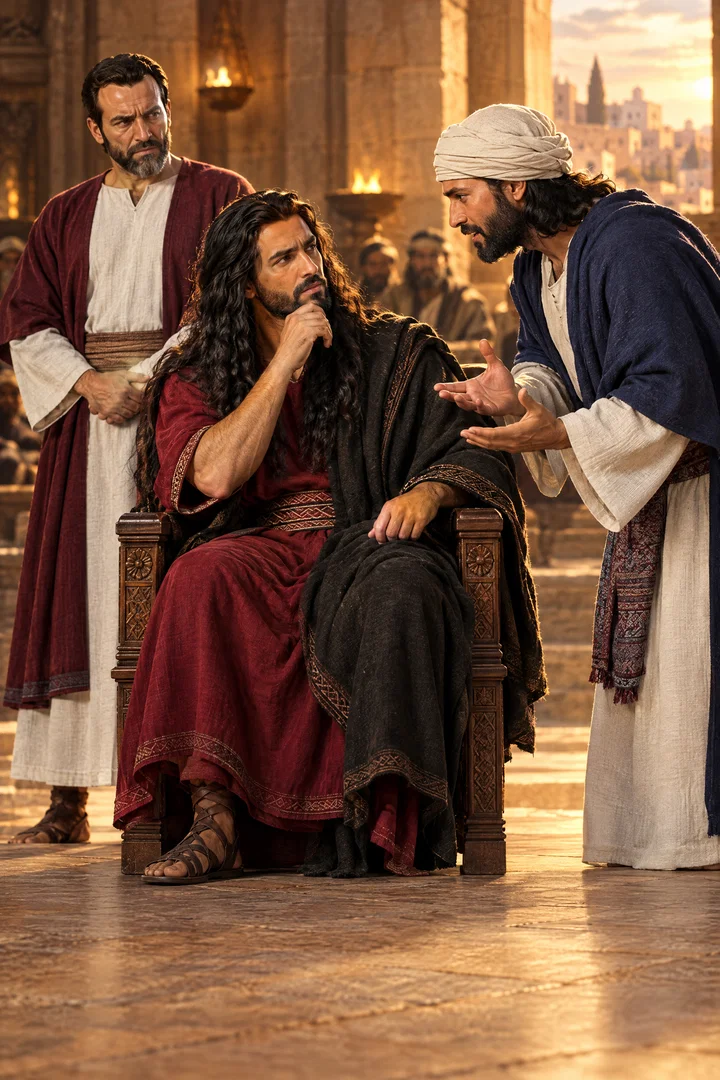
For, said Hushai, thou knowest thy father and his men, that they be mighty men, and they be chafed in their minds, as a bear robbed of her whelps in the field: and thy father is a man of war, and will not lodge with the people.
Translations
For, said Hushai, you know your father and his men, that they be mighty men, and they be chafed in their minds, as a bear robbed of her whelps in the field: and your father is a man of war, and will not lodge with the people.
For, said Hushai, thou knowest thy father and his men, that they be mighty men, and they be chafed in their minds, as a bear robbed of her whelps in the field: and thy father is a man of war, and will not lodge with the people.
For, (said Hushai,) thou knowest thy father and his men, that they be mighty men, and they be chafed in their minds, as a bear robbed of her whelps in the field: and thy father is a man of war, and will not lodge with the people.
For, said Hushai, thou knowest thy father and his men, that they are mighty men, and they are chafed in their minds, as a bear robbed of her whelps in the field: and thy father is a man of war, and will not lodge with the people.
Hushai said moreover, Thou knowest thy father and his men, that they be mighty men, and they be chafed in their minds, as a bear robbed of her whelps in the field: and thy father is a man of war, and will not lodge with the people.
Hushai said moreover, Thou knowest thy father and his men, that they are mighty men, and they are chafed in their minds, as a bear robbed of her whelps in the field; and thy father is a man of war, and will not lodge with the people.
And Hushai saith, 'Thou hast known thy father and his men, that they [are] heroes, and they are bitter in soul as a bereaved bear in a field, and thy father [is] a man of war, and doth not lodge with the people;
And Hushai said, Thou knowest thy father and his men, that they are mighty men, and they are of exasperated spirit, as a bear robbed of her whelps in the field; and thy father is a man of war, and will not lodge with the people.
And Hushai said—Thou, knowest thy father and his men—that, men of might, they are, and, embittered in soul, they are, like a bear bereaved of her young, in the field,—thy father also, is a man of war, and will not lodge with the people.
Berean Standard Bible, Majority Standard Bible
He continued, “ You know your father and his men. They are mighty men, and as fierce as a wild bear robbed of her cubs. Moreover, your father is a man of war who will not spend the night with the troops.
Hushai said moreover, “ You know your father and his men, that they are mighty men, and they are fierce in their minds, like a bear robbed of her cubs in the field. Your father is a man of war, and will not lodge with the people.
Hushai said further, You have knowledge of your father and his men, that they are men of war, and that their feelings are bitter, like those of a bear in the field whose young ones have been taken from her: and your father is a man of war, and will not take his night's rest with the people;
For, said Hushai, thou knowest thy father, and his men, that they be strong men, and are chafed in minde as a beare robbed of her whelps in the fielde: also thy father is a valiant warrier, and will not lodge with the people.
Douay-Rheims (Challoner revision)
And again Chusai said: Thou knowest thy father, and the men that are with him, that they are very valiant, and bitter in their mind, as a bear raging in the wood when her whelps are taken away: and thy father is a warrior, and will not lodge with the people.
Pictures
Cross-references
- 2 Samuel 17:14
And Absalom and all the men of Israel said, The counsel of Hushai the Archite is better than the counsel of Ahithophel. For the LORD had appointed to defeat the good counsel of Ahithophel, to the intent that the LORD might bring evil upon Absalom.
God overruled Ahithophel’s counsel through Hushai, dooming Absalom’s rebellion.
- 2 Samuel 15:1-18
And it came to pass after this, that Absalom prepared him chariots and horses, and fifty men to run before him.
Absalom’s rebellion brings David’s flight and forms part of the retribution in David’s life.
- 2 Samuel 17:1-3
Moreover Ahithophel said unto Absalom, Let me now choose out twelve thousand men, and I will arise and pursue after David this night:
Hushai's warning answers its night attack plan
- 2 Samuel 15:31
And one told David, saying, Ahithophel is among the conspirators with Absalom. And David said, O LORD, I pray thee, turn the counsel of Ahithophel into foolishness.
David prayed that God would thwart Ahithophel’s counsel.
Commentary
Each commentary is drawn from primary sources: the writings of Ellen G. White and Adventist pioneers and periodicals. Each commentary is separate. Its own words are not a quotation; follow the references to read the source passages.
Ellen G. White
1 source
This saying belongs to Hushai the Archite's reply when Absalom, who highly esteemed him as his father's counselor, asked his judgment on Ahithophel's plan to take twelve thousand men and pursue David that night while David was weary and weak, a plan that would have destroyed David if followed.PP 739.2–740.1 Hushai had not been called to the council and would not intrude unasked lest he be suspected as a spy, but after the assembly dispersed he declared Ahithophel's counsel not good at this time.PP 739.2–740.1 By describing David's men as mighty men chafed in mind like a bear robbed of her whelps, he meant they were strong warriors made fierce and angry like a mother bear deprived of its young.PP 739.2–740.1
By describing David as a man of war who would not lodge with the people, he meant David was an experienced soldier who would not sleep among the troops but would be hidden in a pit or some other place.PP 739.2–740.1 He meant Absalom's forces would therefore not capture David, and any setback would discourage Absalom's supporters and harm Absalom's cause.PP 739.2–740.1 His warning was directed by a wisdom higher than Ahithophel's, for the Lord had appointed to defeat Ahithophel's sound counsel in order to bring ruin upon Absalom.PP 739.2–740.1 He spoke to stop immediate action and to turn Absalom toward gathering all Israel from Dan to Beersheba and going to battle in his own person.PP 739.2–740.1
Sources
Pioneers and periodicals
11 sources
2 Samuel 17:8 belongs to the history of the reign of David during Absalom's rebellion against him, when David was fleeing from Jerusalem.ST May 6, 1913ST Apr 14, 1909 It stands specifically in the events leading up to the battle between David's forces and Absalom's followers, within the war against Absalom that ends with victory over Absalom and return to Jerusalem.ST Apr 14, 1909ST Aug 13, 1896 The verse is part of Hushai's countercounsel to Absalom opposing the advice of Ahithophel, an experienced general.ST Aug 13, 1896RH Nov 23, 1905RH Apr 2, 1861 Hushai's counsel was followed and overthrew Ahithophel's counsel, delaying Absalom and giving David time to number and organize his adherents and army.ST Aug 13, 1896RH Nov 23, 1905 In answer to David's prayer God turned Ahithophel's counsel into foolishness and brought about the deliverance David had prayed for, showing that a powerful and apparently superior plan does not guarantee success.ST Aug 13, 1896RH Nov 23, 1905RH Apr 2, 1861
The phrase about being chafed in mind means being bitter of soul.ST Dec 14, 1882RH Sep 13, 1864 Hushai describes David and his men as deeply enraged and embittered and exasperated in feeling, like a bear robbed of its cubs in the field.ST Dec 14, 1882ST Jun 6, 1878 This shows that the Hebrew word nephesh translated mind can refer to a person's inward emotional state or feelings.ST Dec 14, 1882RH Sep 13, 1864ST Jun 6, 1878 This use illustrates nephesh in the higher sense of mind and rational soul, as the seat of the passions, emotions, and affections belonging to a rational being, such as anger, sorrow, hatred, and revenge.ST Dec 14, 1882
The surrounding history in 2 Samuel 11-24 and 1 Kings 1-2 shows the judgments and retribution that followed David for the rest of his life after his great wickedness toward Uriah, fulfilling the denunciation of the prophet Nathan.RH Apr 26, 1870ST Mar 31, 1881RH Oct 12, 1869 That retribution included the rebellion and crimes of Absalom and the calamities upon David's family.RH Apr 26, 1870ST Mar 31, 1881RH Oct 12, 1869 The sad history of Amnon and Tamar and even Adonijah's rebellion and death, together with Absalom's rebellion, shows David receiving back in kind for his own wrongs principally in his own family, proving that what a person sows will be reaped and that sin pays in its own kind.RH Apr 26, 1870
The miseries and difficulties of this history trace largely to the evil of a multiplicity of wives, with sad consequences in trouble with sons David was unable to control.ST May 6, 1913ST Apr 14, 1909 The account is told with detailed faithfulness and recorded openly without covering up or excusing David's sin, followed by David's own humble recorded confession.ST May 6, 1913RH Oct 12, 1869 This stamps the whole account with inspiration and shows that God does not hide the sins of even the greatest kings.ST May 6, 1913
Sources