2 Samuel 7:3
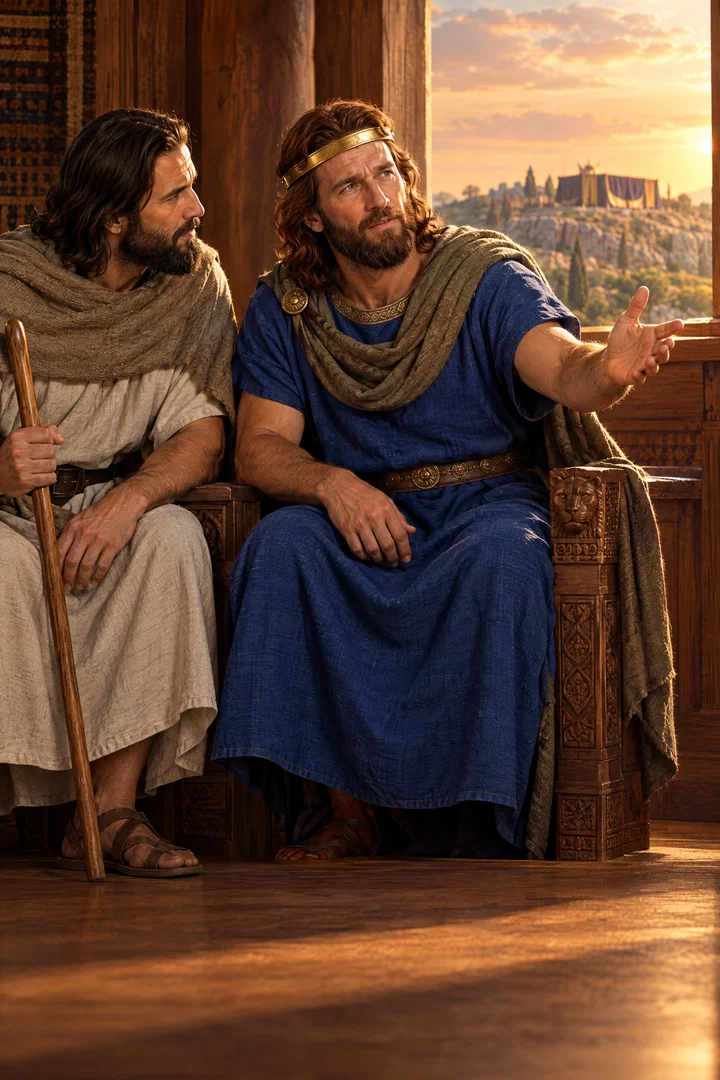
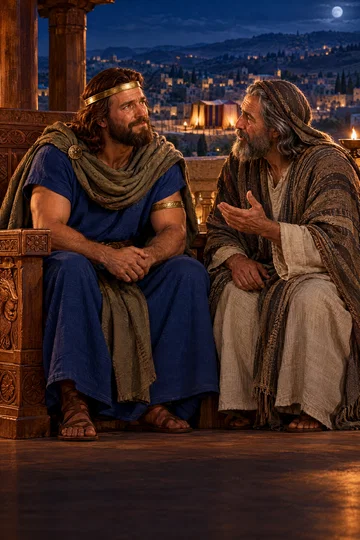
And Nathan said to the king, Go, do all that is in thine heart; for the LORD is with thee.
Translations
And Nathan said to the king, Go, do all that is in your heart; for the LORD is with you.
King James Version, Revised Version
And Nathan said to the king, Go, do all that is in thine heart; for the LORD is with thee.
And Nathan said to the king, Go, do all that is in thine heart; for the Lord is with thee.
And Nathan said to the king, Go, do all that is in thy heart: for the LORD is with thee.
American Standard Version, Darby Translation
And Nathan said to the king, Go, do all that is in thy heart; for Jehovah is with thee.
And Nathan saith unto the king, 'All that [is] in thine heart — go, do, for Jehovah [is] with thee.'
And Nathan said unto the king, All that is in thy heart, go—do,—for Yahweh is with thee.
Berean Standard Bible, Majority Standard Bible
And Nathan replied to the king, “ Go and do all that is in your heart, for the LORD is with you.”
Nathan said to the king, “ Go, do all that is in your heart, for the LORD is with you.”
And Nathan said to the king, Go and do whatever is in your heart; for the Lord is with you.
Then Nathan sayde vnto the King, Go, and doe all that is in thine heart: for the Lord is with thee.
Douay-Rheims (Challoner revision)
And Nathan said to the king: Go, do all that is in thy heart: because the Lord is with thee.
Pictures
Cross-references
- 1 Chronicles 22:7-10
And David said to Solomon, My son, as for me, it was in my mind to build an house unto the name of the LORD my God:
David is forbidden to build the temple because of his wars; Solomon is appointed to build it.
- 1 Chronicles 17:1-4
Now it came to pass, as David sat in his house, that David said to Nathan the prophet, Lo, I dwell in an house of cedars, but the ark of the covenant of the LORD remaineth under curtains.
Retells Nathan’s initial approval and God’s correction about David’s temple plan.
- 2 Samuel 7:12-13
And when thy days be fulfilled, and thou shalt sleep with thy fathers, I will set up thy seed after thee, which shall proceed out of thy bowels, and I will establish his kingdom.
son promised to build house
- 1 Chronicles 17:4
Go and tell David my servant, Thus saith the LORD, Thou shalt not build me an house to dwell in:
God reverses Nathan’s approval overnight.
- 1 Kings 8:17-19
And it was in the heart of David my father to build an house for the name of the LORD God of Israel.
God approved David’s desire to build the temple, though his son would build it.
- Psalms 132:1-5
LORD, remember David, and all his afflictions:
David resolves to find a dwelling for the LORD.
- 1 Chronicles 28:2
Then David the king stood up upon his feet, and said, Hear me, my brethren, and my people: As for me, I had in mine heart to build an house of rest for the ark of the covenant of the LORD, and for the footstool of our God, and had made ready for the building:
David describes his heart’s purpose as building a house of rest for the ark.
- 2 Samuel 7:18-29
Then went king David in, and sat before the LORD, and he said, Who am I, O Lord GOD? and what is my house, that thou hast brought me hitherto?
David gives thanks and prays for God to fulfill his promises to his house.
- Luke 1:32
He shall be great, and shall be called the Son of the Highest: and the Lord God shall give unto him the throne of his father David:
Jesus is promised the throne of David.
- 2 Samuel 7:16
And thine house and thy kingdom shall be established for ever before thee: thy throne shall be established for ever.
The promised enduring kingdom follows the desire Nathan approved.
- Psalms 89:3-4
I have made a covenant with my chosen, I have sworn unto David my servant,
It celebrates God’s covenant promise to establish David’s throne.
- 2 Samuel 7:8
Now therefore so shalt thou say unto my servant David, Thus saith the LORD of hosts, I took thee from the sheepcote, from following the sheep, to be ruler over my people, over Israel:
recalls taking David from sheep
Commentary
Each commentary is drawn from primary sources: the writings of Ellen G. White and Adventist pioneers and periodicals. Each commentary is separate. Its own words are not a quotation; follow the references to read the source passages.
Ellen G. White
2 sources
David was dwelling in his palace of cedar and looking upon the costly houses of Jerusalem when he was impressed that a more honorable place should be prepared for the worship of the great God, the Maker of the heavens and the earth.Ms 23, 1886, par. 1–2 He was filled with remorse that he himself dwelt in a magnificent palace while provision for God was so much poorer.Ms 23, 1886, par. 1–2 The ark, which symbolized the mighty God, had been constructed in the wilderness and borne from Horeb to Jerusalem during the forty years pilgrimage, yet it still remained in the curtained tabernacle where the Shekinah dwelt between the cherubim, housed far more poorly than David himself.Ms 23, 1886, par. 1–2 When David made this conviction known to Nathan, Nathan answered in the verse by encouraging him to carry out his desire and purpose to build a temple for the Lord to dwell in, assuring him the Lord was with him.PP 711.3–712.3Ms 23, 1886, par. 1–2
Nathan's encouragement was not God's direction, for that night God told Nathan that David would not build the temple.PP 711.3–712.3 God barred David from building because he had shed much blood and fought many wars.PP 711.3–712.3 God had a special work for David himself to perform, and in His providence He had selected David's son Solomon to accomplish the great work of building Him a house.PP 711.3–712.3Ms 23, 1886, par. 1–2
Sources
Pioneers and periodicals
27 sources
David sits at rest in his cedar palace while the ark still dwells in curtains, and out of gratitude he purposes in his heart to build a permanent house worthy of God for teaching truth, which Nathan as his prophetic counselor at first approves and encourages him to carry out.RH May 27, 1902ST Jul 3, 1884ST May 21, 1902ST Oct 8, 1885 Nathan gives that approval from his own judgment because the plan seems wise and unobjectionable, before he has received the Lord's message that same night.ST May 21, 1902ST Jul 3, 1884ST Jul 9, 1896 The counsel is mistaken and contrary to the Lord's mind, showing that prophets are not inspired at every moment and infallibility lies in the inspiration given them, not in the man himself, so when God instructs him otherwise Nathan promptly returns, corrects himself and forbids the work, though some hold the first counsel was just on what was then understood and his fault was only speaking before seeking the Lord.ST Jul 3, 1884ST Aug 10, 1904RH Sep 13, 1906ST Jul 3, 1884 The Lord forbids David to build because he has been a man of war who has shed much blood and the holy work of peace must be raised by his son Solomon, a man of rest in quiet times, for whom David prepares the materials, yet David's purpose is pleasing to the Lord and accepted and commended as well done.RH May 27, 1902RH Jan 6, 1853ST Oct 8, 1885RH Nov 10, 1863 That night the Lord answers that David shall not build the house but his son shall, while He will make David a house and establish his house and kingdom and throne forever, a promise to Abraham's Seed fulfilled in Christ of David's line who will reign forever as King.ST May 21, 1902RH Apr 12, 1860RH Jul 15, 1873ST Oct 8, 1885
Setting and Initial Approval
David as king and as servant sits in his house after the Lord has given him rest round about from all his enemies.RH May 27, 1902ST Jul 9, 1896 His wars are over and he has rest from his enemies, at about 44 years old in Jerusalem about B.C. 1042 when Nathan and Gad are prophets.ST Jul 9, 1896 He dwells in his own house of cedar, a beautiful house and palace, while the ark of God dwells within curtains in the tent he pitched in the city of David, with no temple yet built.ST Oct 8, 1885RH Mar 4, 1902 Out of gratitude as he reflects on God's goodness he notices the contrast and forms the purpose in his heart to build a house of rest for the ark of the covenant of the Lord, worthy of the divine majesty.RH May 27, 1902ST Jul 9, 1896 That purpose is a suitable permanent house, a house on earth especially consecrated to teaching God's holy principles of truth.RH Mar 4, 1902
Nathan is the prophet who speaks the words, David's spiritual adviser and prophetic counselor.ST Aug 10, 1904RH Jun 15, 1911 He speaks with authority as a prophet.RH Jun 15, 1911
He tells the king to go and do all that is in his heart because the Lord is with him.ST Jul 3, 1884ST May 21, 1902ST May 21, 1902ST Apr 29, 1913RH Oct 27, 1863 By this he approves David's secret thought, desire, wish and plan to build a house for the Lord, encouraging him to act on what he desires and to carry out what he intends.ST Jul 3, 1884ST May 21, 1902ST May 21, 1902ST Apr 29, 1913RH Oct 27, 1863 This is Nathan's first reply and initial approval and encouragement, given before he receives the Lord's message about the plan.ST Jul 3, 1884ST May 21, 1902ST May 21, 1902 The Lord's instruction to Nathan comes afterward that same night and redirects the matter.ST May 21, 1902ST May 21, 1902
Prophet's Counsel and God's Refusal
Nathan gave his own approval to carry out the plan to build a house for the Lord, reasoning that the Lord was with David because the worthy plan seemed wise and from a human point of view appeared unobjectionable, an approval given from his own judgment and private understanding available to him at the time.ST Jul 3, 1884ST Aug 10, 1904ST Jul 9, 1896 Though he was a true and inspired prophet entrusted with important messages, he did not know the Lord's mind on this matter and gave advice contrary to it, proving that prophets are not inspired at every moment and that infallibility rests in the divine inspiration bestowed upon a prophet, not in the man himself, who remains incompetent to decide correctly unaided by the direct impression of the Holy Spirit.ST Jul 3, 1884ST Aug 10, 1904 That advice was erroneous and mistaken, and when God instructed him otherwise that night with further information, he promptly returned with the Lord's message, corrected himself, reversed his decision and forbade David to build.ST Aug 10, 1904ST Jul 3, 1884 By another reckoning the initial counsel was not a mistake but was just on the circumstances as understood at the time, while the later revelation showed David was not the proper person to build because of his experiences, so that his fault, if any, was offering his own opinion before seeking the Lord's counsel.ST Jul 3, 1884RH Sep 13, 1906
The Lord that same night reversed the approval and forbade David to build Him a house to dwell in, because David had been a man of war and had shed much blood, while the work was important and holy, holding out the olive branch of peace by Heaven to a rebellious world, so none but those whose lives had been passed in peace could be employed in its erection.RH Jan 6, 1853 It was to be fully carried out only through his son Solomon, a man of rest in a time of peace and quietness, though David made preparations and provided the materials before his death while the edifice itself was raised by Solomon.RH May 27, 1902RH Jan 6, 1853ST Oct 8, 1885RH Nov 10, 1863RH Jan 6, 1853
David's purpose in his heart to build a house of rest worthy of the divine majesty was in harmony with the rest he had received, was pleasing to the Lord, was accepted with his good intentions, and is commended as well done, yet it was not his privilege to build the house himself.RH May 27, 1902RH Nov 10, 1863
Promise, Temple, and Application
Nathan's first encouragement gives way that very night to the Lord's answer that David himself shall not build the house but his son shall build it, while the Lord will make David a house and establish his house and his kingdom and his throne forever.ST May 21, 1902ST Oct 8, 1885 While Israel journeyed and lived in tents the Lord went with them and dwelt in a tent, and now that the people have a more settled home He permits a permanent temple for worship, with the vision centering on the king and his house and closing in the promise of an everlasting house, kingdom, and throne.ST May 21, 1902 Having care for the place of God's worship is doing God's will, for the Lord Himself has great care for it.ST Oct 8, 1885
The chapter develops the promise of the Seed after the earlier promise to Abraham, and its apparent difficulty does not prevent its application to Christ even though some details refer only to Solomon.RH Apr 12, 1860ST May 21, 1902 Because of David's thought the Lord establishes his throne forever and causes Christ to come of his line, so the few words hold the secret of why Christ comes of David's line.RH Mar 4, 1902 That promise is connected with Christ sitting as King on the throne of God's kingdom as the fifth universal kingdom on earth, fully realized when the Lord reigns forever and Israel is planted to be removed no more.RH Jul 15, 1873RH Feb 3, 1853 As prophecy spoken by the Lord through the prophet forming part of the life of Christ in Moses and the prophets, it belongs to the grand outline picture of the Messiah above the conception of Israel and even the prophets and to the detailed circumstantial fulfillment inexplicable on natural principles, and together with other prophecies establishes Jesus of Nazareth as the true Messiah, showing that He who knows the end from the beginning foretold through human lips the incarnation, life of self-sacrifice, cruel death, resurrection, ascension, and exaltation of His own Son at His own right hand.
The house David means is not to contain God, for David already knows God dwells not in temples made with hands and that heaven and heaven of heavens cannot contain Him, a truth implied also in David's prayer and Solomon's dedication prayer.RH Mar 4, 1902ST Jun 14, 1883 David wishes to replace the tabernacle, but Solomon builds the house.ST Jun 14, 1883 God's promises to David as confirmed to Solomon are conditional on obedience to God's commandments, so the temple's construction does not guarantee God's presence and favor regardless of how Solomon and the people act.ST Oct 9, 1884
David's desire to build a house of worship is a thought from God, and his plan is joined to his prayer and thanksgiving.ST Apr 14, 1909RH Nov 12, 1903 David is blessed for holding the idea and his descendants are blessed because of it even though he is not allowed to carry it out fully, and such care is richly rewarded with eternal glory, so that a thought for the house of the Lord bears fruit to all eternity.ST Oct 8, 1885RH Nov 12, 1903 David's best intention to do a good work for God, first approved by Nathan yet refused by God, shows God's plans are not always human plans, and the refusal comes because God sees it is best for David and for His cause, not as rejection of sincere devotion.ST Dec 8, 1914 God blesses and uses in the advancement of His cause those who sincerely devote themselves and all they have to His glory, and when He does not grant their desires He counterbalances the refusal with tokens of His love and entrusts them with another service.ST Dec 8, 1914 The refusal is loving care from One who understands a person better than he understands himself, keeping him from selfishly seeking gratification of ambition and from passing by the homely but sacred duties lying next to him, which often give the training essential to prepare for higher work, so that when human plans fail God's plans succeed.ST Dec 8, 1914
Sources