2 Samuel 9:13
So Mephibosheth dwelt in Jerusalem: for he did eat continually at the king’s table; and was lame on both his feet.
Translations
So Mephibosheth dwelled in Jerusalem: for he did eat continually at the king’s table; and was lame on both his feet.
King James Version, KJV Cambridge Paragraph Bible
So Mephibosheth dwelt in Jerusalem: for he did eat continually at the king’s table; and was lame on both his feet.
So Mephibosheth dwelt in Jerusalem: for he ate continually at the king's table; and was lame in both his feet.
So Mephibosheth dwelt in Jerusalem: for he did eat continually at the king’s table; and he was lame on both his feet.
So Mephibosheth dwelt in Jerusalem; for he did eat continually at the king’s table. And he was lame in both his feet.
And Mephibosheth is dwelling in Jerusalem, for at the table of the king he is eating continually, and he [is] lame of his two feet.
So Mephibosheth dwelt in Jerusalem; for he did eat continually at the king's table. And he was lame on both his feet.
So, Mephibosheth, dwelt in Jerusalem, for, at the table of the king, continually, had he to eat,—he being lame, in both his feet.
Berean Standard Bible, Majority Standard Bible
So Mephibosheth lived in Jerusalem, because he always ate at the king’s table, and he was lame in both feet.
So Mephibosheth lived in Jerusalem, for he ate continually at the king’s table. He was lame in both his feet.
So Mephibosheth went on living in Jerusalem; for he took all his meals at the king's table; and he had not the use of his feet.
And Mephibosheth dwelt in Ierusalem: for he did eate continually at the Kings table, and was lame on both his feete.
Douay-Rheims (Challoner revision)
But Miphiboseth dwelt in Jerusalem: because he ate always of the king’s table: and he was lame of both feet.
Pictures
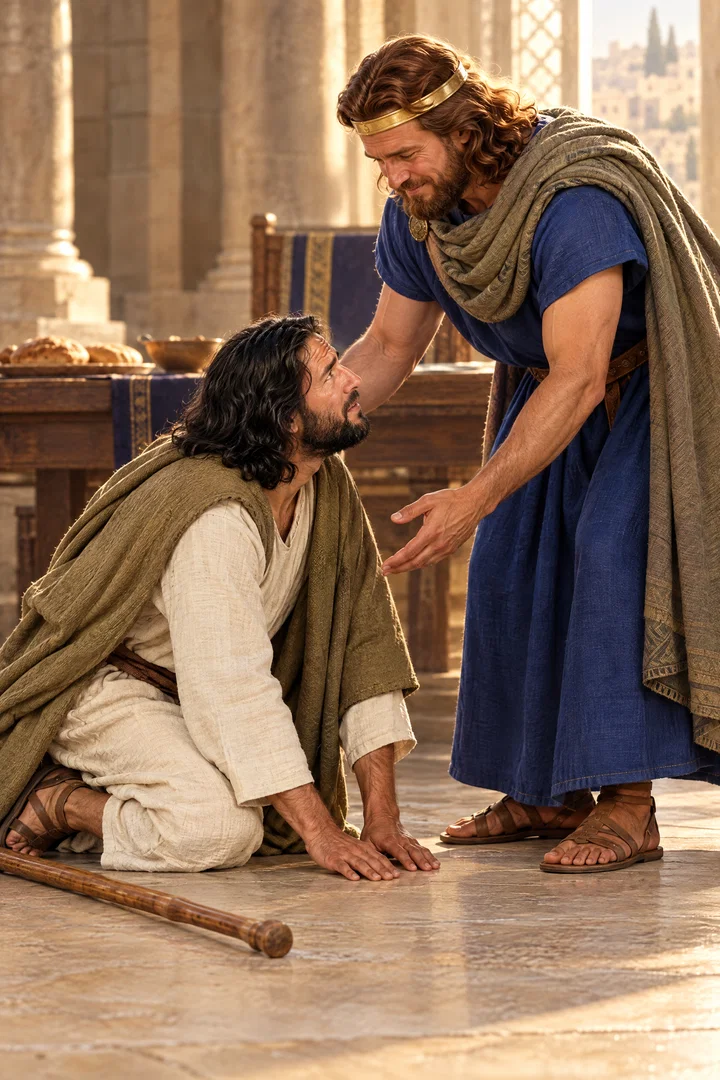
Cross-references
- 2 Samuel 9:7
And David said unto him, Fear not: for I will surely shew thee kindness for Jonathan thy father’s sake, and will restore thee all the land of Saul thy father; and thou shalt eat bread at my table continually.
David promises Mephibosheth a place at his table for Jonathan’s sake.
- 2 Samuel 4:4
And Jonathan, Saul’s son, had a son that was lame of his feet. He was five years old when the tidings came of Saul and Jonathan out of Jezreel, and his nurse took him up, and fled: and it came to pass, as she made haste to flee, that he fell, and became lame. And his name was Mephibosheth.
Explains how Mephibosheth became lame as a child.
- 1 Samuel 20:14-17
And thou shalt not only while yet I live shew me the kindness of the LORD, that I die not:
David’s kindness to Mephibosheth fulfills his covenant with Jonathan.
- 1 Samuel 31:1-2
Now the Philistines fought against Israel: and the men of Israel fled from before the Philistines, and fell down slain in mount Gilboa.
Describes the defeat that prompted Mephibosheth’s nurse to flee.
Commentary
Each commentary is drawn from primary sources: the writings of Ellen G. White and Adventist pioneers and periodicals. Each commentary is separate. Its own words are not a quotation; follow the references to read the source passages.
Ellen G. White
1 source
Mephibosheth made his home in Jerusalem, where he remained a permanent guest eating continually at the king's table despite being lame in both feet.PP 713.1 His honored place at David's table was an expression of David's continuing kindness to the son of Jonathan.PP 713.1 In this David was keeping his covenant with Jonathan, extending covenant faithfulness to Jonathan's house through his son.PP 713.1
Mephibosheth's lameness dated to his early childhood, when his nurse dropped him while fleeing in haste after the defeat and death of Saul.PP 713.1 That fall left him crippled for life, so his lameness in both feet accompanied even his elevation to the royal table.PP 713.1
Sources
Pioneers and periodicals
9 sources
Mephibosheth was Jonathan's son, Saul's grandson and the remaining heir of Saul, and he was lame in both feet.ST Jul 16, 1896ST Sep 10, 1896ST Jun 25, 1912ST Jul 16, 1896ST Jun 25, 1896 He dwelt in Jerusalem and ate continually at the king's table.ST Jul 16, 1896STST Sep 10, 1896ST Jul 16, 1896ST Jul 16, 1896 With his kingdom firmly established, David sought a descendant of Saul to show kindness to for Jonathan's sake, found Mephibosheth in the house of Machir in Lo-debar, and gave him the possessions of Saul.ST Sep 10, 1896
Eating continually at the king's table means eating there at set and appointed times, having a regular, appointed place to eat bread.RH Jul 10, 1860 Eating bread always at David's table was the greatest honor David had to bestow, and Mephibosheth was received there as an honored guest.ST Sep 10, 1896ST Jul 16, 1896 David welcomed Mephibosheth into his palace in Jerusalem and treated him as his own son.ST Jun 25, 1912 While Mephibosheth himself ate at the king's table, the fruits brought in from Saul's lands tilled by Ziba provided for his family and household so he could maintain an establishment suitable to his rank.ST Jul 16, 1896
David acted from his covenant of friendship and lasting love with Jonathan, in loving remembrance of Jonathan, to show kindness to Jonathan's family and the house of Saul.ST Jul 16, 1896STST Sep 10, 1896ST Jul 16, 1896ST Apr 29, 1908 In thus honoring the crippled grandson of his avowed enemy, David showed the beautiful side of his character.ST Jul 16, 1896 His disability did not prevent him from receiving David's lasting kindness and the honor of a place at the king's table.ST Jul 16, 1896ST Jul 16, 1896 His place and this arrangement were lasting and continuing.ST Jul 16, 1896ST Jul 16, 1896ST Jul 16, 1896ST Apr 29, 1908 This kindness is a ray of hope for orphans and homeless people with disabilities.ST Jun 25, 1912 Applied to prayer, the verse teaches constancy, frequency and assiduity in prayer, being instant and persevering at appointed times, and such perseverance is a sign of persevering faith that obtains what is asked when praying according to divine direction.RH Jul 10, 1860
Sources