Acts 13:12
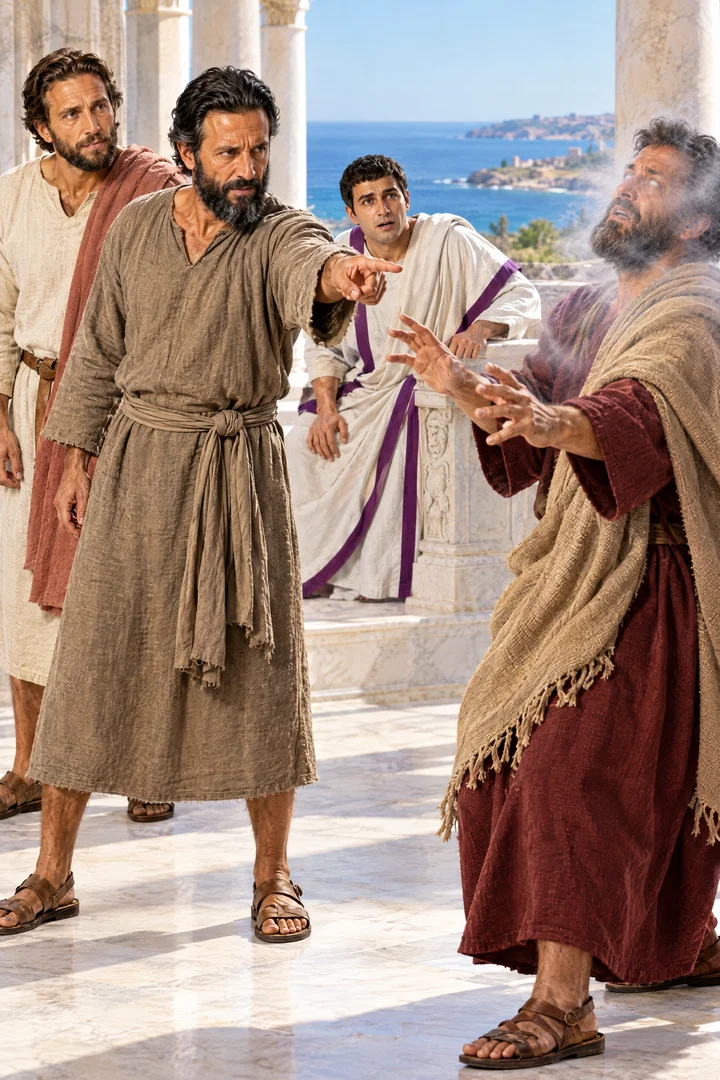
Then the deputy, when he saw what was done, believed, being astonished at the doctrine of the Lord.
Translations
American King James Version, King James Version, KJV Cambridge Paragraph Bible, Webster Bible
Then the deputy, when he saw what was done, believed, being astonished at the doctrine of the Lord.
Revised Version, American Standard Version, World English Bible
Then the proconsul, when he saw what was done, believed, being astonished at the teaching of the Lord.
then the proconsul having seen what hath come to pass, did believe, being astonished at the teaching of the Lord.
Then the proconsul, seeing what had happened, believed, being amazed at the teaching of the Lord.
Then, the proconsul, seeing what had happened, believed, being amazed at the teaching of the Lord.
Berean Standard Bible, Majority Standard Bible
When the proconsul saw what had happened, he believed, for he was astonished at the teaching about the Lord.
Then the ruler, when he saw what was done, had faith, being full of wonder at the teaching of the Lord.
Then the Deputie when he sawe what was done, beleeued, and was astonied at the doctrine of the Lord.
Douay-Rheims (Challoner revision)
Then the proconsul, when he had seen what was done, believed, admiring at the doctrine of the Lord.
Pictures
Cross-references
- Acts 13:2-4
As they ministered to the Lord, and fasted, the Holy Ghost said, Separate me Barnabas and Saul for the work whereunto I have called them.
The Holy Spirit calls Barnabas and Saul and sends them out for their work.
- Acts 13:8
But Elymas the sorcerer ( for so is his name by interpretation) withstood them, seeking to turn away the deputy from the faith.
Elymas opposed the faith and the Lord’s doctrine Paul preached.
- Acts 13:4-5
So they, being sent forth by the Holy Ghost, departed unto Seleucia; and from thence they sailed to Cyprus.
Describes the missionaries’ arrival in Cyprus before the events at Paphos.
- Exodus 7:11-12
Then Pharaoh also called the wise men and the sorcerers: now the magicians of Egypt, they also did in like manner with their enchantments.
Elymas opposes God’s messengers as Pharaoh’s magicians resisted Moses and Aaron.
Commentary
Each commentary is drawn from primary sources: the writings of Ellen G. White and Adventist pioneers and periodicals. Each commentary is separate. Its own words are not a quotation; follow the references to read the source passages.
Ellen G. White
12 sources
On Cyprus during the first missionary journey from Antioch, the prudent deputy Sergius Paulus sought instruction in the truth while Elymas tried to turn him from embracing the faith of Christ.AA 166.1–23SP 350.18RED 7.2–8.3 Paul, filled with the Holy Spirit, declared the hand of the Lord upon the deceiver to blind him for a season, and immediately mist and darkness fell so that he groped for someone to lead him by the hand.3SP 350.28RED 7.2–8.3 The temporary blindness was meant to warn him to repent for closing his eyes to the light of the gospel, while it exposed his deception, stopped his opposition, and proved to all that the apostles worked by the power of God and not by sleight of hand.ST Jun 12, 1879RH May 18, 1911ST Jun 12, 18793SP 350.28RED 7.2–8.3 When he saw what was done, the deputy was astonished at the doctrine of the Lord, convinced it was true, and believed and embraced the gospel of Christ.ST Jun 12, 1879RH May 18, 1911ST Jun 12, 1879 His conversion mattered because as a man of repute and influence he could serve effectively in God's cause, which Satan had specially tried to prevent by working through Elymas to keep him from the truth, leaving the account as a lesson in upholding truth and no low standard.Lt 30, 1910, par. 4–58RED 7.2–8.3AA 167.2–3
Context and Miracle
This took place on the first missionary journey, after the Holy Spirit sent Paul and Barnabas out from Antioch and carried them to Cyprus.AA 166.1–2 The deputy involved was Sergius Paulus, a prudent man of repute and influence, who sought instruction in the truth.3SP 350.18RED 7.2–8.3 While he was seeking, Elymas tried to turn him against the apostles and prevent him from embracing the faith of Christ.3SP 350.18RED 7.2–8.3
That resistance was part of Satan's effort to hinder the spread of the gospel, for the fallen foe works in a special manner through such opposition to keep persons of influence who could be of great service to the cause from embracing the truth.8RED 7.2–8.3AA 167.2–3 Paul, in the Spirit and power of the Holy Ghost, rebuked the deceiver and declared that the hand of the Lord was upon him to make him blind, not seeing the sun for a season.3SP 350.28RED 7.2–8.3 Immediately mist and darkness fell on him, so that he groped about and went about seeking someone to lead him by the hand.3SP 350.28RED 7.2–8.3 The blindness was temporary, not permanent, to warn him to repent and seek pardon of God for closing his eyes to the evidences of truth and the light of the gospel.8RED 7.2–8.3 Its infliction exposed Elymas's deception and false claims, stopped his opposition to the doctrine of Christ, and made his subtle arts of none effect.ST Jun 12, 1879RH May 18, 1911ST Jun 12, 18798RED 7.2–8.3ST Apr 23, 1885 It proved to all beholders that the apostles' miracles were wrought by the power of God and not by sleight of hand.ST Jun 12, 1879RH May 18, 1911ST Jun 12, 1879AA 168.1–28RED 7.2–8.3
Belief and Lesson
When he saw what was done to Elymas, the deputy believed, being astonished at the doctrine of the Lord.ST Jun 12, 1879RH May 18, 1911ST Jun 12, 1879SLP 45.1AA 168.1–2 Sergius Paulus was convinced that the teaching of the apostles was true, and he embraced the gospel of Christ and accepted it.ST Jun 12, 1879RH May 18, 1911ST Jun 12, 1879SLP 45.1AA 168.1–2 The striking of Elymas with temporary blindness exposed his deception and false claims and showed his opposition to be powerless, proving to all beholders that the miracles of the apostles were wrought by the power of God and not by sleight of hand.ST Jun 12, 1879RH May 18, 1911ST Jun 12, 1879AA 168.1–28RED 7.2–8.3 Paul had, in the Spirit and power of the Holy Ghost, rebuked the deceiver and declared that the hand of the Lord was upon him to make him blind, not seeing the sun for a season, and immediately mist and darkness fell on him so that he groped about and went about seeking someone to lead him by the hand.3SP 350.28RED 7.2–8.3
His conversion mattered because he was a prudent man of repute and influence who, having embraced the gospel and been convinced of the truth, could have served effectively in God's cause.8RED 7.2–8.3AA 167.2–3 The attempt to turn this influential man away from the faith and destroy the apostles' influence over him was part of Satan's effort to hinder the spread of the gospel, for the fallen foe works in a special manner to prevent persons of influence who could be of great service to the cause from embracing the truth.8RED 7.2–8.3AA 167.2–3 The blindness inflicted was for a season and not permanent, to warn him to repent and seek pardon of God for closing his eyes to the evidences of truth and the light of the gospel, and the confusion of Elymas in being obliged to grope about in blindness made his subtle arts of none effect.8RED 7.2–8.3
The chapter is to be studied as a lesson in upholding truth.Lt 30, 1910, par. 4–5 The Lord does not encourage false theories or a low standard.Lt 30, 1910, par. 4–5
Sources
Pioneers and periodicals
36 sources
The deputy was Sergius Paulus, the Roman proconsul at Paphos in Cyprus, a man of understanding who had called Barnabas and Saul to hear the word of God.ST Jun 17, 1897ST Apr 15, 1897ST May 7, 1902 Elymas, also called Bar-Jesus, a Jewish false prophet and sorcerer with him, withstood the missionaries to turn him from the faith, so Paul, filled with the Holy Ghost, rebuked him as an enemy of righteousness and declared blindness upon him, and immediately mist and darkness fell so that he groped for someone to lead him.ST Jun 12, 1879RH May 18, 1911ST Apr 15, 1897ST May 7, 1902 When the deputy saw what was done to Elymas he believed, being astonished at the teaching of the Lord, becoming the first ruler to embrace the doctrine of Christ and a true believer.ST Jun 17, 1897ST Nov 18, 1897ST Apr 15, 1897ST Dec 19, 1878ST Nov 21, 1892 The sudden stroke exposed the sorcerer's deception as powerless, proved the apostles' message true and from God, and its accompanying power left him able to do no less than accept the faith and join himself to Christ.ST Jun 12, 1879RH May 18, 1911ST Jun 12, 1879ST Jan 9, 1912ST May 7, 1902 The encounter shows Satan seeking to fasten his work upon God's work through his agent, while the Spirit of God received through faith in Christ is the power that breaks such subtle influence and brings men to salvation.ST Jun 15, 1904ST Dec 20, 1899ST Jul 31, 1879ST Apr 21, 1898
Persons and Place
The deputy is the proconsul Sergius Paulus, the Roman governor at Paphos in Cyprus.ST Jun 17, 1897ST Apr 15, 1897ST May 7, 1902ST Apr 15, 1897ST Nov 21, 1892 He was a man of understanding who had called for Barnabas and Saul to hear the Word of God.ST May 7, 1902 With him was Elymas, also called Bar-Jesus, a Jewish false prophet and sorcerer, who withstood the missionaries seeking to turn the proconsul away from the faith.ST Apr 15, 1897ST May 7, 1902ST Mar 6, 1884 When the deputy saw what was done to Elymas he believed, being astonished at the teaching of the Lord.ST Apr 15, 1897ST May 7, 1902ST Apr 15, 1897 He was the first ruler to embrace the doctrine of Christ, converted after seeing what happened and becoming at last a true believer.ST Dec 19, 1878ST Nov 21, 1892RH Sep 2, 1902
The event took place on Paul's first missionary journey in the island of Cyprus, at the beginning of Paul's recorded missionary travels.ST Mar 10, 1898ST May 14, 1902ST Apr 15, 1897 John Mark was with Paul and Barnabas to minister to their temporal needs, before they sailed to Perga and journeyed north to Antioch in Pisidia.ST May 14, 1902 It was after about sixteen years of growth, when the church sent out her first missionaries to the Gentiles to labor among different peoples.ST Apr 15, 1897 From this time Saul is known by his Roman name Paul, meaning little, while Claudius Caesar ruled Rome and Cuspius governed Judea.ST Apr 15, 1897
The verse belongs to Paul's missionary journey to carry the gospel to people who had not received it, laying the foundation for the great Gentile work that followed.ST Jan 30, 1896ST Apr 10, 1884 It belongs to the record of the results of the early church's faithful work and of the simple yet mighty preaching of the living Word to Jews and Gentiles.ST Oct 15, 1912
Miracle That Convinced Him
Filled with the Holy Ghost, Paul rebuked Elymas, also called Bar-Jesus, as full of guile and villainy, a son of the devil and enemy of all righteousness for perverting the right ways of the Lord and seeking to turn the proconsul away from the faith, and declared that the hand of the Lord was upon him so that he would be blind, not seeing the sun for a season.ST Apr 15, 1897ST May 7, 1902 Immediately a mist and a darkness fell on him so that he went about seeking someone to lead him by the hand, struck with temporary blindness.ST Jun 12, 1879ST Jun 12, 1879ST Apr 15, 1897ST May 7, 1902ST Nov 18, 1897 The sudden stroke displayed the Lord's power working through Saul, confirmed Paul's words, proved that God in heaven had sealed his rebuke upon the deputy's former prophet, and displayed Christ's presence and power with the apostles.ST Jan 9, 1912ST May 7, 1902
When the deputy saw this manifestation of power done to Elymas, he believed, being astonished at the teaching of the Lord, and was converted.ST Jun 17, 1897ST Nov 18, 1897ST Apr 15, 1897ST May 7, 1902ST May 7, 1902 The sign exposed Elymas's deception and claims as false, showed his opposition as powerless, and convinced the deputy that the apostles' message was true and from God, their miracles being from God.ST Jun 12, 1879RH May 18, 1911ST Jun 12, 1879ST Apr 23, 1885ST Apr 23, 1885 Being greatly astonished at the power accompanying the Lord's doctrine as expounded by Paul and Barnabas, and at His teaching and powerful works, he could do no less than believe, embraced the gospel of Christ, accepted the faith, and joined himself to those who chose the Lord Jesus for their portion.ST Jun 12, 1879RH May 18, 1911ST Jun 12, 1879ST Apr 23, 1885ST May 7, 1902 His conversion was the sole object of the Spirit in leading the apostles across the island of Cyprus to Paphos, and Paul preached to the governor while firmly rebuking the sorcerer, going when called by Sergius Paulus, who became at last a true believer.ST May 7, 1902RH Sep 2, 1902
Missionary Work and Preaching
Acts 13 illustrates God's direction of missionary work, for the Holy Spirit calls and sends the workers while the church waits in prayer and fasting and sends them with its blessing.RH Mar 24, 1904 The deputy's believing after seeing what was done, astonished at the Lord's teaching, illustrates God's use of human agents in bringing people to faith.ST Sep 30, 1908 Paul's preaching in Acts 13 was preaching of the word of the Scriptures, for the apostles depended upon and taught the word, the Scriptures, and did not work without the aid of the Scriptures.ST Apr 16, 1896 The Spirit's exposing and rebuking of Elymas the sorcerer, which led the deputy to believe astonished at the Lord's teaching, served that ministry of the word without adding anything to Scripture.ST Apr 1, 1875
In presenting Christ to prejudiced Jewish brethren Paul wisely began with what they respected, the God of Abraham, Isaac, and Jacob, because Jews always gave respectful attention to any favorable reference to the fathers.ST Jan 22, 1902 It is always wise to approach a prejudiced person with something in which he is interested.ST Jan 22, 1902 The verse stands with Paul's sermon at Antioch in Pisidia, where nearly the whole city gathered one Sabbath to hear Paul preach, giving full opportunity to learn God's fame and character and the power of the resurrection.ST Dec 3, 1896 It is associated with the great revival at Antioch, which illustrates that religious revivals lead to increased missionary effort.RH Jan 29, 1914
The verse stands in Acts 13 at the beginning of Paul's recorded missionary travels, among the places Paul visited in order in that chapter, together with Paul's discourse in the synagogue at Antioch.ST Mar 10, 1898 It belongs to the miracles wrought through Paul and to the sequence of persecutions recorded in Acts 13-20.ST Mar 10, 1898
Spiritual Conflict and Truth
Satan tries to interfere with God's work and to hitch his own work onto the work of God whenever he can, taking Elymas as his agent in this encounter, whom Paul called a child of the devil.ST Dec 20, 1899ST Apr 21, 1898 Even with that interference present, the gospel still led its hearer to believe when the deputy believed after seeing what was done to Elymas and was astonished at the Lord's teaching.ST Dec 20, 1899 Elymas's sorcery was a Satanic opposition to God, condemned by the Holy Spirit through the apostles as he sought to turn the deputy away from the faith.ST Mar 6, 1884 That sorcery stood in direct opposition to the Spirit of God, so the wonder-working power of sorcery was not the work of God's Spirit.
Paul, filled with the Holy Ghost, destroyed the hypnotic spell of Elymas the sorcerer, who sought to turn men away from Jesus Christ.ST Jun 15, 1904 The Holy Ghost is not hypnotism under a new name but the opposite power that breaks hypnotic influence.ST Jun 15, 1904 The deputy's belief, astonished at the doctrine of the Lord, shows that the Spirit of God received through faith in Christ Jesus is the only power then and now that can save people from subtle hypnotic influence and suggestion.ST Jun 15, 1904 The verse thus illustrates the doctrine of salvation through Christ preached by Paul and the early disciples, called the faith of Jesus, which Sergius Paulus believed after seeing what happened to Elymas and being astonished by the Lord's doctrine.ST Jul 31, 1879
Lasting Meaning and Use
The account belongs to that part of Scripture which is fitted to every age and to every kind of person.ST Nov 1, 1883 Though it was set down for the reproof or encouragement of those who were then living, it carries the same force now as it did hundreds of years ago.ST Nov 1, 1883 It stands in Paul's first journey among the Gentiles, in which he laid the foundation for the great Gentile work that followed and many were brought to the faith.ST Jan 30, 1896 On that journey he regularly entered the synagogues to teach the gospel on the seventh-day Sabbath to Jews and Gentiles who were present together.ST Jan 30, 1896 When the Gentiles asked for a meeting expressly for themselves he appointed no special day but met with them the next Sabbath, so the seventh-day Sabbath is regularly introduced as the meeting day with no mention made of any other.ST Jan 30, 1896
Sources