Acts 13:4
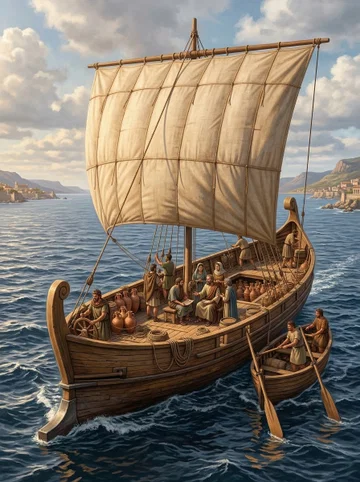
So they, being sent forth by the Holy Ghost, departed unto Seleucia; and from thence they sailed to Cyprus.
Translations
So they, being sent forth by the Holy Ghost, departed to Seleucia; and from there they sailed to Cyprus.
King James Version, KJV Cambridge Paragraph Bible
So they, being sent forth by the Holy Ghost, departed unto Seleucia; and from thence they sailed to Cyprus.
So they being sent forth by the Holy Spirit, departed to Seleucia; and from thence they sailed to Cyprus.
So they, being sent forth by the Holy Ghost, went down to Seleucia; and from thence they sailed to Cyprus.
So they, being sent forth by the Holy Spirit, went down to Seleucia; and from thence they sailed to Cyprus.
These, indeed, then, having been sent forth by the Holy Spirit, went down to Seleucia, thence also they sailed to Cyprus,
They therefore, having been sent forth by the Holy Spirit, went down to Seleucia, and thence sailed away to Cyprus.
They, therefore, being sent forth by the Holy Spirit, went down unto Seleucia, and, from thence, sailed away unto Cyprus;
Berean Standard Bible, Majority Standard Bible
So Barnabas and Saul, sent forth by the Holy Spirit, went down to Seleucia and sailed from there to Cyprus.
So, being sent out by the Holy Spirit, they went down to Seleucia. From there they sailed to Cyprus.
So, being sent out by the Holy Spirit, they went down to Seleucia; and from there they went by ship to Cyprus.
And they, after they were sent foorth of the holy Ghost, came downe vnto Seleucia, and from thence they sayled to Cyprus.
Douay-Rheims (Challoner revision)
So they being sent by the Holy Ghost, went to Seleucia: and from thence they sailed to Cyprus.
Pictures
Cross-references
- Acts 4:36
And Joses, who by the apostles was surnamed Barnabas, ( which is, being interpreted, The son of consolation,) a Levite, and of the country of Cyprus,
Barnabas is identified as a native of Cyprus.
- Acts 11:20
And some of them were men of Cyprus and Cyrene, which, when they were come to Antioch, spake unto the Grecians, preaching the Lord Jesus.
Believers from Cyprus preached Jesus in Antioch.
- Acts 9:15
But the Lord said unto him, Go thy way: for he is a chosen vessel unto me, to bear my name before the Gentiles, and kings, and the children of Israel:
Paul is chosen to carry Christ’s name to the Gentiles.
- Acts 13:13
Now when Paul and his company loosed from Paphos, they came to Perga in Pamphylia: and John departing from them returned to Jerusalem.
Continues the Cyprus mission as Paul’s company leaves Paphos for Perga.
- Acts 15:39
And the contention was so sharp between them, that they departed asunder one from the other: and so Barnabas took Mark, and sailed unto Cyprus;
After separating from Paul, Barnabas sailed to Cyprus with Mark.
- Acts 13:12
Then the deputy, when he saw what was done, believed, being astonished at the doctrine of the Lord.
The deputy believed after witnessing the Lord’s work during the Cyprus mission.
- Matthew 28:19
Go ye therefore, and teach all nations, baptizing them in the name of the Father, and of the Son, and of the Holy Ghost:
Both texts concern the mission to carry the gospel to the nations.
- Acts 11:19
Now they which were scattered abroad upon the persecution that arose about Stephen travelled as far as Phenice, and Cyprus, and Antioch, preaching the word to none but unto the Jews only.
Those scattered after Stephen’s death preached the gospel in Cyprus.
- Acts 1:8
But ye shall receive power, after that the Holy Ghost is come upon you: and ye shall be witnesses unto me both in Jerusalem, and in all Judæa, and in Samaria, and unto the uttermost part of the earth.
The same Greek word is translated “Ghost.”
- John 14:26
But the Comforter, which is the Holy Ghost, whom the Father will send in my name, he shall teach you all things, and bring all things to your remembrance, whatsoever I have said unto you.
The same Greek word is translated “Ghost.”
- Acts 11:26
And when he had found him, he brought him unto Antioch. And it came to pass, that a whole year they assembled themselves with the church, and taught much people. And the disciples were called Christians first in Antioch.
The disciples were first called Christians in Antioch.
- Acts 15:28
For it seemed good to the Holy Ghost, and to us, to lay upon you no greater burden than these necessary things;
The same Greek word is translated “Ghost.”
- Acts 13:52
And the disciples were filled with joy, and with the Holy Ghost.
The same Greek word is translated “Ghost.”
- Mark 1:8
I indeed have baptized you with water: but he shall baptize you with the Holy Ghost.
The same Greek word is translated “Ghost.”
- Acts 8:29
Then the Spirit said unto Philip, Go near, and join thyself to this chariot.
The same Greek word is translated “Ghost.”
Commentary
Each commentary is drawn from primary sources: the writings of Ellen G. White and Adventist pioneers and periodicals. Each commentary is separate. Its own words are not a quotation; follow the references to read the source passages.
Ellen G. White
9 sources
After fasting, prayer, laying on of hands, ordination and setting apart by the believers and church at Antioch, Saul or Paul and Barnabas were sent forth by the Holy Spirit on their first missionary journey.AA 166.1–2Ms 43, 1907, par. 2–5AA 166.3RH May 18, 19117MR 354.1 The Spirit's direction and guidance with the church's prayerful commissioning accompanied their labor for God.Ms 43, 1907, par. 2–57MR 354.1 They departed from Antioch to Seleucia and from there sailed to Cyprus.AA 166.1–2AA 166.3ST Apr 23, 1885RH May 18, 19113SP 349.3 They took John Mark with them as companion to Cyprus.AA 166.1–2ST Apr 23, 1885RH May 18, 19113SP 349.3
Cyprus was a fitting field where the gospel had already been preached to an established Christian community.AA 166.1–2AA 166.3RH May 18, 1911 Believers had fled there from Jerusalem after the persecution following Stephen's death, people from Cyprus had carried the message of Jesus to Antioch, and Barnabas himself was from Cyprus.AA 166.1–2RH May 18, 1911 At Salamis on Cyprus they preached in the Jewish synagogues.ST Apr 23, 1885
The verse shows that the Holy Spirit selects laborers for the work of saving souls, and no one is to be pushed into traveling labor by human encouragement if God has not called him.Lt 33, 1861, par. 11–12 The one the Lord moves to labor feels the burden of the work resting on him, cares for souls rather than for his own support, does not settle into other men's labors but strikes out into new places and enters new ground, labors on through want and privation, gives full proof of his ministry, and brings out souls as fruit of his labor.Lt 33, 1861, par. 11–12 Ability to exhort and pray with freedom in conference meetings is good and needed in the church, but by itself does not qualify a person to labor in the vineyard.Lt 33, 1861, par. 11–12 Sending out those who lack the call and experience leaves churches lower and discourages them.Lt 33, 1861, par. 11–12
Being thus sent by the Holy Spirit calls for a higher moral standard, earnest seeking of the Lord, and humbled hearts, because the Lord will not encourage false theories and a low standard.Lt 32a, 1910, par. 9–11 The sending belongs to a refining, enlightening, sanctifying and purifying work that removes dross, converts the church, reforms sanitariums, printing offices and every line of work throughout America, and sends the warning message forth.Lt 32a, 1910, par. 9–11 The Holy Spirit's presence, guidance and help continue with workers who seek God's counsel, earnestly seek Him, humble themselves, and surrender their will to His guidance.Ms 43, 1907, par. 2–57MR 354.1
Sources
Pioneers and periodicals
49 sources
They were designated and directed by the Holy Spirit and went down from Antioch to its seaport Seleucia and sailed thence to Cyprus.ST May 7, 1902ST May 7, 1902ST Oct 7, 1897ST Apr 15, 1897ST Apr 10, 1884 Their departure followed their separation at Antioch, where the prophets and teachers fasted and prayed and laid hands on them and sent them with blessing in obedience to the Spirit's command.RH Aug 24, 1916ST Apr 15, 1897 This was the beginning of the first foreign mission tour to the Gentiles, marking a new era in the work of God.ST Mar 24, 1914ST Apr 15, 1897ST Jun 8, 1882 Although the church separated and sent them, they are counted as sent by the Holy Ghost Himself, whose power and authority commissioned them to preach, baptize, organize churches and ordain elders.RH Aug 24, 1916RH Jun 19, 1856RH Jun 26, 1856ST Oct 16, 1893 This short history stands as the perpetual type of worldwide missions, showing that those who go to save souls today must likewise be called, separated and sent by the Spirit in connection with the organized church.RH Mar 6, 1913ST Oct 16, 1893ST Jun 7, 1899
Route to Cyprus
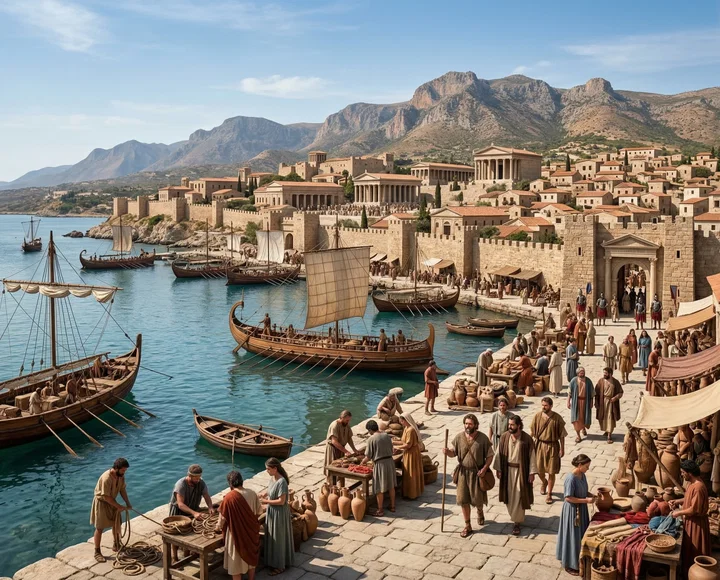
Being sent forth by the Holy Ghost, they went down from Antioch to Seleucia and from there sailed by ship to Cyprus, beginning their missionary work along a definite Spirit-directed route.ST May 7, 1902ST May 7, 1902ST Apr 10, 1884ST Apr 22, 1880ST Mar 11, 1880 This departure followed the ministering, fasting, praying, and laying on of hands by the prophets and teachers at Antioch in obedience to the Holy Ghost's command to separate them for the work.ST May 7, 1902 Seleucia was the seaport of Antioch, about sixteen and one-half miles distant, from which they sailed southwest nearly 100 miles to the island of Cyprus, about sixty miles wide and about 150 miles long.ST Apr 15, 1897 Their first work beyond that starting point lay in Pamphylia, Pisidia, Phrygia, and Lycaonia.ST Oct 7, 1897
Landing at Salamis on the extreme eastern end of Cyprus, they preached the gospel in the Jewish synagogues, accompanied by John Mark, who attended to minister to their temporal needs.ST Apr 23, 1885ST Nov 21, 1892ST May 14, 1902ST May 7, 1902 Little of note appears to have been accomplished at Salamis, perhaps only a single meeting while halting for a night or finding lack of interest, and then they crossed the island to Paphos at the extreme western end.ST May 7, 1902 Cyprus was the old home and native country of Barnabas, where many of his friends and acquaintances still lived and where he would have influence and naturally take a special interest in the work.ST Apr 15, 1897ST May 7, 1902 The gospel had already been preached there to some extent by Christians scattered by persecution, so that they visited an island with an established Christian community including believers who had fled Jerusalem after Stephen's death.RH May 18, 1911ST Apr 15, 1897
The sole object of the Spirit in leading them across the island to Paphos was the conversion of the one man Sergius Paulus.ST May 7, 1902 There Saul is also called Paul, some thinking his name changed in Cyprus, and there Elymas the sorcerer, also called Bar-Jesus, was struck blind when they met the island's deputy.ST Dec 19, 1878RH Jan 18, 1906 Sergius Paulus, the deputy or governor of Cyprus, became the first ruler to embrace the doctrine of Christ.ST Dec 19, 1878 Cyprus was thus one of the first places visited on the first missionary tour, after which they went on to Perga and journeyed north to Antioch in Pisidia and onward over the known world along the coasts of Syria and Rome, preaching Christ and him crucified in the same calm and determined tone, deterred by no danger, awed by no presence, and shrinking from no responsibility.ST May 14, 1902RH Jan 22, 1857RH Mar 21, 1907
Setting in History
Acts 13:4 begins the first missionary journey to the Gentiles, the first foreign mission tour and the beginning of the ministry of Paul and Barnabas in a broader work marking a new era in the work of God.ST Mar 24, 1914RH May 18, 1911ST Apr 15, 1897ST Jun 8, 1882 After ordination by the brethren in Antioch they were sent forth by the Holy Ghost to depart unto Seleucia and sail from there to Cyprus, setting out among new peoples directed and accompanied by Christ.ST Mar 24, 1914RH May 18, 1911ST Apr 15, 1897ST Jun 8, 1882 Their sending is identified with the ordination and sending of the first two foreign missionaries, nineteen years before the period when the gospel was said to have reached the whole world and brought forth fruit.ST Mar 20, 1893 On Cyprus they were accompanied by John Mark and visited an island with an established Christian community, including believers who had fled Jerusalem after Stephen's death.RH May 18, 1911
It follows their ordination and separation by the prophets and teachers in the church at Antioch, who in obedience to the Holy Spirit's command to separate them for the work ministered, fasted, prayed, laid hands on them, and sent them out with blessing.RH Aug 24, 1916ST Apr 15, 1897ST May 7, 1902RH Feb 12, 1901 They departed as men sent by the Holy Spirit through the church and its ministers, whose formal laying on of hands recognized their divine call and commissioned them for gospel service.RH Aug 24, 1916RH Feb 12, 1901 That commissioning authorized them to teach, baptize, and organize churches, publicly recognizing their divine mission especially to teach the Gentiles.RH Aug 24, 1916
The sending occurred after about sixteen years of growth when the church sent out her first missionaries to the Gentiles.ST Apr 15, 1897 It took place while Claudius Caesar was ruling Rome and Cuspius was governor of Judea, and from this time on Saul is known by his Roman name Paul, meaning little.ST Apr 15, 1897 The account is dated to A.D. 45 as the end of the seventieth week, the final week of the 70 weeks that confirms the covenant.RH Jan 10, 1854
The verse stands at the start of a varied record of the wonderful work God wrought through them, including the homesickness of Mark, ministry at Antioch to Jews and Gentiles, ministry at Iconium and at Lystra and Derbe with persecutions, the first council at Jerusalem, revisiting Derbe and Lystra, Troas and Philippi, and the call of Timothy.ST Jun 30, 1909 Though written for a special purpose for those then living, the passage in Acts 13-18 is adapted to all times and all classes of people and is as applicable now as when written.ST Nov 1, 1883 Falling within the readings from Acts 9-16, it illustrates God's use of human agents, showing how God's heavenly messengers and his people on earth work together in bringing people to him.ST Nov 1, 1883ST Sep 30, 1908
Sent by Holy Spirit
They departed as men sent forth by the Holy Ghost Himself, after the Spirit designated them, set apart and called them for the work, and then directed their departure and where they should go.RH Mar 24, 1904RH Jan 9, 1855RH Feb 1, 1906ST Sep 15, 1887 The laying on of hands witnessed that they were sent forth for the work to which God had called them, and they traveled together for a long time and to many places under that direction.RH Feb 1, 1906ST Sep 15, 1887 Although the church at Antioch separated them and sent them forth after the prophets and teachers fasted and prayed and laid hands on them in obedience to the Spirit's command to separate them for the work to which He had called them, they are counted as separated and sent by the Holy Ghost Himself.RH Jun 26, 1856ST Oct 16, 1893 Whatever is done by order of the Holy Spirit is spoken of as if the Spirit had done it, so their sending counts as the Spirit's own act and makes the supernatural factor the basis of mission work.RH Jun 26, 1856ST Oct 16, 1893
The Spirit worked through the organized church and its ministers to ordain and commission them for gospel service, so the journey was a Spirit-led mission carried out in connection with the church and its blessing and prayer, not an isolated ministry opposed to it.RH Mar 6, 1913RH Aug 24, 1916ST Oct 16, 1893ST Nov 25, 1889 The Spirit actively directs the church, calls chosen workers, and sends them out, while God opens the door of access to the nations and opens the door of their hearts to faith, bearing them witness by giving them the Holy Ghost and purifying their hearts.RH Mar 6, 1913ST Oct 16, 1893 After fasting and prayer the church's ministers laid hands on them and commissioned them for gospel work, and this formal ordination publicly recognized their divine call and mission, especially to teach the Gentiles.RH Aug 24, 1916RH Feb 1, 1906 The laying on of hands was the formal separating act by which grace was imparted to do the work and office of a bishop.RH Jun 26, 1856RH Feb 1, 1906
The power and authority for ministry came directly from heaven by the Holy Spirit, not through apostolic succession, with those at Antioch being only prophets and teachers like Paul and Barnabas acting under the Spirit's direction.RH Jun 26, 1856 Their commissioning authorized them to teach, baptize, and organize churches, and publicly recognized their divine mission to teach the Gentiles.RH Aug 24, 1916 The work they were sent to do was preaching, establishing churches, and having elders ordained by vote of the lifted hand.RH Jun 26, 1856 It gives the authority for Paul's ministry and a full example of primitive order for the ministry, in which ministers under Christ's commission to teach all nations to the end of the world are set apart and sent by the Holy Ghost through fasting, prayer, and laying on of hands.RH Jun 19, 1856
The verse is the call, appointment, and ordination of Paul, the chief apostle of the Gentiles, called to be an apostle through the will of God as a chosen vessel to bear Christ's name before the Gentiles and ordained and appointed a preacher, apostle, and teacher of the Gentiles.RH Jun 19, 1856 He was chosen by God to preach the gospel to the Gentiles and taught the gospel by revelation, and being sent forth from Antioch by the Holy Ghost he began at Seleucia and continued by sea to Cyprus on his first journey among the Gentiles.ST Jan 30, 1896RH Jan 1851 This commission makes Paul an apostle appointed to teach the Gentiles, though the verse itself says nothing about the Sabbath.RH Jan 1851 An apostle is one sent forth, and the office was not confined to the twelve: Paul, Barnabas, and others also served as apostles, heralding God's truth, establishing His work, and exercising general oversight, needing wisdom to make sound plans and build up God's work as such leaders arose in every reformation in the church of Christ.ST Jul 8, 1889
Doctrine Prophecy and Scripture
The departure marks the first step in organized foreign missions, undertaken at the special command of the Holy Spirit.ST Oct 16, 1893 Although the church at Antioch separated Barnabas and Saul and sent them forth, they were in truth separated and sent forth by the Holy Ghost Himself, and the supernatural factor is thus the basis of mission work.ST Oct 16, 1893 The Holy Spirit calls, separates, and sends forth the workers, while God opens the door of access to the nations and opens the door of their hearts to faith, bearing them witness by giving them the Holy Ghost and purifying their hearts.ST Oct 16, 1893 The whole tour that follows is a story of miracles and wonders wrought by God, with the Lord working with the preachers and confirming the word with signs following, and this short history stands as the perpetual type and prophecy of world-wide missions.ST Oct 16, 1893
Sent forth from Antioch by the Holy Ghost on the first journey among the Gentiles, Paul as the one chosen by God to preach the gospel to the Gentiles and taught the gospel by revelation sailed from Seleucia to Cyprus.ST Mar 18, 1889ST Jan 30, 1896 On that journey he went regularly into the synagogues on the Sabbath to teach where both Jews and Gentiles were present, and his Sabbath preaching therefore reached Gentiles as well as Jews.ST Mar 18, 1889ST Jan 30, 1896 When the Gentiles requested a meeting expressly for themselves he appointed no special day for them but met with them the next Sabbath, as seen in Acts 13:42.ST Jan 30, 1896 The seventh-day Sabbath was thus regularly introduced as the meeting day with no mention of any other day, many were brought to the faith, and the foundation was laid for the great work among the Gentiles that followed.ST Jan 30, 1896 In this way the verse shows Christ's disciples keeping the Sabbath of the commandment just as Christ did, proving the seventh-day Sabbath continued after Christ and must be kept instead of Sunday, for which there is no scriptural authority.ST Oct 19, 1904 Those who limit the point hold that the commission makes Paul an apostle appointed to teach the Gentiles, though the verse itself says nothing about the Sabbath.RH Jan 1851
The journey connects with Paul's method of presenting Christ to prejudiced Jewish brethren by first making a favorable reference to the fathers.ST Jan 22, 1902 As Peter spoke of the God of Abraham, Isaac, and Jacob and as Stephen did, so Paul did, because Jews always give respectful attention to any favorable reference to the fathers, especially Abraham, Isaac, and Jacob.ST Jan 22, 1902 It is therefore always wise to approach a prejudiced person with something in which he is interested.ST Jan 22, 1902 Sent from Antioch, whose port was Seleucia, Paul's first work lay in Pamphylia, Pisidia, Phrygia, and Lycaonia, regions where Alexander had also spent time conquering.ST Oct 7, 1897 The apostle's lasting, worthy victory and glorious end are contrasted with Alexander's military conquests in those same regions.ST Oct 7, 1897
Pattern for Mission Today
Being sent forth by the Holy Ghost means departing for mission work because the Spirit Himself sends, and the Spirit still actively directs the church today, calling chosen workers and sending them out, so those who go to save souls should likewise be sent by the Holy Spirit.RH Mar 6, 1913ST Jun 7, 1899 The call to mission work follows the call to Christ and calls for consecration, with decisions about the work made with judgment, guided by providence, reason, conscience, and the Holy Spirit.RH Mar 6, 1913ST Jun 7, 1899 The departure is connected with the revival at Antioch, which issued in missionary work.RH Mar 6, 1913RH Jan 29, 1914
God works through the organized church, so those entrusted with church responsibilities need lives of deep consecration.RH Mar 6, 1913 Barnabas and Saul set out on their first great missionary tour after the Holy Spirit called and sent them, and their mission among new peoples was directed and accompanied by Christ.ST May 7, 1902 They were sent forth not only by the brethren but by the Holy Spirit who had called them, and armed with the commission of the Holy Spirit together with the prayer and fasting and blessing of consecrated brethren, the missionary can go in firm confidence of successful work.ST May 7, 1902 Their first field was Cyprus, the native country of Barnabas, where Barnabas would naturally have a special interest in the work.ST May 7, 1902
The first missionary efforts of the early church were under the special guardian care of the Holy Spirit, and modern missions from their very beginning are under that same care, so the record of the founding of modern missions is a latest chapter in the Acts of the Apostles.ST Dec 5, 1892 The Holy Spirit sent a group of missionaries to begin the journey to Cyprus, illustrating that Paul's missionary tours were carried out with fellow workers and supporting the lesson that God's work in new fields should be advanced through coordinated service rather than entrusted to one person alone.ST May 14, 1902ST Jan 1, 1885ST Sep 15, 1887 Barnabas and Saul set out under the direction of the Holy Spirit and traveled together for a long time and to many places, laboring through the island of Cyprus with John Mark attending them to minister to their temporal needs before landing at Perga and journeying north to Antioch in Pisidia.ST May 14, 1902ST Jan 1, 1885ST Sep 15, 1887
Barnabas and Saul, chosen for their work and sent by the Holy Spirit, departed on their mission, and their Spirit-directed appointment and departure demonstrate heaven's approval of the course taken.RH Feb 12, 1901ST Apr 22, 1880ST May 7, 1902 They were sent forth by express direction of the Holy Ghost to a particular field and a special work, though without seeing the end from the beginning.RH Feb 12, 1901ST May 7, 1902 They started westward to the seacoast, found a vessel at Seleucia, and sailed to the island of Cyprus, so the first missionary journey was directed by the Spirit and proceeded along a definite route.ST Mar 10, 1898ST Apr 22, 1880ST May 7, 1902 The beginning of Paul's travels and places of labor, with Paul sent forth by the Holy Ghost to Seleucia and then sailing to Cyprus as the first places visited in order, is one of the circumstances showing Paul was under the guidance of the Spirit of the Lord.ST Mar 10, 1898ST Apr 22, 1880ST May 7, 1902
Sources