Acts 13:2
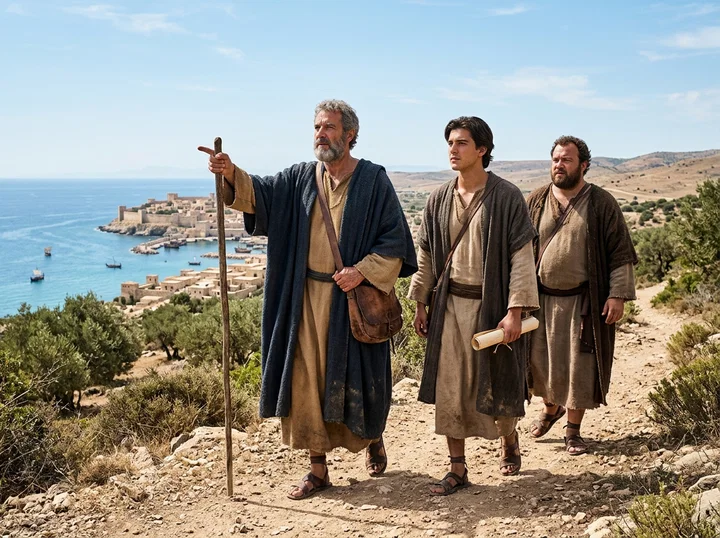
As they ministered to the Lord, and fasted, the Holy Ghost said, Separate me Barnabas and Saul for the work whereunto I have called them.
Translations
As they ministered to the Lord, and fasted, the Holy Ghost said, Separate me Barnabas and Saul for the work to which I have called them.
King James Version, KJV Cambridge Paragraph Bible
As they ministered to the Lord, and fasted, the Holy Ghost said, Separate me Barnabas and Saul for the work whereunto I have called them.
As they ministered to the Lord, and fasted, the Holy Spirit said, Separate for me Barnabas and Saul, for the work to which I have called them.
And as they ministered to the Lord, and fasted, the Holy Ghost said, Separate me Barnabas and Saul for the work whereunto I have called them.
And as they ministered to the Lord, and fasted, the Holy Spirit said, Separate me Barnabas and Saul for the work whereunto I have called them.
and in their ministering to the Lord and fasting, the Holy Spirit said, 'Separate ye to me both Barnabas and Saul to the work to which I have called them,'
And as they were ministering to the Lord and fasting, the Holy Spirit said, Separate me now Barnabas and Saul for the work to which I have called them.
And, as they were publicly ministering unto the Lord and fasting, the Holy Spirit said—Separate forthwith unto me, Barnabas and Saul, unto the work whereunto I have called them.
Berean Standard Bible, Majority Standard Bible
While they were worshiping the Lord and fasting, the Holy Spirit said, “ Set apart for Me Barnabas and Saul for the work to which I have called them.”
As they served the Lord and fasted, the Holy Spirit said, “Separate Barnabas and Saul for me, for the work to which I have called them.”
And while they were doing the Lord's work, and going without food, the Holy Spirit said, Let Barnabas and Saul be given to me for the special work for which they have been marked out by me.
Nowe as they ministred to the Lord, and fasted, the holy Ghost said, Separate me Barnabas and Saul, for the worke whereunto I haue called them.
Douay-Rheims (Challoner revision)
And as they were ministering to the Lord, and fasting, the Holy Ghost said to them: Separate me Saul and Barnabas, for the work whereunto I have taken them.
Pictures
Cross-references 20 of 52
- Acts 9:15
But the Lord said unto him, Go thy way: for he is a chosen vessel unto me, to bear my name before the Gentiles, and kings, and the children of Israel:
The Lord had earlier chosen Paul to bear His name to the Gentiles.
- Romans 1:1
Paul, a servant of Jesus Christ, called to be an apostle, separated unto the gospel of God,
Paul describes himself as called and set apart for the gospel.
- Acts 14:23
And when they had ordained them elders in every church, and had prayed with fasting, they commended them to the Lord, on whom they believed.
Paul and Barnabas appoint elders, praying and fasting as they set them apart for service.
- Acts 11:19-26
Now they which were scattered abroad upon the persecution that arose about Stephen travelled as far as Phenice, and Cyprus, and Antioch, preaching the word to none but unto the Jews only.
The scattered believers established the church at Antioch.
- Acts 15:22
Then pleased it the apostles and elders, with the whole church, to send chosen men of their own company to Antioch with Paul and Barnabas; namely, Judas surnamed Barsabas, and Silas, chief men among the brethren:
The church chooses and sends leaders to support Paul and Barnabas in their mission.
- Galatians 1:15-17
But when it pleased God, who separated me from my mother’s womb, and called me by his grace,
Both show God calling and separating Paul to preach apart from men.
- Acts 15:39-40
And the contention was so sharp between them, that they departed asunder one from the other: and so Barnabas took Mark, and sailed unto Cyprus;
After separating, Barnabas takes Mark and Paul chooses Silas for the work.
- Acts 4:36
And Joses, who by the apostles was surnamed Barnabas, ( which is, being interpreted, The son of consolation,) a Levite, and of the country of Cyprus,
Barnabas is introduced before his calling and is identified as a native of Cyprus.
- Acts 11:22-24
Then tidings of these things came unto the ears of the church which was in Jerusalem: and they sent forth Barnabas, that he should go as far as Antioch.
The church at Jerusalem sent Barnabas to Antioch before the commissioning.
- 1 Corinthians 12:28
And God hath set some in the church, first apostles, secondarily prophets, thirdly teachers, after that miracles, then gifts of healings, helps, governments, diversities of tongues.
apostles first as highest office
- Acts 11:25-26
Then departed Barnabas to Tarsus, for to seek Saul:
Barnabas brought Saul to Antioch, where they served and taught the church.
- 1 Timothy 4:14
Neglect not the gift that is in thee, which was given thee by prophecy, with the laying on of the hands of the presbytery.
Laying on of hands recognizes a minister’s calling and spiritual gifts.
- Acts 16:6-10
Now when they had gone throughout Phrygia and the region of Galatia, and were forbidden of the Holy Ghost to preach the word in Asia,
The Spirit directs Paul’s missionary work, confirming a divine calling.
- Acts 14:14
Which when the apostles, Barnabas and Paul, heard of, they rent their clothes, and ran in among the people, crying out,
Barnabas and Paul are called apostles after being set apart for their work.
- Acts 22:21
And he said unto me, Depart: for I will send thee far hence unto the Gentiles.
Christ sends Paul to proclaim the gospel to the Gentiles.
- Acts 13:9-11
Then Saul, ( who also is called Paul,) filled with the Holy Ghost, set his eyes on him,
The Spirit empowers Paul to expose and rebuke Elymas.
- Mark 16:15
And he said unto them, Go ye into all the world, and preach the gospel to every creature.
The command to preach the gospel is carried out by Barnabas and Saul.
- Acts 13:46-48
Then Paul and Barnabas waxed bold, and said, It was necessary that the word of God should first have been spoken to you: but seeing ye put it from you, and judge yourselves unworthy of everlasting life, lo, we turn to the Gentiles.
Barnabas and Saul carry out their calling by preaching the gospel to the Gentiles.
- 1 Corinthians 9:6
Or I only and Barnabas, have not we power to forbear working?
Both texts identify Barnabas in connection with apostolic ministry.
- Acts 9:27
But Barnabas took him, and brought him to the apostles, and declared unto them how he had seen the Lord in the way, and that he had spoken to him, and how he had preached boldly at Damascus in the name of Jesus.
Barnabas brought Saul to the apostles and introduced him to the church.
Commentary
Each commentary is drawn from primary sources: the writings of Ellen G. White and Adventist pioneers and periodicals. Each commentary is separate. Its own words are not a quotation; follow the references to read the source passages.
Ellen G. White
40 sources
While the prophets and teachers of the church at Antioch were ministering to the Lord in worship and fasting, the Holy Spirit spoke and directed that Barnabas and Saul be separated for the work to which God had called them.ST Jun 12, 1879SLP 42.17MR 353.2 That work was the definite work of teaching the Gentiles, to which God had already called them and which confirmed the commission to carry the gospel to the Gentiles already received from Christ.RH May 11, 1911GW 441.1ST Jun 12, 1879RH May 11, 1911 Their separation was carried out as a solemn dedication to God by fasting and prayer and the laying on of hands, which publicly recognized their divine appointment already given, asked God's blessing upon it, and set the church's seal upon it, yet added no new grace or qualification and did not itself impart power.RH May 11, 1911GW 441.1ST Jun 12, 1879SLP 42.1ST Jun 12, 1879 That setting apart formally ordained and authorized them to teach the truth, baptize, and organize churches, investing them with unquestionable authority from the established church so their departure from Jewish exclusiveness would stand above challenge from suspicious and prejudiced believers.RH May 11, 1911GW 441.1ST Jun 12, 18793SP 348.1–2SLP 43.1 God so works through appointed agencies in the organized church that no calling is to be independent of it, but the church in union with the Holy Spirit is to seek guidance in prayer, prove fitness and unmistakable tokens of the Spirit, and set apart those whom God has selected.RH May 11, 1911GW 443.1–444.1AA 162.3–164.21T 208.1–209.1Lt 20, 1859, par. 3
Worship Setting at Antioch
At Antioch the devout prophets and teachers of the church were ministering to the Lord in worship and fasting, with the Christians seeking the Lord together, when the Holy Spirit communicated direction to them.ST Jun 12, 1879SLP 42.17MR 353.2Ms 43, 1907, par. 2–58RED 5.2 The Spirit spoke to separate and set apart Barnabas and Saul for the work to which God had already called them, a specific and definite work among the Gentiles.ST Jun 12, 1879SLP 42.17MR 353.2Lt 30, 1910, par. 4–58RED 5.2 In this way missionary service is shown to be work assigned by the Spirit and recognized by the church in worship and fasting.7MR 353.2 After the believers at Antioch ordained them, the Spirit sent them out, and their departure began their first missionary journey to the Gentiles.RH May 18, 1911AA 166.1–2
Spirit's Call to Gentiles
The Holy Spirit spoke while the prophets and teachers of the church at Antioch were ministering to the Lord in worship and fasting, directing that Barnabas and Saul be set apart for a specific, definite work to which God had called them.RH May 11, 1911GW 441.1ST Jun 12, 1879ST Jun 12, 1879GW 443.1–444.1 That appointed work was teaching the Gentiles and going as missionaries to the Gentiles.RH May 11, 1911GW 441.1ST Jun 12, 1879ST Jun 12, 1879RH May 11, 1911 The mission had already been given them by God before the church ceremony, and their prayerful dedication with fasting and the laying on of hands publicly recognized that divine appointment, designated them for that appointed work, and asked God's blessing upon it without adding any new grace or qualification.RH May 11, 1911GW 441.1ST Jun 12, 1879ST Jun 12, 1879 The call confirmed and advanced the commission Paul had earlier received from Christ, including carrying the gospel to the Gentiles.RH May 11, 1911
Christ's death had opened the full privileges of the gospel to the Gentiles, though many Jewish believers still did not clearly understand what had been abolished.ST Apr 23, 1885 Barnabas and Saul were sent to carry that gospel vigorously to the Gentiles, bringing many into the church.ST Apr 23, 1885
Ordination and Public Authority
Their separation was carried out as a solemn dedication to God by fasting and prayer and the laying on of hands, and then their sending forth to their field of labor among the Gentiles.RH May 11, 1911GW 441.1SLP 42.18RED 5.2AA 160.1–2 The Holy Spirit directed the devout prophets and teachers ministering to the Lord at Antioch to set Barnabas and Saul apart for the work to which He had already called them, and fasting and prayer accompanied that dedication before they went as missionaries to the Gentiles.RH May 11, 1911SLP 42.18RED 5.2AA 160.1–23SP 347.3–4
The ceremony publicly recognized a divine appointment already given, designated them for that appointed work, asked God to bless them in it, set the church's seal upon it, and affirmed the church's support of God's work.ST Jun 12, 1879ST Jun 12, 1879GW 442.1–2AA 161.1–162.2RH May 11, 1911 Their commission came from God before the laying on of hands, and the church's prayerful setting apart made that mission known and openly recognized their appointment and authority.ST Jun 12, 1879GW 442.1–2AA 161.1–162.2RH May 11, 1911SLP 43.3 The laying on of hands added no new grace or qualification, did not itself give them a new commission, impart power, or qualify them for every kind of ministry.ST Jun 12, 1879ST Jun 12, 1879GW 442.1–2AA 161.1–162.2RH May 11, 1911 It was the church's formal recognition and designation of the work God had appointed for them, asking His blessing upon it rather than creating their call.ST Jun 12, 1879ST Jun 12, 1879AA 161.1–162.2RH May 11, 1911SLP 43.3
Their setting apart formally ordained and authorized them to teach the truth, baptize, and organize churches, giving them full authority for church ministry and for carrying the gospel to the Gentiles.RH May 11, 1911GW 441.1ST Jun 12, 1879AA 160.1–23SP 347.3–4 That public ordination recognized their divine appointment and authority and marked their formal authorization for that appointed service among the Gentiles.RH May 11, 1911GW 441.1ST Jun 12, 1879AA 160.1–2AA 161.1–162.2 Because their departure from Jewish exclusiveness would expose them to suspicion, prejudice, jealousy, charges of heresy, and questioning of their doctrine and credentials by many zealous believing Jews, God in foresight had them invested with unquestionable authority from the established church, so that their work would be above challenge.3SP 348.1–2SLP 43.1 That open recognition of their divine mission was made fully known to the brethren in Jerusalem and in Antioch.3SP 348.1–2
Paul regarded this appointment as a new and important epoch and turning point in his life, dating his apostleship in the Christian church from that time.AA 162.3–164.2ST Apr 23, 18853SP 348.1–2 He described himself afterward as a servant of Jesus Christ, called to be an apostle and separated to the gospel of God.ST Apr 23, 18853SP 348.1–2
Church Order and Cooperation
God works through appointed agencies in the organized church as well as through individuals, and a servant's calling is not meant to be independent of the church.RH May 11, 1911GW 443.1–444.1AA 162.3–164.2 The church serves as the channel through which God communicates guidance, for while the leaders at Antioch worshiped and fasted the Holy Spirit communicated direction to set Barnabas and Saul apart for the definite work to which God had already called them, including carrying the gospel to the Gentiles.RH May 11, 1911GW 443.1–444.1AA 162.3–164.2 That direction confirmed and advanced the commission Paul had earlier received from Christ, and the church bore witness to it and helped carry it out, with responsibility for ordaining them laid upon the church so believers could cooperate in spreading the gospel.RH May 11, 1911GW 443.1–444.1AA 162.3–164.2 His servants are not to treat their guidance as independent of the church or dismiss the counsel of its appointed leaders.AA 162.3–164.2
The church was entrusted with ordaining them, supporting the pattern of seeking God's guidance in prayer, following Scripture and the Holy Spirit, and then setting apart by prayer and the laying on of hands those who have proved their fitness and calling.GW 443.1–444.1EW 80.3–81.1SCEV 18.2–19.1 Their commissioning took place in worship and fasting, and the act recognizes their commission from God together with the church's approval for them to devote themselves to their calling.EW 80.3–81.1SCEV 18.2–19.1 No one is to be set apart for the holy work of being God's mouthpiece and laboring for souls on human wisdom alone, but only on unmistakable evidence and manifest tokens of the Holy Spirit.1T 208.1–209.1 Ability to pray with power and talk to the point is no evidence of a divine call, and even power over unclean spirits and to heal the sick is no evidence, for only God knows the heart and whom to select and entrust with the burden for His flock.1T 208.1–209.1
God has laid the duty of deciding who is fit upon His chosen ministers, who in union with the church and with manifest tokens of the Holy Spirit are to decide who should go and who are unfit to go.1T 208.1–209.1 Leaving the decision to private individuals here and there to say who is called brings confusion and distraction everywhere.1T 208.1–209.1 Those whom God calls are persons of deep experience, tried and proved, of sound judgment, who will dare to reprove sin in the spirit of meekness and who understand how to feed the flock.1T 208.1–209.1 Setting apart for the work is done by the sanction of the brethren together with the Holy Spirit.Lt 20, 1859, par. 321MR 13.3–14.5
Present Application for Workers
The command still speaks to churches today, calling for holy and devout men and women who have cultivated mental and physical powers and piety to the uttermost to be ordained and sent forth as medical missionaries, including to untried fields.Lt 35, 1893, par. 13–14 That setting apart applies to medical missionary work, including the work of the Sanitarium and the defense of health reform, with God's word and the movements of providence speaking clearly to move the church to send workers.STMMW 15.2 Medical missionaries, like ministers of the gospel, are to be set apart for their work with prayer and the laying on of hands, and this setting apart helps guard them against leaving institutional service for private practice.7MR 126 God will communicate just as truly with all who deny self and lift the cross, and prayerful dependence on Him enables their work.Lt 35, 1893, par. 13–146MR 226.1–4
Paul and Barnabas are representatives of what very many should become, and the same grace from Jesus Christ that distinguished Paul and Apollos for spiritual excellence can be reproduced in many devoted missionaries, so no one should fold the hands and expect the committed work to be done by proxy.Lt 35, 1893, par. 13–14 The voice calling, Separate me Barnabas and Saul for the work whereunto I have called them, is heard today through the indications of God's providence, and God is fitting men to stand in their lot and in their place.Lt 86, 1902, par. 17–18 God can communicate with people who deny self and take up the cross as surely as He communicated with them, and many should follow their example in devoted service.STMMW 16.1–2 Hearing that call requires sincere devotion and humble, earnest prayer that brings close communion with Christ, living faith claiming the promises, and compassion for those in darkness.Lt 86, 1902, par. 17–18
When a united, converted church ministers with prayer and fasting for the Holy Spirit to be revealed, angelic agencies come very near and the Holy Spirit chooses agents for appointed spheres of labor.Lt 218, 1901, par. 3–4 The very choicest instrumentalities the church contains are to be selected, sent forth, and sustained to extend the truth to hitherto unworked cities, resulting in many souls coming to a knowledge of the truth.Lt 218, 1901, par. 3–4 Disciples who remain in their business stations earn means and uphold them by prayers and contributions, each laboring to strengthen fellow workers and never hindering or discouraging any soul working interestedly under the Great Head.Lt 218, 1901, par. 3–4 The same presence that directed at Antioch accompanies workers who seek God's counsel and surrender their will to His.Ms 43, 1907, par. 2–5 Prayer, humility, and continual surrender bring the help pledged by the Father, the Son, and the Holy Spirit, for the Holy Spirit is a sacred gift and source of power, and God's angels work for those led by the Spirit.7MR 354.1
God guides His people in their work and does not support false teaching or a low standard, but requires His people to seek Him earnestly and humble themselves before Him.Lt 30, 1910, par. 4–5 A higher moral standard is to be upraised and maintained in printing establishments and in every line of work, with the Holy Spirit refining, enlightening, sanctifying, and purifying the receiver from dross so that God's glory is revealed.Lt 32a, 1910, par. 9–11 In this way a decided change and reformation takes place, and the entire church is converted.Lt 32a, 1910, par. 9–11 At the end of all things when wickedness has increased, the zeal of the church should exceed even that of the early church in bearing witness with mighty power to redeeming love.Lt 86, 1902, par. 17–18
Those truly set apart carry the burden and weight of the message and feel the burden for souls and for people who have not heard it, striking out into new places and new ground where the truth has not been preached to raise up individuals or a company to keep the truth.Lt 33, 1861, par. 11–12Ms 1, 1859, par. 5–821MR 13.3–14.5 They give full proof of ministry by bringing out souls as fruit even through want and privation, rather than being content to travel from church to church among believers, enter into other men's labors, build on another man's foundation, take an easy course, accomplish nothing, or leave the church lower instead of benefited.Lt 33, 1861, par. 11–12Lt 20, 1859, par. 321MR 13.3–14.5 One whose principal burden is his own support, who lacks this burden for new fields, or who can exhort and pray with freedom in meetings but lacks essential qualifications and experience for the vineyard, has not been called to give himself unreservedly to traveling labor and must not be encouraged, pushed, hurried, or urged into a work he does not understand.Lt 33, 1861, par. 11–12Ms 1, 1859, par. 5–821MR 13.3–14.5 Such persons are needed in the church to fill their place there and should labor with their hands at what is good to supply their necessities, only assisting and doing errands for the Lord, such as baptizing or administering the ordinances when ministers are absent.Lt 33, 1861, par. 11–1221MR 13.3–14.5
Sources
Pioneers and periodicals
121 sources
While the prophets and teachers at Antioch were worshiping the Lord and fasting, the Holy Spirit commanded that Barnabas and Saul be separated for the work to which he had already called them.ST Nov 18, 1897ST May 7, 1902ST May 7, 1902 That work was the first step in organized foreign missions, the beginning of the world-wide gospel mission to the Gentiles.ST Jun 17, 1897ST Jan 2, 1893ST Mar 20, 1893 Their setting apart was a solemn ordination completed with worship, fasting, prayer, the laying on of hands and sending out under the Spirit's direction.CO 29.6RH Aug 24, 1916RH Jan 9, 1855 The laying on of hands added no new grace or qualification but publicly recognized the divine appointment and authority already given and asked God's blessing upon it.ST Mar 17, 1914ST Jun 12, 1879ST Jun 12, 1879 By this solemn setting apart Barnabas and Saul became apostles, for apostleship was not confined to the twelve first chosen but belongs to those specially raised up and sent out by the Spirit to take a leading part.RH May 19, 1874RH Nov 18, 1873ST Jul 8, 1889
Antioch Setting and Wording
The command was given to the church at Antioch to set apart Barnabas and Saul for the work to which they had been called.ST May 7, 1902ST Apr 15, 1897 In that church, among the prophets and teachers Barnabas, Symeon called Niger, Lucius of Cyrene, Manaen and Saul, as they ministered to the Lord and fasted, the Holy Ghost commanded that Barnabas and Saul be separated for the work whereunto He had called them.ST May 7, 1902ST Apr 15, 1897 While the prophets and teachers at Antioch were worshiping the Lord and fasting, the Holy Spirit directed them to set apart Barnabas and Saul for that work.ST Nov 18, 1897ST Dec 15, 1898 After further fasting and prayer and laying hands on them they were sent away as those sent forth by the Holy Ghost.ST Apr 15, 1897
In this setting “Ghost” translates the Greek pneuma, a word also rendered Spirit, wind and life.ST Feb 21, 1878 “Ministered” denotes worship and holy service to the Lord, and “separate” means to border off for special service.ST May 7, 1902 While the prophets and teachers of Antioch held special communion with God in a season of fasting, the Holy Spirit directed them to separate, or border off, Barnabas and Saul for special service.ST May 7, 1902
Barnabas and Saul were set apart at Antioch after they returned from carrying that church’s bounty to Jerusalem.ST May 7, 1902 After a year of abundantly blessed labor among the believers in Antioch while still not formally ordained to the gospel ministry, Paul and Barnabas had reached a stage in Christian experience where God was about to entrust them with a difficult missionary enterprise in which they would need every advantage that could be obtained through the agency of the church.ST Mar 17, 1914 The Lord had other work for them than ministering to Antioch, because Antioch had developed men of its own capable of leading its members into the higher life, so Antioch in turn was to contribute toward establishing churches among people sitting in moral darkness, a mission to the heathen in regions beyond.ST May 7, 1902 Yet the Holy Spirit’s separation of them for their called work did not keep false teaching from troubling that same church, when men from Judea taught circumcision as necessary for salvation and stirred a dissension that even Paul and Barnabas could not settle, so the question had to be taken to the apostles and elders at Jerusalem.RH Jan 16, 1900
The sending came after about sixteen years of growth, identified as a landmark around A.D. 44 in the history of Christian missions.RH Sep 12, 1912 It is also identified as the event marking the end of the seventieth week and the completion of the covenant-confirming period in A.D. 45.RH Jan 10, 1854 It occurred when Claudius Caesar ruled Rome and Cuspius governed Judea, with Saul’s conversion in the background, from this time Saul being known by his Roman name Paul, meaning little. It introduces a new departure in Acts centered on Paul, opening the account of the places he visited and what occurred at each place.ST Jun 2, 1898 It stands at the beginning of the continued record from Acts 13 through Acts 16 of the ministry of Paul and Barnabas, including the homesickness of Mark, Paul’s ministry to Jews and Gentiles at Antioch and at Iconium, Lystra, and Derbe with their persecutions, the first apostolic council at Jerusalem, visiting again at Derbe, Lystra, Troas, and Philippi, the call of Timothy, their persecutions, and the wonderful work God wrought through them.ST Jun 30, 1909ST Jun 30, 1909 That beginning extends through the travels and places of labor recorded in that chapter and onward through chapters 14-20, including preaching such as the discourse in the synagogue at Antioch, miracles wrought through Paul, and persecutions suffered.ST Mar 10, 1898 In this way it marks Antioch as the place where Paul began his first decisive work.
Barnabas is named before Saul, reflecting his standing as a Christian teacher.ST Jan 15, 1885 Barnabas was Paul’s first associate in the work for the Gentiles and his fellow-laborer with Paul.ST Dec 3, 1896ST Mar 3, 1887 He is distinct from the later writer of the epistle bearing Barnabas’s name. The Holy Spirit called Barnabas and Saul to a specific work, and they set out on that mission with John Mark.ST Nov 21, 1892 They carried out their joint calling to evangelistic work by traveling and laboring through the island of Cyprus and then journeying north from Perga to Antioch in Pisidia, with John Mark at first attending them to minister to their temporal needs until he returned home at Perga.ST May 14, 1902 Paul and Barnabas labored together as companions, and after they separated, each chose another companion, for service together provides mutual encouragement and strengthens prayer, since human help and sympathy are divinely appointed means of grace, not substitutes for God’s help. Cyprus was Barnabas’s native country.
The verse is as applicable now as when it was written, for the Bible is adapted to all times and all classes of people.ST Nov 1, 1883 Though much of it was written for a special purpose for reproof or encouragement, it remains as fresh today as then, just as the parables of Christ given to meet a pressing want and the epistles addressed to people living in the apostles’ days are for present Christians as much as for those named in them.ST Nov 1, 1883
Spirit's Call to Gentiles
The Holy Spirit spoke in the first person, calling Barnabas and Saul by name to a definite work to which he himself had already called them.RH May 11, 1911RH May 11, 1911RH Mar 6, 1913RH Mar 24, 1904 The Spirit's choice came before the church sent them, for the mission was a sending by the Holy Spirit with the church's blessing following in fasting and prayer.RH May 11, 1911RH May 11, 1911RH Mar 24, 1904 God, who knows each person's capacities and each field's needs and dangers, is the one to determine whom to send, while the church waits prayerfully for his direction.RH Mar 24, 1904 He carries out his work through human agencies, with heavenly messengers cooperating with his people on earth.RH Jan 9, 1855ST Sep 30, 1908
That work was the first step in organized foreign missions and the beginning of the church's world-wide gospel mission to the Gentiles.ST Jan 2, 1893ST Oct 16, 1893RH May 2, 1912 Barnabas and Saul were ordained as the first two missionaries and foreign missionaries, commissioned to teach all nations and sent to labor vigorously among the Gentiles.ST Jun 17, 1897ST Jan 2, 1893ST Mar 20, 1893ST Jun 18, 1902 Their setting apart began a missionary journey carrying the gospel to new places and bringing a great ingathering of souls in an important era.ST Jun 17, 1897RH Aug 27, 1901 It stood under the Spirit's special guardian care, in which God opens doors of access to the nations and opens hearts to faith, bears witness by giving the Holy Ghost and purifying hearts, and works miracles and wonders through his workers as the perpetual type and prophecy of world-wide missions.ST Oct 16, 1893RH May 2, 1912
Their calling had been given years earlier, but the church's setting apart and sending marked the start of the work, since the missionaries were not to begin on their own authority but to be formally sent after fasting, prayer and laying on of hands.ST Mar 6, 1884ST Jan 8, 1885 The call confirmed and advanced the commission Paul had already received from Christ to bear his name before the Gentiles and kings and to organize churches in untried fields.RH May 11, 1911RH Aug 27, 1901 Paul waited in Tarsus after his conversion and testimony until God called him to missionary work through the leaders at Antioch, beginning patient, difficult labor for the Gentiles. He was set apart for ministry to the Gentiles only after returning to Jerusalem, not during his earlier time in Arabia.ST Jun 28, 1883
The mission grew out of revival at Antioch that led to missionary effort, following the scattering after Stephen's death with the spread of the gospel to Antioch and the conversion of many Grecians, showing its mission extended beyond the Jews.RH Jan 29, 1914ST Sep 20, 1910ST Jan 9, 1893 Christ as head of the church reserved to himself direction in doctrine and discipline through the Holy Spirit as his representative, selecting and setting apart Paul and Barnabas for the specific work he had called them to do.ST Sep 24, 1896 That indication proves the Lord himself with all-seeing eye and master hand was directing the gospel work after Pentecost.ST Jun 26, 1901 Their sending on the first great tour shows Christ's presence in the church's work and his direction of its laborers.
The church at Antioch had much experience in the things of God and knew the voice of the Spirit, whose witness showed they were children of God by faith in Christ without any outward sign. The later demand for circumcision in order to be saved therefore set the sign without faith above faith without the sign and denied the power of Christ to save. Paul, whom the Spirit called and commissioned to the Gentiles with a gospel received by revelation, went regularly into the synagogues on the Sabbath to teach where Jews as well as Gentiles were present.ST Jan 30, 1896RH Jan 1851 When Gentiles requested a meeting expressly for themselves he said nothing about a special day for them but met with them the next Sabbath, with the seventh-day Sabbath regularly introduced as the meeting day and no mention of any other, which makes his Sabbath preaching significant against the claim that Gentiles were taught the Sabbath was abolished.ST Jan 30, 1896RH Jan 1851 Their ordination to go to the heathen was followed by such spread that within twenty years, by A.D. 64, the word of the gospel had come to all the world and brought forth fruit everywhere as at Colosse.ST Jan 23, 1893
Ordination by Church Order
The setting apart at Antioch was a solemn ordination carried out while the believers worshiped the Lord and fasted, completed with fasting, prayer, the laying on of hands and sending out under the direction of the Holy Spirit, solemnly dedicating Barnabas and Saul as missionaries to the Gentiles.ST Apr 23, 1885CO 29.6RH Aug 24, 1916RH Jan 9, 1855RH Aug 29, 1854 The Spirit called them to the specific work to which God had called them, and the church then fasted, prayed, laid hands on them and sent them away, which was the formal ordination and public recognition of their divine mission.ST Apr 23, 1885RH Aug 24, 1916RH Jan 9, 1855RH Aug 29, 1854RH May 15, 1855 Though both had already served as ministers with blessing upon their work, this act formally authorized them to teach, baptize and organize churches with full ecclesiastical authority.CO 29.6RH Aug 24, 1916
The laying on of hands added no new grace or qualification but publicly recognized the divine appointment and authority already given, designated them for that appointed work and asked God's blessing upon it.ST Mar 17, 1914ST Jun 12, 1879ST Jun 12, 1879RH May 11, 1911 Their prayerful setting apart while the prophets and teachers worshiped and fasted confirmed a mission God had already given them among the Gentiles rather than creating it.ST Mar 17, 1914ST Jun 12, 1879ST Jun 12, 1879 The subsequent act publicly dedicated them as missionaries and recognized their authority to teach, baptize and organize churches.ST Mar 17, 1914RH May 11, 1911
The call came from God through the Spirit, while the church's leaders gathered in worship and fasting recognized, affirmed and concurred with it by common consent, the laying on of hands giving outward expression to the church's agreement with the Spirit.RH Feb 13, 1879ST Aug 24, 1888ST Apr 3, 1884RH Feb 13, 1879 The mission was deliberately planned by the Spirit with the church having a part, for the call alone did not mean going forth without the brethren's action, and those who honor this order for recognizing and commissioning workers share in heaven's blessing.ST Aug 24, 1888ST Apr 3, 1884 Although Paul had already been chosen by the Lord and held credentials directly from heaven, he did not begin that ministry until the church acted, proving the primitive church did not believe in guidance by independent individuals and that even such a one must submit to be set apart by the laying on of hands rather than act alone.ST Aug 24, 1888RH Dec 25, 1913
The church's selection does not bestow the gift but recognizes God's leading and gives room for it, the early church recognizing the Spirit's gifts to Paul and Barnabas and giving room for the work God had appointed them to do.ST Mar 15, 1910ST Jun 13, 1900 The Holy Spirit, not the church, directed the setting apart, guided the church through fasting and prayer, remains the believer's guide, and no human authority takes that direction away, yet the guidance never conflicts with God's Word.ST Jun 13, 1900RH May 4, 1905 Safety is only in the double call, the conscious personal call of the individual by the Lord and the indication by the Spirit to the brethren to recognize the call, since councils are not infallible and judgment alone is insufficient, and one with no other evidence of call than a council's judgment should stay home.RH May 4, 1905ST Jul 24, 1901 If council and individual are both in close touch with the Spirit there will be no conflict of judgment, but if as in Abraham's time there is none of like faith who can see the importance of missionary work, the Lord makes the call personally only, while otherwise the call to ministry is carried forward through the recognized church rather than an independent course, the Lord making the appointed work known through the organized church whose members work together in discerning and carrying it out.RH May 4, 1905ST Jul 24, 1901RH Oct 21, 1902
This is the divine authority and full pattern of primitive order for calling, appointing and ordaining ministers to bear Christ's name before the Gentiles as preacher, apostle and teacher through the will of God: the Holy Ghost himself calls and chooses, the church recognizes that call by ministering to the Lord and fasting, then fasts and prays and lays hands on them and sends them away, so that those sent forth are sent forth by the Holy Ghost.RH Jun 19, 1856 Those so sent go to preach, establish churches and have elders ordained.RH Jun 19, 1856
The separation took place by the laying on of hands of the prophets and teachers at Antioch after fasting and prayer, and whatever is done by order of the Holy Spirit counts as done by the Spirit himself, so power and authority to ordain elders or bishops comes from the Holy Spirit of God.RH Jun 26, 1856RH Jun 26, 1856 The laying on of hands is the separating act by which grace is imparted to do the work and office of a preaching elder or bishop, the work being preaching, establishing churches and causing elders to be ordained by lifting up of hands in vote.RH Jun 26, 1856RH Jun 26, 1856 Those at Antioch who laid on hands were no more than prophets and teachers like Paul and Barnabas at that time acting under the Spirit's direction, so ministerial power comes directly from heaven from Christ and not through apostolic succession, exercised in the first instance by the presbytery, the body of elders or chief persons appointed by vote of the church by lifting up of hands.RH Jun 26, 1856RH Jun 26, 1856
The appointment demonstrates that divine calling was carried out through an ordered relationship among the churches and their ministers, not through isolated personal direction, as they ministered to the Lord and fasted.RH May 30, 1907RH May 2, 1907 The church sent them as representatives in a united gospel work, not to make new believers answerable to Antioch alone, Barnabas himself having been sent from Jerusalem and having helped establish the Antioch church in the faith.RH May 30, 1907RH May 2, 1907 This gospel order secures the peace, harmony and union of the flock against false teachers, for brethren of experience and sound minds assemble together following the word of God and the sanction of the Holy Spirit, and with fervent prayer lay hands upon those who have given full proof that they have received their commission of God, showing the church's sanction so the flock knows who are approved messengers and the door by which the enemy comes in to perplex and trouble the flock is shut.RH May 30, 1907RH Jun 11, 1901
Barnabas and Paul, already well-accredited ministers, were set apart for a special work within their ministry distinct from that covered by their earlier ordination, so a person may be set apart again when called to a role not contemplated in the first appointment.ST Apr 9, 1896ST Apr 2, 1885 This gives Bible authority for Christian churches to set apart a select portion of their teachers to carry out part of the commission to make disciples of all nations, for the commission belongs to the whole church but there are different kinds of work, and God has placed different gifts, ministers and offices in the church to supply it, so special persons are set apart for special work while there is room for all.ST Apr 9, 1896ST Jan 1, 1885 Important work is not entrusted to one alone but workers go two by two and act together, Barnabas and Saul being sent out to travel together with the church's support as part of a shared effort.RH Jan 9, 1855ST Apr 9, 1896ST Jan 1, 1885
The Spirit's guidance and prophetic instruction operated in the early church to help it recognize special duties and prepare for events ahead, prophets receiving the Spirit's direction while teachers and others were guided in their work as members waited on the Lord and fasted.RH Apr 21, 1868ST Apr 1, 1875 Such personal guidance and direction for ministry do not add to the body of Scripture, for the Spirit can instruct and lead the church while keeping it within the revelation already given.ST Apr 1, 1875 Through the spirit of prophecy the Holy Ghost directed the church at Antioch to send Paul and Barnabas to work among the Gentiles.RH May 2, 1907
Setting apart for ministry is a solemn and sacred occasion of service to God, accompanied by prayer and the laying on of hands, marked by the Lord's blessing, with the Spirit of God witnessing to the work.ST Jul 23, 1885ST Jul 22, 1875RH Jun 16, 1874 It is done only after abundant evidence of fitness, confirmed by the manifest presence of the Holy Spirit by which the Lord of the harvest sets the seal of his approval and accepts them as laborers together with him, the Spirit coming down with great power as a witness, and the Lord coming near.ST Oct 16, 1884RH Jun 16, 1874RH Apr 30, 1908 Authority to carry the gospel and lead sinners to salvation comes from the Holy Spirit himself separating and calling a saved man to the work, so the laying on of hands is no certain evidence of fitness or of power to save others unless accompanied by the abiding unction and manifest presence of the same Spirit who called Barnabas and Saul, and those called, including responding young men, are to have the heart right before God.ST Aug 12, 1897RH Jun 16, 1874RH Apr 30, 1908
Following this example gospel ministers have been set apart by prayer and the laying on of hands with fasting, unanimous agreement, conference counsel and a charge, on occasions when the Spirit rested richly and the Lord came near and graciously poured out his Spirit.RH Mar 22, 1906RH Nov 25, 1858RH Sep 23, 1858RH Mar 25, 1858RH Sep 20, 1853 Nathan Fuller was set apart with the church's unanimous agreement and trust in the Holy Spirit's approval, John Wilson was set apart when the Lord came near, Hull and Sanborn were set apart in obedience to the order of the gospel, T. J. Butler was set apart by prayer and the laying on of hands, and Lawrence was set apart to preach the gospel and administer ordinances.RH Nov 25, 1858ST Oct 16, 1884RH Sep 23, 1858RH Mar 25, 1858RH Sep 20, 1853 So also D. T. Evans was set apart to preach and administer ordinances as the way opened, with Shortridge, Brother Ehlers, A. O. Narem, Santee, E. J. W. after recommendation and approval by delegates and congregation, and others.RH Mar 22, 1906RH Nov 25, 1858ST Oct 16, 1884
Apostolic Office and Authority
By this solemn setting apart Barnabas and Saul became apostles.RH May 19, 1874RH Nov 18, 1873 Apostleship was not confined to the twelve first chosen nor to filling the vacancy left by Judas, but belongs to those specially raised up and sent out by the providence and Spirit of God to take a leading part in his work.RH May 19, 1874RH Nov 18, 1873 An apostle means one sent with commands or a message, sent forth by God to proclaim his truth, establish his work, and exercise a measure of general oversight.RH Nov 18, 1873ST Jul 8, 1889 That work requires wisdom to make sound plans and build up God's work, and apostleship is the highest office, establishing that Christ authorizes offices of authority and influence in the Christian church.RH Nov 18, 1873ST Jul 8, 1889
God called and sent Barnabas to lead out in the work, so apostleship was not limited to the original twelve, and Paul, Barnabas, and others held the office.ST Aug 9, 1905ST Jul 8, 1889 Their setting apart was a solemn ordination completed with worshiping and fasting, then fasting, prayer, and the laying on of hands, by which the church through its prophets and teachers and its ministry formally recognized, commissioned, and sent them as missionaries to the Gentiles.RH May 11, 1911CO 29.6RH Aug 24, 1916 Though both had already served as ministers with God's blessing, this act was their formal ordination and public recognition of their divine appointment and special mission to the Gentiles, to untried fields, to bear his name before kings and to the Gentiles.CO 29.6RH Aug 24, 1916RH Aug 27, 1901 It formally authorized them to teach, baptize, and organize churches with full ecclesiastical authority, especially among the Gentiles.RH May 11, 1911CO 29.6RH Aug 24, 1916
God by revelation instructed the church to set Paul and Barnabas apart publicly to the work of the ministry at the start of an important era when proclaiming the gospel among the Gentiles was to be prosecuted with vigor and strengthen the church by a great ingathering of souls.ST Mar 17, 1914 He did so because he foresaw that as leaders in this work they would face suspicion, prejudice, and jealousy, be charged with heresy for teaching the breaking down of the middle wall of partition between Jew and Gentile, and have their authority as ministers questioned by many zealous believing Jews, so their work had to be above challenge.ST Mar 17, 1914 Both men had already received their commission from God himself, so the ceremony added no new grace or qualification but was an acknowledged form of designation to an appointed office and a recognition of authority in that office, by which the seal of the church was set upon the work of God and their divine mission and special choice by the Holy Spirit were publicly recognized.ST Mar 17, 1914ST Apr 23, 1885 Paul regarded his formal ordination as marking the beginning of a new and important epoch and turning point in his life-work, and from that time he afterward dated the beginning of his apostleship in the Christian church, describing himself as Christ's servant, called to be an apostle and set apart for the gospel.ST Mar 17, 1914ST Apr 23, 1885
Sent out by the Holy Spirit and traveling together, they were commissioned to teach all nations.ST Jun 18, 1902 They were called to their work by the Holy Spirit, yet their later sharp contention was not approved by the Lord.ST Jul 13, 1882
Fasting Prayer and Worship
The prophets and teachers at Antioch were worshiping the Lord and fasting when the Holy Spirit called Barnabas and Saul apart for the work appointed for them.RH Apr 14, 1863ST Mar 25, 1889RH Sep 3, 1861 Fasting accompanied the church's recognition of their mission and its seeking of God to receive the Spirit's direction for setting them apart.RH Apr 14, 1863RH Sep 3, 1861 Fasting was practiced by the apostles as they served the Lord, and prayer with fasting marked their ministry and service to God on this special occasion.ST Mar 25, 1889 After Christ the bridegroom was taken from the disciples through death, resurrection and ascension, they fasted and mourned in prayer while he remained away.ST Apr 15, 1880RH Jul 4, 1871
Prayer with fasting stands central to missionary service and spiritual power, discerned while the church worshiped and fasted and confirmed as the church sent them under the influence of the Spirit and prayer.RH Mar 6, 1913ST Oct 30, 1907 Prayer was the power behind the mission, giving spiritual service its proper direction, with compassion, fasting and prayer as things God values.RH Mar 6, 1913ST Oct 30, 1907 Together with other prayers for missions, this highlights dependence on God rather than organization, money, numbers or other visible means as the chief source of success.RH Mar 6, 1913
The church was earnest to know the will of the Lord and kept itself by ministering and fasting in proper condition to receive his blessing and guidance.ST Apr 15, 1897 The time had arrived for the church to begin a broader work than it had yet done.ST Apr 15, 1897 When the command to separate Barnabas and Saul was given, a new era in the work of God was marked.ST Apr 15, 1897
Their separation for holy purpose exemplifies sanctification as being set apart for God's work, sealed after fasting and prayer when believers laid hands on them and sent them away.ST Sep 16, 1913ST May 3, 1910 A person yields to God and consecrates the will, and God accepts that consecration and sets him apart for a definite work and field of service.ST May 3, 1910 This setting apart does not mean the person is perfect or unable to sin.ST May 3, 1910 The purpose of consecration is formed at once, while carrying it out is a progressive daily work that prepares the person for greater usefulness.ST May 3, 1910
The call to missionary work is distinct from the call to Christ, and its response is consecration or surrender of the will.ST Jun 7, 1899 Deciding how to serve depends on judgment and providential guidance.ST Jun 7, 1899 God calls people in different ways, including through obstacles, invitations, facts weighed by reason and conscience, providence, and the Holy Spirit.ST Jun 7, 1899
Mission Pattern for Today
Disciples were not to remain permanently in one place and become spiritually dormant, for after a church had been established at Antioch the Holy Spirit called Barnabas and Saul to a specific work as they ministered to the Lord and fasted, and the church was to set them apart for the work God had prepared them to do, marking the beginning of their active gospel mission. Their call launched gospel preaching beyond the local church despite the trials and hardships they would face, after prayer and the laying on of hands. Their successful work in a large church was no reason to keep them there, but the church sent them out to pioneer in new fields, supporting ministers going as evangelists to unreached people rather than settling permanently as pastors. This was the beginning of Paul's missionary work beyond the Christian fellowship at Antioch to seek and save people who were lost, even though much work remained among Christians and Jews closer to home, and concern that people at home still needed the gospel was not a reason to keep Paul and Barnabas from working beyond their local field.ST Apr 10, 1884RH Sep 22, 1904
The call established a pattern in which the Spirit chooses workers by name to missionary work to the Gentiles while believers serve the Lord, the church recognizes their fitness and sends them after prayer and fasting, and the church remains connected to and concerned for the people and fields they serve.RH May 2, 1912ST Nov 1, 1899 The Holy Spirit directly guided the church at Antioch in selecting Barnabas and Saul for foreign missionary work, even though they were among the community's most eminent teachers and preachers and were greatly needed at home, and their departure left the church without two leaders.ST Sep 5, 1900ST The early churches thus gave their best gifts and leaders to the urgent work abroad, an example applied to the present need for educated missionaries and capable leaders to carry the gospel to the nations.RH Nov 11, 1915 In the same way the church at Antioch sending out a worker for a mission beyond its own field is paralleled when believers released one of their own experienced workers, as Brother Hwang to Kiang-si to answer another province's call with prayer that his mission would be blessed, and likewise sending churches hearing reports of need have released their own laborers to distant fields such as Switzerland without dissent and in sacrifice, and churches have sent members to other provinces as a Telugu church's missionary to Natal among Indian laborers, with prayer and support.RH May 2, 1912
A missionary to a distant land must, where possible, be especially called by the Holy Spirit and set apart by prayer and formal dedication, just as essential as a minister being called and formally ordained to the ministry.ST May 7, 1902 One sent out in this way carries with him the sympathy and interest of his brethren in a way that one who simply goes forth on his own does not.ST May 7, 1902 A person must be set apart to God for the work God has chosen before being fit to preach the gospel, with the call coming from God and the called servant ready to go wherever God sends, whether kept at home or sent far away to the Gentiles.ST Jun 5, 1884 The Holy Spirit both calls faithful workers to a particular work and sends them forth even though the brethren also send them away, and Barnabas and Saul are examples of workers entrusted with service elsewhere because they were called by God, with the laying on of hands witnessing to their sending by the Holy Spirit.RH Feb 1, 1906ST May 7, 1902 Armed with the commission of the Holy Spirit, with the added benediction of prayer and fasting by consecrated brethren, the missionary can go in firm confidence of successful work, their sending leading toward Cyprus, the native country of Barnabas, where he would naturally be interested in the work.ST May 7, 1902
Paul's special calling did not make him opposed to the church, for after years of ministry he sought the leaders' review of his teaching while the church was worshiping and fasting, worked in harmony with the church, and received their fellowship and approval, illustrating the Spirit's continued guidance and unity of worldwide mission.ST Nov 25, 1889 The first missionary efforts of the early church were under the special guardian care of the Holy Spirit, and modern missions from their very beginning stand under that same care, so that the record of the founding of modern missions is only one of the latest chapters in the Acts of the Apostles.ST Dec 5, 1892 Being set apart by God for the ministry of the word is a privilege, and those preparing for ministry are to be grounded in the Bible's truths so they can teach them to others. The church solemnly setting apart Barnabas and Saul for their important duties and special work gives Bible authority for Christian churches to set apart a select portion of their teachers to carry out part of the commission to make disciples of all nations, for the commission belongs to the whole church but there are different kinds of work to be done and God has placed different gifts, ministers, and offices in the church to supply it, so special persons are set apart for special work while there is room for all.ST Apr 9, 1896 The call to ministry comes immediately from God, personally and internally through the Holy Spirit directing that they be set apart for a specific work, rather than through a church or bishop or through outward circumstances, and in the dispensation of the Spirit the call is silent and inward rather than audible, yet it remains effective so that those called by God enter the ministry.RH Aug 15, 1912
Barnabas and Paul worked in early churches that worshiped God in simplicity and seriousness, filled with heavenly aspirations.ST Jan 7, 1897 Their pattern gives no place to modern methods of raising money by suppers and popular entertainments, and there is no record that Paul gave stereopticon lectures with Barnabas operating the lantern.ST Jan 7, 1897
Sources