Acts 17:32
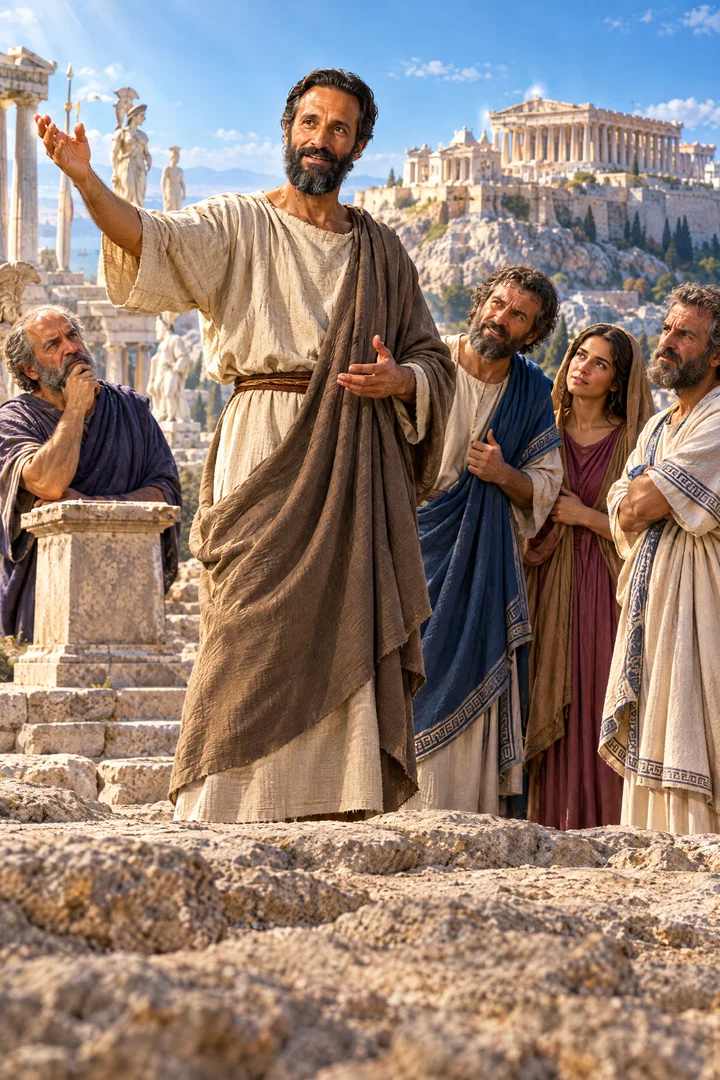
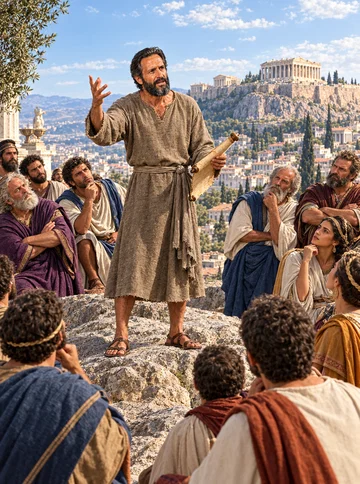
And when they heard of the resurrection of the dead, some mocked: and others said, We will hear thee again of this matter.
Translations
And when they heard of the resurrection of the dead, some mocked: and others said, We will hear you again of this matter.
King James Version, KJV Cambridge Paragraph Bible
And when they heard of the resurrection of the dead, some mocked: and others said, We will hear thee again of this matter.
And when they heard of the resurrection of the dead, some mocked: and others said, We will hear thee again concerning this matter.
Revised Version, American Standard Version
Now when they heard of the resurrection of the dead, some mocked; but others said, We will hear thee concerning this yet again.
And having heard of a rising again of the dead, some, indeed, were mocking, but others said, 'We will hear thee again concerning this;'
And when they heard [ of the] resurrection of the dead, some mocked, and some said, We will hear thee again also concerning this.
Now, when they heard of raising the dead, some, indeed, began to mock, while, others, said—We will hear thee, concerning this, even again.
Berean Standard Bible, Majority Standard Bible
When they heard about the resurrection of the dead, some began to mock him, but others said, “ We want to hear you again on this topic.”
Now when they heard of the resurrection of the dead, some mocked; but others said, “ We want to hear you again concerning this.”
Now on hearing about the coming back from death, some of them made sport of it, but others said, Let us go more fully into this another time.
Now when they heard of the resurrection from the dead, some mocked, and other sayde, We will heare thee againe of this thing.
Douay-Rheims (Challoner revision)
And when they had heard of the resurrection of the dead, some indeed mocked, but others said: We will hear thee again concerning this matter.
Pictures
Cross-references 20 of 36
- Acts 17:18
Then certain philosophers of the Epicureans, and of the Stoicks, encountered him. And some said, What will this babbler say? other some, He seemeth to be a setter forth of strange gods: because he preached unto them Jesus, and the resurrection.
Paul’s preaching of Jesus and the resurrection provoked Athenian debate and mockery.
- Acts 17:23
For as I passed by, and beheld your devotions, I found an altar with this inscription, TO THE UNKNOWN GOD. Whom therefore ye ignorantly worship, him declare I unto you.
Paul identifies the unknown God worshipped in Athens and declares him to them.
- 2 Timothy 2:18
Who concerning the truth have erred, saying that the resurrection is past already; and overthrow the faith of some.
Some taught that the resurrection had already occurred.
- 1 Corinthians 15:12
Now if Christ be preached that he rose from the dead, how say some among you that there is no resurrection of the dead?
Both texts address belief in the resurrection of the dead.
- Acts 26:8
Why should it be thought a thing incredible with you, that God should raise the dead?
Paul asks why God raising the dead should be considered incredible.
- Acts 24:15
And have hope toward God, which they themselves also allow, that there shall be a resurrection of the dead, both of the just and unjust.
Paul hopes for the resurrection of both the just and unjust.
- 2 Timothy 1:10
But is now made manifest by the appearing of our Saviour Jesus Christ, who hath abolished death, and hath brought life and immortality to light through the gospel:
Christ brings life and immortality to light, contrary to those who mock the resurrection.
- Acts 23:6
But when Paul perceived that the one part were Sadducees, and the other Pharisees, he cried out in the council, Men and brethren, I am a Pharisee, the son of a Pharisee: of the hope and resurrection of the dead I am called in question.
Paul identifies the resurrection of the dead as his hope.
- 1 Corinthians 15:32
If after the manner of men I have fought with beasts at Ephesus, what advantageth it me, if the dead rise not? let us eat and drink; for to morrow we die.
Denying the resurrection leads to the saying, “Let us eat and drink; for to morrow we die.”
- Acts 2:31
He seeing this before spake of the resurrection of Christ, that his soul was not left in hell, neither his flesh did see corruption.
Peter says Christ’s flesh was not left to see corruption.
- 1 Thessalonians 4:16
For the Lord himself shall descend from heaven with a shout, with the voice of the archangel, and with the trump of God: and the dead in Christ shall rise first:
The dead in Christ rise at the Lord’s coming.
- Matthew 22:23-34
The same day came to him the Sadducees, which say that there is no resurrection, and asked him,
Jesus corrects the Sadducees’ denial of the resurrection.
- Acts 17:1-15
Now when they had passed through Amphipolis and Apollonia, they came to Thessalonica, where was a synagogue of the Jews:
same series of places where word triumphed
- Acts 17:28
For in him we live, and move, and have our being; as certain also of your own poets have said, For we are also his offspring.
quoted from same sermon at Athens
- John 5:28-29
Marvel not at this: for the hour is coming, in the which all that are in the graves shall hear his voice,
Jesus says the dead will rise from their graves at his voice.
- Acts 24:21
Except it be for this one voice, that I cried standing among them, Touching the resurrection of the dead I am called in question by you this day.
Paul says he is on trial for proclaiming the resurrection.
- 1 Corinthians 15:20
But now is Christ risen from the dead, and become the firstfruits of them that slept.
Christ’s resurrection pledges the promised resurrection of the dead.
- John 6:39-40
And this is the Father’s will which hath sent me, that of all which he hath given me I should lose nothing, but should raise it up again at the last day.
Jesus promises to raise believers at the last day.
- Philippians 3:11
If by any means I might attain unto the resurrection of the dead.
Paul makes attaining the resurrection of the dead his goal.
- 1 Corinthians 15:23
But every man in his own order: Christ the firstfruits; afterward they that are Christ’s at his coming.
The resurrection of those who belong to Christ follows at his coming.
Commentary
Each commentary is drawn from primary sources: the writings of Ellen G. White and Adventist pioneers and periodicals. Each commentary is separate. Its own words are not a quotation; follow the references to read the source passages.
Ellen G. White
13 sources
Paul proclaimed the resurrection of the dead to philosophers and learned men in the center of heathen learning, and his hearers divided, some mocking and others putting off a decision until they could hear more.SLP 95.38RED 58.3ST Sep 22, 1914Ms 114, 1898, par. 17–196T 141.3 That divided response interrupted and closed his work at Athens.SLP 95.38RED 58.3AA 240.2–241.1 Their mocking and delay showed pride in intellect, learning, and self-sufficiency, clinging to idolatry and turning from true religion as foolishness.SLP 95.38RED 58.3AA 240.2–241.1 His learned and eloquent meeting of philosophy with philosophy and eloquence with eloquence brought little fruit, showing that human wisdom cannot convict and convert sinners, so at Corinth he laid aside elaborate argument to preach Jesus Christ and Him crucified in plain words with the Spirit's power.8RED 58.3Ms 114, 1898, par. 17–19SLP 120.1–29MR 69.3 Yet the labor was not wholly in vain, for Dionysius and several others believed and joined the believers, leaving a witness of courage and victory for Christianity in the heart of paganism.AA 240.2–241.18RED 59.1
Paul's Hearing at Athens
Paul proclaimed the resurrection of the dead at Athens, the center of heathen learning, before philosophers, sages, and great and learned men.AA 240.2–241.1ST Sep 22, 1914Ms 114, 1898, par. 17–19AA 462.1–2 His reasoning astonished and silenced even the wisest hearers, yet few accepted the gospel.AA 240.2–241.1ST Sep 22, 1914 When the resurrection was heard, the audience divided, with some mocking and others postponing decision and saying they would hear more of the matter.SLP 95.38RED 58.36T 141.3
That divided response interrupted and closed his teaching and work at Athens.SLP 95.38RED 58.3AA 240.2–241.1 The mocking and postponing revealed a people clinging to idolatry and turning from the light of true and reasonable religion.SLP 95.38RED 58.3AA 240.2–241.1 Pride in intellect, learning, refinement, and self-sufficiency left them satisfied with their own attainments, regarding the message of Christ as foolishness and having little desire for anything better, so that while boasting of high literary and scientific culture they grew yearly more corrupt.SLP 95.38RED 58.3AA 240.2–241.16T 141.3
In that encounter he stood with noble firmness, publicly proclaiming faith in Christ with winning power, and by knowledge and eloquence silencing the arguments of proud philosophy.AA 240.2–241.1ST Sep 22, 1914AA 462.1–2SLP 291.1–2 He gave unmistakable evidence of the divine character of the faith by signs and miracles.AA 462.1–2 He carefully drew minds away from heathen deities to the true God who was to them unknown, with a tact born of divine love that avoided irritating his proud listeners by direct attack.AA 240.2–241.1
The labor there was not wholly in vain, for despite few receiving the gospel, Dionysius, one of the most prominent citizens, and several others became converts, accepted the message, and united themselves fully with the believers.AA 240.2–241.18RED 59.1 The account remains to show God rebuking idolatry and the sins of a proud people through His servant.AA 240.2–241.1 It is preserved for all coming generations as a treasure of knowledge, bearing witness of unshaken confidence and courage in loneliness and adversity and of the victory gained for Christianity in the very heart of paganism.AA 240.2–241.18RED 59.1
Human Wisdom and Gospel Power
At Athens Paul adapted his style to his audience, adopting an oratorical style and spending much time in discussion of natural religion, meeting false philosophy with true philosophy, eloquence with eloquence, logic with logic, oratory with oratory, and science with science, and displaying human ability and smartness with his intellectual acquirements.Ms 114, 1898, par. 17–199MR 69.38RED 60.1–61.1 That learned and eloquent approach produced little fruit and a disappointing response, failing to bring the success he had hoped for, so he judged the method unsuccessful and its effect failure.Ms 114, 1898, par. 17–19SLP 120.1–29MR 69.38RED 60.1–61.18RED 67.1–2 The failure shows that even the highest human wisdom, learning, and eloquence cannot convict and convert sinners, and that when a people are wholly satisfied with their own attainments little more need be expected of them, for though enjoying reputation of high literary and scientific culture and boasting of learning and refinement they clung to idolatry, turned from the light of true and reasonable religion, and yearly became more corrupt with less desire for anything better than what they possessed.8RED 58.3Ms 114, 1898, par. 17–19
The lack of success taught that something above the world's wisdom must come into the work, power from a higher source, with the Spirit sanctifying every intellectual development.Ms 114, 1898, par. 17–19 The Athens experience therefore led Paul to change his plan at Corinth to avoid theories and elaborate arguments and worldly wisdom and eloquence, choosing instead to preach in plain, simple words centered on salvation through Christ and on Christ and His mission, urging Jesus Christ and Him crucified upon sinners in demonstration of the Spirit and of power and presenting the simple truth about Christ.Ms 114, 1898, par. 17–19SLP 120.1–29MR 69.38RED 60.1–61.18RED 67.1–2 The lesson is that ministers in their short lifetime have no time for anything else but knowing Jesus Christ and Him crucified.9MR 69.3
Sources
Pioneers and periodicals
58 sources
Paul was proclaiming the gospel alone at Athens when his address on Mars Hill was cut short as his hearers divided, with some jeering at him, others putting off a decision to hear more, and Paul then leaving them.ST Jan 21, 1903ST Jan 27, 1898ST Apr 19, 1877 He had moved from God as Creator to repentance and the day God had set to judge the world by the Man He had raised from the dead, making the resurrection the assurance of that coming judgment.ST May 21, 1885ST Dec 3, 1896RH Mar 17, 1853 The jeering was open ridicule, the same scorn poured on the apostles at Pentecost.ST Apr 12, 1883 It came because resurrection was a distinctively Christian teaching and foolishness to philosophers who held that the soul lives on conscious after death and needed no raising of the dead.ST Nov 13, 1879RH Mar 13, 1879ST Nov 11, 1880ST Feb 10, 1887 Had he taught only that an undying soul leaves the body at death they might have listened, so their mockery shows they understood him to mean the actual raising of the dead, a truth few at Athens received though Dionysius the Areopagite and Damaris with others believed.ST Jan 21, 1903RH Dec 19, 1871ST Aug 14, 1879RH Oct 16, 1860RH Aug 4, 1874
Setting at Athens
The verse belongs to Paul's first preaching of the gospel in Athens, about A.D. 52 when he was alone, and about twenty years after Christ's death after his attendants had returned to Berea.ST Jul 8, 1897ST Apr 19, 1877 It is the most prominent event recorded in Acts 17 and part of his work in the places of labor named in that chapter.ST Jun 9, 1898 The verse is one of the prominent references to the resurrection in Acts, showing the importance attached to the resurrection as the burden of Paul's preaching, joined to statements concerning the judgment and to the truth that life and movement and being are in God.ST Jun 9, 1898
Paul spoke on the Areopagus or Mars Hill to an idolatrous crowd with no Christian hearers present.ST Apr 19, 1877 His hearers were people who worshipped many gods and had raised an altar to an unknown god, who were ignorant of the true God and spent their time in telling or hearing something new.RH Dec 10, 1861ST Dec 3, 1896 His audience included the learned men, pagan philosophers, Epicureans and Stoics of Athens, and the setting with its many temples, idols and altars recalls the challenge of carrying the message to a largely non-Christian population.RH Nov 9, 1905 There he moved from the Creator, humanity's relation to God, God's creative power and the worship acceptable to him, repentance, and the future judgment to Jesus and the resurrection.ST Dec 3, 1896
The word for mocked means to jest, joke, jeer, ridicule, or laugh at, the same word as the mocking response to the apostles in Acts 2:13.ST Apr 12, 1883 The phrase resurrection of the dead is a general expression for the resurrection without distinction of character.RH Jun 21, 1864 It does not by itself describe the distinct resurrection of Christ and his followers, which is expressed elsewhere as resurrection from among the dead.RH Jun 21, 1864
When Paul spoke of the resurrection of the dead his address was broken off and divided his hearers.ST Jan 21, 1903ST Jan 27, 1898ST Jan 21, 1903 Some mocked with derisive sneers, while others postponed decision and said they would hear him again concerning this matter.ST Jan 21, 1903ST Jan 27, 1898ST Jan 21, 1903ST Sep 24, 1894 The doctrine made a strong impression on the pagan philosophers, and the reaction may have come from surprise at the novelty of his teaching, but it does not show that Paul spoke improperly or indecently.ST Sep 24, 1894RH Jul 6, 1868 Paul then went out from among them.ST Jan 21, 1903
Certain men joined Paul and believed, among them Dionysius the Areopagite and a woman named Damaris, with others.ST Jan 21, 1903 Some listeners mocked him, others put off hearing more, and some believed.ST Jul 10, 1893 The account marks Paul disputing with philosophers, speaking at the Areopagus, gaining some converts, and leaving for Corinth, a sequence used to establish when Timothy could have joined Paul and been sent back to Thessalonica.ST Sep 27, 1883 It shows his work among the Gentiles at Athens before his statement at Corinth about going to the Gentiles, and the gospel reached even the scoffers of Athens so that some became penitent believers.RH Dec 19, 1871RH Oct 16, 1860
The same chapter records Paul preaching in the Jewish synagogue at Thessalonica on three Sabbath days and laying the foundation of the Thessalonian church, with no introduction of a new Sabbath day.RH Nov 21, 1871 His address at Mars Hill is an account of his visit and work, not a re-affirmation of the second commandment.ST Apr 19, 1877
The fruit at Athens was limited: the message was rejected by almost all his hearers, unlike his preaching in places where many believed, so the same gospel could produce very different responses in different people.RH Apr 2, 1861 His reasoning astonished and silenced the wisest hearers but led few to accept the gospel, and his effort among the learned men was not followed by remarkable results.ST Sep 22, 1914RH Oct 3, 1907 Few people received his message, and he met controversy there where few received it.ST Oct 25, 1877RH Feb 9, 1905 His work there was faithful even though it produced no apparent result, just as his preaching to the Athenians was as acceptable to God as his work among the church at Corinth.ST Oct 25, 1877 Apparently only one member of the Areopagus assembly was converted, showing that learning and status did not ensure a response to the gospel.RH Feb 26, 1861
What Paul Preached
At Athens Paul preached Jesus and the resurrection, publicly proclaiming Christ in Greece.ST Feb 14, 1884ST Mar 18, 1903ST Sep 28, 1882RH Dec 16, 1858 He spoke before the Greek sages with knowledge and eloquence, declaring the glory of the cross to philosophers who worship the creations of human wisdom.ST Feb 14, 1884ST Mar 18, 1903RH Dec 16, 1858 The same preaching of Jesus and the resurrection must be done now to men sunk in Corinthian sensuality and to men who worship human wisdom like the Athenians, without softening any truth to suit their prejudices.RH Dec 16, 1858 Preaching the resurrection belongs to the work of saving souls.ST Sep 28, 1882
In the address he found people ignorant of the true God and taught them about God's creative power and the worship acceptable to him.ST Dec 3, 1896 He moved from the Creator, humanity's relation to God, repentance, and the future judgment to Jesus and the resurrection.ST Dec 3, 1896 The resurrection was part of his message about the judgment, when all would be judged by the Man God had ordained.ST May 21, 1885RH Mar 17, 1853 God had appointed a day to judge the world through the man He raised from the dead, and God's raising of Jesus assured all people that the appointed judgment would take place.ST May 21, 1885RH Mar 17, 1853 When he spoke of the resurrection of the dead, some mocked while others postponed hearing more.ST May 21, 1885RH Mar 17, 1853
The sermon at Athens is the most prominent event recorded in Acts 17 and part of Paul's work in the places of labor named in that chapter.ST Jun 9, 1898 The verse is one of the prominent references to the resurrection in Acts, showing the importance attached to the resurrection as the burden of Paul's preaching, joined to statements concerning the judgment and to the truth that life and movement and being are in God.ST Jun 9, 1898 The resurrection was the gospel's grand hope and the hope Paul preached, and the verse illustrates the rebuffs he faced while laboring to establish it.ST Jun 9, 1898ST Jan 24, 1884RH Mar 17, 1853 His tact in introducing the subject to the Athenians did not keep him from proclaiming the whole counsel of God, including the resurrection, though some responded with derisive sneers.ST Mar 5, 1894ST Apr 7, 1914 He preached the resurrection through the Lord Jesus because salvation depended on it, even though the teaching was unpopular and brought persecution, and it met mixed reactions with some mocking while others said they would listen again.ST Mar 5, 1894ST Apr 7, 1914
Why Hearers Rejected It
The response at Athens illustrates opposition to the resurrection and the attempt to make it seem unimportant, and it shows how difficult it is for people to imagine that the dead can live again.ST Jun 25, 1896RH Jul 4, 1871 The Athenians took offense because their belief in an afterlife was not a belief in resurrection, for resurrection was a distinctively Christian teaching and not the idea that the soul ascends or is assumed to another state after death.ST Nov 11, 1880 That idea of an immortal soul merely leaving the body at death effectively denies the Christian doctrine of resurrection.ST Nov 11, 1880
Had Paul taught merely an immortal soul leaving the body at death, a familiar philosophical idea, they might have accepted it.ST Aug 14, 1879 Their mockery shows they did not take his teaching as the claim that an immortal soul rises out of a dying body, but as the raising of the dead, including Christ's bodily resurrection.ST Aug 14, 1879RH Aug 4, 1874 Some of the philosophers mocked because they regarded the resurrection as unreasonable and unphilosophical and cared nothing for what the Bible said.ST Nov 13, 1879RH Mar 13, 1879 To them it was absurd, foolishness, and a new doctrine, and as unbelievers reject the teaching when they do not believe resurrection is possible, so the resurrection of Jesus was foolishness to Gentiles who did not believe he could rise from the dead.RH Jul 13, 1869ST Jun 15, 1882
The Stoic and Epicurean philosophers, influenced by Plato and Socrates, believed the soul remained conscious after death and therefore regarded resurrection as foolish.ST Feb 10, 1887 That belief conflicts with the resurrection, which raises the righteous to a higher state of existence, while Christian hope in a future life rested on the Bible's promise of resurrection and Platonists argued for a future life through the soul's immortality.RH Mar 13, 1879ST Feb 10, 1887 The resurrection of the dead was the testing truth presented on Mars Hill and struck against a cherished belief in the immortality of the soul, so some mocked and many turned away.RH Jan 7, 1862 Those who held the other account taught that the Epicureans in Athens mocked because they rejected life after death and the immortality of the soul.RH Jul 13, 1869
The reaction may have come from surprise at the novelty of his teaching, but it does not show that Paul spoke improperly or indecently.RH Jul 6, 1868 The doctrine made a strong impression on the pagan philosophers, with some mocking it while others wanted to hear more.ST Sep 24, 1894RH Jul 6, 1868 The verse illustrates resistance to the resurrection and the future state through Greek philosophical influence, exposing its pernicious influence in its tendency to attach a mystical interpretation to the fundamental doctrines of Christianity, particularly those connected with the resurrection and the future state, an influence to which Paul repeatedly alludes in his writings.ST Jun 30, 1914RH May 21, 1914 Their reaction shows how human philosophy ridiculed the resurrection, a truth made known through the gospel and confirmed by Christ's resurrection.RH Nov 15, 1864
Doctrine of Resurrection Hope
Paul met rebuff at Athens while laboring to establish the resurrection of the dead, which was the gospel's grand hope.ST Jan 24, 1884 He preached the resurrection and his hearers divided, some mocking and others deferring further hearing.ST Jan 24, 1884 Some mocked when they first heard of the resurrection of the dead, showing how hard it is for people to imagine that the dead can live again.RH Jul 4, 1871 Yet resurrection belongs to the center of the apostles' preaching and of Christian hope.RH Jul 4, 1871
With other passages, the divided hearing at Athens teaches that the world will continue to oppose Christ and His true church to the end of the age.ST Aug 7, 1901 The church's hope therefore is the Lord's coming, not the conversion of the world during this age.ST Aug 7, 1901
Gospel Work and Application
Paul carried the gospel to Athens without regard for the cultivation of his hearers, preaching in a setting altogether unlike Peter's sermon at Pentecost.ST Sep 10, 1896RH Jun 18, 1872 That work at Athens belonged to the foreign missionary enterprise by which Gentiles were coming into the church, and success abroad of that kind shows the need for increased effort and even apostolic skill in the home church at Jerusalem to care for a growing church and give direction in grave matters pertaining to the kingdom of God.ST Jun 16, 1898
The same gospel can produce very different responses in different people, for at Athens the message of the resurrection of the dead was rejected by almost all the hearers, unlike places where many believed.RH Apr 2, 1861 Yet the gospel reached even the scoffers of Athens, and some became penitent believers.RH Oct 16, 1860 Paul's work there was faithful even though it produced no apparent result, with some mocking and others putting off hearing more, and his preaching to the Athenians was as acceptable to God as his work among the church at Corinth.ST Oct 25, 1877
The divided response at Athens, with some mocking the resurrection of the dead and others postponing further hearing, illustrates the opposition that can meet earnest advocacy of biblical truth.ST Dec 6, 1883 Paul stood in the minority there, and being outnumbered while defending truth, or facing ridicule, does not make a person sectarian.ST Dec 6, 1883ST Mar 2, 1882
He proclaimed the gospel to the philosophic Athenians without treating it as one opinion among many, listening to honest questions and giving reasons for his faith while holding firmly that the gospel is the true religion and that accepting or rejecting it carries the stakes of salvation.RH Mar 5, 1857 His commitment to Christ alone brought opposition from those who held other beliefs, meeting mockery and refusal to accept his message of the resurrection.ST Nov 13, 1893
The same preaching of Jesus and the resurrection must be done now, declaring the glory of the cross to philosophers who worship the creations of human wisdom, both to men sunk in sensuality as at Corinth and to men who worship human wisdom as at Athens, without softening any truth to suit their prejudices.RH Dec 16, 1858 At Athens Christ was publicly proclaimed in Greece before the Greek sages with knowledge and eloquence, confronting the arguments of proud philosophy.ST Feb 14, 1884RH Dec 16, 1858
Preaching the resurrection belongs to the work of saving souls, for Paul preached Jesus and the resurrection and his hearers answered the resurrection of the dead with mockery or postponement.ST Sep 28, 1882 He is an example for gospel workers in moving from the Creator, humanity's relation to God, repentance, and the future judgment to Jesus and the resurrection before Epicureans and Stoics.
What he saw at Athens stirred his spirit, and such stirring calls for excited, earnest speech and crying out against destroying evil rather than calm silence to please men.RH Jun 9, 1874 The public houses and whisky-shops of Glasgow with their horrid fruit and great number of perishing men and women give even more to stir the spirit than all he saw at Athens.RH Jun 9, 1874 Faithfulness in the judgment of God requires being overwhelmed and crying out instead of holding back, even to be counted singular in the judgment of men, while the church and the world sleep and hug each other.RH Jun 9, 1874
At Athens he met controversy where few received his message, and there he was mocked.ST Dec 9, 1913RH Feb 9, 1905
Sources