Acts 20:8
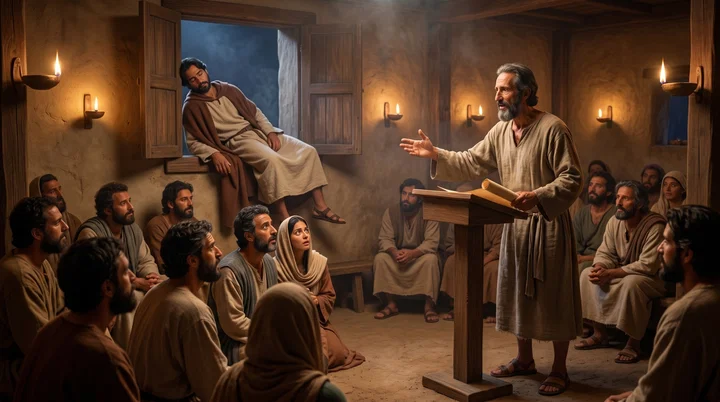
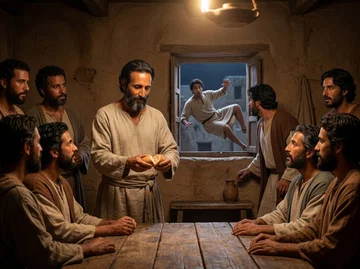
And there were many lights in the upper chamber, where they were gathered together.
Translations
American King James Version, King James Version, KJV Cambridge Paragraph Bible
And there were many lights in the upper chamber, where they were gathered together.
And there were many lights in the upper chamber, where they were assembled.
And there were many lights in the upper chamber, where we were gathered together.
And there were many lights in the upper chamber where we were gathered together.
and there were many lamps in the upper chamber where they were gathered together,
And there were many lights in the upper room where we were assembled.
Now there were a good many torches in the upper room, where we were gathered together.
Berean Standard Bible, Majority Standard Bible
Now there were many lamps in the upper room where we were gathered.
There were many lights in the upper room where we were gathered together.
And there were a number of lights in the room where we had come together.
And there were many lightes in an vpper chamber, where they were gathered together.
Douay-Rheims (Challoner revision)
And there were a great number of lamps in the upper chamber where we were assembled.
Pictures
Cross-references
- Acts 20:13-14
And we went before to ship, and sailed unto Assos, there intending to take in Paul: for so had he appointed, minding himself to go afoot.
Continues the account of Paul’s journey from Troas to Assos.
- 1 Corinthians 11:23-24
For I have received of the Lord that which also I delivered unto you, That the Lord Jesus the same night in which he was betrayed took bread:
Connects breaking bread with its institution by Christ.
Commentary
Each commentary is drawn from primary sources: the writings of Ellen G. White and Adventist pioneers and periodicals. Each commentary is separate. Its own words are not a quotation; follow the references to read the source passages.
Ellen G. White
2 sources
The gathering described was in an upper chamber located on the third story.AA 391.2–3SLP 196.4–197.1 It took place on the last evening of Paul's seven-day stay at Troas.SLP 196.4–197.1 Many people had assembled because Paul was about to leave, a larger-than-usual company having come together to break bread as their teacher was about to depart.AA 391.2–3SLP 196.4–197.1
The upper room was the coolest and most pleasant place for such a gathering on that warm spring evening.SLP 196.4–197.1 The room was brightly lit with many lamps, while outside the night was dark.AA 391.2–3SLP 196.4–197.1 Paul preached there until midnight, and, impressed with coming perils and uncertain of meeting them again, he spoke with earnest love and solicitude.AA 391.2–3SLP 196.4–197.1
Sources
Pioneers and periodicals
61 sources
The upper chamber at Troas was brightly lit with many lamps for a night gathering on the third story where Eutychus sat in the window.ST Sep 15, 1887ST Feb 14, 1911ST Feb 13, 1912 The many lights show it was dark, for by Bible reckoning the day runs from sunset to sunset, so the meeting began after sunset at the close of the Sabbath on what is now called Saturday night and continued through the night until midnight and till daybreak.ST Feb 14, 1911ST Feb 13, 1912RH May 10, 1860 It was an occasional farewell meeting because Paul was about to depart and expected not to see them again, not a regular weekly worship service.ST Apr 12, 1883ST Feb 20, 1879RH Feb 7, 1916 Paul discoursed until midnight, Eutychus fell from the third loft and was restored to life, bread was broken after midnight before daybreak, and in the daylight of that same first day Paul walked to Assos while his companions sailed, using it for common travel and labor.ST Sep 15, 1887ST Nov 25, 1886ST Aug 21, 1893ST Feb 20, 1879ST Aug 21, 1893 Therefore the account gives no example or authority for Sunday observance and no proof that the apostles changed the Sabbath to Sunday, but Paul's journeying on first-day morning proves he did not regard it as a Sabbath to be kept by rest.RH May 10, 1860ST Apr 12, 1883ST Aug 21, 1893ST Feb 20, 1879ST Aug 21, 1893
Room, Lights, and Occasion
The gathering was in an upper chamber or upper room at Troas, brightly lit with many lamps or lights.ST Sep 15, 1887ST Feb 14, 1911ST Feb 13, 1912ST Aug 21, 1893ST Oct 11, 1877 It was on the third story with a window where Eutychus sat, a young man sleeping in the window who fell from the third loft and was taken up dead or thought dead and was restored to life.ST Sep 15, 1887ST Aug 21, 1893ST Oct 11, 1877 The disciples had come together there to break bread on the first day of the week while Paul preached ready to leave the next day and continued his discourse until midnight, then after the restoration talked a long while until daybreak before departing on foot.ST Sep 15, 1887ST Aug 21, 1893ST Oct 11, 1877RH May 1, 1900 By Bible reckoning of days from sunset to sunset the whole night service belonged to the first day of the week, which began at sunset on Sabbath evening; the meeting took place in darkness at night and continued through the night, on what is now called Saturday night.ST Feb 14, 1911ST Feb 13, 1912ST Aug 21, 1893ST Oct 11, 1877RH May 1, 1900
It was an occasional farewell meeting held because Paul was about to depart and expected not to see them again, not a regular weekly worship service.ST Apr 12, 1883ST Feb 20, 1879RH Feb 7, 1916RH Oct 28, 1915ST Oct 17, 1878 Paul stayed with the believers at Troas for seven days, so meeting on that day does not establish a weekly Sabbath or a transferred Sabbath.ST Feb 20, 1879ST Jun 13, 1906ST Oct 17, 1878 The lights fit the evening setting in the lighted upper room and do not make the first day sacred, and the gathering continued through the night as a farewell to Paul, including the breaking of bread, with Paul leaving at daybreak Sunday.ST Apr 12, 1883ST Feb 20, 1879RH Feb 7, 1916RH Oct 28, 1915ST Oct 17, 1878
The many lights are mentioned to show the time of meeting, not for their number.ST Jan 8, 1885RH Jun 7, 1864 They fit an evening supper setting in a lighted upper room with guests reclining at the table.ST Apr 12, 1883ST Jun 3, 1875 They were there because it was dark at night, not because someone might fall from the window nor because of heat and poor air in the room.ST Jan 8, 1885RH Jun 7, 1864
Paul had been delayed on the voyage from Philippi on his urgent journey to Jerusalem and had waited seven days to spend a Sabbath with the believers at Troas.ST Feb 24, 1898 His traveling companions were sent ahead by boat as soon as the Sabbath was past to save time while he stayed to meet for one last night meeting on the first day of the week and then resumed his journey on foot the next morning.ST Feb 24, 1898ST Sep 26, 1911 The gathering belonged to the night after the Jewish Sabbath, counted as the beginning of the first day of the week, and Paul and his companions resumed their journey on Sunday morning, apparently because of the ship's departure, his companions going by boat around the peninsula to Assos.ST Feb 24, 1898ST Aug 19, 1875ST Sep 26, 1911
Night and Day Reckoning
The many lamps show the gathering was held in darkness at night, continuing through the night until midnight and on till daybreak as an all-night meeting.ST Feb 14, 1911ST Feb 13, 1912RH May 10, 1860ST May 27, 1875ST Nov 25, 1886 By Bible reckoning the day runs from sunset to sunset, with the evening and the night as the first part of the day, so the night meeting belonged to the beginning of the first day of the week.ST Feb 13, 1912RH May 10, 1860ST Dec 11, 1884ST May 27, 1875ST Aug 21, 1893 The whole night service belonged to the first day, which began at sunset on Sabbath evening and ended at sunset on Sunday evening.ST Feb 13, 1912ST Aug 21, 1893ST Aug 1, 1916
Therefore the meeting began after sunset at the close of the Sabbath on what is now called Saturday night or Saturday evening, continued through the night, and Paul departed in the daylight that followed on Sunday morning, still the same first day.ST Feb 14, 1911ST Feb 13, 1912RH May 10, 1860ST Dec 11, 1884ST Aug 21, 1893 The disciples gathered to break bread, not to keep a Christian Sabbath, and Paul preached through the night and left on foot Sunday morning.ST Feb 13, 1912RH May 10, 1860ST Aug 21, 1893 The meeting was held after the Sabbath was past so he could travel on Sunday, which proves Sunday was not observed as sacred.ST Aug 21, 1893ST Aug 1, 1916
In a differing reckoning the late evening is still treated as belonging to the first day, with Paul's departure for Assos occurring the following day, the second day of the week. Another account describes it as an all-night assembly continuing from Sunday evening into Monday morning.ST Oct 23, 1884 In other differing views the meeting is described as held on the Sabbath and continued over into part of Sunday, while the remainder of that Sunday was spent in secular activity.ST Jan 30, 1896 As a Sunday-evening gathering its breaking of bread after midnight could not have been on the first day if counted as Sunday night, and one account places its continuance past one o'clock on Wednesday morning.ST May 6, 1886ST Jan 8, 1885
The Greek word for morrow does not necessarily mean another day of the week but the next period of daylight, as when soldiers took Paul by night to Antipatris and on the morrow returned on the same weekday.RH Dec 12, 1871 So Paul preaching through the night and being ready to depart on the morrow means leaving Sunday morning, when the vessel was about to sail and he himself joined it at Assos about twenty miles distant by the direct road.RH Dec 12, 1871 His waiting till the Sabbath was past and then journeying on first-day morning is consistent with sacred regard for the ancient Sabbath and is fatal to the idea that he regarded the first day as the Christian Sabbath.RH Dec 12, 1871
Course of the Meeting
Paul discoursed in readiness to leave the next day, preaching until midnight and, after Eutychus was restored, talking a long while even till break of day before departing on foot while his companions sailed by his appointment.ST Sep 15, 1887ST Nov 25, 1886ST Aug 21, 1893ST Oct 11, 1877ST Feb 20, 1879 The gathering was therefore an all-night meeting that continued through the night until daybreak.ST Nov 25, 1886ST Oct 11, 1877ST Jul 22, 1897 Bread was broken between midnight and daybreak, after midnight, early in the morning of the first day, before Paul left.ST Aug 21, 1893ST Feb 20, 1879RH Mar 31, 1874ST Oct 17, 1878 Eutychus, a young man sleeping in the window, fell from the third loft, was taken up dead or thought dead, and was restored to life.ST Sep 15, 1887ST Aug 21, 1893ST Feb 20, 1879ST Jul 22, 1897ST Oct 17, 1878
In the daylight of that same first day Paul and his companions spent the time in travel and labor, with Paul walking to Assos while Luke and the rest went by ship around the cape to Assos and on to Mitylene, proving the day was used as common working time.ST Aug 21, 1893ST Aug 21, 1893RH Jul 20, 1911ST Jan 25, 1910ST Jan 20, 1909 The meeting was held after the Sabbath was past so Paul could set out in the morning, and the record is given to prove positively that Sunday was not sacredly observed.ST Aug 21, 1893ST Aug 21, 1893 The journey is given as Paul walking about nineteen and one-half miles early Sunday morning to meet the vessel at Assos and then sailing about fifty miles farther to Mitylene.ST Aug 21, 1893 The journey is given as Paul walking nineteen miles across country to Assos on Sunday morning while the company sailed about forty-five miles around the cape, and elsewhere as about twenty miles across the peninsula, more than twenty Sabbath-day's journeys, and more than a Sabbath-day's journey.RH Jul 20, 1911ST Jan 20, 1909ST Jul 22, 1897ST Jan 29, 1902
The journey is given as Paul walking about nineteen and one-half miles while Luke and seven companions worked the vessel around a headland, these activities being ordinary travel and work.RH Jun 17, 1873 Elsewhere it is given as walking seven miles on foot while the ship sailed about fourteen miles around, then taking passage on board.RH Sep 17, 1857
No Proof for Sunday
This is the only religious meeting on the first day of the week recorded in the New Testament and in the entire word of God, the only one connected with the name of an apostle after belief that the Saviour had risen, and the only case of meeting and breaking bread on that day.ST Feb 20, 1879ST Aug 21, 1893RH Jul 20, 1911ST Jul 18, 1878ST Apr 11, 1906 It was only one gathering by one church, an evening farewell meeting for the apostle in a lighted upper room where he preached until midnight, restored the young man who fell, broke bread, talked until daybreak and departed on a journey.ST Feb 20, 1879RH Jun 24, 1873ST Apr 11, 1906 It gives no regulation for observing the first day and describes the setting of a meeting on an otherwise secular day.ST Jul 18, 1878ST Apr 11, 1906
The day is never called the Sabbath, the Lord's day, or by any sacred title, and the Sabbath is not mentioned anywhere in this whole connection.ST Feb 20, 1879ST Oct 17, 1878ST Nov 14, 1878 There is no statement that it was custom to meet then before or afterward, no precept or requirement to meet and break bread on that day, no regulation for observing it, and no account that the disciples regularly met on that day or ever met on that day before or afterward.ST Feb 20, 1879ST Oct 17, 1878ST Aug 16, 1883RH Jun 24, 1873ST Jul 18, 1878 This stands in contrast to eighty-four Sabbaths on which Paul preached.ST Feb 20, 1879ST Oct 17, 1878
It was not an ordinary daytime Sunday worship service but an uncommon all-night farewell evening meeting because Paul was leaving, held during the night between what is now called Saturday and Sunday and continued after midnight.ST Oct 17, 1878ST Nov 30, 1882ST Jul 18, 1878 It is recorded because of its length and the miracle of raising the dead and not for any sacredness of the day, and there is nothing in the verse or its context to indicate the day was sacred.ST Feb 20, 1879ST Oct 17, 1878ST Jan 20, 1909ST Jul 22, 1897 An evening meeting can be held on any day of the week without making that day holy.ST Feb 20, 1879ST Oct 17, 1878
The account gives no example or authority for Sunday observance, no proof that the apostles changed the Sabbath to Sunday, no declaration or implication that the Sabbath is changed from the seventh to the first day, and no support for a regular first-day custom or a transferred Sabbath.ST Feb 20, 1879ST Aug 21, 1893RH Jul 20, 1911 The gathering and breaking of bread do not establish the first day as a Sabbath, the lights fit the evening setting and do not make the first day sacred, and the disciples gathered to break bread, not to keep a Christian Sabbath.RH May 10, 1860ST Apr 12, 1883ST Aug 13, 1874 Even an apostle's example could not make another day the seventh day commanded in the fourth commandment.RH May 10, 1860
Paul's waiting till the Sabbath was past and then journeying on first-day morning, using it for extended preaching, preparing to depart, and laborious travel, is consistent with sacred regard for the ancient Sabbath and proves he did not regard Sunday as a Sabbath to be devoted to rest, abstinence from labor, and religious duties.ST Aug 21, 1893ST Aug 21, 1893ST Jan 20, 1909 By Bible reckoning of days from sunset to sunset, the whole night service belonged to the first day of the week, which began at sunset on Sabbath evening and ended at sunset on Sunday evening, held on what is now Saturday night because the Bible day began at sunset.ST Aug 21, 1893ST Jan 20, 1909 The meeting was held after the Sabbath was past so Paul could walk about nineteen and one-half miles early Sunday morning to meet the vessel at Assos and then sail about fifty miles farther to Mitylene on Sunday, while his companions in labor spent the entire twenty-four hours of that day in travel and Paul himself spent all the light part of the same day in the same business.ST Aug 21, 1893ST Aug 21, 1893 The daytime portion of that day was used for hard labor, the travelers set out on foot on Sunday morning, and the bread was broken sometime between midnight and daybreak, so the first day was treated as ordinary time, not as a Sabbath.ST Jan 25, 1910ST Dec 25, 1893
The passage gives no example for meeting in the daytime on the first day, for a short daytime sermon, for breaking bread about midday, or for refusing to journey on that day.ST Sep 15, 1887 The first-day meeting was at night, proved by the many lights in the upper chamber where they were gathered, and was an all-night meeting in which Paul preached until midnight, the bread was broken shortly after midnight, and he talked a long while even till break of day, after which in the daytime he departed afoot for Assos while his companions sailed to Assos by his appointment.ST Sep 15, 1887ST Sep 15, 1887 If the example binds men to meet on the first day it binds them to meet in the night, and if it binds the minister to preach on the first day it binds him to preach in the night and all night, so those who claim it as authority for Sunday-keeping follow it by going directly contrary to it, and the claim of apostolic example for Sunday-keeping is a pretense to justify transgression of the commandment of God in refusing to keep the Sabbath of the Lord.ST Sep 15, 1887ST Sep 15, 1887
By contrast, those who held otherwise taught that Paul held a meeting on the first day of the week, showing God sanctioned keeping the first day though there is no precept commanding it.RH Jan 2, 1866
Connections and Practical Lessons
The breaking of bread at Troas was the meal taken together before leaving, not a mark of holiness in the day and not the fixing of a weekly observance.ST Jan 20, 1909ST Sep 28, 1915RH Jun 5, 1860 It was an occasional farewell evening gathering in an upper chamber with many lights, fitting an evening setting in darkness, held on what is now Saturday night because the Bible day begins at sunset.ST Jan 20, 1909ST Sep 28, 1915RH Jun 5, 1860 Paul preached until midnight, Eutychus fell from the window and was taken up for dead, Paul restored him to life, then talked a long while, broke bread with the group, and departed at break of day.ST Jan 20, 1909ST Sep 28, 1915 The meeting is recorded because of the miracle wrought there, and there is nothing in the verse or its context to indicate the day was sacred.ST Jan 20, 1909ST Sep 28, 1915 Even if the bread-breaking was the Lord's Supper, it did not make the day holy or establish a custom, and its occurrence in the early evening is only assumption.ST Jan 20, 1909ST Sep 28, 1915RH Jun 24, 1873 The rest of that first day was spent by Paul in travel as on an ordinary workday, waiting till daybreak and then walking about twenty miles across the peninsula to Assos while the others went by ship, which proves he used it as a common working day and did not observe it as Sabbath with the Christians at Troas.ST Jan 20, 1909ST Sep 28, 1915RH Jun 5, 1860 If the meeting is counted as Sunday night, the breaking of bread after midnight came on Monday morning, still with nothing to show Sabbath-keeping, so the text gives no support for Sunday as a holy day.ST Jan 20, 1909
The breaking of bread there was a single instance done at night, while Jesus kept that ordinance on Thursday evening and the disciples sometimes observed it every day and broke bread daily from house to house, which would make every day holy.ST Jan 13, 1881ST Jul 22, 1897 The meeting to break bread therefore does not make the first day the Sabbath, any more than daily breaking from house to house makes every day the Sabbath.ST Jul 22, 1897 There was no requirement to break bread on that day and no intimation of any other meeting on it before or after, and the account gives no intimation of a change of the Sabbath.ST Jan 13, 1881ST Jul 22, 1897 Because the breaking occurred after midnight, it could not have been on the first day if the time is reckoned as Sunday night.ST Jan 8, 1885ST Jul 22, 1897 Eating the bread and drinking the cup is connected in 1 Corinthians 11:26 with proclaiming his death, not with commemorating his resurrection.ST Jan 8, 1885 By Bible reckoning where the day begins at sunset with the evening first, the night portion answers to Saturday night, and the light part of that same first day was spent by Paul in walking twenty miles to Assos while his companions sailed around the promontory, showing it to be a day of common travel and labor.ST Jul 22, 1897 The Troas meeting was a night meeting continued after midnight till break of day, after which on Sunday morning Paul walked to Assos to rejoin his companions and continue his long journey toward Jerusalem, and it is recorded only because of the noted miracle of raising the young man to life.ST Jan 13, 1881ST Jul 22, 1897
Paul's unusually long meeting supports holding long meetings on extraordinary occasions.ST Apr 15, 1875RH Apr 8, 1875 His discourse there was informal enough to be interrupted by a question and by a hearer falling asleep.ST Oct 8, 1885 His farewell sermon in the upper chamber at Troas, in the upper room with many lights or lamps, was spoken to instruct and benefit its hearers rather than to win praise or display eloquence.ST Apr 15, 1875ST Oct 8, 1885RH Oct 10, 1865 The account shows how wonderfully God worked there and how the word triumphed in spite of persecution.ST Jul 7, 1909 It serves as the setting for a late-night meeting compared with a gathering in Tahiti, where Paul preached to a listening, drowsy company until midnight.ST Dec 4, 1893 It was a meeting like the one in Ulysses in some respects, continuing until nearly daybreak, after which the believers departed on their journeys.RH Aug 14, 1860
In the wider farewell context Paul called the elders of Ephesus together to say farewell, knowing he would not see them again.RH Nov 4, 1873 He had worked among them while poor, and testified that he had coveted no one's silver, gold, or clothing.RH Nov 4, 1873 He supported himself and his companions by working with his own hands.RH Nov 4, 1873
Sources