Acts 21:14
And when he would not be persuaded, we ceased, saying, The will of the Lord be done.
Translations
American King James Version, King James Version, KJV Cambridge Paragraph Bible, Webster Bible, Revised Version, American Standard Version
And when he would not be persuaded, we ceased, saying, The will of the Lord be done.
and he not being persuaded, we were silent, saying, 'The will of the Lord be done.'
And when he would not be persuaded, we were silent, saying, The will of the Lord be done.
And, as he was not to be persuaded, we ceased, saying—the Lord’s, will be done!
When he would not be dissuaded, we fell silent and said, “ The Lord’ s will be done.”
When he would not be dissuaded, we quieted down and said, “ The Lord’ s will be done.”
When he would not be persuaded, we ceased, saying, “ The Lord’ s will be done.”
And as he might not be moved we did no more, saying, Let the purpose of God be done.
So when he would not be perswaded, we ceased, saying, The will of the Lord be done.
Douay-Rheims (Challoner revision)
And when we could not persuade him, we ceased, saying: The will of the Lord be done.
Pictures
Cross-references
- Matthew 6:10
Thy kingdom come. Thy will be done in earth, as it is in heaven.
Both express prayer for God’s will to be done.
- 2 Samuel 12:22-23
And he said, While the child was yet alive, I fasted and wept: for I said, Who can tell whether GOD will be gracious to me, that the child may live?
David's acceptance after his child's death as example
- Acts 21:4
And finding disciples, we tarried there seven days: who said to Paul through the Spirit, that he should not go up to Jerusalem.
Disciples urge Paul not to go to Jerusalem, contrasting with his submission to the Lord’s will.
- Isaiah 46:10
Declaring the end from the beginning, and from ancient times the things that are not yet done, saying, My counsel shall stand, and I will do all my pleasure:
God’s sovereign counsel grounds submission to his will.
- 1 Samuel 3:18
And Samuel told him every whit, and hid nothing from him. And he said, It is the LORD: let him do what seemeth him good.
Linked with accepting God’s will without resistance.
- Acts 9:16
For I will shew him how great things he must suffer for my name’s sake.
The Lord foretells Paul’s suffering, which his later trials fulfill.
- Acts 21:20-26
And when they heard it, they glorified the Lord, and said unto him, Thou seest, brother, how many thousands of Jews there are which believe; and they are all zealous of the law:
Paul observes a purification rite to reassure Jewish believers about his respect for the law.
Commentary
Each commentary is drawn from primary sources: the writings of Ellen G. White and Adventist pioneers and periodicals. Each commentary is separate. Its own words are not a quotation; follow the references to read the source passages.
Ellen G. White
11 sources
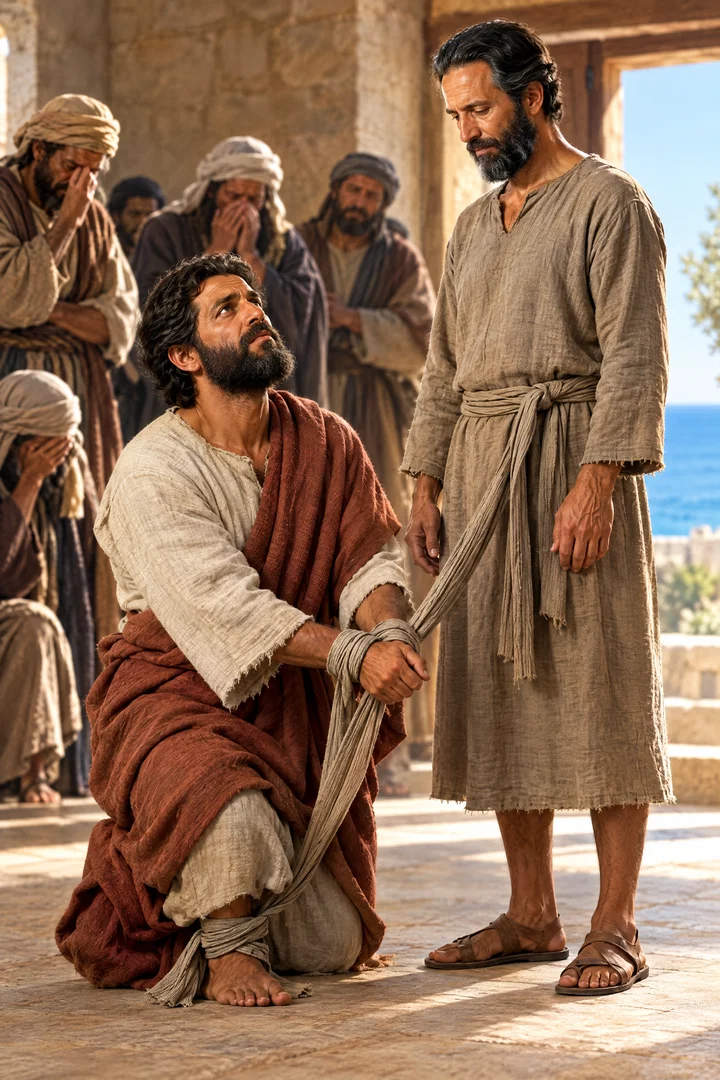
At Caesarea, after Agabus bound his own hands and feet with Paul's girdle and foretold that the Jews at Jerusalem would bind its owner and deliver him to the Gentiles, Luke and the local believers pleaded with Paul not to go up to Jerusalem.ST May 1, 1884AA 397.2–3SLP 205.1LSEGW 433.4–434.1 Paul would not swerve from the path of duty but was ready to follow Christ to prison and to death at Jerusalem for the name of the Lord Jesus, and their weeping only broke his heart.AA 397.2–3SLP 205.1 When he could not be persuaded to avoid the coming danger, they saw they caused him pain without changing his purpose, so they stopped urging him and accepted the Lord's will even as he proceeded toward danger.ST May 1, 1884AA 397.2–3SLP 205.1LSEGW 433.4–434.1
The verse means always leaving everything in God's hands and accepting what He in providence decides is best, because He knows what is best and sees the end from the beginning and sees what cannot possibly be seen.Ms 127, 1901, par. 13–14 It calls for peace and rest in Jesus with trust that He will verify His Word, refusing to let the mind be confused by erroneous reasoning or influenced by idle tales, while doing what He directs and doing one's part.Ms 127, 1901, par. 13–14 If a greatly desired thing is not obtained it is to be accepted as a closed way with the satisfaction of having done one's best and with assurance that for some reason the Lord did not bring it to pass, rather than as a great misfortune or a reason for discouragement.Ms 127, 1901, par. 13–14 This rests on God as a wise, compassionate heavenly Father who loves His children and will not indulge them to their injury, who at times withholds what is greatly desired though it seems good to possess, and who does not always permit His children to have their own way because He loves them.Ms 127, 1901, par. 13–14
The verse expresses agreement with the Lord's direction of a worker's field of labor, affirming submission to the Lord's will over one who puts trust in God and goes where He directs, with approval that he does not enter the field alone but with someone with him.Lt 79, 1894, par. 6 It calls for submission to the Lord's will when plans to finish work and return home to America and family must be set aside to remain longer in a distant field until the work is placed on a solid basis, accepting continued presence and separation from loved ones because the Lord requires it to advance His cause and bring souls to the knowledge of the truth.Lt 12, 1894, par. 1 It means yielding even a practical decision such as a boat to God's will and accepting it without objection if it is the Lord's plan.Lt 79, 1894, par. 2–3 Such submission does not remove deep disappointment and longing for children to unite in the work and for retirement and rest, but it calls for ceasing complaint and leaving all to God.Lt 79, 1894, par. 2–3 It means surrendering to God's will about whether loved ones should leave their duty to give personal help, holding together close affection and great desire for their help with refusal to draw them away from their duty, and leaving whether they can help to what the Saviour wills.Lt 132, 1894, par. 1 It applies when a desired visit cannot take place, calling for accepting the outcome without complaint and without urging others contrary to their own best judgment or at risk of loss or inconvenience to themselves, and it expresses acceptance of God's will for the future when uncertain about seeing someone again and traveling to a distant place, yielding personal desire to visit and talk to God's control over whether the return ever happens.Lt 13, 1913, par. 1Lt 106, 1895, par. 38–39
Sources
Pioneers and periodicals
38 sources
When Paul would not be turned from going up to Jerusalem, those with him stopped urging him and left his journey and its outcome to the Lord's will.ST May 1, 1884ST Apr 15, 1903ST Sep 16, 1897 At Caesarea the prophet Agabus had shown by Paul's girdle that the Jews at Jerusalem would bind him and deliver him to the Gentiles, yet Paul answered that he was ready not only to be bound but to die there for the name of the Lord Jesus.ST Dec 9, 1897ST Sep 16, 1897ST Dec 22, 1898 His brethren's weeping appeals touched his heart but did not move him from duty, and the same unswerving loyalty is required of Christ's soldiers now in every conflict and call of duty.ST May 6, 1913ST Dec 22, 1898 Submission holds when human pleading cannot change God's will, even when His will brings suffering, in sorrow and in joy, in life or in death.ST Nov 5, 1912RH Apr 16, 1914 While a trouble is still future it may rightly be met with caution and effort, but once it has happened beyond undoing, its happening reveals the Lord's will and the mind is to be brought heartily to rest in it, which clothes calamity with contentment, hope, and testimony to grace.RH Jul 11, 1871
Paul's Journey to Jerusalem
When he would not be persuaded to stay away from Jerusalem, his companions, friends, and local believers stopped urging him and yielded the matter to the Lord's will, leaving his journey and what would happen to him to God.ST May 1, 1884ST Apr 15, 1903ST Sep 16, 1897ST Apr 15, 1903RH Nov 26, 1861 When the disciples saw they could not move him from his purpose, they ceased trying to dissuade him from taking the journey and gave up persuading him not to go up.ST May 1, 1884ST Apr 15, 1903ST Sep 16, 1897ST Apr 15, 1903ST Aug 8, 1906 On his last journey back to his old home at Jerusalem, this yielding committed the matter to the will of the Lord and illustrates sympathy with God's workers and faithfulness to duty in the face of obstacles and dangers.ST Sep 16, 1897ST Apr 15, 1903ST Sep 16, 1897
The warnings came in cities on the way to Jerusalem where he received warnings of what awaited him and would not be persuaded to turn back.ST Jun 9, 1898ST Mar 17, 1898ST Apr 15, 1903ST Jul 31, 1893 The course ran from Miletus past Coos and Rhodes to Patara, then changing to a ship for Syria and sailing south of Cyprus to Tyre where the cargo was discharged and he stayed seven days and was told through the Spirit not to set foot in Jerusalem.ST Mar 17, 1898ST Apr 15, 1903ST Jul 31, 1893 When the days were accomplished he departed, with all the disciples with wives and children bringing him on the way out of the city, kneeling down on the beach in prayer and farewell before he went on board and they returned home.ST Mar 17, 1898ST Apr 15, 1903ST Jul 31, 1893 He stayed one day at Ptolemais, then stayed many days at Caesarea with Philip and with Mnason with whom they would lodge, then went on with baggage by land up to Jerusalem where he was gladly received, and this leads into the last part of the chapter where he fell into the hands of the Romans.ST Jun 9, 1898ST Mar 17, 1898ST Apr 15, 1903ST Jul 31, 1893
At Caesarea in Syria he lodged many days in the home of Philip the evangelist on his way from Greece to Jerusalem on his fifth visit to that city, which was to be his last.ST Dec 9, 1897ST Sep 16, 1897ST Dec 22, 1898 The prophet Agabus came down from Jerusalem, took Paul's girdle and bound his own hands and feet to declare by the Holy Ghost that the Jews at Jerusalem would bind its owner and deliver him to the Gentiles.ST Dec 9, 1897ST Sep 16, 1897ST Dec 22, 1898 Despite weeping appeals and alarmed begs from his companions and the Caesarean believers not to go up, he would not be turned back but answered he was ready not only to be bound but also to die at Jerusalem for the name of the Lord Jesus.ST Mar 17, 1898ST Sep 16, 1897ST Dec 22, 1898 This revealed steadfastness of character and unwavering devotion to the work appointed him, for whom it mattered little whither the Spirit led or into what depths of suffering and utter surrender of natural desires, will, and plans.ST Sep 16, 1897ST Dec 22, 1898
Prophecy, Failure, and Worship
The verse stands amid warnings given to Paul in city after city on the way to Jerusalem, which he refused to let turn him back, and it leads directly into the last part of chapter 21 where he falls into the hands of the Romans.ST Jun 9, 1898 It belongs to the account of his further trials at Jerusalem, continuing the fulfillment of the Lord's word that he would suffer for His name.ST Jan 24, 1884 The forebodings of his companions are fulfilled when he reaches Caesarea chained to a soldier and under guard.ST Feb 12, 1885
After Paul had come from Miletus past Coos and Rhodes to Patara, changed to a ship for Syria, sailed south of Cyprus to Tyre where cargo was discharged and he stayed seven days, knelt with the disciples on the beach in prayer and farewell, stayed one day at Ptolemais, stayed many days at Caesarea with Philip where Agabus foretold his imprisonment, then gone by land to Jerusalem with Mnason with whom they would lodge and been gladly received and rehearsed before James and the elders what God had wrought among the Gentiles, the Jerusalem brethren from prejudice wrongly persuaded him for policy to join men under a vow and perform its ceremonies and pay its expenses.ST Jul 31, 1893 When he would not be persuaded by advice to follow human policy, the others stopped urging him and submitted the outcome to the Lord's will.RH Aug 10, 1916 The demand that he conform outwardly to Jewish ceremonial practices shows how a church can accommodate its surroundings to avoid conflict and preserve popular favor even at the cost of faithfulness.ST Oct 16, 1884 It shows also that apostles and leading believers can make serious mistakes, and that God's overruling providence protected Paul from losing his life.RH Aug 10, 1916 Worldly wisdom meant to save him from persecution hastened it.ST Jul 31, 1893
By the time Paul arrived in Jerusalem his opponents accused him about teaching on circumcision but did not accuse him of replacing the seventh day with the first day as a day of worship.ST Jul 13, 1882 Their silence on that point shows he had not taught the first day's sanctification.ST Jul 13, 1882
Submitting to God's Will
The verse illustrates the prayer for God's will to be done on earth, which is to be accepted without resistance.RH Jun 16, 1863 Paul's unswerving loyalty when forewarned that bonds awaited him at Jerusalem is the loyalty of the true soldier of Christ in all conflicts with the enemy and all calls of duty.ST May 6, 1913 His dear brethren endeavored to persuade him not to go, and their strong appeals touched his heart but did not change his resolution or swerve him from duty, for he was ready not to be bound only but also to die at Jerusalem for the name of the Lord Jesus.ST May 6, 1913ST Dec 22, 1898 The same faith and loyalty is demanded of Christ's soldiers now.ST May 6, 1913 That steadfastness revealed unwavering devotion to the work appointed him, for whom it mattered little whither the Spirit led or into what depths of suffering and utter surrender of natural desires, will, and plans, or into what sore travail of spirit over disciples wavering in the faith because rooted too near the surface in the truth.ST Dec 22, 1898
Submission to the Lord's will stands when human wishes cannot prevail and when God's will cannot be changed by human pleading, even when His will brings suffering.ST Nov 5, 1912RH Apr 16, 1914 The same response can be maintained through sorrow and joy, trusting Jesus with everything and with each future circumstance, in life or death.ST Nov 5, 1912 While a threatening trouble has not yet happened there is a right to oppose it with caution and effort.RH Jul 11, 1871 But the moment a thing has happened beyond hope or possibility of undoing it, the will of the Lord is revealed by the happening of facts.RH Jul 11, 1871 The next step is to bring the mind into such a state as to say with all the soul, because the heart wants to say it and not because of compulsion, let His will be done.RH Jul 11, 1871
Completeness and sweetness of submission in accomplished trouble clothes calamity with contentment, resignation, hope and the sweeter Christian emotions, testifies of God, manifests grace in the soul, and is a striking evidence of sonship.RH Jul 11, 1871 Fretting and chafing over what is done is useless; if sin caused it there must be frank and full confession and effort to do better, and if simple mistakes caused it they must be learned from to avoid them in the future.RH Jul 11, 1871 When a desired course cannot be pursued or a matter cannot be changed, the proper response is to yield to the Lord's will rather than insist on one's own wish.RH Jun 23, 1863RH Feb 24, 1863RH Jun 19, 1856 When a person cannot be persuaded to change course, others may stop urging and submit the matter to the Lord's will.RH Jun 19, 1856 In times of trouble, care, or sorrow, trust may take effort at first, but a person can come to rest in God and say the will of the Lord be done.RH Jul 25, 1871
Accepting His will can bring cheerful peace through severe trials and sorrow, because His will is always best, and hardships make Christian graces shine more brightly without complaint.ST Aug 17, 1882 The words express calm, patient submission and composure through severe illness, suffering, and disappointment, without murmuring, trusting the Lord will make matters plain.RH Aug 22, 1854RH Jun 11, 1861RH Jun 25, 1857RH Jun 19, 1856 Such resignation was shown in Alice Owen's final illness.RH Mar 10, 1874 The same submission applies to the church's organization, with confidence that the Lord is leading and preparing a people for Christ's soon coming.RH Nov 26, 1861
The words express trust when the hoped-for recovery from illness does not come, maintained without fear of death in hope of resurrection.RH Mar 18, 1902RH Apr 19, 1906 They express acceptance even in the face of death, with comfortable hope and confidence of meeting loved ones in heaven. So they were spoken in grief over a son's death alongside confidence that he died in the Lord and hope in Jesus.RH Feb 24, 1863 So they were spoken as calm submission when those praying for Joseph C. Green believed his death was near.RH Mar 18, 1902 When the outcome is uncertain or painful, prayer that God's will be done does not demand a particular result.RH Jun 4, 1867 It asks neither for healing at all costs nor for death, but expresses willingness to rest until Christ comes or to recover and continue the work.
If it is God's will for the Yankees to come, human prayer will not prevent it, and if it is His will to drive them back, they will go back.RH Jun 4, 1867 Surrender accompanies prayer for the message to advance and for a preaching messenger to visit, while recognizing that the Lord's will may differ.RH Jul 3, 1866 The verse expresses submission and trust in God amid a distressing trial and devastating loss that cannot be understood or changed, in trust that God sees what is best.ST Aug 8, 1906ST Aug 8, 1906 Even calamity may serve to humble His people, stir them to action, and awaken sympathy for others, and its reason may become clear in time.ST Aug 8, 1906
Sources