Acts 26:15
And I said, Who art thou, Lord? And he said, I am Jesus whom thou persecutest.
Translations
And I said, Who are you, Lord? And he said, I am Jesus whom you persecute.
King James Version, KJV Cambridge Paragraph Bible, Webster Bible
And I said, Who art thou, Lord? And he said, I am Jesus whom thou persecutest.
Revised Version, American Standard Version
And I said, Who art thou, Lord? And the Lord said, I am Jesus whom thou persecutest.
'And I said, Who art thou, Lord? and he said, I am Jesus whom thou dost persecute;
And I said, Who art thou, Lord? And the Lord said, I am Jesus whom thou persecutest:
And, I, said—Who art thou, Lord? And the Lord said—I, am Jesus, whom, thou, art persecuting!
‘ Who are You, Lord?’ I asked.‘ I am Jesus, whom you are persecuting,’ the Lord replied.
‘ Who are You, Lord?’ I asked. ‘ I am Jesus, whom you are persecuting,’ He replied.
“ I said, ‘ Who are you, Lord?’“ He said, ‘ I am Jesus, whom you are persecuting.
And I said, Who are you, Lord? And the Lord said, I am Jesus, whom you are attacking.
Then I sayd, Who art thou, Lord? And he sayd, I am Iesus whom thou persecutest.
Douay-Rheims (Challoner revision)
And I said: Who art thou, Lord? And the Lord answered: I am Jesus whom thou persecutest.
Pictures
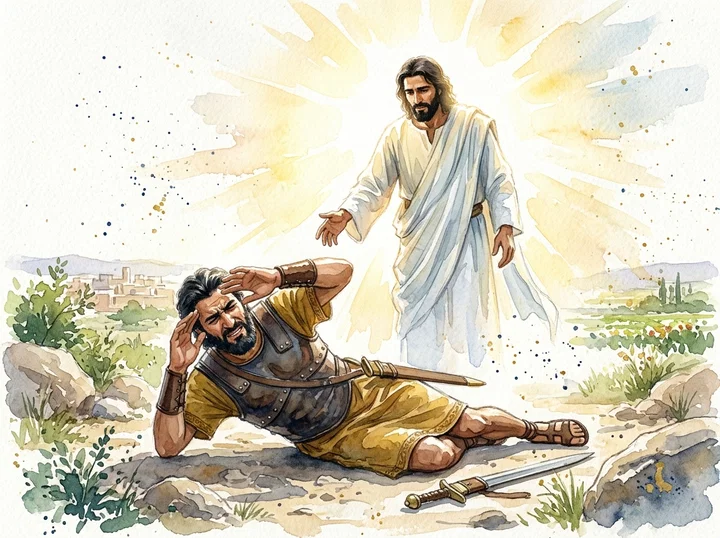
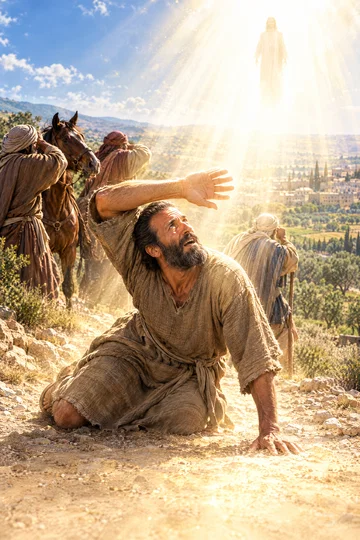
Cross-references 20 of 24
- Acts 9:4-5
And he fell to the earth, and heard a voice saying unto him, Saul, Saul, why persecutest thou me?
Jesus identifies himself to Saul and confronts him over his persecution.
- Acts 22:6-8
And it came to pass, that, as I made my journey, and was come nigh unto Damascus about noon, suddenly there shone from heaven a great light round about me.
Paul recounts Jesus appearing and identifying himself as the one Saul persecuted.
- 1 Corinthians 15:8
And last of all he was seen of me also, as of one born out of due time.
Paul says the risen Christ appeared to him.
- 1 Corinthians 9:1
Am I not an apostle? am I not free? have I not seen Jesus Christ our Lord? are not ye my work in the Lord?
Paul cites seeing Jesus as evidence of his apostleship.
- Acts 9:17
And Ananias went his way, and entered into the house; and putting his hands on him said, Brother Saul, the Lord, even Jesus, that appeared unto thee in the way as thou camest, hath sent me, that thou mightest receive thy sight, and be filled with the Holy Ghost.
Ananias affirms that Jesus appeared to Saul and sent him.
- Acts 22:14
And he said, The God of our fathers hath chosen thee, that thou shouldest know his will, and see that Just One, and shouldest hear the voice of his mouth.
Recounts Jesus appearing to Saul.
- Acts 9:27
But Barnabas took him, and brought him to the apostles, and declared unto them how he had seen the Lord in the way, and that he had spoken to him, and how he had preached boldly at Damascus in the name of Jesus.
Barnabas reports Saul’s encounter with the risen Lord.
- Acts 7:55-56
But he, being full of the Holy Ghost, looked up stedfastly into heaven, and saw the glory of God, and Jesus standing on the right hand of God,
Stephen sees the glorified Son of Man whom Saul recognizes as Jesus.
- Acts 26:23
That Christ should suffer, and that he should be the first that should rise from the dead, and should shew light unto the people, and to the Gentiles.
Christ’s suffering, resurrection, and light fulfill what Moses and the prophets foretold.
- Acts 26:28
Then Agrippa said unto Paul, Almost thou persuadest me to be a Christian.
Agrippa responds to Paul’s testimony about Jesus, and Paul urges him to believe in Christ.
- Acts 9:15
But the Lord said unto him, Go thy way: for he is a chosen vessel unto me, to bear my name before the Gentiles, and kings, and the children of Israel:
Paul is chosen to bear Jesus’ name before kings.
- Acts 22:4
And I persecuted this way unto the death, binding and delivering into prisons both men and women.
Paul describes persecuting Christians, which Jesus identifies as persecution of himself.
- Acts 9:6
And he trembling and astonished said, Lord, what wilt thou have me to do? And the Lord said unto him, Arise, and go into the city, and it shall be told thee what thou must do.
Jesus commands Saul to go into the city.
- Acts 9:20
And straightway he preached Christ in the synagogues, that he is the Son of God.
Saul begins preaching that Jesus is the Son of God.
- Galatians 1:15-16
But when it pleased God, who separated me from my mother’s womb, and called me by his grace,
Paul describes God’s call to preach Christ among the Gentiles.
- Galatians 1:12
For I neither received it of man, neither was I taught it, but by the revelation of Jesus Christ.
Paul received the gospel through Jesus’ revelation.
- Acts 26:19
Whereupon, O king Agrippa, I was not disobedient unto the heavenly vision:
Paul obeyed the heavenly vision.
- Acts 26:20
But shewed first unto them of Damascus, and at Jerusalem, and throughout all the coasts of Judæa, and then to the Gentiles, that they should repent and turn to God, and do works meet for repentance.
The voice sent Paul to preach repentance everywhere.
- Galatians 1:1
Paul, an apostle, ( not of men, neither by man, but by Jesus Christ, and God the Father, who raised him from the dead;)
Paul’s apostleship came from Jesus Christ, not from people.
- Hebrews 12:2
Looking unto Jesus the author and finisher of our faith; who for the joy that was set before him endured the cross, despising the shame, and is set down at the right hand of the throne of God.
Both texts identify Jesus and describe his suffering.
Commentary
Each commentary is drawn from primary sources: the writings of Ellen G. White and Adventist pioneers and periodicals. Each commentary is separate. Its own words are not a quotation; follow the references to read the source passages.
Ellen G. White
19 sources
At midday near Damascus a light from heaven above the brightness of the sun left Saul prostrate while Jesus of Nazareth, the crucified and risen Christ enthroned in divine glory, spoke to him.RH Nov 16, 1911RH Mar 16, 19113SP 306.2–307.1 In saying whom thou persecutest He identified Himself with His suffering people, so that in persecuting and seeking to destroy His followers Saul struck directly against the Lord of heaven Himself.Lt 30, 1895, par. 17–19ST May 29, 1884SLP 256.1 The glory at first filled Paul with terror, then poured light into his mind to show the ignorance and error of his former life and the truth of the crucified, risen and ascended Messiah, making him from that hour a new man and a sincere believer in Jesus as the world's Redeemer.AA 436.1ST May 29, 1884SLP 256.1 By these words Christ appointed him to rise and serve as a minister and witness, sent to Jews and Gentiles under Jesus' authority to open their eyes and turn them from darkness to light and from the power of Satan unto God, that they might receive forgiveness and inheritance among the sanctified by faith.RH Nov 16, 1911Lt 30, 1895, par. 17–19SLP 257.2–258.1 Paul afterward related his conversion before kings, governors and nobles, and his testimony about Jesus helped convince listeners that Jesus was the Son of God and left them without excuse.EW 172.3GC88 207.3SG1 91.2
Vision Setting and Meaning
This answer belongs to Paul's defense of his faith before King Agrippa and a gathered company of officials, prominent citizens, rulers and nobles.ST May 29, 1884AA 433.1 That hearing was made possible by the delay before his voyage to Rome.AA 433.1 The words themselves were spoken at the gate of Damascus, near Damascus at midday.RH Nov 16, 1911RH Mar 16, 1911 Then a light from heaven above the brightness of the sun left Saul prostrate.RH Mar 16, 19113SP 306.2–307.1 His companions heard a voice without seeing anyone or understanding what was said.3SP 306.2–307.1
The speaker is Jesus, the Son of God, Jesus of Nazareth, the crucified and risen Christ enthroned in divine glory.Lt 30, 1895, par. 17–19SLP 257.2–258.1AA 436.1ST May 29, 1884RH Nov 16, 1911 He is the same who walked the streets of Jerusalem, died on Calvary, broke the bands of death and ascended to heaven triumphant over death and the grave.RH Nov 16, 1911RH Nov 16, 1911 He is the long-looked-for Messiah, the Consolation and Redeemer of Israel.RH Nov 16, 1911RH Mar 16, 1911 He is the divine Son who appeared as a man in fulfillment of every specification of Moses and the prophets and endured the cross to redeem a lost world.RH Nov 16, 1911 The vision displayed divine glory, leaving no doubt in Saul's mind that the glorious Being before him was the Crucified One.ST May 29, 1884RH Mar 16, 1911
By saying whom thou persecutest, Christ identifies Himself with His suffering people in the person of His saints.Lt 30, 1895, par. 17–19RH Mar 16, 19113SP 306.2–307.1 In persecuting, despising and seeking to destroy His followers, Saul struck directly against the Lord of heaven.SLP 256.1RH Nov 16, 1911RH Mar 16, 1911 In falsely accusing and testifying against them, he falsely accused the Saviour of the world and testified against Him.RH Mar 16, 1911 What Paul saw and heard ended his unbelief that Christ should rise from the dead.RH Nov 16, 1911 For he looked upon and talked with the risen Saviour as truly as Cephas, James, John and the other disciples had, and could therefore testify that Christ had risen.RH Nov 16, 1911SLP 257.2–258.1
Transformation Commission and Example
The glory revealed was divine, with Jesus enthroned in it as the One Paul had despised and sought to destroy in His followers, and the sight first struck Paul with terror and unspeakable terror.AA 436.1ST May 29, 1884SLP 256.1RH Nov 16, 1911 Light poured into his mind to expose the ignorance and error of his former life, showing that his supposed service to God had been serving Satan, and convicting him that the claims of the disciples and the testimony of Stephen concerning the crucified, risen and ascended Messiah foretold by the prophets were true.RH Mar 16, 19113SP 306.2–307.1 By transforming mercy that terror was turned into his greatest consolation and source of comfort, making him from that hour a new man, a penitent, sincere and fervent believer in Jesus as the world's Redeemer, called to be an apostle by God's will.AA 436.1ST May 29, 1884SLP 256.1RH Nov 16, 1911
The words belong to Christ's appointment of Saul to rise and serve as minister and witness both of what he had seen and of what Christ would yet show him, delivered from the people and the Gentiles to whom Christ sent him under Jesus' authority.Lt 30, 1895, par. 17–19 He was sent to open their eyes and turn them from darkness to light and from the power of Satan unto God, that they might receive forgiveness of sins and inheritance among those sanctified by faith in Jesus.Lt 30, 1895, par. 17–19SLP 257.2–258.1 Commanded to proclaim the gospel of a risen Saviour, whom he had looked upon and talked with as truly risen, he could not disobey, so in Damascus, in Jerusalem, throughout all Judea and in regions afar off he bore witness of Jesus the crucified to Jews and Gentiles.RH Nov 16, 1911SLP 257.2–258.1 He called all classes to repentance and faith, to repent and turn to God with confession, to do works meet for repentance, and to a changed life, and that same work of opening eyes and turning sinners from darkness to light and from Satan's power to God unto repentance, confession, forgiveness and inheritance is given to every minister.RH Nov 16, 1911Lt 30, 1895, par. 17–19SLP 257.2–258.1
Paul afterward related this account of his conversion before kings, governors, rulers and nobles, and his testimony about Jesus and His power to convert a persecutor into a preacher helped convince listeners that Jesus was the Son of God, leaving them without excuse.EW 172.3SG1 91.2 His imprisonment thus brought the message of Jesus before powerful hearers, just as the confession of the Reformation was later proclaimed before the princes of the empire.GC88 207.34SP 167.1
The answer itself shows Jesus addressing Paul with courtesy even though Paul had persecuted Him, extending courtesy even to a persecutor.MYP 421.2GW92 431.2GW 123.2 Paul's speech before Agrippa likewise illustrates that same spirit of dignified, true courtesy joined with persuasive eloquence.MYP 421.2GW92 431.2GW 123.2MH 489.5 True Christian courtesy of this kind comes from kindness of heart, not merely from formal politeness.GW92 431.2MH 489.5
Sources
Pioneers and periodicals
44 sources
On the road to Damascus Saul asked who was speaking to him from heaven and was answered that it was Jesus whom he was persecuting.ST Mar 10, 1914RH Jan 7, 1858ST May 5, 1898ST Aug 14, 1893 The speaker was Jesus of Nazareth Himself, who had died on Calvary, risen, ascended to heaven, and now appeared in unveiled divine glory in a midday light above the brightness of the sun.RH Nov 16, 1911RH Nov 16, 1911RH Mar 16, 1911ST Aug 25, 1898 His answer shows that to imprison His followers and put them to death is to persecute Jesus Himself in heaven and to strike directly against the Lord of heaven.ST Mar 10, 1914ST May 29, 1884RH Mar 16, 1911RH Jan 7, 1858ST May 17, 1899 What Paul saw and heard ended his unbelief and hatred, convicted him as a sinner, made him a new man changed from persecutor to devoted follower, and called him without human suggestion to be a minister, witness and apostle of the risen Saviour.RH Nov 16, 1911ST May 29, 1884RH Jan 7, 1858ST Mar 14, 1878ST Feb 26, 1885 His commission was especially to the Gentiles to open their eyes and turn them from darkness to light and from Satan's power to God, marking in A.D. 34 the beginning of the commissioned work for the Gentiles and the end of the period specially assigned to the Jews.ST Feb 10, 1914ST Aug 14, 1893ST May 11, 1876ST Jan 18, 1883ST Oct 29, 1885
Setting Before Agrippa
The verse belongs to Paul's defense and testimony before King Agrippa at Caesarea, where Paul defended himself and set forth his experience.ST May 29, 1884ST Jan 8, 1885RH Oct 22, 1872 It was spoken before a gathered company of officials and prominent citizens, with kings and nobles present.ST May 29, 1884RH Oct 22, 1872 His two years of imprisonment at Caesarea gave him opportunity to preach the gospel in that setting before kings and nobles.RH Oct 22, 1872
The verse is part of Paul's detailed retelling of what happened on the Damascus road, recording his asking who spoke to him and receiving the answer identifying the speaker as Jesus whom he persecuted.ST Jun 9, 1898ST May 5, 1898 It stands in Acts 26, a chapter wholly given to that testimony of his conversion.ST Jun 9, 1898 That retelling is counted as one of several times Paul repeats the story of his conversion in Acts, showing the conversion story was told repeatedly.ST Jun 9, 1898ST May 5, 1898 It belongs also to the closing chapters recording Paul's wonderful experience in Acts 22-28.ST Nov 8, 1910 In that setting the verse stands as Paul's appeal to the king and tells the burden of his preaching, containing striking statements to be quoted.ST Jun 9, 1898ST Jul 21, 1909
Voice on Damascus Road
The verse records Paul at the gate of Damascus asking who spoke to him in the heavenly vision and receiving the audible answer identifying the speaker as Jesus whom he persecuted.RH Jan 7, 1858ST May 5, 1898ST Aug 14, 1893RH Oct 27, 1868 It belongs to Paul's detailed retelling of his conversion before Agrippa, showing that the conversion story was told repeatedly.ST May 5, 1898ST Aug 14, 1893 The encounter was a vision in which the Lord identified Himself to Paul, and it began his calling as minister and witness.RH Jan 7, 1858ST Aug 14, 1893
The one speaking is Jesus of Nazareth, the same who walked the streets of Jerusalem, died on Calvary, broke the bands of death, and ascended to heaven.RH Nov 16, 1911RH Nov 16, 1911RH Mar 16, 1911 He remains in heaven the same personal Jesus the disciples had seen and learned to love on earth, speaking from heaven very soon after the resurrection.RH Nov 16, 1911 He is the Messiah of prophecy, the divine Son of God who appeared as a man among men in fulfillment of every specification of Moses and the prophets, endured the cross despising the shame to redeem a lost world, and ascended triumphant over death and the grave.RH Nov 16, 1911RH Mar 16, 1911
He appeared to Saul after His ascension in a light from heaven at midday above the brightness of the sun, shining round about Saul and those journeying with him.RH Mar 16, 1911 The light was so great that all fell to the earth, and Paul fell prostrate to the ground before the glorious Redeemer revealing His presence.RH Mar 16, 1911ST Aug 25, 1898 Jesus Christ Himself spoke with His own voice to Saul at midday near Damascus in that light.RH Mar 16, 1911
That light was the unveiled divine glory Jesus had with the Father before the world was. While on earth His divine glory was laid aside and concealed so He could come close to men, and was not seen except at the transfiguration, because men could not behold it and live. Mortal man cannot endure the unveiled glory of God, and even righteous men fall prostrate when Christ reveals Himself to them in it.ST Aug 25, 1898
The vision displayed Christ enthroned in divine glory as the crucified and risen Christ.RH Nov 16, 1911ST May 29, 1884RH Nov 16, 1911 The glorious Being before Saul was revealed as Jesus, the Son of God, the Crucified One, Jesus of Nazareth, the long-looked-for Messiah, the Consolation and Redeemer of Israel, leaving no doubt in Saul's mind.RH Nov 16, 1911RH Mar 16, 1911 The heavenly figure was Jesus, the one whose followers Paul was persecuting, and the display of His divine glory first filled Paul with terror but became a source of consolation.ST May 29, 1884RH Nov 16, 1911
This post-ascension appearance to Saul near Damascus was not on the first day of the week, for his journey from Jerusalem would otherwise have placed him on the road over the Sabbath.ST Apr 13, 1882 It was not one of Christ's two public manifestations to the world.RH Aug 31, 1869 His appearances to Saul and others do not conflict with the Bible's description of His future coming as His second public appearing.RH Aug 31, 1869
Persecuting Jesus Himself
The voice that answered Saul on the road to Damascus identifies the speaker addressed as Lord as Jesus himself.ST Mar 10, 1914RH Jan 7, 1858ST May 17, 1899 Jesus regards persecution of His followers as persecution of Himself, so that Saul's attack on His followers was an attack on Jesus Himself.ST Mar 10, 1914RH Jan 7, 1858ST May 17, 1899 Although Jesus was in heaven, Saul by imprisoning Christians and delivering them to death was persecuting Jesus Himself.RH Jan 7, 1858ST May 17, 1899 This encounter was part of the revelation through which Jesus dealt with Paul and began his calling as minister and witness.RH Jan 7, 1858
In persecuting the followers of Jesus, Saul struck directly against the Lord of heaven.ST May 29, 1884RH Mar 16, 1911ST Feb 26, 1885 In falsely accusing them and testifying against them, he falsely accused and testified against the Saviour of the world.RH Mar 16, 1911 Christ thereby identifies Himself with His suffering people, and His answer makes clear that every effort to stop the gospel injures the opposer himself.ST Mar 10, 1914RH Mar 16, 1911
Conversion Commission and Witness
What Paul saw and heard on the Damascus road ended his unbelief that Christ should rise from the dead and his stubborn hatred of Jesus and His followers, for he had seen the risen Saviour as truly as Cephas, James, John and the other disciples had.RH Nov 16, 1911ST Mar 14, 1878ST Feb 26, 1885 The personal appearing made him a witness to the resurrection as the other apostles were, and changed him from a persecutor into a believer and messenger who knew that Jesus had risen from the dead.ST Mar 14, 1878ST Feb 26, 1885 The vision at first filled him with terror and afterward became his greatest consolation.ST May 29, 1884RH Nov 16, 1911 It poured light into his mind to reveal the ignorance and error of his former life, and convicted him that the disciples' claims and Stephen's testimony about the crucified, risen and ascended Messiah foretold by the prophets are true.RH Mar 16, 1911
The meeting fully convinced Paul as chief of sinners that he was a sinner before God, bringing the covenant of ten commandments to him.RH Oct 27, 1868 By the commandment sin revived, he was slain and died to sin, lying three days without sight and neither eating nor drinking while praying.RH Oct 27, 1868 Then Ananias came, his sight was restored, he was filled with the Holy Ghost, baptized, strengthened, and straightway preached Christ as the Son of God.RH Oct 27, 1868 From that hour he became a new man, a penitent believer changed from persecutor to devoted follower through transforming mercy.ST May 29, 1884RH Nov 16, 1911 It was a spiritual earthquake followed by resolute attachment and sincere and fervent belief in Jesus of Nazareth as the world's Redeemer.RH Nov 16, 1911
The encounter was part of Saul's direct, impressive call without human suggestion to devote his life to the gospel ministry as minister, witness and apostle.RH Jan 7, 1858ST Aug 14, 1893 He was sent by Jesus though he had not been with Him on earth as the twelve had, receiving his call and ministry directly from heaven.RH Feb 11, 1862ST Oct 17, 1895 The call laid hold of conscience with an unyielding grip until surrender and promised obedience to the heavenly calling, and laid on him woe if he preached not the gospel. The voice commanded him to proclaim the gospel of a risen Saviour and made him a personal witness to the resurrection as required for apostleship, which he could not disobey.RH Nov 16, 1911RH Dec 7, 1869ST Oct 17, 1895 So in Damascus, in Jerusalem, throughout all Judea and in regions afar off he bore witness of Jesus the crucified, calling all classes to repent and turn to God and do works meet for repentance.RH Nov 16, 1911
His commission was especially to the Gentiles, to open their eyes and turn them from darkness to light and from Satan's power to God so they could be saved.ST Feb 10, 1914ST Aug 14, 1893 He preached Jesus first to fellow Jews and then to Gentiles, keeping that purpose in view even while imprisoned and on trial.ST Oct 29, 1885 Everyone who receives the gospel is likewise privileged and called to carry its light to others.ST Feb 10, 1914 The change marked the turning point of his life, not a rejection of his fathers' faith, for he accepted Jesus in keeping with Israel's hope and promises.ST Jun 24, 1886 He preached Christ's suffering, resurrection and light for Jews and Gentiles as Moses and the prophets foretold, and often recalled his call as comfort and assurance while enduring great trials of suffering and affliction.ST Jun 24, 1886
Time Prophecy and Doctrine
The conversion and commission to the Gentiles belongs to A.D. 34, marking the beginning of the commissioned work for the Gentiles and the end of the period specially and exclusively assigned to the Jews.ST May 11, 1876ST Jan 18, 1883ST Aug 8, 1878RH Mar 10, 1874 At his conversion he was told to begin that Gentile work then, so his Gentile mission did not begin with his later statement in Acts 18:6.RH Dec 19, 1871
The meeting on the road to Damascus brought the covenant of ten commandments to him as chief of sinners going to destroy the people of God, when Jesus spoke in an audible voice identifying Himself as Jesus whom he persecuted.RH Oct 27, 1868 By the commandment sin revived, he was slain and died to sin, lying three days without sight and neither eating nor drinking while praying, until Jesus sent Ananias, his sight was restored, he was filled with the Holy Ghost, arose and was baptized, received meat and was strengthened, stayed with the disciples at Damascus, and straightway preached Christ as the Son of God.RH Oct 27, 1868 The verse means passing from death unto life, being dead indeed unto sin but alive unto God through Jesus Christ.RH Oct 27, 1868 It shows that the law of ten commandments, which is holy and just and good, slays all under the gospel who violate its precepts and then makes them alive unto God through Jesus Christ.RH Oct 27, 1868
The discourse before Agrippa appeals to the fulfillment of the prophecies concerning the Messiah in the life and work of Jesus as the strongest evidence of His divinity and the truth of the claim that He is the Messiah, showing the relation of prophecy to the gospel.ST Jan 24, 1906
Pattern for Proclamation
Paul's retelling of his conversion before Agrippa shows that a person's conversion story manifests God's power and is itself a way of preaching the gospel.RH Jul 31, 1900 As the Samaritan woman used her personal experience with Christ to draw others to hear Him, so Paul used his own account to testify to the gospel.RH Jul 31, 1900ST Aug 6, 1896
His two years of imprisonment at Caesarea gave opportunity to preach the gospel before kings and nobles.RH Oct 22, 1872 Being brought before governors and kings and the Roman emperor helped bring God's truth to people of influence.ST Oct 12, 1904 Through Paul testifying about Jesus before a ruler, God bore witness to the Roman world and to the nations.ST Dec 29, 1887 Oppression thus compelled God's truth to those in power and compelled God's children to bear that message.ST Oct 12, 1904
Before Agrippa and Festus he spoke plainly rather than softening the message for his hearers.ST Mar 5, 1894 He did not treat all religions as equally true or aim merely to make people better adherents of their existing faiths, but sought to persuade them toward the gospel.RH Jul 28, 1910 Conscious of innocence, he stood with dignified composure and courage that the court's pomp did not intimidate.RH Oct 15, 1857 He fearlessly confronted Agrippa with the claims of prophecy and the judgment, asking whether he believed the prophets.RH Oct 15, 1857 His discourse appeals to the fulfillment of the prophecies concerning the Messiah in the life and work of Jesus as the strongest evidence of His divinity and Messiahship, showing the relation of prophecy to the gospel.ST Jan 24, 1906
That standing before a king is an example of courageous public witness, in which he proclaimed Christ and reasoned about righteousness, self-control, and coming judgment.ST Feb 14, 1884 The tribunal before Agrippa is a place where a decisive test of faith may occur, distinct from a minister's quiet study where he may also have to choose between truth and fearful silence.RH Sep 25, 1860
His masterly, tactful address before the haughty Roman king was marked throughout by the truest and broadest Christian courtesy, with gentle and kindly manner. His powerful reasoning made the king tremble while his gentleness melted the king's heart. This proves that mere logic and deep and forceful reasoning are of no avail without such courtesy. He was a very polite man, and the address gives the pattern of Christian courtesy to be taught to children.
He was just as sincere when he persecuted the church as when he made that mighty defense in Acts 26:1-29.RH Oct 24, 1912 That persecuting sincerity shows the danger of not knowing oneself as God sees one.RH Oct 24, 1912 One may think he is doing God service while only satisfying self, because Satan has drawn a curtain over the eyes so sin is not seen in its true light.RH Oct 24, 1912
Sources