Acts 9:6
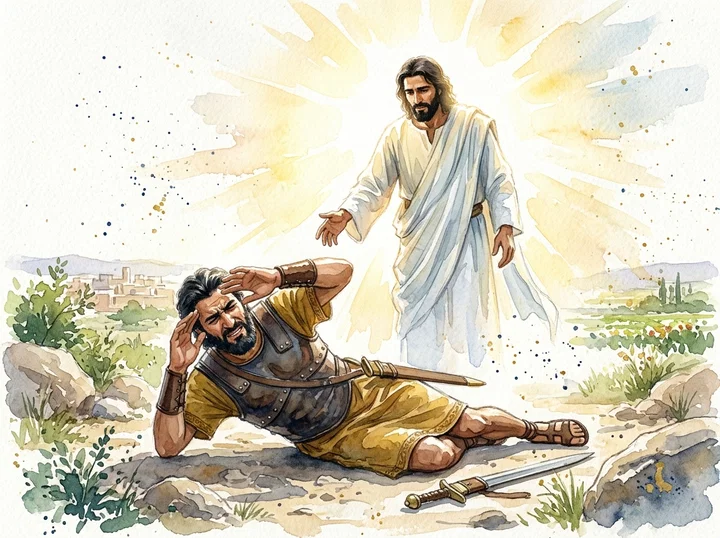
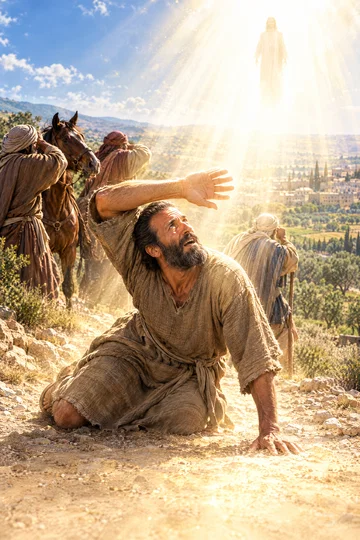
And he trembling and astonished said, Lord, what wilt thou have me to do? And the Lord said unto him, Arise, and go into the city, and it shall be told thee what thou must do.
Translations
And he trembling and astonished said, Lord, what will you have me to do? And the Lord said to him, Arise, and go into the city, and it shall be told you what you must do.
King James Version, KJV Cambridge Paragraph Bible
And he trembling and astonished said, Lord, what wilt thou have me to do? And the Lord said unto him, Arise, and go into the city, and it shall be told thee what thou must do.
And he trembling and astonished said, Lord, what wilt thou have me to do? And the Lord said to him, Arise, and go into the city, and it shall be told thee what thou must do.
Revised Version, American Standard Version
but rise, and enter into the city, and it shall be told thee what thou must do.
trembling also, and astonished, he said, 'Lord, what dost thou wish me to do?' and the Lord [said] unto him, 'Arise, and enter into the city, and it shall be told thee what it behoveth thee to do.'
But rise up and enter into the city, and it shall be told thee what thou must do.
But rise up, and enter into the city, and it shall be told thee what thou must do.
Berean Standard Bible, Majority Standard Bible
“ Now get up and go into the city, and you will be told what you must do.”
But rise up and enter into the city, then you will be told what you must do.”
But get up, and go into the town, and it will be made clear to you what you have to do.
He then both trembling and astonied, sayd, Lord, what wilt thou that I doe? And the Lord sayd vnto him, Arise and goe into the citie, and it shall be tolde thee what thou shalt doe.
Douay-Rheims (Challoner revision)
And he trembling and astonished, said: Lord, what wilt thou have me to do?
Pictures
Cross-references 20 of 71
- Acts 9:15-16
But the Lord said unto him, Go thy way: for he is a chosen vessel unto me, to bear my name before the Gentiles, and kings, and the children of Israel:
Ananias receives Christ’s direction to guide Saul into his calling and coming suffering.
- Acts 22:10
And I said, What shall I do, Lord? And the Lord said unto me, Arise, and go into Damascus; and there it shall be told thee of all things which are appointed for thee to do.
Paul asks what to do and receives Christ’s direction to go into Damascus.
- Acts 9:17-18
And Ananias went his way, and entered into the house; and putting his hands on him said, Brother Saul, the Lord, even Jesus, that appeared unto thee in the way as thou camest, hath sent me, that thou mightest receive thy sight, and be filled with the Holy Ghost.
Ananias fulfills Christ’s direction to Saul, restoring his sight and baptizing him.
- Acts 26:14-18
And when we were all fallen to the earth, I heard a voice speaking unto me, and saying in the Hebrew tongue, Saul, Saul, why persecutest thou me? it is hard for thee to kick against the pricks.
Paul recounts Christ confronting him and commissioning him to preach to the Gentiles.
- Acts 7:58-60
And cast him out of the city, and stoned him: and the witnesses laid down their clothes at a young man’s feet, whose name was Saul.
Stephen’s death left a lasting impression on Saul and preceded his conversion.
- Galatians 1:15-16
But when it pleased God, who separated me from my mother’s womb, and called me by his grace,
God called Paul by grace, revealed Christ to him, and sent him to preach among the Gentiles.
- Acts 8:1-4
And Saul was consenting unto his death. And at that time there was a great persecution against the church which was at Jerusalem; and they were all scattered abroad throughout the regions of Judæa and Samaria, except the apostles.
Persecution scattered believers, and Saul persecuted the church before his conversion.
- Acts 26:9
I verily thought with myself, that I ought to do many things contrary to the name of Jesus of Nazareth.
Paul recalls believing he should oppose Jesus before his conversion.
- Acts 9:20-22
And straightway he preached Christ in the synagogues, that he is the Son of God.
Saul’s conversion leads him to preach Jesus as the Son of God and confound his hearers.
- Acts 9:11
And the Lord said unto him, Arise, and go into the street which is called Straight, and enquire in the house of Judas for one called Saul, of Tarsus: for, behold, he prayeth,
Saul’s prayer follows his conversion, as the Lord directs Ananias to find him.
- Acts 22:16
And now why tarriest thou? arise, and be baptized, and wash away thy sins, calling on the name of the Lord.
Ananias tells Saul to arise, be baptized, and wash away his sins.
- Isaiah 6:8
Also I heard the voice of the Lord, saying, Whom shall I send, and who will go for us? Then said I, Here am I; send me.
Isaiah responds to the Lord’s call with readiness to be sent.
- Acts 22:21
And he said unto me, Depart: for I will send thee far hence unto the Gentiles.
The Lord directs Paul to leave Jerusalem and carry his message to the Gentiles.
- Acts 26:19
Whereupon, O king Agrippa, I was not disobedient unto the heavenly vision:
Paul says he obeyed the heavenly vision.
- 1 Samuel 3:9-10
Therefore Eli said unto Samuel, Go, lie down: and it shall be, if he call thee, that thou shalt say, Speak, LORD; for thy servant heareth. So Samuel went and lay down in his place.
Both express readiness to hear and obey the Lord’s direction.
- 1 Timothy 1:13
Who was before a blasphemer, and a persecutor, and injurious: but I obtained mercy, because I did it ignorantly in unbelief.
Paul recalls receiving mercy after persecuting the church in unbelief.
- Galatians 1:17
Neither went I up to Jerusalem to them which were apostles before me; but I went into Arabia, and returned again unto Damascus.
Paul recalls going to Arabia after his Damascus encounter.
- Galatians 1:13-14
For ye have heard of my conversation in time past in the Jews’ religion, how that beyond measure I persecuted the church of God, and wasted it:
Paul recalls his former persecution and zeal before his conversion.
- Philippians 2:13
For it is God which worketh in you both to will and to do of his good pleasure.
God works in people to will and act as they yield and obey.
- Acts 10:5-6
And now send men to Joppa, and call for one Simon, whose surname is Peter:
Cornelius is directed to Peter to learn what he must do.
Commentary part 1 of 3
Each commentary is drawn from primary sources: the writings of Ellen G. White and Adventist pioneers and periodicals. Each commentary is separate. Its own words are not a quotation; follow the references to read the source passages.
Ellen G. White
176 sources
Struck down by a light brighter than the midday sun on his way to arrest Christians at Damascus, Saul learned his persecuting was against Jesus Himself and in trembling surrender asked what his Lord wanted him to do, and was told to arise and go into the city where he would be told his duty.3SP 308.2ST Dec 12, 1878Ms 17, 1908, par. 18–28RH Mar 6, 1900Ms 8, 1900, par. 2–3
His question is complete surrender of the human will to God, abandoning his own plans to be led and obey without questioning whatever hardship follows.3SP 308.2Ms 17, 1908, par. 18–28RH Mar 6, 1900Lt 136a, 1898, par. 5–8Lt 60, 1897, par. 1–2
Though Christ Himself convicted and subdued him, He did not teach him all truth directly but sent him to learn it from the very disciples he had purposed to destroy, thereby sanctioning His organized church as His representative and channel of light.ST Nov 10, 1898AC1 45.1SLP 28.1–2Lt 54, 1874, par. 81–86Lt 54, 1874, par. 69–75
That same question is the daily, morning and hourly prayer of every believer, minister, youth and worker, asking for light and orders with whole-hearted, teachable humility.Ms 99, 1893, par. 32Lt 43, 1902, par. 17Lt 35, 1903, par. 11–12CH 423.4Lt 24a, 1882, par. 15
The answer gives each person a special work that none else can do, to go into all the world preaching Christ, turning from darkness to God, and living no longer to self but to Him who died.Lt 9, 1873, par. 15–16Ms 139, 1898, par. 92–94Lt 154, 1897, par. 9–10AA 436.3SLP 257.2–258.1
Road to Damascus Encounter
Saul was on his way to Damascus to arrest Christians, to seize men and women believers, imprison them and put them to death.RH Mar 6, 1900Ms 46, 1900, par. 16–21Ms 8, 1900, par. 2–3Lt 54, 1874, par. 66–68AA 112.1 He acted as a powerful Jewish leader, a zealous Pharisee, a rabbi trained by Gamaliel and a member of the Sanhedrin, who consented to Stephen's stoning and entered houses to seize his victims.RH Mar 6, 1900Lt 54, 1874, par. 66–68AA 112.1 A light from heaven above the glory of the midday sun shone round about him, and Jesus confronted him as the one he was persecuting.RH Mar 6, 1900Ms 8, 1900, par. 2–3Lt 54, 1874, par. 66–68 He fell to the earth, was struck blind, arose blind and was led by the hand into Damascus helpless and dependent on his companions.RH Mar 6, 1900Ms 8, 1900, par. 2–3SLP 25.3–26.13SP 310.2–311.1AC1 50.1–2
Trembling and astonished, Saul recognized the speaker as Jesus of Nazareth, the long-awaited Messiah, Redeemer of Israel and of the world, Consolation of Israel, Son of God and Prince of Life.3SP 308.2ST Dec 12, 1878Lt 54, 1874, par. 66–68AA 117.1–2 In that recognition he asked, Lord, what wilt thou have me to do.3SP 308.2ST Dec 12, 1878Ms 17, 1908, par. 18–28Ms 95, 1899, par. 3–5 He entered Damascus in a state opposite to what he expected, instead of honored and in control, with his plans to seize believers collapsed.SLP 25.3–26.13SP 310.2–311.1 Remorseful, fearful and uncertain what the Lord would do with him, he came in humility and uncertainty to fast and pray for three days before receiving instruction.SLP 25.3–26.13SP 310.2–311.13T 430.3–431.1
The encounter stopped Saul's persecution, arrested his mad yet honest career, overturned stubborn unbelief, and marked the beginning of his conversion from fierce opponent to disciple, witness and apostle.Ms 95, 1899, par. 3–5AA 112.2–113.1ST Jun 23, 18873SP 320.1SG1 91.2 Once arrested and convicted he immediately abandoned his evil course and professed faith in Jesus, becoming a preacher of Jesus as the Son of God.3SP 320.1SG1 91.2 From a determined enemy of the gospel he became Paul, a devoted minister of Christ and chosen messenger to the Gentiles.ST Jun 23, 1887ST Oct 25, 1905 His change of faith was caused not by impulse or fanaticism but by overwhelming evidence.SLP 33.1
His conversion is to be studied by tracing out his whole later life together with studying the life of Jesus Christ and beholding the shame of Christ crucified as a criminal.Ms 91, 1910, par. 6
Saul's Question and Surrender
Trembling and astonished, Saul yielded and asked for direction, and was commanded to get up and go into the city where he would be told what he must do.3SP 308.2Ms 17, 1908, par. 18–28RH Mar 6, 1900Ms 95, 1899, par. 3–5 His question expresses complete surrender of the human will to the divine will, abandoning his own plans, yielding to be led, and asking what the Lord wants done with trembling submission.3SP 308.2Ms 17, 1908, par. 18–28Ms 96, 1900, par. 18–19Ms 95, 1899, par. 3–5 Receiving Christ as Captain means such complete giving up of the human will, bringing prompt and cheerful obedience to His commands without questioning, bringing all activities and business arrangements into perfect accord with the Lord's commands and the laws of His kingdom.Ms 96, 1900, par. 18–19Ms 82, 1900, par. 16–17 Obedience is still required even when the command is stern and startling like the command to offer Isaac, and zeal for the advancement of His kingdom marks faithful subjects of the cross whom God can trust as His representatives because they obey implicitly.Ms 96, 1900, par. 18–19Ms 82, 1900, par. 16–17 Like Saul, willing response means asking what God would have us do and offering ourselves with powers that belong to God yielded to the control of His Spirit for whatever service and message of mercy He chooses.ST May 29, 1884ST Feb 3, 1904
On the road to Damascus where he was going to arrest Christians, Saul had been trained by Gamaliel and was a rabbi, statesman and member of the Sanhedrin zealous to suppress Christianity, consenting to the stoning of Stephen and entering houses to imprison men and women.RH Mar 6, 1900 Stopped by a light from heaven, fallen to the earth, confronted by Jesus whom he was persecuting, struck blind and led by the hand into Damascus, he recognized Jesus as the long-awaited Messiah, the long-looked-for Messiah, the Consolation and Redeemer of Israel, and his encounter stopped his persecution and marked the beginning of his conversion when being converted he was called Paul and joined the disciples as one of the chief apostles.3SP 308.2RH Mar 6, 1900Ms 95, 1899, par. 3–5SLP 23.2 A brightness above the glory of the midday sun shone around him and Jesus, the name above all others which he hated and despised, revealed Himself to arrest his mad yet honest career in order to make this most unpromising instrument a chosen vessel to bear the gospel to the Gentiles.Lt 54, 1874, par. 66–68AC1 44.1–2 Though the glory of heaven felled him to the earth, it did not exalt him.Lt 54, 1874, par. 66–68
He had conscientiously done many things contrary to the name of Jesus of Nazareth, and in his zeal had been a persevering, earnest persecutor of the church of Christ, with deep and strong conviction of his duty to exterminate the alarming, everywhere prevailing doctrine that Jesus was the Prince of Life.Lt 54, 1874, par. 66–68AC1 44.1–2 He verily believed that belief in Jesus made of none effect the law of God, the religious service in sacrificial offerings, and the rite of circumcision which had in all past ages received the full sanction of God, that faith in Jesus repudiated the law and offerings, that Jesus disregarded the law and taught it was now of no effect.Lt 54, 1874, par. 66–68AC1 44.1–2 The miraculous revelation brought light into the darkened chambers of his mind with marvelous heavenly light, showing that Jesus of Nazareth whom he was arrayed against is indeed the Redeemer of the world, and overwhelmed by guilt in opposing Him he perceived his mistaken zeal and cried out asking the Lord what He will have him to do.AC1 45.1Lt 54, 1874, par. 66–68AC1 44.1–2 His surrender was turning with penitence and the meekness of a learner, overcome and brought to penitence by conviction of mind and heart.AC1 45.1AC1 44.1–2
Christ Himself does the work of revelation and conviction, astonishing and subduing, yet He does not then and there inform him of the work assigned him nor at once restore the sight taken by that illumination, but sends him for instruction to learn his duty and the truth from those God ordained to teach, even the very disciples he had so bitterly persecuted and purposed to destroy who become his instructors in the religion he had despised and persecuted.AC1 45.1AC1 44.1–2 By this He sanctions the authority of His organized church as His representative on earth and places the repentant sinner in connection with His representatives, reserving to the church the work of directing the repentant sinner in the way of life, though all blessings flow from Christ.AC1 45.1 True faith asks the Lord what He would have it do and is ready to obey the path He marks out and to do whatever work God gives when He makes the way clear, whatever hardship or sacrifice follows.Lt 136a, 1898, par. 5–8ST Feb 3, 1904CT 183.1 It is the earnest question of one who has turned to the Lord in contrition and surrendered the will to God, continuing that surrender when self battles for supremacy, being ready to understand the message when God calls to leave ordinary work as Elisha left his oxen at Elijah's call, and laboring to be approved unto God with the eye single to His glory, going forward from victory to victory under the working of the Holy Spirit.Lt 136a, 1898, par. 5–8Lt 60, 1897, par. 1–2 As a willing servant and model prayer for Christians, it means seeking the Spirit's influence and relying on God for strength, with faithful performance of humble daily duties preparing for further service.ST Feb 3, 1904
After Saul recognizes the Lord's authority, he is given a definite task to rise, go into the city, and receive further instructions there, for God gives people work to do and calls them to obey the light they have received.Lt 135, 1898, par. 11–12ST Feb 12, 1894ST Jun 4, 1912 Divine light and direction do not replace a person's willing cooperation, and the light and evidence he received with heavenly light flashing all about him did not by itself break the bewitching power of falsehood and the spell of the world's deception nor do his part for him.ST Feb 12, 1894Lt 135, 1898, par. 6–102MR 34.3–35.3 Saul had to act in obedience to the divine command, surrendering the will to God and acting on His direction, inclining the heart to do God's will and taking up God's service, accepting the light, arousing the energies of the will, acknowledging righteousness and truth, and cooperating with the heavenly ministrations by choosing to follow His direction and relying on the gracious influence already given, or there is no conversion.ST Feb 12, 1894ST Jun 4, 19122MR 34.3–35.3 More light would be useless if they refused to act, for the light and evidence would have been useless if he refused to yield his will to God.Lt 135, 1898, par. 11–12ST Jun 4, 1912Lt 135, 1898, par. 6–10 If a sinner or backslider settles in disobedience and sin, the light shines in vain, and a thousandfold more light and conviction would accomplish nothing, because God has already given sufficient evidence.2MR 34.3–35.3
Order to Enter the City
Trembling and astonished, Saul recognized the speaker as Jesus of Nazareth, the long-awaited Messiah and Redeemer of Israel, and asked what he should do, and Jesus answered by commanding him to arise and go into the city, into Damascus, where it would be told him what he must do.3SP 308.2ST Dec 12, 1878Ms 17, 1908, par. 18–28 The command to go followed his surrender and began his obedience, giving him work to carry out rather than then telling him his assigned work.Ms 17, 1908, par. 18–28ST Nov 10, 1898AA 112.2–113.1AC1 39.1–40.1 Though He could have done so, Christ did not at once heal his blindness from the heavenly light, nor forgive his sins and tell him his duty and mark out his future course directly.ST Nov 10, 1898 His duty was to be taught through Christ's disciples, to learn the Christian faith from the very disciples he had persecuted and purposed to destroy.ST Nov 10, 1898
The command to go into the city began Saul's new course of service.Ms 17, 1908, par. 18–28AA 112.2–113.1AC1 39.1–40.1 He was to receive instruction and move understandingly, to be tested in fasting and prayer, to take the steps necessary in conversion, to make confession to the men whose destruction he had premeditated, and to unite himself to the people he had despised.ST Nov 10, 1898 In uncertainty and humility he fasted and prayed for three days before receiving instruction through Ananias, one of the people he had persecuted.3T 430.3–431.1 Thus his conversion began with obedience to that direction and would not be an experience independent of the church recently organized on earth through which Christ's power and mercies were to flow.Ms 17, 1908, par. 18–28ST Nov 10, 18983T 430.3–431.1
The answer carries Christ's likening of Saul's persecuting of Christ's followers to kicking against the pricks, meaning it is impossible for any man to stay the onward progress of Christ's truth, which will march on to triumph and victory.SLP 23.2 Every effort to stop it only injures the opposer, and the persecutor in the end suffers a thousandfold more than those he persecuted, while his own heart condemns him for having kicked against the pricks.3SP 308.2SLP 23.2 The command proves that all heaven is interested in the believing church of God and that God will open ways before those who put their trust in Him.Ms 8, 1900, par. 2–3 It proves there is an observer in heaven of all that people do, who works to preserve His people and to open the way before His disciples, for Christ who so worked to arrest Saul on the road to Damascus when he was going full of zeal to take men and women believers and punish them with imprisonment and death still lives and is the same today in power as when He worked with the apostles.Ms 8, 1900, par. 2–3Ms 57, 1909, par. 7–9
Christ's Use of the Church
Christ Himself did the work no man could do, revealing truth, convicting of sin, astonishing, confounding and wholly subduing Saul, yet He deliberately did not then tell him the work assigned to him, forgive his sins, heal his blindness from the heavenly light, or teach him all lessons of truth personally.ST Nov 10, 1898Lt 54, 1874, par. 69–75AA 120.3–121.1 When Saul asked what he must do, the answer was to arise and go into the city, into Damascus, where it would be told him what he must do.ST Nov 10, 1898AC1 45.1Lt 54, 1874, par. 69–75 He was sent to learn the Christian faith from the very disciples he had been bitterly persecuting and purposing to destroy, so that he would receive instruction and move understandingly, be tested in fasting and prayer, and for three days in uncertainty and humility fast and pray before receiving instruction.ST Nov 10, 1898Lt 54, 1874, par. 69–753T 430.3–431.1 The revelation and conviction came from Christ, while the disciples were to help the penitent Saul understand and follow God's will.SLP 28.1–2AA 120.3–121.1
By this Christ gave authority and sanction to His organized church, placing the repentant sinner in connection with His representatives on earth and His agencies in the church for further knowledge of duty.AC1 45.1Lt 54, 1874, par. 69–75AA 120.3–121.1 He sanctions the authority of His organized church as His representative on earth, His organized body on earth, the channel of communication and light to the world and of salvation, through which His power and mercies were to flow.ST Nov 10, 1898AC1 45.1Lt 54, 1874, par. 81–86 He directs every repentant sinner to learn duty and truth from those God ordained to teach, to His appointed representatives who teach the truth and guide in the way of life, rather than claiming religious experience and light independent of the church.AC1 45.1SLP 28.1–2Lt 54, 1874, par. 81–86 Christ does not sanction religious experience and light independent of His organized and acknowledged church where He has a church, but directs sinners to the church as the appointed channel of light and instruction and the appointed means for enlightenment and salvation.Lt 54, 1874, par. 81–863T 433.115MR 131.1–3 Conversion is thus not an experience independent of the recently organized church, but dependent on union with and learning from those God ordained to teach.ST Nov 10, 1898Lt 54, 1874, par. 69–75
Ananias, one of the people Saul had persecuted, acted in Christ's stead, in His name and by His authority, representing Christ and representing Christ's ministers appointed to act in Christ's stead.Lt 54, 1874, par. 81–863T 433.1AC1 47.2–48.2 In touching Saul's eyes that they might receive sight and in laying hands on him and praying in Christ's name that he might receive the Holy Ghost, he restored sight and conveyed the Holy Spirit through Christ's authority.Lt 54, 1874, par. 81–863T 433.2AC1 47.2–48.2 Christ is the foundation and source of truth, while the church is the channel through which He communicates it, and Ananias as His representative shows the church is the channel of communication.Lt 54, 1874, par. 81–863T 433.2AC1 47.2–48.2 He was connected with Christ's representatives and made a learner of the disciples, receiving instruction through Ananias.15MR 131.1–33T 430.3–431.1
Paul had to take steps in conversion, make confession to the men whose destruction he had premeditated, and unite himself to the people he had despised.ST Nov 10, 18983T 431.2SLP 30.2 He had to confess to those he had intended to destroy and join the people he had persecuted, becoming one of the despised and hated sect he had opposed and enduring the cruel treatment he had once helped inflict.3T 431.2Ms 148, 1897, par. 5–712MR 51.1–2 Though Christ could have done all the work for Saul directly, His plan is for blessings to come through agencies He has ordained, leaving Saul with something to do in confession and leaving a responsible work for the men authorized to act in God's stead to do for him.3T 431.2SLP 30.2 His conversion was therefore not independent of the church, for Christ worked through His organized church and its appointed agents.ST Nov 10, 18983T 431.2
Even though Christ has all power in heaven and on earth and stood directly before Paul, He required respect to His ordinances by having the church tell Paul what he must do.Lt 54, 1874, par. 81–86Lt 54, 1874, par. 69–75AC1 47.2–48.2 Though Saul was a learned teacher in Israel brought directly into Christ's presence to be fitted for a most important work as a chosen vessel, Christ only arrested his course and convicted him, and put him in communication with the church as the light of the world.Lt 54, 1874, par. 81–86AC1 47.2–48.215MR 130.3–5 Even learned Saul had to become a learner of the disciples, showing that sinners are not responsible to Christ alone for their light and experience and that religious experience is not independent of Christ's recognized followers on earth.Lt 54, 1874, par. 81–86AC1 47.2–48.2 Personal independence is no substitute for connection with Christ's church, and those who boast of personal independence must come into closer relation to Christ through closer communion with His church.Lt 54, 1874, par. 81–863T 433.2
Doctrinal Lessons on Law and Faith
Saul had believed that faith in Jesus repudiated the law of God, the religious service in sacrificial offerings, and the rite of circumcision which had received the full sanction of God in all past ages.Lt 54, 1874, par. 66–68AC1 44.1–2SLP 27.3 He had believed that Jesus Himself had disregarded the law and had taught His disciples that it was now of no effect.AC1 44.1–2SLP 27.3 With deep and strong conviction he had felt it his duty to strive with utmost power to exterminate the alarming, everywhere prevailing doctrine that Jesus was the Prince of Life, verily believing that belief in Jesus made of none effect God's sanctioned institutions.Lt 54, 1874, par. 66–68AC1 44.1–2SLP 27.3
The miraculous revelation brought light into the darkened chambers of his mind, showing that Jesus of Nazareth whom he was arrayed against is indeed the Redeemer of the world.Lt 54, 1874, par. 66–68AC1 44.1–2Lt 54, 1874, par. 79–80 Clear but terrible light broke upon his soul, revealing Christ as having come to earth in fulfillment of His mission, being rejected, abused, condemned and crucified by those He came to save, and as having risen from the dead and ascended into heaven.SLP 23.1 He learned that Jesus, whom in blindness he had considered an imposter, is indeed the Author and foundation of all the religion of God's chosen people from Adam's day, and the Finisher of the faith now clear to his enlightened vision.Lt 54, 1874, par. 79–80 He sees Christ as the vindicator of the truth and the fulfiller of all prophecies, the one who vindicated His Father's law, originated the entire Jewish system of sacrifices, and fulfilled its symbols and types when type met antitype in His death at the crucifixion.AA 120.2Lt 54, 1874, par. 79–80ST Mar 10, 1914 From the prophets he recognized these events as identifying Jesus as the promised Messiah and Israel's Redeemer, and the revelation made plain to his mind the difference between a living faith and a dead formalism.ST Mar 10, 19143SP 370.3
In the light of the law he saw himself a sinner, where he had thought he had kept it zealously, and he died to sin.3T 432.2Lt 54, 1874, par. 79–80 No longer seeing himself righteous but sinful, he found his thoughts, words and actions condemned by the far-reaching claims of the law taking hold of his life to the thoughts and emotions of his heart.RH Jun 3, 1902Lt 54, 1874, par. 79–80 The same revelation convicted him that Stephen had been sacrificed by his consent and that many worthy saints had met death through his cruel persecution, and the thought of his zeal in persecuting God's people filled him with abhorrence of himself and bitter remorse.RH Jun 3, 1902SLP 23.1 It was a hard struggle to see himself a transgressor with all his supposed goodness swept away, to give up his supposed righteousness as a proud Pharisee who thought himself justified by good works, but he yielded to the convictions of the Spirit.RH Jun 3, 1902 Hopeless and helpless he cast himself on Jesus as the only one who could pardon him and clothe him with righteousness, sought pardon and acceptance through the merits of the crucified and risen Christ, repented of his sins and had faith in Jesus Christ as his Saviour.RH Jun 3, 1902Lt 54, 1874, par. 79–80AA 119.1–120.1 He forsook his former opposition to Christ, became obedient to the claims of God's law, was baptized, and preached Jesus as earnestly and zealously as he once condemned Him, becoming a preacher of the doctrine he had once despised.Lt 54, 1874, par. 79–80SLP 35.2SLP 75.3–76.1
After that revelation Paul still claimed to be one of the children of Abraham and kept the Ten Commandments in letter and in spirit as faithfully as before his conversion.3SP 370.38RED 27.2–28.1 He knew that the typical ceremonies must soon altogether cease because what they had shadowed forth had come to pass, understanding that the Jewish ceremonial rites were temporary symbols whose meaning had been fulfilled in Christ.3SP 370.3ST Jun 26, 18798RED 27.2–28.1 The light of the gospel was shedding its glory upon the Jewish religion and giving a new significance to its ancient rites.3SP 370.38RED 27.2–28.1
Although he thought he was serving God by persecuting Christ's followers, he was doing Satan's work, for his attack on Christ's followers was an attack on Christ Himself in His saints.3SP 306.2–307.1SLP 22.2Ms 148, 1897, par. 5–7 His religious zeal did not make him a Christian, showing zeal without knowledge and conscientious error while with great zeal he sent men and women to prison and to death following the dictates of his own conscience.Ms 46, 1900, par. 16–21Ms 148, 1897, par. 5–712MR 51.1–2Lt 17, 1902, par. 17–20 The revelation of Christ changed his character and his conscience and gave him a terrible view of his wicked course, revealing that the work he had been doing was against Christ.Lt 17, 1902, par. 17–20 The Lord's glory struck him with blindness in order to teach that conscience must be enlightened before a person can correctly discern spiritual things, so it is not safe to take the position of always following the dictates of one's own conscience.Lt 17, 1902, par. 17–20 Christians in every church who do not know the truth but live up to the best light they have, even while living in error worshipping an idol sabbath, are as conscientiously serving the Lord as Paul was, and Jesus will reveal Himself to them to save them by devised methods and not by piling up condemnation against them.Ms 46, 1900, par. 16–21
His being strictly conscientious while persecuting the saints does not make him guiltless once his cruel work is impressed upon him, proving sincerity does not make belief harmless and belief of error is destructive.Lt 54, 1874, par. 79–80Ms 106, 1894, par. 3 The more conscientious a man is in error the more dangerous he becomes in opposition to truth, yet when light flashes into his soul and he sees his condition, he humbles himself, is converted, accepts the truth, and becomes as zealous and persevering in spreading truth as he was in opposing it.Ms 106, 1894, par. 3 Forgiveness was open even to the worst opposers, for even those who taunted Christ upon the cross and abused Him in the judgment hall would have been forgiven if they had repented as Saul did.Ms 29, 1898, par. 14–15 Even those who now stand in opposition to the truth in midnight darkness, not having rejected light and evidence, are precious in the sight of God and can be won to Christ just as Saul was, and the very last work in the controversy may be the enlightening of such minds, therefore every soul in darkness needs aid, every man is to be treated as honest, and no word is to be spoken and no deed is to be done that will confirm opposers in unbelief.Ms 64, 1894, par. 9
Saul had no moral right to unbelief, having the prophecies but choosing men's opinions and rabbis' sayings, following Satan's track in honest infidelity until confronted.Lt 54, 1874, par. 66–68 Stephen's faith, steadfastness, godly appearance, courage, radiant and glorified expression, words and glorification remained in the witnesses' memories and testified to the truth he had proclaimed, leaving a lasting testimony and deep impression that helped bring about Saul's conversion.3SP 299.2AC1 35.3RH Feb 23, 1911SLP 19.2 After Stephen's martyrdom had left that testimony in his memory, Saul turned to the Lord and asked what he should do.7RED 35.3
The heavenly vision first filled him with terror, then became a source of consolation as he saw the glory of the Jesus he had hated and whose followers he was persecuting, turning his stubborn unbelief into faith in Jesus.AA 436.1SLP 256.1ST May 29, 1884 Like Isaiah, he saw his own unworthiness and received full and free forgiveness, arising a changed man having seen the Lord and glimpsed the beauty of the divine character.PK 314.1–2RH Mar 25, 1915 Beholding divine love transformed him and awakened in him a desire to free others from sin's burden and penalty, making him from that hour a new man, a sincere penitent and fervent believer called to be Christ's apostle by God's will to proclaim the gospel to Jews and Gentiles.ST May 29, 1884PK 314.1–2
Commission to the Gentiles
Jesus Himself met Saul on the road to Damascus after the ascension and talked with him face to face, revealing Himself whom Saul had most hated and despised in order to arrest him in his mad career of conscientious persecution.AC1 44.1–2AC1 52.2AC1 53.13SP 320.3–321.1 That meeting was followed by later visions of Jesus and of the nature of His work in heaven, and together they place Paul the Pharisee alongside Peter the chosen earthly companion of Christ as the two grand characters of the new faith.AC1 53.13SP 320.3–321.1 The work then assigned, though not told him at that moment, was to make this most unpromising subject an instrument to bear the gospel to the Gentiles, and his commission to preach to Jews and Gentiles came from Christ by heavenly revelation and not from any human source.AC1 44.1–2ST Aug 5, 1889
The voice he heard commissioned him to proclaim the gospel of the risen Saviour, bearing witness to Jesus across Judea and beyond because he had seen and spoken with Him.AA 436.3SLP 257.2–258.1 He was to call both Jews and Gentiles to repent and turn from darkness and Satan's power to God, that they might receive forgiveness of sins and share the inheritance of the sanctified.AA 436.3SLP 257.2–258.1 His testimony to Christ's resurrection rested on having seen and heard Him at noonday, and his turning to faith belongs to the spread of salvation beyond the Jewish people after the nation's rejection of the gospel.SLP 257.2–258.1GC88 328.1
The circumstances of his conversion prepared him to accept God's direction and afterward to turn from the Jews who rejected the message and preach to the Gentiles.ST Apr 23, 1885SLP 50.1–2ST Jun 12, 1879 God and not men chose him and assigned him that work among the Gentiles.SLP 33.3–34.1 After his conversion Jesus appeared to him in vision while he prayed in Jerusalem and directed him to leave the city because its people would reject his testimony, sending him instead to the Gentiles.EW 171.2
After his baptism he began at Damascus preaching that Jesus is the Son of God and the promised Messiah who died and rose again, and then he was directed to leave for a time.AC1 50.1–2RH Mar 30, 1911 He spent a period in solitude at Damascus studying the Scriptures with Christ as his teacher, laying aside the prejudices and traditions that had shaped him to receive instruction from the Source of truth, and then went into Arabia in comparative solitude for communion with God and contemplation without communicating with the apostles.ED 65.3–4AC1 50.1–2 There alone he searched his heart, deepened his repentance, prayed and studied to prepare for a work too great for him, determined not to rest until he knew his repentance was accepted, his great sin pardoned, and Jesus would be with him in his coming ministry.7RED 50.3–51.1AC1 50.1–2 Blinded by the heavenly light, he bore lasting marks in his eyes reminding him of Christ's glory, and Jesus communed with him, established him in faith, and strengthened him with wisdom, grace, and the constant assurance of sustaining grace.7RED 50.3–51.1AC1 50.1–2
Once arrested and convicted he immediately abandoned his evil course and professed faith in Jesus, changing from a proud persecutor into a believer, and he expected his former associates to recognize their error and believe when they heard what had happened to him.3SP 320.17RED 51.4–52.1 Eager to be about his Master's business, he fearlessly proclaimed in the same synagogue where he had disputed with Stephen that Jesus was the Son of God, advocating the same cause Stephen had died to vindicate and presenting evidences from prophecy as Stephen had done that the crucified Jesus was the Son of God.AC1 53.2 Because God had so met him, Peter and James, then the only apostles in Jerusalem, could no longer hesitate or withstand God but gave the once fierce persecutor the right hand of fellowship, and he became as much beloved and respected as he had formerly been feared and avoided.AC1 53.1 At first the news of his wonderful change from persecutor to disciple had reached the disciples only as rumor, and after he immediately retired into Arabia with no definite report reaching them they did not credit it, so that when he attempted to join them they would not receive him, remembering his former persecutions and suspecting him of acting a part to deceive and destroy them.SLP 35.3–36.1 He later recounted that conversion experience before kings and governors, and his account helped bring hearers to believe in Jesus or left them without excuse.EW 172.3
As with Paul, so with Farel, whose change is set beside Paul's turning from fierce opposition and bondage to religious tradition and hostility toward those opposing the church to faith in Jesus Christ and the liberty of God's children in submission to His direction.GC 213.2–214.1GC88 213.2–3
Pattern for Daily Prayer
The question Saul asked on the Damascus road is the daily, morning and hourly prayer every believer must offer, with ministers, youth, canvassers and every worker included, asking for light, orders and duty while taking Christ's yoke and learning in His school to hasten His coming.Ms 99, 1893, par. 32Lt 43, 1902, par. 179T 168.4Lt 238, 1899, par. 6–8Lt 44, 1887, par. 15 It is the inquiry for everyone working for God, especially in winning souls who do not know the truth, drawing power from Christ, working for God and not for man, seeking His will with a heart melted by His love in constantly increasing devotion, laying hold of His promises without complaint and leaving the measurement of the work with Him.Ms 99, 1893, par. 32Lt 43, 1902, par. 17CH 423.4 It is the prayer of consecration and fidelity to Christ who suffered reproach, insult and mockery, asking for His assignment with willingness to be strong, to be fervent in spirit, to endure hardness, opposition, reproach and even death, rejecting sloth, self-indulgence, carelessness, half-heartedness and lukewarmness.Lt 35, 1903, par. 11–12Lt 44, 1887, par. 15 In times of trouble and decision it expresses daily willingness to bring concerns to Christ, to trust Him rather than give way to undue anxiety, and to let Him shape character according to His will.Lt 238, 1899, par. 6–8
To ask it truly is entire consecration in return for the blood shed and the heaven prepared, making it the burden of every prayer.Ms 94, 1902, par. 14–19Ms 1a, 1890, par. 23–24EDFCP 11.1 It means laying self and all one has and is at the cross, confessing that nothing worth living for can be achieved alone, denying self for Christ's sake, lying passive in God's hands and studying His holy will instead of studying ease, inclination and wishes.Lt 24a, 1882, par. 15Ms 1a, 1890, par. 23–24Ms 3, 1858, par. 1 Joined to the response Here I am, send me, it is thorough unreserved surrender with the whole heart, believing and practicing the Word and taking a full stand on Christ's side instead of remaining dull of understanding, half Christian and half worldling, and a hindrance rather than teachers in the church.Ms 94, 1902, par. 14–19 To know the divine will the earnest anxious inquirer must study it rather than follow personal inclinations and the natural bent of the mind, withdrawing affections from the world and placing them upon heavenly things, coming to the light and walking in it so as to be a blessing and a pillar in the church, living for God and heaven and pointing others to the way of life.4T 53.3–54.1
It is to be spoken from the whole heart in humble dependence because what lies ahead is unknown, with eyes and thoughts taken away from self, instead of handling sacred things in self-sufficient management of one's own case.Lt 35, 1903, par. 11–12Lt 24a, 1882, par. 15Ms 88, 1900, par. 20–21 It is the model for approaching God attentively and reverently rather than acting carelessly, humbling the heart before God, carefully considering every plan, and waiting not in a careless attitude but in an attentive reverent attitude to hear and do duty, drawing nigh to God every day and every hour and keeping the spirit clean and fragrant in whatever one is called to do in this most critical period of earth's history.19MR 28.1Lt 10, 1897, par. 24–26 It is spoken while sitting at the feet of Jesus, eagerly drinking in His words and learning of Him instead of leaning on human understanding or conforming to worldly maxims, exchanging natural independence, self-confidence and strong self-will for a childlike, submissive, teachable spirit.Lt 186, 1902, par. 11 So asked, it blends Christ with all thoughts, feelings and affections and shows Him in the smallest details of daily service, putting the person in right relation to God, recognizing Christ's authority to direct and His claim to unquestioning obedience.Lt 186, 1902, par. 11
Living in that asking promotes to positions of trust and admits to familiar intercourse with Christ whose commands are loved, giving freedom to speak to Him, oneness with Him in faithful duty, the most exalted conception of His greatness to the one who talks most familiarly with Him, and strength in every perplexity and uncertainty by consulting the will of the divine Friend in reference to all actions and looking to Jesus the Author and Finisher of faith.Ms 96, 1900, par. 2–4Ms 82, 1900, par. 2–5 It brings close acquaintance with Him, and while God is working and all heaven is engaged in drawing men to Christ and repentance, human agents become channels of light cooperating with divine agencies, practicing self-denial as Jesus did, stirred to earnest prayer, receiving grace and the Holy Spirit and wisdom and then using personal ability and means to save souls perishing without Christ.Ms 99, 1893, par. 32Lt 35, 1903, par. 11–12 It produces prompt and cheerful obedience without questioning even when the command is stern and startling like the command to offer Isaac, bringing all activities and business arrangements into perfect accord with the Lord's commands and the laws of His kingdom, with zeal for the advancement of His kingdom marking faithful subjects of the cross whom God can trust as His representatives because they obey implicitly.Ms 96, 1900, par. 18–19Ms 82, 1900, par. 16–17 In this way it improves and beautifies the disposition and the character, stamping His image.Lt 238, 1899, par. 6–8Lt 186, 1902, par. 11
It means taking heed to self, studying earnestly to know duty and examining fitness for the work, calling all enlightened in the Scriptures to active unreserved devotion, since Jesus bought them with a price and they are to live no longer to themselves but to Him who died for them.Ms 76, 1900, par. 27 It means dealing honestly with one's own soul and with Him who bought us, refusing to move without God, continuing in prayer and supplication until the soul is fitted for the work and helped to do it, asking at every step with fear and care before accepting and holding responsibilities and before meeting temptation, in hourly and daily consecration and entire surrender of the will while remaining under transforming grace.Lt 177, 1899, par. 11Ms 16, 1890, par. 99–101 Inclination is no evidence of duty and must be severely tested, so everything must be taken to God in prayer with close self-examination and counsel with experienced followers of God, with unhasty care in selecting men to fill important positions, refusing to strive to be placed in position while being careful about accepting a position of trust, knowing that making mistakes does not exclude from the work of God.Lt 9, 1899, par. 34 The answer may be an inward assurance to trust the heavenly Father and wait patiently until duty is clear and until called to act.1T 45.2–3ST Apr 5, 1883
Where Christ abides in the church and in the heart, each member asks it earnestly with a sense of individual responsibility, willing to follow Him, to advance, and to accept new plans of action as the Holy Spirit moves.Lt 65, 1900, par. 27–327MR 150.2 Where this question is honestly asked, all quarrels, dissensions, discourteous words and selfish actions are repudiated, and believers yoke up with the Saviour in meekness and lowliness to work in unity and love for the saving of sinners.Lt 65, 1900, par. 27–327MR 150.2ST Sep 19, 1900 The sincere asking should have followed hearing the most solemn Conference message, and asking it in sincerity would have made the experience of the following year very different, leading to making the track clean behind, confessing mistakes, ceasing to go over the same ground and follow the same wrong course, and keeping spiritual eyesight, while failure to ask it shows being unimpressible and destroying spiritual eyesight by repeating wrong courses in spiritual blindness.Lt 138, 1901, par. 158T 93.3STGC 23.2
Conversion always requires advanced steps to take as truth comes in clear distinct forms, proved by prompt perfect obedience that puts no obstacles in the way through hereditary or cultivated tendencies that would keep out the blessings the Lord has, keeping nothing between the soul and the voice of God.Ms 180, 1898, par. 35–37 The truly converted stand alone depending on no man's judgment or woman's opinions, pushing aside all that would retard spiritual progress, not allowing child, wife, friend or dearest relative to stand between them and the blessings sought.Ms 180, 1898, par. 35–37 This was seen when Saul, discovering that while thinking he did God service he was persecuting Christ, was filled with abhorrence of himself, made physically blind by the glory of Him he had blasphemed so that he might receive spiritual sight, and in days and nights of blindness had time for reflection, no longer seeing himself righteous but sinful, with thoughts, words and actions condemned by the law and bitter remorse for zeal in persecuting God's people.RH Jun 3, 1902 Hopeless and helpless he cast himself on Jesus as the only one who could pardon and clothe with righteousness, and though it was a hard struggle to see himself a transgressor with all supposed goodness swept away and to give up supposed righteousness as a proud Pharisee who thought himself justified by good works, he yielded to the convictions of the Spirit as the far-reaching claims of the law took hold of life to the thoughts and emotions of the heart, and with eyes anointed by grace saw the mistakes of life and was changed to a humble suppliant for mercy whose tongue once ready to blaspheme became eloquent in praise, an experience required also of those who despise the messages God sends and use capabilities to make His work of none effect, who must repent with humility and confess to be forgiven and saved.RH Jun 3, 1902 Asking God what duty requires, even praying through the night when burdened with willingness to do anything duty requires, brings specific instruction from God including a message to bear to another person.Lt 123, 1902, par. 1
Call to Mission Service
Everyone has an appointed work from God that no one else can do for them, whether it is of the lowliest kind or calls forth the loftiest powers, and graces are developed and matured by exercise in doing it with singleness of eye to the Redeemer's glory.Lt 9, 1873, par. 15–16Lt 154, 1897, par. 9–10 God gives power with His commands for their performance, yet He will not do the human part of the work nor require humans to do His, for He works in them while they must work out their own salvation with fear and trembling in willing cooperation and obedience.ST Feb 12, 18942T 166.1–167.2 Every intelligent being is therefore to study opportunities and privileges and educate himself to be a minister under Christ's direction, devoting soul, body, and spirit actively and unreservedly to God's work and cause, living not unto self but unto Him who died, until the soul is stamped with His image.Ms 60, 1898, par. 55–57Ms 95, 1907, par. 13
Standing in view of the cross of Calvary and realizing the matchless love and wonderful grace of the Son of the infinite God crucified, bearing sins in His body and delivered for offenses and raised for justification, each person is to present self and all possessed to God as His own, holding nothing selfishly because every part of being is redeemed and everything owned is already His.Ms 139, 1898, par. 92–94Ms 124, 1898, par. 36–39 The inquiry then becomes earnest and constant, governing all pursuits when the eye is single and directed heavenward, changing the purpose of the heart, fixing thoughts on the great rewards of eternity, making earthly things appear insignificant and uninviting, drawing the heart toward treasure laid up in heaven, and weaving Bible religion into daily life.RH Sep 8, 1910RH Oct 20, 1910 The answer already told is to go into all the world and preach the gospel to every creature, making known the grace of the Lord Jesus Christ by personal service and by sending gifts and offerings with praise and thanksgiving for the salvation of souls, so that those who obey go forth preaching everywhere with the Lord working with them and souls saved in the kingdom bring rejoicing.Ms 139, 1898, par. 92–946T 480.2Ms 124, 1898, par. 36–39 Such prayer ennobles and elevates character far above mere impulse, makes more fit candidates for immortality, makes it meat and drink to have every thought and action right, and leads to living for the good of others and answering the purpose of creation.Ms 43, 1900, par. 23
The question is a model for taking up missionary work, giving some of one's time to serve as the way opens after the first step is taken wholeheartedly.Lt 237, 1899, par. 21–22 It calls workers to serve in large cities through medical missionary and educational work, especially advancing medical institutions that make healing without drugs prominent in every large city.CH 423.49T 168.4Lt 203, 1905, par. 8STB 433.1 Those who go forth in God's power to heal the sick are invested with holy dignity, attended by divine power as true-hearted workers though Satan makes the work as difficult as possible, and guided by the heavenly Father's hand to carry light farther into every place entrance can be gained and to improve every opportunity to extend God's work.Lt 203, 1905, par. 8 Those blessed with truth are thus to become witnesses sharing light, educating others, and exerting Christlike influence even in foreign fields such as Australia.SBAWP 35.4
All who are enlightened in the Scriptures are summoned to active and unreserved devotion, for Jesus bought them with a price and they are to live no longer to themselves but to Him who died for them, using temporal and spiritual blessings for present and eternal good to become servants of God's love imparting received grace as His helping hand.Ms 76, 1900, par. 27Ms 57, 1901, par. 12 This forbids narrow, indolent, selfish, self-centered religion and requires loving the souls for whom Christ gave His life and revealing that love daily as earnest, energetic, persevering workers in the great work of heaven's love.Lt 6, 1892, par. 15–16Ms 57, 1901, par. 12 Young people are to honor and glorify God by helping those around them learn the plan of salvation and be won to Christ, preparing diligently and taking heed to self while examining fitness for the work.Ms 76, 1900, par. 27MYP 204.3–205.1 Canvassers and colporteurs are to carry the inquiry on the lips and in continual attitude, laboring as in the sight of God and in the presence of heavenly angels, with eye single to God's glory, watching for souls with a true sense of the value of the soul, praying for wisdom to speak a word in season, making the most of every opportunity to make known the riches of Christ's grace, continually elevated and purified by obedience, with assurance such work will not be fruitless.Ms 122, 1899, par. 60–64CEv 60.2
Duty is not evidenced by inclination, which must be severely tested, for everything must be taken to God in prayer with willingness to be led rather than choosing work according to personal preference or refusing what brethren think should be done.Lt 9, 1899, par. 34Ms 104, 1902, par. 42–437T 252.4–517MR 55.8–9 Knowing God's will requires studying it rather than following personal inclinations and the natural bent of the mind, with close self-examination, counsel with experienced followers of God, earnest prayer, unhasty care in selecting men for important positions, refusing to strive for position while careful about accepting trust, and withdrawing affections from the world to heavenly things to become a blessing and pillar in the church.Lt 9, 1899, par. 344T 53.3–54.1 The time for work is short and demands contrite humbling at every step, self-control, and close heart examination, and making mistakes does not exclude from God's work.Lt 9, 1899, par. 34
Saul hunted souls for persecution because he was unconverted and used by Satan, and without converting power the same will happen again, for history is to be repeated and unconverted men will use all power against God's people.Lt 189, 1909, par. 21 Ministers therefore need thorough conversion like Paul's, whose conversion from persecutor to believer shaped all his after life, gave personal experience and knowledge of Christ to speak intelligently, cultivated living abiding faith by a sense of Christ's presence, and supplied strength in prayer so that as a faithful soldier ever looking to his Captain for orders no piled-up obstacles could make him call the work impossible.Ms 114, 1897, par. 114T 446.2 Arrested on the Damascus road, he turned from the wrong path, bound himself to Christ and the very people he thought worthy only of persecution, exchanging Phariseeism, popularity, honor and ambitious preferment for service with trials and humiliations even to martyrdom, wholly devoted to the Crucified One with one great purpose to be faithful, honor the once-despised name, and win souls, relating his testimony in the Spirit's power so impressively that only bitterest hatred could withstand it.Lt 107, 1904, par. 7–14Ms 1, 1895, par. 14–17Lt 395, 1904, par. 3–5
Religious zeal did not make Paul a Christian until Christ revealed Himself and talked with him, showing that in persecuting the saints he persecuted his Master, whereupon he joined the despised and hated sect and received the same cruel treatment he had helped inflict.Ms 148, 1897, par. 5–712MR 51.1–2 Even as a persecutor he was susceptible to divine impressions, and his eyes were opened to see and his heart to feel the power of glorious truths he once despised, turning him to deep earnest love for his Redeemer's cause so that he rejoiced to suffer shame, torture, darkness and desolation in the dungeon.9T 238.5ST Mar 31, 1914AA 213.4–214.1 Workers must therefore not be too easily discouraged at difficulties or fiercest opposition and prejudice, for God can mightily break down strong iron walls of prejudice, but they must not hedge their own way, hiding in God, clinging to Christ, humble and teachable and molded by the Spirit, with melting love, pity and tenderness, ready for counsel from more experienced brethren, going not in their own name but in the might of Israel's God, doing good to haters, enduring hardness as good soldiers, and leaving results with God.Lt 54, 1874, par. 87–88
The heavenly light blinded Paul and left lasting marks in his eyes reminding him of Christ's glory, and in Arabia in comparative solitude he searched his heart, deepened repentance, prayed and studied without communicating with the apostles, determined not to rest until assured his repentance was accepted, his great sin pardoned, and Jesus would sustain him, until Jesus communed with him, established him in faith, and bestowed wisdom, grace and constant assurance of sustaining grace.7RED 50.3–51.1AC1 50.1–2 From the Damascus gate the revelation of the crucified Christ changed his life's course, giving allegiance to Christ and making faithfulness to Him and exaltation of the cross the steady purpose of life and work, loving above all the Lord he had persecuted in His followers.GW 58.2AA 483.2–3 His whole religious experience was changed into blessed captivity to Christ for ministering to others, a pattern of wholly devoted, consistent Christian life enabled in every soul accepting Him, proving manual tentmaking labor not degrading and enabling correct representation of Christian character by an impression never losing force.Lt 395, 1904, par. 3–5
Asking and then doing duty made plain brings happiness even in this life compensating every effort, a joy so pure and deep language cannot express it and only the experienced can speak of it understandingly, found by offering self, seeking direction, and glorifying God with love of sin and self subdued.Lt 9, 1873, par. 15–161T 33.3–34.2ST Nov 29, 1910ST Dec 21, 1882 The converted inquiry becomes a daily prayer of gratitude and obedience from love for Christ, regarding His service as freedom and truest freedom, striving to live by God's commands rather than lowering their standard, delighting in His law.AAP 4.1ST Feb 4, 1886 Christ receives graciously, loves freely, and pardons abundantly as a longsuffering Father.Lt 9, 1873, par. 15–16
Those blessed with treasures of truth who ask the awakening question refuse indolence and become missionaries cooperating with Christ at the head of heavenly forces, yoking with Him and lifting His burden to carry truth where unknown, and every soul diffusing light to others is brightened by increasing light.Lt 16d, 1892, par. 18–19 God will have His witnesses even if professed Christians refuse, but those who refuse harden their hearts, fall from first love, fail to repent quickly, sustain loss, miss precious experience, have their candlestick removed, see light go out, and grow hard and selfish in contact with the world.Lt 16d, 1892, par. 18–19
Sources