Acts 4:9
If we this day be examined of the good deed done to the impotent man, by what means he is made whole;
Translations
If we this day be examined of the good deed done to the weak man, by what means he is made whole;
If we this day be examined of the good deed done to the impotent man, by what means he is made whole;
if we this day be examined of the good deed done to the impotent man, by what means he is made whole;
If we this day are examined concerning the good deed done to the impotent man, by what means he is made sound.
Revised Version, American Standard Version
if we this day are examined concerning a good deed done to an impotent man, by what means this man is made whole;
if we to-day are examined concerning the good deed to the ailing man, by whom he hath been saved,
if we this day are called upon to answer as to the good deed [ done] to the infirm man, how he has been healed,
If, we, this day, are to be examined for doing good to a sick man,—in whom, this, man hath been made well,
Berean Standard Bible, Majority Standard Bible
If we are being examined today about a kind service to a man who was lame, to determine how he was healed,
if we are examined today concerning a good deed done to a crippled man, by what means this man has been healed,
If we are questioned today about a good work done to a man who was ill, as to how he has been made well,
For as much as we this day are examined of the good deede done to the impotent man, to wit, by what meanes he is made whole,
Douay-Rheims (Challoner revision)
If we this day are examined concerning the good deed done to the infirm man, by what means he hath been made whole:
Pictures
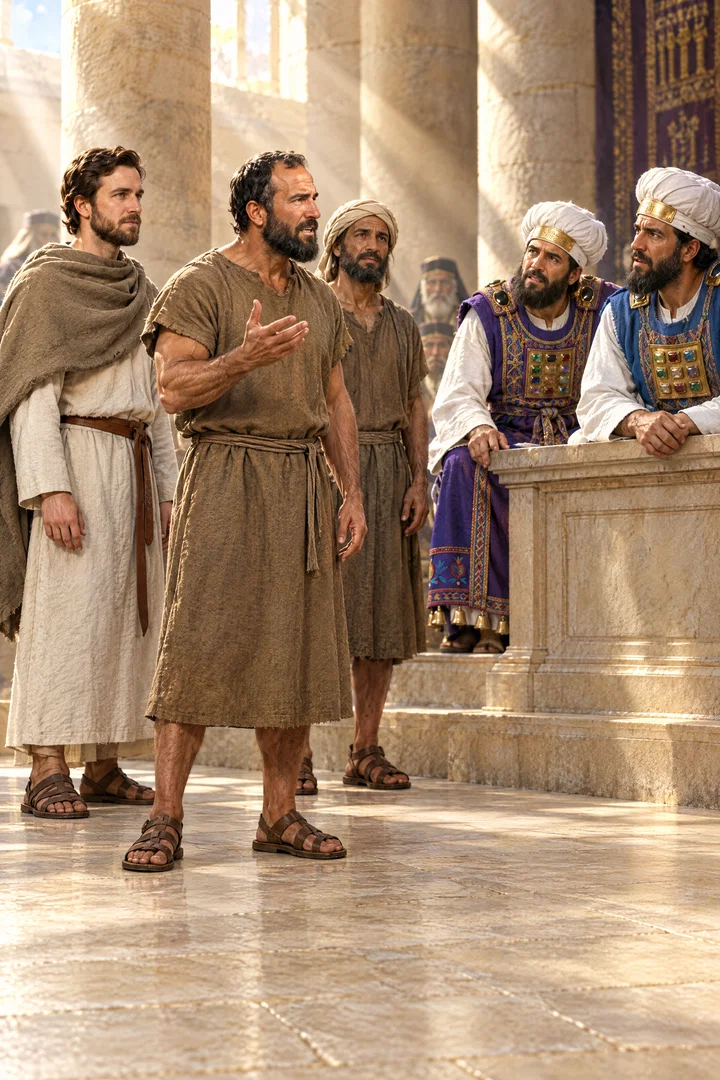
Cross-references
- Acts 3:1-10
Now Peter and John went up together into the temple at the hour of prayer, being the ninth hour.
Peter and John heal the lame man at the temple gate.
- Acts 4:18-20
And they called them, and commanded them not to speak at all nor teach in the name of Jesus.
The authorities forbid the apostles to speak in Jesus’ name, but they insist on obeying God.
- Acts 4:13
Now when they saw the boldness of Peter and John, and perceived that they were unlearned and ignorant men, they marvelled; and they took knowledge of them, that they had been with Jesus.
Peter and John’s boldness before the council is part of the same account.
- Acts 4:14
And beholding the man which was healed standing with them, they could say nothing against it.
The healed man’s presence made the healing undeniable.
- Acts 4:16
Saying, What shall we do to these men? for that indeed a notable miracle hath been done by them is manifest to all them that dwell in Jerusalem; and we can not deny it.
The rulers admit the healing is a notable miracle they cannot deny.
- Acts 4:19-20
But Peter and John answered and said unto them, Whether it be right in the sight of God to hearken unto you more than unto God, judge ye.
Peter and John testify to what they have seen and heard before the rulers.
- Psalms 118:22
The stone which the builders refused is become the head stone of the corner.
Peter’s reply applies the rejected-stone image to Jesus.
- Mark 5:25-34
And a certain woman, which had an issue of blood twelve years,
The woman received healing through contact with Christ and was made whole by faith.
- Acts 4:2
Being grieved that they taught the people, and preached through Jesus the resurrection from the dead.
The Sadducees opposed the disciples’ preaching about resurrection.
Commentary
Each commentary is drawn from primary sources: the writings of Ellen G. White and Adventist pioneers and periodicals. Each commentary is separate. Its own words are not a quotation; follow the references to read the source passages.
Ellen G. White
10 sources
The day after the healing at the temple, Peter and John were brought as prisoners before the Jewish leaders for trial, with Annas and Caiaphas and the other dignitaries of the temple assembled as rulers and council.SG1 82.17RED 15.3SLP 11.1 The verse is Peter's bold reply before that council concerning the good deed done to the healed man, declaring that the healing was done in the name of Jesus, who had risen and imparted power to His followers.SG1 82.1SLP 11.1 The examination took place in that very room and before those very men where Peter had shamefully denied his Lord, and Peter distinctly remembered his denial as he appeared for his own trial.7RED 15.3 He saw it as an opportunity to redeem his former wicked cowardice.7RED 15.3
The question put to them was about a good deed done to a helpless, disabled man who was unable to walk, being lame and crippled from birth, asking by what means he was made whole and restored to health.SPBC 139.2Ms 22, 1900, par. 11–16AA 57.2–58.2SLP 11.1AA 65.2–66.2 The answer is that the man was healed in the name of Jesus Christ of Nazareth, whom the rulers crucified and God raised from the dead, and the man crippled from birth immediately received strength, stood and walked, and now stands whole.Ms 22, 1900, par. 11–16AA 57.2–58.2SLP 11.1Ms 47, 1886, par. 5–9 The healed man's presence with Peter served as visible, public evidence supporting the apostles' message, and the rulers could not deny that the healing had taken place.Ms 22, 1900, par. 11–16AA 65.2–66.2Ms 47, 1886, par. 5–9
Peter answered boldly and fearlessly under the Holy Spirit's power, with Jesus' approval and blessing upon him.SPBC 139.2SG1 82.1 His zeal, courage and energy helped silence their enemies, while John's patience and caution helped restrain Peter when he was impetuous.EW 188.1–2 Their words and works represented Jesus' words and works, and their testimony bore witness to His resurrection.SPBC 139.2 Peter's fearless acknowledgment of Jesus contrasts with his earlier denial and with his earlier character as impetuous, hasty and self-confident and often reproved, yet he went on to a life of service and sacrifice that shows the power of God's grace.SG1 82.1MH 493.3–4EW 188.1–2
Sources
Pioneers and periodicals
29 sources
Peter with John was brought before the highest Jewish council in Jerusalem and questioned about the healing of a man lame from birth at the Beautiful Gate.RH Feb 18, 1915ST Jan 14, 1897ST Jan 29, 1902ST Sep 11, 1884RH May 10, 1915 The man born unable to walk stood whole beside them as undeniable proof of a real public miracle, leaving the rulers no just cause to punish a good deed.ST Jun 1, 1882ST Feb 13, 1901RH Apr 28, 1863ST Jan 29, 1902 Their question opened the way to declare that he was made whole in the name and power of Jesus of Nazareth, whom they had crucified and God had raised, turning the miracle into witness to salvation in him alone.ST Feb 24, 1914RH Feb 18, 1915ST Jun 1, 1882ST Jul 18, 1900ST Feb 13, 1901 Jesus is the stone rejected by the builders become head of the corner, and there is no other name under heaven by which men must be saved.RH Oct 2, 1900RH Jul 8, 1902 Peter spoke this bold testimony because he was filled with the Holy Spirit, strengthened without fear in contrast to his former denial when frightened by a servant girl.RH Feb 10, 1916RH Jun 11, 1901
Examination for Healing
The verse records Peter, with John, answering when examined by the rulers and council about the good deed done to the disabled man and by what means he was made whole.RH Feb 18, 1915ST Jan 14, 1897ST Jan 29, 1902ST Mar 11, 1897ST Jan 29, 1902 The question put to them concerns the good deed and the power behind the healing, namely what power had made the man who could not walk well.ST Jan 14, 1897ST Jan 29, 1902ST Mar 15, 1905ST Jan 29, 1902 Since Peter and John are being examined for a good deed done to a disabled man, the issue before the Sanhedrin is how the man was made whole, and the healing itself becomes the occasion for their imprisonment and trial.ST Mar 11, 1897ST Jan 29, 1902
The impotent man was lame and unable to walk, lame from his birth and a lifelong cripple, healed at the Beautiful Gate.ST Jun 1, 1882ST Feb 13, 1901ST Jun 2, 1909 The healing was a public, undeniable, real miracle performed by the apostles.RH Feb 12, 1861ST Jan 29, 1902RH Jun 27, 1865 The restored man stood whole beside the apostles before the council as visible testimony, his presence confirming that he had been restored to full health in a way the rulers could not deny.ST Jan 29, 1902 The questioning about this good deed gave Peter the occasion to speak about Christ's crucifixion and resurrection and to proclaim that it was done through the power of Jesus, whom God had raised from the dead.ST Jun 1, 1882ST Jan 29, 1902
The phrase good deed renders the Greek word elsewhere translated benefit, meaning well-doing or good conduct.RH Apr 28, 1863 The healing involved nothing illegal and gave no just reason to punish the apostles, being plain evidence set before the council.ST Jan 29, 1902
The setting is the first persecution after Pentecost and Christ's resurrection, when the apostles were imprisoned and brought before the Sanhedrin in Jerusalem.RH May 10, 1915RH Sep 15, 1868RH Jun 27, 1865 That body was the highest Jewish authority with power over religious affairs and punishments, and Peter and John were questioned by rulers, elders, priests and the priesthood about their preaching and miracle.RH Apr 7, 1863RH Apr 7, 1863RH Jun 27, 1865 They were opposed by religious authorities and commanded not to speak or teach in Jesus' name, bearing courageous witness to the truth before hostile religious authorities.ST Sep 11, 1884RH Apr 7, 1863 This opposition by the nation's influential and religious leaders did not disprove Jesus' claims, and the condemnation and persecution of the apostles after Christ's resurrection helped bring Jerusalem's guilt to its full measure in the early church's experience before its organization.RH May 10, 1915RH Sep 15, 1868
Witness to Christ's Power
The disabled man was made well in the name and power of Jesus Christ of Nazareth, not by relics or by help from the dead.RH Feb 18, 1915ST Feb 13, 1901 The name Jesus means Saviour, and his healing proves the power in that name for salvation, with no other name under heaven given among men for that work.ST Feb 13, 1901 The lifelong cripple's restoration through that name shows healing and salvation found in him, and shows that Christ's word still keeps its power when his disciples speak it in faith.ST Feb 13, 1901ST Mar 15, 1905
The rulers' question about the good deed and the means of the cure became the occasion to declare that the man stands healed through Jesus Christ of Nazareth, whom those leaders crucified and whom God raised from the dead.ST Feb 24, 1914ST Feb 7, 1884ST Jul 18, 1900 The examination before the Sanhedrin over the healing of the lame man thus opened the way to speak of Christ's crucifixion and resurrection.ST Feb 24, 1914ST Jun 1, 1882ST Jan 29, 1902 The undeniable public miracle that the authorities could not deny was turned from the physical wonder itself to salvation through Jesus and to the power of his name.ST Feb 7, 1884ST Jul 18, 1900ST Jan 29, 1902
The man standing whole before them was healed by the name of Jesus Christ of Nazareth, whom they crucified and whom God raised, and this proves the stone prophecies refer to Christ.RH Oct 2, 1900RH Jul 8, 1902 He is the stone set at naught by the builders which is become the head of the corner, rejected by the builders yet made the foundation of salvation.RH Oct 2, 1900RH Jul 8, 1902 Therefore there is salvation in no other, for there is none other name under heaven given among men whereby we must be saved.RH Oct 2, 1900
Peter's bold answer was given because he was filled with the Holy Spirit, who strengthened him to face opposition without fear.RH Jun 11, 1901ST Mar 9, 1882RH Mar 18, 1915 It belonged to the Spirit-empowered ministry after Pentecost, when the sick were healed and the gospel was preached with power after the disciples had put away selfishness and discord and had become united.RH Feb 10, 1916 The same apostle who had been frightened by a servant girl into denying Jesus could now stand before the council, because divine power upheld him after his self-confidence had fallen.RH Jun 11, 1901ST Mar 9, 1882RH Mar 18, 1915 It was the Spirit rather than his former self-assertion and self-confidence that spoke and worked through him.RH Jun 11, 1901RH Mar 18, 1915 Such Spirit-filled men showed the gospel in action as those who could suffer as well as speak, and be patient and earnest, bold and kind, while God was still willing to work and the name of Jesus remained powerful.RH Feb 10, 1916
The examination places Peter and John before the Jewish council, questioned about the good deed of healing the disabled man and how he was made well, bearing courageous witness to the truth before hostile religious authorities.ST Apr 23, 1912RH Apr 7, 1863 Their example of courage under opposition illustrates that human rule must not take the place of conscience or God.ST Apr 23, 1912RH Apr 7, 1863
Sources