Acts 4:19
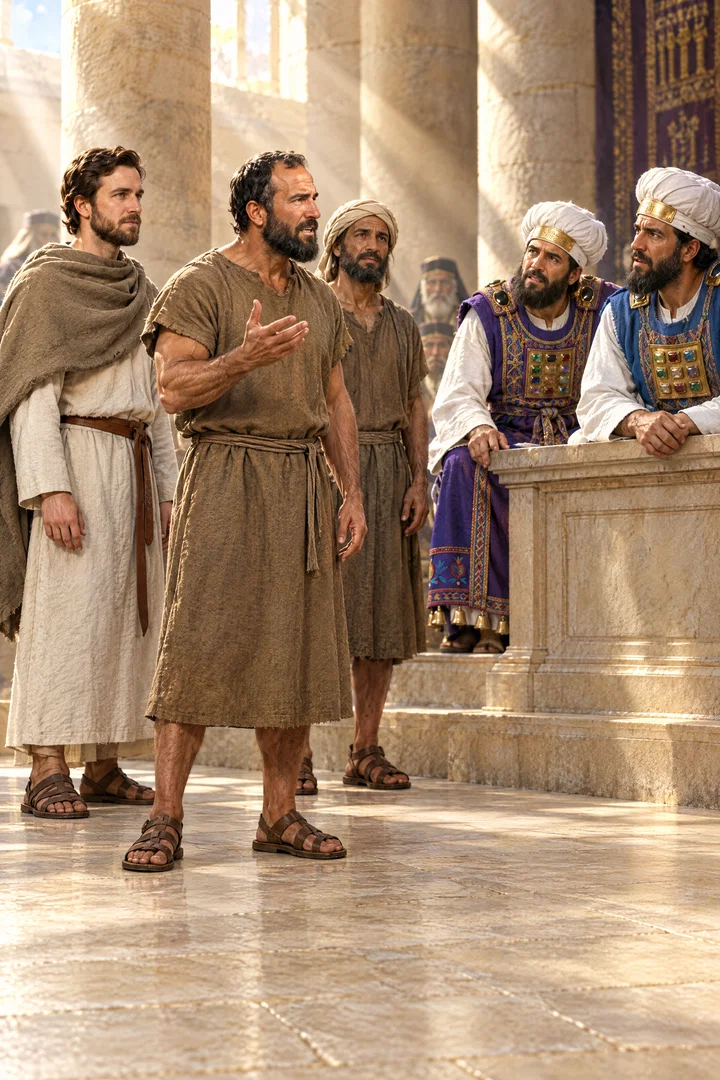
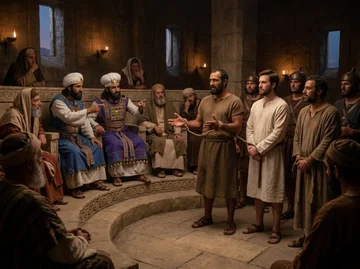
But Peter and John answered and said unto them, Whether it be right in the sight of God to hearken unto you more than unto God, judge ye.
Translations
But Peter and John answered and said to them, Whether it be right in the sight of God to listen to you more than to God, judge you.
King James Version, KJV Cambridge Paragraph Bible
But Peter and John answered and said unto them, Whether it be right in the sight of God to hearken unto you more than unto God, judge ye.
But Peter and John answered and said to them, Whether it is right in the sight of God to hearken to you rather than to God, judge ye.
But Peter and John answered and said unto them, Whether it be right in the sight of God to hearken unto you rather than unto God, judge ye:
But Peter and John answered and said unto them, Whether it is right in the sight of God to hearken unto you rather than unto God, judge ye:
and Peter and John answering unto them said, 'Whether it is righteous before God to hearken to you rather than to God, judge ye;
But Peter and John answering said to them, If it be righteous before God to listen to you rather than to God, judge ye;
But, Peter and John, answering, said unto them—Whether it be right in presence of God, unto you, to be hearkening, rather than unto God, judge!
Berean Standard Bible, Majority Standard Bible
But Peter and John replied, “ Judge for yourselves whether it is right in God’s sight to listen to you rather than God.
But Peter and John answered them, “ Whether it is right in the sight of God to listen to you rather than to God, judge for yourselves,
But Peter and John in answer said to them, It is for you to say if it is right in the eyes of God to give attention to you more than to God:
But Peter and Iohn answered vnto them, and said, Whether it be right in the sight of God, to obey you rather then God, iudge ye.
Douay-Rheims (Challoner revision)
But Peter and John answering, said to them: If it be just in the sight of God, to hear you rather than God, judge ye.
Pictures
Cross-references 20 of 29
- Acts 5:29
Then Peter and the other apostles answered and said, We ought to obey God rather than men.
Both declare that God must be obeyed rather than human authorities.
- Daniel 3:16-18
Shadrach, Meshach, and Abed-nego, answered and said to the king, O Nebuchadnezzar, we are not careful to answer thee in this matter.
The three Hebrews refuse the king’s command to worship the image, remaining loyal to God.
- Daniel 6:10
Now when Daniel knew that the writing was signed, he went into his house; and his windows being open in his chamber toward Jerusalem, he kneeled upon his knees three times a day, and prayed, and gave thanks before his God, as he did aforetime.
Daniel continues praying to God despite the king’s prohibition.
- Romans 13:1
Let every soul be subject unto the higher powers. For there is no power but of God: the powers that be are ordained of God.
Acts 4:19 qualifies the command to obey governing authorities when their laws conflict with God’s law.
- 1 Peter 2:13-17
Submit yourselves to every ordinance of man for the Lord’s sake: whether it be to the king, as supreme;
Urges submission to rulers while making clear that obedience to God takes priority.
- Matthew 22:21
They say unto him, Cæsar’s. Then saith he unto them, Render therefore unto Cæsar the things which are Cæsar’s; and unto God the things that are God’s.
Distinguishes duties owed to Caesar from duties owed to God.
- Acts 5:20
Go, stand and speak in the temple to the people all the words of this life.
The apostles obey God’s command to preach despite human restrictions.
- Acts 4:13
Now when they saw the boldness of Peter and John, and perceived that they were unlearned and ignorant men, they marvelled; and they took knowledge of them, that they had been with Jesus.
The council recognizes Peter and John’s boldness and their association with Jesus.
- Acts 3:1-16
Now Peter and John went up together into the temple at the hour of prayer, being the ninth hour.
The healing leads to the apostles’ arrest and their answer.
- Romans 13:5
Wherefore ye must needs be subject, not only for wrath, but also for conscience sake.
Submission to civil authority is a matter of conscience, within its proper sphere.
- Romans 13:3-4
For rulers are not a terror to good works, but to the evil. Wilt thou then not be afraid of the power? do that which is good, and thou shalt have praise of the same:
Contrasts obedience to civil rulers with obeying God when authorities demand wrongdoing.
- Acts 5:40-42
And to him they agreed: and when they had called the apostles, and beaten them, they commanded that they should not speak in the name of Jesus, and let them go.
The apostles endured punishment and continued witnessing rather than obeying the order to stop.
- Acts 4:2
Being grieved that they taught the people, and preached through Jesus the resurrection from the dead.
The apostles faced opposition for preaching the resurrection through Jesus.
- Acts 5:17-18
Then the high priest rose up, and all they that were with him, (which is the sect of the Sadducees,) and were filled with indignation,
The authorities imprison the apostles for continuing to preach.
- Acts 4:31
And when they had prayed, the place was shaken where they were assembled together; and they were all filled with the Holy Ghost, and they spake the word of God with boldness.
After praying, the believers receive the Spirit and speak boldly.
- Matthew 15:3-6
But he answered and said unto them, Why do ye also transgress the commandment of God by your tradition?
Jesus rejects traditions that set aside God’s commandment.
- Romans 14:12
So then every one of us shall give account of himself to God.
Each person gives an account to God.
- Mark 12:17
And Jesus answering said unto them, Render to Cæsar the things that are Cæsar’s, and to God the things that are God’s. And they marvelled at him.
Jesus distinguishes what is owed to Caesar from what is owed to God.
- Matthew 26:69-75
Now Peter sat without in the palace: and a damsel came unto him, saying, Thou also wast with Jesus of Galilee.
Peter’s denials contrast with his bold declaration before the authorities.
- Galatians 2:11-13
But when Peter was come to Antioch, I withstood him to the face, because he was to be blamed.
Peter’s retreat at Antioch contrasts with his boldness before the rulers.
Commentary
Each commentary is drawn from primary sources: the writings of Ellen G. White and Adventist pioneers and periodicals. Each commentary is separate. Its own words are not a quotation; follow the references to read the source passages.
Ellen G. White
23 sources
Peter and John had been seized and ordered by the rulers with threats to speak and teach no more in the name of Jesus, and under the Holy Spirit they boldly answered by asking their judges themselves to decide whether it is right to listen to men more than to God, declaring they must obey God and speak what they had seen and heard.Ms 79, 1896, par. 15–17Ms 22, 1900, par. 11–16AA 57.2–58.2AA 66.3–67.1RH Feb 2, 1911 When human rulers command what God forbids or forbid what God requires, obedience to God comes first and no human authority can rightly bind the conscience to disobey Him.GW 389.1–2EW 161.1GW 390.1–2 God's word stands as supreme above all human law, so a Thus saith the Lord is never to be set aside for church or state, and this is the foundation of religious liberty.GW 389.1–2Ms 11, 1894, par. 30–31AA 68.1 Believers therefore cannot be silenced by threats, imprisonment, or danger to life from openly proclaiming Christ, Scripture, and God's commandments.EW 161.1GW 390.1–26T 395.2–3ST Jun 5, 1901Lt 36, 1895, par. 1–5 This does not mean needless defiance, for government is to be honored in its rightful place until such a conflict arises.GW 389.1–2GW 390.1–2Lt 36, 1895, par. 1–5
Setting and Answer
The Sanhedrin seized and imprisoned Peter and John to intimidate and silence them, commanding them to speak no more and teach no more in the name of Jesus and backing the order with threats.AA 66.3–67.1RH Feb 2, 1911SLP 11.1Ms 6, 1884, par. 7–8 Restrained from violence by fear of the people, the rulers at last set the apostles at liberty.SLP 11.1 The disciples continued proclaiming Jesus despite the prohibition, accepting imprisonment rather than stopping their preaching.RH Feb 2, 1911Ms 6, 1884, par. 7–8
Under the power of the Holy Spirit the apostles gave clear, bold testimony about Jesus that represented their Teacher.SPBC 139.2 They proclaimed the gospel of a risen Saviour, declaring as present truth that Christ had risen from the dead and that the impotent man was healed through Jesus of Nazareth, and they would not be stilled by threats from wicked rulers.5MR 264.1–3 God bore witness to their words and works.SPBC 139.2AA 70.1–71.1 Their powerful preaching made the evidence of God's work so plain that their opponents were afraid to act against them.Lt 296, 1904, par. 1–5
Their answer asks the hearers themselves to judge whether it is right in the sight of God to hearken to men more than to God.Ms 79, 1896, par. 15–17Ms 22, 1900, par. 11–16AA 57.2–58.2AA 66.3–67.1 It expresses their faithfulness to their calling, their commitment and resolve to obey God, and their necessity to testify to what they had seen and heard.Ms 79, 1896, par. 15–17Ms 22, 1900, par. 11–16AA 66.3–67.1 The verse shows the transformation of Peter, who in cowardice had once denied his Lord, now boldly declaring the power of the risen Saviour.SLP 11.1 After refusing to be restrained or intimidated by threatenings, the apostles went forth and raised up companies of believers in many places, leaving them in charge of faithful teachers and going on to still other places.Ms 75, 1903, par. 16 Hundreds proclaimed that the kingdom of God is at hand, the Lord spoke through them, and wherever they went the sick were healed and the poor had the gospel preached to them.Ms 75, 1903, par. 16
Obeying God Above Men
When human rulers and civil authorities command what conflicts with God's will or forbid what God requires and has commanded, obedience to God takes precedence over obedience to them.GW 389.1–2EW 161.16T 395.2–3ST Jun 5, 1901Ms 79, 1896, par. 15–17 No human authority can rightly bind people to claims or demands that require disobedience to God, and those who are ordered not to preach about Jesus must refuse to stop speaking about what they have seen and heard, accepting threats and imprisonment rather than violate duty to God.EW 161.1GW 390.1–26T 395.2–3ST Jun 5, 1901Ms 79, 1896, par. 15–17 When men forbid the work of going forward in Christ's name advocating the truths committed to believers, the answer to give is that listening to God comes before listening to men, because believers cannot keep from speaking the things they have seen and heard.GW 389.1–2EW 161.1GW 390.1–2ST Jun 5, 1901Ms 79, 1896, par. 15–17
This does not require defying authorities in general or acting against law and order unnecessarily.GW 389.1–2GW 390.1–2Lt 36, 1895, par. 1–5AA 68.2–69.1 Human government is to be recognized as an ordinance of divine appointment and obeyed as a sacred duty within its legitimate sphere, and only when its claims conflict with the claims of God must God be obeyed rather than men.GW 389.1–2GW 390.1–2Lt 36, 1895, par. 1–5AA 68.2–69.1 Until that conflict arises believers should act with care, carefully consider words spoken or written so as not to appear antagonistic to law and order, avoid needless attacks on authorities, and do and say nothing that would needlessly close the way so their witness is not mistaken for opposition to law and order.GW 389.1–2GW 390.1–2Lt 36, 1895, par. 1–5AA 68.2–69.1
The verse states the principle of religious liberty to be held when human authority forbids speaking in the name of Jesus, and the principle is to be firmly maintained now, with the banner of truth and religious liberty held by those who know God's word.GW 389.1–2Ms 11, 1894, par. 30–31AA 68.1 God's word is to be received as supreme authority above all human legislation, so that a Thus saith the Lord is never set aside for a Thus saith the church or Thus saith the state, and the crown of Christ is lifted above earthly diadems.GW 389.1–2 The same appeal to conscience became a principle defended by the Reformers and reformed princes at the Diet of Spires in 1529 when they rejected the emperor's decree restricting religious liberty and prohibiting the reformed doctrines, declaring that in matters of conscience the majority has no power.GW 389.1–2AA 68.1 God's government stands against persecution and oppression.GW 389.1–2Ms 11, 1894, par. 30–31
The principle applies when authorities prohibit openly teaching Scripture and proclaiming God's commandments and the faith of Jesus.GW 389.1–2GW 390.1–26T 395.2–3Lt 36, 1895, par. 1–5 This includes openly teaching that God is Creator and that the seventh day is His Sabbath.6T 395.2–3
Faithful Witness Under Threat
Believers cannot keep back what they have seen and heard, and cannot withhold their witness to Jesus, so when ordered to be silent they refuse to stop proclaiming Him and salvation through Christ.EW 161.1ST Jun 5, 1901Ms 22, 1900, par. 11–16Ms 47, 1886, par. 5–95T 712.3–713.3 Though threatened, imprisoned, and in danger to their lives, Peter and John would not cease speaking of what they had seen and heard, accepting threats and imprisonment rather than violate duty to God.EW 161.1ST Jun 5, 1901Ms 22, 1900, par. 11–165T 712.3–713.3 Their answer openly puts the question to the council to judge whether it is right before God to hearken to men rather than to God, expressing resolve to keep witnessing despite threats and human attempts to silence the gospel.EW 161.1ST Jun 5, 1901Ms 22, 1900, par. 11–16 When men forbid the work of going forward in Christ's name advocating the truths committed to believers, this is the answer to give, that listening to God comes before listening to men.GW 389.1–2GW 390.1–2
God by the Holy Spirit had given them present truth to declare, that Christ had risen from the dead and that the impotent man was healed through Jesus of Nazareth, and they would not be stilled by threats from wicked rulers.5MR 264.1–3 They would not stop proclaiming the truth about Jesus though the message displeased hearers and brought opposition, refusing to yield to pressure from religious authorities.5MR 264.1–3Ms 47, 1886, par. 5–9 Believers must therefore persist in declaring the truth whether it pleases people or not, and must not resist conviction because of opposition.5MR 264.1–3Ms 47, 1886, par. 5–9
The same principle is to be firmly maintained now, with the banner of truth and religious liberty held by those who know God's word, and it applies to believers who must remain faithful when human laws oppose God's law.GW 389.1–2Lt 36, 1895, par. 1–55T 712.3–713.3 God's word is to be received as supreme authority above all human legislation, so that a Thus saith the Lord is never set aside for a Thus saith the church or Thus saith the state, and the crown of Christ is lifted above earthly diadems.GW 389.1–2 This was the principle maintained at the Diet of Spires in 1529, when the reformed princes rejected the emperor's decree restricting religious liberty and prohibiting the reformed doctrines, declaring that in matters of conscience the majority has no power.GW 389.1–2 It applies when authorities prohibit proclaiming God's commandments and the faith of Jesus and openly teaching Scripture, while human government within its legitimate sphere is to be recognized as an ordinance of divine appointment and obeyed as a sacred duty.GW 389.1–2Lt 36, 1895, par. 1–5 Until that conflict arises believers should act with care, carefully consider words spoken or written so as not to appear antagonistic to law and order, avoid needless attacks, and do nothing that would needlessly close the way or be mistaken for opposition to law and order.GW 389.1–2GW 390.1–2Lt 36, 1895, par. 1–5
Sources
Pioneers and periodicals
83 sources
Peter and John had healed in Jesus' name and were imprisoned and tried before the highest Jewish council, which repeatedly commanded and threatened them not to speak or teach at all in that name.ST Jun 9, 1914ST Mar 11, 1897RH Jun 8, 1916ST Jun 2, 1909 Filled with the Holy Spirit they answered boldly, asking the judges to decide whether it is right in God's sight to listen to them rather than to God, for they could not keep silent about what they had seen and heard.ST Sep 23, 1908ST Nov 8, 1905ST Oct 7, 1886RH Jun 11, 1901 When human law requires what God forbids or forbids what God requires, obedience to God comes first and obedience to people, rulers, churches or states must give way.ST Aug 21, 1893ST Feb 25, 1889ST May 21, 1912ST Jul 23, 1912RH Nov 24, 1859 Christians gladly obey civil rulers in civil things, but civil authority cannot rule conscience, worship or faith, so they disobey the conflicting human command peacefully without revolt or force and meekly accept arrest, stripes, imprisonment or death.ST Feb 25, 1889ST Jun 27, 1878ST Feb 16, 1882ST Jul 24, 1884 So even where law commands Sunday keeping and Sabbath labor or otherwise forbids God's seventh-day Sabbath, believers must keep the fourth commandment and suffer the penalty rather than violate conscience.RH Feb 7, 1916ST Jun 27, 1878ST Sep 30, 1880ST Jul 18, 1878RH Jul 8, 1873
Trial Before Council
The answer belongs to the imprisonment and trial of Peter and John before the Sanhedrin soon after Pentecost, following the healing in chapter 3.ST Mar 11, 1897RH Jun 8, 1916ST Jun 2, 1909ST Jan 14, 1897RH Feb 16, 1911 The Sanhedrin before which they stood was the highest Jewish authority, with power over religious affairs and punishments.RH Feb 16, 1911 After Gamaliel's counsel the disciples for a time continued preaching.RH Feb 16, 1911 The imprisonment with God's deliverance belongs to the early testimony to God's power and to the rise of the early church and the Spirit's work through it under persecution, and the apostles were persecuted there for preaching Christ and did not treat the State as their authority in religion.RH Jun 8, 1916ST Jun 2, 1909ST Jan 14, 1897
The rulers repeatedly commanded the apostles not to speak at all nor teach in the name of Jesus, especially His resurrection, and threatened them for preaching Christ.ST Jun 9, 1914RH Jul 14, 1874ST Jun 6, 1916ST Jan 29, 1902 Faced with the threat they would not promise to stop.ST Jan 29, 1902 The council that issued the ban was an ancient political church movement acting as civil legislators in priestly garments with the high priest at its head, trying to prevent overlapping of parishes.ST Jun 9, 1914
That opposition profited the work of the church.ST Jan 21, 1897 It belongs among the acts by which Jerusalem's leaders condemned and persecuted Christ's apostles and people after His resurrection, adding to the city's guilt before its destruction.RH May 10, 1915 It shows that the world will continue to oppose Christ and His true church to the end of the age.ST Aug 7, 1901 Peter's stand before the authorities shows the weakness and obscurity of the first messengers, who nevertheless helped establish a religion that overcame powerful opposition and spread throughout the world.RH Jun 27, 1865
Filled with the Holy Spirit, Peter and John answered boldly.ST Sep 23, 1908RH Jun 11, 1901 Even the combined power of Church and State could not make them fear opposition.RH Jun 11, 1901 Their courage came from consecration and simple trust in God's word, and they continued preaching despite the consequences.ST Sep 23, 1908 The chapter shows what Spirit-filled, consecrated people can do: speak boldly and suffer while remaining patient, earnest and kind, and the name of Jesus remains as powerful as then.
Question of Right Obedience
The verse turns the trial around by putting the question to the judges themselves, whether it is right in the sight of God to hearken to them more than to God, and leaving them to judge it.ST Nov 8, 1905ST Oct 7, 1886RH Jun 8, 1916RH Jul 25, 1854 When human authorities forbid preaching Christ and forbid what God requires, or command what God forbids, obedience to God takes precedence over obedience to them.ST Oct 7, 1886ST Jul 22, 1897RH Jun 8, 1916RH Jul 25, 1854 God’s authority is the final appeal in matters of moral duty, and conscience and duty to God cannot be surrendered to civil or religious commands that conflict with God’s will.ST Oct 7, 1886RH Jun 8, 1916 Every person must judge this duty in the sight of God, and hearers are accountable to judge which authority is right.ST Nov 8, 1905ST Jul 22, 1897RH Jul 25, 1854
The answer goes on to add that they cannot but speak the things they have seen and heard.ST Jun 5, 1901ST Jun 9, 1914ST Jul 22, 1897ST Jun 6, 1916 When the council commanded them not to speak at all nor teach in the name of Jesus, they refused the ban and would not stop speaking about Jesus merely because the rulers threatened them.ST Jun 5, 1901RH Feb 2, 1911ST Jun 9, 1914 They had to testify to what God had given them to do, were bound to speak about what they had seen and heard, and could not obey the magistrates’ ban on preaching without denying their faith.ST Jun 5, 1901RH Feb 2, 1911ST Jun 6, 1916 They refused to keep silent about Jesus and remained firm in that work, accepting threats rather than violate their duty to God, for no human authority can rightly bind people to claims that require disobedience to God and no human authority could take away the proclamation of Bible truth.ST Jun 5, 1901ST Jun 9, 1914 In this the gospel stands at its purest and most powerful, when its adherents trust in Christ and fearlessly carry their message to the world regardless of threatenings.ST Jun 9, 1914
Refusing the human ban could make the apostles criminals under human law without making them sinners.ST Jan 20, 1898ST Jun 11, 1912 They chose to keep teaching in Jesus’ name, accepting that human law could count them as criminals rather than sin against God.ST Jan 20, 1898ST Jun 11, 1912 Their refusal was a crime under human law but not a transgression of God’s law, for breaking a civil law can make someone a criminal without making that person a sinner when human rulers command what God forbids or forbid what God commands.ST Jan 20, 1898ST Jun 11, 1912
Their stand despite the authorities’ opposition shows that opposition by religious and influential leaders does not disprove Jesus’ claims.RH Sep 15, 1868 Peter and John stood by their witness to him in the face of that opposition.RH Sep 15, 1868
God Above Human Authority
When human commands stand against obedience to God, obedience to God comes first and obedience to people gives way.ST Aug 21, 1893ST May 21, 1912ST Jul 23, 1912RH Nov 24, 1859ST Aug 13, 1912 God must be obeyed rather than human authorities, rulers, churches, or states.ST Aug 21, 1893ST May 21, 1912ST Jul 23, 1912ST Aug 13, 1912ST Feb 16, 1882 Those commanded to do what is wrong before God are to obey God rather than that authority, and may put to the authorities themselves the question whether it is right to hearken to men more than to God.ST Aug 21, 1893ST Jul 23, 1912RH Nov 24, 1859ST Aug 13, 1912ST Feb 16, 1882 This does not justify general rebellion, for Christians are to obey laws that bring hardship but do not interfere with duty to God, remaining loyal to God and carrying on their duties without making resistance to civil government their aim.ST Aug 13, 1912ST Jun 27, 1878ST Jul 24, 1884
The duty is plain when human law requires what God forbids or forbids what God requires.ST Feb 25, 1889RH Nov 24, 1859ST Jun 27, 1878ST Jul 24, 1884RH May 12, 1868 In that conflict refusal of the human command is duty, and to obey civil rulers against God is sinful.ST Feb 25, 1889RH Nov 24, 1859RH May 12, 1868 To have obeyed the prohibition on speaking in the name of Jesus would itself have been disobedience to God.RH Nov 24, 1859ST Jun 27, 1878ST Feb 16, 1882 Such statutes may be passively violated with meek submission to whipping, imprisonment, and death without violent rebellion and without disobeying God.ST Jun 27, 1878ST Jul 24, 1884 So keeping the seventh day as God requires holds even when the law of the land commands the first day, by keeping the seventh day and, if compelled, also resting the first day or paying the penalty for Sunday labor.ST Jun 27, 1878ST Feb 16, 1882
Obedience belongs to God first and to civil rulers second.ST Feb 25, 1889ST Aug 28, 1898 Christians gladly obey rulers when they punish evil and uphold good, restrain evil and commend good.ST Feb 25, 1889ST Feb 16, 1882ST Aug 28, 1898 But when rulers reward evil and punish good, or when human laws make wrongdoing acceptable and punish those who do right, the question whether it is right to hearken to men more than to God is the standing answer and rule for refusal, including refusal of a law requiring Sunday work that would conflict with God's law.ST Feb 25, 1889ST Feb 16, 1882 It sets the limit on rendering tribute, custom, fear, honor, and submission to every ordinance of man, requiring obedience to God first.ST Aug 28, 1898ST Jan 2, 1907 Civil government is an ordinance of God for sinful men, and even when administered by evil men it is better than anarchy, but outside its proper sphere it has no authority, and where duty to God transcends civil demand God justifies disobedience to a civil command contrary to His law.ST Jul 17, 1907ST Aug 28, 1898
Preaching the gospel was a direct commission and personal moral responsibility that no human authority could take away.ST May 21, 1912ST May 21, 1912 God's commands address each person directly, and each believer is individually responsible to God for faith and moral obedience.ST May 21, 1912ST May 21, 1912 Peter and John refused the order to stop teaching about Jesus because conscience guided by God's truth required them to speak the things they had seen and heard.ST May 21, 1912ST Oct 6, 1887ST May 21, 1912 Conscience therefore must be correct as well as obeyed.ST Oct 6, 1887
God is supreme in religious matters, and His word rather than human creeds or standards is the rule of faith and obedience.ST Dec 24, 1896ST Oct 31, 1895HM Jun 1889 Religious faith and worship are accountable to God and are to follow conscience, with submission to earthly authority applying only within that authority's rightful limits and not unconditionally in matters that belong to God.ST Jul 17, 1907ST Dec 24, 1896ST Oct 31, 1895 Civil rulers have authority in the civil realm and over civil things that belong to Caesar, but they cannot claim what belongs to God, take God's place over conscience, or extend authority to religion, worship, or conscience.ST Jul 17, 1907ST Oct 31, 1895ST Jan 2, 1907 The apostolic church therefore did not treat the State as its authority in matters of religion.ST Dec 12, 1895HM Jun 1889 This principle applies universally and not only where one church is joined to the state, so Christians are to oppose church-state unions and their coercive effects wherever they occur.ST Dec 24, 1896ST Oct 31, 1895ST Dec 12, 1895
Submitting Without Rebelling
The apostles kept on preaching after their release and refused to obey the order to stop speaking and teaching in the name of Jesus, accepting arrest and trial rather than disobeying God.ST Sep 10, 1885ST May 10, 1883ST Oct 8, 1896 They chose stripes and imprisonment rather than disobedience, and God approved and vindicated them.ST Dec 10, 1885 When persecution, imprisonment, scourging, stoning and death could have been escaped by quitting the work God had given them, they would not quit, and nearly all of them gave their lives rather than cease preaching.RH Aug 19, 1915 The same duty holds for one who refuses to stop preaching the gospel or to leave the city unless forced, even being imprisoned for that refusal before being released and allowed to preach and hold meetings.ST Oct 8, 1896
They did not revolt against the authorities or resist them, nor engage in force, plotting or conspiracy against government.ST May 10, 1883ST Jan 9, 1896 They remained loyal to heaven without seeking to defy earthly government, and would not promise to stop preaching Christ when threatened.ST Aug 13, 1912ST Jan 29, 1902 They carried on their duties without making resistance to civil government their aim, and did not needlessly defy authority or appear opposed to law and order.ST Feb 24, 1914ST Aug 13, 1912 Their course illustrates submission to authority without yielding a command that conflicts with conscience and God's law.ST May 10, 1883
The command to be subject to the higher powers is met by obeying God's law at all events and, where the law of the land opposes it, obeying God anyway and taking the consequences by submitting to the penalty without resistance.ST Jun 27, 1878 Such statutes may be passively violated while the penalty is meekly suffered, and this does not justify violent rebellion against civil authority.ST Jul 24, 1884 In this way the apostles obeyed God and accepted whipping, imprisonment and death without resisting the powers and without disobeying God.ST Jun 27, 1878ST Jul 24, 1884ST May 10, 1883
The verse does not justify general rebellion, lawlessness or anarchy.ST Aug 13, 1912ST Jan 9, 1896ST Nov 27, 1901 Christians obey laws that cause hardship but do not interfere with duty to God, and obey the laws of the land when those laws do not require disobedience to God.ST Aug 13, 1912ST Oct 19, 1904 Following what is regarded as God's higher law rather than conflicting human laws is not necessarily lawlessness, and keeping the Lord's Sabbath rather than obeying human laws requiring another day of worship was obedience to God, not anarchy.RH Feb 9, 1905ST Nov 27, 1901 Those who carry out unrighteous laws remain accountable to God for their actions, and officials have no right to require submission contrary to obedience to God.ST Jan 21, 1903
Disciples live as pilgrims and strangers with citizenship in heaven, submitting to human laws and ordinances for the Lord's sake even when oppressive.ST Aug 28, 1898 They pray that governments allow a quiet and peaceable life in godliness, refusing to seek ruling positions or to coerce worship, but following in holy humble self-denying service and walking as Jesus walked rather than striving primarily to build up any earthly kingdom.ST Aug 28, 1898 They state the duty plainly and respectfully, without turning it into hostility toward government or law.RH Mar 30, 1911 Keeping God's Sabbath instead of observing Sunday requires no hostility toward the government and no disturbance of others' worship, for a person can obey God peacefully and avoid harming others.ST Apr 29, 1913
After an angel freed them and ordered them to preach, they returned to the temple and continued proclaiming Christ despite the rulers' command and imprisonment.ST Mar 12, 1896 Their defiance of the prohibition was obedience to God, not resistance by force.ST Mar 12, 1896
Sabbath Sunday and Worship
Keeping God's Sabbath instead of observing Sunday does not require hostility toward government or disturbance of other people's worship, for obedience to God can be rendered peacefully without harming others.ST Apr 29, 1913 A Sunday law is not merely a requirement to rest on Sunday but a test of loyalty to God and obedience to His plainly revealed word against bowing to the human church institution of a Sunday sabbath.ST Sep 8, 1914 Each person facing the vote must therefore decide for himself where to stand and judge whether it is right to obey men more than God, which means continuing to speak the things seen and heard.ST Apr 29, 1913ST Sep 8, 1914
Even if the law of the land commands Sunday keeping and Sabbath labor contrary to God's law, Christians must not obey it but must keep the fourth commandment.RH Jul 8, 1873 When human rulers command against God it is right to listen to God more than to men, and the command to be subject to the higher powers is reconciled by obeying the law of God at all events and submitting to the penalty without resistance.ST Jun 27, 1878 This means keeping the seventh day as God requires even when the law of the land commands the first day, keeping the seventh day and, if compelled, also resting the first day or paying the penalty for Sunday labor.ST Jun 27, 1878RH Jul 8, 1873
When the laws of the country enforce a false Sabbath, the rule requires obeying God's command to keep the seventh-day Sabbath rather than obeying men, and every person must judge this duty in the sight of God.ST Jul 18, 1878 Such demands for a day of rest or a religious practice contrary to God's law must be judged by whether they conflict with God's command, for when human commands conflict with God's requirements obedience to God must take precedence.RH Feb 7, 1916ST Sep 30, 1880
A country's laws do not justify disobeying God, and laws cannot excuse disobedience to God's command, including the seventh-day Sabbath.RH Apr 4, 1865RH Sep 17, 1857 Obedience to the laws of one's country does not override obedience to God, and the ten-commandment law is to be respected, honored, and obeyed above all other laws.RH Oct 29, 1914 Difficulty in changing one's routine or managing worldly affairs is no reason to keep the first day instead of God's seventh-day Sabbath, and even if people oppose those who obey, God's approval matters more than their good opinion.RH Dec 21, 1869
Believers who observe the seventh-day Sabbath must obey God rather than people when human authority requires conduct contrary to God's command, accepting legal punishment rather than violating conscience.RH May 30, 1912 Those facing such demands should make this clear and be ready to endure the consequences, as applied to believers in Russia under the state church who had to resist its authority when it opposed God's law.RH May 23, 1907 The same applied to those prosecuted for Sunday work in New Brunswick.RH May 30, 1912RH May 23, 1907
The same principle applies to civil laws that prevent Sabbath observance, for when human authorities command what conflicts with God's will people must obey God rather than them.ST Sep 10, 1885 It applies likewise to laws that enforce a religious practice contrary to God's law, requiring judgment whether it is right to obey human authority rather than God.ST Sep 30, 1880 When a human law requires worship contrary to God's law, Peter and John's putting the rulers' order not to speak or teach in Jesus' name against God's will and leaving the rulers to judge which obedience was right is the standing rule.RH Jul 14, 1874
Conscience Liberty and Witness
The verse states the principle of religious freedom and fidelity to God that the defenders of the gospel also upheld in the Reformation.ST Feb 24, 1914RH Apr 7, 1863ST Oct 8, 1896RH Apr 7, 1863 As Luther refused to recant when church leaders demanded it, so Peter and John stood before the Sanhedrin and bore witness to the truth despite opposition from religious authorities.ST Feb 24, 1914RH Apr 7, 1863RH Apr 7, 1863 The same rule holds when a preacher refuses to stop preaching the gospel or to leave the city unless forced, is imprisoned for that refusal, then is released and allowed to preach and hold meetings.ST Feb 24, 1914ST Oct 8, 1896
A command that leaves belief and worship formally untouched but forbids speaking or teaching about Jesus still restricts religious liberty.ST Sep 11, 1884 The apostles' refusal to submit to such a command was not oppression of the majority, and the wishes of the majority did not justify silencing their witness.ST Sep 11, 1884
The verse requires resisting civil control over religious belief and worship, including laws that tax or regulate churches and their ministers.ST Jul 17, 1907RH Oct 1, 1908ST May 10, 1883ST Jul 3, 1907 Religious faith and worship are answerable to God and are to follow conscience, so submission to earthly authority applies only within its rightful limits and not unconditionally in matters that belong to God.ST Jul 17, 1907RH Oct 1, 1908ST May 10, 1883 Each person is answerable to God alone in matters of conscience when human authority conflicts with God's commands.ST Jul 17, 1907ST May 10, 1883ST Jul 3, 1907 People answer to God for their religious faith and worship, and government cannot rightfully command their consciences or make religious liberty a revocable privilege.ST Jul 17, 1907RH Oct 1, 1908ST Jul 3, 1907
A civil prohibition cannot make preaching Christ morally wrong, just as a civil law cannot make a divine wrong right or a divine right wrong.ST Mar 16, 1915 When civil rulers forbid what God commands, obedience to God takes precedence over obedience to them.ST Jan 29, 1902ST Apr 30, 1902ST Mar 16, 1915
The verse is an example of steadfast faithfulness under persecution, leaving the judges to decide whether obeying them instead of God would be right and leaving the consequences with God.ST Jan 29, 1902ST Apr 30, 1902RH Jul 10, 1860 It is the model of freedom in truth, refusing to be silenced by threats but speaking boldly everything true before enemies and accusers, scorning prison, rack, and rod, refusing to tremble at danger or to place truth under ban, and leaving the result to God.ST Jan 29, 1902ST Apr 30, 1902RH Jul 10, 1860RH Apr 23, 1872 Faced with threat for preaching Christ, loyalty to heaven does not seek to defy earthly government, yet it will not promise to stop, and the example warns against using civil government to enforce religious forms.ST Jan 29, 1902RH Jul 10, 1860RH Apr 23, 1872
Obedience to God stands above obedience to men even when faithfulness brings few numbers, reviling, persecution, shameful handling, and the wrath of enemies.ST Mar 4, 1886ST May 20, 1889RH Jul 24, 1913 The verse refuses friendship with the world because friendship with the world is enmity with God, and refuses to go with the masses because their way is disobedience and death.ST Mar 4, 1886ST May 20, 1889 It expresses single resolve to bear the cross of the Saviour and do His bidding, shunning the way where the many go and joining the little flock in the narrow way because it leads to life.ST Mar 4, 1886ST May 20, 1889 The same stand teaches remaining faithful to religious conviction rather than surrendering it for position, income, or human approval.ST Mar 4, 1886ST May 20, 1889RH Jul 24, 1913
The verse answers those who challenge faith in Christ and the Bible, requiring people to judge that obedience to God is right when human commands conflict with obedience to God.ST Mar 4, 1886 It confronts persecutors who command disobedience to God, affirming obedience to God rather than yielding to the world's demands even at the cost of suffering.ST Mar 4, 1886ST May 20, 1889
Sources