Daniel 4:29
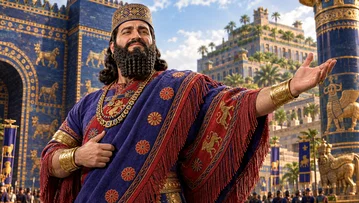
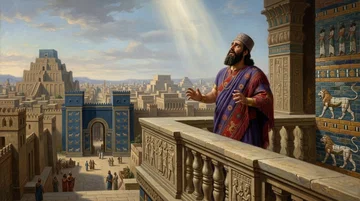
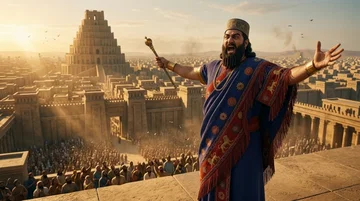
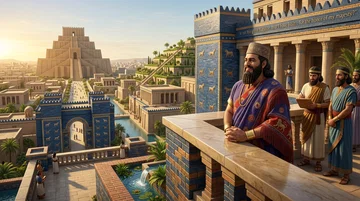
At the end of twelve months he walked in the palace of the kingdom of Babylon.
Translations
American King James Version, King James Version, KJV Cambridge Paragraph Bible, Webster Bible
At the end of twelve months he walked in the palace of the kingdom of Babylon.
Revised Version, American Standard Version, World English Bible
At the end of twelve months he was walking in the royal palace of Babylon.
'At the end of twelve months, on the palace of the kingdom of Babylon he hath been walking;
At the end of twelve months he was walking upon the royal palace of Babylon:
At the end of twelve months, over the palace of the kingdom of Babylon, was he walking:
Berean Standard Bible, Majority Standard Bible
Twelve months later, as he was walking on the roof of the royal palace of Babylon,
At the end of twelve months he was walking on the roof of his great house in Babylon.
And they shall driue thee from men, and thy dwelling shalbe with the beastes of the fielde: they shall make thee to eate grasse, as the oxen, and seuen times shall passe ouer thee, vntill thou knowest, that the most High beareth rule ouer the kingdome of men, and giueth it vnto whomsoeuer he will.
Douay-Rheims (Challoner revision)
At the end of twelve months he was walking in the palace of Babylon.
Pictures



Cross-references
- Daniel 4:34-37
And at the end of the days I Nebuchadnezzar lifted up mine eyes unto heaven, and mine understanding returned unto me, and I blessed the most High, and I praised and honoured him that liveth for ever, whose dominion is an everlasting dominion, and his kingdom is from generation to generation:
After his affliction, Nebuchadnezzar acknowledges God’s rule and is restored.
- Daniel 5:22-23
And thou his son, O Belshazzar, hast not humbled thine heart, though thou knewest all this;
Belshazzar knew how God had humbled Nebuchadnezzar but did not learn from it.
- Daniel 4:17
This matter is by the decree of the watchers, and the demand by the word of the holy ones: to the intent that the living may know that the most High ruleth in the kingdom of men, and giveth it to whomsoever he will, and setteth up over it the basest of men.
Nebuchadnezzar’s humbling shows that the Most High rules human kingdoms.
- Daniel 3:1
Nebuchadnezzar the king made an image of gold, whose height was threescore cubits, and the breadth thereof six cubits: he set it up in the plain of Dura, in the province of Babylon.
Nebuchadnezzar’s pride is reflected in his earlier golden image, magnifying himself and Babylon.
- Jeremiah 27:6
And now have I given all these lands into the hand of Nebuchadnezzar the king of Babylon, my servant; and the beasts of the field have I given him also to serve him.
God gave Nebuchadnezzar rule as his servant.
- Daniel 4:33
The same hour was the thing fulfilled upon Nebuchadnezzar: and he was driven from men, and did eat grass as oxen, and his body was wet with the dew of heaven, till his hairs were grown like eagles’ feathers, and his nails like birds’ claws.
The king is judged by being driven from human society to live with beasts.
- Daniel 5:1-4
Belshazzar the king made a great feast to a thousand of his lords, and drank wine before the thousand.
Belshazzar repeated Nebuchadnezzar’s defiance by profaning the temple vessels.
- Daniel 2
And in the second year of the reign of Nebuchadnezzar Nebuchadnezzar dreamed dreams, wherewith his spirit was troubled, and his sleep brake from him.
The dream and its interpretation first confronted Nebuchadnezzar with God’s power and revealed the succession of kingdoms.
- Daniel 5:30
In that night was Belshazzar the king of the Chaldeans slain.
Babylon’s power ends in its fall that night.
- Isaiah 13:19-22
And Babylon, the glory of kingdoms, the beauty of the Chaldees’ excellency, shall be as when God overthrew Sodom and Gomorrah.
Babylon’s prideful glory ends in judgment and desolation.
- Daniel 5:5
In the same hour came forth fingers of a man’s hand, and wrote over against the candlestick upon the plaister of the wall of the king’s palace: and the king saw the part of the hand that wrote.
The writing warned of judgment after the lesson of humiliation was rejected.
- Daniel 5:26-28
This is the interpretation of the thing: MENE; God hath numbered thy kingdom, and finished it.
Daniel interprets God’s judgment on Belshazzar, recalling Nebuchadnezzar’s fall.
- Daniel 4:25
That they shall drive thee from men, and thy dwelling shall be with the beasts of the field, and they shall make thee to eat grass as oxen, and they shall wet thee with the dew of heaven, and seven times shall pass over thee, till thou know that the most High ruleth in the kingdom of men, and giveth it to whomsoever he will.
It foretells Nebuchadnezzar’s removal until he recognizes God’s rule.
- Daniel 4:34-35
And at the end of the days I Nebuchadnezzar lifted up mine eyes unto heaven, and mine understanding returned unto me, and I blessed the most High, and I praised and honoured him that liveth for ever, whose dominion is an everlasting dominion, and his kingdom is from generation to generation:
After his humiliation, Nebuchadnezzar acknowledges God’s rule.
- Daniel 5:20
But when his heart was lifted up, and his mind hardened in pride, he was deposed from his kingly throne, and they took his glory from him:
same deposition detailed in Daniel 4
- Daniel 4:16
Let his heart be changed from man’s, and let a beast’s heart be given unto him; and let seven times pass over him.
heart changed explains beast degradation
- Daniel 4:14
He cried aloud, and said thus, Hew down the tree, and cut off his branches, shake off his leaves, and scatter his fruit: let the beasts get away from under it, and the fowls from his branches:
The command to cut down the tree represents the judgment on the king.
- Daniel 4:1-3
Nebuchadnezzar the king, unto all people, nations, and languages, that dwell in all the earth; Peace be multiplied unto you.
Nebuchadnezzar’s later testimony praises God’s everlasting dominion.
Commentary
Each commentary is drawn from primary sources: the writings of Ellen G. White and Adventist pioneers and periodicals. Each commentary is separate. Its own words are not a quotation; follow the references to read the source passages.
Ellen G. White
21 sources
At the end of twelve months of warning and trial after his dream was interpreted, Nebuchadnezzar was walking in the palace of the kingdom of Babylon in returned pride and boasted that he had built great Babylon by the might of his own power for the honor of his own majesty.Ms 233, 1902, par. 14–17Lt 34, 1900, par. 24–27Ms 15, 1896, par. 4–6PK 519.3–4 While the boast was still in his mouth a voice from heaven declared the kingdom departed from him, and that same hour he was driven from men to live as a beast for seven times until he knew that the Most High rules and gives kingdoms to whomever He will.Ms 233, 1902, par. 14–17Lt 34, 1900, par. 24–27PK 519.3–4 Dominion and glory come from God, who took away his wisdom and reason to humble him until he acknowledged a power above himself and praised God, for Babylon passed away because in prosperity her rulers forgot God and ascribed her honor to human achievement.Lt 34, 1900, par. 24–27PK 529.2–3Ms 39, 1899, par. 9–11 The verse warns against the self-sufficiency that grows from success, against trusting in self and human wisdom and strength and pursuing ambitious plans by one's own will instead of giving glory to God, for human capabilities are only lent in trust and boasting over them brings loss and judgment unless hearts are humbled and sins confessed.8T 126.38T 162.1–2Ms 93, 1903, par. 19Ms 97, 1899, par. 24–25 His divinely decreed banishment, conversion, and restoration teach humility and obedience, a lesson Belshazzar knew yet disregarded to his own calamity, and those entrusted with leadership must not take God's work into human hands by personal devising and supremacy over others but must give all a chance to work by the wisdom God gives them individually.SLP 14.1–2PK 522.2Lt 188, 1901, par. 111MR 310.3–311.1CTBH 20.1–21.2
Setting and Downfall
Daniel 4 records another dream God gave to Nebuchadnezzar after he lost the holy impression made by the deliverance of the three Hebrews from the fiery furnace, because he did not continue to walk in the light he had received about the living God.13MR 60.1–61.2 In that dream the lofty tree represented his greatness and prosperity, with nations living under his sovereignty and his kingdom firmly established among loyal subjects.8T 126.3
The verse places him walking in the palace of the kingdom of Babylon at the end of twelve months after Daniel had interpreted the dream and warned him of the coming sentence, closing a twelve-month period of warning and trial.Ms 233, 1902, par. 14–17Ms 15, 1896, par. 4–6PK 519.3–47MR 67.2–68.2PK 529.2–3 About a year after his warning he was still in his palace, and his prosperity and pride had made him unjust and oppressive.7MR 67.2–68.2
While walking there his earlier pride and self-directed ambition had returned, and in pride he exalted himself and thought highly of himself, boasting of his own capabilities.Ms 15, 1896, par. 4–6Lt 45, 1900, par. 18–21Ms 97, 1899, par. 24–25 In pride in his power as ruler and success as a builder he claimed that he himself had built great Babylon by the might of his own power and for the honor of his own majesty and name, that his own name might receive the glory.Lt 34, 1900, par. 24–27PK 519.3–4Lt 45, 1900, par. 18–21Ms 97, 1899, par. 24–25
While the boast was still in his mouth a voice from heaven announced that the appointed time of judgment had come and the kingdom was departed from him.Lt 34, 1900, par. 24–27PK 519.3–4 That same hour the declared judgment was fulfilled in his madness and degradation, when he was driven from men to dwell with beasts and eat grass for seven times until he knew that the Most High rules and gives kingdoms to whomever He will.Lt 34, 1900, par. 24–27 In forgetting God and glorifying himself he at once lost his kingdom, wisdom, and reason, in banishment from the society of men and association with the beasts of the field, for God took away his wisdom and reason to humble him so that he would recognize God as able to create and destroy.Ms 233, 1902, par. 14–177MR 67.2–68.2SLP 14.1–2Ms 39, 1899, par. 9–11
Lessons and Applications
Dominion and glory come from God, who judged Nebuchadnezzar's pride at the end of twelve months of warning by taking away his wisdom and reason to humble him. The humbling was to lead him to recognize God as able to create and to destroy, to acknowledge a power above himself, to use his tongue to praise God, and to confess God's power and mercy.Lt 34, 1900, par. 24–27PK 529.2–3Ms 39, 1899, par. 9–11 Babylon passed away because in prosperity her rulers forgot God and ascribed her honor and glory to human achievement.Ms 39, 1899, par. 9–11RH Feb 6, 1900 The same humiliation comes today when people forget God and refuse to obey His law, for God tests them, and if they do not humble their hearts and confess their sins they receive the penalty of transgression.RH Feb 6, 1900
His divinely decreed banishment, conversion, and miraculous restoration teach humility and obedience.PK 522.2 That experience became a lesson to Belshazzar, who knew these facts and had great opportunities and light to know the works and power of the living God and to do His will.SLP 14.1–2PK 522.2 Yet he disregarded what ought to have been a lesson to him as if it had never occurred, and went on repeating the same sins and daring the crimes that brought judgment upon Nebuchadnezzar, bringing later calamity on Babylon.SLP 14.1–2Lt 201, 1899, par. 3–4 He was condemned not alone because he himself was doing wickedly, but because he did not avail himself of opportunities and capabilities which, if cultivated, would have made him right.SLP 14.1–2 God gives lessons to lead people to reform, and neglecting and failing to practice them brings judgment, a warning Daniel later recalled to him.CTBH 20.1–21.2Lt 201, 1899, par. 3–4
The walk in the palace warns against the self-sufficiency that grows from success, greatness and prosperity, when nations live under one's sovereignty and the kingdom seems firmly established.8T 126.3 It warns against trusting in oneself and one's own wisdom, and against relying on human wisdom and human strength.8T 162.1–221MR 53.3–4 It warns against continuing in pride and self-directed ambition instead of heeding warning, disregarding God's counsel and pursuing ambitious plans by one's own will, and against patterning after Nebuchadnezzar by exalting self and seeking personal glory for one's own name instead of giving glory to God.Ms 93, 1903, par. 19Lt 45, 1900, par. 18–21RH Feb 6, 1900 The kings who succeeded Nebuchadnezzar failed to profit by his experience.RH Feb 6, 1900
Human capabilities belong to God and are only lent in trust, so boasting over them brings the same danger of losing reason.Ms 97, 1899, par. 24–25 Self must be denied, and true excellence is demonstrated not by boasting but by Christlikeness in meekness and lowliness, usefulness and love.Ms 97, 1899, par. 24–25
For those entrusted with leadership, especially in sanitarium and medical missionary work, the verse forbids acting like Nebuchadnezzar by taking God's work into human hands and carrying it by the wisdom of human minds and personal devising instead of as God requires.11MR 310.3–311.1 It forbids exercising authority and power over God's heritage that God has not given, requiring everyone to understand and carry out one man's mind, and investigating and criticizing and condemning work that does not meet his ideas.Lt 188, 1901, par. 1 It forbids bringing discouragement upon workers striving to accomplish something in their own borders, and revealing a spirit of supremacy in making laws and pledges for the future.Lt 188, 1901, par. 1 To carry on the work in that self-directed way brings in principles God will not sustain or favor.11MR 310.3–311.1 It calls for a change of heart so that planning no longer centers in one man's devising but gives all others a chance to accomplish the work by the wisdom given them individually of God, on which eternal interests depend.11MR 310.3–311.1
Sources
Pioneers and periodicals
55 sources
At the end of twelve months of probation and mercy after he was warned by the dream and its interpretation, Nebuchadnezzar was walking in his royal palace in Babylon at the height of his glory, prosperity, majesty and security, looking upon the city he had built.RH May 4, 1869ST Dec 23, 1897ST Sep 21, 1904RH Jan 23, 1908ST Apr 12, 1905
While walking there he was lifted up in pride, boasting of his own power and deeds and claiming the greatness of Babylon as his own achievement for his own honor, forgetting God as the source of his greatness and refusing to acknowledge Him.ST Dec 24, 1896ST Mar 18, 1903RH Oct 22, 1901RH Oct 22, 1901RH Feb 1, 1906
While he spoke the judgment fell, the voice from heaven announcing the kingdom taken from him, and his man's heart was changed to a beast's heart so that for seven years he was driven from men and lived like the beasts of the field.ST Dec 23, 1897ST Apr 8, 1897RH Aug 12, 1875RH Oct 22, 1901
When he turned his mind heavenward his reason returned and he was restored to kingly honors and the throne, humbly acknowledging God.RH Jan 23, 1908RH Oct 27, 1910ST Mar 25, 1903
The verse teaches that the Most High rules in the kingdom of men and gives it to whom He will, mercifully giving opportunity for repentance and then humbling the proud to teach humility, a lesson written for rulers and nations to the last days.ST Dec 1, 1914RH Feb 1, 1906
Time Place and Circumstance
At the end of twelve months the threatened chastening had not yet fallen, for God allowed a full year of probation and mercy to pass after the warning given by the dream and its interpretation.RH May 4, 1869ST Dec 23, 1897ST Sep 21, 1904ST Jan 16, 1912 That interval was a time of continued prosperity and tranquillity in which the king went on cherishing pride instead of turning from it.RH May 4, 1869ST Dec 23, 1897 The verse marks the moment just before pride reached its climax, when his boast over his power and achievements immediately preceded the judgment announced from heaven that the kingdom and reason were taken from him.RH May 4, 1869ST Dec 23, 1897ST Sep 21, 1904 The word of the Lord did not fail, and after the twelve months the predicted calamity came upon him in severe mental illness, removal from royal functions, and seven times of humiliation in which he ate grass like an ox with hair and nails growing like an animal's.ST Sep 21, 1904ST Jan 16, 1912RH Aug 12, 1875
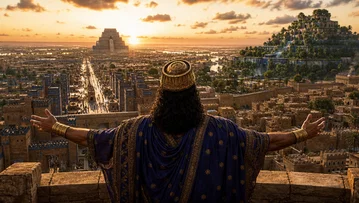
He is pictured walking in his royal palace in Babylon, looking upon the city and its wonders and upon the mightier Babylon he had built.RH May 4, 1869ST Apr 12, 1905 It was the zenith of Babylonian power and the height of the kingdom, majesty, glory, honor, prosperity and security God had given him.RH Jan 23, 1908ST Jun 10, 1913 There with mind lifted up and heart hardened he was in outrageous pride, surveying Babylon and claiming its greatness as his own achievement and for his own honor.RH Jan 23, 1908ST Apr 12, 1905 Forgetting God as the source of his greatness, he took the glory to himself, and that pride was clipped by the judgment of insanity in which his man's heart was changed to a beast's heart and he was brought down to a degraded bestial condition and driven to live among beasts.RH May 4, 1869RH Jan 23, 1908ST Apr 12, 1905 Because of this God deposed him from his throne and took his glory from him in degradation, showing that such prosperity and security when men feel secure holds the danger of judgment and downfall.RH Mar 18, 1873ST Jun 10, 1913
In the order of the book the account with its proclamation belongs to the prophecies of Daniel and follows the captivity of Judah and the accounts of the dream and the golden image, and comes before the writing on the wall.ST Jan 24, 1911 Daniel's vision in the first year of Belshazzar follows chapter 4, though history and prophecy are presented separately.ST Apr 5, 1877ST Jan 24, 1911
An inscription of Nebuchadnezzar connected with the account refers to his restoration of the tower of Babel and his building projects in Babylon.RH May 13, 1909 The ruins of his palace in Babylon, with bricks stamped with his name, confirm the biblical account of the king in his palace.ST Oct 23, 1901 The account of his absence from royal affairs stands alongside a Standard Inscription in which he says he did not attend to royal duties for four years.ST Jan 11, 1916
Pride Before Judgment
While walking in the palace he was lifted up in outrageous pride and self-exaltation, speaking proudly and boastfully of his own prowess, deeds, culture, wealth and power.ST Dec 24, 1896ST Mar 18, 1903RH Oct 22, 1901 Surveying Babylon from the palace, he claimed its greatness and honor as his own achievement and for his own honor.ST Apr 12, 1905RH Feb 1, 1906 His heart was lifted up because of his greatness and the extent of his kingdom.RH Feb 1, 1906
Instead of gratitude he forgot God as the source of his greatness, failing to acknowledge God's hand in his power and success.RH May 4, 1869RH Oct 22, 1901 He took the glory to himself, with mind lifted up and heart hardened in pride, going on in his own strength in spite of warning.RH Feb 6, 1900 He refused to recognize that he was God's servant, responsible to God for the conduct of the affairs of the kingdom.RH Feb 1, 1906 Because of this God deposed him from his throne and took his glory from him in degradation, then in mercy gave him another opportunity to acknowledge God as supreme Ruler to whom kings and nations owe allegiance.
He had been warned through the dream and its interpretation to turn from a proud purpose and its ruinous consequences.RH Nov 22, 1906 Through Daniel's interpretation he had been counseled to break off sins by righteousness and to show true repentance by mercy to the poor, and was deeply impressed at the time.ST Jan 17, 1906 Yet he made no real change in life but continued to cherish pride, and his pride kept him from learning the lessons of earlier warnings and deliverances that should have turned him and spared him the sad experience.RH May 4, 1869RH Oct 22, 1901ST Jan 17, 1906
His boast immediately preceded the judgment, for while he spoke the voice from heaven announced that the kingdom was taken from him, and the predicted calamity and announced chastening came upon him at once.ST Dec 23, 1897ST Apr 8, 1897RH Oct 22, 1901ST Apr 12, 1905ST Dec 23, 1897 The judgment was the loss of wisdom and reason for seven years, when his man's heart was changed to a beast's heart and he was brought down to a degraded bestial condition.RH Jan 23, 1908 He was driven from people, removed from royal functions, and lived and ate like the beasts of the field, eating grass like an ox, with hair and nails growing like an animal's.RH Aug 12, 1875RH Oct 22, 1901 This came after a period of prosperity and tranquillity, and the godlike faculties that enabled him to rule among men were taken from him.RH Feb 1, 1906
At the end of the affliction, when he turned his mind heavenward, his reason returned.RH Oct 27, 1910 He was lifted up from the earth and restored, given a man's heart again and brought to a sane appreciation of his humble position as a man in relation to Almighty God.RH Jan 23, 1908 He resumed his kingly honors and was restored to the throne, humbly acknowledging God's sovereignty over human kingdoms and acknowledging Jehovah as his God.RH Oct 27, 1910ST Jan 17, 1906 Having learned humility through being brought down to live like an ox for seven years, he became a better king.ST Mar 25, 1903
God's Rule and Mercy
The Most High rules in the kingdom of men and gives it to whomever He will, and earthly kingship stands under His righteous rule so that only what stands in harmony with that rule can persist.ST Dec 1, 1914RH Feb 1, 1906 He did not abdicate when He permitted Babylon to come to empire and gave kingdoms into her power, but ruled over Babylon and then over Medo-Persia, then over Grecia, then over iron Rome with its mingled clay, and rules still. Nebuchadnezzar refused to recognize that he was God's servant responsible to God for the conduct of the affairs of the kingdom, and because of that pride the godlike faculties that enabled him to rule among men were taken from him until he became as a beast of the field, that he might know this rule.RH Feb 1, 1906 That lesson that He is the King of heaven whose works are truth and whose ways are judgment was proclaimed to all the world by royal proclamation so that all might put confidence in God, not forget His doings, and keep His commands as personally as if each had passed through the experience himself.RH May 29, 1900
The twelve months of prosperity and tranquillity after warning, and the further opportunity given after degradation to acknowledge God as supreme Ruler in heaven and earth to whom kings and nations owe allegiance, show God's merciful effort to turn a proud ruler from self-sufficiency and win him to the truth.ST Jan 16, 1912 The king stood at the height of the kingdom, majesty, glory and honor God had given him, yet instead of gratitude took the glory to himself with mind lifted up and heart hardened in pride, so God deposed him from his throne and took his glory from him. After a period of prosperity and tranquillity he was struck by severe mental illness and removed from his royal functions for seven years.
Afflictions and judgments serve as means by which God humbles people, and pride and foolishness brought judgment upon Nebuchadnezzar but God brought blessing and glory from the experience.RH Feb 13, 1900RH Mar 23, 1869 Through seven years' loss of reason he learned his weakness under the supreme God and was led to recognize God's authority.RH Apr 25, 1912 His outrageous pride was clipped when his man's heart was changed to a beast's heart and he was brought down to a degraded bestial condition, and afterward he was lifted up from the earth, given a man's heart again, and brought to a sane appreciation of his humble position as a man in relation to Almighty God.RH Jan 23, 1908 Brought down from his throne to live like an ox for seven years, he was taught humility, and after he learned the lesson he was restored to his throne and became a better king.ST Mar 25, 1903
Through chastisement and humility he learned that God rules in the kingdoms of men and that he owed God homage as both a man and a king.ST Oct 18, 1905 The setting led to his later recognition that God was just and right and that his own ways were evil, and to his submission to God.ST Jul 16, 1912
The chapter is Nebuchadnezzar's own royal proclamation to all peoples, nations and languages that dwell in all the earth, telling of himself and Babylon and Daniel and God to show the signs and wonders the Most High wrought toward him, that His kingdom is an everlasting kingdom and His dominion is from generation to generation.ST Oct 16, 1901 It was written by the king for all posterity and preserved through Daniel, though idolatrous successors and priests of heathen cults did their best to obliterate the knowledge and worship of the true God from Babylonian history rather than let future generations know their mightiest emperor had been humbled and taught by the God of a despised nation.ST Oct 16, 1901 It belongs also to the account of a king who was ultimately brought to acknowledge the true God and issued a decree proclaiming Him to all the nations under his rule.ST Feb 4, 1886
Daniel 4 is the chapter showing God the Ruler, revealing God as ruler over human affairs and nations.ST Aug 9, 1910 Like the rest of Daniel it was written not for that time merely but for all subsequent time and most emphatically for the last days, containing God's instruction to nations in the last days.ST Oct 16, 1901 It opens a lesson that if learned by Nimrod the beginner of earthly kings and followed ever since would have made earth's history far different, worthy of profoundest study by the mightiest of earth and for the very days now passing.ST Oct 16, 1901 Though presented as narrative, like the other chapters it is more or less prophetic and teaches practical lessons of life to rulers and nations and lessons for all classes of people.ST Oct 21, 1908
Prophecy and Modern Babylon
At the end of twelve months the king walked in the palace in the midst of the dream of the tree, which is a symbolic prophecy whose meaning is unfolded by inspiration in the Bible itself and fully explained with its application fearlessly made.RH Sep 2, 1909 With the other divinely interpreted prophecies it furnishes the basis and key for correct general interpretation of symbolic prophecy and for opening Scriptures that would otherwise remain closed.RH Sep 2, 1909 Though presented as narrative, the chapter like the other chapters is more or less prophetic and teaches practical lessons of life to rulers and nations.ST Oct 21, 1908
Ancient Babylon with its religion exalting man and perverting truth in antagonism to God is a type of apostasy and of apostate organizations, churches, associations and federations that profess to save men while perverting God's plan.ST Mar 23, 1915 The historical account serves as a prophetic outline of modern Babylon, which God seeks to heal and whose fall comes when it expresses contempt for its enemies and confidence in its permanence.ST Mar 23, 1915RH Oct 11, 1915 In God's everlasting way of right prideful Babylon falls, for the exaltation and pride of Nebuchadnezzar over the mightier Babylon he had built shows that human Babylonian exaltation ends in sudden divine judgment by the voice from heaven taking the kingdom away.ST Apr 8, 1897ST Mar 23, 1915 Beyond the complete surrender of nominal Christianity to Rome lies the same humbling of boastful Babylon.ST Apr 8, 1897 His later remembrance of being humbled and spending seven years among the beasts pictures how shameful and wasted the past will seem beside the glory of God's coming kingdom.RH Feb 16, 1864
The chapter shows that a prophetic time means a year, so a time and times and half a time means three and one-half years, or forty-two months, or twelve hundred and sixty days reckoned at thirty days to the month, and in symbolic prophecy twelve hundred and sixty years.RH Sep 18, 1900
Doctrine and Scripture Links
Civil rule as king was permitted by God to restrain evil, but it gave no right to take God's place by directing worship, controlling conscience, or forcing religious worship on others by decree and punishment.ST Jul 11, 1911ST Dec 3, 1896ST Jul 1, 1903 When Nebuchadnezzar sought that authority and punished those who would not worship as he decreed, God humbled him and proud Babylon with him.ST Jul 11, 1911ST Dec 3, 1896ST Jul 1, 1903 The account belongs with the origin of civil government alongside Daniel 2:36-38 and Romans 13:1-2, and it shows he did not humble himself nor correct his error of enforcing worship before his reason was taken for seven years.RH Mar 26, 1914
Nebuchadnezzar walking in pride in the palace of his kingdom shows the glorification of man that must be laid in the dust.RH Aug 22, 1907 Pride is the very essence of righteousness by works, by which no one can make himself acceptable to God.RH Aug 22, 1907 Justification by faith is God's work in doing for man what he cannot do for himself, and its designed effect is seen in the king's conversion.RH Aug 22, 1907 The chapter preaches the gospel of the kingdom of God, which is righteousness by faith, as the third part of a threefold message proclaimed in Babylon by Daniel and his companions so that all who would accept it might be saved from impending destruction.RH Aug 22, 1907
That threefold revelation of the gospel of the kingdom joins the dream of the image, the deliverance of the three Hebrews from the furnace, and the dream of the tree.RH Aug 22, 1907RH May 29, 1900 The chapter is an example of God making His truth known through Gentile kings when Israel failed to carry the gospel to the nations.RH Nov 11, 1902 Its lesson is that the Most High rules in the kingdom of men and gives it to whomever He wills, and that He is the King of heaven whose works are truth and whose ways are judgment.RH May 29, 1900 That lesson was proclaimed to all the world by royal proclamation so that all might put confidence in God, remember His doings, and keep His commands as personally as if each had passed through the experience himself.RH May 29, 1900
The humbling was public record and known light, occurring only about three decades before Belshazzar's feast and well known to many present there.ST Aug 13, 1896ST Oct 23, 1901 Belshazzar knew of that humiliation and its cause, and had every privilege and opportunity to know God and His truth and to know and do righteousness and lead others rightly.ST Jun 28, 1899ST Aug 13, 1896 Yet he heeded not its lesson, disregarded it completely as though it had never occurred, and committed the very sins for which his predecessor had been condemned.ST Oct 23, 1901 His presumption went beyond Nebuchadnezzar's when in drunken pride he publicly defiled the vessels of the Lord's house to insult God and lifted himself against Him, leaving himself without excuse.ST Jun 28, 1899
Nebuchadnezzar's immediate successors soon forgot God's works, disregarded the message, failed to profit by his experience, and did not glorify the living God.RH Feb 6, 1900RH May 29, 1900 The character of the king determines the greatness and permanency of the dominion, and within a quarter century after Nebuchadnezzar's death Babylon's glory waned until Medo-Persia under Cyrus stood before the city.RH May 29, 1900 God's dealings with Babylon in this account are thus connected with Cyrus's proclamation and the return of the Jewish captives.ST Dec 19, 1892 Despite Babylon's greatness and patronage of the arts, Jehovah brought the proud king down from his royal position to learn humility, and because in prosperity her rulers forgot God and ascribed honor and glory to human achievement, the kingdom passed away and the city crumbled into dust.RH Feb 6, 1900RH Jul 11, 1854
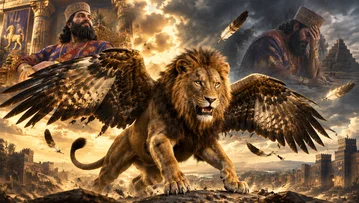
The plucking of the lion's wings may represent the period when Nebuchadnezzar was made to eat grass and was humbled until he recognized that God rules. Through that episode God brought the proud king to see that he was only a servant.
Warning to Nations Today
The same pride seen in Babylon is now repeated by Great Britain, France, Germany, Russia and the United States, who need the lesson Babylon needed. Their length of stay depends on recognizing God not in words but in deeds so that glory accrues to Him, and when they fail the everlasting kingdom of God will succeed all earthly rule and temporal kingdoms will pass away forever. God did not abdicate when He permitted Babylon to come to empire, but ruled over Babylon and then over Medo-Persia, Grecia, and iron Rome with mingled clay, and rules still, while He permits sin to work out its evil fruit to demonstrate His word true.
The verse places Babylon at the height of prosperity when it felt secure, and that prosperity and security held the danger of judgment and downfall.ST Jun 10, 1913 It warns that a nation that abandons its founding principles, enters the sphere of religion, and assumes authority belonging to God will face judgment.ST Jun 10, 1913 Beyond the complete surrender of nominal Christianity to Rome lies the same humbling of boastful Babylon.ST Apr 8, 1897 Such pride leads to a state-backed religious system and persecution and ultimately to the destruction of the proud city.ST Dec 24, 1896
The same humiliation comes today when in prosperity men forget God, ascribe honor and glory to human achievement and refuse to obey His law.RH Feb 6, 1900 Babylon passed away because in prosperity her rulers forgot God and ascribed her honor and glory to human achievement, and the kings who succeeded Nebuchadnezzar failed to profit by his experience.RH Feb 6, 1900 God tests men today, and if they do not humble their hearts and confess their sins they receive the penalty of transgression.RH Feb 6, 1900 The humiliation was preceded by faithful warning after long-suffering had endured until waiting longer would no longer be mercy, proving that when justice speaks in the Judgment day the guilty will have no excuse for neglecting the warning given.RH Mar 18, 1873 The twelve months after the warning ending with the king walking in his royal palace calls readers to study the circumstances in which the prophecy was fulfilled.RH Jan 2, 1900RH Mar 18, 1873
Sources