Daniel 4:30
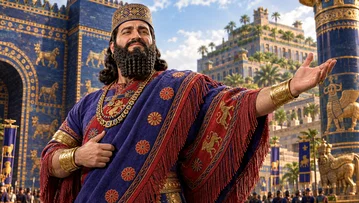
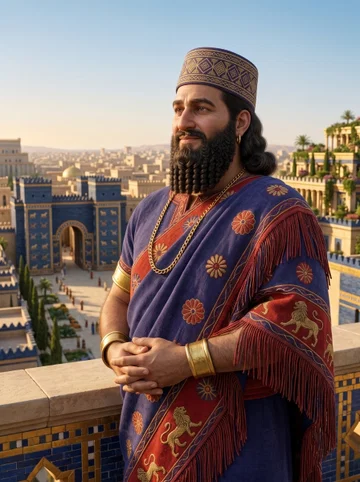
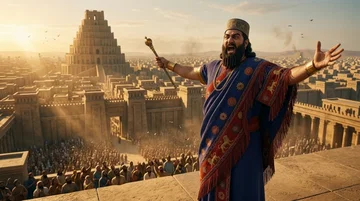
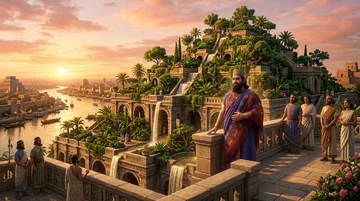
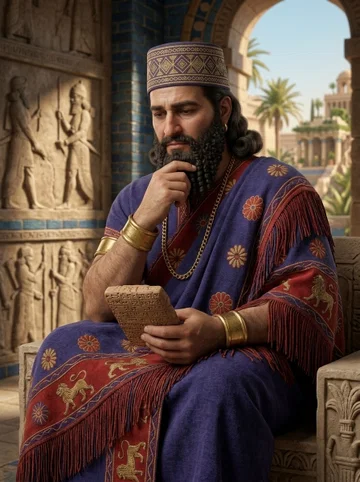
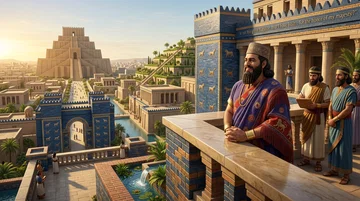
The king spake, and said, Is not this great Babylon, that I have built for the house of the kingdom by the might of my power, and for the honour of my majesty?
Translations
American King James Version, Webster Bible
The king spoke, and said, Is not this great Babylon, that I have built for the house of the kingdom by the might of my power, and for the honor of my majesty?
King James Version, KJV Cambridge Paragraph Bible
The king spake, and said, Is not this great Babylon, that I have built for the house of the kingdom by the might of my power, and for the honour of my majesty?
The king spake and said, Is not this great Babylon, which I have built for the royal dwelling place, by the might of my power and for the glory of my majesty?
The king spake and said, Is not this great Babylon, which I have built for the royal dwelling-place, by the might of my power and for the glory of my majesty?
the king hath answered and said, Is not this that great Babylon that I have built, for the house of the kingdom, in the might of my strength, and for the glory of mine honour?
the king spoke and said, Is not this great Babylon, that I have built for the house of the kingdom by the might of my power and for the glory of my majesty?
the king spake and said, Is not, this, Babylon the great,—which, I myself, have built as the home of the kingdom, by the might of my power, and for the dignity of my majesty?
the king exclaimed, “ Is this not Babylon the Great, which I myself have built by the might of my power as a royal residence and for the glory of my majesty?”
the king exclaimed, “ Is this not Babylon the Great, which I myself have built as a royal residence by the might of my power and for the glory of my majesty?”
The king spoke and said, “ Is not this great Babylon, which I have built for the royal dwelling place by the might of my power and for the glory of my majesty?”
The king made answer and said, Is this not great Babylon, which I have made for the living-place of kings, by the strength of my power and for the glory of my honour?
The very same houre was this thing fulfilled vpon Nebuchad-nezzar, and hee was driuen from men, and did eate grasse as the oxen, and his body was wet with the dewe of heauen, till his heares were growen as eagles feathers, and his nailes like birds clawes.
Douay-Rheims (Challoner revision)
And the king answered, and said: Is not this the great Babylon, which I have built to be the seat of the kingdom, by the strength of my power, and in the glory of my excellence?
Pictures


Cross-references 20 of 55
- Daniel 4:37
Now I Nebuchadnezzar praise and extol and honour the King of heaven, all whose works are truth, and his ways judgment: and those that walk in pride he is able to abase.
After his humiliation, Nebuchadnezzar praises God and recognizes His power to humble the proud.
- Daniel 3:1-6
Nebuchadnezzar the king made an image of gold, whose height was threescore cubits, and the breadth thereof six cubits: he set it up in the plain of Dura, in the province of Babylon.
Nebuchadnezzar’s golden image displays the pride and self-exaltation behind his boast.
- Daniel 4:17
This matter is by the decree of the watchers, and the demand by the word of the holy ones: to the intent that the living may know that the most High ruleth in the kingdom of men, and giveth it to whomsoever he will, and setteth up over it the basest of men.
Declares that the Most High rules human kingdoms and gives them to whom he wills.
- Daniel 5:22-23
And thou his son, O Belshazzar, hast not humbled thine heart, though thou knewest all this;
Daniel rebukes Belshazzar by recalling Nebuchadnezzar’s fall.
- Daniel 2:37-38
Thou, O king, art a king of kings: for the God of heaven hath given thee a kingdom, power, and strength, and glory.
God gave Nebuchadnezzar the kingdom and power he claimed to build.
- Isaiah 13:19
And Babylon, the glory of kingdoms, the beauty of the Chaldees’ excellency, shall be as when God overthrew Sodom and Gomorrah.
Babylon’s glory and beauty are contrasted with its prophesied overthrow.
- Daniel 4:34-35
And at the end of the days I Nebuchadnezzar lifted up mine eyes unto heaven, and mine understanding returned unto me, and I blessed the most High, and I praised and honoured him that liveth for ever, whose dominion is an everlasting dominion, and his kingdom is from generation to generation:
Nebuchadnezzar’s boast is corrected as he acknowledges God’s sovereign rule.
- Jeremiah 27:6-7
And now have I given all these lands into the hand of Nebuchadnezzar the king of Babylon, my servant; and the beasts of the field have I given him also to serve him.
God grants Nebuchadnezzar power over nations while keeping him subject to divine authority.
- Daniel 4:25
That they shall drive thee from men, and thy dwelling shall be with the beasts of the field, and they shall make thee to eat grass as oxen, and they shall wet thee with the dew of heaven, and seven times shall pass over thee, till thou know that the most High ruleth in the kingdom of men, and giveth it to whomsoever he will.
Nebuchadnezzar is humbled until he acknowledges that God rules human kingdoms.
- Genesis 11:4
And they said, Go to, let us build us a city and a tower, whose top may reach unto heaven; and let us make us a name, lest we be scattered abroad upon the face of the whole earth.
Both express pride in building a city to make a name for themselves.
- Revelation 18:7-8
How much she hath glorified herself, and lived deliciously, so much torment and sorrow give her: for she saith in her heart, I sit a queen, and am no widow, and shall see no sorrow.
Both boast of greatness before a fall and judgment.
- Proverbs 16:18
Pride goeth before destruction, and an haughty spirit before a fall.
Pride in the boast precedes the king’s downfall.
- Daniel 5:2-4
Belshazzar, whiles he tasted the wine, commanded to bring the golden and silver vessels which his father Nebuchadnezzar had taken out of the temple which was in Jerusalem; that the king, and his princes, his wives, and his concubines, might drink therein.
Belshazzar profanes the holy vessels and praises idols, showing defiance against God.
- Daniel 5:20-21
But when his heart was lifted up, and his mind hardened in pride, he was deposed from his kingly throne, and they took his glory from him:
Nebuchadnezzar’s pride led to losing his majesty and being humbled by God.
- Daniel 5:5
In the same hour came forth fingers of a man’s hand, and wrote over against the candlestick upon the plaister of the wall of the king’s palace: and the king saw the part of the hand that wrote.
A hand writes judgment on the palace wall during Belshazzar’s feast.
- Jeremiah 51:9
We would have healed Babylon, but she is not healed: forsake her, and let us go every one into his own country: for her judgment reacheth unto heaven, and is lifted up even to the skies.
Babylon’s refusal to be healed is linked to its king’s pride.
- Daniel 4:14
He cried aloud, and said thus, Hew down the tree, and cut off his branches, shake off his leaves, and scatter his fruit: let the beasts get away from under it, and the fowls from his branches:
The command to cut down the tree follows the king’s boast as judgment is pronounced.
- Daniel 5:26-28
This is the interpretation of the thing: MENE; God hath numbered thy kingdom, and finished it.
The writing announces Babylon’s judgment and its division to the Medes and Persians.
- Isaiah 47:8
Therefore hear now this, thou that art given to pleasures, that dwellest carelessly, that sayest in thine heart, I am, and none else beside me; I shall not sit as a widow, neither shall I know the loss of children:
Both express Babylon’s boastful claim to supremacy and unmatched greatness.
- Daniel 4:2-3
I thought it good to shew the signs and wonders that the high God hath wrought toward me.
Nebuchadnezzar’s pride contrasts with his later proclamation of God’s signs and everlasting rule.
Commentary
Each commentary is drawn from primary sources: the writings of Ellen G. White and Adventist pioneers and periodicals. Each commentary is separate. Its own words are not a quotation; follow the references to read the source passages.
Ellen G. White
69 sources
Walking in his palace, the king congratulated himself within and claimed the greatness and splendor of Babylon as built by himself for his own power and honor.8T 126.3Lt 126, 1910, par. 13–15Lt 34, 1900, par. 24–27Lt 11a, 1886, par. 4–5Lt 11b, 1886, par. 3–4 His words were pride and self-sufficiency, crediting his own ability and majesty for his position and success while forgetting and robbing God as the source of strength and exaltation.8T 126.3Ms 233, 1902, par. 14–17ED 175.4–5ST Sep 9, 1889PK 522.2 The boast came after warning in the dream of the tree and counsel to break off sins, followed by twelve months of probation in which his heart remained unchanged.Lt 126, 1910, par. 13–1513MR 61.3–62.2Ms 15, 1896, par. 7–9Lt 71, 1894, par. 27–31Ms 233, 1902, par. 14–17 While the word was still in his mouth judgment fell, his reason was taken, and he was driven from men to live as a beast for seven times until he knew that the Most High rules in the kingdoms of men.8T 126.3Lt 126, 1910, par. 13–1513MR 61.3–62.28T 126.4–127.1Lt 34, 1900, par. 24–27 When he lifted his eyes to heaven and blessed the Most High, his understanding returned and he was restored with added majesty to confess that God is able to abase those who walk in pride.13MR 61.3–62.2Lt 34, 1900, par. 24–27Ms 29, 1895, par. 19–22PK 529.2–3 The record stands as warning that prosperity lifts up corrupt nature to self-exaltation, that pride is surely followed by punishment, and that success and ability are lent in trust to be used humbly for God rather than for display and control of others.Lt 11a, 1886, par. 4–5Lt 11b, 1886, par. 3–4Lt 8, 1886, par. 10–117MR 69.1–3Ms 29, 1895, par. 23–24
Boast and Setting
The king uttered the boast while walking in the palace of the kingdom of Babylon, speaking in self-gratulation even within himself, on a morning when he was swelling with self-importance.Lt 126, 1910, par. 13–15Lt 34, 1900, par. 24–27Ms 29, 1895, par. 19–22Lt 71, 1894, par. 27–31 He asked whether this great Babylon was not built by him for the house of the kingdom by the might of his power and for the honor of his majesty, claiming its building, greatness, construction, splendor, and his success as ruler as his own achievement and for his own glory.Lt 34, 1900, par. 24–27Lt 11a, 1886, par. 4–5Lt 11b, 1886, par. 3–4PK 519.3–4Lt 180, 1901, par. 14–16
The words were pride, self-sufficiency, self-importance, and self-glorification, crediting his own power, ability, strength, achievement, and majesty for Babylon.8T 126.3Ms 233, 1902, par. 14–17ED 175.4–5Lt 114, 1903, par. 15–18PK 519.3–4 He proudly claimed credit for building Babylon and took its splendor as a display of his power and majesty.ED 175.4–5Lt 114, 1903, par. 15–18PK 519.3–4PK 514 His prosperity fed that pride and self-glorification, and his words revealed a heart unchanged by warning.Ms 233, 1902, par. 14–17ED 175.4–5Lt 114, 1903, par. 15–18
The boast forgot God and robbed Him of glory, failing to recognize Him as the power that had exalted the king and as the source of strength, ability, authority, position, prosperity, success, and exaltation.ED 175.4–5ST Sep 9, 1889PK 522.2Ms 39, 1899, par. 9–11Lt 45, 1900, par. 18–21 He did not consider God as his source of strength and ability, forgot God's honor, and put self where God should be and self before the people as an object of worship.Ms 29, 1895, par. 19–22Lt 71, 1894, par. 27–31ST Sep 9, 1889Lt 45, 1900, par. 18–21 Babylon itself likewise passed away because in prosperity its rulers forgot God and gave human achievement the glory for its success.Ms 39, 1899, par. 9–111MR 50.2
Prosperity had elevated him and deceived him, raising him up until in an unguarded moment corrupt human nature lifted up by prosperity claimed Babylon as his own by his own power for his own honor.Lt 11a, 1886, par. 4–5Lt 11b, 1886, par. 3–4Lt 8, 1886, par. 10–11TEPD 3.121MR 332.4–5 He looked on his kingdom with pride and did what he had been warned not to do, taking credit for Babylon and glorying in his own power and majesty rather than God.Lt 8, 1886, par. 10–11TEPD 3.121MR 332.4–5
That pride stood in contrast with his earlier recognition that his kingdom and its splendor had been granted to him, for he had understood that Babylon would fall, other kingdoms would follow, and God's everlasting kingdom would supersede all earthly powers.PK 514.1 It grew out of flattery over Babylon as the head of gold and out of failing to continue walking in the light after acknowledging the living God, joined to the pride and ambition that set up the golden image.Ms 15, 1896, par. 7–913MR 60.1–61.2 Flattered by the word that he was the head of gold, he became jealous of other kingdoms and determined his kingdom should be as an image all of gold.13MR 65.1–2 A rule that had been largely just and merciful by God-given wisdom was thus turned into vanity and oppression, with self-indulgence and pride remaining.Ms 15, 1896, par. 7–913MR 65.1–2Ms 15, 1896, par. 13–16
Warning Beforehand
The boast did not come without warning, for the king had first been shown his kingdom and greatness in the dream of the tree, with counsel to break off his sins by righteousness and to show mercy to the poor.Ms 15, 1896, par. 7–9Lt 71, 1894, par. 27–31Ms 233, 1902, par. 14–17 That warning was followed by twelve months of probation and testing in which his actions were weighed in the balances of the sanctuary in heaven.Lt 126, 1910, par. 13–15Lt 71, 1894, par. 27–31Ms 233, 1902, par. 14–17 He did not heed it, and when he spoke his heart remained unchanged in pride, ambition, self-indulgence and vanity.13MR 61.3–62.2Ms 15, 1896, par. 7–9Lt 71, 1894, par. 27–31Ms 233, 1902, par. 14–17Lt 114, 1903, par. 15–18 His prosperity had fed that pride and self-glorification, revealing a heart not changed by the warning.13MR 61.3–62.2Lt 34, 1900, par. 24–27Lt 114, 1903, par. 15–18
The twelve months passed and the announced judgment fell while the word of self-glorification was still in his mouth.Lt 126, 1910, par. 13–1513MR 61.3–62.2Lt 34, 1900, par. 24–27Lt 71, 1894, par. 27–31Ms 233, 1902, par. 14–17 God read his heart and heard its secret whisperings when he spoke within himself in self-gratulation.Ms 29, 1895, par. 19–22 The Watcher guards the interests of all men, sees every act and plan, hears every secret whispering, reads and measures every heart and thought, and will bring every secret thing into judgment.Ms 29, 1895, par. 19–22
He had set God aside and trusted in his own wisdom, magnifying himself and his power and glory as builder and ruler of great Babylon.13MR 60.1–61.213MR 65.1–2 Flattered by the word that Babylon was the head of gold, he became jealous of other kingdoms and determined his kingdom should be as an image all of gold.13MR 60.1–61.213MR 65.1–2 A rule that had been largely just and merciful by God-given wisdom was thus turned into vanity and oppression, as he misapplied his God-given reason to glorify and exalt himself before God.13MR 65.1–2
Judgment and Restoration
While the word was still in his mouth, judgment fell from heaven and a voice declared that the kingdom was departed from him.8T 126.3Lt 126, 1910, par. 13–15Lt 34, 1900, par. 24–27Lt 71, 1894, par. 27–31Ms 233, 1902, par. 14–17 The sentence came at once upon the utterance of the boast, without delay after the twelve months of probation and testing in which his actions were weighed and the warning was not heeded.Lt 126, 1910, par. 13–15Lt 34, 1900, par. 24–27Lt 71, 1894, par. 27–31Ms 233, 1902, par. 14–17 It revealed God as Lord over all creatures and works, able to humble kings and nobles for His glory until they acknowledge a power above themselves.Lt 34, 1900, par. 24–27Lt 71, 1894, par. 27–31
As the felling of the tree that had represented his kingdom and greatness, the blessings God had given were removed.Lt 11a, 1886, par. 4–5Lt 11b, 1886, par. 3–4Lt 8, 1886, par. 10–11TEPD 3.121MR 332.4–5 His reason was taken away, with the judgment and wisdom he had prized and trusted, the jewel of the mind that elevates man above the beasts.8T 126.4–127.1Lt 11a, 1886, par. 4–5Lt 11b, 1886, par. 3–4Lt 8, 1886, par. 10–11TEPD 3.1 The mighty ruler was thus brought down from rule and driven from men to find his place among the beasts of the field.8T 126.4–127.1Lt 11a, 1886, par. 4–5Lt 11b, 1886, par. 3–4TEPD 3.121MR 332.4–5
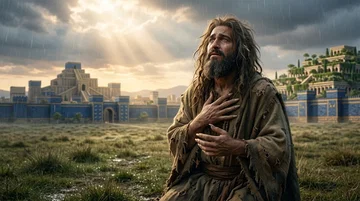
The sentence was fulfilled the same hour.Lt 34, 1900, par. 24–27 He was driven from men to dwell with the beasts of the field, to eat grass as oxen and to be wet with the dew of heaven, living as a beast and following the instincts of beasts for seven times or years.Lt 34, 1900, par. 24–27Lt 53, 1898, par. 21–2213MR 65.1–2Ms 15, 1896, par. 13–16 He continued until his hair grew like eagles' feathers and his nails like birds' claws, an astonishment to his subjects.Lt 34, 1900, par. 24–2713MR 65.1–2 The humbling lasted until he knew that the Most High rules in the kingdoms of men and gives them to whom He wills.13MR 61.3–62.2Lt 34, 1900, par. 24–27Ms 29, 1895, par. 19–227MR 67.2–68.27MR 69.1–3 His kingdom was taken from him until he learned that God, not man, is Ruler, whose kingdom is an everlasting kingdom.13MR 61.3–62.2Lt 34, 1900, par. 24–277MR 67.2–68.27MR 69.1–3
At the end of the days he lifted his eyes to heaven, and his understanding and reason returned.Lt 34, 1900, par. 24–27 He blessed and praised the Most High whose dominion is everlasting, was restored to his kingdom with added majesty, and acknowledged the power and mercy of God.Lt 34, 1900, par. 24–27PK 529.2–3 He confessed that the works of the King of heaven are truth and His ways judgment, and that He is able to abase those who walk in pride.Lt 34, 1900, par. 24–27 Babylon itself passed away because in prosperity its rulers forgot God and credited human achievement and glory for success, and the kings who succeeded him failed to profit by his experience.Ms 39, 1899, par. 9–111MR 50.2RH Feb 6, 1900Lt 201, 1899, par. 3–4
God and Pride
Human greatness and rule remain subject to God, and royal position and power do not make a ruler acceptable to Him apart from acknowledgment of Him.PK 519.3–4Ms 233, 1902, par. 22–24Lt 205, 1903, par. 14 Claiming the building, greatness, and success of a kingdom as the work of one's own power and for one's own glory is pride in power, achievement, and majesty.PK 519.3–4Lt 205, 1903, par. 14 While such boasting is still being spoken, God's appointed judgment begins, and power can be taken away suddenly.PK 519.3–4Lt 205, 1903, par. 14 Position and abilities come from God and must not be ruled by self-seeking, but used to acknowledge Him and do what is right, for those who exalt themselves or make laws against His law are not beyond His authority to humble them and direct human affairs to carry out His purposes.Ms 233, 1902, par. 22–24
All powers of mind, including reason, are God's precious gift, given to understand man's situation and to glorify Him, and using ability only for self-glorification does not fulfill His will.ST Sep 9, 1889 When a ruler walking in his capital used God-given reason to exalt himself and credited his own power and majesty for building his great city, forgetting God's honor, God removed his reason and wisdom and sent him to dwell with the beasts of the field to eat grass as an ox.ST Sep 9, 1889Ms 233, 1902, par. 22–24 What is left when God takes away the powers of the mind is nothing but the instinct of a beast, showing what a man becomes without that precious endowment.ST Sep 9, 1889 The jewel of the mind that elevates man above beasts, the judgment and wisdom he prized, can be removed in judgment.Lt 8, 1886, par. 10–11Ms 233, 1902, par. 22–24
Pride is surely followed by punishment from God, for He has many ways to punish and will bring down anyone lifted up by a sense of his own ability and trusting in human strength, ability, wisdom, or talents.Lt 11a, 1886, par. 4–5Lt 11b, 1886, par. 3–421MR 332.4–5 Prosperity elevates and deceives until, in an unguarded moment, a man claims his great work as built by himself by the might of his power and for the honor of his majesty, after warning against that course.Lt 11a, 1886, par. 4–5Lt 11b, 1886, par. 3–4 The instant such words are spoken divine sentence falls as the felling of the tree, the blessings God had given are removed, reason is taken away, and the mighty ruler is driven from men to find his place among the beasts of the field.Lt 11a, 1886, par. 4–5Lt 11b, 1886, par. 3–421MR 332.4–5 By this God teaches utter weakness and need of divine aid, that the Lord alone is to be exalted and that pride and trust in human ability lead to a fall.Lt 11a, 1886, par. 4–5Lt 11b, 1886, par. 3–421MR 332.4–5
In this God magnifies Himself as the true and living God by withdrawing support, leaving corrupt human nature lifted up by prosperity to fall and be brought to confusion when it does what He warned against.Lt 8, 1886, par. 10–11 Any man, church, or people, and any leaders of an institution, lifted up in pride and glorying in wealth, intellect, knowledge, wisdom, efficiency, or anything but Jesus Christ instead of depending on God will not be sustained.Lt 8, 1886, par. 10–117MR 69.1–3 Success in work comes from God for God's glory, not for man's glory, and whoever seeks to steal glory from God and takes to himself credit for success will be punished for presumption.7MR 69.1–3 The same result surely follows today for those who boast in wisdom, exalt self, and indulge pride; pride goes before destruction and a haughty spirit before a fall, the proud will be laid low and brought to humiliation, and the wicked in great power will pass away and not be found.7MR 69.1–3
Success, ability, talents, capabilities, and powers are not one's own but God's, lent in trust to be exercised after His order and plan for His glory, and glory belongs to Him.7MR 69.1–3Lt 10, 1899, par. 1–12Ms 97, 1899, par. 24–25 Thinking highly of oneself, boasting of one's own capabilities, taking personal credit for success, becoming proud of power and importance, and supposing a great work is one's own achievement to carry out one's own purposes is failure to deny self.Lt 10, 1899, par. 1–12Ms 97, 1899, par. 24–25 God answers such boasting by taking away reason, and true excellence is shown not by boasting but by Christlikeness in meekness and lowliness, usefulness and love.Ms 97, 1899, par. 24–25 Prosperity is dangerous to spiritual life like carrying a cup full to the brim, requiring nice precision to balance, while an empty cup is not the most difficult to carry.Ms 29, 1895, par. 23–24 It is not those who have lost property who are most likely to forget God, but those who have a measure of prosperity or success in their plans, who too often fall into self-exaltation and self-approbation, feel they are masters and others are dependent on them, and turn fellow men away from their rights, which is deception, delusion, presumption, and vanity; therefore every man in a position of trust, when even a little power is placed in his hands, must not feel too great and too wise to follow Christ's example, but must respect and treat kindly every other man.Ms 29, 1895, par. 23–24
Warnings for Today
The verse warns not to follow the king's course by trusting in self, in one's own wisdom, or in human strength and plans, instead of learning from God and making Him the support.Ms 123, 1902, par. 338T 162.1–221MR 53.3–4 Making one's own ways and judgment supreme puts a person under Satan's jurisdiction and into a snare.STB 363.2MWISDAP 20.2Ms 122, 1905, par. 5 Then he is led blindfold until spirit and methods conform to the arch-deceiver little by little, until the whole mind is under the spell, charmed and fixed by the serpent's eye with no power to leave the snare, brought into pride and spiritual blindness.MWISDAP 20.2Ms 122, 1905, par. 5
Those with responsibility and position must not exalt themselves, take the measuring line and judgment seat to measure character and pass sentence on others, oppress those purchased by Christ's blood, or wield authority as though human judgment should rule.Ms 29, 1895, par. 19–22Ms 233, 1902, par. 22–24Lt 199, 1901, par. 2–3 They must humble their hearts before God, respect others, acknowledge Him as source of position and ability and do what is right, and let the Lord be ruler, or they will make grievous mistakes.Ms 29, 1895, par. 19–22Ms 233, 1902, par. 22–24Lt 199, 1901, par. 2–312MR 3.1 Man is not sufficient to take such power and authority into his own word and sway God's work, exaggerating power in a way God cannot approve, and those who exalt themselves or make laws against God's law are not beyond His authority to humble them and direct affairs to His purposes.Ms 233, 1902, par. 22–2412MR 3.1 The Watcher guards the interests of all, sees every act and plan, hears every secret whispering, reads and measures every heart and thought, and will bring every secret thing into judgment, a warning especially pointed at Battle Creek.Ms 29, 1895, par. 19–22
Treating oneself as complete, claiming too much as one's own work, exalting self, trying to control others, and trusting presumptuous ambition, high opinions, and one's own plans and wisdom cannot succeed without the Lord.Lt 177, 1900, par. 27–30Lt 256, 1903, par. 10–11 Such a course is permitted to go so far that it counteracts one's influence, and may bring God's humbling, which could be escaped through revulsion at presumptuous ambition and high opinions of self.Lt 177, 1900, par. 27–30Lt 256, 1903, par. 10–11 The king's sin, fall, banishment from men to beasts, and judgment were a lesson that ought to have taught Belshazzar to know and do God's will.SLP 14.1–2CTBH 20.1–21.2 He had great opportunity and knowledge of the works and power of the living God from that history, yet disregarded it as if it had never occurred and went on repeating the same sins and daring the same crimes, and he was condemned not only for doing wickedly but for not availing himself of opportunities and capabilities which if cultivated would have made him right, for God will not condemn any for honestly believing a lie but for neglecting opportunities to learn truth.SLP 14.1–2
That same self-exaltation is pursued in gladness over the burning of the old sanitarium buildings when their burning was a reproof, in giving place to self-exaltation instead of heeding it.17MR 268.2–4 It is pursued in risking God's warning by concentrating the work in one place at Battle Creek rather than establishing it in many places according to His direction, and in self-exaltation and desire to direct everything which brings divine rebuke upon claims of kingly power.Lt 297, 1903, par. 2–4Ms 93, 1903, par. 19 Carrying on sanitarium and medical-missionary work by the wisdom of human minds and personal devising instead of as God requires will not be sustained or favored by the Lord.11MR 310.3–311.1 Eternal interest depends on a change of heart so that planning no longer imposes one man's devising but gives all others a chance to accomplish the work after the wisdom God gives them individually.11MR 310.3–311.1
The verse means feeling oneself a man of power, magnifying self to large proportions, exalting self and one's own work while demeaning the ministry, making the medical missionary work the body instead of the hand, treating a created work as the all and in all, discrediting the ministry and ridiculing God's ordained means, creating many responsibilities and devising human plans to build an unfinished tower when God was not in the devising, and taking up work God did not put into human hands instead of bearing only what He designed and knew was best.Ms 103a, 1899, par. 20–22Lt 92, 1900, par. 1–5 A steward placed by God becomes a power only by refusing that pride, and persisting in it causes the Lord to withdraw and leave him in the humbled position in which the king was left.Ms 103a, 1899, par. 20–22 It also means standing to require everyone to understand and carry out one's own mind, investigating and criticizing and condemning workers unless their work meets one's ideas, harassing striving workers with drawbacks and discouragements instead of encouraging and instructing them in their small beginning, and revealing supremacy by making laws and pledges for the future.Lt 188, 1901, par. 1Lt 188, 1901, par. 2–3 One in oversight must be very careful of words lest self be exalted even in a good action.Lt 188, 1901, par. 1Lt 188, 1901, par. 2–3
To act the king's part is proud self-exaltation claiming what God has given as one's own work and setting self up as controlling power, claiming supremacy and authority over God's heritage that God has not given.Lt 180, 1901, par. 14–16Lt 188, 1901, par. 1 It frames binding agreements that force other men to accept restrictions, takes control of institutions and refuses to cooperate unless they subscribe to one's terms, and holds the molding of the work in one's own hands instead of leaving it in other hands under God.Lt 180, 1901, par. 14–16 No man is God, and all talents and powers are given by God to be exercised for Him after His own order and plan.Lt 180, 1901, par. 14–16 The verse warns against pride in talents and advantages, which must be used and improved only under the shield of humility.Ms 164, 1899, par. 19–20 Humility is the safeguard for churches, requiring faithfulness, self-denial, close watching and waiting, and careful conscientious doing of God's will, because even the best of men could not endure God's wrath for one moment.Ms 164, 1899, par. 19–20
Spiritual pride that builds and spends for display repeats the king's glorifying of himself for what he had built by his own power and for the honor of his own majesty.20MR 97.4–98.1Lt 8a, 1890, par. 45–46 Putting up a costly showy house of worship when a plain comfortable respectable building in keeping with faith would be more pleasing to God manifests that same self-glorification, and wisdom is not manifested in such direction.20MR 97.4–98.1Lt 8a, 1890, par. 45–46 Every needless article of dress and every needless expenditure for display to glorify self wastes entrusted means needed elsewhere, while missionaries lack comfortable clothing and enough food to sustain their families.20MR 97.4–98.1Lt 8a, 1890, par. 45–46 Such outlay is placed on the losing side in the books of record.20MR 97.4–98.1Lt 8a, 1890, par. 45–46 Instead there is need to buy love and faith, Christ's righteousness, and spiritual discernment.20MR 97.4–98.1Lt 8a, 1890, par. 45–46
The verse means an unquenchable thirst taking possession of the whole man to obtain money, to be first, to accomplish some great thing and spread renown and get glory to self.18MR 129.3Ms 224, 1902, par. 7–818MR 93.3–94.2 A man with this spirit betrays the most precious cause of truth to obtain money or to be first, binds up with worldly men, forsakes the fountain of living waters, makes self-worship an idol, and forms selfish plans to exalt self.18MR 129.3Ms 224, 1902, par. 7–818MR 93.3–94.2 Nothing but humbling the soul to the light of the Word, with the Sun of Righteousness penetrating every chamber of the moral being, will break the fog and dense darkness gathered about the soul.18MR 129.3 The record warns never to grasp every dollar possible in connection with God's cause to carry out ambitious projects and be overcome by Satan's bribes, never to sustain one another by unholy confederacy in what God warned against, manipulate matters to suit personal plans, lift a pin or remove a landmark of truth, leave the strait and narrow path to accommodate self, seek popularity, or lower the banner and blend into the last message anything that hides prominent features of faith.Lt 71, 1894, par. 27–31Lt 126, 1898, par. 10 Allowing influence so to lead away causes prosperity to cease, for God will not guide, and He will surely remove ability, uproot the exalted and bring ambitious projects to confusion, yet if they repent and humble hearts, make God their trust and do justice and judgment, there is pardon, peace, acceptance and another trial.Lt 71, 1894, par. 27–31Lt 126, 1898, par. 10
Self-glorification that puts self before the people as an object of worship, takes glory to one's own name and power and majesty, robs God of glory and puts self in His place, exemplifies high-minded pride.13MR 60.1–61.2Ms 15, 1896, par. 18Lt 45, 1900, par. 18–21 It grows out of flattery and out of failing to continue walking in the light after acknowledging the living God, and it leads people to follow their own way rather than learn from God and to treat one's own judgment as superior to others.13MR 60.1–61.2Ms 15, 1896, par. 18Lt 135, 1899, par. 3–6 Any worker entertaining the same self-exalting spirit and patterning after the king by exalting self and seeking honor for his own name is in danger of passing through a trying experience.13MR 60.1–61.2Lt 45, 1900, par. 18–21Lt 123, 1898, par. 1–3
Sources
Pioneers and periodicals
107 sources
While walking on his palace overlooking the city and its surroundings at the height of its glory, the king surveyed Babylon and claimed its greatness as his own building by the might of his power and for the honor of his majesty.RH May 4, 1869ST Dec 23, 1897ST Oct 16, 1901ST Dec 18, 1907 The boast came twelve months after the dream and its interpretation, at the end of a year of mercy while he enjoyed tranquillity and prosperity with his conquests and great works complete.ST Sep 21, 1904ST Jan 16, 1912RH May 20, 1915 It was the climax of pride and self-exaltation, taking kingdom, power, strength and glory to himself and forgetting God as the giver and source of greatness.RH Jan 2, 1900ST Nov 27, 1893ST Aug 3, 1904ST Jun 20, 1911 While the word was still in his mouth a voice from heaven declared the kingdom departed, and he was driven from men for seven times to dwell with beasts and eat grass until he learned that heaven rules.ST Jun 28, 1899RH Apr 25, 1912ST Dec 18, 1893ST Jan 30, 1901 That humbling lays human glory in the dust and teaches that the Most High rules in the kingdom of men and gives it to whom He will, exposing all self-glorying as the creed and spirit of Babylon in every age, whether in works-religion, in rulers and nations, or in pride over wealth, buildings and progress.ST Aug 9, 1910ST Mar 23, 1915ST Jan 23, 1896RH Oct 22, 1901ST Dec 1, 1914
Setting and Wording
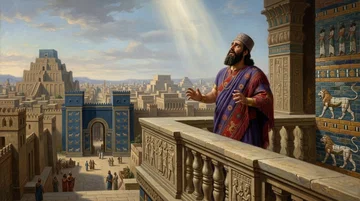
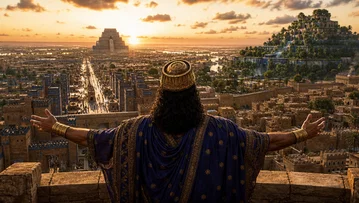
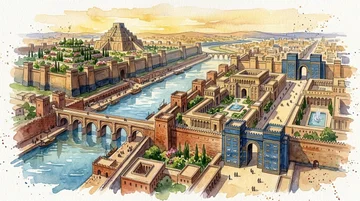
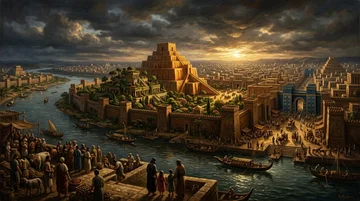
The boast was uttered while the king walked upon his palace, in some accounts his gold-plated palace, overlooking his vast domain and surveying the grandeur of Babylon, with its walls, temples, palaces, canals, bridges and hanging gardens gleaming in beauty, and the sight of the city and its fertile surroundings swelled his heart with pride and prompted the outcry.ST Oct 16, 1901ST Dec 18, 1907RH Feb 13, 1900ST Apr 12, 1905 He walked there with thoughts of self alone and with heart filled with pride, pointing to the mighty city and crying out in boastful tones as a royal god and the greatest monarch that ever trod the earth.ST Sep 18, 1901RH Feb 13, 1900ST Apr 12, 1905 The utterance came twelve months after the dream and its interpretation, at the end of a year of probation and mercy in which he walked more softly yet continued building, when his conquests and most of his great works were complete and he enjoyed tranquillity and prosperity at the height of Babylon's glory and power.ST Sep 21, 1904ST Jan 16, 1912ST Jan 28, 1913RH Nov 11, 1862 His failure during that year to break off sins by righteousness and show mercy to the poor to lengthen tranquillity left the warning unheeded when the word of self-credit was spoken.ST Sep 21, 1904ST Jan 16, 1912ST Apr 12, 1905
In wording the claim takes the greatness of Babylon, its building, its power and its honor as his own achievement, asking whether this great Babylon was not built by himself by the might of his own power for the house of the kingdom and for the glory of his own majesty.RH May 4, 1869ST Dec 23, 1897RH Jan 2, 1900RH Nov 19, 1861ST Oct 23, 1901 It admires the city and forgets God as giver and source of strength and greatness, displaying the pride the dream's warning had called him to abandon.RH May 4, 1869ST Dec 23, 1897RH Jan 2, 1900 The city so claimed was one he had enlarged, embellished and beautified, looking over its palaces, hanging gardens, colonnaded streets and mighty walls with thought only of his own glory, pleasure and exaltation.ST Sep 4, 1907ST Oct 16, 1901 Ruins, foundations, massive stone blocks, winged lions, stone records and inscriptions on building operations, restoration of the tower of Babel, the East India House Inscription on campaigns, and every brick stamped with his name confirm the scale of his building work, with nearly all monumental ruins naming him as builder and fixing his name most prominently in Babylonian history.RH May 13, 1909ST Apr 28, 1914RH May 20, 1915ST Oct 23, 1901 His boast matched those stone records, and he believed the city's defenses and stores would make it last forever and withstand long siege, though it later fell.RH May 20, 1915ST Jan 28, 1913RH Nov 11, 1862
The verse is an inspired record of the king's own uninspired words and conceptions, recording his great conception of God's goodness and power without making him inspired, and it belongs to his royal proclamation to all peoples, nations and languages that dwell in all the earth about himself and Babylon and Daniel and God.ST Jul 16, 1912ST Oct 16, 1901RH Nov 11, 1902 Through such an account God made truth known through Gentile kings when Israel did not carry the gospel to the nations, giving pre-eminently His instruction to nations in the last days on the Most High ruling in the kingdom of men, a lesson missed from Nimrod the beginner of earthly kings onward.ST Oct 16, 1901RH Nov 11, 1902 Chronologically the events precede Daniel's vision in the first year of Belshazzar, even though the book presents its historical chapters before its prophetic chapters.ST Apr 5, 1877 The verse belongs to the tree dream, a symbolic prophecy whose meaning is fully explained and whose application is fearlessly made, which with other divinely interpreted prophecies furnishes the basis and key for correct interpretation of symbolic prophecy by comparing Scripture with Scripture rather than human imagination, and whose fulfillment can be compared with historical events to confirm reliability.RH Sep 2, 1909RH Mar 8, 1915 Daniel interpreted that dream fearlessly without counting the cost of right-doing, undeterred by pomp and glory of the court and unafraid of royal displeasure, softening nothing of God's pointed message about pride and glory, and so stood as a man of real principle and integrity against prevailing wickedness.RH Sep 2, 1909ST Nov 24, 1898 The reign itself is listed as a passage about the origin of the state, identifying Nebuchadnezzar's rule over Babylon as an example of civil government.RH Mar 26, 1914
Pride and Downfall
The boast is the climax of pride and self-exaltation, claiming that the greatness and splendor of Babylon were his own achievement, built by himself by the might of his own power and for the honor of his own majesty.ST Nov 27, 1893ST Aug 3, 1904ST Oct 18, 1905RH Nov 22, 1906ST Feb 10, 1904 It forgets God as the giver of kingdom and success and of power, strength, glory and honor, and as the source of strength and greatness, using God-given reason to exalt self instead of glorifying God.ST Sep 9, 1889RH Jan 2, 1900ST Aug 3, 1904RH Jun 12, 1900 It is idolatrous self-exaltation setting self against the God of heaven in the spirit of exalted majesty, voicing the very prideful purpose against which God had warned him.RH Nov 22, 1906ST Feb 10, 1904
The pride broke out after he had walked more softly for a year while continuing building, because he did not heed the call to break off sins by righteousness and iniquities by mercy to the poor so that his tranquillity might be lengthened.RH Nov 22, 1906ST Dec 18, 1893ST Jan 17, 1906 His heart was lifted up after light had witnessed to Jehovah through Daniel and the three Hebrews and after mercy had been extended to him, and because of greatness of kingdom he refused to recognize himself as God's servant responsible to Him.ST Dec 18, 1893RH Feb 1, 1906 While the word was still in his mouth a voice from heaven condemned him and declared the kingdom departed from him, and the decree went forth at once.ST Dec 18, 1893ST Jan 30, 1901ST Apr 8, 1897ST Jun 10, 1913RH Mar 25, 1873 That immediate judgment shows human rulers do not ultimately control their power or fate, and that earthly rulers do not rule independently of God who can abase the proud.ST Nov 27, 1893ST Jun 10, 1913
The judgment deprived him of reason and of those godlike faculties that enabled him to rule among men, for seven years or times, until he learned that heaven rules.RH Apr 25, 1912RH Feb 1, 1906 He was driven from men to dwell with beasts and cattle in the field, to eat grass as oxen, with hair and nails growing like a bird's, reduced from the pinnacle of human power and glory to a bestial condition.ST Sep 9, 1889ST Jul 29, 1875RH Aug 12, 1875ST Mar 16, 1882 His experience shows what a man becomes when God removes the precious endowment of reason and the powers of the mind, leaving nothing but animal instinct.ST Sep 9, 1889RH Mar 23, 1869 A man apart from God's indwelling is thus proved to be on the plane of animals, in contrast with Christ who had made all things yet lived in dependence on God and glorified God.RH May 16, 1907
The humbling was necessary and profitable to teach the living that the Most High rules in the kingdom of men and gives it to whom He will, and to save him from trusting in outward achievements.ST Dec 18, 1893RH Mar 25, 1873 When the lesson was complete and the affliction ended, his understanding and reason returned as he looked to heaven, and he blessed and praised and honored the Most High and extolled the King of heaven whose works are truth and whose ways are judgment.ST Dec 18, 1893RH Mar 25, 1873ST Jan 17, 1906 He was restored to throne and glory as a better king, acknowledging Jehovah as his God and that God does according to His will in the army of heaven and among the inhabitants of earth, and he proclaimed God's sovereignty and signs and wonders to all peoples, nations and languages in a royal proclamation.ST Dec 18, 1893RH Jun 12, 1900ST Aug 13, 1896 Under the chastening hand he showed bursts of gratitude and devotion and a spirit of real piety, self-condemnation and self-abasement.
His error also involved idolatrous ambition to take God's place and to establish himself as possessor of the earth, building up a kingdom by his own power for his own majesty to the exclusion of God.ST Jul 11, 1911ST Dec 3, 1896RH Aug 26, 1915 That aspiration included directing worship and punishing those who would not worship as he decreed, even compelling worship while claiming to exalt true religion.ST Jul 1, 1903 God humbled the king and Babylon to show that civil rulers may restrain evil but must not control religion or coerce conscience.ST Jul 11, 1911ST Dec 3, 1896ST Jul 1, 1903
His later praise of God was personal testimony, not a law compelling others to share his faith. It made no discernible impression on those who followed him on the throne, and with his death about twenty-three years before Belshazzar the greatness and real glory of the kingdom departed and iniquity culminated in his grandson.ST Feb 4, 1886 The humiliation had happened only about three decades before Belshazzar's feast, and many there knew of it yet did not heed its lesson or protest the sacrilege, for Belshazzar had the benefit of that warning yet ignored it.ST Oct 18, 1905ST Oct 23, 1901 He lived seventeen years afterward holding firmly that the Lord is able to abase all who walk in pride.RH Mar 25, 1873
God Rules Kingdoms
The chapter shows that the Most High rules in human affairs and nations, giving the kingdom to whomever He will.ST Aug 9, 1910ST Dec 1, 1914 The boast of great Babylon built by personal power and for personal majesty stands set against that supreme righteous rule.ST Dec 1, 1914 Only what is in harmony with that righteous rule can persist.ST Dec 1, 1914
The king claimed city and kingdom as his own achievement, made by his power for his personal honor.ST Jun 20, 1911ST Apr 9, 1896 In admiring the city he had beautified he forgot God and reached the height of self-glorification, self-exaltation, self-reliance and self-worship that refuses to acknowledge God.ST Jun 20, 1911ST Jan 16, 1912 He took the glory of its greatness, building and splendor to himself instead of acknowledging that wisdom, strength, success, rule, kingdom, majesty, glory and honor belong to and come from God.ST Apr 9, 1896RH Oct 22, 1901ST Jan 16, 1912 To use God-given reason to exalt self rather than to glorify God and submit to His Spirit hides His glory and obstructs conversion.RH Oct 22, 1901 Such taking of credit rather than giving glory to God is the ambition that seeks honor and power apart from God, the language of unbelief and apostasy, and it leaves no ground for pride.ST Mar 18, 1903
God's foreknowledge and supreme control over earth's mightiest kings was proved in foretelling the calamity unless there was repentance by mercy to the poor and then fulfilling it.ST Aug 13, 1912 Human purposes in the seven times were overruled by His disposing.ST Aug 13, 1912 The account of Babylon's overthrow afterward helped Cyrus to recognize the true God as ruler over all.ST Dec 19, 1892
He had been raised to universal rule while still a pagan idolater, so his rule did not depend on his government formally recognizing God. His later deposition therefore is not proof that God gives secular authority only to rulers who formally recognize Him. God was not impressed by the city's greatness or its arts, and He humbled the king until he learned humility, after which Babylon crumbled into ruins.RH Jul 11, 1854 To see one's own kingdom as supreme and imagine it will endure forever is evil earthly pride that worships earthly power.ST Oct 13, 1909 The pride and grandeur of ancient Babylon raised great structures, but they could not make them strong enough to shut out doom.
Righteousness by Faith
The boast over great Babylon built by personal might for personal majesty is the glorification of man, which is the very essence of righteousness by works by which no one can become acceptable to God.RH Aug 22, 1907RH Apr 10, 1916RH Apr 10, 1916 It is repudiation of justification by faith and boasting in works, putting righteousness by works in the place of righteousness by faith and denying the gospel of salvation by faith.RH Apr 10, 1916RH Apr 10, 1916RH Apr 30, 1908 It trusts outward display of material works instead of character-building, trusting great buildings, dazzling ornamentation and outward glory that may impress the senses for a time but will not endure test and trial, as seen in magnificent churches that follow the same pattern.RH Jul 4, 1907RH Apr 30, 1908 Daniel 4 stands as the third part of the threefold message of Daniel 2, 3 and 4 proclaimed in Babylon as the gospel of the kingdom of God, righteousness by faith, so that all who would accept it might be saved from impending destruction.RH Aug 22, 1907
That pride is the characteristic of Babylon and the creed of Babylon and of all false religions.RH Apr 30, 1908RH Apr 30, 1908 It is a formal declaration of righteousness by works and the climax of self-exaltation, declaring independence of God and of any help outside of self, claiming independence while excusing gross sin as those did who boasted in the temple of Jehovah.RH Apr 30, 1908RH Apr 30, 1908 It means denial of the incarnation of the Son of God, leaving a man apart from the indwelling of God reduced to the plane of animals, with pride brought into contempt, false religion discredited, humbled by a foreign foe and overthrown never to recover former glory.RH Apr 30, 1908RH Apr 30, 1908 It is glorying in one's own works where self is honored and God is left out, the opposite of glorying in the cross of Christ where self is abased and Christ and His work for salvation are manifested.ST Dec 16, 1880 Such a selfish spirit refuses to confess sin or bear burdens for others for fear of losing esteem, ease or comfort, showing lack of the spirit of Christ, of fellowship of His sufferings and conformity to His death, and need of the transforming influence of grace to give sympathy with Christ.ST Dec 16, 1880
Justification by faith is the work of God in laying the glory of man in the dust and abasing those who walk in pride, and this work turned the boast into praise and honor to the King of heaven.RH Aug 22, 1907 The same self-exalting spirit appears in God's work when success is credited to self and own abilities and methods are deemed indispensable, ignoring that God gives wisdom, strength and power.RH Oct 22, 1901 Such pride reveals an unregenerate heart and an unsubdued soul.RH Oct 22, 1901 Individuals are saved out of fallen Babylon only through preaching of the gospel, proving that the power of the indwelling Son of God through the Spirit alone saves from sin and death.RH Apr 30, 1908
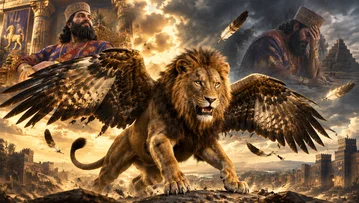
The soaring ambition and swift conquests of the Babylonian monarchy in the zenith of its power are pictured as eagle's wings on the lion-like first beast, denoting power, strength, ferocity and pride toward the peoples and toward the people of God.RH Jan 23, 1908ST Nov 28, 1895 The outrageous pride exalting self over the capital as own building by own might for own majesty was clipped by the judgment of insanity, when the man's heart was changed to a beast's heart and he was degraded to a bestial condition.RH Jan 23, 1908 The plucking of the lion's wings may refer to this humbling, when he lost reason and lived like an animal until he acknowledged that God rules.RH Jan 23, 1908 Afterward he was lifted from the earth and restored to a sane appreciation of his humble position as a man in relation to Almighty God, when a man's heart was given to him again, learning he was only God's servant and that God controls earthly kingdoms, while proud Babylon for its pride was forced to succumb, the gold yielding to a baser metal and the lion to a baser beast.RH Jan 23, 1908ST Nov 28, 1895
His sins were broken off by righteousness as the tree dream and affliction ultimately taught him to know God and His righteousness.ST Nov 26, 1912 His life became a testimony to God's goodness and wisdom.ST Nov 26, 1912 His experience demonstrated God's intended healing for Babylon, that people could turn from self-reliance and receive God's saving power.ST Nov 26, 1912
Babylon Type and Fall
Proud self-glorying over great Babylon built by the might of personal power and for the honor of personal majesty is the spirit that has marked Babylon, both literal and symbolical, through the whole history of the world.ST Mar 23, 1915ST Jan 23, 1896RH Dec 10, 1901 It is self-righteousness and self-exaltation, the claim that the kingdom's greatness is the work of one's own power and for one's own honor.ST Jan 23, 1896RH Dec 10, 1901 Ancient Babylon thus embodies the satanic principle of selfishness through self-glorification and proud self-exaltation, and gives its name to that principle.RH Dec 10, 1901 The Babylon so boasted of professed a religion that exalts man and perverts truth and stood antagonistic to God, so it became a type of apostasy and of apostate organizations, churches, associations and federations which profess to save men while perverting God's plan, and that mightier Babylon falls in God's everlasting way of right.ST Mar 23, 1915
Ancient Babylon's proud claim that the city was personal achievement, built by personal power for personal glory, came just before its fall, and heaven's judgments fell at that moment.RH Sep 20, 1906RH Oct 11, 1915 Here the city's fall before Cyrus is an object lesson in prophecy: ancient Babylon's fate foreshadows the fall of mystical and spiritual Babylon, whose ruin will be greater in scale. His pride and confidence in Babylon's permanence serves as a pattern for modern and spiritual Babylon, which likewise exalts itself above God and faces an inevitable fall.RH Sep 20, 1906RH Oct 11, 1915 When it boasts of its greatness and denies its widowhood, its judgments are about to fall.RH Sep 20, 1906
The dream of the tree, together with the dream of the image and the deliverance from the furnace, made known the gospel of the kingdom.RH May 29, 1900 That experience revealed that the Most High rules in the kingdom of men and gives it to whomever He will, and that He is the King of heaven whose works are truth and whose ways are judgment.RH May 29, 1900 These truths were proclaimed to all the world by royal proclamation so the lesson was as personal as if each person had passed through the experiences himself, calling all men to put confidence in God, not forget God's doings, and keep His commands.RH May 29, 1900 The message was disregarded and God was not glorified, and the history under the immediate successors shows how the character of the king determines the greatness and permanency of the dominion, waning from his death until the armies of Medo-Persia came.RH May 29, 1900 The proud boast before conversion, claiming to have built great Babylon by personal power for personal honor, was spoken in the palace of the kingdom of Babylon, and in that same palace the handwriting on the wall later announced the fall of Babylon, showing how monuments intended for human greatness become announcements of impending ruin.RH May 29, 1900RH Jun 5, 1900
The proud claim that great Babylon was built by personal power for personal honor was spoken in the very face of God's prophecy of its doom.ST Aug 26, 1897 All human boasting over national pomp and power is the same pride, and it stands under God's sentence that Babylon the glory of kingdoms will be overthrown like Sodom and Gomorrah, a sentence that holds good for every modern Babylon that boasts the same way.ST Aug 26, 1897 The lesson is to keep a humble and contrite heart and remember God lest forgetting Him bring the same fall.ST Aug 26, 1897 History reveals what lies beyond the coming complete surrender of nominal Christianity to Rome.ST Apr 8, 1897
Echoes in Scripture
The boast is rebellion against the truth that the Most High rules in the kingdom of men, expressing the same spirit as the builders of Babel who said they would build a city and make a name for themselves instead of multiplying and filling the earth.ST Oct 16, 1901 It expresses the same spirit as heaven's original rebel and Babylon's original king, who said he would ascend and make himself like the Most High.ST Oct 16, 1901 That proud self-glorying and self-exalting defiance of God is characteristic of Babylon in all ages, literal and symbolical.ST Oct 16, 1901
The same sin of self-exaltation was repeated by Belshazzar, his grandson and heir, despite the light and instruction he had received from Nebuchadnezzar's renown and degradation. Nebuchadnezzar had received kingdom, majesty, glory and honor from God, but took the glory to himself with lifted mind and hardened heart, and for that self-exaltation God deposed him, took his glory and reason, and drove him to be a companion of the beasts of the field. That history was permitted to shine on Belshazzar's pathway to teach him to deny self in order to know and do righteousness and to lead others in the way, and in mercy another opportunity was granted to acknowledge God as supreme Ruler in heaven and earth to whom kings and nations owe allegiance. But Belshazzar disregarded the lesson completely as though it had never occurred, made himself guilty of the very same sin for which his grandfather had been condemned, and presumed beyond it by lifting himself against the Lord of heaven and defiling the vessels of the Lord's house to insult God.RH Mar 8, 1915 Unlike his father he had earned none of the inherited riches, authority and power whose glory turned his head, and refusing to heed the light despite every opportunity to become acquainted with God and His truth, his rebellion brought God's final judgment on him and his house.RH Mar 8, 1915
The boast is egotism, claiming Babylon's greatness and the display of majesty as personal achievement by personal power.RH Feb 16, 1864RH Jan 5, 1860 Its humbling in seven years of life among the beasts became a memory of abasement, and set beside the coming kingdom of God the world's proud achievements appear vile and wasted.RH Feb 16, 1864RH Jan 5, 1860
Warnings for Today
The boast stands as a warning to rulers and nations today, for Great Britain, France, Germany, Russia and the United States repeat Babylon's proud claim to reign by right of self through prowess, deeds, culture and wealth for their own glory. Their tenure depends on recognition of God not in words but in deeds, so that glory from their existence accrues to Him, and when they fail the everlasting kingdom of God will succeed all earthly rule and temporal kingdoms will pass away forever. National greatness does not excuse sin, and a nation that takes pride in its achievements while failing to ground them in justice and mercy may expect punishment.RH Jul 19, 1864
The same boast was repeated by the merchant and mining and marine princes of San Francisco, who gloried in its magnificent public buildings, gilded palaces, parks, wealth and commercial supremacy as the glory of cities and the beauty of California's excellency, crediting themselves with building great San Francisco by their power for their own name.ST May 23, 1906ST May 2, 1906 Like Babylon of old, the city in its pride and voluptuousness was laid low in the dust by earthquake and fire.ST May 23, 1906ST May 2, 1906ST Jun 27, 1906 The would-be mighty men of Chicago spoke in the same substance, saying in effect is not this great Chicago that we have built by the might of our power and for the honor of our majesty, boasting that they showed the world they could make a big fire and then rebuild, even claiming to have equaled God's creation of the world in six days.RH Nov 12, 1872 Chicago was intoxicated by marvelous accumulation of wealth and boastful above other cities, saying in its heart it sits as a queen and shall see no sorrow, and therefore its sudden burning in one day was God's righteous judgment on such boasting pride in greatness, wealth, energy and success as built by its own power for its own honor, a sin God censures bitterly in communities as in individual men.RH Nov 21, 1871 New York is a modern Babylon whose people glory in the same spirit in size, wealth and splendor, and whose fate will be like Babylon's.RH Jun 22, 1911
The boast warns ministers who claim credit for impressive church steeples or costly displays, for such pride and self-glory can be brought low by God.RH Dec 23, 1858 It warns preachers who take pride in showy sermons they have constructed and rely on them for reputation, as though their work came from their own power, and Nebuchadnezzar's humiliation and return to sanity and humility show the need for such pride to be brought low.RH Feb 5, 1914 It warns against glorying in religious success such as endowing a college, starting a school or building a church, for success tends to produce such bragging after great works done by personal power for personal honor, and God answers it by humbling the boaster as He drove Nebuchadnezzar from men to live as an animal eating grass, and by letting success be jeered at and by sanctified persecution to make a person humble and poor in spirit.RH Jan 16, 1872 It warns any who look proudly on beautiful property, wealth and pleasure as their own work and source of personal honor, forgetting that worldly possessions are lent by God, human life is brief, and the earth is doomed to desolation and fire.RH Dec 12, 1865
The boast warns against regarding rapid progress, wealth and impressive achievements as one's own doing rather than recognizing the fulfillment of prophecy, for such pride invites God's judgment and the loss of power.ST May 20, 1875 It warns against the danger of taking personal credit for achievements that depend on God. It exposes the proud self-sufficient spirit that claims man built himself by natural selection as even more impious and degrading than robbing God of due honor to take it for self, for the humiliation from the pinnacle of human power and glory to the level of beasts of the field proves it is easier for man to descend to the monkey's level than for a monkey to ascend to man's, making brutes not merely companions but blood relations.ST Mar 16, 1882
That pride resulted in a legally enforced religious creed and persecution.ST Dec 24, 1896 Christians therefore must not enter politics to elect officials and drag religion into politics but pray and trust God who upholds even corrupt governments and sets up whom He will.ST Dec 24, 1896
Judgment for such pride comes only after faithful warning, and stands with the flood, the cities of the plain, Egypt at Israel's deliverance, Nineveh, Babylon at the close of the seventy years' captivity, and the destruction of the Jewish polity and Jerusalem for rejecting the gospel to prove that those who neglect warning will have no excuse when justice speaks in the Judgment day, for God's long-suffering endures until waiting longer would no longer be mercy.RH Mar 18, 1873 Because in prosperity her rulers forgot God and ascribed the honor and glory of great Babylon to human achievement, God took from him the talent of wisdom that he might be led to see and acknowledge that the God of Israel is able to create and to destroy, and the kingdom of Babylon passed away because her rulers forgot God and the kings who succeeded him failed to profit by his experience.RH Feb 6, 1900 So today when men forget God and refuse to obey His law they are humiliated, God tests them, and if they do not humble their hearts and confess their sins they receive the penalty of transgression.RH Feb 6, 1900
Daniel's life in Babylon shows what God wants His workers to be in the world in its closing act, individually led by God under the new covenant promise, holding the light higher in their own work, understanding how their little part fits in the grand whole, and doing medical missionary work to reach thousands perishing spiritually and physically who cannot be reached by an institution.RH Dec 20, 1906 By contrast the boast expresses the lust for universal empire and self-exaltation, a worldly ambition shared by rulers seeking civil or religious dominion in claiming Babylon and its glory as the work of their own power and majesty.ST Jul 18, 1916
Sources