Daniel 4:37
Now I Nebuchadnezzar praise and extol and honour the King of heaven, all whose works are truth, and his ways judgment: and those that walk in pride he is able to abase.
Translations
American King James Version, Webster Bible
Now I Nebuchadnezzar praise and extol and honor the King of heaven, all whose works are truth, and his ways judgment: and those that walk in pride he is able to abase.
King James Version, KJV Cambridge Paragraph Bible
Now I Nebuchadnezzar praise and extol and honour the King of heaven, all whose works are truth, and his ways judgment: and those that walk in pride he is able to abase.
Now I Nebuchadnezzar praise and extol and honour the King of heaven; for all his works are truth, and his ways judgment: and those that walk in pride he is able to abase.
Now I, Nebuchadnezzar, praise and extol and honor the King of heaven; for all his works are truth, and his ways justice; and those that walk in pride he is able to abase.
'Now, I, Nebuchadnezzar, am praising and exalting and honouring the King of the heavens, for all His works [are] truth, and His paths judgment, and those walking in pride He is able to humble.'
Now I Nebuchadnezzar praise and extol and honour the King of the heavens, all whose works are truth, and his paths judgment: and those that walk in pride he is able to abase.
Now, I, Nebuchadnezzar, am praising and extolling and honouring the King of the Heavens, all whose works, are truth, and, his ways, right; and, them who walk in pride, he is able to abase,
Berean Standard Bible, Majority Standard Bible
Now I, Nebuchadnezzar, praise and exalt and glorify the King of heaven, for all His works are true and all His ways are just. And He is able to humble those who walk in pride.
Now I, Nebuchadnezzar, praise and extol and honor the King of heaven; for all his works are truth, and his ways justice; and those who walk in pride he is able to abase.
Now I, Nebuchadnezzar, give worship and praise and honour to the King of heaven; for all his works are true and his ways are right: and those who go in pride he is able to make low.
Douay-Rheims (Challoner revision)
Therefore I Nabuchodonosor do now praise, and magnify, and glorify the King of heaven: because all his works are true, and his ways judgments, and them that walk in pride he is able to abase.
Pictures


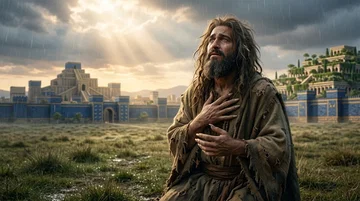
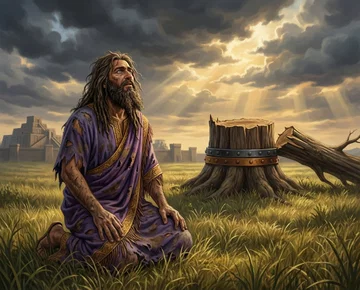
Cross-references 20 of 75
- Daniel 4:30-33
The king spake, and said, Is not this great Babylon, that I have built for the house of the kingdom by the might of my power, and for the honour of my majesty?
Nebuchadnezzar’s proud boast is followed by God’s judgment and his humiliation.
- Daniel 5:22-23
And thou his son, O Belshazzar, hast not humbled thine heart, though thou knewest all this;
Belshazzar knew how God humbled Nebuchadnezzar yet refused to humble himself or glorify God.
- Daniel 2:37
Thou, O king, art a king of kings: for the God of heaven hath given thee a kingdom, power, and strength, and glory.
God gave Nebuchadnezzar his kingdom
- Daniel 3:1-6
Nebuchadnezzar the king made an image of gold, whose height was threescore cubits, and the breadth thereof six cubits: he set it up in the plain of Dura, in the province of Babylon.
Nebuchadnezzar’s pride led him to demand worship of the golden image.
- Daniel 4:17
This matter is by the decree of the watchers, and the demand by the word of the holy ones: to the intent that the living may know that the most High ruleth in the kingdom of men, and giveth it to whomsoever he will, and setteth up over it the basest of men.
Declares that the Most High rules human kingdoms and appoints their rulers.
- Daniel 4:32
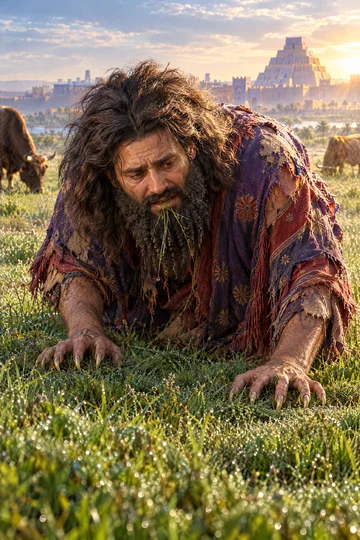
And they shall drive thee from men, and thy dwelling shall be with the beasts of the field: they shall make thee to eat grass as oxen, and seven times shall pass over thee, until thou know that the most High ruleth in the kingdom of men, and giveth it to whomsoever he will.
The humbling taught Nebuchadnezzar that God rules and gives kingdoms as he wills.
- Proverbs 16:18
Pride goeth before destruction, and an haughty spirit before a fall.
Pride precedes a fall and humiliation.
- Daniel 4:1-3
Nebuchadnezzar the king, unto all people, nations, and languages, that dwell in all the earth; Peace be multiplied unto you.
The proclamation’s praise of God’s works and everlasting kingdom is echoed in the closing verse.
- Daniel 4:25
That they shall drive thee from men, and thy dwelling shall be with the beasts of the field, and they shall make thee to eat grass as oxen, and they shall wet thee with the dew of heaven, and seven times shall pass over thee, till thou know that the most High ruleth in the kingdom of men, and giveth it to whomsoever he will.
The king’s humbling teaches that the Most High rules human kingdoms.
- Jeremiah 27:6
And now have I given all these lands into the hand of Nebuchadnezzar the king of Babylon, my servant; and the beasts of the field have I given him also to serve him.
God calls Nebuchadnezzar his servant and grants him authority over kingdoms.
- 1 Peter 5:5-6
Likewise, ye younger, submit yourselves unto the elder. Yea, all of you be subject one to another, and be clothed with humility: for God resisteth the proud, and giveth grace to the humble.
God opposes the proud and exalts those who humble themselves.
- Daniel 3:28
Then Nebuchadnezzar spake, and said, Blessed be the God of Shadrach, Meshach, and Abed-nego, who hath sent his angel, and delivered his servants that trusted in him, and have changed the king’s word, and yielded their bodies, that they might not serve nor worship any god, except their own God.
The earlier rescue of the Hebrews displayed the power that called Babylon to trust God.
- Daniel 4:27
Wherefore, O king, let my counsel be acceptable unto thee, and break off thy sins by righteousness, and thine iniquities by shewing mercy to the poor; if it may be a lengthening of thy tranquillity.
Daniel urges Nebuchadnezzar to turn from sin and show mercy to the poor.
- Psalms 37:35-36
I have seen the wicked in great power, and spreading himself like a green bay tree.
The proud and powerful may prosper for a time, then disappear.
- Proverbs 16:5
Every one that is proud in heart is an abomination to the LORD: though hand join in hand, he shall not be unpunished.
Both texts condemn pride and affirm that God brings the proud low.
- Proverbs 29:23
A man’s pride shall bring him low: but honour shall uphold the humble in spirit.
Both say pride brings a person low, while humility leads to honor.
- Daniel 5:20
But when his heart was lifted up, and his mind hardened in pride, he was deposed from his kingly throne, and they took his glory from him:
Nebuchadnezzar’s pride led to his deposition and humiliation.
- Daniel 4:26
And whereas they commanded to leave the stump of the tree roots; thy kingdom shall be sure unto thee, after that thou shalt have known that the heavens do rule.
Nebuchadnezzar’s kingdom was restored after he learned that heaven rules.
- Daniel 2:28
But there is a God in heaven that revealeth secrets, and maketh known to the king Nebuchadnezzar what shall be in the latter days. Thy dream, and the visions of thy head upon thy bed, are these;
Both texts recount God revealing the meaning of Nebuchadnezzar’s dreams.
- Proverbs 6:16-17
These six things doth the LORD hate: yea, seven are an abomination unto him:
Both texts condemn pride before God.
Commentary
Each commentary is drawn from primary sources: the writings of Ellen G. White and Adventist pioneers and periodicals. Each commentary is separate. Its own words are not a quotation; follow the references to read the source passages.
Ellen G. White
47 sources
After seven years of madness for his proud boast over Babylon, his reason and kingdom restored with added majesty, Nebuchadnezzar closes his life with a public proclamation to the world praising and honoring the King of heaven.Lt 126, 1910, par. 16–18Lt 71, 1894, par. 27–31Lt 114, 1903, par. 19–20Ms 21, 1899, par. 6–7Ms 233, 1902, par. 14–17 He acknowledges Jehovah as the living God and supreme Ruler over all kings, whose dominion is everlasting and whose power over earthly kingdoms leaves no room for self-exaltation.Ms 29, 1895, par. 27–29Lt 132, 1901, par. 7–15Ms 15, 1896, par. 4–67MR 69.1–3Ms 142, 1901, par. 5 He confesses that all God's works are truth and His ways are judgment, that God is just and judges rightly and His promises and threatenings are true.PK 521.2Ms 36, 1896, par. 7PK 529.2–3 He confesses that those who walk in pride God is able to abase, stripping away human ability and kingdom in a moment until even the mightiest king sees his weakness and uses his tongue to praise a power above himself.Lt 71, 1894, par. 27–31Lt 34, 1900, par. 24–27Lt 132, 1901, par. 7–157MR 68.3–4Lt 205, 1903, par. 14 His words are a real change of heart and true conversion after severe discipline, from a tyrannical monarch who defied heaven into a wise ruler who witnessed for God, teaching all humanity that God gives success for His own glory and will lay human pride and glory in the dust.PK 521.2Ms 233, 1902, par. 14–17Ms 233, 1902, par. 18–197MR 69.1–3RH Jan 11, 1906
Historical Setting and Background
The praise belongs to the account of the tree in Nebuchadnezzar's dream, which represented his greatness and prosperity at a time when nations lived under his sovereignty and his kingdom was firmly established among loyal subjects.8T 126.3 That chapter stands after an earlier dream of the great image which impressed upon him that earthly kingdoms would fall until God establishes an everlasting kingdom that supersedes them all.PK 514.1 It also stands after he had seen the deliverance of the three Hebrews in the fiery furnace and acknowledged their God as the living God, an impression he then lost because he did not continue to walk in the light.13MR 60.1–61.2
The confession grew out of his self-glorification and refusal of God's warnings, for he placed a high estimate on his own ability and did not regard God as the source of his strength.Lt 71, 1894, par. 27–31Ms 15, 1896, par. 4–6 For twelve months he pursued his own course of self-exaltation while his actions were weighed in the balances of the sanctuary in heaven, until his proud boast over Babylon brought the judgment that the kingdom was departed from him.Lt 71, 1894, par. 27–31 The sentence pronounced against him was then fulfilled in the loss of his reason, and his humiliation showed that earthly power comes under God's rule and cannot rightly be used for self-exaltation.Ms 15, 1896, par. 4–6Ms 233, 1902, par. 14–17
After seven years of chastening his reason, honor and kingdom were restored to him, with added majesty to his restored dominion.Lt 126, 1910, par. 16–18Lt 114, 1903, par. 19–20Ms 21, 1899, par. 6–7 In that restoration he acknowledged his wrong and gave public praise to the King of heaven, confessing that God's works are true and His ways just.Lt 126, 1910, par. 16–18Lt 114, 1903, par. 19–20Ms 21, 1899, par. 6–7 That praise went forth to the world in a royal proclamation declaring God's mercy, goodness and authority, fulfilling God's purpose that the greatest kingdom in the world should show forth His praise, and it stands as the last act of his life recorded in sacred history.PK 521.3PK 8.3–4
Meaning of the Confession
Now Nebuchadnezzar praises and extols and honors the King of heaven, acknowledging Jehovah as the living God and supreme Ruler. Ms 29, 1895, par. 27–29Lt 132, 1901, par. 7–15Lt 155, 1902, par. 34–36 He confesses God as King over all kings, the Most High whose dominion is everlasting, and as the Maker of heaven and earth to be worshiped, not a golden image. Ms 29, 1895, par. 27–29Lt 132, 1901, par. 7–15 His closing praise comes after God humbled him again following the great display he had made for his own glory and his self-glorification, when his understanding and reason were restored and his kingdom reestablished with added majesty. Ms 29, 1895, par. 27–29Lt 132, 1901, par. 7–15Ms 15, 1896, par. 4–6 In contrast to hardening the heart in unbelief and pride, having seen God's greatness and tasted His goodness, he desired all the people of his realm to learn what he had learned, so that the king on the Babylonian throne became a witness for God, a Babylonian monarch proclaiming the supremacy of the God worshiped by the Hebrew captives, giving warm and eloquent testimony from a grateful heart that shared in the mercy and grace and righteousness and peace of the divine nature. Ms 29, 1895, par. 27–29DA 28.3 Earthly power comes under God's rule and cannot rightly be used for self-exaltation, for God worked with power upon the mind of the proud king, the mightiest king on earth, until he acknowledged God. Lt 132, 1901, par. 7–15Ms 15, 1896, par. 4–6
He confesses that all God's works are truth and His ways are judgment, meaning God's works are true and His ways are just. Ms 29, 1895, par. 27–29PK 521.2Ms 36, 1896, par. 7Ms 15, 1896, par. 4–6RCOC 76.1–2 God is just and judges rightly, acknowledging the power and mercy of the God of Israel after divine judgment humbled the king for his pride. Ms 36, 1896, par. 7PK 529.2–3 His promises and threatenings are true, and He will humble proud and selfish aspirations. RCOC 76.1–2
He confesses that those who walk in pride God is able to abase, as Lord over all His creatures and all His works. Ms 36, 1896, par. 7Lt 71, 1894, par. 27–31PK 529.2–3 He abases the proud by removing their human ability, kingdom and strength, uprooting them and bringing their ambitious projects to confusion, and royal greatness did not make Nebuchadnezzar acceptable to God, for his power was taken from him in a moment. Lt 71, 1894, par. 27–31Lt 205, 1903, par. 14 Nebuchadnezzar had placed a high estimate on his own ability and did not consider God his source of strength, and the same humbling will surely be fulfilled toward those who grasp for gain to carry out ambitious projects in connection with God's cause and, having great light, sustain one another in an unholy confederacy to do what God warned them not to do, yet if they repent and humble their hearts before God, walk in humility, make God their trust, and keep the way of the Lord to do justice and judgment, there is pardon, peace in the forgiveness and approval of God, acceptance, and another trial and proving, for the Lord will not be trifled with. Lt 71, 1894, par. 27–31
The verse means God can so humble kings and nobles, even the mightiest king on earth, for His glory that they acknowledge a power above themselves and use the tongue to praise Him. Lt 34, 1900, par. 24–27Lt 132, 1901, par. 7–15 Brought to see his weakness and guilt and God's supremacy and sovereign power after losing his reason and being humbled through a fearfully severe experience, Nebuchadnezzar recognized his weakness and acknowledged the living God's supremacy. Ms 36, 1896, par. 73MR 186.2–3Lt 155, 1902, par. 34–36 His humiliation taught him his guilt and God's sovereign power, and he publicly acknowledged God's mercy in restoring him. 7MR 68.3–4 After his reason and kingdom were restored he praised and extolled and honored the King of heaven, confessing that all God's works are truth and His ways judgment and that He is able to abase those who walk in pride. Lt 34, 1900, par. 24–277MR 68.3–43MR 186.2–3
Conversion and Changed Character
The words are the mark of a real change of heart and true and final conversion after fearfully severe experience and stern discipline.Ms 233, 1902, par. 14–17Ms 233, 1902, par. 18–19RH Jan 11, 1906 The punishment was not in vain, for after the sentence against him was fulfilled he praised the King of heaven, confessed that His works are true and His ways just, and recognized that He can bring down all who walk in pride.Ms 233, 1902, par. 14–17Ms 233, 1902, par. 18–19 Daniel's steady practice of honoring God before the king helped lead him to recognize God's glory and at last learn to praise and extol and honor Him.RH Jan 11, 1906
That yielding is the giving of the human will to the will of God and the giving of the self to Him without delay.7MR 151.1–2 Those who so yield receive from Christ all the excellence necessary for perfection of character, gained through more self-denial and self-sacrifice.7MR 151.1–2 God then molds and fashions the perverse human mind into His own likeness by taking the things of Christ and showing them, so that beholding the beauty of the Saviour's character they grow more and more like Him until complete in Him.7MR 151.1–2
The seven years of chastening reformed his heart and transformed his character.PK 521.2Ms 15, 1896, par. 20–2113MR 66.1–2 The tyrannical, overbearing, fierce monarch who defied and blasphemed the God of heaven became a wise and compassionate ruler who acknowledged heaven's power and sought earnestly to promote the happiness of his subjects.Ms 15, 1896, par. 20–2113MR 66.1–2 In this is seen that true greatness consists in goodness, and that rulers should seek to honor God and promote the happiness of those under them.PK 521.2
In contrast to hardening the heart in unbelief and pride, the king on the Babylonian throne became a witness for God.Ms 29, 1895, par. 27–29 Humbled under rebuke, with understanding and reason restored and kingdom reestablished with added majesty, having seen God's greatness and tasted His goodness, he acknowledged Jehovah as the living God and King of heaven whose works are true and whose ways are just and who can bring low the proud.Ms 29, 1895, par. 27–29 He gave warm and eloquent testimony from a grateful heart that shared in the mercy and grace and righteousness and peace of the divine nature, desiring all the people of his realm to learn what he had learned, that the God to be worshiped is not a golden image but the Maker of heaven and earth.Ms 29, 1895, par. 27–29 That public acknowledgment of God's mercy, goodness, and authority fulfilled God's purpose that the greatest kingdom in the world should show forth His praise, and it was the last act of his life recorded in sacred history.PK 521.3
A king's position does not excuse pride nor remove the need to repent and humble himself before God.Ms 233, 1902, par. 18–19 His conversion and miraculous restoration stand as the lesson his grandson Belshazzar knew yet ignored, failing to learn what he should have learned from it.Ms 233, 1902, par. 18–19PK 522.2 Belshazzar disregarded the light given and lost the benefit he could have received by obeying it, for God gives lessons to instruct and lead to reform, and neglecting and failing to practice them brings judgment.Lt 201, 1899, par. 3–4
God Humbles the Proud
The confession stands as a lesson for all humanity that God, not man, is Ruler and His kingdom is an everlasting kingdom which men today must learn to acknowledge as supreme.7MR 69.1–3 The book of Daniel proves point by point in the history of the kingdoms represented there, with their statesmen, councils and powerful armies, that God works to abase the pride of men and lay human glory in the dust.Ms 142, 1901, par. 5 Nebuchadnezzar himself had to learn this by stern discipline, that God and not man rules.7MR 69.1–3Lt 114, 1903, par. 21–23 Success in the work of the Lord comes because God gives it, not for man's own glory but for God's glory.7MR 69.1–3Lt 114, 1903, par. 21–23 Whoever seeks to steal a ray of light from God's glory, takes credit for success to himself, or boasts in personal wisdom, will be punished for presumption and surely be laid low and brought to humiliation.7MR 69.1–3Lt 114, 1903, par. 21–23
Self-exaltation is answered by humbling, and what befell Nebuchadnezzar warns anyone who exalts himself.7MR 69.1–3Lt 297, 1903, par. 2–4 When a people boast in their own wisdom, exalt self and indulge pride, when a church becomes proud and boastful, and when those in charge of any institution take to themselves credit for success and glory in their wisdom and efficiency, the result will surely follow in being laid low and brought to humiliation.7MR 69.1–3 A man placed by God as a steward remains a power only while he does not become like Nebuchadnezzar in pride.Ms 103a, 1899, par. 20–22 As soon as he feels himself to be a man of power and exalts his own work, God leaves him to the humbled condition in which Nebuchadnezzar was left.Ms 103a, 1899, par. 20–22
God is able to abase those who walk in pride and self-sufficiency, and men must submit to His rule and recognize that He orders and controls matters according to His own will.20MR 118.1–3Lt 73, 1896, par. 58–59 The proud, self-sufficient heart must be melted and subdued by the Holy Spirit, weeping over a self-sufficient estimate of personal capabilities and coming to God in lowliness of mind with heart renewed and cleansed.Lt 73, 1896, par. 58–59 Then he blesses and glorifies God for learning from Jesus His mercy and truth gently instead of having to learn it through judgments as so many have.Lt 73, 1896, par. 58–59 Through this abasement he learns that the heavens rule and how mighty the wonderworking God is, who controls matters after His own order and will for all who place themselves under His rule.20MR 118.1–3Lt 73, 1896, par. 58–59
Warnings and Present Applications
Nebuchadnezzar's life in Daniel 4:28-37 stands as a warning not to trust in self and in human wisdom and strength or to make flesh one's arm.8T 162.1–2Lt 126, 1898, par. 1021MR 53.3–4 It warns against exalting one's own ways and judgment as supreme, for pride places a person under Satan's influence, where he is led blindly and gradually shaped to resemble the deceiver.MWISDAP 20.2 Consumed by ambition and desire for glory, like those who make wealth, distinction, or their own plans their ruling aim, his example shows that pride and self-exaltation lead away from God into spiritual darkness that only humble submission to God's Word can break.Ms 224, 1902, par. 7–8
Patterning after Nebuchadnezzar in exalting self and taking glory to one's own name brings danger of self-exaltation, loss of the sweet spirit of truth and righteousness, and loss of God's restraining power against rivalry and embarrassment.Lt 45, 1900, par. 18–21 Heeding the lesson is the duty of humbling the heart before God and keeping the eye single to His glory.Lt 45, 1900, par. 18–21 The verse applies to people who become elated by success, blessings, ability, or worldly praise, and to persons exalted by pride and confidence in their own wisdom and plans.RCOC 76.1–2Lt 256, 1903, par. 10–11 Their achievements come from God, so they must not exalt themselves or trust in their own wisdom but put trust in God and submit to His rule, for presumptuous ambition can lead to a humbling like his, since God's promises and threatenings are true and He will humble proud and selfish aspirations.RCOC 76.1–2Lt 256, 1903, par. 10–11
God's people must not bend the truth or their message to serve personal plans or win popularity.Lt 126, 1898, par. 1021MR 53.3–4 Seeking popularity, lifting or removing the landmarks of truth given to God's people, leading influence away from the strait and narrow path cast up by God in order to accommodate self, and lowering the banner in the message for the last days cause prosperity to cease because God will not guide.Lt 126, 1898, par. 10 The features of faith must be kept prominent.Lt 126, 1898, par. 10 Those who walk in pride in carrying on God's work will be abased, which warns against bringing human wisdom and unsanctioned principles into God's work and planning according to human minds and one person's devising instead of as God requires.Lt 188, 1901, par. 111MR 310.3–311.1
It warns against exalting and magnifying self, taking unauthorized authority and power over God's heritage, demanding that every sanitarium and worker meet one's own ideas and carry out one's own mind, investigating, criticizing and condemning fellow laborers, discouraging those making a small and imperfect beginning, and ruling with a spirit of supremacy in making laws and pledges for the future.Lt 188, 1901, par. 1 Eternal interest depends on a change of heart, so that planning gives all others a chance to accomplish the work not after human devising but after the wisdom given them individually by God.11MR 310.3–311.1 Pride so indulged endangers holding fast the faith once delivered to the saints and threatens shipwreck of faith.Lt 123, 1898, par. 1–3 It warns not to lose sight of the work to be done for this time, not to erect barriers between medical missionary education and the church and the ministry of the Word, not to create unbelief in the position occupied by God's people at the present time, and not to let go of the banner of present truth for a different banner.Lt 123, 1898, par. 1–3
The same humbling that removed Nebuchadnezzar's human ability, kingdom and strength, uprooted him and brought his ambitious projects to confusion after his proud boast over Babylon, will surely be fulfilled toward those who grasp for gain to carry out ambitious projects in connection with God's cause and, having great light, sustain one another in an unholy confederacy to do what God warned them not to do.Lt 71, 1894, par. 27–31 Yet if they repent and humble their hearts before God, walk in humility, make God their trust, and keep the way of the Lord to do justice and judgment, there is pardon, peace in the forgiveness and approval of God, acceptance, and another trial and proving, for the Lord will not be trifled with.Lt 71, 1894, par. 27–31 The verse gives faith to reach even the high ones of the world, even ruling powers in the large cities today, because God worked with power upon the mind of the proud king, the mightiest king on earth, until he acknowledged God as King over all kings whose dominion is everlasting, and God is to be honored and glorified today by bringing such ones to acknowledge Him.Lt 132, 1901, par. 7–15 God gives such lessons to instruct people and lead them to reform, and neglecting and failing to practice those lessons brings judgment, as when Belshazzar disregarded the light given to Nebuchadnezzar and lost the benefit he could have received by obeying it.Lt 201, 1899, par. 3–4
Sources
Pioneers and periodicals
88 sources
Now Nebuchadnezzar praises and honors the King of heaven, confessing that all His works are true and His ways are right and just, and that He is able to bring down all who walk in pride.RH Jan 2, 1900RH May 4, 1869ST Jan 17, 1906ST Oct 7, 1897
He speaks from experience after boasting over great Babylon as his own work, being driven from men to live as a beast until seven years had passed, and then having his reason and kingdom restored with added majesty.ST Dec 23, 1897ST Jan 17, 1906ST Jan 30, 1901RH Oct 27, 1910
His words mark a true conversion, not mere conviction under pressure, for his pride was broken, he turned from idols to serve the living God, and learned that God lays self-glory in the dust to do for man what he cannot do for himself.ST Dec 23, 1897ST Dec 23, 1897RH Aug 22, 1907STST Nov 26, 1912
They declare that the Most High rules in the kingdom of men and gives it to whom He will, doing His will in heaven and earth with none able to stay His hand, and His dominion endures from generation to generation.ST Dec 23, 1897ST Jan 19, 1915ST Aug 25, 1914RH Jun 12, 1860
The testimony was published to all peoples so that men would humble themselves rather than wait to be humbled, a warning Belshazzar refused though he knew it, and a witness still preaching that prosperity must not make men forget God.ST Jun 28, 1899RH May 29, 1900ST Oct 16, 1901RH Mar 23, 1869ST
Historical Setting
Daniel 4:37 closes Nebuchadnezzar's own royal proclamation to all peoples, nations and languages dwelling in all the earth, telling of himself and Babylon and Daniel and God, of his pride and foolishness, of the judgment that came upon him, and of the blessing and glory he afterward received from God.RH Feb 13, 1900ST Oct 18, 1905ST Dec 18, 1893ST Aug 7, 1884ST Oct 16, 1901 After receiving the truth he made this experience known to the nations and peoples under his rule, proclaiming God's signs and wonders, wisdom, justice, power, glory, kingdom and dominion, so that all might know that God rules in human kingdoms and that a king owes Him homage.RH Feb 13, 1900ST Oct 18, 1905ST Dec 18, 1893ST Aug 7, 1884 The verse with its opening praise of the Most High whose kingdom is everlasting and whose dominion is from generation to generation testifies to the signs and wonders God wrought toward him, and closes the lesson of the fourth chapter for the mightiest of earth.ST Oct 16, 1901
He had lifted up his heart and boasted over great Babylon which he had built by the might of his own power and for the honor of his own majesty, claiming for himself the greatness of a universal and mighty kingdom God had given him and taking to himself the glory for kingdom, majesty and honor.ST Dec 18, 1893ST Jan 30, 1901ST Mar 18, 1903RH Feb 13, 1900RH Mar 25, 1873 He had not heeded Daniel's inspired interpretation and warning to break off his sins by righteousness and his iniquities by showing mercy to the poor, that his tranquillity might be lengthened, and his proud claims to personal achievement had to be brought low before he could acknowledge God.ST Jan 17, 1906ST Dec 18, 1893RH Oct 22, 1901 His presumption in claiming the glory of building Babylon for himself illustrates that pride and self-exaltation bring consequences, for human pride prevents the heart from submitting to God.ST Mar 18, 1903RH Oct 22, 1901RH Feb 13, 1900
While the boast was still in his mouth he was smitten within a year by a voice of reproof from heaven, deposed from power and driven from men to dwell with the beasts of the field.ST Dec 23, 1897RH Mar 25, 1873 He eschewed human habitations and lived in the open air night and day without clothing, with unsheltered body wet with dew, feeding on herbs and eating grass as oxen.ST Dec 23, 1897ST Jan 30, 1901 He rejected ordinary human food and disused language and lived like an animal, until his hair grew like eagles' feathers and his nails like birds' claws.ST Dec 23, 1897
The seven times that passed over him are seven years, suffered toward the close of his reign when his conquests and most of his great works were completed in complete tranquillity and prosperity.ST Dec 23, 1897RH Apr 25, 1912 It was a madness in which a man believes he is a beast, disuses language, rejects ordinary human food, and lives like an animal. During the announced time of obscuration his kingdom was preserved for him as shown by the stump of the tree, and the government was carried on in his name.ST Dec 23, 1897
At the end of the days he lifted his eyes to heaven, his understanding and reason returned, his insanity passed away and clearness of intellect returned.ST Dec 23, 1897RH Oct 27, 1910ST Oct 16, 1901RH Mar 25, 1873 His honor and brightness returned, his counselors and lords sought him and gathered about him with joy, he once more took the government into his own hands and performed the functions of royalty, and he was established in his kingdom with more excellent majesty added.ST Dec 23, 1897ST Oct 16, 1901 His last days as an old man were as brilliant as his first until he expired at Babylon in the forty-fourth year of his reign, B.C. 561, at little short of eighty years old after an illness of no long duration, having lived seventeen years afterward holding firmly what he had learned that God can bring down those who walk in pride.RH Mar 25, 1873
The inspired record accurately reports Nebuchadnezzar's words, but this does not mean Nebuchadnezzar himself or his words were inspired.ST Jul 16, 1912 The account was written for all posterity and preserved through Daniel, though later Babylonian rulers and heathen priests tried to obliterate the knowledge and worship of the true God from Babylonian history.ST Oct 16, 1901
Words of Confession
Now Nebuchadnezzar praises and extols and honors the King of heaven in personal confession, acknowledging Jehovah as his God and as universal Governor.ST Jan 17, 1906ST The government of the universe stands under God, whose system of government and resources for administering it far excel those of any ruler on earth.STRH May 29, 1900 His closing testimony is a personal act of praise without exhortation or law compelling others to accept his religious views. It was spoken after his predicted affliction ended, his reason returned and his kingly honors were restored, because Daniel's interpretation warning him to break off his sins by righteousness and show mercy to the poor had been fulfilled.ST Jan 17, 1906RH Aug 12, 1875 Having been deposed from his kingly throne for failure to recognize the Most High as Governor among the nations, he afterward freely bore witness to the universal dominion of the government of heaven.STRH Feb 13, 1900
All His works are truth and His ways are judgment, meaning everything God does is true and His dealings are right and just and righteous.RH May 4, 1869ST Dec 23, 1897ST Jan 16, 1912ST Jan 19, 1915 His system of government stands over the universe.ST Jan 19, 1915ST The king's praise reflects real submission to God, unlike his earlier acknowledgments driven by policy and desire to have power on his side.ST Dec 23, 1897 After defying God's delineation of successive crumbling empires by exalting Babylon as enduring forever, he learned the lesson prophecy was given to teach the living, that God gives rule to whom He will, and he published it to the whole world so all might know God rules.ST Jan 19, 1915
Those who walk in pride He is able to abase.RH Jan 2, 1900RH Jan 2, 1900RH May 4, 1869ST Dec 23, 1897ST Jan 16, 1912 Pride was his great sin, and the Lord regards pride as culpable.RH Jan 2, 1900RH Jan 2, 1900 God is not impressed by human achievements and can humble the proud, and Babylon's greatness did not keep the city from crumbling into ruin.RH Jul 11, 1854RH Dec 23, 1858 Individuals, nations, kingdoms, and powers of darkness cannot withstand Him; those who exalt themselves, even as high as the clouds, will be brought down, and human grandeur and self-exaltation will be humbled before God.ST Oct 7, 1897ST Nov 14, 1900RH Dec 23, 1858
The confession was learned by personal experience of being abased.ST Oct 16, 1901 He had made his kingdom universal and mighty by God, yet claimed all his greatness for the might of his own power and honor and took credit for his success, so God condemned his self-exaltation, took his kingdom from him, and sentenced him to eat grass as oxen.ST Aug 3, 1904ST Jan 30, 1901 He was driven from men with unsheltered body, coarse hair and claw-like nails until seven times passed over him.ST Jan 30, 1901 God did not leave him, but kept the cause of his humiliation before him until at the end of the days he lifted his eyes to heaven and humbly recognized that the Most High rules over human kingdoms and does according to His will in heaven and earth with none able to stop Him.RH Nov 22, 1906ST Oct 16, 1901 Only then did he freely bear witness to heaven's dominion, and when he turned back to God and acknowledged his dependence his understanding and reason and clearness of intellect returned, his insanity passed, his kingdom and glory were restored, his counselors and lords sought him, he was established, and more excellent majesty was added, showing that man can rule better under the great God of heaven than by trusting in himself.ST Aug 3, 1904ST Oct 16, 1901
The praise and honor is a burst of gratitude and devotion expressing real piety, self-condemnation and self-abasement.ST Apr 12, 1905 He recognized that God is just and right and good and powerful and that his own ways were evil, and he submitted to Him.ST Jul 16, 1912ST Nov 26, 1912 Though an absolute monarch, hasty and violent and wavering in faith, he was not obstinate but could repent suddenly and humble himself before the chastening hand of the Almighty after vain-glorious pride, acknowledging the God of the Jews as the only real deity, which makes him one of the most remarkable characters in Scripture. After his reason returned, humility and faith with love and joy and peace grew in his heart, fruit grown in shade and storm because prosperity had not produced it and love does not forsake a heart while there is hope, and God's healing broke off sin through righteousness and turned confusion and despair into truth and hope.ST Nov 26, 1912ST Apr 12, 1905 His testimony of God's work was sent to all the earth so others may learn in prosperity what he learned in adversity.ST Apr 12, 1905 The inspired record accurately reports his words, but this does not mean he himself or his words were inspired.ST Jul 16, 1912
Conversion Lesson Taught
The verse proves true conversion through humbling of self before God, for after pride was humbled and reason restored the king praised and honored the King of heaven as sovereign and turned to serve Him, turned from idols to serve the living God, and afterward died with the resurrection to reveal his converted state.RH Jan 11, 1906ST Dec 23, 1897ST Dec 23, 1897STST Jan 16, 1912 His praise reflects real submission and entire surrender at the end of seven times, which are seven years of deprivation of reason and driving from men to act like a beast eating grass as oxen with body wet with dew till hairs were like eagles' feathers and nails like birds' claws, while his kingdom was preserved for him as shown by the stump of the tree.ST Dec 23, 1897ST Jan 16, 1912 At the end of the days he lifted his eyes to heaven, his understanding and reason returned, he blessed the Most High whose dominion is everlasting and whose kingdom is from generation to generation and who does according to His will in heaven and earth with none able to stop him, his honor and brightness and counselors returned, he was established in his kingdom with excellent majesty added, and he confessed that all God's works are truth and His ways just and that He can bring down those who walk in pride.ST Dec 23, 1897ST Dec 23, 1897ST Jan 16, 1912 Daniel's steady practice of honoring God before the king helped lead him to recognize God's glory and to acknowledge Jehovah as his God.RH Jan 11, 1906
This conversion differs from earlier acknowledgments driven by policy and desire to have power on his side, which were conviction without conversion, for the first acknowledgment after Daniel 3 came because he was convinced of the power of the Most High and desired to have power on his side.ST Dec 23, 1897ST Dec 23, 1897ST Jun 28, 1899 In this final acknowledgment he learned the lesson of humility that marks the converted man, that the Most High is a God of mercy as well as of power.ST Dec 23, 1897ST Jun 28, 1899 His pride and self-sufficiency had to be broken before he acknowledged God, for all His works are right and His judgments just and He can humble the proud.ST Jan 16, 1912ST Jun 28, 1899
The verse teaches the gospel of righteousness by faith, in which God lays human pride and self-glory in the dust and does for people what they cannot do for themselves.RH Aug 22, 1907RH Oct 22, 1901 His proud claims to personal achievement had to be brought low before he could acknowledge that God's power rules, while human pride prevents the heart from submitting to God, and when self is hidden pride and boasting give way to practical Christianity.RH Aug 22, 1907RH Oct 22, 1901 His affliction taught him God's truth, righteousness, authority and power, and God's healing can break off sin through righteousness and turn confusion and despair into truth and hope.RH Aug 22, 1907ST Nov 26, 1912 God deals with every person as an individual and still speaks personally through the dream and its interpretation to all proud people, the message that humbles pride being given not to the mass but to each one alone.RH May 22, 1900
That change of heart came through the message proclaimed through Daniel and his companions in Babylon, whose witness changed the king's heart and at last brought him to heed the gospel brought before the throne and be saved.RH Aug 22, 1907ST Oct 27, 1898 Daniel gave a fearless interpretation with real principle and integrity, whom the pomp and glory of the royal court did not deter from his purpose and whom fear of incurring the king's displeasure did not lead to soften God's message or take away one iota from its pointedness.RH Aug 22, 1907ST Nov 24, 1898 Daniel's steady honoring of God before the king helped lead him to recognize God's glory and be finally converted.RH Jan 11, 1906
Looking to God turned the king from a debased bestial condition to a changed life, for after looking to God he left his life among the beasts and returned to his throne transformed and acknowledging God.RH Jan 23, 1908RH Oct 27, 1910 God did not leave him during the punishment but kept the cause of his humiliation before him until the proud king learned the lesson, and the cause stayed with him until at the end of the days he lifted his eyes to heaven and his understanding returned.ST Oct 16, 1901 Afflictions and judgments are God's means of humbling men, and it is better to be humbled by them than to be left without humility, though men should not ask God to humble them but should do the work of humbling themselves by divine aid.RH Mar 23, 1869 After learning this his insanity passed, clearness of intellect returned, the kingdom and its glory were restored, his counselors and lords sought him, he was established, and more excellent majesty was added, showing that man can rule better under the great God of heaven than by trusting in himself and that men at most and best are but instruments suffered to remain for testing and salvation and for His glory.ST Oct 16, 1901 His experience also shows God working through a ruler who finally yields to God and responds to divine goodness after learning that God can humble the proud.RH Jan 23, 1908
Prophetic Significance Explained
The verse stands at the close of the tree dream, a prophecy whose symbolic meaning is fully explained in the Bible itself and whose application is fearlessly made.RH Sep 2, 1909RH Mar 8, 1915 Prophecy was given to disclose future events rather than to hide them, and its fulfillment can be compared with history to confirm the reliability of divine predictions.RH Sep 2, 1909RH Mar 8, 1915 That fulfillment demonstrates God's knowledge of the future and supreme control over the mightiest of earth's kings, humbling the proud king of Babylon after his predicted affliction ended, his reason returned, and his kingly honors were restored.ST Jan 17, 1906 It was spoken after Daniel's interpretation warning him to break off sins by righteousness and show mercy to the poor had been fulfilled, expressing changed heart and newly found faith acknowledging Jehovah as God and praising the King of heaven.ST Jan 17, 1906
The times of Nebuchadnezzar's humbling were literal years, proving that a prophetic time is a literal year.RH Sep 18, 1900 A time and times and half a time is therefore three and one-half years, or forty-two months of thirty days each, or twelve hundred and sixty days.RH Sep 18, 1900 Those twelve hundred and sixty days in symbolic prophecy are twelve hundred and sixty years.RH Sep 18, 1900
The verse belongs to the historical part of Daniel and comes before the events introduced in Daniel 7, which are placed later in time even though the book presents its historical and prophetic sections separately.ST Apr 5, 1877 The humiliation of Babylon's proud monarch, when his pride was abased and the kingdom's glory departed, is represented by the plucking of the lion's wings in Daniel 7:4.RH Feb 3, 1853RH Nov 14, 1854RH Feb 8, 1870RH Feb 17, 1874ST Jul 23, 1874 That humiliation, in which Nebuchadnezzar was abased for pride and then restored to praise the King of heaven as just and true, shows Babylon stripped of its rapidity of conquest and soaring pride.RH Nov 14, 1854RH Feb 8, 1870RH Feb 17, 1874ST Jul 23, 1874RH Apr 23, 1857
The chapter reveals God as able to rule.ST Aug 9, 1910 The fulfillment shows how the prophetic gift brings conversion and strengthens faith in God's knowledge of and interest in human affairs.ST Jan 17, 1906 Together with the other divinely interpreted prophecies it furnishes the basis and key for general prophetic interpretation, opening portions of Scripture otherwise closed, with the key to symbolic prophecy found in the Bible by comparing scripture with scripture rather than human imagination, so preventing fantastic expositions.RH Sep 2, 1909
Divine Sovereignty Declared
The confession declares that the Most High rules in the kingdom of men and gives it to whomever He will, doing according to His will in heaven and earth with none able to stay His hand, whose dominion is everlasting and whose kingdom is from generation to generation.ST Dec 23, 1897ST Jan 19, 1915RH May 29, 1900ST Aug 9, 1910 It was learned after the king was driven from men to eat grass as oxen with unsheltered body wet with dew, with coarse hair grown like eagles' feathers and nails like birds' claws, until seven times passed over him while his kingdom was preserved for him as shown by the stump of the tree.ST Dec 23, 1897 At the end of the days he lifted his eyes to heaven, his understanding and reason returned, his insanity passed and clearness of intellect came back, and he blessed and praised the Most High whose works are truth and whose ways are justice.ST Dec 23, 1897 Then his honor and brightness returned, his counselors and lords sought him, he was established in his kingdom, and more excellent majesty was added, and the burden of his message to all peoples is that God rules and men at most and best are but instruments suffered to remain for testing and salvation and for His glory, and that man can rule better under the great God of heaven than by trusting in himself.ST Dec 23, 1897 Published to the whole world from that time forward so all might know God rules, it belongs to the gospel of the kingdom made known in the threefold experience of the dream of the image, the deliverance of the three Hebrews from the furnace, and the dream of the tree, proclaimed so personally that it was as if each person had passed through the experiences himself, in order that all men might put confidence in God and not forget His doings and keep His commands.ST Jan 19, 1915RH May 29, 1900 Although thus proclaimed, it was disregarded and the living God was not glorified by the immediate successors who soon forgot His works, and with that forgetting the greatness of Babylon began to wane until the armies of Medo-Persia were at the gates.RH May 29, 1900
God has always exercised a kingdom among humanity, supreme as King of kings and Lord of lords, firmly seated on the eternal throne.ST Aug 25, 1914RH Jun 12, 1860 His purpose stands over all the earth and His hand is stretched over all nations, and what He has purposed none can disannul, so that no flesh should glory in His presence.ST Aug 25, 1914 A heavenly watcher guards the interests of every nation, working out His own purposes amid unrest among civilized and uncivilized nations and shaping things for the approaching consummation.RH Sep 25, 1900RH May 28, 1908 The only permanent peace is found in harmony with His will.RH May 28, 1908
God gave Nebuchadnezzar his kingdoms and could rightly call him His servant, willed that all nations should serve him, and made his kingdom universal and mighty, yet the king's authority did not permit him to demand what violated God's law.RH Mar 25, 1873RH Jun 12, 1900 When power came into his hands pride entered his heart and he boasted over great Babylon he had built by his own power for his own majesty, and while the words were still in his mouth reproof came and he was driven to dwell with the beasts of the field for seven years, confirming that his kingdom and glory were gifts from God and that prideful self-exaltation led to loss of power until he recognized God's sovereignty.RH Mar 25, 1873RH Jun 12, 1900 His return to the throne after his reason and kingship were restored shows God preparing people to cooperate with His plans.RH Dec 10, 1914 Only those who live in harmony with His righteous rule can endure, for God rules over earthly kingdoms and their rulers, and civil authority is to be obeyed within its proper sphere while commands contrary to God's law are to be refused.ST Dec 1, 1914 The humiliation was necessary and profitable, for afterward he lived seventeen years holding firmly what he had learned.RH Mar 25, 1873
The Most High brings His own order out of the chaos of sin and death despite human perversion of justice, equity, righteousness and mercy.ST Jan 19, 1915 After defying God's delineation of successive crumbling empires by exalting Babylon as enduring forever, the king lifted up his heart and did not heed the warning to break off his sins by righteousness and his iniquities by showing mercy to the poor so his tranquillity might be lengthened.ST Jan 19, 1915ST Dec 18, 1893 The tall tree was hewn down for a time so the living might know that the Most High rules in the kingdom of men and gives it to whomever He will.ST Dec 18, 1893 When the lesson accomplished its work he praised and extolled the King of heaven and proclaimed His signs and wonders unto all peoples, nations, and languages.ST Dec 18, 1893
Applied to the time of the great European war, the verse teaches that the race is not to the swift nor the battle to the strong.ST Aug 25, 1914 Selfish national ambition and military preparedness cannot prevail against God but will work out its own defeat.ST Aug 25, 1914 After seven years of losing his reason and living like a beast, the king's mind was restored and he recognized God's everlasting kingdom, the certainty of God's purposes, and God's rule over earthly kingdoms, teaching rulers that pride and resistance to God's will are folly.ST Jun 10, 1913
Witness and Warning Applied
Nebuchadnezzar's praise closes his own royal proclamation to all peoples, nations and languages in all the earth, telling his experience with Babylon and with God so personally that it is as if each reader had passed through it himself, in order that all might put confidence in God, not forget His doings, and keep His commands.RH May 29, 1900ST Oct 16, 1901 It is God's instruction to nations in the last days, the lesson of Daniel 4 for the mightiest of earth and for the very days now passing, and it must be made known in this day to all the earth when the history of Babylon is being repeated.ST Oct 16, 1901RH Jun 19, 1900 After his reason returned at the end of his days among the beasts, humility and faith with love and joy and peace grew in his heart, fruit grown in shade and storm because prosperity had not produced it, and with that confession his kingdom, honor and majesty were restored and his counselors and lords sought him again, that others may learn in prosperity what he learned in adversity.ST Apr 12, 1905 His testimony declared the gospel of the kingdom revealed through the dream of the image, the deliverance of the three Hebrews from the furnace, and the dream of the tree, with such clearness and power that everyone in Babylon from successor to the humblest person was without excuse, yet his immediate successors disregarded it and soon forgot His works, and with that forgetting the greatness of Babylon began to wane until Medo-Persia was at the gates.RH May 29, 1900RH Jun 19, 1900
The closing praise is a personal act without exhortation or law compelling others to accept his religious views, contrasting personal faith with enforced worship.ST Dec 23, 1897 True conversion through humbling of self before God, different from acknowledgment actuated by policy and desire to have power on his side, means loving one's neighbor as oneself and making no more decrees of extermination, and making nor advocating no laws to coerce the consciences of others, nor seeking peace with God by inflicting bodily punishment upon oneself.ST Dec 23, 1897ST Dec 23, 1897 God humbled Nebuchadnezzar and proud Babylon when the king tried to take God's place by directing worship and punishing those who refused his decree, teaching that God is able to bring down the proud and that His rule is just.ST Jul 11, 1911ST Dec 3, 1896ST Jul 1, 1903 Civil rulers serve God in restraining evil, but they are not authorized to control worship, direct worship, coerce conscience, or demand what violates God's law.ST Jul 11, 1911ST Dec 3, 1896
Belshazzar knew of this humiliation and the reason for it, public knowledge and public record in Babylon only about three decades before his feast, which many present at his drunken licentious festival knew or could have known, yet he heeded not its lesson and refused to take it to heart.ST Jun 28, 1899STST Aug 13, 1896 His presumption went beyond Nebuchadnezzar's, for he would not humble his heart but lifted himself against the Lord of heaven, and his public defiling of the vessels of the Lord's house to drink to the gods of Babylon was an insult to the God who had humiliated Nebuchadnezzar, showing the influence of strong drink and dependence on human defenses.ST Jun 28, 1899 That sacrilegious profaning of the holy vessels from Jerusalem filled up the cup of Babylon's iniquity and demonstrated her unfitness to reign longer, and this testimony of a true God whose works are true and ways just and who humbles those who live in pride is about to be verified when proud and blasphemous Belshazzar faces judgment.ST Sep 28, 1904 God had given Nebuchadnezzar kingdom, majesty, glory and honor, but instead of gratitude he took glory to himself with lifted-up mind and hardened heart until God deposed him and took his glory, then in mercy granted another opportunity to acknowledge the supreme Ruler to whom kings and nations owe allegiance, and that history and mercy became light for Belshazzar.
Nebuchadnezzar received the gospel of the kingdom and proclaimed it by praising the King of heaven who lives forever instead of praising idols that are the work of men's hands, and he was established in his kingdom because he sought first the kingdom of God and His righteousness.RH May 29, 1900RH May 29, 1900 Belshazzar heard the same messages and made the opposite choice, publicly and formally repudiating that gospel by drinking the wine of Babylon from the temple vessels in worship of idols, lifting himself against the Lord of heaven and not glorifying the God in whose hand his breath was.RH Aug 22, 1907RH Jun 19, 1900RH May 29, 1900 His rejection of that light and obligation, which a message-sent humbling had laid also upon him, filled Babylon's iniquity and was sufficient for his condemnation, so that he lost both life and kingdom that very night when the kingdom was taken from him and given to another.RH Aug 22, 1907RH Jun 19, 1900 No one perished in the fall of Babylon except by his own choice, for the revelation had been declared with such power that no one needed the experiences repeated, yet ancient Babylon's rejection of that gospel led to its fall, paralleled by modern Babylon whose prideful claim to lasting power makes its fall also certain.RH Oct 11, 1915RH Jun 19, 1900
As Nebuchadnezzar at last heeded the gospel brought before the throne by Daniel and his companions and was brought to repentance and salvation, God could have glorified His name through Pharaoh's repentance and salvation as well, but Pharaoh refused.ST Jan 30, 1912ST Oct 27, 1898 Pharaoh likewise could have been saved and brought glory to God if he had yielded, and with his opportunity as a powerful and influential king he could have proclaimed the true God abroad and turned many subjects into the ways of salvation.ST Jul 1, 1908 God would have shown His great power in Pharaoh's conversion as in Nebuchadnezzar's conversion, but Pharaoh would not submit, so God showed His power despite Pharaoh's will to the utter undoing of Egypt, whereas He showed it in Nebuchadnezzar's conversion.ST Mar 11, 1903 God still deals with every person as an individual and speaks personally through Nebuchadnezzar's dream and interpretation to all proud people and to every proud person addressed alone, proving He brings saving truth even to rulers in high position, and the same contrast bears on Pilate.RH May 22, 1900ST Oct 27, 1898
Afflictions and judgments are God's means of humbling men, and it is better to be humbled by them than to be left without humility, yet men should not ask God to humble them but should do the work of humbling themselves by divine aid rather than wait for God to humble them.RH Mar 23, 1869ST Nov 14, 1900 God is able to bring down anyone who walks in pride, whether individuals, nations, kingdoms, or powers of darkness, and those who exalt themselves even as high as the clouds will be brought down, so human grandeur and self-exaltation will be humbled before God.ST Nov 14, 1900RH Dec 23, 1858 Prosperity can lead people to forget dependence on God and become proud, but God can bring them low and awaken them to their true condition.RH Apr 16, 1914 People on earth should praise the King of heaven, learning that praise on the Sabbath in hope of the never-ending day, while holding the light higher as Daniel did in Babylon under the new covenant promise in medical missionary work to reach thousands perishing spiritually and physically, recognizing that Lucifer's rebellion and humanity's turning first challenged that heavenly authority.RH May 9, 1854RH Dec 20, 1906
God made His truth known through a Gentile king when Israel failed to carry the gospel to the nations, using the captivity after Jerusalem was destroyed as a special occasion to make Himself known throughout the earth to all peoples, nations and languages.ST Aug 7, 1884RH Nov 11, 1902 Nebuchadnezzar, humbled through contact with Daniel and his companions and ultimately yielding under reproof and instruction, proclaimed the name and wonders of the Most High, displaying God's power and glory through blessed final cooperation.ST Aug 7, 1884ST Oct 2, 1901 His pagan status before humbling did not prevent God from raising him to rule, and formal recognition of God did not ensure faithful rule, as Israel's failure shows, while God's work in overthrowing Babylon helped Cyrus recognize the true God as great over all others.ST Dec 19, 1892 Some who heard were benefited and prepared for salvation, but the mass still chose to ignore God and continue in sin on the road to destruction, and Nebuchadnezzar was saved after Daniel delivered God's final message to him.ST Aug 7, 1884 His chastisement taught him that God's works are true, His ways just, He rules over human kingdoms, and He is able to humble the proud.ST Sep 21, 1904
The tree in his dream was to be cut down to turn him from being useless to becoming a tree of righteousness, and the praise of the King of heaven after humbling shows God's judgment can abase pride and lead to acknowledgment of God's rule.RH May 15, 1900 That experience of warning and restoration keeps preaching the gospel of the kingdom to every person who reads it, for God deals with each one alone and still speaks personally to all proud people.RH May 22, 1900 It is the fullness of which Revelation 14:6-12 is only the syllabus, and wherever told not with enticing words of man's wisdom but in demonstration of the Spirit and of power it preaches the gospel for a witness, bringing men to final choice either to glorify God or to lift themselves against the Lord of heaven, so Daniel and its meaning must be taught in every part of the earth.RH Jun 19, 1900
Sources