Daniel 4:27
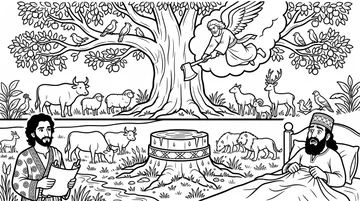
Wherefore, O king, let my counsel be acceptable unto thee, and break off thy sins by righteousness, and thine iniquities by shewing mercy to the poor; if it may be a lengthening of thy tranquillity.
Translations
Why, O king, let my counsel be acceptable to you, and break off your sins by righteousness, and your iniquities by showing mercy to the poor; if it may be a lengthening of your tranquility.
King James Version, KJV Cambridge Paragraph Bible
Wherefore, O king, let my counsel be acceptable unto thee, and break off thy sins by righteousness, and thine iniquities by shewing mercy to the poor; if it may be a lengthening of thy tranquillity.
Wherefore, O king, let my counsel be acceptable to thee, and break off thy sins by righteousness, and thy iniquities by showing mercy to the poor; if it may be a lengthening of thy tranquillity.
Wherefore, O king, let my counsel be acceptable unto thee, and break off thy sins by righteousness, and thine iniquities by shewing mercy to the poor; if there may be a lengthening of thy tranquillity.
Wherefore, O king, let my counsel be acceptable unto thee, and break off thy sins by righteousness, and thine iniquities by showing mercy to the poor; if there may be a lengthening of thy tranquillity.
'Therefore, O king, let my counsel be acceptable unto thee, and thy sins by righteousness break off, and thy perversity by pitying the poor, lo, it is a lengthening of thine ease.
Therefore, O king, let my counsel be acceptable unto thee, and break off thy sins by righteousness, and thine iniquities by shewing mercy to the poor; if it may be a lengthening of thy tranquillity.
Wherefore, O king, let, my counsel, be pleasing unto thee, thy sin, then,—by righteousness, break thou off, and, thine iniquities, by shewing favour to the oppressed,—if so be it may become the lengthening out of thy security.
Berean Standard Bible, Majority Standard Bible
Therefore, may my advice be pleasing to you, O king. Break away from your sins by doing what is right, and from your iniquities by showing mercy to the oppressed. Perhaps there will be an extension of your prosperity.”
Therefore, O king, let my counsel be acceptable to you, and break off your sins by righteousness, and your iniquities by showing mercy to the poor. Perhaps there may be a lengthening of your tranquility.”
For this cause, O King, let my suggestion be pleasing to you, and let your sins be covered by righteousness and your evil-doing by mercy to the poor, so that the time of your well-being may be longer.
And the King spake and sayde, Is not this great Babel, that I haue built for the house of the kingdome by the might of my power, and for the honour of my maiestie?
Douay-Rheims (Challoner revision)
Wherefore, O king, let my counsel be acceptable to thee, and redeem thou thy sins with alms, and thy iniquities with works of mercy to the poor: perhaps he will forgive thy offences.
Pictures

Cross-references 20 of 21
- Daniel 4:37
Now I Nebuchadnezzar praise and extol and honour the King of heaven, all whose works are truth, and his ways judgment: and those that walk in pride he is able to abase.
Nebuchadnezzar testifies that God can humble the proud.
- Daniel 4:33
The same hour was the thing fulfilled upon Nebuchadnezzar: and he was driven from men, and did eat grass as oxen, and his body was wet with the dew of heaven, till his hairs were grown like eagles’ feathers, and his nails like birds’ claws.
Nebuchadnezzar’s punishment followed his failure to heed the warning.
- Isaiah 1:16-18
Wash you, make you clean; put away the evil of your doings from before mine eyes; cease to do evil;
Turning from sin and learning to do good are connected with sins being made clean.
- Jeremiah 18:8
If that nation, against whom I have pronounced, turn from their evil, I will repent of the evil that I thought to do unto them.
Turning from evil can avert threatened judgment.
- Daniel 4:14
He cried aloud, and said thus, Hew down the tree, and cut off his branches, shake off his leaves, and scatter his fruit: let the beasts get away from under it, and the fowls from his branches:
The dream’s command to cut down the tree depicts the judgment Daniel counsels the king to avert.
- Daniel 4:31-32
While the word was in the king’s mouth, there fell a voice from heaven, saying, O king Nebuchadnezzar, to thee it is spoken; The kingdom is departed from thee.
sentence Daniel urged king to avoid
- Proverbs 20:28
Mercy and truth preserve the king: and his throne is upholden by mercy.
Both connect mercy with a ruler’s security and stability.
- Matthew 25:40
And the King shall answer and say unto them, Verily I say unto you, Inasmuch as ye have done it unto one of the least of these my brethren, ye have done it unto me.
Mercy to the poor is treated as care for Christ.
- Proverbs 16:12
It is an abomination to kings to commit wickedness: for the throne is established by righteousness.
Righteousness establishes a throne.
- Proverbs 19:17
He that hath pity upon the poor lendeth unto the LORD; and that which he hath given will he pay him again.
Both commend kindness and help for the poor.
- Daniel 4:20-22
The tree that thou sawest, which grew, and was strong, whose height reached unto the heaven, and the sight thereof to all the earth;
The king’s greatness and dominion set the context for Daniel’s warning.
- Proverbs 21:13
Whoso stoppeth his ears at the cry of the poor, he also shall cry himself, but shall not be heard.
It connects refusing to hear the needy with the nation’s disregard for the distressed.
- 1 John 3:17
But whoso hath this world’s good, and seeth his brother have need, and shutteth up his bowels of compassion from him, how dwelleth the love of God in him?
Both connect love of God with compassion for those in need.
- Micah 6:8
He hath shewed thee, O man, what is good; and what doth the LORD require of thee, but to do justly, and to love mercy, and to walk humbly with thy God?
Both call for righteous conduct and mercy toward others.
- Jeremiah 27:6
And now have I given all these lands into the hand of Nebuchadnezzar the king of Babylon, my servant; and the beasts of the field have I given him also to serve him.
Nebuchadnezzar serves as God’s appointed ruler under His authority.
- Luke 14:21-23
So that servant came, and shewed his lord these things. Then the master of the house being angry said to his servant, Go out quickly into the streets and lanes of the city, and bring in hither the poor, and the maimed, and the halt, and the blind.
The passage connects Jesus’ invitation to bring in the poor with the counsel to show them mercy.
- Proverbs 14:34
Righteousness exalteth a nation: but sin is a reproach to any people.
Righteousness exalts a nation, echoing the counsel to rule justly.
- Daniel 7:4
The first was like a lion, and had eagle’s wings: I beheld till the wings thereof were plucked, and it was lifted up from the earth, and made stand upon the feet as a man, and a man’s heart was given to it.
Describes Nebuchadnezzar’s humiliation and restoration with a man’s heart.
- Daniel 5:1-4
Belshazzar the king made a great feast to a thousand of his lords, and drank wine before the thousand.
Belshazzar’s sacrilegious feast shows the result of disregarding Daniel’s counsel.
- Daniel 5:22-23
And thou his son, O Belshazzar, hast not humbled thine heart, though thou knewest all this;
Belshazzar is condemned for disregarding the light given to Nebuchadnezzar.
Commentary
Each commentary is drawn from primary sources: the writings of Ellen G. White and Adventist pioneers and periodicals. Each commentary is separate. Its own words are not a quotation; follow the references to read the source passages.
Ellen G. White
32 sources
Daniel closed his interpretation of the king's tree dream — the great tree cut to a stump being Nebuchadnezzar himself in his greatness, to be driven from men to live with beasts for seven times until he learned that Heaven rules — with a second warning to break off sins by righteousness and iniquities by mercy to the poor, that his peace and prosperity might be lengthened and the sentence averted.Ms 233, 1902, par. 14–1713MR 61.3–62.2Lt 71, 1894, par. 27–31Lt 126, 1910, par. 10–12Lt 34, 1900, par. 20–23 The counsel called him to abandon wrongdoing and oppression for right conduct, compassion and care for the needy because pride had lifted him to forget God as the source of his strength.Ms 233, 1902, par. 14–17ED 174.2Ms 169, 1904, par. 7Lt 71, 1894, par. 27–31PK 517.2–3 He was put on trial for twelve months, but the warning left no lasting change, and in an unguarded moment of boasting over great Babylon built by his own power the tree was felled, his reason taken and he was banished among the beasts.13MR 61.3–62.2Lt 71, 1894, par. 27–31Ms 21, 1899, par. 6–7Ms 15, 1896, par. 7–9TEPD 3.1 Afterward he acknowledged God's sovereignty as the living God, was converted and miraculously restored with his kingdom restored to him.Ms 21, 1899, par. 6–7PK 522.2Ms 39, 1899, par. 9–11 It is a lesson to every earthly ruler that authority comes from Heaven and continued peace depends on turning from sin to do justice and show mercy to the poor.ED 174.2Lt 71, 1894, par. 27–31PK 502.1 For the guilty man that breaking off of sin means earnest reform without delay in living union with Christ by active faith, utter dependence, humbling of heart and painful detachment from pride and selfishness until character is transformed, which brings pardon, peace and acceptance.Lt 71, 1894, par. 27–315T 230.4–231.3ST Feb 4, 1886AAP 14.4Lt 15, 1897, par. 8
Dream Setting and Counsel
The counsel belongs to Nebuchadnezzar's dream of a lofty great tree cut down to a stump, where the tree is the king himself in his greatness, prosperity, power and glory, with the nations under his rule.8T 126.313MR 61.3–62.2Lt 71, 1894, par. 27–31 It was a further dream God gave after the king had acknowledged from the furnace miracle that the God of the Hebrews is the living God, but he did not continue to walk in the light and lost the holy impression made on his mind.13MR 60.1–61.2 Daniel declared that the great tree was the king himself and that the Most High had decreed he would be driven from men to live with beasts for seven times until he knew that God rules the kingdom of men and that heaven rules, and that his kingdom would be restored to him when he learned this.Lt 126, 1910, par. 10–12Lt 34, 1900, par. 20–23
The coming judgment was because of pride, arrogance and self-exaltation, for he did not acknowledge God as the source of his strength and ability, and his prosperity elevated and deceived him.Lt 71, 1894, par. 27–31PK 517.2–3TEPD 3.1Ms 39, 1899, par. 9–1121MR 53.3–4 Daniel had a solemn duty to tell this dreadful truth plainly and personally without flattery or seeking favor, whatever the consequences might follow, and the verse closes his interpretation as a second warning to the king.Ms 29, 1895, par. 13–16Lt 126, 1910, par. 10–12Lt 34, 1900, par. 20–23PK 517.2–3 It urges him to break off sins by righteousness and iniquities by showing mercy to the poor, to abandon wrongdoing and practice right conduct, and to replace oppression and selfishness with compassion, kindness and care for those in need.Ms 233, 1902, par. 14–17ED 174.2Ms 169, 1904, par. 7Lt 114, 1903, par. 12–147MR 66.1–67.1 It calls the self-exalted ruler to stop sinning by doing what is right and to turn from wrongdoing by being merciful to the poor instead of continuing in his course.13MR 61.3–62.2Lt 71, 1894, par. 27–31Ms 21, 1899, par. 6–7Lt 126, 1910, par. 10–12Lt 34, 1900, par. 20–23
The counsel is conditional and offers a chance before the announced judgment falls, holding out that if he repents and changes conduct his tranquility, peace, security and prosperity may be lengthened.Ms 233, 1902, par. 14–17Ms 169, 1904, par. 7Ms 21, 1899, par. 6–7Lt 126, 1910, par. 10–12Lt 34, 1900, par. 20–23 Such turning to righteous living and kindness to the poor could avert the threatened calamity, delay the threatened judgment, and keep the threatened sentence from being fulfilled.ED 174.213MR 61.3–62.2Lt 71, 1894, par. 27–31Lt 114, 1903, par. 12–147MR 66.1–67.1
Probation and Fulfillment
Daniel's counsel placed the king on a twelve-month probation, during which his actions were weighed while he was tested and proved, and for a time he was genuinely impressed by the warning.13MR 61.3–62.2Lt 71, 1894, par. 27–31Ms 15, 1896, par. 7–9Ms 15, 1896, par. 4–6PK 519.2 The judgment was thus delayed to give him space to repent by turning from sin to righteousness and mercy to the poor, so that his peace might be prolonged and the threatened sentence delayed or not fulfilled.Lt 71, 1894, par. 27–31Ms 15, 1896, par. 7–9Ms 15, 1896, par. 4–6PK 519.2Ms 15, 1896, par. 13–16 That forbearance, however, was dismissed as commonplace and had no lasting or saving effect on character.Lt 71, 1894, par. 27–31Ms 15, 1896, par. 7–9PK 519.2Ms 15, 1896, par. 13–16 Because his heart was not fully transformed, self-indulgence and inordinate ambition remained, he soon lost the impression of the Spirit, persisted in pride and vanity, lost confidence in the interpretation, and returned to boasting of his own power.13MR 61.3–62.2Lt 71, 1894, par. 27–31Ms 15, 1896, par. 4–6PK 519.2Ms 15, 1896, par. 13–16
In an unguarded moment he exalted himself for great Babylon as built by his own power and for his own honor.TEPD 3.1 In that instant sentence was issued and the tree was felled: the blessings bestowed upon him were removed, his reason and wisdom were taken away, and the mighty ruler was banished from human society and driven from men to find his place among the beasts of the field.Ms 21, 1899, par. 6–7PK 522.2TEPD 3.1 That degradation lasted seven years.Ms 21, 1899, par. 6–7 Afterward he acknowledged his wrong and God's sovereignty, was converted and miraculously restored, with his kingdom restored to him, having learned to acknowledge the living God who has power to create and destroy.Ms 21, 1899, par. 6–7PK 522.2Ms 39, 1899, par. 9–11
Belshazzar knew what had happened to Nebuchadnezzar yet ignored the lessons it should have taught him.PK 522.2 Light is given to lead to reform, and neglecting or refusing to practice that light brings judgment, and his calamity followed such disregard of the light given to Nebuchadnezzar.PK 522.2Lt 201, 1899, par. 3–4
Lessons for Rulers and Believers
Authority comes from Heaven, and the counsel to break off sins by righteousness and iniquities by showing mercy to the poor is a lesson for every earthly ruler that success and continued peace depend on how rulers use the power God gives them, by turning from sin, living righteously, doing justice and judgment, and being merciful to the poor.ED 174.2Lt 71, 1894, par. 27–31PK 502.1 The conditional promise is that doing so may prolong peace, tranquility, security and prosperity, while refusal to heed brings removal of human ability and the uprooting and confusing of ambitious projects, and repentance with humbling the heart before God brings pardon, peace, acceptance and another trial and proving.ED 174.2Lt 71, 1894, par. 27–31PK 502.1 The king was warned because he did not acknowledge God as the source of his strength and ability and was pursuing self-exaltation that would bring divine judgment, after the interpretation of the dream of the great tree cut down to a stump.Lt 71, 1894, par. 27–31 For twelve months he was tested and proved while his actions were weighed, yet the warning from God was dismissed as commonplace.Lt 71, 1894, par. 27–31
The plain, personal counsel spoken directly to the self-exalted king in his high place, warning him to stop sinning by doing what is right and to turn from wrongdoing by showing kindness to the poor so that peace and prosperity might be prolonged before judgment falls, stands as the pattern and example for future opportunities for God's servants to speak plainly and give personal warning and counsel to repent to those who stand in high places of the earth and have influence and authority.Lt 34, 1900, par. 20–236MR 70.4–6 If such persons repent and are converted, God can use them in His cause.6MR 70.4–6 The counsel holds lessons of vital importance for all connected with the work of God, and in a special sense for those entrusted to receive sacred truth and reveal it to the world, who are far more accountable than the king of Babylon because his course is laid out before them to learn from.Ms 29, 1895, par. 13–16 It reveals God working to change even the heart of a heathen king, with a Watcher taking cognizance of human works, and sets the solemn duty to tell the truth without flattery or seeking favor.Ms 29, 1895, par. 13–16
The case stands as a warning to a leader in God's work who is bringing in principles God will not sustain and carrying on the work by human wisdom.Lt 188, 1901, par. 121MR 53.3–4 Such a one is not to trust in self or human strength or make human strength a support, not to exalt and magnify self, not to take unauthorized authority and power over God's heritage, and not to control, criticize and condemn fellow workers who do not meet his ideas.Lt 188, 1901, par. 121MR 53.3–4 Breaking off sins by righteousness and iniquities by turning to the Lord means putting forth most earnest effort to form a lasting alliance and living union with Christ by living, active faith whose permanence is the condition of union, where Christ is chosen as first and last and best in everything and through which alone the proffered blessings are attained.5T 230.4–231.3ST Feb 4, 1886AAP 14.4RH Nov 18, 1909 Turning from sin therefore involves righteous living, repentance, thorough reformation, and turning to the Lord to form a living union with Christ that depends on cherishing a living, active, enduring faith.5T 230.4–231.3AAP 14.4RH Nov 18, 1909Lt 15, 1897, par. 8
That union costs utter dependence, feeling need of the atoning blood of Christ, change of heart, submission of the will to the will of God, painful detachment from pride, selfishness, vanity, worldliness and sin in all its forms, humbling the heart before God and continuing until character is transformed, with struggle against outward and internal obstacles.ST Feb 4, 1886Lt 15, 1897, par. 8 For a guilty man the verse means making reform his lifework with no delay, righting past cruel wrongs to wife and children as far as possible and showing mercy to the oppressed, which evidences the character of those who will be clothed in white and walk with Christ and receive the seal of the living God.Lt 71, 1894, par. 27–31Lt 35, 1896, par. 20–23 Refusal leaves selfishness, appetite and oppression unovercome and brings the foretold judgments as they came upon Nebuchadnezzar, with dealing without sympathy, without mercy, without compassion.Lt 71, 1894, par. 27–31Lt 35, 1896, par. 20–23
Sources
Pioneers and periodicals
80 sources
After interpreting the king's dream of the great tree cut down for pride, Daniel urged Nebuchadnezzar to end his sins by doing righteousness and to end his wrongs against the poor by showing them mercy, so that his peace, prosperity and rule might be prolonged.ST Dec 23, 1897RH May 4, 1869ST Mar 3, 1909ST Sep 21, 1904ST Dec 18, 1893 The threatened loss of kingdom and reason was conditional and could have been delayed or turned aside if he humbled himself in repentance instead of being humbled by judgment.RH May 4, 1869RH Jan 2, 1900RH Jan 2, 1900ST Sep 21, 1904RH Nov 22, 1906 His sins were pride, self-exaltation and oppression of the poor, hoarding wealth, enlarging his capital and temples at their expense while their needs were neglected.ST Sep 21, 1904ST Oct 16, 1901 The counsel is a complete gospel message that sin brings trouble and righteousness is the only remedy, calling the sinner to cease evil, learn to do good, and by living union with Christ receive God's righteousness and power to overcome.ST Nov 29, 1910ST Feb 4, 1886RH Aug 22, 1907RH Apr 10, 1916RH May 22, 1900 It belongs to the lesson that the Most High rules human kingdoms, giving lasting stability only where rulers and nations turn from sin to righteousness, justice and mercy, honor God as Ruler, and do not invade His place by coercing conscience.ST Dec 23, 1897ST Sep 21, 1904RH Jun 16, 1904
Historical Setting and Context
Daniel's counsel belongs to the king's own royal proclamation to all peoples, nations and languages dwelling in all the earth, telling of himself and Babylon and Daniel and God and the signs and wonders the Most High wrought toward him.RH May 15, 1900RH Feb 13, 1900ST Oct 16, 1901 It follows the interpretation of the dream of the great tree cut down, and belongs to Nebuchadnezzar's experience of pride, judgment and blessing from God that led to his conversion.RH May 15, 1900RH Feb 13, 1900ST Jan 16, 1912 In that record he is shown recognizing that God was just and right and his own ways evil, submitting to God, yielding himself to heaven's right to rule him in service, and declaring God's goodness, power and wonders.RH May 15, 1900ST Jul 16, 1912 The chapter presents this as God's merciful effort to teach a proud and idolatrous ruler to acknowledge the true God who alone rules and is able to deliver.ST Oct 16, 1901ST Jan 16, 1912
The warning was given before the king lost rule and sanity for seven years, leaving him a year or twelve months to respond.RH Apr 25, 1912RH Oct 22, 1901 He did not heed the voice to break off sins by righteousness and iniquities by showing mercy to the poor that his tranquillity might be lengthened, but continued boasting in his own power, saying Is not this great Babylon that I have built.ST Dec 18, 1893ST Mar 18, 1903RH Oct 22, 1901 While the word was still in his mouth the decree went forth against him and he was driven from human society to live like a beast among the beasts of the field, with godlike faculties taken away and the wings of outrageous pride clipped by insanity in the zenith of Babylonian power.ST Dec 18, 1893RH Jan 23, 1908RH Oct 22, 1901 The tall tree was hewn down for a time until seven times, meaning years, had passed, including seven years loss of reason in degraded bestial condition separated from kingdom and friends, followed by restoration to sanity and to a sane appreciation of his humble position as a man in relation to Almighty God, when he praised and extolled the King of heaven and proclaimed His signs and wonders to all peoples, nations and languages.ST Dec 18, 1893RH Jan 23, 1908RH Oct 22, 1901 Daniel had urged this turning with hope that reform would prolong peace, prosperity, security and rule, offering a final warning and opportunity still open before judgment came, so that repentance and practical mercy might avert the foretold humiliation.RH Apr 25, 1912RH Oct 22, 1901RH Oct 22, 1901
The chapter belongs to the Aramaic portion of Daniel, which is distinctively prophetic.ST Oct 21, 1908 Though it belongs to the book's narrative section it is also more or less prophetic, giving rulers and nations practical lessons for life.ST Oct 21, 1908 As a historical section it chronologically precedes Daniel 7, even though Daniel 7 is placed after it in the book.ST Apr 5, 1877
The tree cut down to a stump was an object-lesson by which God opened the future, as a teacher uses toothpicks or kernels of corn to hold attention and impress truth on receptive minds.RH Sep 2, 1909ST May 27, 1908 Together with the image of four metals smitten by a stone in Daniel 2, which revealed three coming universal monarchies, the passing of all earthly kingdoms and the establishment of God's kingdom, it was a symbolic prophecy given to disclose future events not to hide them.RH Sep 2, 1909ST May 27, 1908 Its meaning is unfolded by inspiration in the Bible itself by comparing Scripture with Scripture rather than human imagination, fully explained with its application fearlessly made, standing as one of five prophecies in Daniel given in symbols and afterward fully interpreted and one of seven prophecies with authoritative interpretations that furnish the basis for general prophetic interpretation and supply the key for unlocking other important prophecies.RH Sep 2, 1909 It made a profound impression on Nebuchadnezzar's giant mind as no bare statement of the same truths could, and resulted in his conversion.ST May 27, 1908
Daniel gave this counsel after interpreting the dream about the great tree cut down for seven times until the king would know that the Most High rules, speaking personally and directly about thy sins and thine iniquities and not about sin in general.RH May 22, 1900RH May 22, 1900ST Oct 16, 1901 He spoke with kindness and persuasion, not harshness, pleading with the king to end sin by practicing righteousness and to end iniquity by showing mercy to the poor, since heavenly watchers had noted pride, arrogance and oppression of the poor which in the face of light already given and acknowledged could not be suffered to continue.RH May 4, 1869ST Oct 16, 1901 Yet he delivered God's message with full pointedness without softening it from fear of incurring royal displeasure and without being deterred by the pomp and glory of the royal court, not counting the cost of doing right.ST Oct 30, 1879ST Nov 24, 1898 Such counsel to the king of Babylon was reluctant but faithful warning that the threatened humiliation might still be escaped, requiring Christian strength, courage and faithfulness that does not seek to please men or speak smooth things to those in high position, as an example of real principle and integrity formed from early training in truth and ready on the hour as one step in a continuous life.ST Nov 24, 1898RH May 22, 1900ST Oct 16, 1901
The vision of the future was given to Nebuchadnezzar, and through him to all rulers of earth who come after, to lead them to think of the future, even the eternal future, so that ignoring that divine warning is folly.ST Nov 28, 1900 The dream that foretold Nebuchadnezzar's deposition, the pride that caused it, and the humiliation itself were all known to Belshazzar, yet he acted with even greater presumption by publicly defiling the vessels of God's house to insult the God who had humiliated Nebuchadnezzar.ST Jun 28, 1899 Nebuchadnezzar was finally brought to full acknowledgment of the true God and published a decree to that effect to all nations of his dominion, about forty-four years before the fall of Babylon under Belshazzar and ending about twenty-three years before Nebuchadnezzar's death with the greatness and real glory of the kingdom.ST Feb 4, 1886 That acknowledgment had no discernible impression on those who followed him on the throne, with iniquity culminating in his grandson Belshazzar.ST Feb 4, 1886
Meaning of Counsel Words
To break off sins by righteousness is to end sinful ways through righteous doing rather than mere abstention, putting righteousness in sin's place instead of dwelling on sin.ST Jul 18, 1911ST Jan 16, 1912ST Mar 3, 1909 A heart inactive in righteous deeds turns toward unrighteousness, and one that withholds mercy hardens itself against good.ST Jan 16, 1912 Cherishing sin even when not acted upon leaves a person in bondage, and a single cherished sin can destroy peace and lead to ruin.RH Oct 13, 1859 There is no righteous idle soul and no righteous empty life.ST Oct 16, 1901 The victory must be won in the moment of temptation by resisting unholy desires, asking the Spirit's help, and promptly doing God's will.ST Mar 3, 1909
Righteousness is right being and right doing, a positive character bearing the fruits of righteousness, and there is no other way to cooperate with God in building character.ST Oct 16, 1901 It is God's righteousness taking the place of human righteousness, by which a person is made acceptable to God and brought into harmony with Him.ST Mar 3, 1909 Those who long with all their heart to become like God can receive His righteousness.ST Mar 3, 1909
To break off iniquities by showing mercy to the poor means mercy must reign where lawlessness oppressed the poor.ST Oct 16, 1901 Such mercy is itself a work of righteousness highly valued by God and a practical expression of repentance for the king's good.ST Dec 23, 1897RH Jan 5, 1911 It is the outward manifestation of inward change of character, not requiring a grand temple to the true God to surpass the temple of Belus in Babylon, but recognizing the temple of the living God already built in man and revealing God's character in treatment of the poor, for what is done to the poor is done to Christ Himself.RH May 22, 1900 A true king both reveals and retains his kingship by ministering to the lowly and unfortunate after the pattern of Christ who came not to be ministered unto but to minister and give His life a ransom.RH May 22, 1900 Showing mercy would have checked the concentration of Babylon's wealth and eased the poverty of its people, confronting oppressive rule and the use of the country's resources to enlarge the capital.ST Sep 21, 1904
The sins and iniquities to be broken off were pride, arrogance and oppression of the poor which heavenly watchers had noted, and continuance in that way could not be suffered after light given and acknowledged.ST Oct 16, 1901 Mighty temples erected to the gods avail nothing and count for nothing when their material came from the sweat and blood of the needy.ST Oct 16, 1901 If it may be a lengthening of tranquillity means reform might avert or delay the threatened judgment and prolong the king's peace, prosperity, security and rule.RH May 4, 1869ST Sep 21, 1904ST Oct 28, 1908 As the margin explains, lengthening of tranquillity also means healing of his error.RH May 4, 1869ST Sep 21, 1904
Conditional Judgment and Mercy
The threatened judgment announced in the dream was conditional, and the course the king took could turn it aside, avert it, delay it, or ease it.RH May 4, 1869RH Jan 2, 1900RH Jan 2, 1900ST Jan 16, 1912 Leaving sins, practicing righteousness, and showing mercy to the poor might prolong peace and lengthen the period of tranquillity before the judgment fell.RH May 4, 1869RH Jan 2, 1900ST Jan 16, 1912ST Jun 10, 1913 The chapter therefore stands as an example of the Lord's judgment being turned aside by the response of those concerned.RH Jan 2, 1900 Reform was urged with kindness and persuasion rather than harshness, holding out hope that peace might be extended and error healed.RH May 4, 1869ST Jun 10, 1913
The counsel was given to teach the king without his first undergoing the foretold ordeal, offering him the privilege of saving his humiliation by humility.ST Sep 21, 1904RH Nov 22, 1906ST Oct 16, 1901ST Oct 16, 1901 It opened to him the sure refuge of repentance and the chance to avoid humiliation and have peace last longer.ST Sep 21, 1904RH Nov 22, 1906 God desires to humble no one, but wishes man to see and know and recognize by faith his true condition as a creature of a moment dependent on God for every breath, acknowledging God as Ruler and himself as servant.ST Oct 16, 1901 Judgment was meant to lead him to forsake sin.ST Jun 10, 1913
A final warning and opportunity remained open to him before judgment came, calling for genuine repentance expressed in practical mercy.RH Oct 22, 1901RH Oct 22, 1901ST Jan 17, 1906 The warning came a year, even twelve months, before judgment, leaving time to respond.RH Oct 22, 1901ST Apr 12, 1905 He made no real change and did not heed it, but continued boasting in his own power, saying in effect that great Babylon was built by his own might for his own honor.ST Dec 18, 1893RH Oct 22, 1901ST Apr 12, 1905ST Jan 17, 1906 While the boastful word was still in his mouth the decree went forth against him, and the predicted calamity and humiliation followed, and he was driven out from human society to dwell with the beasts of the field and live like an animal until the lesson was complete.ST Dec 18, 1893RH Oct 22, 1901ST Apr 12, 1905 His experience shows that pride and refusal to heed God's warning bring judgment.RH Oct 22, 1901
He was thus offered a way to turn from sin through repentance, righteousness, and mercy, and in the same way Pharaoh would have been saved if he had repented.ST Jan 30, 1912
Gospel Repentance and Righteousness
The counsel is a complete gospel message, the message of righteousness by faith preached in Babylon, which does more than warn of coming trouble because it points out the remedy.RH Aug 22, 1907RH Apr 10, 1916RH May 22, 1900RH May 22, 1900 Sin was the cause of the trouble and righteousness the only remedy, and the aim was to bless by turning away from iniquity.RH May 22, 1900RH May 22, 1900 The message was made personal, dealing with thy sins and thine iniquities and not with sin in general, and it brought the king to recognize God's power to humble the proud and to acknowledge and worship the true God, which was its intended effect on his heart.RH Aug 22, 1907RH Apr 10, 1916RH May 22, 1900RH May 22, 1900 It means true healing from Babylonian confusion and despair through receiving God's righteousness and knowing God, exchanging sin for righteousness and despair for certainty of truth and bright everlasting hope, as at last received after the dream of the tree cut down for seven times until he would know that the Most High rules and after the affliction it foretold, demonstrating what God intended for all Babylon.RH May 22, 1900ST Nov 26, 1912
Repentance and conversion here mean breaking off sins by practicing righteousness and turning to the Lord from iniquity, ceasing to do evil and learning to do good before receiving cleansing and mercy.RH May 11, 1869RH Oct 3, 1865RH Feb 5, 1861RH Dec 9, 1852 Such changed conduct, including showing mercy to the poor, could lengthen tranquillity, and turning from sin through righteous living and turning to God from iniquity are conditions of salvation.RH Mar 3, 1863 Conversion is an ongoing progressive work and not merely good thoughts, resolutions, or joyful feelings, continuing as one learns more of God's law and repents of and forsakes remaining sins.RH May 11, 1869 Genuine repentance also leads to trying to make right wrongs already done and to living more watchfully and faithfully, under an urgent call not to delay repentance.RH Oct 3, 1865RH Feb 5, 1861
Breaking off sins by righteousness and iniquities by turning to the Lord means putting forth earnest effort to form an alliance and living union with Christ by living, active, enduring faith.ST Nov 29, 1910ST Feb 4, 1886ST Dec 21, 1882RH Nov 18, 1909 Fallen humanity is alienated and separated from God and cannot overcome evil in its own strength, but Christ has made provision to connect sinners again with himself.ST Nov 29, 1910ST Feb 4, 1886 Through that union believers receive moral and spiritual power, and if they have the Spirit of Christ they bring forth fruits of righteousness that bless fellow men and honor and glorify God.ST Nov 29, 1910 That union, in which Christ is chosen as first and last and best in everything, costs utter dependence, feeling need of the atoning blood, change of heart, submission of the will to the will of God, and painful detachment from pride, selfishness, vanity, worldliness and sin in all its forms, with struggle against outward and inward obstacles, and its permanence amid widespread skepticism and infidelity is the condition of the union.ST Feb 4, 1886ST Dec 21, 1882 It is an amazing privilege offered to all followers, joined to sharing the suffering and reproach of Christ now and sharing his glory hereafter.ST Nov 29, 1910
This turning is the first step to partake of the saints' inheritance in the heavenly city and to leave transgression behind and enter the Lord's coming kingdom of glory and immortality.ST Aug 24, 1882ST Nov 23, 1904ST Feb 25, 1875 The way is easy through Christ: one without hope in Christ must speedily obtain hope in him, confess and forsake sins to be forgiven and cleansed from all unrighteousness, practice righteousness and obedience, and seek God with all the heart to find him in that very day.ST Aug 24, 1882RH Jun 23, 1859ST Nov 23, 1904ST Feb 25, 1875 The call is therefore to repent and seek hope in Christ without delay.RH Jun 23, 1859
The counsel warns that repentance must not be delayed, for turning from sin by practicing righteousness is the safe course.RH Jun 23, 1859RH Mar 3, 1863 When judgment begins, continued sin brings continued resistance against the evil it causes, and that conflict ultimately destroys the sinner.RH Mar 3, 1863
God Rules Nations and Conscience
Daniel 4:27 belongs to the lesson that God is the Ruler, that the Most High rules in the kingdom of men and gives it to whomsoever he will, whose kingdom is everlasting and whose dominion is from generation to generation.ST Dec 23, 1897ST Sep 21, 1904ST Jul 16, 1912 The counsel to break off sins by righteousness and iniquities by showing mercy to the poor called Nebuchadnezzar to submit to that rule, with the offer that his tranquillity might be lengthened, or as the margin explains, that his error might be healed.ST Dec 23, 1897ST Sep 21, 1904 His madness and recovery taught him that Jehovah rules human affairs and is above all gods, and that kings owe him homage.ST Oct 18, 1905ST Dec 29, 1887 The chapter that contains this counsel shows God the Ruler, and like the rest of Daniel was written not for Daniel's own time only but for all later time, most emphatically for the last days, with lessons for all classes of people.ST Jul 16, 1912
The king's error was stepping into God's domain by forcing worship on everyone regardless of conscience, seeking to take God's place by directing and controlling worship and punishing those who would not worship as he decreed.ST Jul 11, 1911ST Dec 3, 1896ST Jul 1, 1903 The counsel to correct wrongdoing through righteousness and mercy toward the poor, itself a healing of his error, called him to give God his rightful place to rule in matters of religion. His authority as God's servant did not give him authority to coerce conscience, for civil rulers may restrain evil but must not coerce conscience or control religion.ST Jul 11, 1911ST Jul 1, 1903
A king finds lasting stability only by turning from sin to righteousness and showing mercy to the poor, for righteousness and mercy with justice are fundamental principles of the gospel and the basis of stability for nations as well as individuals.RH Jun 16, 1904RH Jul 19, 1864 That lengthening of tranquillity depends on breaking off sin by righteousness in deeds, not words, giving glory to God through national existence. Pride and oppression, hardened sin, and ignoring the cries of the distressed bring calamity and end rule, while justice and mercy are the basis of a nation's prosperity.RH Jul 19, 1864
In ruling, the Most High permits Babylon then Medo-Persia then Grecia then Rome and now Great Britain, France, Germany, Russia and the United States to hold power for his testing and glory, while permitting sin to work out its own evil fruit. Modern proud boastful nations need the same counsel given to Nebuchadnezzar. When they fail to recognize God their rule ends and God's everlasting kingdom succeeds all earthly dominion forever.
What Nebuchadnezzar learned, that the Most High rules in the kingdom of men and gives it to whomever he wills and that he is the King of heaven whose works are truth and whose ways are judgment, formed the third part of the threefold gospel of the kingdom made known through the image, the furnace and the tree.RH May 29, 1900 That truth was proclaimed by royal decree to all the world so that every person might put confidence in God, and not forget God's doings, and keep his commands, making the lesson as personal as if each one had passed through the experiences himself.RH May 29, 1900 The message was disregarded and the living God was not glorified and men soon forgot his works, so the greatness of Babylon began to wane with the death of Nebuchadnezzar until the armies of the conqueror were at its gates.RH May 29, 1900
Universal Call and Example
Though spoken to Nebuchadnezzar, the counsel holds for every soul and calls every sinner who would share the coming glory to forsake sins by righteousness and iniquities by turning to the Lord.ST Jul 18, 1911RH May 22, 1900 God sends the same gospel message to all, high and low, rich and poor.RH May 22, 1900 Messengers must speak all the commanded words without diminishing a word, since a message shaped to please men becomes mere human words without saving power.RH May 22, 1900
For every soul the secret of overcoming sin is to put righteousness in its place instead of dwelling on sin.ST Jul 18, 1911 This means taking self off the throne and enthroning Christ as King over the whole spiritual, mental, moral and physical life, consecrating every faculty to His service and thinking of Him.ST Jul 18, 1911 It means practicing the opposite virtue in place of each fault, ending sinful ways through righteous doing and ending wrongdoing through kindness to the poor.ST Jul 18, 1911 The victory must be won in the moment of temptation by resisting unholy desires, asking for the Spirit's help, and promptly doing God's will.ST Mar 3, 1909
Living in harmony with God's righteous rule means turning from sin to righteousness and showing mercy to the poor, for only those in harmony with that rule can persist.ST Dec 1, 1914 It requires humbling self and taking the proper creature place before Him so that He may extend mercy and exalt.RH Jul 7, 1859 God uses affliction and judgment to humble the proud, and that humility is better than remaining without it.RH Mar 23, 1869
Daniel in Babylon is an example of what God wants His workers to be in the world's closing act, with the new covenant promise fulfilled in leading each worker individually.RH Dec 20, 1906 God made His truth known through Gentile kings when Israel did not carry its mission to the nations.RH Nov 11, 1902 Daniel was ready on the hour with God's message for that hour, equal to the occasion and awake to the time, and his counsel is one step in a continuous life of integrity of principle and faithfulness, the same steadfast character that stood from youth through each successive test.RH Feb 27, 1900 He delivered God's message with full pointedness without softening it from fear of incurring royal displeasure and without being deterred by the pomp and glory of the royal court, not counting the cost of doing right, as an example of real principle and integrity formed from early training in truth.ST Nov 24, 1898
The call is applied to a backslidden people who must put away sins through righteous conduct, abandon evil deeds and return to God before He shows mercy and restores them. It is applied to those who know the Sabbath and human mortality to be true yet fail to obey, for knowing duty without doing it leaves one accountable for withholding the light from others.RH Jun 4, 1867 Sinners must break from sin and turn to righteousness rather than diverting attention to duties imagined to arise while they continue in a sinful relation.RH Jul 1, 1858 When believers turn to the Lord and put away sins by righteousness with fasting and prayer as Daniel did, their minds become impressed with the glory and beauty of the heavenly inheritance, so that the glitter of earthly wealth and fashions has no power to draw them aside from the narrow way, for all beneath the sun appears worthless and vain compared with the city of God.RH Oct 10, 1871 Leading a sinner to give the heart to God and break off sins and bad habits comes through feeble efforts with the blessing of God and does much for the person and family, making the home a heaven, and the work gives richer, sweeter, more enduring pay than money can give, the sense of having done someone good and made a soul happy and a sunshine of joy rising in the heart, while selfish deeds that benefit self at another's expense leave meanness and unhappiness.RH Feb 21, 1871
Like the rest of Daniel, this chapter was written not for Daniel's own time only but for all later time, most emphatically for the last days, and contains lessons for all classes of people. It belongs to the chapter that shows God the Ruler and to the royal proclamation to all peoples, nations and languages, carrying the lesson that His kingdom is an everlasting kingdom and His dominion is from generation to generation, a lesson for the mightiest of earth and for the very days of the last days, for the book of Daniel is God's instruction to nations in the last days.ST Oct 16, 1901
Sources