Deuteronomy 2:28
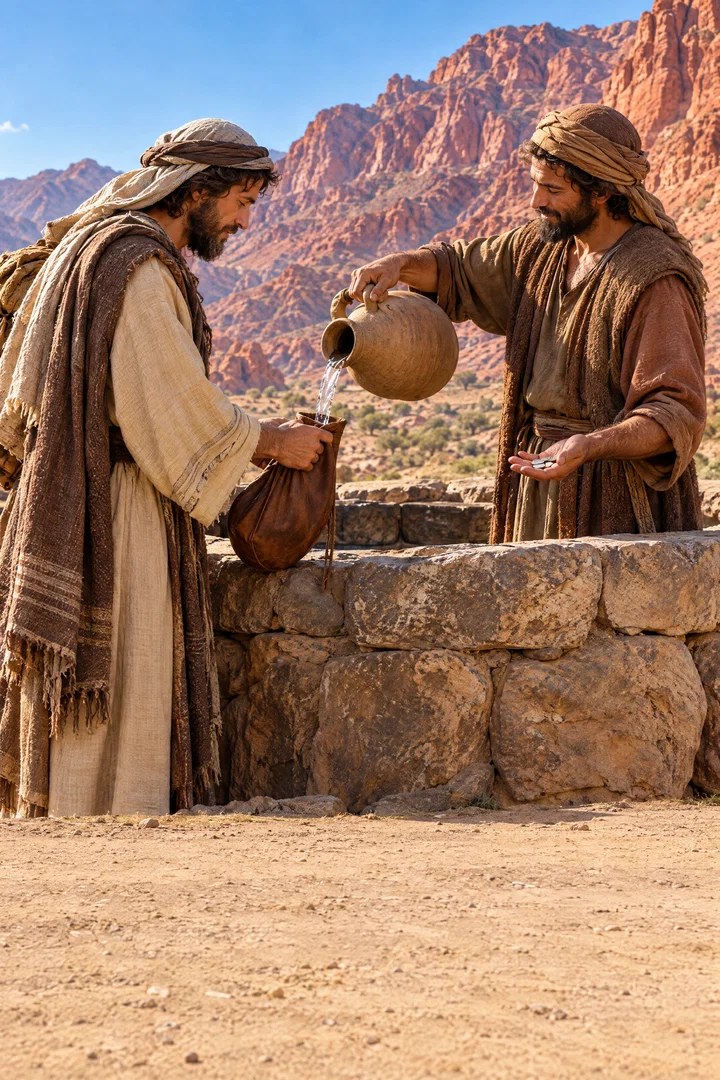
Thou shalt sell me meat for money, that I may eat; and give me water for money, that I may drink: only I will pass through on my feet;
Translations
You shall sell me meat for money, that I may eat; and give me water for money, that I may drink: only I will pass through on my feet;
King James Version, KJV Cambridge Paragraph Bible
Thou shalt sell me meat for money, that I may eat; and give me water for money, that I may drink: only I will pass through on my feet;
Thou shalt sell me food for money, that I may eat; and give me water for money, that I may drink: only I will pass through on my feet;
Revised Version, American Standard Version
Thou shalt sell me food for money, that I may eat; and give me water for money, that I may drink: only let me pass through on my feet;
food for money thou dost sell me, and I have eaten; and water for money thou dost give to me, and I have drunk; only, let me pass over on my feet, —
Thou shalt sell me food for money that I may eat; and thou shalt give me water for money that I may drink; I will only pass through on my feet,
Food for silver, shalt thou sell me so will I eat, and water for silver, shalt thou let me have, so will I drink,—only I would pass through on my feet;—
Berean Standard Bible, Majority Standard Bible
You can sell us food to eat and water to drink in exchange for silver. Only let us pass through on foot,
You shall sell me food for money, that I may eat; and give me water for money, that I may drink. Just let me pass through on my feet,
Let me have food, at a price, for my needs, and water for drinking: only let me go through on foot;
Thou shalt sell me meate for money, for to eate, and shalt giue me water for money for to drinke: onely I will go through on my foote,
Douay-Rheims (Challoner revision)
Sell us meat for money, that we may eat: give us water for money and so we will drink. We only ask that thou wilt let us pass through,
Pictures
Commentary
Each commentary is drawn from primary sources: the writings of Ellen G. White and Adventist pioneers and periodicals. Each commentary is separate. Its own words are not a quotation; follow the references to read the source passages.
Ellen G. White
4 sources
The verse records a friendly, peaceful message in which Moses asks leave for Israel to pass through Amorite territory on the way to the Jordan.PP 433.2PP 433.1ST Nov 4, 1880 The appeal was addressed to Sihon, the Amorite king.PP 433.2ST Nov 4, 1880 The message was sent to him at his capital.PP 433.2 Israel promised to keep strictly to the highway without turning to the right or left, traveling only along the road on foot.PP 433.2PP 433.1ST Nov 4, 1880 Israel offered to pay with money for meat and food to eat and for water to drink.PP 433.2PP 433.1ST Nov 4, 1880
The peaceful request to pass straight through was refused and met with an army gathered for battle.PP 435.1 Israel then crossed the river Arnon, advanced against the Amorites, defeated them in battle, and took possession of the country of the Amorites.PP 435.1 The victory was won by the Captain of the Lord's host fighting for His people.PP 435.1 The same victory would have been given to Israel thirty-eight years before if Israel had trusted Him.PP 435.1
Sources
Pioneers and periodicals
3 sources
Deuteronomy 2:28 belongs to Deuteronomy's recounting of God's dealings with Israel at the close of the forty years of wandering, before the people entered the promised land.ST Mar 11, 1913ST Mar 1, 1910 It stands in Moses's repetition of the law and rehearsal of the wonderful things God had done for His people, spoken after forty years of wandering in the wilderness and before the Israelites crossed the Jordan River into the promised land.ST Mar 1, 1910 That repetition and rehearsal was given to bring God's lessons to their remembrance and to impress upon them the sacred import of God's holy law and the necessity of keeping it.ST Mar 1, 1910
The verse records the request to Sihon for peaceful passage through the Amorite land, with an offer to pay for food to eat and water to drink.ST Nov 4, 1880 It promises to stay on the highway without turning aside, passing through on foot until Israel crossed the Jordan.ST Nov 4, 1880
Sources