Deuteronomy 2:6
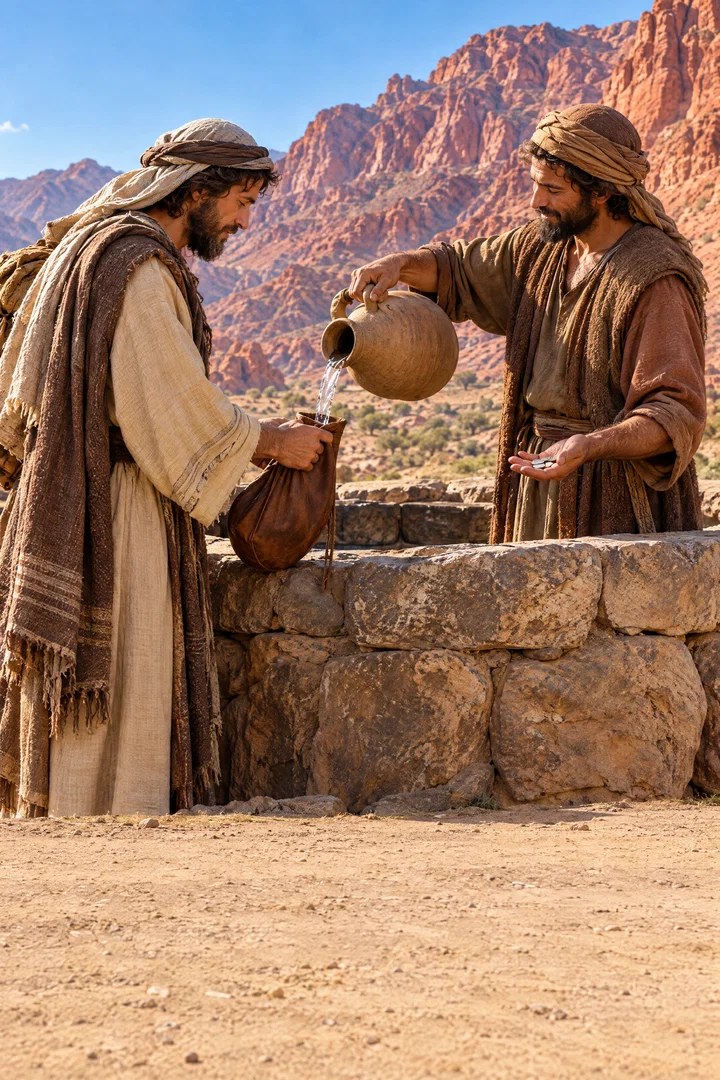
Ye shall buy meat of them for money, that ye may eat; and ye shall also buy water of them for money, that ye may drink.
Translations
You shall buy meat of them for money, that you may eat; and you shall also buy water of them for money, that you may drink.
King James Version, KJV Cambridge Paragraph Bible
Ye shall buy meat of them for money, that ye may eat; and ye shall also buy water of them for money, that ye may drink.
Ye shall buy food of them for money, that ye may eat; and ye shall also buy water of them for money, that ye may drink.
Revised Version, American Standard Version
Ye shall purchase food of them for money, that ye may eat; and ye shall also buy water of them for money, that ye may drink.
'Food ye buy from them with money, and have eaten; and also water ye buy from them with money, and have drunk,
Ye shall buy of them food for money, that ye may eat; and water shall ye also buy of them for money, that ye may drink;
Food, shall ye buy of them with silver so shall ye eat,—yea even water, shall ye buy of them with silver so shall ye drink.
Berean Standard Bible, Majority Standard Bible
You are to pay them in silver for the food you eat and the water you drink.’”
You shall purchase food from them for money, that you may eat. You shall also buy water from them for money, that you may drink.’”
You may get food for your needs from them for a price, and water for drinking.
Ye shall buy meate of them for money to eate, and ye shall also procure water of them for money to drinke.
Douay-Rheims (Challoner revision)
You shall buy meats of them for money and shall eat: you shall draw waters for money, and shall drink.
Pictures
Commentary
Each commentary is drawn from primary sources: the writings of Ellen G. White and Adventist pioneers and periodicals. Each commentary is separate. Its own words are not a quotation; follow the references to read the source passages.
Ellen G. White
1 source
Israel was to pass through Edom peacefully and without attack, buying food and water with money for their needs.PP 413.3–4 This reflected that they were entering a fertile, well-watered country where supplies could be obtained along the way to Canaan.PP 413.3–4 The command to buy water explains why the miraculous stream stopped before Edom was reached.PP 413.3–4 Its stopping was a sign that the wilderness journey was ending and that the promised passage through Edom was being fulfilled.PP 413.3–4 Israel's doubt and murmuring at that time came from failing to recognize that this provision meant God was fulfilling His promise.PP 413.3–4
Sources
Pioneers and periodicals
3 sources
Deuteronomy 2 stands among Moses' records of judgment upon nations wholly given over to evil.ST In such cases preserving the people alive would only bring further corruption.ST In that setting God directed Israel, in passing through the territory of Seir, that is Edom, to buy with money both food to eat and water to drink rather than take those necessities without payment.ST Mar 11, 1913ST May 26, 1914 This took place as Israel passed through Edom near the promised land, where purchase with money took the place of the miraculous supply of water from the rocks that had sustained them through the wilderness journey.ST May 26, 1914
Sources