Deuteronomy 21:6
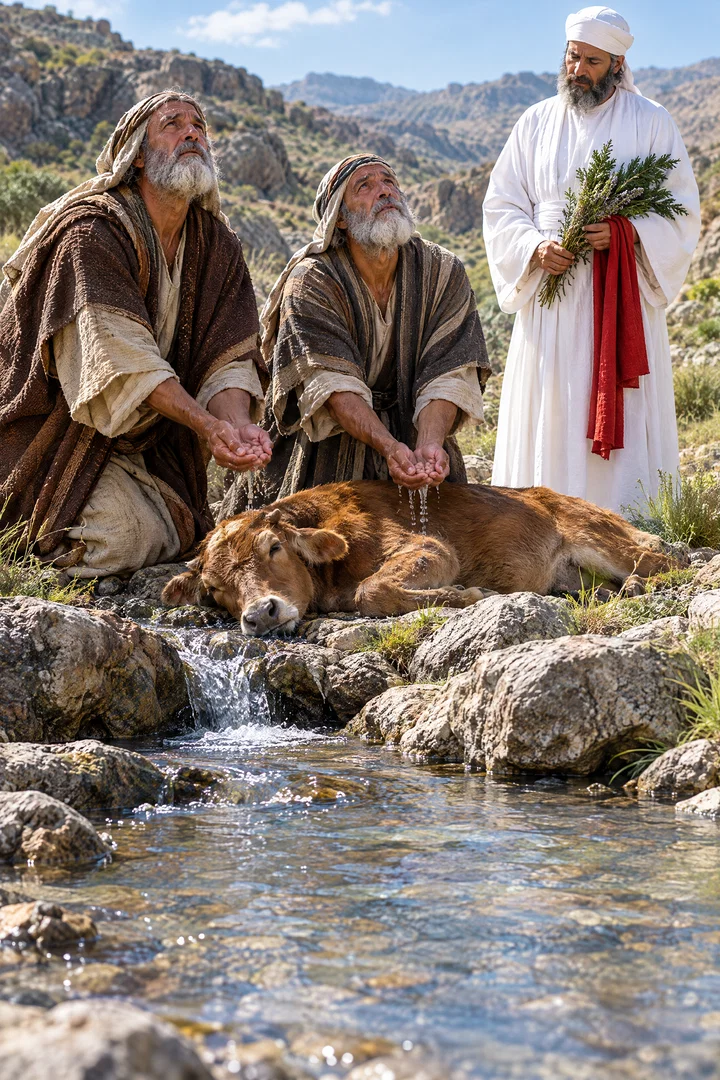
And all the elders of that city, that are next unto the slain man, shall wash their hands over the heifer that is beheaded in the valley:
Translations
And all the elders of that city, that are next to the slain man, shall wash their hands over the heifer that is beheaded in the valley:
And all the elders of that city, that are next unto the slain man, shall wash their hands over the heifer that is beheaded in the valley:
and all the elders of that city, that are next unto the slain man, shall wash their hands over the heifer that is beheaded in the valley:
And all the elders of that city that are next to the slain man, shall wash their hands over the heifer that is beheaded in the valley:
and all the elders of that city, who are nearest unto the slain man, shall wash their hands over the heifer whose neck was broken in the valley:
And all the elders of that city, who are nearest unto the slain man, shall wash their hands over the heifer whose neck was broken in the valley;
and all the elders of that city, who are near unto the slain one, do wash their hands over the heifer which is beheaded in the valley,
And all the elders of that city, that are nearest unto him that is slain, shall wash their hands over the heifer whose neck is broken in the watercourse,
and, all the elders of that city who are nearest unto the slain, shall bathe their hands over the heifer that hath been beheaded in the ravine,
Berean Standard Bible, Majority Standard Bible
Then all the elders of the city nearest the victim shall wash their hands by the stream over the heifer whose neck has been broken,
All the elders of that city which is nearest to the slain man shall wash their hands over the heifer whose neck was broken in the valley.
And all the responsible men of that town which is nearest to the dead man, washing their hands over the cow whose neck was broken in the valley,
And all the Elders of that citie that came neere to the slayne man, shall wash their hands ouer the heifer that is beheaded in the valley:
Douay-Rheims (Challoner revision)
And the ancients of that city shall come to the person slain, and shall wash their hands over the heifer that was killed in the valley,
Pictures
Cross-references
- Numbers 19:1-10
And the LORD spake unto Moses and unto Aaron, saying,
Both describe a heifer ceremony involving slaughter and purification.
Commentary
Each commentary is drawn from primary sources: the writings of Ellen G. White and Adventist pioneers and periodicals. Each commentary is separate. Its own words are not a quotation; follow the references to read the source passages.
Ellen G. White
1 source
The washing of the hands over the beheaded heifer was a solemn public act by the elders of the city found nearest to the slain man.ST Jan 20, 1881 By it they openly declared that their own hands had not shed his blood and that their eyes had not seen who had done the deed.ST Jan 20, 1881 The ceremony was an expression of abhorrence for murder, declaring that those in authority were not to treat such a crime with carelessness or indifference.ST Jan 20, 1881 They were held responsible to employ every possible means to discover the wrongdoer and bring him to justice, and any negligence that shielded the guilty made them partakers in the evil and left them answerable for innocent blood.ST Jan 20, 1881
Sources
Pioneers and periodicals
3 sources
The verse stands within the special instruction and directions in Deuteronomy 18-26, in which great principles for deciding questions were set forth and various laws for the government of Israel and the regulation of its worship were repeated. It applies when a slain person is found and the killer is unknown, directing the elders of the city next unto the slain person to wash their hands over the heifer that is beheaded in the valley.RH May 16, 1912ST Mar 11, 1908 They performed this washing while asking God not to hold them responsible for innocent blood.RH May 16, 1912
The washing of hands was a public declaration that they had not shed the slain person's blood and had not seen who did it.ST Jan 20, 1881 It was joined with asking God not to lay innocent blood to their charge.RH May 16, 1912 The ceremony expressed abhorrence of murder and made the nearby cities and towns responsible for the crime.ST Jan 20, 1881ST Mar 11, 1908 It showed that the authorities must not treat such a crime carelessly but were responsible to use every possible means to bring the wrongdoer to justice.ST Jan 20, 1881 Negligence that shields the guilty makes those responsible partakers in the evil and leaves them answerable for innocent blood.ST Jan 20, 1881
Sources