Translations
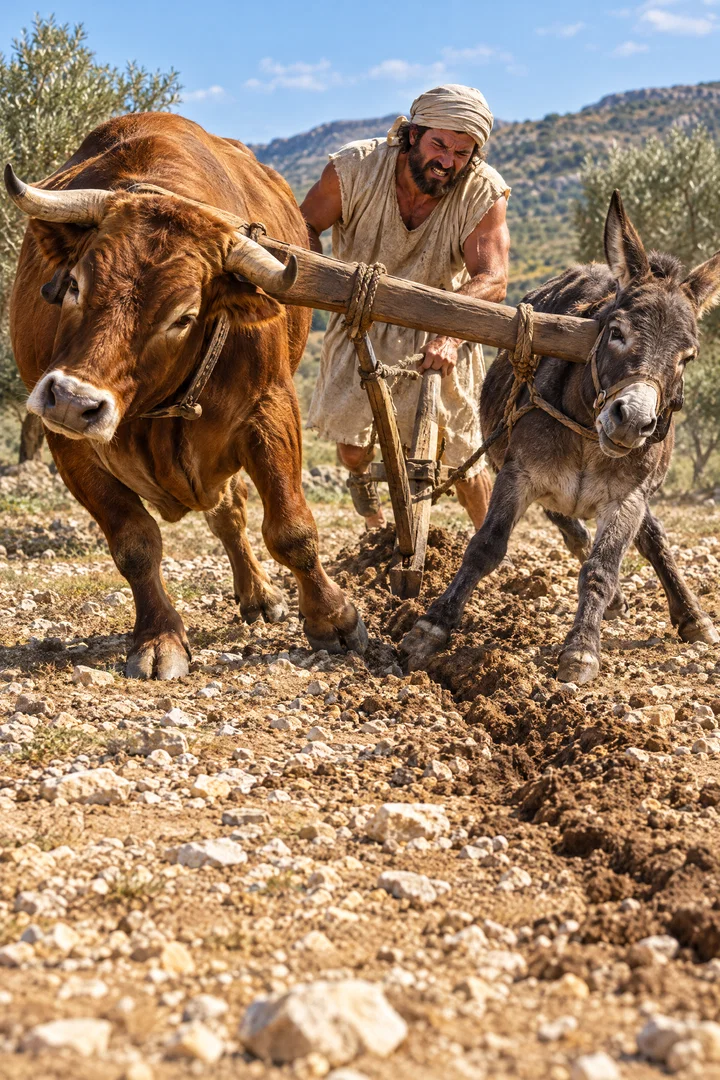
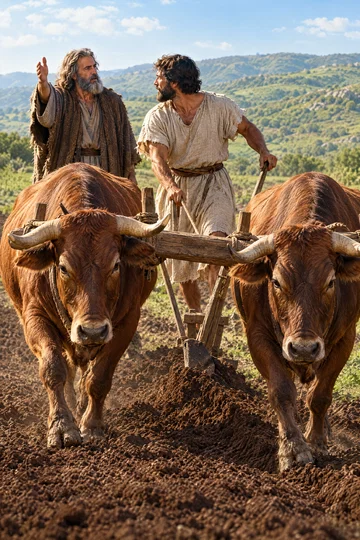
You shall not plow with an ox and an ass together.
King James Version, KJV Cambridge Paragraph Bible, Webster Bible, Revised Version, American Standard Version
Thou shalt not plow with an ox and an ass together.
'Thou dost not plow with an ox and with an ass together.
Darby Translation, Douay-Rheims (Challoner revision)
Thou shalt not plough with an ox and an ass together.
Thou shalt not plough with an ox and an ass together,
Berean Standard Bible, Majority Standard Bible
Do not plow with an ox and a donkey yoked together.
You shall not plow with an ox and a donkey together.
Do not do your ploughing with an ox and an ass yoked together.
Thou shalt not plow with an oxe and an asse together.
Pictures
Cross-references
- 2 Corinthians 6:14
Be ye not unequally yoked together with unbelievers: for what fellowship hath righteousness with unrighteousness? and what communion hath light with darkness?
Both warn against binding together those with different spiritual commitments.
Commentary
Each commentary is drawn from primary sources: the writings of Ellen G. White and Adventist pioneers and periodicals. Each commentary is separate. Its own words are not a quotation; follow the references to read the source passages.
Pioneers and periodicals
7 sources
The command forbids hitching together for plowing an ox, a clean animal, and an ass or donkey, an unclean animal, even though both animals were useful and were not to be joined in the same work.ST Mar 31, 1914ST Mar 13, 1901ST Aug 5, 1897ST Aug 5, 1897RH Mar 17, 1859 The prohibition shows care for animals and requires consideration for working beasts, because their different harnesses or yokes would cause discomfort.ST Mar 13, 1901 The yoking would be cruel to both animals because their different dispositions and temperaments would subject them to an unequal and painful restraint, and for that reason the command is merciful.ST Aug 5, 1897ST Aug 5, 1897 The same principle is illustrated by yoking a camel with an ox.ST Aug 5, 1897
The rule about how the soil was to be cultivated shows that ordinary work and the practical details of daily life were meant to educate in holiness and to point to the Redeemer who takes away the sins of the world.RH Sep 20, 1906 The rule illustrates the principle that unlike things should not be joined in a way that dulls moral sensibility.ST Mar 11, 1908 It teaches avoidance of incongruous, unholy mixtures and alliances, since as the animals differ in nature so God's people differ from the world in nature and motive, and neither side benefits from such a union.ST Aug 5, 1897 It teaches that God's people may use what the world offers without joining themselves to its evil.ST Mar 31, 1914 The verse stands among the ritual requirements about sowing, harvesting, tithes, and offerings that burdened the people.RH Mar 17, 1859
Sources