Deuteronomy 27:6
Thou shalt build the altar of the LORD thy God of whole stones: and thou shalt offer burnt offerings thereon unto the LORD thy God:
Translations
You shall build the altar of the LORD your God of whole stones: and you shall offer burnt offerings thereon to the LORD your God:
Thou shalt build the altar of the LORD thy God of whole stones: and thou shalt offer burnt offerings thereon unto the LORD thy God:
Thou shalt build the altar of the Lord thy God of whole stones: and thou shalt offer burnt offerings thereon unto the Lord thy God:
Thou shalt build the altar of the LORD thy God of whole stones: and thou shalt offer on it burnt-offerings to the LORD thy God.
Thou shalt build the altar of the LORD thy God of unhewn stones: and thou shalt offer burnt offerings thereon unto the LORD thy God:
Thou shalt build the altar of Jehovah thy God of unhewn stones; and thou shalt offer burnt-offerings thereon unto Jehovah thy God:
Of complete stones thou buildest the altar of Jehovah thy God, and hast caused to ascend on it burnt-offerings to Jehovah thy God,
of whole stones shalt thou build the altar of Jehovah thy God; and thou shalt offer up burnt-offerings thereon to Jehovah thy God.
Of whole stones, shalt thou build the altar of Yahweh thy God,—then shalt thou cause to go up thereon ascending-sacrifices, unto Yahweh thy God;
Berean Standard Bible, Majority Standard Bible
You shall build the altar of the LORD your God with uncut stones and offer upon it burnt offerings to the LORD your God.
You shall build the LORD your God’s altar of uncut stones. You shall offer burnt offerings on it to the LORD your God.
You are to make the altar of the Lord your God of uncut stones; offering on it burned offerings to the Lord your God:
Thou shalt make the altar of the Lord thy God of whole stones, and offer burnt offerings thereon vnto the Lord thy God.
Douay-Rheims (Challoner revision)
And of stones not fashioned nor polished: and thou shalt offer upon it holocausts to the Lord thy God:
Pictures
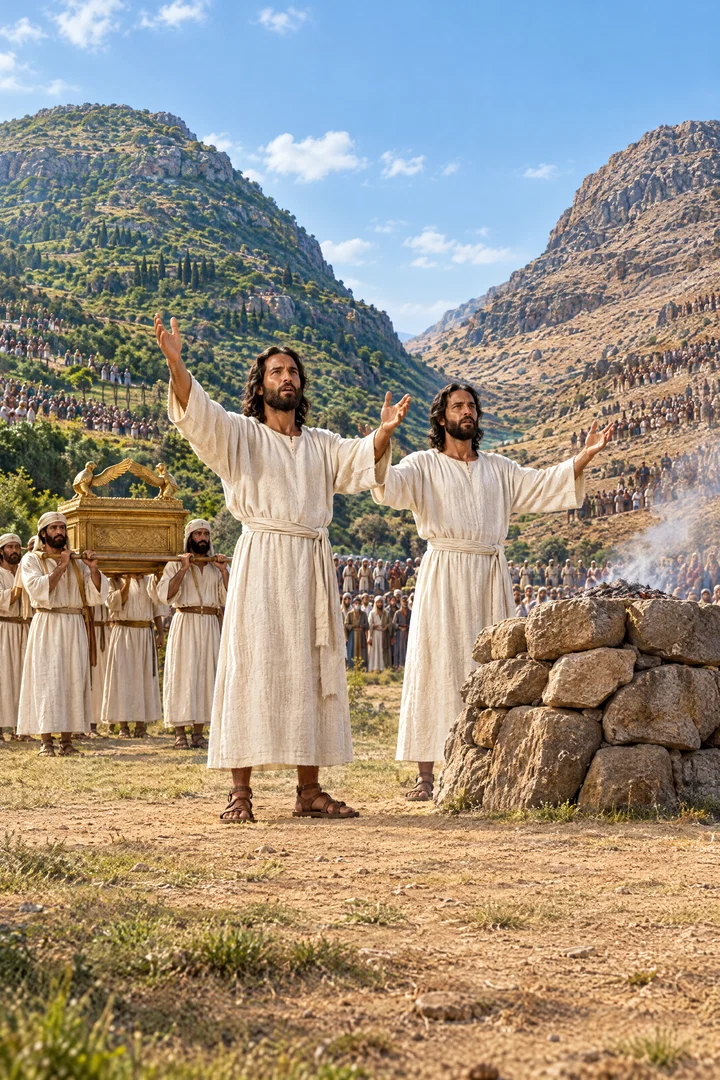
Cross-references
- Joshua 8:30-32
Then Joshua built an altar unto the LORD God of Israel in mount Ebal,
Joshua builds the commanded altar of whole stones and offers burnt offerings.
- Deuteronomy 27:2
And it shall be on the day when ye shall pass over Jordan unto the land which the LORD thy God giveth thee, that thou shalt set thee up great stones, and plaister them with plaister:
Part of the instruction about stones discussed in connection with Deuteronomy 27.
- 1 Kings 6:7
And the house, when it was in building, was built of stone made ready before it was brought thither: so that there was neither hammer nor axe nor any tool of iron heard in the house, while it was in building.
Stones were prepared away from the temple, with no iron tool heard during construction.
Commentary
Each commentary is drawn from primary sources: the writings of Ellen G. White and Adventist pioneers and periodicals. Each commentary is separate. Its own words are not a quotation; follow the references to read the source passages.
Ellen G. White
10 sources
The command is to build the altar of the Lord God of whole stones, uncut and unhewn, without shaping them with iron tools, and to offer burnt offerings upon it to the Lord.Ms 17, 1899, par. 13–15Ms 92a, 1898, par. 24–27PP 500.2Ms 177, 1907, par. 19–21 It was given as the people's response after crossing the Jordan into the promised land, with the altar to stand at Mount Ebal.Ms 17, 1899, par. 13–15Ms 92a, 1898, par. 24–27 It belongs to the covenant-renewal ceremony at Ebal and Gerizim, where Israel was to recognize God's law before taking possession of Canaan.Ms 92a, 1898, par. 24–27PP 499.2–3
The surrounding directions required plastering stones and writing the law and commandments of God plainly upon memorial stones where all could read.Ms 92a, 1898, par. 24–276MR 373.3–374.1Ms 7, 1904, par. 126–128PP 500.4 They required also offering peace offerings, rejoicing before God, and having the law read aloud so the people could see the covenant terms and assent to the blessings for obedience or the curses for neglect.Ms 92a, 1898, par. 24–27PP 500.4 The verse was spoken by Jesus Christ enshrouded in the pillar of cloud with His own voice.Ms 68, 1900, par. 3–5
It belongs to the directions that express the principles of His kingdom and of the law of the kingdom of God and set out His claims on His people.RH Dec 25, 1900Ms 68, 1900, par. 3–5 They were made specific with precaution and decided practical demonstration so that minds may not be left in ignorance and uncertainty.Ms 68, 1900, par. 3–5 Their exactness shows God's care over forgetful Israel and how particular He was in telling them just what to do.6MR 373.3–374.1Ms 7, 1904, par. 126–128
Together with chapter 28 they plainly state the blessings of obedience, repeated from the two prominent positions of the mount of blessings and the mount of curses, where the advantages of the blessing and the disadvantages of the curse were pronounced.RH Dec 25, 19006MR 373.3–374.1Ms 7, 1904, par. 126–128 They were given to remind that obedience to God's commandments is for present and future good and brings prosperity, while disobedience results in a curse.Ms 68, 1900, par. 3–5 The altar's position on the mountain where the curse was pronounced signified that by transgressing the law Israel had justly incurred God's wrath, but that the wrath would be stayed through Christ's atonement represented by the altar and its sacrifice.PP 500.2
It presents the never-ceasing obligation of all whom God has blessed with life and health and temporal and spiritual advantages, and whom He has specially favored, to publicly acknowledge Him so that His name will be glorified as a testimony that His Word is verity and truth.Ms 68, 1900, par. 3–5 It teaches the lesson that God's commandments and warnings must be kept before the people and repeatedly taught and remembered.Ms 68, 1900, par. 3–5Ms 177, 1907, par. 19–21
Sources
Pioneers and periodicals
12 sources
Thou shalt build the altar of whole stones was a command to erect an altar of complete, natural, uncut stones untouched by any iron tool on Mount Ebal soon after crossing the Jordan for offering burnt offerings to the Lord.RH Mar 20, 1900RH Mar 17, 1910 It belonged to the solemn covenant gathering with the tribes standing on Ebal and Gerizim to hear the blessings and curses, which was carried out when Joshua raised the altar, set up great stones, covered them with plaster, and wrote upon them a copy of the law of Moses.RH Mar 20, 1900ST Mar 11, 1908RH Jun 18, 1901RH Sep 6, 1864 Those inscribed stones are not the two tables brought down from Sinai and not the stones of the ministration of death in 2 Corinthians 3, so the Mosaic copy connected with that altar stands distinct from the Decalogue in its ten precepts alone engraved by God.RH Jun 18, 1901RH Sep 6, 1864 Its placement on the mount where the curse was pronounced showed Israel under God's wrath for breaking His law, while the burnt offerings and sacrifices upon it represented Christ's atonement through which the curse would not fall.RH Apr 30, 1867 The direction expresses God's claims and the principles of His kingdom in the blessings of obedience and the fearful curses of transgression, with forgiveness coming not by a law that was never designed to pardon or give life, but by faith in Jesus Christ whose imputed righteousness brings believers into harmony with the law.RH Dec 25, 1900ST Mar 11, 1908ST Mar 8, 1910ST Feb 20, 1896
Altar, Stones, and Ceremony
The altar was to be built of whole, rough, uncut and unhewn stones, with no iron tool lifted to shape them.RH Mar 20, 1900RH Mar 17, 1910RH Sep 6, 1864 It was to stand on Mount Ebal, and was set up after crossing the Jordan among Israel's first duties on entering the promised land, for offering burnt offerings to the Lord thereon.RH Mar 20, 1900 The setting was the solemn covenant ceremony with the tribes gathered on Mount Ebal and Mount Gerizim while the Levites proclaimed the law's blessings and curses, and the revealed will of God was given so that the people might do what the law commands.ST Mar 11, 1908ST Feb 20, 1896 In that place the stones served in commemorating God's covenant and works.RH Mar 20, 1900
The command was fulfilled when Joshua built the altar on Mount Ebal, set up the great stones, covered them with plaster, and wrote upon them a copy of the law of Moses.RH Sep 6, 1864 The law was thus inscribed on the altar, on the stones or on the plaster covering them.RH Jun 18, 1901RH Sep 6, 1864 Those altar stones are not the two tables of testimony brought down from Sinai bearing God's graven writing, and are not the stones written and engraven in the ministration of death in 2 Corinthians 3.RH Jun 18, 1901RH Sep 6, 1864 The law of Moses connected with the altar of whole stones is therefore distinct from the Decalogue in its ten precepts, which alone was written and engraved in stones.RH Jun 18, 1901RH Sep 6, 1864
In keeping with the ban on iron tools on the altar, the temple stones were cut to size in the quarry so they could be set in place in reverent silence.RH Mar 17, 1910 The verse belongs to the book's renewal of the covenant with Israel.RH Feb 24, 1916 It is part of the explicit conditions laid down for the literal seed of Abraham to continue possessing the promised territory, a territorial fulfillment recorded hundreds of years after the promise was given.ST Jul 22, 1913
Law, Atonement, and Warning
The directions surrounding the altar belong to the solemn blessings and curses spoken from Mount Gerizim and Mount Ebal, and they express the principles of God's kingdom and His claims upon His people.RH Dec 25, 1900ST Mar 11, 1908 In those chapters the responsibilities of obedience and the fearful curses of transgression are especially emphasized, while the blessings of obedience are plainly stated.RH Dec 25, 1900ST Mar 8, 1910 God's revealed will is given so that people may do what the law commands.ST Mar 11, 1908
The altar was to stand on the mountain where the curse was pronounced, and that placement showed that Israel had incurred God's wrath by breaking His law. In this sense the law is the sentence of despair.RH Apr 30, 1867
The burnt offerings and sacrifices to be made upon that altar represented Christ's atonement, through which the curse would not fall upon them.
The covenant ceremony on Ebal and Gerizim, where the law's blessings and curses were solemnly pronounced and accepted, shows that the law's inability to give life or to pardon sinners does not mean it failed.ST Feb 20, 1896 It was not designed to pardon those who continue in sin, and the failure lies in people's sin, which leaves them unable to meet the law's demands.ST Feb 20, 1896 Forgiveness and justification come by faith in Jesus Christ, whose righteousness is imputed to believers and brings them into harmony with the law, which then justifies them by witnessing to their righteousness.ST Feb 20, 1896
The chapters containing this command lay down the explicit conditions for the literal seed of Abraham to continue possessing the promised territory, a territorial fulfillment recorded hundreds of years after the promise was given.ST Jul 22, 1913 From the days of Solomon onward Israel departed from God and utterly refused to meet those conditions despite every divine effort to move their hearts to accept Him.ST Jul 22, 1913 Though in compassion God sent messengers to His people, they mocked the messengers and despised His words and scoffed at His prophets until the wrath of Jehovah arose with no remedy.ST Jul 22, 1913 This resulted in the Babylonian captivity expressly foretold in the prophecies of Jeremiah and Ezekiel, even the seventy years the Jews should remain captive to Babylon.ST Jul 22, 1913
Applied to God's house, whole stones represent fit, sound material for building, and inferior material is not suitable.RH Mar 20, 1900 Each person's work will be tested and revealed.RH Mar 20, 1900
Sources