Esther 1:12
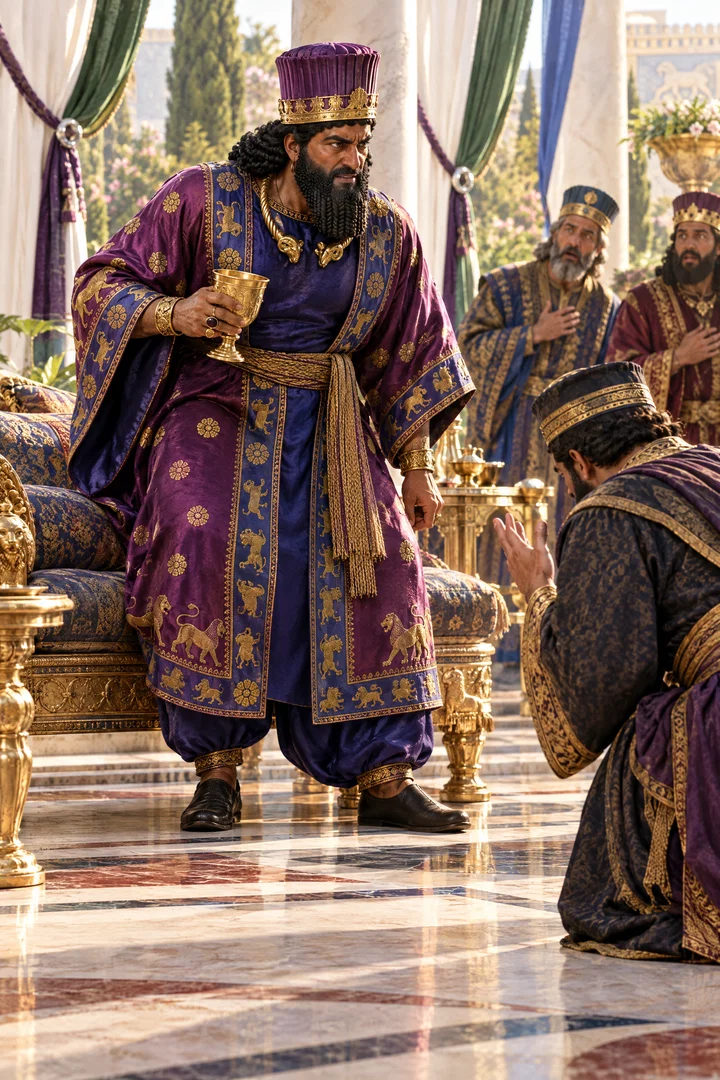
But the queen Vashti refused to come at the king’s commandment by his chamberlains: therefore was the king very wroth, and his anger burned in him.
Translations
American King James Version, King James Version, KJV Cambridge Paragraph Bible
But the queen Vashti refused to come at the king’s commandment by his chamberlains: therefore was the king very wroth, and his anger burned in him.
But the queen Vashti refused to come at the king's commandment by his chamberlains: therefore was the king very wroth, and his anger burned in him.
Revised Version, American Standard Version
But the queen Vashti refused to come at the king’s commandment by the chamberlains: therefore was the king very wroth, and his anger burned in him.
and the queen Vashti refuseth to come in at the word of the king that [is] by the hand of the eunuchs, and the king is very wroth, and his fury hath burned in him.
But the queen Vashti refused to come at the word of the king which was [ sent] by the chamberlains; and the king was very wroth, and his fury burned in him.
But Queen Vashti refused to come in at the command of the king, which was given through the eunuchs,—and the king was exceeding wroth, and, his anger, burned within him.
Berean Standard Bible, Majority Standard Bible
Queen Vashti, however, refused to come at the king’s command brought by his eunuchs. And the king became furious, and his anger burned within him.
But the queen Vashti refused to come at the king’s commandment by the eunuchs. Therefore the king was very angry, and his anger burned in him.
But when the servants gave her the king's order, Vashti the queen said she would not come: then the king was very angry, and his heart was burning with wrath.
But the Queene Vashti refused to come at the Kings worde, which he had giuen in charge to the eunuches: therefore the King was very angry, and his wrath kindled in him.
Douay-Rheims (Challoner revision)
But she refused, and would not come at the king’s commandment, which he had signified to her by the eunuchs. Whereupon the king, being angry, and inflamed with a very great fury,
Pictures

Cross-references
- Esther 2:17
And the king loved Esther above all the women, and she obtained grace and favour in his sight more than all the virgins; so that he set the royal crown upon her head, and made her queen instead of Vashti.
Esther’s rise to the throne advanced God’s purpose for his people.
Commentary
Each commentary is drawn from primary sources: the writings of Ellen G. White and Adventist pioneers and periodicals. Each commentary is separate. Its own words are not a quotation; follow the references to read the source passages.
Ellen G. White
3 sources
The command to Vashti was given while the king was under the influence of wine, which had impaired his judgment and made the command unwise.Ms 39, 1910, par. 16–17Ms 39, 1910, par. 6–7Ms 29, 1911, par. 26–29 He wanted the wine-besotted men at his feast to gaze upon her beauty.Ms 29, 1911, par. 26–29 She refused in order to remain at the head of the women of the court, acting for her husband's sake as well as her own.Ms 39, 1910, par. 6–7
She refused with a pure conscience and expected the king to approve her decision once he had recovered his reason.Ms 29, 1911, par. 26–29 Instead his anger burned against her because of her refusal.Ms 39, 1910, par. 6–7 His advisers argued that allowing her refusal to stand would give women a power to their own harm.Ms 29, 1911, par. 26–29 Although the indulgence surrounding the episode did not glorify God, God made the resulting events work for Israel's good, showing that He can carry out His purposes through rulers and others even when their conduct is wrong.Ms 39, 1910, par. 16–17
Sources
Pioneers and periodicals
5 sources
The feast at which the refusal took place was held while Xerxes, or Ahasuerus, was preparing to invade Greece.ST Mar 4, 1886 The king's command was a drunken demand that Vashti come to display her beauty before him and his guests while they were drunk.ST Mar 2, 1904ST Jan 31, 1906ST Sep 20, 1899 She refused to come at the king's command by his chamberlains, and the king became very angry with his anger burning within him.ST Jan 31, 1906ST Sep 20, 1899ST Mar 4, 1886 After the refusal his council decided to depose Vashti and to issue a decree that every man should rule in his own house.ST Sep 20, 1899ST Mar 4, 1886
Her refusal was a virtuous and noble defense of her purity and womanliness.ST Jan 31, 1906ST Sep 20, 1899 She stands as an example of a woman who would not appear before drunken men, in contrast to Herodias's daughter, who was sent to dance before them.ST Mar 2, 1904 The lives of Vashti and Esther together teach wives the evil consequences of disregarding Paul's teaching about wives, a lesson profitable to study when the doctrine of female supremacy is taught from rostrum and fireside.RH Mar 11, 1873
Sources