Esther 1:6
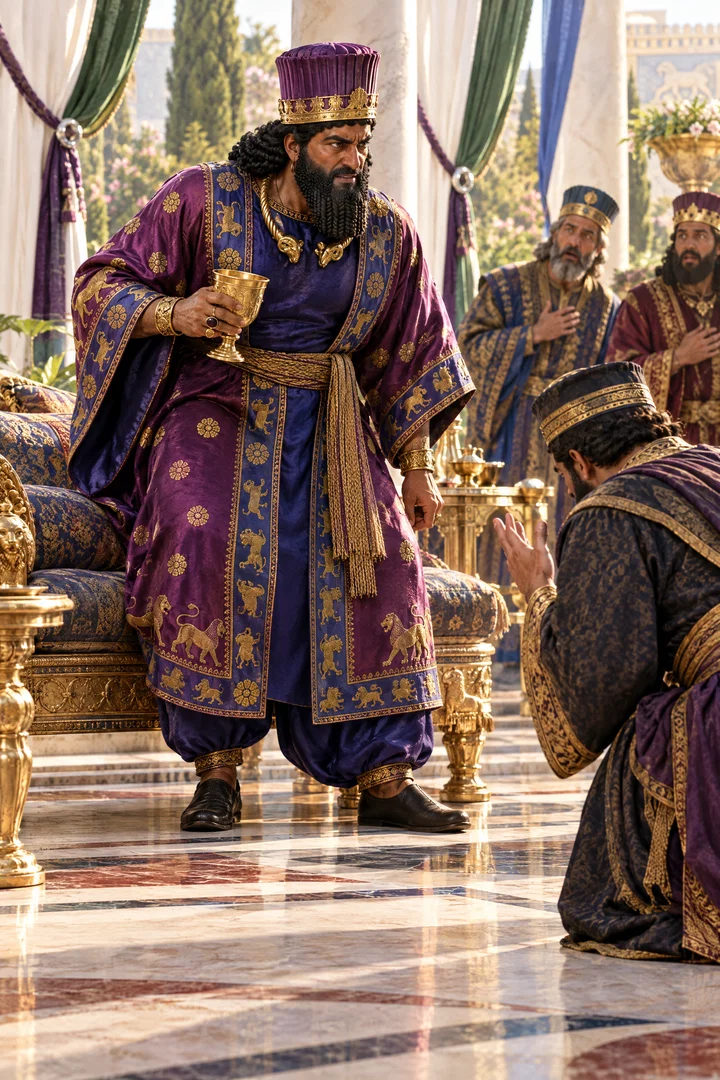
Where were white, green, and blue, hangings, fastened with cords of fine linen and purple to silver rings and pillars of marble: the beds were of gold and silver, upon a pavement of red, and blue, and white, and black, marble.
Translations
Where were white, green, and blue, hangings, fastened with cords of fine linen and purple to silver rings and pillars of marble: the beds were of gold and silver, on a pavement of red, and blue, and white, and black, marble.
Where were white, green, and blue, hangings, fastened with cords of fine linen and purple to silver rings and pillars of marble: the beds were of gold and silver, upon a pavement of red, and blue, and white, and black, marble.
where were white, green, and blue hangings, fastened with cords of fine linen and purple to silver rings and pillars of marble: the beds were of gold and silver, upon a pavement of red, and blue, and white, and black marble.
Where were white, green, and blue hangings, fastened with cords of fine linen and purple to silver rings and pillars of marble: the beds were of gold and silver, upon a pavement of red, and blue, and white, and black marble.
Revised Version, American Standard Version
There were hangings of white cloth, of green, and of blue, fastened with cords of fine linen and purple to silver rings and pillars of marble: the couches were of gold and silver, upon a pavement of red, and white, and yellow, and black marble.
white linen, white cotton, and blue, fastened with cords of fine linen and purple on rings of silver, and pillars of marble, couches of gold, and of silver, on a pavement of smaragdus, and white marble, and mother-of-pearl, and black marble —
White, green, and blue [hangings] were fastened with cords of byssus and purple to silver rings and pillars of white marble; couches of gold and silver [ lay] upon a pavement of red and white marble, and alabaster, and black marble.
white stuff, cotton and blue, being held fast with cords of fine linen and purple, upon rods of silver, and pillars of white marble,—the couches being of gold and silver, upon a pavement of alabaster and white marble, and pearl and black marble.
Berean Standard Bible, Majority Standard Bible
Hangings of white and blue linen were fastened with cords of fine white and purple material to silver rings on the marble pillars. Gold and silver couches were arranged on a mosaic pavement of porphyry, marble, mother-of-pearl, and other costly stones.
There were hangings of white and blue material, fastened with cords of fine linen and purple to silver rings and marble pillars. The couches were of gold and silver, on a pavement of red, white, yellow, and black marble.
There were fair hangings of white and green and blue, fixed with cords of purple and the best linen to silver rings and pillars of polished stone: the seats were of gold and silver on a floor of red and white and yellow and black stone.
Vnder an hanging of white, greene, and blue clothes, fastened with cordes of fine linen and purple, in siluer rings, and pillars of marble: the beds were of golde, and of siluer vpon a pauement of porphyre, and marble and alabaster, and blue colour.
Douay-Rheims (Challoner revision)
And there were hung up on every side sky coloured, and green, and violet hangings, fastened with cords of silk, and of purple, which were put into rings of ivory, and were held up with marble pillars. The beds also were of gold and silver, placed in order upon a floor paved with porphyry and white marble: which was embellished with painting of wonderful variety.
Pictures
Commentary
Each commentary is drawn from primary sources: the writings of Ellen G. White and Adventist pioneers and periodicals. Each commentary is separate. Its own words are not a quotation; follow the references to read the source passages.
Ellen G. White
1 source
The rich hangings, cords, rings, pillars, couches, and colored marble pavement belong to a display of royal self-indulgence that gives no glory to God.Ms 39, 1910, par. 16–17 Although the banquet and its surrounding decisions were shaped under the influence of wine, they were overruled into God's working, opening the way for Esther to be raised to the throne of the Medo-Persian kingdom so that His purposes for Israel could be fulfilled.Ms 39, 1910, par. 16–17 The setting therefore shows that God is able to restrain and direct earthly rulers and to advance His work even through those who do wrong and do not acknowledge His wisdom.Ms 39, 1910, par. 16–17
Sources
Pioneers and periodicals
8 sources
The verse describes the furnishings in the court of the garden of the king's palace at the seven-day feast made to all the people present in Shushan, both great and small.ST Apr 23, 1902ST Jun 2, 1914ST Sep 28, 1915 White, green, and blue hangings were fastened with cords of fine linen and purple to silver rings and pillars of marble.ST Apr 23, 1902ST Sep 28, 1915ST Sep 28, 1915 Couches or divans of gold and silver, on which the guests reclined while eating and drinking, stood upon a pavement of red, and blue, and white, and black marble.ST Apr 23, 1902ST Sep 28, 1915ST Jun 2, 1914 The richly colored hangings, precious-metal furnishings, and marble pavement display the wealth and splendor of the royal feast and palace.ST Sep 28, 1915ST Jun 15, 1915ST Sep 28, 1915
That seven-day feast was the climax at the end of the hundred and fourscore days, or six months, in which the king showed the riches of his glorious kingdom and the honor of his excellent majesty.ST Apr 23, 1902ST Jun 16, 1909ST Jun 2, 1914 Thousands of visitors and sightseers from different parts of the kingdom and world were invited to the banquet, with none barred.ST Jun 2, 1914 It came in the third year of the reign, in the day of Persia's greatest glory, when the princes and servants and the power of Persia and Media and the nobles and princes of the provinces, with the governors, were assembled to prepare for the invasion of Greece.ST Mar 4, 1886ST Apr 23, 1902 The kingdom stretched over 127 provinces from India even unto Ethiopia, with its capital at Shushan or Susa, and the exposition is dated to 521 B.C.ST Jun 10, 1913ST Jun 2, 1914
The king Ahasuerus was Xerxes the Great, the son of Darius of Ezra 6 and the father of Artaxerxes of Ezra 7, and Ahasuerus meaning the venerable king is a title rather than a personal name.ST Apr 23, 1902ST Jun 16, 1909ST Jun 10, 1913 The opening account to which the verse belongs is the first world's fair or international exposition on record, with six months of exhibits from all parts of the kingdom, covering a striking period in the history of the Jews under Persian rule.ST Jun 16, 1909ST Jun 10, 1913ST Jun 2, 1914 The display of wealth at the king's command compares more than favorably with modern expositions and has not been surpassed by them.ST Jun 2, 1914 It illustrates the wealth, splendor, magnificence, and grandeur of the Medo-Persian empire, its royal palace, and its feast, yet that greatness and splendor did not last but was marked for passing away, with Ichabod written over it.ST Sep 28, 1915ST Jun 15, 1915ST Sep 28, 1915 The setting belongs to the book whose purpose is to reveal the Amalekite plot against the people of God and God's overruling power to prevent it.ST Jun 10, 1913
Sources