Esther 2:15
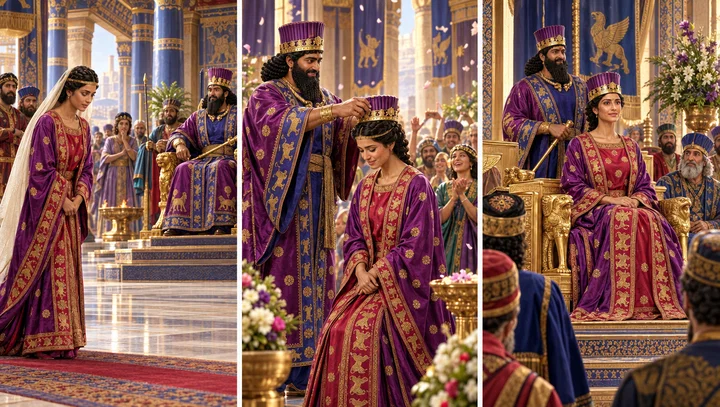
Now when the turn of Esther, the daughter of Abihail the uncle of Mordecai, who had taken her for his daughter, was come to go in unto the king, she required nothing but what Hegai the king’s chamberlain, the keeper of the women, appointed. And Esther obtained favour in the sight of all them that looked upon her.
Translations
Now when the turn of Esther, the daughter of Abihail the uncle of Mordecai, who had taken her for his daughter, was come to go in to the king, she required nothing but what Hegai the king’s chamberlain, the keeper of the women, appointed. And Esther obtained favor in the sight of all them that looked on her.
King James Version, KJV Cambridge Paragraph Bible, Revised Version
Now when the turn of Esther, the daughter of Abihail the uncle of Mordecai, who had taken her for his daughter, was come to go in unto the king, she required nothing but what Hegai the king’s chamberlain, the keeper of the women, appointed. And Esther obtained favour in the sight of all them that looked upon her.
Now when the turn of Esther, the daughter of Abihail the uncle of Mordecai, who had taken her for his daughter, had come to go in to the king, she required nothing but what Hegai the king's chamberlain, the keeper of the women, appointed. And Esther obtained favor in the sight of all them that looked upon her.
Now when the turn of Esther, the daughter of Abihail the uncle of Mordecai, who had taken her for his daughter, was come to go in unto the king, she required nothing but what Hegai the king’s chamberlain, the keeper of the women, appointed. And Esther obtained favor in the sight of all them that looked upon her.
And in the drawing nigh of the turn of Esther — daughter of Abihail, uncle of Mordecai, whom he had taken to him for a daughter — to come in unto the king, she hath not sought a thing except that which Hegai eunuch of the king, keeper of the women, saith, and Esther is receiving grace in the eyes of all seeing her.
And when the turn of Esther, the daughter of Abihail the uncle of Mordecai, who had taken her for his daughter, came to go in to the king, she required nothing but what Hegai the king's chamberlain, keeper of the women, appointed. And Esther obtained grace in the sight of all them that saw her.
But, when the turn came for Esther daughter of Abihail the uncle of Mordecai—who had taken her as his own daughter—to go in unto the king, she requested nothing, save what Hegai the king’s eunuch who kept the women might direct,—but so it was, that Esther obtained favour in the eyes of all who beheld her.
Berean Standard Bible, Majority Standard Bible
Now Esther was the daughter of Abihail, the uncle from whom Mordecai had adopted her as his own daughter. And when it was her turn to go to the king, she did not ask for anything except what Hegai, the king’s trusted official in charge of the harem, had advised. And Esther found favor in the eyes of everyone who saw her.
Now when the turn of Esther, the daughter of Abihail the uncle of Mordecai, who had taken her for his daughter, came to go in to the king, she required nothing but what Hegai the king’s eunuch, the keeper of the women, advised. Esther obtained favor in the sight of all those who looked at her.
Now when the time came for Esther, the daughter of Abihail, his father's brother, whom Mordecai had taken as his daughter, to go in to the king, she made request for nothing but what Hegai, the king's servant and keeper of the women, had given her. And Esther was looked on kindly by all who saw her.
Now when the course of Ester the daughter of Abihail the vncle of Mordecai (which had taken her as his owne daughter) came, that shee should go in to the King, she desired nothing, but what Hege the Kings eunuche the keeper of the women sayde: and Ester founde fauour in the sight of all them that looked vpon her.
Douay-Rheims (Challoner revision)
And as the time came orderly about, the day was at hand, when Esther, the daughter of Abihail the brother of Mardochai, whom he had adopted for his daughter, was to go in to the king. But she sought not women’s ornaments, but whatsoever Egeus the eunuch the keeper of the virgins had a mind, he gave her to adorn her. For she was exceeding fair, and her incredible beauty made her appear agreeable and amiable in the eyes of all.
Pictures
Cross-references
- Esther 1:12-20
But the queen Vashti refused to come at the king’s commandment by his chamberlains: therefore was the king very wroth, and his anger burned in him.
Vashti’s refusal contrasts with Esther’s conduct, illustrating the consequences of disregarding obedience.
Commentary
Each commentary is drawn from primary sources: the writings of Ellen G. White and Adventist pioneers and periodicals. Each commentary is separate. Its own words are not a quotation; follow the references to read the source passages.
Ellen G. White
1 source
When Esther's turn came to go in to the king, she asked for nothing beyond what Hegai the king's chamberlain, the keeper of the women, had appointed for her.Ms 39, 1910, par. 25–27 In doing so she showed modesty and a willingness to be guided by his direction rather than seeking adornment or advantage of her own choosing.Ms 39, 1910, par. 25–27 She came as the daughter of Abihail, the uncle of Mordecai who had taken her for his own daughter, yet she claimed no special standing for herself.Ms 39, 1910, par. 25–27 And she obtained favor in the sight of all who looked upon her.Ms 39, 1910, par. 25–27
Sources
Pioneers and periodicals
3 sources
This verse belongs to the account of how, in God's providence, a Jewish maiden and captive was brought to the throne of Persia, her exceptional situation being overruled for the good of His people.ST Jun 16, 1909 She was among the beautiful maidens brought before the Persian king, and she was chosen by him rather than choosing to marry him herself.
When her turn came to go in to the king, she meekly accepted what was appointed for her and required nothing beyond what Hegai the keeper of the women appointed, rather than seeking her own choice.RH Oct 13, 1874 She obtained favor in the sight of all who looked upon her.RH Oct 13, 1874 In that standing she had become the best beloved of all the king's concubines, though not yet advanced to the dignity of queen.
Her restraint reflects humility and loyalty, together with meekness, wisdom, and prudence, and with the development of physical, intellectual, moral, and spiritual abilities.RH Oct 13, 1874 While in that standing, still not revealing her kindred and nation and acting by Mordecai's direction, she used one of the occasions when Persian kings allowed their women to ask whatever boon they pleased to solicit from the king the ample commission given in B.C. 457 for Ezra with all willing Jews to return to Jerusalem to restore the state, reform the church, and regulate both according to their own laws.
Her example shows that seeking the appointed way can find favor with people and with the heavenly King.RH Oct 13, 1874 Her life, alongside Vashti's, stands as a historical example from which wives can learn about the consequences of disregarding Paul's teaching concerning women's authority.RH Mar 11, 1873
Sources