Esther 2:7
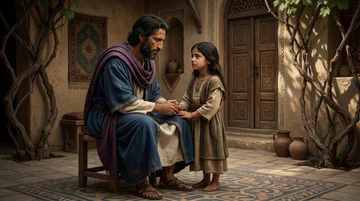
And he brought up Hadassah, that is, Esther, his uncle’s daughter: for she had neither father nor mother, and the maid was fair and beautiful; whom Mordecai, when her father and mother were dead, took for his own daughter.
Translations
American King James Version, King James Version, KJV Cambridge Paragraph Bible
And he brought up Hadassah, that is, Esther, his uncle’s daughter: for she had neither father nor mother, and the maid was fair and beautiful; whom Mordecai, when her father and mother were dead, took for his own daughter.
And he brought up Hadassah, that is, Esther, his uncle's daughter: for she had neither father nor mother, and the maid was fair and beautiful; whom Mordecai, when her father and mother were dead, took for his own daughter.
Revised Version, American Standard Version
And he brought up Hadassah, that is, Esther, his uncle’s daughter: for she had neither father nor mother, and the maiden was fair and beautiful; and when her father and mother were dead, Mordecai took her for his own daughter.
and he is supporting Hadassah — she [is] Esther — daughter of his uncle, for she hath neither father nor mother, and the young woman [is] of fair form, and of good appearance, and at the death of her father and her mother hath Mordecai taken her to him for a daughter.
And he brought up Hadassah, that is, Esther, his uncle's daughter; for she had neither father nor mother — and the maiden was fair and beautiful — and when her father and mother were dead, Mordecai took her for his own daughter.
And it came to pass, that he was bringing up Hadassah, the same, was Esther, his uncle’s daughter, for she had neither father nor mother,—and, the maiden, was of beautiful form and pleasing appearance, and when her father and mother died, Mordecai took her for his own daughter.
And Mordecai had brought up Hadassah ( that is, Esther), the daughter of his uncle, because she did not have a father or mother. The young woman was lovely in form and appearance, and when her father and mother had died, Mordecai had taken her in as his own daughter.
And Mordecai had brought up Hadassah ( that is, Esther), the daughter of his uncle, because she did not have a father or mother. The young woman was lovely in form and appearance, and when her father and mother had died, Mordecai had taken her as his own daughter.
He brought up Hadassah, that is, Esther, his uncle’s daughter; for she had neither father nor mother. The maiden was fair and beautiful; and when her father and mother were dead, Mordecai took her for his own daughter.
And he had been a father to Hadassah, that is Esther, the daughter of his father's brother: for she had no father or mother, and she was very beautiful; and when her father and mother were dead, Mordecai took her for his daughter.
And he nourished Hadassah, that is Ester, his vncles daughter: for she had neither father nor mother, and the mayde was fayre, and beautifull to looke on: and after the death of her father, and her mother, Mordecai tooke her for his own daughter
Douay-Rheims (Challoner revision)
And he had brought up his brother’s daughter Edissa, who by another name was called Esther: now she had lost both her parents: and was exceeding fair and beautiful. And her father and mother being dead, Mardochai adopted her for his daughter.
Pictures
Commentary
Each commentary is drawn from primary sources: the writings of Ellen G. White and Adventist pioneers and periodicals. Each commentary is separate. Its own words are not a quotation; follow the references to read the source passages.
Ellen G. White
2 sources
Mordecai was a Jew living in Shushan the palace, with a background among those carried away from Jerusalem with the captivity of Jeconiah king of Judah by Nebuchadnezzar king of Babylon.Ms 39, 1910, par. 20–24 The young woman in his care bore two names, Hadassah, that is, Esther.Ms 39, 1910, par. 25–27Ms 39, 1910, par. 20–24 She was his uncle's daughter, and therefore his cousin.Ms 39, 1910, par. 25–27Ms 39, 1910, par. 20–24
She had neither father nor mother, being left an orphan by their loss.Ms 39, 1910, par. 25–27Ms 39, 1910, par. 20–24 The maid was fair and beautiful, lovely in form and appearance.Ms 39, 1910, par. 20–24 When her father and mother were dead, Mordecai took her for his own daughter and brought her up, raising her as his own child.Ms 39, 1910, par. 25–27Ms 39, 1910, par. 20–24
Sources
Pioneers and periodicals
4 sources
Esther is Hadassah, the daughter of Mordecai's uncle, who had neither father nor mother and whom Mordecai took for his own daughter and brought up after her father and mother were dead. She was fair and beautiful in physical form and appearance. She was a Jewish maiden living as a Hebrew captive.ST Jun 16, 1909ST Mar 8, 1899
Her being brought up under Mordecai's care taught her loyalty and obedience, which she afterward showed in serving both Mordecai and God. This verse belongs to the account of how through God's providence she was brought to the throne of Persia and accepted by the king.ST Jun 16, 1909ST Sep 20, 1899 The same account of Mordecai and Esther shows God's providence working through Mordecai to save the king from a conspiracy.ST Sep 20, 1899
She stands as an example of God using humble, unprepossessing people as instruments to bring others to Christ.ST Mar 8, 1899 Together with the account of Vashti, her account through this chapter provides historical examples from which wives may learn the harmful consequences of disregarding Paul's teaching, in contrast to the doctrine of female supremacy.RH Mar 11, 1873
Sources