Esther 4:3
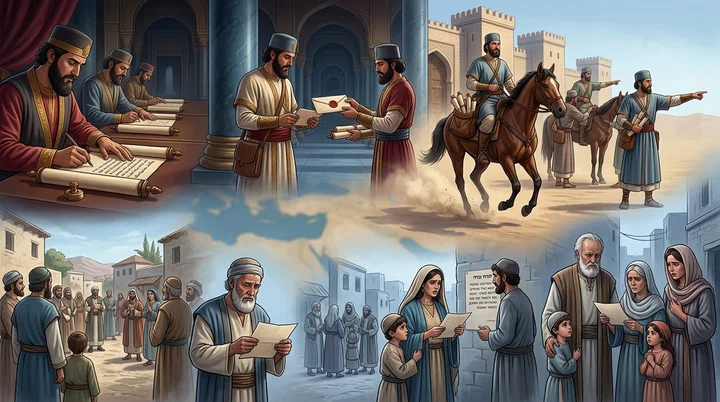
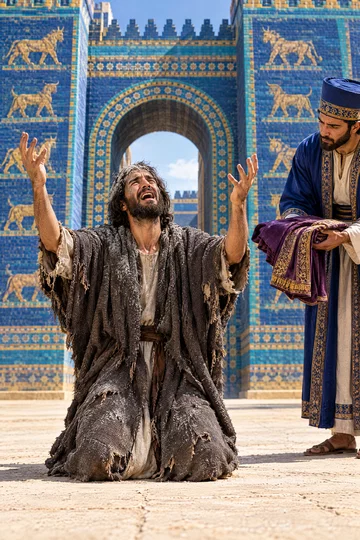
And in every province, whithersoever the king’s commandment and his decree came, there was great mourning among the Jews, and fasting, and weeping, and wailing; and many lay in sackcloth and ashes.
Translations
And in every province, wherever the king’s commandment and his decree came, there was great mourning among the Jews, and fasting, and weeping, and wailing; and many lay in sackcloth and ashes.
King James Version, KJV Cambridge Paragraph Bible, Revised Version, American Standard Version
And in every province, whithersoever the king’s commandment and his decree came, there was great mourning among the Jews, and fasting, and weeping, and wailing; and many lay in sackcloth and ashes.
And in every province whithersoever the king's commandment and his decree came, there was great mourning among the Jews, and fasting, and weeping, and wailing; and many lay in sackcloth and ashes.
And in every province and province, the place where the word of the king, even his law, is coming, a great mourning have the Jews, and fasting, and weeping, and lamenting: sackcloth and ashes are spread for many.
And in every province, wherever the king's commandment and his decree came, there was great mourning among the Jews, and fasting, and weeping, and wailing: many lay in sackcloth and ashes.
And, throughout every province, whithersoever the word of the king and his edict came, was great mourning to the Jews, and fasting and weeping, and lamentation,—sackcloth and ashes, were spread out for many.
Berean Standard Bible, Majority Standard Bible
In every province to which the king’s command and edict came, there was great mourning among the Jews. They fasted, wept, and lamented, and many lay in sackcloth and ashes.
In every province, wherever the king’s commandment and his decree came, there was great mourning among the Jews, and fasting, and weeping, and wailing; and many lay in sackcloth and ashes.
And in every part of the kingdom, wherever the king's word and his order came, there was great sorrow among the Jews, and weeping and crying and going without food; and numbers of them were stretched on the earth covered with dust and haircloth.
And in euery prouince, and place, whither the Kings charge and his commission came, there was great sorowe among the Iewes, and fasting, and weeping and mourning, and many laye in sackecloth and in ashes.
Douay-Rheims (Challoner revision)
And in all provinces, towns, and places, to which the king’s cruel edict was come, there was great mourning among the Jews, with fasting, wailing, and weeping, many using sackcloth and ashes for their bed.
Pictures
Cross-references
- Esther 3:13
And the letters were sent by posts into all the king’s provinces, to destroy, to kill, and to cause to perish, all Jews, both young and old, little children and women, in one day, even upon the thirteenth day of the twelfth month, which is the month Adar, and to take the spoil of them for a prey.
The decree of destruction prompted the Jews’ mourning.
- Esther 3:8
And Haman said unto king Ahasuerus, There is a certain people scattered abroad and dispersed among the people in all the provinces of thy kingdom; and their laws are diverse from all people; neither keep they the king’s laws: therefore it is not for the king’s profit to suffer them.
Haman’s accusation led to the decree that caused the Jews’ mourning.
- Esther 8:16-17
The Jews had light, and gladness, and joy, and honour.
The Jews rejoice after their threatened destruction is averted.
- Esther 3:6
And he thought scorn to lay hands on Mordecai alone; for they had shewed him the people of Mordecai: wherefore Haman sought to destroy all the Jews that were throughout the whole kingdom of Ahasuerus, even the people of Mordecai.
plot that caused the mourning
- Esther 3:15
The posts went out, being hastened by the king’s commandment, and the decree was given in Shushan the palace. And the king and Haman sat down to drink; but the city Shushan was perplexed.
The decree left Shushan perplexed while the Jews mourned.
- Daniel 9:3
And I set my face unto the Lord God, to seek by prayer and supplications, with fasting, and sackcloth, and ashes:
Both describe fasting and prayer while seeking deliverance from peril.
Commentary
Each commentary is drawn from primary sources: the writings of Ellen G. White and Adventist pioneers and periodicals. Each commentary is separate. Its own words are not a quotation; follow the references to read the source passages.
Ellen G. White
2 sources
In every province, wherever the king's commandment and his decree came, there was great mourning among the Jews, expressed in fasting and weeping and wailing, with many lying in sackcloth and ashes.PK 601.1RH Jan 23, 1908 The king who issued the commandment was Xerxes the Great, the Ahasuerus of Esther, ruling Medo-Persia, and his edict ordered the massacre of the Jews.RH Jan 23, 1908 The plot was to destroy all the Jews throughout the kingdom on an appointed day and to confiscate their property.RH Jan 23, 1908 The edict was procured by Haman the Agagite out of malice against Mordecai the Jew, who refused to give him the reverence that belongs to God alone, and that hatred grew into a plot against all the Jews.RH Jan 23, 1908
Behind Haman stood Satan, seeking to rid the earth of those who preserved the knowledge of the true God.RH Jan 23, 1908 Those overtaken by this grief were those who had failed to heed God's warning to flee for their lives from Babylon and had remained in exile, and they were now brought face to face with death.RH Jan 23, 1908 Because a decree of the Medes and Persians could not be revoked, there appeared to be no hope and the Jews seemed doomed to destruction.PK 601.1RH Jan 23, 1908
Sources
Pioneers and periodicals
6 sources
The king whose commandment and decree spread to every province was Ahasuerus, that is Xerxes the Great, ruling Medo-Persia, and the decree came through Haman.RH Jan 23, 1908ST Nov 19, 1896ST Jun 27, 1911 Haman the Agagite obtained the edict from malice against Mordecai the Jew because Mordecai refused him the reverence that belongs to God alone, and the personal grievance grew into a plot to destroy all the Jews throughout the kingdom on an appointed day and confiscate their property.RH Jan 23, 1908 The massacre was set for a fixed day under a law that could not be changed, for decrees of the Medes and Persians could not be revoked, so apparently there was no hope and all Israel was doomed to destruction.RH Jan 23, 1908ST Apr 30, 1902 Wherever the commandment and decree reached in every province, the Jews responded with great mourning, fasting, weeping and wailing, and many lay in sackcloth and ashes.RH Jan 23, 1908ST Apr 30, 1902ST Nov 19, 1896ST Jun 27, 1911 Those overtaken by this grief were exiles who had failed to heed the warning to flee for their lives from Babylon and had remained behind, and they were now brought face to face with death.RH Jan 23, 1908
Medo-Persia, which succeeded Babylon, was the second head of the Satan-controlled beast system of church-and-state government, and Satan perverted that government to his own ends.ST Nov 19, 1896 Behind Haman stood Satan, planning to rid the earth of those who preserved the knowledge of the true God by destroying all of the people of God, the woman through whom the Man-child should come.RH Jan 23, 1908ST Nov 19, 1896 God frustrated that purpose, and the distress described in the verse, with the prayer of Mordecai in it, is linked with the execution of Haman and the deliverance of Israel.ST Nov 19, 1896ST Jun 27, 1911RH Aug 1, 1871 In the days of Ahasuerus and Mordecai, when the decree that the Jews should be slain had gone forth, the people proclaimed a solemn fast and prayed to the Lord for deliverance, showing that it is always the privilege and duty of the people of God to seek Him for deliverance in times of peril and calamity as well as to offer thanksgiving and praise in days of peace and prosperity, for the same God still lives and is moved by the united supplications of His people.RH Sep 17, 1914
Sources